In this guide
Run your finger down a map of southeast Brazil, from the great bay of Rio de Janeiro toward the port of Santos, and you trace one of the most beautiful coastlines in the country. Brazilians call it the Costa Verde — the Green Coast — and the name is not marketing. For most of its length the Serra do Mar, the coastal mountain range, comes right down to the water, its slopes still draped in Atlantic Forest, so that you are forever looking at deep green hills falling into a blue, island-studded sea. This is the coast of Angra dos Reis and its hundreds of islands, of car-free Ilha Grande, of colonial Paraty, of the surf village of Trindade and, further south, of Ubatuba's hundred beaches.
It is also, frankly, a coast that confuses first-time visitors, because it is not one place but a sequence of them, strung along a single road between mountain and sea. People arrive having heard of Paraty, or seen a photograph of Ilha Grande, without quite grasping how the pieces fit — how far apart they are, which to choose, where to base themselves, and what the whole region actually is. That is what this guide is for. Think of it as the orientation you'd get from a friend who lives here: the big picture first, then the headline destinations, then how to assemble them into a trip that works.
I write this from the Paraty end of the coast, where we host guests at a hillside chalet above the bay, so I'll be honest about where I think the heart of the Costa Verde lies. But the point of a piece like this is to step back and see the whole green coast at once — to explain what it is, why it's green, and how to make sense of it before you ever choose a hotel.
What and where the Costa Verde is
The Costa Verde is the stretch of Brazilian coast running roughly southwest from the Rio de Janeiro area toward Santos, in São Paulo state. It straddles the boundary between the two states: the larger and better-known part lies in Rio de Janeiro state — Angra, Ilha Grande, Paraty — while the southern end, around Ubatuba and on toward Santos, falls in São Paulo state. In practice, travellers treat it as one continuous region, because geographically and scenically it is one: the same mountains, the same forest, the same line of bays and beaches, linked by the same coastal highway.
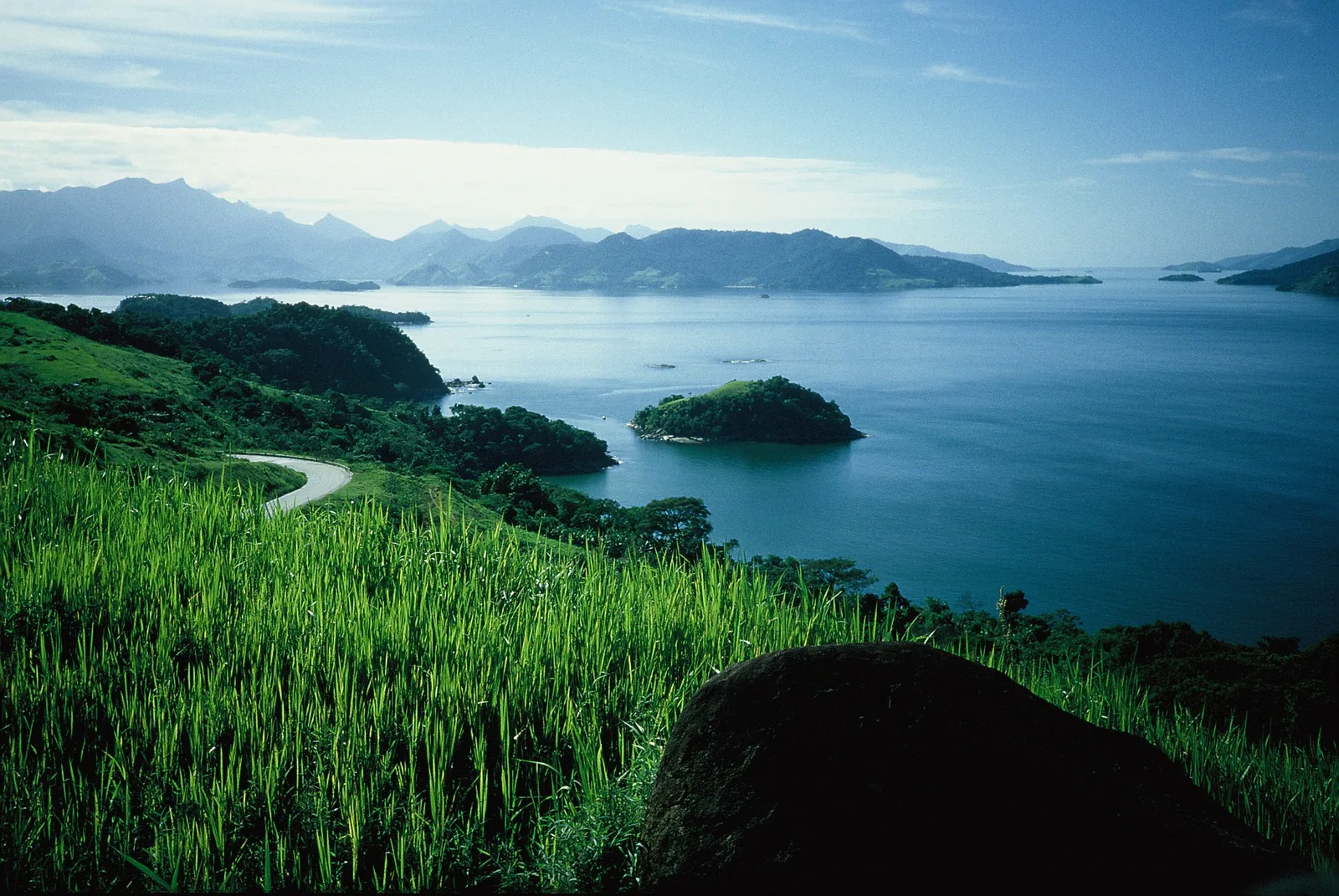
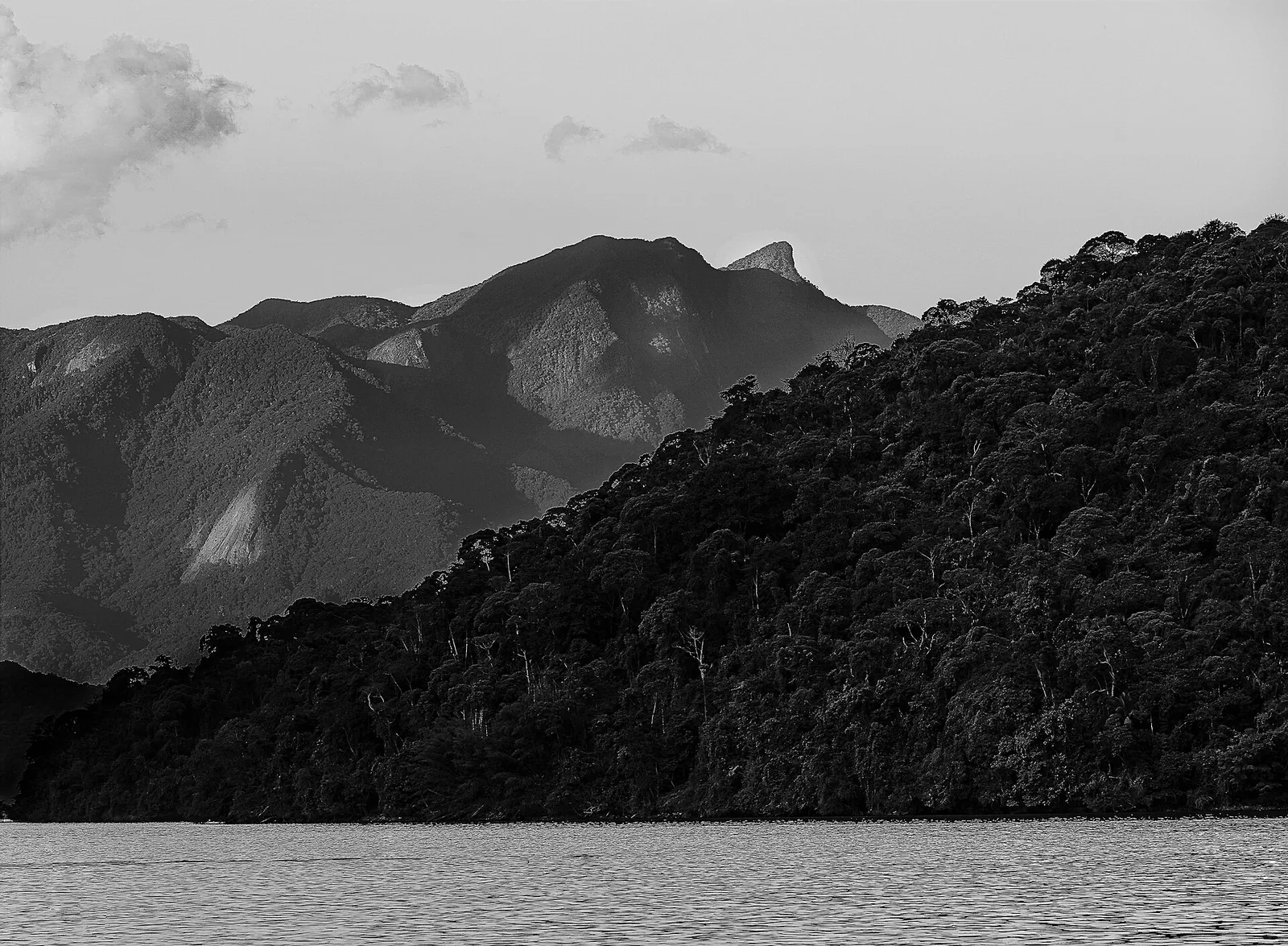
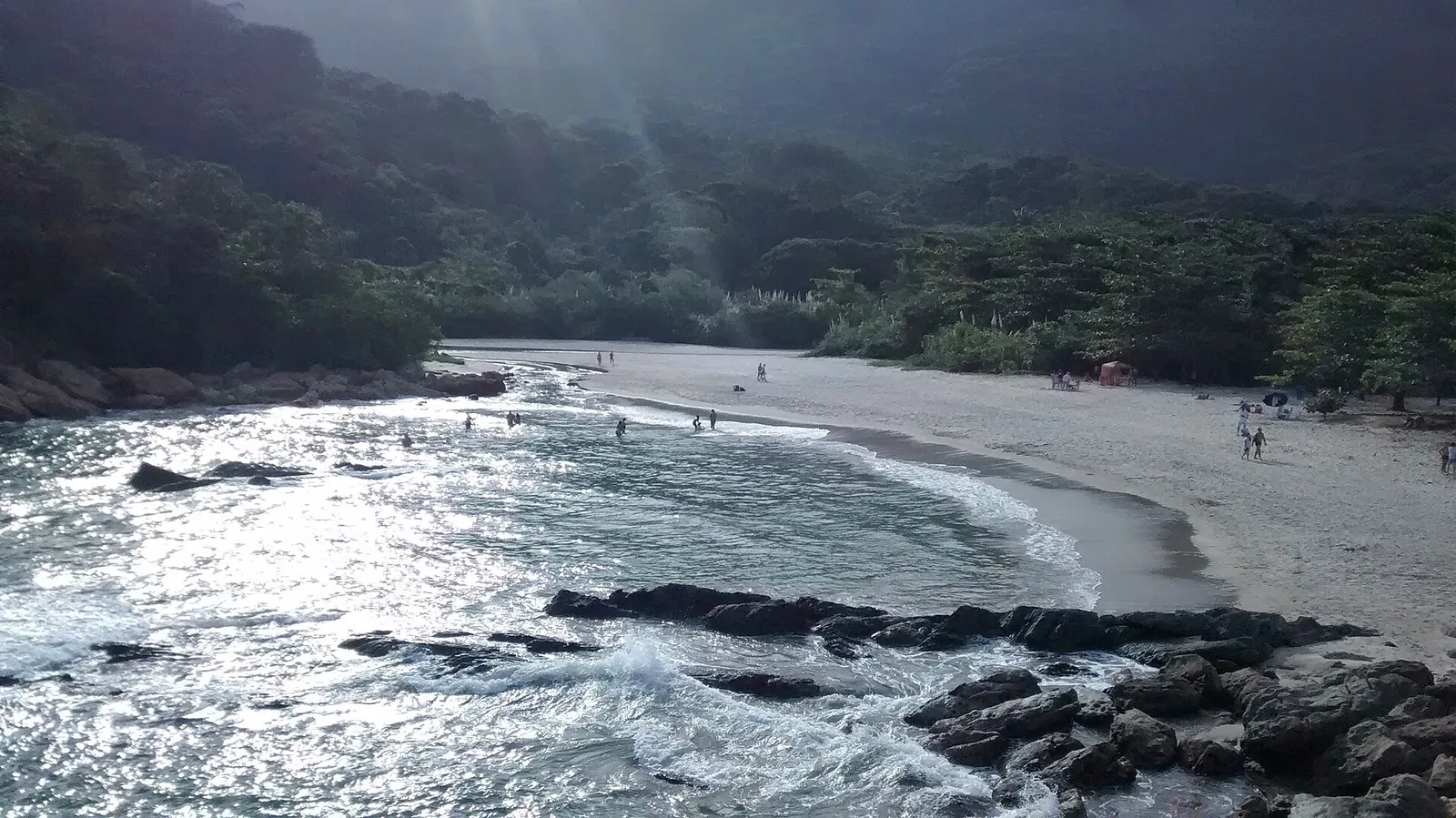
What unites it physically is the relationship between mountain and sea. The Serra do Mar — literally the "range of the sea" — runs parallel to the coast, often only a few kilometres inland and sometimes right at the shore. Between the foot of the mountains and the water there is rarely much flat land, which is why the towns are small and the road is winding, and why so many of the beaches are tucked into coves with forested headlands on either side. The sea itself, sheltered in many places by islands and headlands, tends to be calm and clear, which is part of what makes the region so good for boats and swimming.
The Green Coast is not one destination but a sequence of them, strung along a single road between mountain and sea.
Why it's green: the Serra do Mar and the Atlantic Forest
The greenness is not incidental; it is the whole identity of the coast, and it has a name: the Mata Atlântica, the Atlantic Forest. This is one of Brazil's great forest biomes, once running for thousands of kilometres along the coast and now reduced, by centuries of clearance, to fragments — of which the Costa Verde holds some of the largest and best-preserved. Here the forest climbs the steep flanks of the Serra do Mar from sea level to the ridge-tops, and because the slopes were too steep to farm or build on easily, much of it survived where flatter coasts lost theirs.
The result is the signature view of the region: dense, layered rainforest coming down to the edge of the sea, in some places literally to the rocks at the waterline. It is also why the area is so rich in the things that draw visitors beyond the beaches — waterfalls tumbling out of the hills, like those above Paraty, hiking trails through genuine jungle, and a remarkable concentration of wildlife. The Atlantic Forest is recognised as one of the world's most important biodiversity hotspots, home to species found nowhere else, from small primates to the larger animals that still move through the protected ranges inland. You feel this even on a short walk: the noise of insects and birds, the humidity, the sheer density of green. The forest is not a backdrop to the Costa Verde. It is the reason the Costa Verde looks and feels the way it does. If wildlife is part of your interest, our journal piece on Atlantic Forest wildlife goes deeper into what lives in these hills.
The headline destinations
The Costa Verde is best understood through its main stops, each with its own character. Here is how I'd describe them to a guest deciding where to spend their time.
Angra dos Reis and its islands
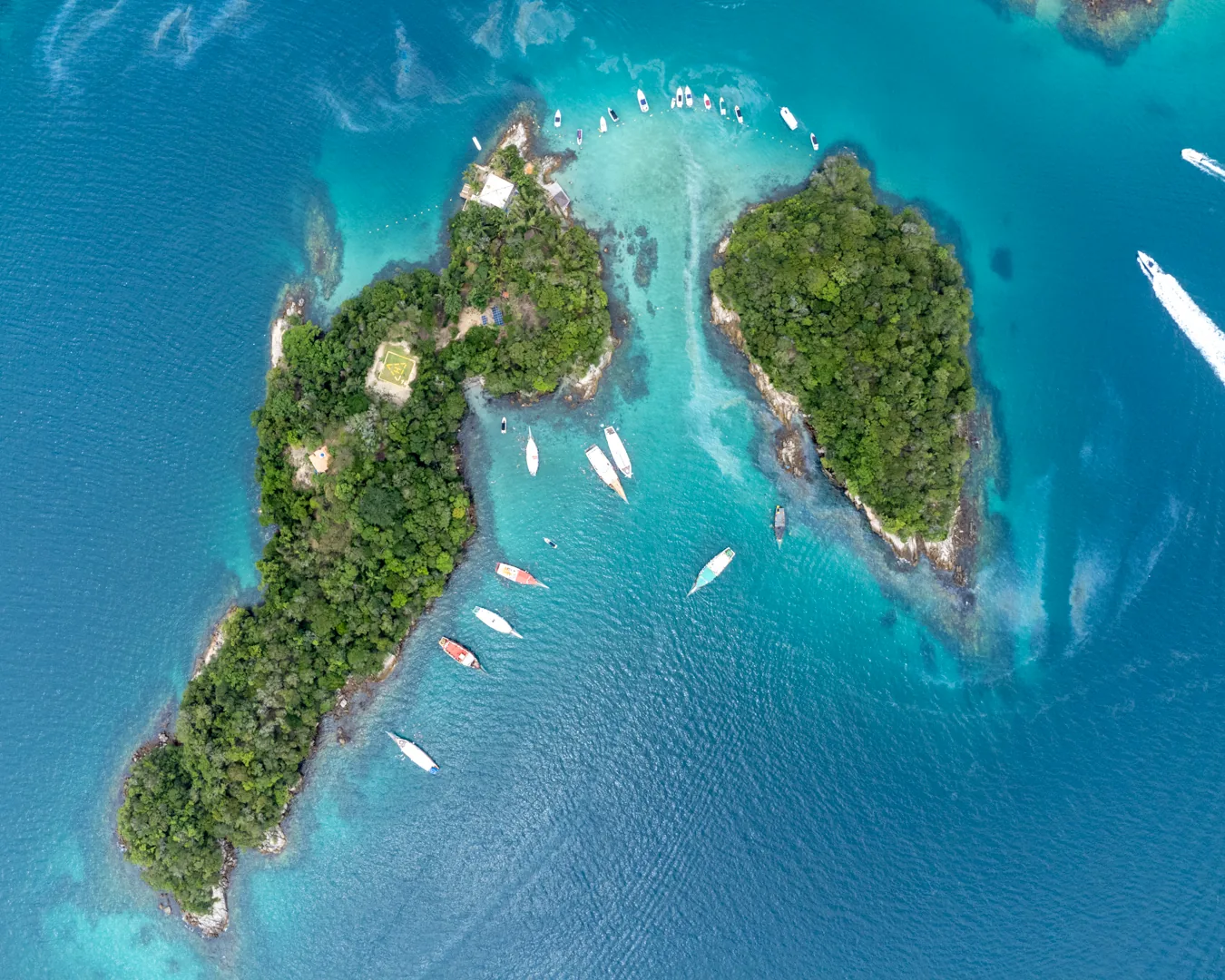
Angra dos Reis is the big bay town of the Rio de Janeiro side, and its claim to fame is water rather than streets: the Baía da Ilha Grande, scattered with so many islands that locals say there is one for every day of the year. It is the place to go island-hopping by schooner or speedboat, to snorkel in clear coves like Lagoa Azul, and to feel the full effect of that island-filled bay. The town itself is a working port with limited charm, so most visitors treat Angra as a day on the water rather than a base. It is covered fully in our Angra dos Reis guide.
Ilha Grande
Off Angra lies Ilha Grande, the largest island on the coast and one of its great pleasures: a roadless, car-free island of forested hills, quiet villages and some of the finest beaches in Brazil, reached by ferry or speedboat from the mainland. There is one main village, Vila do Abraão, and from it trails and boats fan out to beaches like the much-photographed Lopes Mendes. The absence of cars sets the pace — you walk or you take a boat, and the island slows you down accordingly. Our complete Ilha Grande guide covers it in full, and the guide to Lopes Mendes beach picks out its most famous stretch of sand.
Paraty
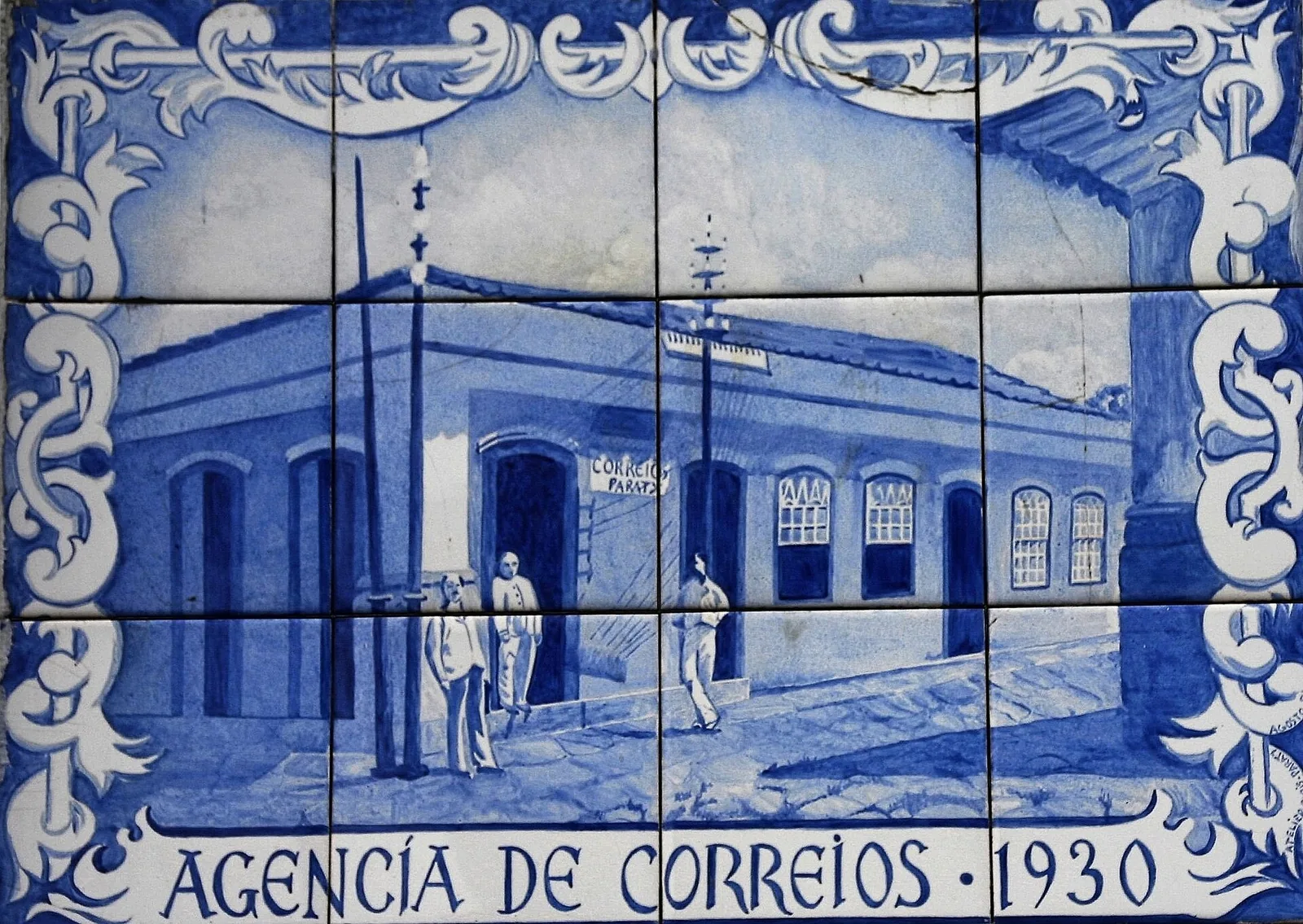
Paraty is, to my mind, the cultural heart of the Costa Verde, and the natural place to base a trip. It is a remarkably well-preserved colonial town, built in the gold-rush era as the port from which Brazil's inland gold was shipped to Lisbon, with cobbled streets, whitewashed churches and a historic centre closed to cars. Around it spreads a quieter bay than Angra's — fewer islands, more mangrove, secluded beaches and the long, fjord-like inlet of the Saco do Mamanguá — and behind it rise the mountains, with their waterfalls, the old gold trail, and cachaça distilleries in the hills. Paraty rewards a stay rather than a day, both for the town itself and as a springboard to everything around it. Start with our explore Paraty overview and the historic centre guide.
Trindade
A short way south of Paraty, the village of Trindade is the coast's relaxed, barefoot counterpoint: a former fishing and hippie hideaway turned easy-going beach village, where the rainforest meets a string of beaches and natural sea pools. It is less polished than Paraty and all the better for it for some travellers, a place to spend a slow day swimming and eating simply by the sand. Our Trindade guide has the detail.
Ubatuba and the São Paulo side
Cross into São Paulo state at the southern end and you reach Ubatuba, often called the watersports capital of the coast, with a long, mountainous shoreline holding a great many beaches — well over a hundred by local reckoning — each with its own feel, from family-friendly coves to surf breaks. It is the natural extension of the Costa Verde for anyone approaching from São Paulo or wanting to push further down the coast. See our Ubatuba guide for more, and beyond it the coast continues toward Ilhabela and eventually Santos.
The UNESCO listing: Paraty and Ilha Grande
If you want a single fact that captures the value of this coast, it is this: in 2019, UNESCO inscribed "Paraty and Ilha Grande – Culture and Biodiversity" on the World Heritage List. It was the first mixed site in Brazil — meaning it was recognised for both its cultural and its natural importance together, which is a relatively rare distinction. Most World Heritage sites are listed for one or the other; this one earned both at once, precisely because here the human history and the natural world are so tightly bound.
The listing covers the historic centre of Paraty, one of Brazil's best-preserved colonial coastal towns; Ilha Grande and the surrounding bay; and several protected areas of Atlantic Forest, including part of the Serra da Bocaina range behind the coast and the remnants of the old gold trail, the Caminho do Ouro. It also recognises the biodiversity of the forest and bay, home to threatened species and to the living culture of the caiçara people — the traditional coastal communities of fishers and small farmers whose way of life is woven into the landscape. The practical upshot for a visitor is that the core of the Costa Verde is not just beautiful but formally protected and internationally recognised, which is part of why it has kept its character where other coasts have been built over. It's worth reading alongside our piece on the region's gold trail and the broader story of Brazil's colonial towns.
How the pieces fit for a trip
Here is where the orientation pays off. Once you understand that the Costa Verde is a chain of destinations along one road, planning becomes straightforward: you choose which links of the chain to visit, in what order, and where to put down your bags.
The coast is bookended by its two big cities and their airports — Rio de Janeiro to the north, São Paulo to the south — and threaded together by the BR-101 coastal highway. From Rio it is roughly a four-hour drive down to Paraty, passing Angra and the Ilha Grande ferry ports on the way; we've written that journey up in full in the Rio to Paraty road trip guide, and the getting around page covers buses, transfers and local logistics. From São Paulo you join the same road from the southern end, passing Ubatuba. The neat trick, for travellers with the flexibility, is to fly into one city and out of the other, driving the coast once in between rather than doubling back.
Suggested bases
Where you stay shapes the trip more than anything. A few honest recommendations:
- Paraty as your main base. For most visitors this is the smart choice. It has the town, the bay, the restaurants and the culture, and it is within reach of Trindade, the waterfalls, the gold trail and — by boat or a short drive — the Angra islands and Ilha Grande. Base yourself here and you can do day trips in several directions without changing hotels. This is, unsurprisingly, where we are, and why we think it makes the best home for a coastal week.
- Ilha Grande for an island escape. If switching off completely is the goal, spend a few nights on the island itself, where there are no cars and the day is set by tides and trails rather than traffic. Combine it with Paraty rather than treating it as the whole trip.
- Angra only as a gateway. I wouldn't base a holiday in Angra town, but it's the obvious launch point for the islands and the ferry, so a night there can make sense purely for logistics.
- Ubatuba for the São Paulo side. If you're coming from São Paulo or want a quieter, beach-focused stay, Ubatuba is the natural base at the southern end.
A common, well-balanced shape for a trip is a couple of nights in Rio to see the city, then several based around Paraty for the town and the bays, with a day or two given over to Ilha Grande or the Angra islands from there. That gives you the urban icon, the cultural heart and the wild island, without constant repacking. For worked examples, see our Paraty itineraries, and for the wider planning of a high-end Brazilian trip our journal guide to luxury travel planning in Brazil.
How long to give it
You can get a real taste of the Costa Verde in three or four days based in one place. A week is better: enough to combine a town, an island and the bays without rushing the winding roads and boat schedules that govern movement here. Less than three days and you'll spend too much of it travelling; much more than a week and you'll want to range further afield, up to Rio's own beaches or down past Ubatuba. For most, a week on the coast plus a few days in Rio is the sweet spot.
A note on how the days actually divide. If you base yourself around Paraty for the bulk of the trip — which I'd recommend — a sensible rhythm is one day for the town and its immediate surroundings, one for a boat trip on the bay, one for the waterfalls or the gold trail in the hills, one for Trindade, and one given over to either the Angra islands or an overnight on Ilha Grande. That's already five distinct days without repacking or backtracking, all from a single comfortable base, which is exactly why a hillside chalet above the bay makes such a practical home for the week. Add your Rio days at the start or end, drive the coast once between the two cities if you can, and you have a trip that feels full rather than frantic.
What there is to do
The Costa Verde is sometimes pigeonholed as a beach-and-boat coast, and it is certainly that, but its range is wider than first-timers expect. Knowing the breadth helps you balance a trip so it isn't all sand.
On the water
The defining experience is getting out on the bays — by schooner, speedboat or kayak — to swim, snorkel and island-hop. The Angra bay is the island-hopping capital, with its clear-water lagoons; the Paraty bay offers a gentler, more secluded version, with mangroves and quiet beaches and the dramatic inlet of the Saco do Mamanguá, sometimes called Brazil's only fjord. Diving and snorkelling are good in the right spots and seasons, covered in our diving and snorkelling guide. Whichever bay you're on, a day on a boat is the single experience I'd tell every visitor not to miss.
In the forest and hills
Behind every beach is a mountain, and the Atlantic Forest is laced with trails and rivers. There are walks to waterfalls with natural pools to swim in — the hills above Paraty are full of them, gathered in our waterfalls guide — and longer hikes through genuine rainforest, on Ilha Grande's network of trails and through the protected ranges inland. The old colonial gold trail, the Caminho do Ouro, can be walked in part, a stone-paved path through the forest that once carried Brazil's gold down to the coast. For the more ambitious, the Serra da Bocaina rises behind the coast into cooler highland country.
Town, culture and the table
Then there is the human side: wandering Paraty's cobbled historic centre, visiting the cachaça distilleries in the hills that make the region's signature spirit, eating the seafood the coast does so well, and catching one of the festivals that punctuate the calendar. The Costa Verde is not a place where you have to choose between nature and culture — its appeal is precisely that you can spend the morning on a boat and the evening in a three-hundred-year-old street, and both feel essential.
The caiçara coast: people and food
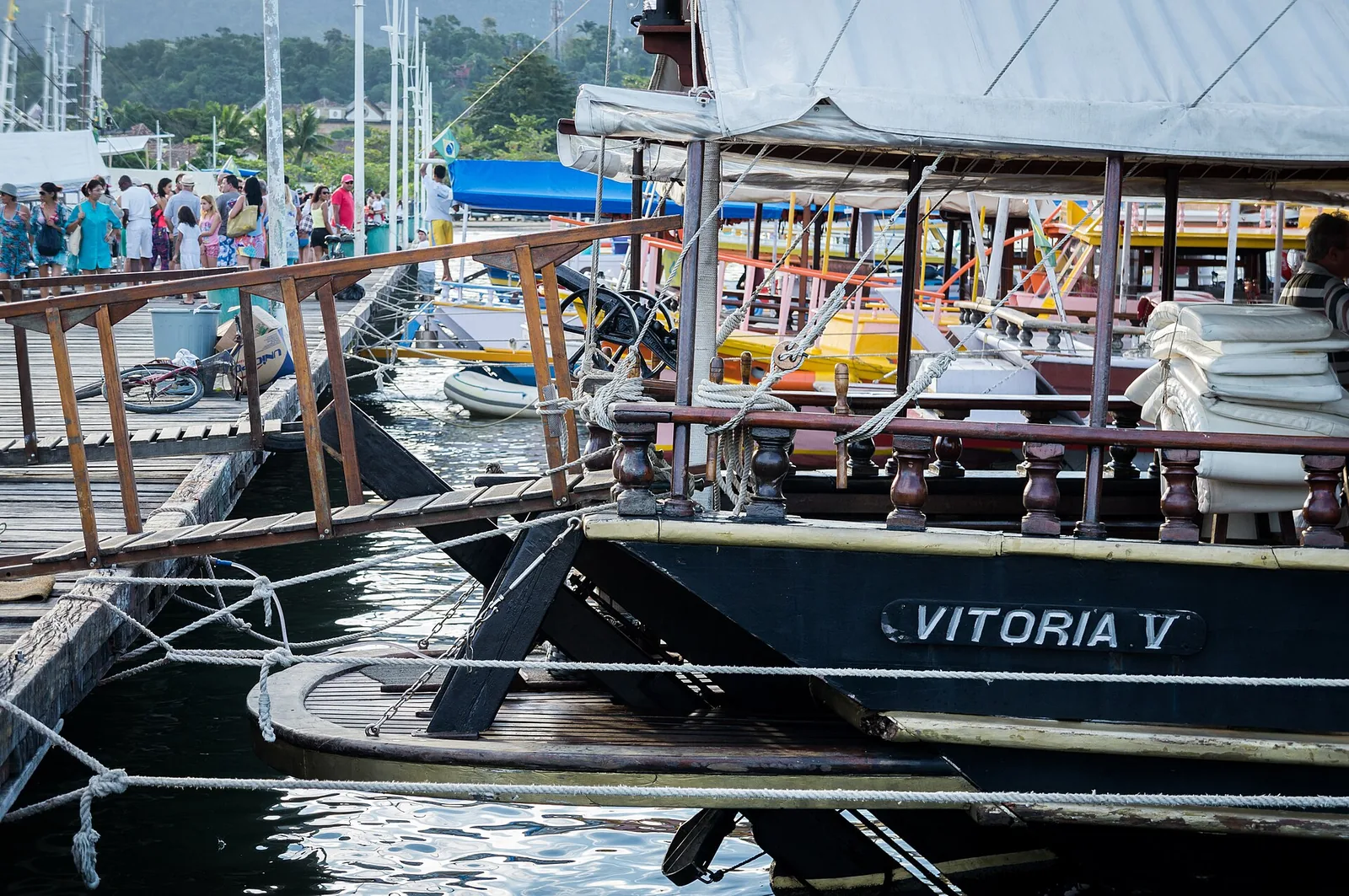
To understand the Costa Verde you have to know about the caiçara — the traditional coastal communities of the southeast, descended from a mingling of Indigenous, Portuguese and African peoples, who have lived by fishing, small-scale farming and the forest for generations. Their presence is woven into the whole region, from the fishing villages on Ilha Grande and around the bays to the boatmen who'll take you out on the water, and their culture — the canoes, the music, the relationship with the sea and forest — is part of what UNESCO recognised in listing the wider landscape. It's a living culture, not a museum piece, and respecting it is part of travelling here well. We go into it in our piece on caiçara culture.
That heritage shows up most deliciously at the table. The food of the Costa Verde is, above all, seafood: fish and prawns grilled or fried at beach kiosks, and the slow seafood stews the coast is known for, often cooked with coconut milk, palm oil, tomato and coriander. Cachaça, the sugar-cane spirit distilled in the hills around Paraty, is the regional drink, and the caipirinha its most famous expression. Eating and drinking your way along the coast is genuinely one of its pleasures; our journal guides to Brazilian gastronomy and cachaça and caipirinha culture are good companions, and the Paraty restaurants guide covers where to eat once you're here.
Getting around the region
One thing that catches people out is how movement works on the Costa Verde, because it's governed by the geography. The single coastal highway, the BR-101, is the spine: it links every town, and you travel along the coast by car or by the regular buses that run it. There is no coastal railway and no quick inland shortcut, so the road is it, and journeys take longer than the distances suggest because it winds.
Off the highway, much of the real movement is by boat. To reach Ilha Grande you cross from the mainland; to reach many of the best beaches around both Angra and Paraty you go by water rather than road; and within the bays, boats are simply how you get from place to place. This is part of the region's charm but also something to plan around: factor in ferry and boat schedules, which are friendlier outside the rush, and don't assume everything is a short drive. Our getting around guide sets out the practicalities of buses, transfers, taxis and boats, and as hosts we're glad to help guests piece together the logistics of a multi-stop coastal trip.
Costa Verde or the rest of Brazil?
Travellers planning a first trip to Brazil often weigh the Costa Verde against the other famous coasts — the northeast's beaches around Bahia, say, or the resort strips further afield. It's worth being clear about what this coast does and doesn't offer, so it lands on the right itinerary.
What the Costa Verde does uniquely well is combine. Few places in Brazil put a UNESCO colonial town, a car-free wilderness island, hundreds of bay islands, rainforest waterfalls and a serious food and drink culture within a few hours of each other and a few hours of Rio. If you want variety in a compact, scenic package, close to the country's gateway city, this is the coast. What it is not is a flat, endless-white-sand resort coast: the beaches are coves and bays rather than vast strands, the sea is calm and green rather than the bright open Atlantic of the northeast, and the weather is wetter because of all that forest. Neither is better; they're different holidays. For the broader context of where this coast sits among Brazil's shorelines, our journal piece on Brazil's coastlines is the place to look, and for the city itself, the Rio de Janeiro guide.
When to go
The Costa Verde is a year-round destination, but the experience changes with the seasons, and it's worth choosing with open eyes. The Brazilian summer — roughly December to February — brings the warmest sea, the longest days and the liveliest atmosphere, but also the heaviest rain, the biggest crowds and the highest prices, all concentrated around the New Year and Carnival holidays. The drier, cooler months generally give the clearest water and the most settled weather, which matters a great deal if snorkelling and boat trips are high on your list, since clarity depends on calm seas and an absence of run-off from the hills.
For many travellers the best of both worlds lies in the shoulder seasons on either side of summer: warm enough water, fewer people, gentler prices and a good chance of the settled, clear conditions that make the bays sparkle. It also helps to know the region's own calendar — Paraty in particular has a strong run of festivals, from the literary festival FLIP to the religious Festa do Divino, which can be a wonderful reason to visit or, if you'd rather avoid the crowds, a date to plan around. We unpack all of this in the best time to visit Paraty guide and, more broadly, in when to visit Brazil.
Common mistakes, and how to read the coast
After years of welcoming guests who arrive with the wrong mental map, I'd flag a handful of misunderstandings worth correcting before you book anything.
- Treating it as one stop. The biggest error is assuming "the Costa Verde" is a single place you visit. It's a chain. Decide which links you want and base yourself sensibly, rather than trying to sleep somewhere different every night.
- Underestimating travel time. Distances look short on a map, but the winding road and the boat schedules mean everything takes longer than you'd guess. Don't pack the days too tightly; the coast punishes a rushed itinerary.
- Expecting the wrong kind of beach. If you come picturing endless flat white sand and a flat blue Atlantic, you'll be surprised. The beauty here is coves, bays, islands and forest meeting water — calm and green rather than wide and open. Loved on its own terms, it's extraordinary.
- Skipping the boat. Some visitors spend their whole stay on land and never get out on the water, which is like visiting a vineyard and not tasting the wine. The bays are the point.
- Ignoring the weather. All that forest means rain, and rain changes everything from road safety to water clarity. Build flexibility in, and keep the boat days loose so you can grab the clear weather when it comes.
Read the coast for what it is — a sequence of small, scenic places linked by one road and a lot of water, where the forest is always close — and it falls into place. The travellers who enjoy it most are the ones who slow down to its pace rather than fighting it.
A short geography to carry in your head
If you remember nothing else, remember the shape. Rio de Janeiro sits at the northern end. Drive southwest down the BR-101 and you pass, in order, the Angra dos Reis bay with its islands and the ferry ports for Ilha Grande; then Paraty with its colonial town and quieter bay; then little Trindade just beyond; and then, crossing into São Paulo state, Ubatuba and the road on toward Santos. The mountains are always on your inland side, the sea always on the other, and the forest is everywhere. That single line — city, island bay, colonial town, beach village, then the São Paulo coast — is the whole region in a sentence, and once it's in your head, every guide and itinerary you read afterward will slot neatly onto it.
A coast that rewards the long view
The thing I'd most want a first-time visitor to take from all this is that the Costa Verde is not a single sight to be ticked off but a region to be read. Its pleasure is cumulative — the drive past the islands, the morning on a boat, the evening in a colonial street, the walk through forest to a waterfall, the slow day on a car-free island — and it adds up to something more than any one of its parts. Understand the shape of it, choose your base well, give it enough time, and pick your season, and it will give you one of the most varied and beautiful weeks in Brazil.
We see the whole of it laid out from our terrace above the Bay of Paraty: the islands of the Ilha Grande Bay away to the north, the green wall of the Serra do Mar behind, and the colonial town just below. It is, I'll admit, a partial vantage point — but it's a good one from which to plan a coast like this. If you'd like help shaping a Costa Verde trip around a stay at the chalet, or simply want a steer on which pieces to combine, we're glad to talk it through; reach us any time on the contact page, and dive into the individual guides from our Paraty hub whenever you're ready to go deeper.
Frequently asked questions
The Costa Verde, or Green Coast, is the stretch of coast running roughly from the Rio de Janeiro area southwest toward Santos in São Paulo state. It is named for the dense Atlantic Forest that covers the mountains right down to the shoreline. Its headline destinations include Angra dos Reis, Ilha Grande, Paraty, Trindade and Ubatuba.
Because of the forest. The Serra do Mar mountain range, cloaked in Atlantic Forest, runs close to the coast for the whole length of the region and in many places drops straight into the sea. That wall of green meeting blue water is what gives the Costa Verde its name and its character.
It lies on Brazil's southeast coast between Rio de Janeiro and São Paulo, both of which have international airports. Most visitors fly into Rio and drive or take the bus down the coastal BR-101 highway; the São Paulo side is reached the same way from the south. The whole coast is linked by this one road.
The classic line-up is Angra dos Reis for its island-filled bay, Ilha Grande for car-free island life, Paraty for its colonial town and quiet bay, Trindade for laid-back beaches and, on the São Paulo side, Ubatuba for its long coastline of beaches. Most trips combine two or three of these.
Part of it is. In 2019 UNESCO inscribed 'Paraty and Ilha Grande – Culture and Biodiversity,' Brazil's first mixed cultural and natural World Heritage Site, covering Paraty's historic centre, Ilha Grande and several Atlantic Forest protected areas. The wider Costa Verde is not all listed, but this is its protected core.
You can taste it in three or four days based in one place, but a week lets you combine a town, an island and the bays without rushing. A common plan is a couple of nights in Rio, a few based around Paraty, and a day or two for Ilha Grande or the Angra islands.
The drier, calmer months generally give the clearest water and the most reliable weather, while the Brazilian summer brings the warmest seas but the biggest crowds and the most rain. The shoulder seasons on either side of summer are often the sweet spot for fewer people and settled conditions.