In this guide
Brazil has something close to seven and a half thousand kilometres of Atlantic coast, and one of the first things you learn, planning a trip here, is that this is not a single coastline at all. The water off Santa Catarina in the deep south is a different colour, a different temperature and a different mood from the water off Alagoas in the northeast. The villages are built differently. The food changes. Even the rhythm of the day shifts as you move up the map. So the useful question is never "is the Brazilian coast beautiful?" — it plainly is — but "which part of it suits the holiday I actually want?"
This is a guide to answering that. We host travellers on the Costa Verde, the green, island-strewn coast that begins just south-west of Rio de Janeiro, so we will say plainly where our affections lie. But we travel the rest of the country too, and we send guests on to other coasts often enough to have honest opinions about them. What follows is a tour of Brazil's great coastlines for the discerning traveller — the character of each, the season that shows it best, who it is for, and the kind of stay that fits. Read it as a way of choosing, not a ranking.
We will start where we know best, and where, for a particular kind of traveller, the case is strongest: the cultured, near-Rio coast that wraps around the Bay of Ilha Grande.
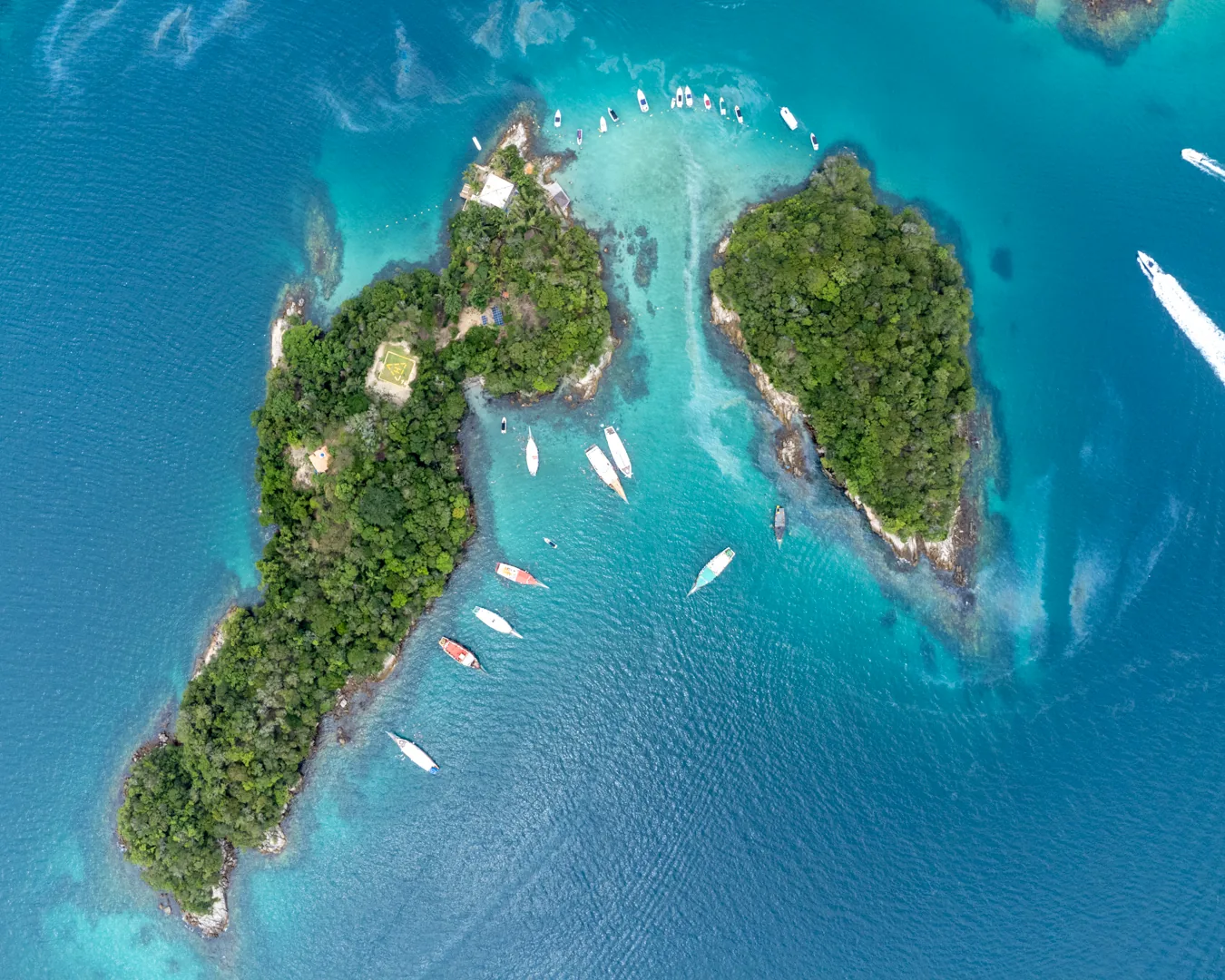
The Costa Verde: the cultured, near-Rio coast
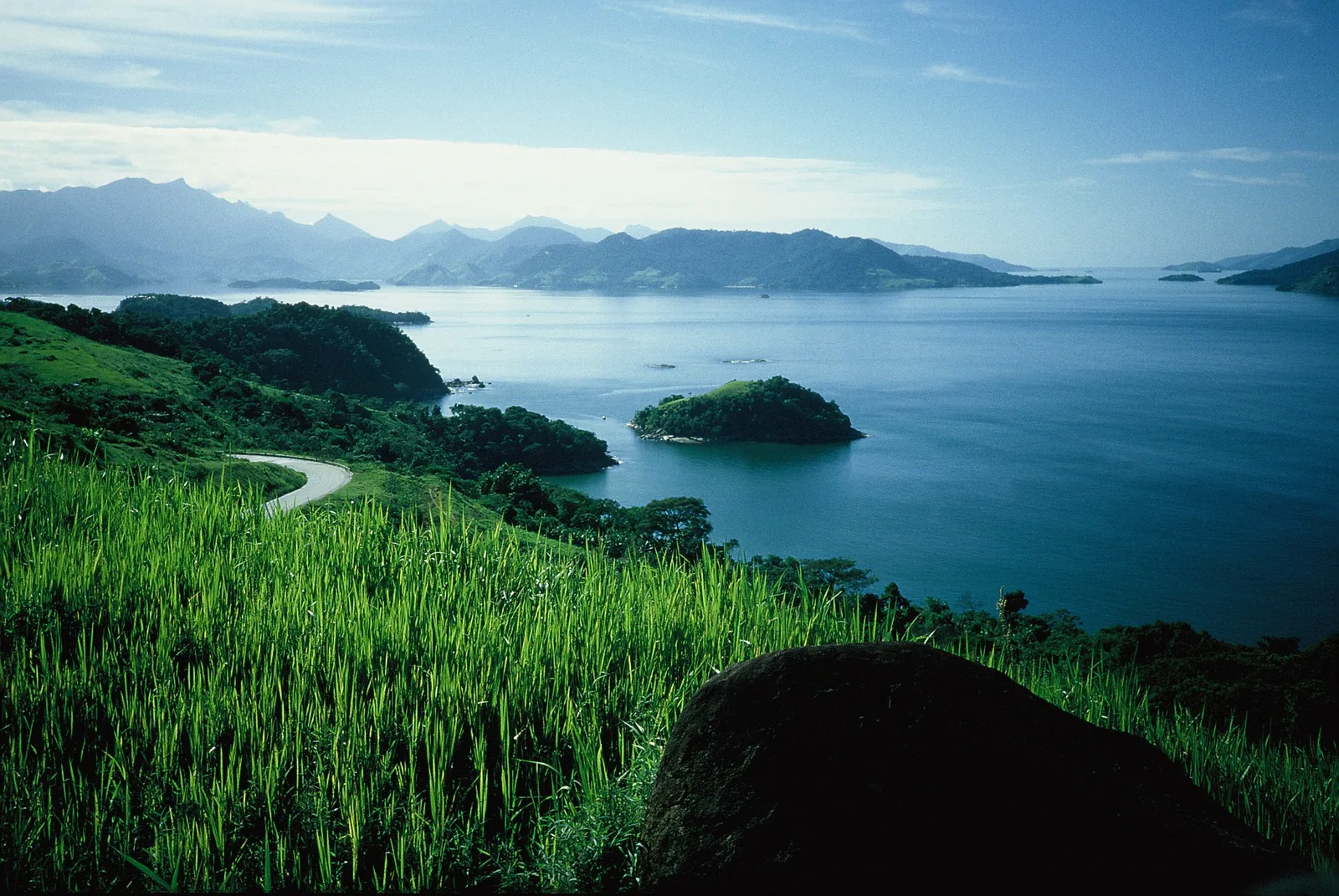
The Costa Verde — literally the Green Coast — runs from the edge of Rio de Janeiro south-west toward the border with São Paulo state. It earns its name. The Serra do Mar mountains come down almost to the water, draped in dense Atlantic Forest, and the sea fills in around them in a long, sheltered bay studded with islands. The three names to know are Angra dos Reis, the mainland town and the archipelago of islands at the northern end; Ilha Grande, the large car-free island that sits across the mouth of the bay; and Paraty, the colonial town at the southern end. Together with their forests and waters they form a single UNESCO World Heritage property, Paraty and Ilha Grande – Culture and Biodiversity, inscribed in 2019 as Brazil's first mixed natural-and-cultural site. That dual listing tells you exactly what makes the coast distinctive: it is scenery and history in the same frame.
What sets the Costa Verde apart from Brazil's other beautiful coasts is proximity and texture. It is the closest of the great coasts to Rio — Paraty is roughly four hours by road — so you can fly into one of the world's most famous cities, spend a few days, and then drive to genuine seclusion without an internal flight. And it is not a blank-sand resort coast. Paraty is a living colonial port, its centre a grid of whitewashed houses and uneven stone streets laid down in the eighteenth century, when this was the Atlantic end of the Caminho do Ouro, the road down which gold from the interior was shipped to Lisbon. You can swim from a deserted cove in the morning and have dinner that evening in a three-hundred-year-old room. Few coasts anywhere give you both.
The character
The defining experience here is the bay itself — more than sixty islands and a coastline so folded that it is easiest, and most pleasant, to explore by boat. A day on a traditional wooden schooner, dropping anchor at a string of swimming stops, is the classic way to see it; our notes on Paraty boat tours cover how to do it well and how to do it privately. On land, the forested mountains hold waterfalls and the old gold road; offshore, Ilha Grande has some of the finest beaches in the country, including the long pale sweep of Lopes Mendes, reached only on foot or by boat. The water is calm and warm, the colours green and silver rather than tropical turquoise — this is southern Atlantic water, clear but not Caribbean.
A practical word on the boats, because it shapes the whole experience: the big public schooners that leave the main pier are cheerful and inexpensive but crowded, and they all sail to the same handful of stops at the same time. The day-boats arrive at the popular coves around late morning, so the trick, if you want the famous spots to yourself, is to go early or to charter a smaller private boat and set your own course — a captain who knows the bay can drop you at empty beaches the schedules never reach. For couples and families both, a private boat day is, in our experience, the single best thing you can do on this coast. The other defining feature is the rhythm of land and sea: a morning swimming off islands, an afternoon in the cool of a forest waterfall, an evening among the lamplit stone streets of the old town. Few coasts let you change the scene so completely without ever changing your base.
The season
The Costa Verde is at its best in the warm half of the year, roughly October through April, with the most settled, swimmable weather around the turn of the year. That is also the busiest stretch, particularly the Brazilian summer holidays in January and February and the long Carnival weekend. We tend to point guests toward the shoulder months — late March to May, or September into October — for warm days, lower prices and far fewer day-trippers. For a fuller breakdown, see our guide to the best time to visit Paraty. It rains here in the warm months, often in short, heavy bursts; a good base with a view and a covered terrace turns a rainy afternoon into one of the better parts of the trip rather than a loss.
Who it's for, and the stay that suits it
The Costa Verde suits the traveller who wants more than a beach: couples after a quiet, scenic escape with real culture nearby; families who want calm water and short boat trips rather than long transfers; friends who want a base to explore from; the solo traveller who wants somewhere safe, beautiful and easy to move around. It is forgiving and inclusive in a way that some of Brazil's more fashionable coasts are not — you do not need to be anyone in particular to enjoy it, and the town itself, with its galleries, its festivals like FLIP and the Festa do Divino, and its restaurants, gives you somewhere to go on the days you don't want the water. There is plenty to explore around Paraty on foot and by car as well as by boat. The natural way to stay is a private villa in the hills above the bay, where you have the view, the pool and the quiet to yourself and the town a short drive below. That is, candidly, what we offer: the chalet sits around four hundred metres above the Bay of Paraty, with an infinity pool looking out over Paraty, Angra and Ilha Grande at once. For a sense of how a few days here actually unfold, our Paraty itineraries lay out some options, and the broader Costa Verde overview sets the whole region in context.
Brazil does not have one great coast. It has half a dozen, and the art of planning a trip here is choosing the one that matches the holiday you actually want.
Angra dos Reis and the islands
It is worth dwelling on the northern end of the same bay, because Angra dos Reis is a destination in its own right and a slightly different proposition from Paraty. Where Paraty is about the town, Angra is about the water. The name refers both to the mainland town and to an archipelago — the local count runs to hundreds of islands, the most quoted figure being well over three hundred — scattered across a bay so intricate that from the air it has been likened to the shape of a lung. This is yacht country: a coast of sheltered anchorages, clear coves like the much-photographed Lagoa Azul, and small private islands. It is also where Rio's well-to-do keep their boats, so the marinas are good and the day-charter scene is established.
For the traveller, the appeal of Angra is simply more of the bay's best feature — islands to swim off, snorkelling over rocky points, long lazy days on the water — with the option of basing yourself nearer the marinas if a boat is the centre of your trip. We think the smarter play for most guests is to stay in the quieter, more characterful south near Paraty and take in the Angra islands by boat, since the two halves of the bay flow into each other. But if your holiday is built around the water above all else, the Angra dos Reis guide goes into the practicalities. The season tracks Paraty's exactly — they are the same bay.
Ilha Grande: the road-free island
Across the mouth of the bay lies Ilha Grande, and it deserves to be considered separately because staying on the island is a genuinely different holiday from staying on the mainland. There are no cars. You arrive by boat — about an hour or so from the Costa Verde ports — and from then on you move on foot, by trail or by small boat. The main village, Abraão, is a cheerful, low-key place; beyond it the island is mostly protected forest and a coastline of beaches that consistently appear on lists of Brazil's best. Lopes Mendes, on the open Atlantic side, is the famous one: a long, flat ribbon of fine pale sand backed by forest, with no development on it at all. Reaching it takes a boat then a forest walk, or a longer hike, and that effort is exactly why it stays beautiful.
Ilha Grande rewards walkers and people who like their days uncomplicated. The island's network of trails ranges from gentle coastal paths to full-day crossings, and the snorkelling and diving around its points and shipwrecks are among the best in the region. Many of our guests do it as a long day trip from the mainland — see our day-trip guide — which gives you the best beaches without giving up the comforts of a proper base. Those who want to immerse themselves can stay a night or two; the complete island guide weighs that up. Either way the season is the southern coast's: best in the warm months, and worth checking for sea conditions, since the open-Atlantic beaches can be lively.
Búzios and the Costa do Sol
Swing around to the other side of Rio and the mood changes. North-east of the city, the Costa do Sol — the Sun Coast — is drier and brighter than the green coast to the south-west, and its star is Armação dos Búzios, usually just called Búzios. It was a quiet fishing village until 1964, when the French actress Brigitte Bardot spent a few months here and, more or less single-handedly, put it on the map. Today it is Brazil's most polished beach town: a slim peninsula, around eight kilometres long, lined with more than twenty small beaches, each with its own personality, and threaded together by the cobbled Rua das Pedras with its boutiques, galleries and restaurants.
Búzios is for the traveller who wants the social side of a beach holiday as well as the sand. The peninsula's geography is its charm: because it points out to sea, you can chase calm water on the sheltered beaches in the morning and surf or breeze on the open ones in the afternoon, all within a short drive. The dining and shopping are genuinely good, the evenings have a gentle buzz, and the whole place is walkable and easy. It is more about scene than seclusion — if you want to be entirely alone with a view, this is not the coast for it — but for couples and groups who like a bit of life around them, it is hard to fault.
The season is the southern warm season again, October to April, peaking over the New Year and Carnival when Búzios fills with cariocas from the city. It can be busy. We'd suggest the shoulder months for the same reasons we suggest them for Paraty. The natural stay here is a design-led pousada or a villa on one of the quieter beaches like Ferradura or João Fernandes, near enough to walk into town but set back from it. Búzios and the Costa Verde make a natural pairing for a longer Brazil trip, since both are reachable from Rio by road and they balance each other — one social and sun-bright, the other green and quiet.
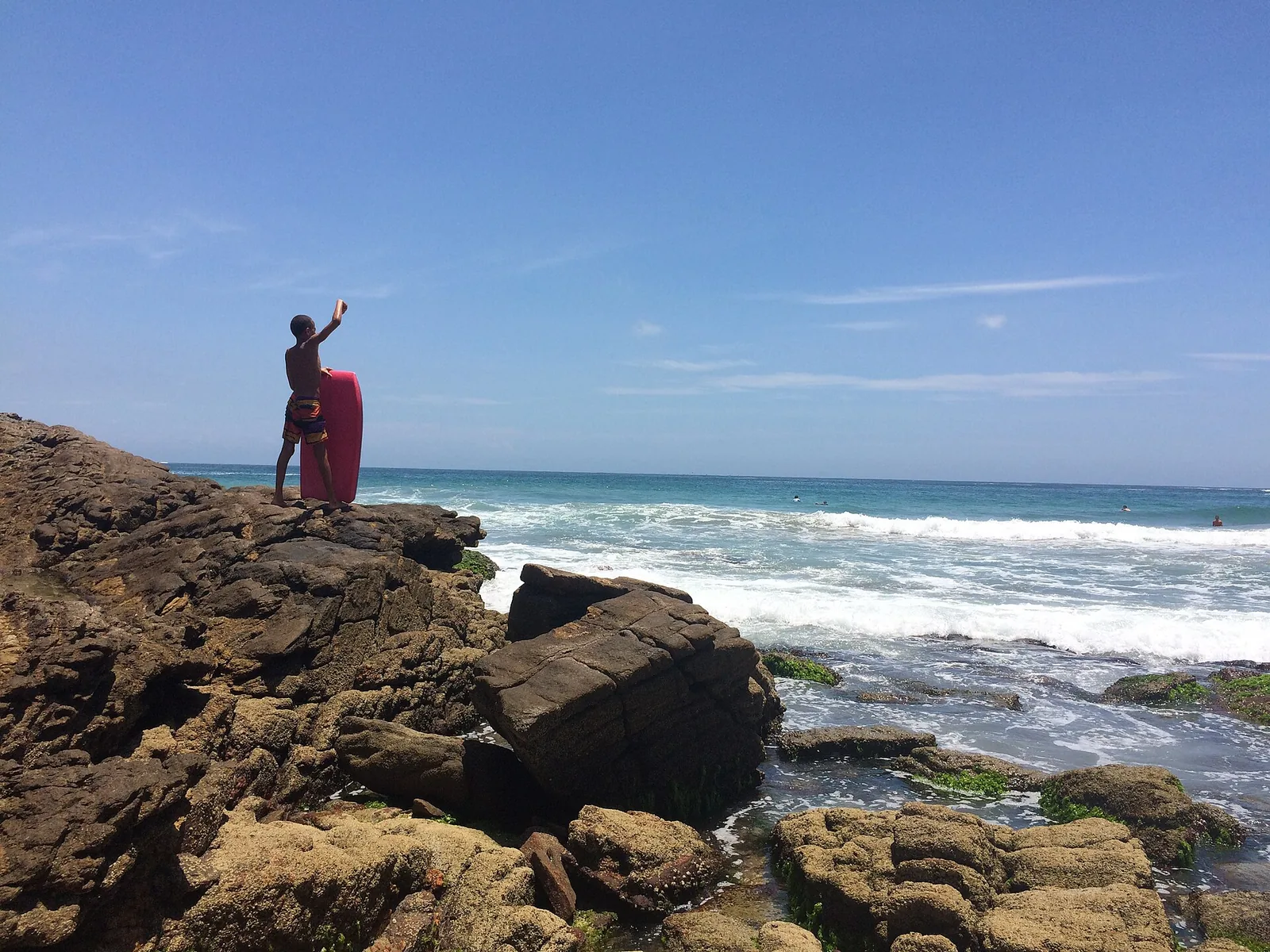
Trancoso and Bahia's Discovery Coast
For something more bohemian, fly north to Bahia and the Costa do Descobrimento, the Discovery Coast, so named because it is roughly where the Portuguese first made landfall in Brazil in 1500. The whole stretch is layered with Atlantic Forest, indigenous Pataxó territory and a clutch of small beach towns, of which Trancoso is the one luxury travellers come for. Its history is unusual: a sleepy Bahian village rediscovered by a wave of artists and free spirits from São Paulo in the 1970s, who built a particular kind of barefoot sophistication on top of the existing fishing community. That layering is still what defines it.
The centre of Trancoso is the Quadrado, a long grassy square lined with brightly painted former fishermen's cottages and anchored at one end by a simple whitewashed church on a bluff above the sea. It is one of the most photographed places in Brazil for good reason — at dusk, with the lights coming on in the little houses, it is genuinely lovely. The cottages now hold some of the country's best small hotels, galleries and restaurants, but the scale stays low and the feel stays relaxed. Below the bluff, a coast of red cliffs, palm-backed sand and warm Bahian water runs for miles.
Around Trancoso, the beaches earn their reputation: long stretches of pale sand backed by coconut palms and the occasional river mouth, with the warm, gentle water of the Bahian coast. Nearby villages like Arraial d'Ajuda and Caraíva — the latter still without paved roads or much in the way of cars — give you somewhere quieter to wander, and the whole coast is good for slow boat trips, horseback rides along the sand, and the kind of unstructured days the place is built for. The wider Discovery Coast also carries real natural weight: its Atlantic Forest reserves are recognised by UNESCO as a World Heritage site for their biodiversity, so the green behind the beaches is not just scenery but one of the most important fragments of rainforest left on the continent.
Trancoso is for the traveller who wants barefoot luxury rather than polished resort luxury: long lunches, a slow pace, design-conscious places to stay, and a dress code that tops out at a good linen shirt. It suits couples and families who like a creative, low-key atmosphere. The Bahian season is the inverse of what you might expect to favour, in a sense — it is warm year-round, but the driest, most reliable weather tends to run from around September through February or March. The town gets fashionable and full over the New Year. The way to stay is one of the boutique houses on or near the Quadrado, several of them built in collaboration with local Pataxó artisans; the point of Trancoso is to dissolve into its pace, not to sightsee from it.
Fernando de Noronha: the protected archipelago
If Trancoso is barefoot and easy, Fernando de Noronha is rarefied and earned. This volcanic archipelago lies more than 350 kilometres off the northeast coast, reachable only by air from cities such as Recife and Natal, and it is the closest thing Brazil has to a strictly rationed paradise. Most of it is protected: a marine national park covers the great majority of the archipelago, the number of visitors on the islands at any one time is deliberately capped, and everyone pays a daily environmental tax plus a separate marine-park fee. None of that is bureaucratic friction for its own sake — it is the reason Noronha still looks the way it does.
And it looks extraordinary. The water is some of the clearest in the South Atlantic, the beaches — Baía do Sancho is the famous one, reached down a ladder through a cleft in the cliff — regularly top national and global rankings, and the marine life is the real draw. Spinner dolphins gather here in numbers, sea turtles nest on the beaches, and the diving and snorkelling are world class. The conservation work is serious and visible: the long-running TAMAR sea-turtle project has a station here, and the rhythms of the island bend around protecting what makes it special.
Noronha is for the traveller who will trade convenience and a certain amount of money for genuine wildness and water. It is not a place you drop into; you plan it, you book the fees and the limited beds well ahead, and you accept that the infrastructure is modest by design — there are excellent small pousadas but no sprawling resorts, and prices are high because everything has to be flown in. The best conditions for diving and clear water tend to run from around August to December, while the Atlantic-facing side can be lively earlier in the year. For the right traveller it is unforgettable; for someone who wants ease and a wide choice of restaurants, the mainland coasts will be happier.
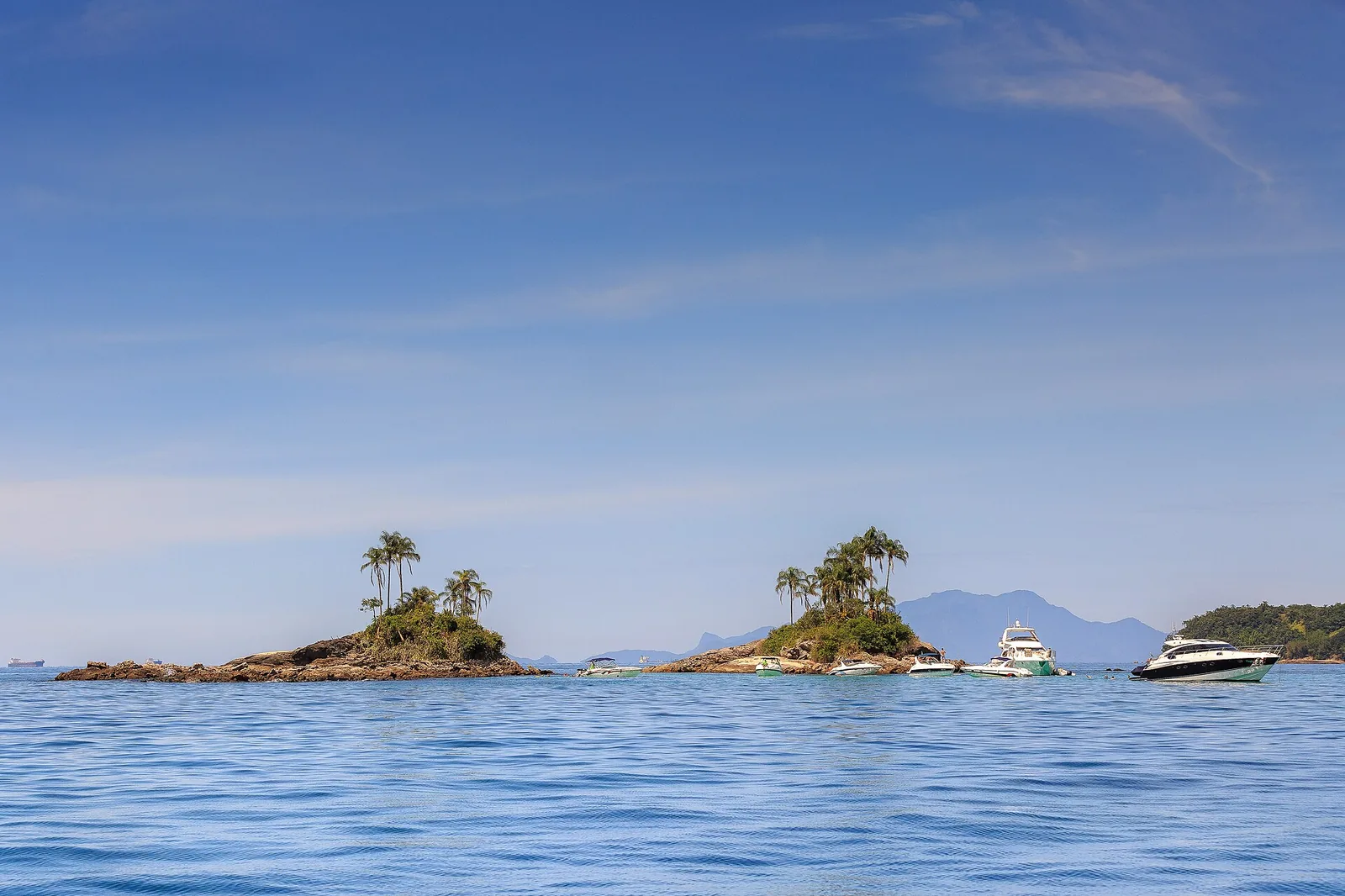
The northeast: Maragogi, Alagoas and Jericoacoara
The wider northeast is where Brazil delivers the postcard tropics: warm water year-round, white sand, coconut palms and a string of beach destinations that range from the developed to the wonderfully remote. Two stand out for travellers chasing that particular dream.
Maragogi and the Alagoas coast
The state of Alagoas has some of the most beautiful, and least crowded, beaches on the whole coast. The water is warm and a genuine turquoise, and the signature experience around Maragogi is the galés — natural pools that form over the reef offshore at low tide, where you can float in clear, shallow, bath-warm water a good way out to sea. The whole stretch has earned the nickname "the Brazilian Caribbean," and unusually it largely lives up to it, with far less development than the better-known parts of neighbouring Pernambuco. It is an easy, gentle coast — good for families, good for anyone who simply wants to swim in clear warm water and not much else. The timing of the reef trips is tide-dependent, so a good local operator matters; the dry, sunny season here runs broadly from around September to March.
Jericoacoara, Ceará
Further up, in Ceará, Jericoacoara — "Jeri" to everyone — is a different flavour of northeast: a former fishing village set among enormous dunes, inside a national park since 2002, with development tightly restricted and the streets still made of sand. The classic Jeri images are the Sunset Dune, climbed each evening for the view; the Pedra Furada, a great perforated rock arch on the beach; and the inland lagoons, Paraíso and Azul, whose still, blue-green water and white sand can look almost Polynesian. It is a place for wind and water sports — the kitesurfing here is famous — and for travellers who like their paradise a little raw and a little remote. Getting there involves a flight to Fortaleza and then a long transfer, often partly across the sand, which is part of why it stays special. The wind-and-sun season runs strongest from around July to December.
Florianópolis and Santa Catarina
Finally, the deep south, which surprises people. Florianópolis — "Floripa" — is the capital of Santa Catarina state and sits largely on an island with something like forty-two beaches, from long surf beaches on the open Atlantic to calm bays and the big inland Lagoa da Conceição, a lagoon ringed by hills and good for paddleboarding and windsurfing. The water is cooler and a clear green-blue rather than tropical turquoise; the landscape is greener and more temperate; and the food leans toward the sea, with the island known as something of an oyster capital. It is, in feel, the most "southern" of Brazil's coasts — more European in places, with a strong Azorean heritage in the older fishing villages.
Santa Catarina is for the traveller who wants variety in a single base — surf one day, calm bay the next, lagoon sports, good seafood — and who is travelling in the southern summer, because the season here is short and clear: December to March is the window, and outside it the water gets cold and the days grey. It draws a lot of Argentine and Brazilian holidaymakers in peak summer, so the north of the island can be busy; the wilder south stays quieter. The natural stay is a house or pousada near whichever stretch of coast matches your week — surf, calm, or lagoon.
How to choose your coast
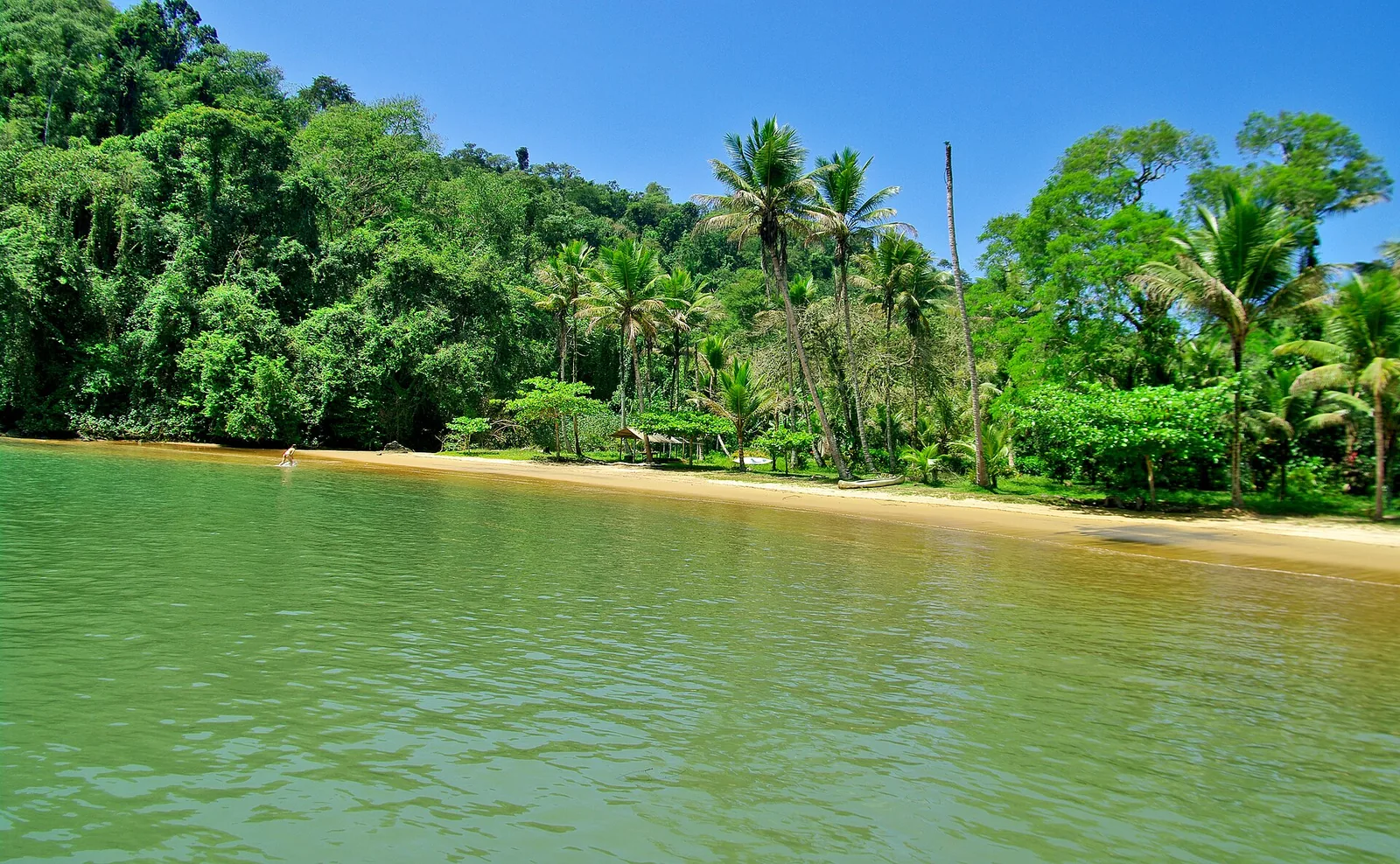
If you take one thing from all of this, let it be that Brazil does not have one great coast. It has half a dozen, and the art of planning a trip here is choosing the one that matches the holiday you actually want. To make that concrete:
- Closest to Rio, scenery plus culture, calm water: the Costa Verde — Paraty, Angra, Ilha Grande. The most forgiving all-rounder, and our home patch.
- Chic, walkable, social beach town near Rio: Búzios and the Costa do Sol.
- Barefoot-bohemian Bahia, design and long lunches: Trancoso and the Discovery Coast.
- Rationed, wild, world-class water and wildlife: Fernando de Noronha — for those willing to plan and spend.
- Postcard tropics, turquoise water, easy and warm: Maragogi and Alagoas; Jericoacoara for something rawer and windier.
- Variety in one base, southern summer only: Florianópolis and Santa Catarina.
For a longer trip, the coasts pair well. The most natural luxury itinerary for a first proper visit, in our experience, is a few days in Rio, then the Costa Verde for the green, quiet, cultured end of the trip — and, if you have the time, either Búzios to the north for a contrasting beach scene, or a flight up to Bahia or Noronha for the tropical north. You can lean as remote or as social as your mood runs.
Getting there and getting around
One thing that separates the southern coasts from the rest is how you reach them, and it is worth understanding before you plan, because it changes the shape of a trip. The Costa Verde and Búzios are the two great coasts you can reach from Rio by road — no internal flight, no lost day. Paraty is roughly a four-hour drive south-west of Rio along a scenic coastal highway; Búzios is a similar distance to the north-east. We always arrange a private transfer for arriving guests rather than leaving them to the buses or to driving an unfamiliar road, and the drive itself, hugging the green coast, is part of the pleasure rather than a chore.
The other coasts mean flying. Trancoso is reached via the airport at Porto Seguro in southern Bahia, then a short onward transfer; Fernando de Noronha is an air-only destination from Recife or Natal, with capped numbers and fees to arrange ahead; the northeast beaches hang off regional hubs like Recife, Maceió and Fortaleza; and Florianópolis has its own airport but is realistically a southern-summer destination only. The lesson for itinerary-building is simple. If your time is short and you want minimum friction, stay south and travel by road — Rio plus the Costa Verde, perhaps with Búzios, is a complete and easy trip. If you have a week or more and want the tropical north or the wild islands, build the internal flights in deliberately and give each leg enough room to be worth the journey. Whichever you choose, we can help arrange the transfers, the boats and the connections; tell us your dates and we will make the logistics disappear.
Why we keep coming back to the Costa Verde
We will end honestly, where we began. Having travelled all of these coasts, the one we chose to live and host on is the Costa Verde, and the reasons are the ones we have laid out: it is close to Rio, so it costs you no extra flight and no lost day; it is genuinely beautiful in the green, layered, mountains-meet-the-sea way rather than the blank-sand way; and it carries real history, the colonial town and the gold road and the UNESCO listing, alongside the beaches and islands. It is the coast where you can do the most different things — boat, hike, swim, explore a living town, do nothing at all on a terrace above the bay — without ever moving your base. For the traveller who wants substance with their scenery, it is the most complete coast in Brazil.
If that is the holiday you are after, the practical starting points are our Costa Verde overview for the region, the chalet for where to stay above the bay, and the wider journal for more on the food, the spirit and the culture of this coast. When you have a sense of your dates and your party, get in touch and we will help you shape the trip — and tell you, plainly, if another of these coasts would suit you better. The point of knowing all of them is being able to send you to the right one.
Frequently asked questions
There is no single answer, because Brazil's coasts are genuinely different in character. For green islands and colonial history near Rio, the Costa Verde around Paraty and Angra is hard to beat. For turquoise water and white sand, the northeast — Alagoas, Ceará — and Fernando de Noronha lead. For a chic, walkable beach scene, Búzios; for bohemian Bahia, Trancoso.
The Costa Verde near Paraty offers the easiest combination of comfort, scenery and culture within a few hours of Rio. Trancoso in Bahia and Fernando de Noronha are the other two destinations most associated with high-end Brazilian travel, though Noronha is remote and tightly controlled for conservation reasons.
The Costa Verde, or Green Coast, runs roughly from Rio de Janeiro south-west toward São Paulo state. Its heart is the Bay of Ilha Grande, with Angra dos Reis, the island of Ilha Grande, and the historic town of Paraty. Paraty is about four hours by road from Rio.
Broadly, the southern coasts (Costa Verde, Búzios, Santa Catarina) are at their best from roughly October to April, the warm season, though that overlaps with the busy Brazilian summer. The northeast is warm year-round and is often best from September to February. We cover the timing of each coast below.
Only by air. There are no ferries for tourists; you fly from mainland cities such as Recife or Natal. Visitor numbers are capped, and everyone pays an environmental tax plus a marine-park fee, so plan and book well ahead.
Yes. The calm, island-dotted bay, short boat trips and gentle beaches make it one of the more relaxed coasts to travel as a family, while the same scenery and seclusion suit couples. A private villa works for both — see our notes on the chalet for how we set up for each.
The Costa Verde is the nearest of the great coasts to Rio, beginning just south-west of the city. Búzios, on the Costa do Sol, lies a similar distance to the north-east of Rio. Both are reachable by road in a single drive, which is part of why they are so popular as escapes from the city.