In this guide
The south coast of Ilha Grande faces the open Atlantic, and it shows. While the beaches near the main village sit on calm, glassy water, Aventureiro takes the swell head-on: a curve of coarse gold sand backed by forest, with a single coconut palm that grows sideways out of the rock and leans low over a shallow tidal pool. It is the most photographed tree on this stretch of the Rio de Janeiro coast, and the beach around it is one of the harder places on the whole Costa Verde to reach. That difficulty is not a flaw. It is the reason Aventureiro still looks the way it does.
Visiting Aventureiro Ilha Grande is not something you drift into on a whim. There is no road to it, no jetty of restaurants, no line of beach clubs. What you find instead is a small fishing community, a handful of family campsites, a protected reserve of Atlantic forest running straight down to the water, and an ocean that can be turquoise and gentle one morning and heaving with white water the next. People come for exactly that rawness, and the ones who plan properly leave wishing they had given it two days instead of one.
This guide is written from the Paraty side of the bay, because that is where we sit. From the deck at the chalet, four hundred metres up the hillside, you can look out over the water toward Angra dos Reis and Ilha Grande and understand at a glance why the island is a full expedition rather than a quick hop. Below is everything we tell guests before they set off for the wild south: where it is, how to get there, whether to camp or day-trip, what the rules mean in practice, and how to come home to a warm shower and a quiet swim at the end of it.
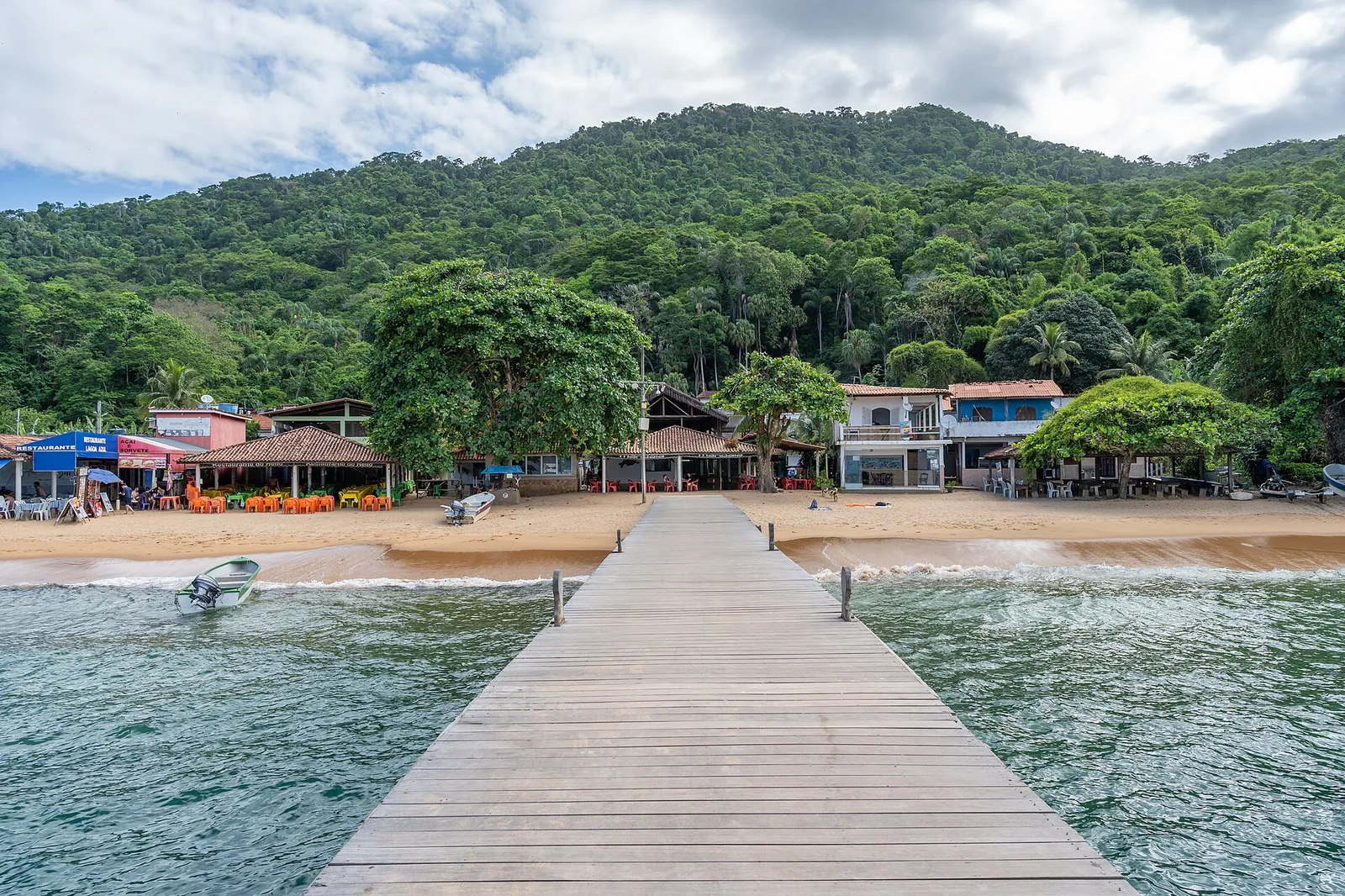

Where Aventureiro sits — and why the south is different
Ilha Grande is a large, mountainous island off the town of Angra dos Reis, roughly midway between Rio de Janeiro and Paraty. Most visitors know only its north-facing side, where the main village of Vila do Abraão collects the ferries and where the easy, calm-water beaches sit within a short boat ride. That side of the island is sheltered by the mainland and by its own high ridge, so the water is usually flat and clear.
The south coast is another world. It looks straight out into the open ocean with nothing between it and the swell, so the beaches here are wilder, the sand coarser, and the sea often loud. Aventureiro is the best-known of them, tucked into the south-west corner, with its neighbours Parnaioca, Caxadaço, Meros and the fishing village of Provetá strung along the same exposed shoreline. Behind all of them rises dense, protected forest, and there are no roads linking any of it. You travel between these places by boat or on foot, the way people have for generations.
That separation is the whole character of the place. The north side has pousadas, kayak rentals, dive shops and a nightlife of sorts. The south has fishing boats pulled up on the sand, a scatter of simple campsites, and long stretches where you will not see another building. If your idea of a beach day includes a waiter and a cold draught beer at a table, the south is not for you. If it includes walking to the far end of an empty beach and hearing nothing but surf and cicadas, this is one of the last places near Rio that still delivers it.
Aventureiro is not somewhere you pass through on the way to somewhere better. It is the end of the line, and that is exactly why it stays the way it is.
The leaning palm — what the photo does not tell you
The single image that has made Aventureiro famous is the coqueiro deitado, the leaning coconut palm. It grows out of the rocks at the eastern end of the beach and bends almost horizontally, low over a shallow natural pool that the tide keeps topped up. In photographs it looks like a piece of set design. In person it is smaller and more precarious than most people expect, and there is usually a short, good-natured queue of people waiting to sit on it.
A few honest notes about the palm. First, it is a living tree in a fragile spot, and it has taken years of foot traffic; treat it gently, sit rather than climb, and do not hang off the crown. Second, the pool beneath it is the calmest, safest water on the beach, which makes it perfect for a float and for families with small children — but it is also the busiest corner for the same reason. Third, the light. For the cleanest photograph without a crowd, you want to be standing there early, soon after the first boats arrive, or late in the afternoon once the day-trippers have started back. The middle of the day, in high season, is when the pool fills up.
Beyond the palm, the beach itself is what stays with people. It is a long, gently curving bay, backed by palms and forest, with a small river mouth and clean, coarse sand that squeaks underfoot. Because it faces the ocean, the water clarity is often extraordinary on calm days — a deep, glassy green — and the swell that rolls in gives the whole place a rhythm the sheltered north beaches lack. It is, quite simply, one of the finest beaches in the state, and the effort to reach it is written into every quiet metre of it.
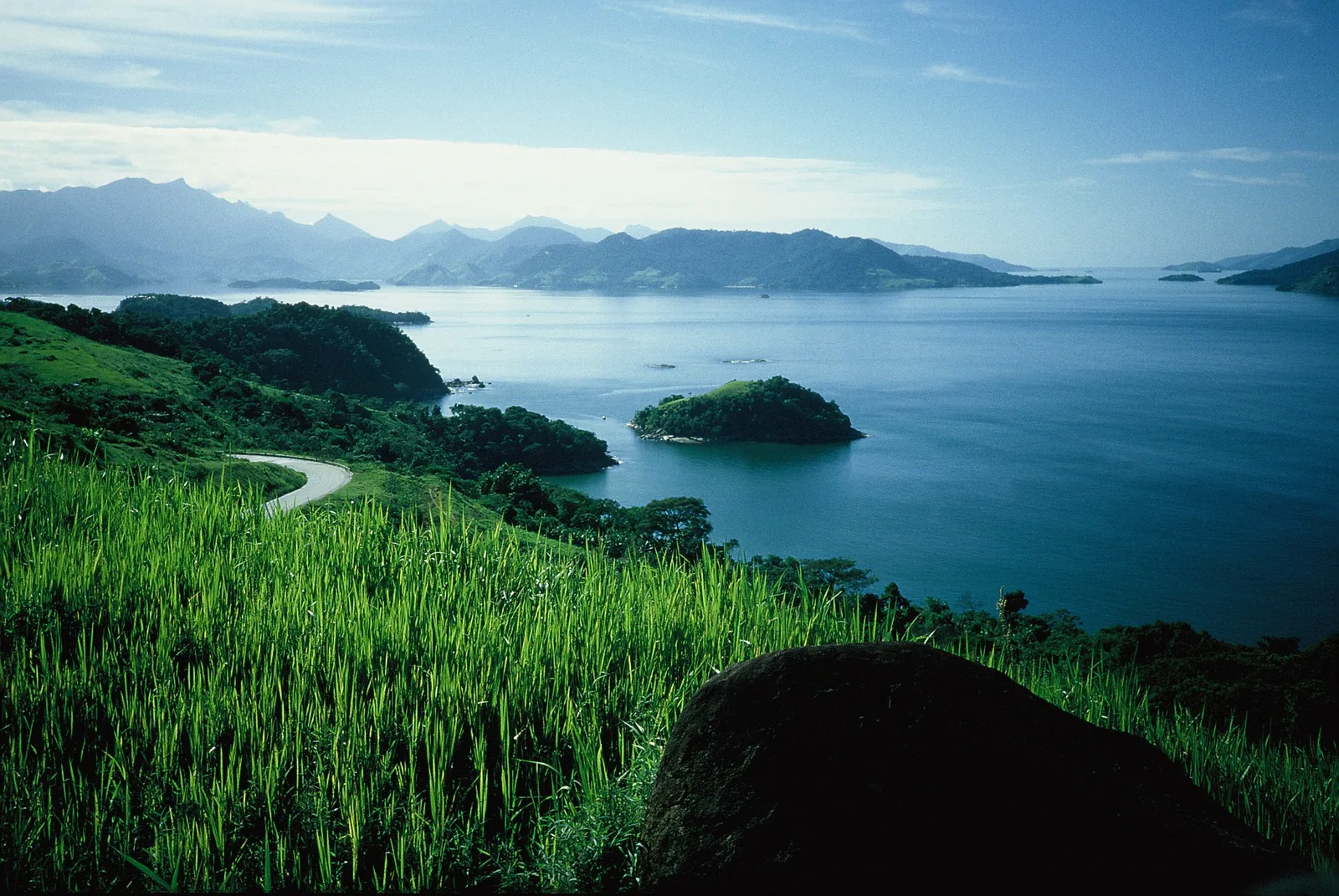
A protected place — the reserve and what the rules mean for you
Aventureiro is not merely remote by accident. It sits inside a state sustainable-development reserve, the Reserva de Desenvolvimento Sustentável do Aventureiro, created in 2014 out of land that had previously been a strict biological reserve and a marine park. The distinction matters. A sustainable-development reserve is designed to protect both the ecosystem and the traditional community that lives inside it — in this case the caiçara families, descendants of fishing people who have worked this coast for generations.
For a visitor, that legal status translates into a few concrete realities, and it is worth understanding them before you arrive rather than being surprised on the day.
There is a daily visitor cap
Access to the beach is limited to a set number of people per day, in the region of a few hundred, precisely so that the place is never overrun. Entry is controlled and issued through an official authorisation, which is free, but which has to be arranged. In practice, if you book a place at one of the family campsites or travel with an established boat operator, they handle the authorisation and the numbered wristband for you as part of the arrangement. If you are planning to arrive independently, sort this out in advance through the official channel in Angra dos Reis. Turning up unannounced on a busy summer weekend is how people end up turned away.
You carry out everything you bring in
There is no rubbish collection service waiting for you on the sand. The reserve runs on a simple, old principle that the community states plainly: take nothing but photographs, leave nothing but footprints, kill nothing but time. Every wrapper, bottle and bag you bring in, you carry out again. Bring a dry bag or a sturdy sack for your waste and treat it as non-negotiable. The reason the beach is still clean is that visitors before you did exactly this.
Infrastructure is deliberately minimal
Do not expect much. Power is limited and often solar; phone signal is patchy to non-existent; there are no ATMs, no pharmacies and no shops beyond what the community itself sells. Bring cash, because cards may not work, and bring any medication or specific supplies you need. The lack of infrastructure is not an oversight the reserve intends to fix — it is the condition that keeps the place intact.
How to get to Aventureiro
Getting there is genuinely the crux of a visit, and it is where most first-timers underestimate the day. There are two ways in: by boat around the south coast, or on foot over the ridge from Provetá. Both start with the same first leg — getting across to Ilha Grande in the first place.
Getting to the island from the Paraty side
From Paraty and the surrounding coast, you reach Ilha Grande through one of two mainland piers. The nearest and quickest is Conceição de Jacareí, a short drive up the coast road toward Angra, from which the crossing to Vila do Abraão is only around twenty to twenty-five minutes on a fast boat. The other option is the town of Angra dos Reis itself, which has more departures, including the slower, cheaper passenger ferry — a leisurely crossing of well over an hour and a half — and quicker flex-boats that make the same trip in under an hour. Our guide to the wider bay and its towns covers this in more detail in the Angra dos Reis guide, and the general island logistics live in the complete Ilha Grande guide.
Whichever pier you choose, you land at Vila do Abraão, the island's main village. Abraão is where the second leg begins, and it is worth understanding that Aventureiro is not a short skip from there. It is at the far, exposed end of the island.
By boat around the south coast
The classic way to reach Aventureiro is by boat, and it is a proper journey. Operators run out from Abraão along the sheltered western channel, past the calmer beaches and the fishing village of Provetá, then round the corner into the open water of the south coast to reach Aventureiro and, often, remote Parnaioca beyond it before turning back. Depending on the boat and the itinerary, this is most of a day on the water, typically a shared speedboat leaving mid-morning and returning late afternoon.
The single most important thing to understand about the boat route is that it depends entirely on the sea. Because the south coast is exposed, operators will only make the run when conditions are calm enough to be safe and comfortable. On a rough day the trip simply does not happen, or the itinerary switches to the sheltered side. This is not an operator being difficult — it is the reserve's own coastline enforcing itself. Build flexibility into your plans and do not pin a once-in-a-trip visit to a single fixed date. Our overview of the island's water routes sits in the Paraty boat tours guide and the dedicated Ilha Grande day-trip guide.
On foot over the ridge
For walkers, there is a land route: a steep forest trail that climbs over the ridge from the neighbouring fishing village of Provetá down to Aventureiro. It is short in distance but genuinely demanding — a proper uphill grind through the forest before the descent — and it rewards you with a view over the south coast from the top that few day-trippers ever see. This is a real hike, not a stroll, so treat it with respect: good shoes, water, an early start and, ideally, someone who knows the path. The wider network of island paths is covered in the Ilha Grande trails guide, and the Atlantic forest you walk through gets its own treatment in our journal piece on Atlantic forest wildlife.
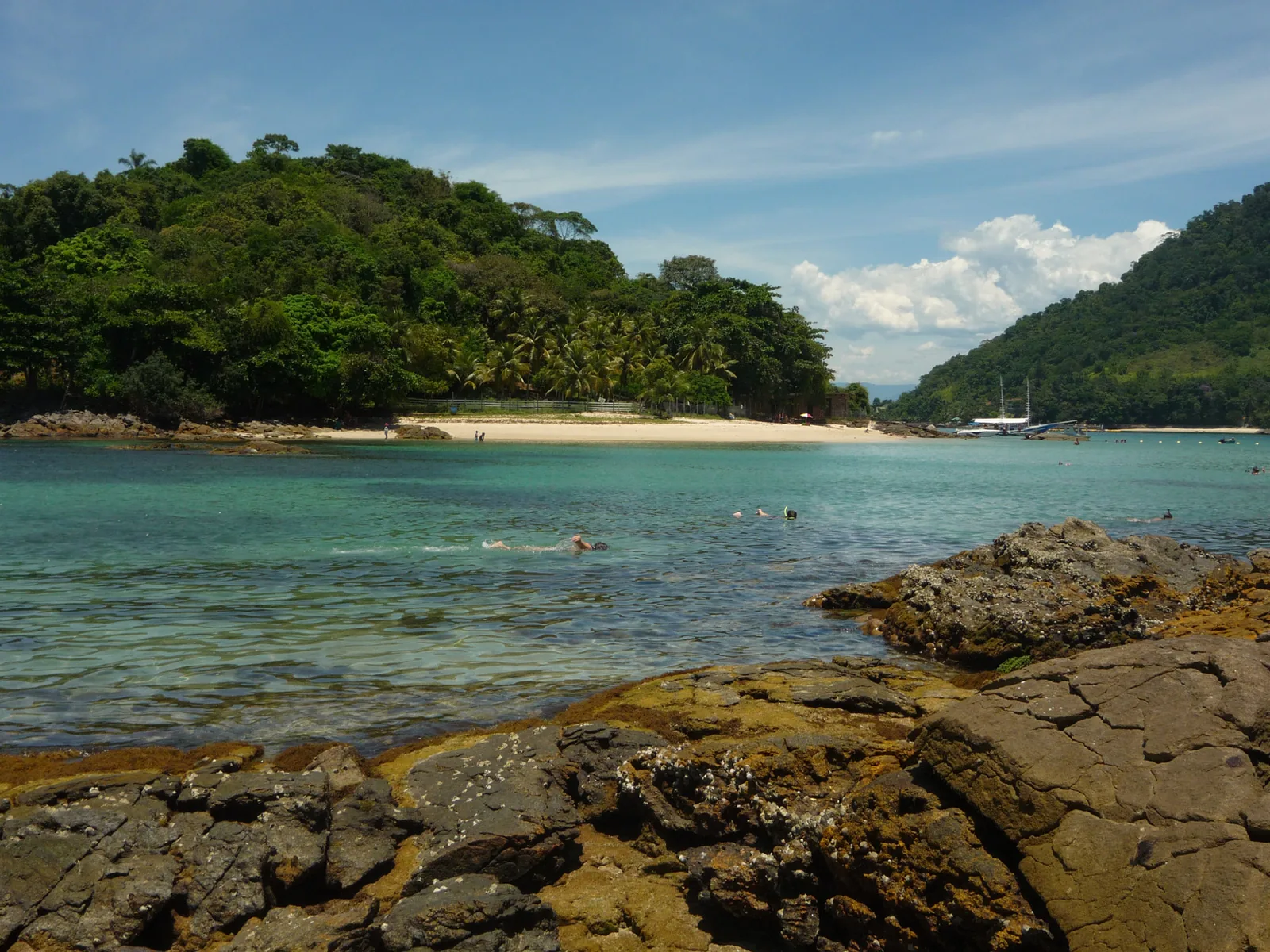
Day trip or camping — the honest comparison
This is the decision that shapes everything, so it is worth thinking through properly rather than defaulting to the easy answer. A day trip and an overnight stay are almost different experiences of the same beach.
The day trip
A day trip is the sensible choice for most people, especially anyone based on the mainland or the Paraty side who wants to see Aventureiro without committing to camping. You join a boat, you get several hours on the sand and in the water, and you sleep somewhere comfortable that night. The trade-offs are real, though. You arrive in the middle of the day with everyone else, so you see the beach at its busiest and never at its best — you miss the empty early morning and the golden late afternoon when the day boats have gone. And the whole thing is at the mercy of the sea and the boat schedule.
Camping in the reserve
Staying overnight is the traditional way, and for many people it is the whole point of Aventureiro. There are no hotels; you stay in simple campsites run by the local caiçara families, either in your own tent or, at some sites, in a very basic room or hammock spot. What you get in return is the beach after dark and before dawn — the version without a single boat in the bay, the stars over the water with no light pollution, the surf as the only sound. It is memorable in a way a day visit rarely is.
Be clear-eyed about what camping here involves. Facilities are basic: cold showers, shared bathrooms, limited power, no luxuries. You need to book ahead, sort your authorisation, and arrive self-sufficient. It suits confident, low-maintenance travellers and surfers far more than it suits anyone wanting comfort. A quick way to decide:
- Choose the day trip if you want to see the beach, keep things simple, sleep comfortably, and you are travelling with people who would not enjoy roughing it.
- Choose to camp if you want the empty beach at dawn and dusk, you are comfortable with basic facilities, you are chasing the surf, or you simply want to slow all the way down for a night or two.
There is a middle path we often suggest to guests: treat Aventureiro as a long day trip and keep your comfortable base elsewhere. You get the wild beach and still come home to a proper bed and a warm shower. More on that below.
The neighbouring beaches of the wild south
Aventureiro rarely travels alone on a boat itinerary. The south coast strings together a run of remote beaches, and the good tours link several of them into one day. Each has its own character.
Parnaioca
Beyond Aventureiro lies Parnaioca, arguably the most secluded beach on the island. A clear river runs down out of the forest and meets the sea across the sand, and there is almost nothing built here — a near-abandoned old fishing settlement and a great deal of quiet. It is the beach people mean when they talk about having a whole shoreline to themselves. Boats reach it on the same calm-sea days that make Aventureiro possible.
Provetá
Provetá is not a tourist beach at all but a working fishing village, the largest traditional community on the island, tucked into a sheltered bay on the western side. Most visitors see it only in passing on the boat run, or as the trailhead for the walk over to Aventureiro. It is worth knowing it for what it is — a living community, not an attraction — and treating it accordingly.
Caxadaço and Meros
Between the exposed south beaches and the calmer western channel sit smaller coves like Caxadaço, with clear, sheltered water good for snorkelling, and Meros. These make natural stops on a full-island boat tour, giving you a calm swim to balance the wildness of Aventureiro. If snorkelling is your thing, our diving and snorkelling guide covers the best of the clear-water spots across the bay.
Taken together, these beaches are why a full circuit of the island by boat is one of the best days out on the entire Costa Verde. The contrast — sheltered turquoise coves on one side, thundering open ocean on the other, all within a single day — is something the calmer parts of the coast cannot match.

.jpg)
The sea, the surf and staying safe
The ocean is the reason to come and the thing to respect most. Because Aventureiro faces open water, it gets real swell, and that swell is exactly what draws surfers to make the long trip out with their boards. On the right day it is one of the better beach breaks within reach of Rio.
For everyone else, the same swell means the open beach can be no place for a casual dip. The shorebreak can be powerful, and there can be currents; there are no lifeguards, no flags and no quick rescue if things go wrong. This is not a reason to stay away — it is a reason to read the water and use common sense. A few rules we pass on to guests:
- Watch the sea for a few minutes before you go in. If the shorebreak is heavy and dumping, stay in the shallows.
- Keep small children in the calm tidal pool by the leaning palm, not on the open beach.
- Never swim out alone on a big-swell day, and do not rely on your phone for help — there may be no signal.
- If you are not a confident open-water swimmer, treat Aventureiro as a beach for wading and floating in the sheltered corner, and save your real swim for a calmer cove.
None of this should put you off. Handled with a little care, the water here is a joy — clear, alive and yours. It simply asks for the kind of attention that a flat, sheltered beach does not.
The caiçara community — how to be a good guest
The families who live at Aventureiro are the reserve. Their traditional way of life — fishing, farming small plots, and now hosting a limited number of visitors — is precisely what the sustainable-development status exists to protect. When you camp here, you are staying on their land and in their home, not in an anonymous resort, and that changes how you should behave.
The practical version of respect is straightforward. Book directly with the community campsites and pay fairly rather than trying to sidestep the system. Buy the meals and fish they offer instead of bringing everything from the mainland — it supports the people keeping the place alive. Keep noise down after dark; this is a family community, not a party beach. Ask before photographing people or their homes. And follow the reserve rules on waste and fires without needing to be told twice. The reason Aventureiro has stayed unspoiled while so much of the coast has not is that the community has fought to keep it that way. A visitor's job is to make that easier, not harder. The broader story of these coastal communities is one we return to in our writing on caiçara culture around Paraty.

What to pack for Aventureiro
Because there is next to nothing to buy on the beach, what you carry is what you have. For a day trip, pack light but complete; for camping, add the overnight kit. A sensible list:
- Cash in small notes — cards frequently will not work, and there are no machines.
- Plenty of water and more sun protection than you think you need; the beach is exposed and the reflection off the sand and sea is strong.
- A dry bag for phone, documents and camera on the boat, and a separate sack for carrying your rubbish back out.
- Reef-safe sunscreen, a hat and a light long-sleeve top — you are inside a protected area, so choose products that do not harm the water.
- Proper footwear if you plan to walk the Provetá trail; the coarse sand and rocks are hard on bare feet in any case.
- Snacks and, if camping, a tent, sleeping mat, torch or headlamp, insect repellent and any personal medication.
- A basic first-aid kit — the nearest pharmacy is a boat ride and a bus away.
Pack it all into something you can carry comfortably from a boat across a beach, because that is exactly what you will be doing. Leave the wheeled suitcase behind.
When to go — reading the seasons and the sea
Two calendars matter here: the season and the day. The season sets the odds; the day decides whether you actually go.
Broadly, the drier, calmer months from around April to October give the most reliable conditions for the southern boat run and the clearest water. The sea is more settled, the crossings gentler, and your chance of the trip going ahead as planned is higher. The catch is that this is also the cooler part of the year, so while it is still pleasant on the coast, the water is fresher and the air can be crisp early and late.
The southern-hemisphere summer, from roughly December to March, brings heat, long days and the swell that surfers travel for — but also more rain and rougher seas, which means more days when the south-coast boats simply cannot run. If you are coming specifically for Aventureiro in high summer, give yourself a window of several days rather than banking on one. Our seasonal breakdown for the whole region lives in the best time to visit Paraty guide, and it applies neatly to the island too.
Whatever the month, the golden rule stands: the day you go to Aventureiro is chosen by the sea, not by your itinerary. Keep the plan loose, watch the forecast, and be ready to move fast when a calm morning arrives.
Aventureiro versus the rest of Ilha Grande
It is worth being honest that Aventureiro is not the right first beach for everyone visiting Ilha Grande, and pretending otherwise does no one any favours. If your priority is the single most beautiful, easy-access beach on the island, that is arguably Lopes Mendes, a vast, calm-water sweep of fine white sand on the sheltered east side, reached by a short boat-and-walk combination from Abraão. It is gentler, simpler and family-friendly in a way the wild south is not.
Aventureiro is the beach you choose when you have either already seen the easy ones or you specifically want the remote, raw version of the island. It rewards a second visit to Ilha Grande more than a first. For visitors with only a single day and young children, we often steer them toward Lopes Mendes and the calm beaches, and save Aventureiro for the ones who are chasing something wilder. Both experiences are covered across our island guides, and there is no wrong answer — only the right match for who is travelling.
Making Aventureiro part of a Paraty trip
Here is the practical shape of a great Aventureiro day for anyone staying on the Paraty side of the bay. You are up early, down to the pier at Conceição de Jacareí or Angra, across to Abraão, and onto a south-coast boat when the sea allows. You get your hours on the wild beach — the leaning palm, the clear water, the walk to the empty end — and the run past Parnaioca and the southern coves. Then you make the return crossing in the late afternoon light and drive back up the coast.
The quiet luxury of doing it this way is what waits at the other end. Instead of a basic campsite shower, you come home to the chalet on the hillside above Paraty, rinse the salt off, and slide into the infinity pool as the light goes. From four hundred metres up, the deck looks out over the whole of the bay at once — Paraty below, Angra and Ilha Grande across the water, the island you just came from turning blue in the distance. There is something particular about watching that view knowing you spent the day inside it.
Aventureiro also fits naturally into a longer, slower exploration of the region rather than a single frantic outing. Pair it with a boat day among the calmer bay islands, a morning in the historic centre of Paraty, an afternoon at one of the forest waterfalls, and you have a week that moves between wild and gentle without ever feeling rushed. Our broader planning notes for putting a trip together sit in the Paraty itineraries guide and across the Explore Paraty pages.
A few last, honest words
Aventureiro is not somewhere you pass through on the way to somewhere better. It is the end of the line, and that is exactly why it stays the way it is. It asks you to plan, to travel, to accept the sea's veto, to carry your own water and carry out your own rubbish, and to treat a small community's home with the care it deserves. Do all of that, and you get one of the last genuinely wild beaches within reach of Rio de Janeiro — the leaning palm, the clear green water, the surf, and long stretches of sand with no one on them.
Our advice, after sending a good many guests out there, is simple. Go with a flexible plan and a calm-sea window. Decide honestly whether you are a day-tripper or a camper, and choose accordingly. And keep a comfortable base to come back to, so that a hard, salty, wonderful day on the wild south of Ilha Grande ends with a warm shower, a quiet swim and a view of the very island you spent it on. If you want help shaping the trip around the tides and the weather, get in touch — we watch the sea from up here every day, and we are happy to tell you when it looks like a good week to go.


Frequently asked questions
There is no road. You reach Aventureiro by boat around the island's exposed south coast, or on foot by a steep forest trail from the fishing village of Provetá. Most visitors from the Paraty side cross to Vila do Abraão first, then join a boat tour or hire a local skipper. The southern run only happens when the sea is calm enough, so plans can shift with the weather.
Yes, if you want the quietest, wildest beach on Ilha Grande and you accept it takes most of a day to reach. The leaning palm, the clear water and the empty sand are the reward. If you only have one day on the island and prefer easy access, calmer beaches like Lopes Mendes are simpler to reach.
Yes. Camping is the traditional way to stay, in small campsites run by the local caiçara families inside the reserve. There are no hotels or resorts. Access and numbers are capped, so book your spot and arrange your authorisation before you travel rather than turning up unannounced.
Aventureiro sits inside a state sustainable-development reserve with a daily visitor cap. Access is controlled and free authorisation is issued through the official channel in Angra dos Reis; reputable boat operators and campsites handle the paperwork and the numbered wristband as part of your booking. Confirm it before you go.
It varies enormously. The little tidal pool by the leaning palm is calm and shallow, but the open beach faces the Atlantic and can produce strong shorebreak and currents, which is why surfers like it. Watch the water before you go in, keep children in the sheltered corner and never swim out alone on a big-swell day.
Allow half a day of travel. From Paraty you drive or take a bus to a mainland pier — Angra dos Reis or Conceição de Jacareí — then cross by boat to Vila do Abraão. The Conceição de Jacareí crossing is around twenty to twenty-five minutes; the run down to Aventureiro is a further trip on top of that.
The drier, calmer months from roughly April to October give the most reliable sea conditions for the southern boat run and clearer water. Summer brings warmth and swell that surfers want but also more rain and rougher crossings. Whatever the season, the day you go depends on the sea, so keep your plans flexible.