In this guide
The first thing to understand about Brazilian gastronomy is that there is no such single thing. The country is the size of a continent, and its food was shaped by three sets of hands — indigenous peoples who had farmed cassava and fished these waters for millennia, enslaved Africans who brought palm oil, okra and whole techniques of cooking, and Portuguese settlers with their stews, salt cod and sweet tooth — across landscapes that range from Amazon rainforest to southern grassland. What grew out of that is not a cuisine but a family of cuisines, each rooted in its own region, ingredients and history. Anyone who tells you they have eaten "Brazilian food" after a weekend in one city has, in truth, eaten a sliver of it.
This guide is an attempt to give you the whole shape: the great regional cuisines and what defines each; the moment Brazilian fine dining is having, led by São Paulo and the kitchens that rebuilt their menus around native ingredients; the ingredients worth knowing by name, so a menu stops being opaque; the street and market food where some of the best eating happens; and, since this is where we host, how to eat well on the Costa Verde around Paraty. Our aim is that by the end you can read a Brazilian table — anywhere in the country — and know what you are looking at and what to order. We will recommend places by type rather than by name throughout, because restaurants change hands and we would rather hand you a principle you can trust than a sign that may have come down; the famous institutions and dishes we do name are the ones worth knowing wherever you travel.
We will start with the regions, because everything else sits on top of them.
The regional cuisines
If you remember one idea from this piece, make it this: Brazilian food is regional first. The dish that is sacred in Bahia is barely cooked in the south; the spirit-tingling herb that defines an Amazon soup is unknown on most coastal menus. Four regional traditions matter most for the traveller.
Bahia and the African coast
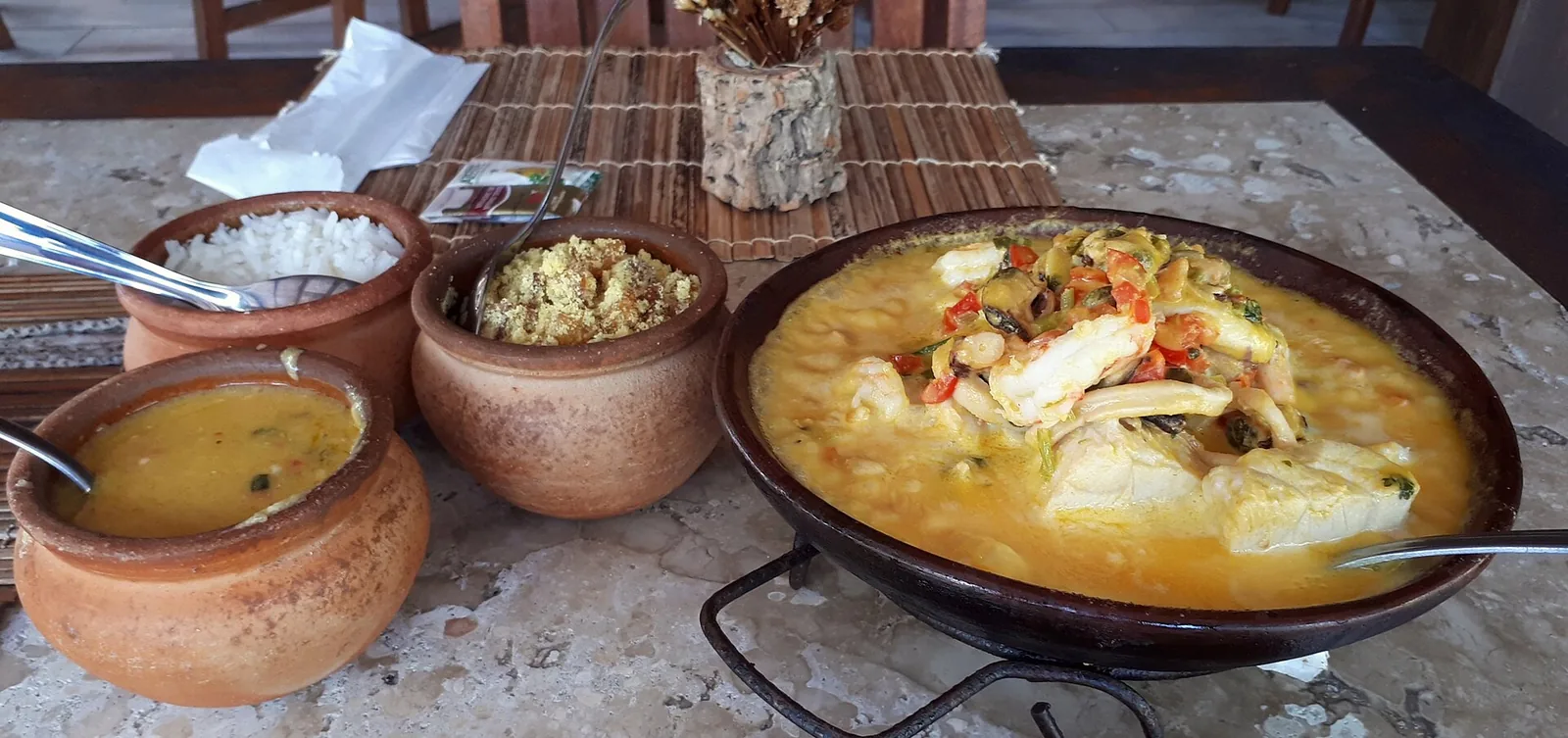
The cooking of Bahia, on the northeast coast, is the most distinctive in Brazil and the most directly shaped by Africa. Its signature ingredient is dendê — palm oil — which lends a deep orange colour and a rich, faintly nutty flavour to everything it touches. The emblematic dish is moqueca baiana: a seafood stew of fish or prawns slow-cooked with tomatoes, onions, peppers and coriander, finished with dendê and coconut milk, and served bubbling in a clay pot. Around it sits a whole vocabulary of African-Brazilian dishes — acarajé, black-eyed-pea fritters fried in dendê and split open and filled, sold from the stands of the baianas in their white dresses; vatapá and caruru, the thick, savoury sauces of bread, nuts, dried shrimp and okra. Bahian food is warm, generous and unmistakable. It is also food with a strong sense of place and ritual: many of these dishes have roots in Candomblé, the Afro-Brazilian religion, and are tied to ceremony as much as to the lunch table. To eat in Salvador, the Bahian capital — at a street stand, at a covered market, at a home table if you are lucky enough to be invited — is to taste the most culturally distinct cooking in Brazil. If you only visit one region for its food alone, a strong case can be made for Bahia.
The Amazon and the north
The cooking of the Amazon basin is the one most likely to surprise even well-travelled eaters, because so many of its ingredients exist nowhere else. The defining dish is tacacá, a hot, sour, intensely savoury soup of tucupi — a golden broth pressed from wild cassava — with dried shrimp, tapioca starch and jambu, a leafy herb that produces a genuine tingling, slightly numbing sensation on the lips and tongue. It is served scalding hot from gourds at street stands in cities like Belém and Manaus, and there is nothing else quite like it. The north is also the home of açaí eaten the local way — not the sweet frozen bowl of the export markets but a thick, savoury purée served alongside fried fish — and of fruits, like cupuaçu, that rarely leave the region intact. The freshwater fish of the Amazon are a world unto themselves — the enormous pirarucu, sometimes called the cod of the Amazon, grilled or salted and dried; the tambaqui ribs cooked over charcoal — and the region's puddings and ices made from cupuaçu, bacuri and other fruits are like nothing in the south. If you reach the north, eat adventurously; this is the most singular food in the country, and the one that most rewards a traveller willing to order the thing they cannot pronounce.
The southern churrasco
Travel to the far south, to the grasslands of Rio Grande do Sul, and the food changes completely. This is cattle country — part of the great pampas shared with Argentina and Uruguay — and the central tradition is churrasco, barbecue, in its original ranch-hand form. The technique grew out of practical fieldcraft: a fire built on the ground, meat threaded onto a long spit or skewer, set at a height above the coals, and seasoned with nothing more than coarse salt. The cuts the gaúchos prize are picanha (the rump cap), short ribs and maminha, cooked slowly over hardwood embers until the fat renders and the crust crackles. Done properly — over real fire, salted simply, carved straight off the spit — it is one of the great meat cookeries of the world, and the genuine version, in the south, has little to do with the all-you-can-eat rodízio houses that travel under its name abroad.
The caiçara coast
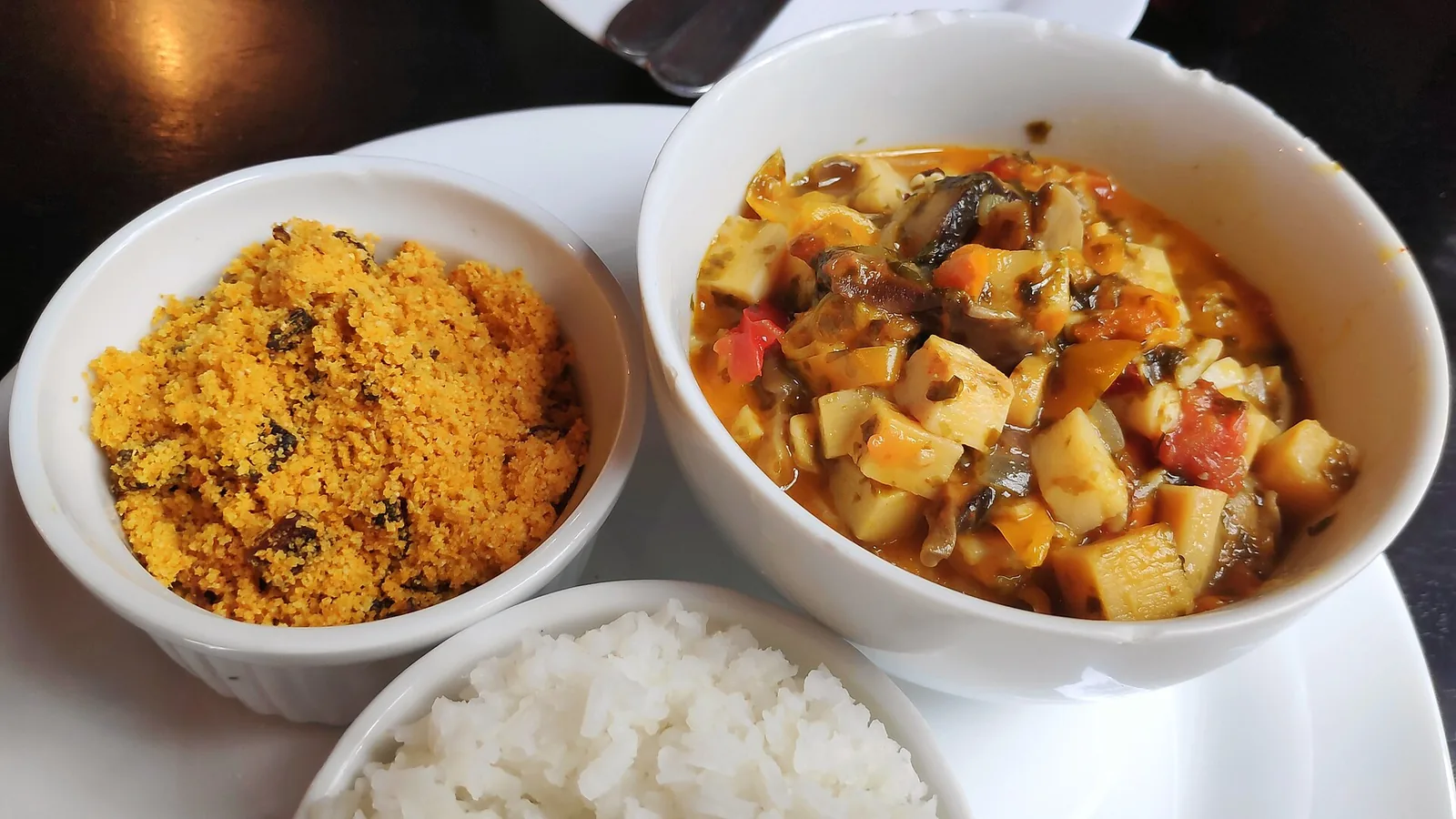
Closest to home for us is the cooking of the caiçara — the traditional fishing communities of the southeastern coast, including the Costa Verde around Paraty. This is quiet, ingredient-led food, built on what the sea and the forest give: very fresh fish and seafood, cassava in all its forms, banana, palm hearts and coconut. The local moqueca is lighter than the Bahian one, the seafood is often simply grilled, and the cooking carries a clear indigenous inheritance. It is unshowy and deeply satisfying, and we say more about it below and in our guide to caiçara culture in Paraty. Between the caiçara coast and the rest, the everyday Brazilian table across most of the country rests on a handful of staples — rice, black or brown beans, farofa (toasted cassava flour), and the leafy greens and pork that, slow-cooked together, become feijoada, the bean stew many regard as the closest thing to a national dish.
It is worth saying plainly that these four traditions barely scratch the surface. The southeast around Minas Gerais has its own rich, rustic cooking built on pork, corn, cheese and beans — the tutu de feijão, the cornmeal porridges, the famous farm cheeses. The state of Espírito Santo has its own moqueca, the capixaba version, made in a black clay pot without dendê or coconut, lighter and more tomato-forward than the Bahian one, and a fierce point of local pride. The far interior and the central plains have their freshwater fish and their cattle cooking. The point of naming the four is not to be exhaustive but to give you a mental map: when someone hands you a menu in Brazil, the first useful question is always "where am I, and what does this region cook?"
There is no single Brazilian cuisine, and anyone who tells you otherwise has only eaten in one part of the country.
Feijoada and the everyday table
Before the famous restaurants, it is worth understanding how Brazilians actually eat day to day, because the everyday table is the foundation everything else is built on, and it is genuinely good. The default Brazilian plate, north to south, is a balance of rice and beans — white rice almost always, beans either black or brown depending on the region — with a protein, a leafy green, and farofa scattered over the top to add crunch and soak up the juices. It is simple, satisfying, and done well it is a pleasure rather than mere fuel. The midday meal, almoço, is traditionally the main one, and the institution that delivers it is the prato feito or the por quilo buffet, where you serve yourself and pay by the weight of your plate — one of the most useful things a traveller can know, because it lets you eat exactly what you want, taste widely, and eat well for very little.
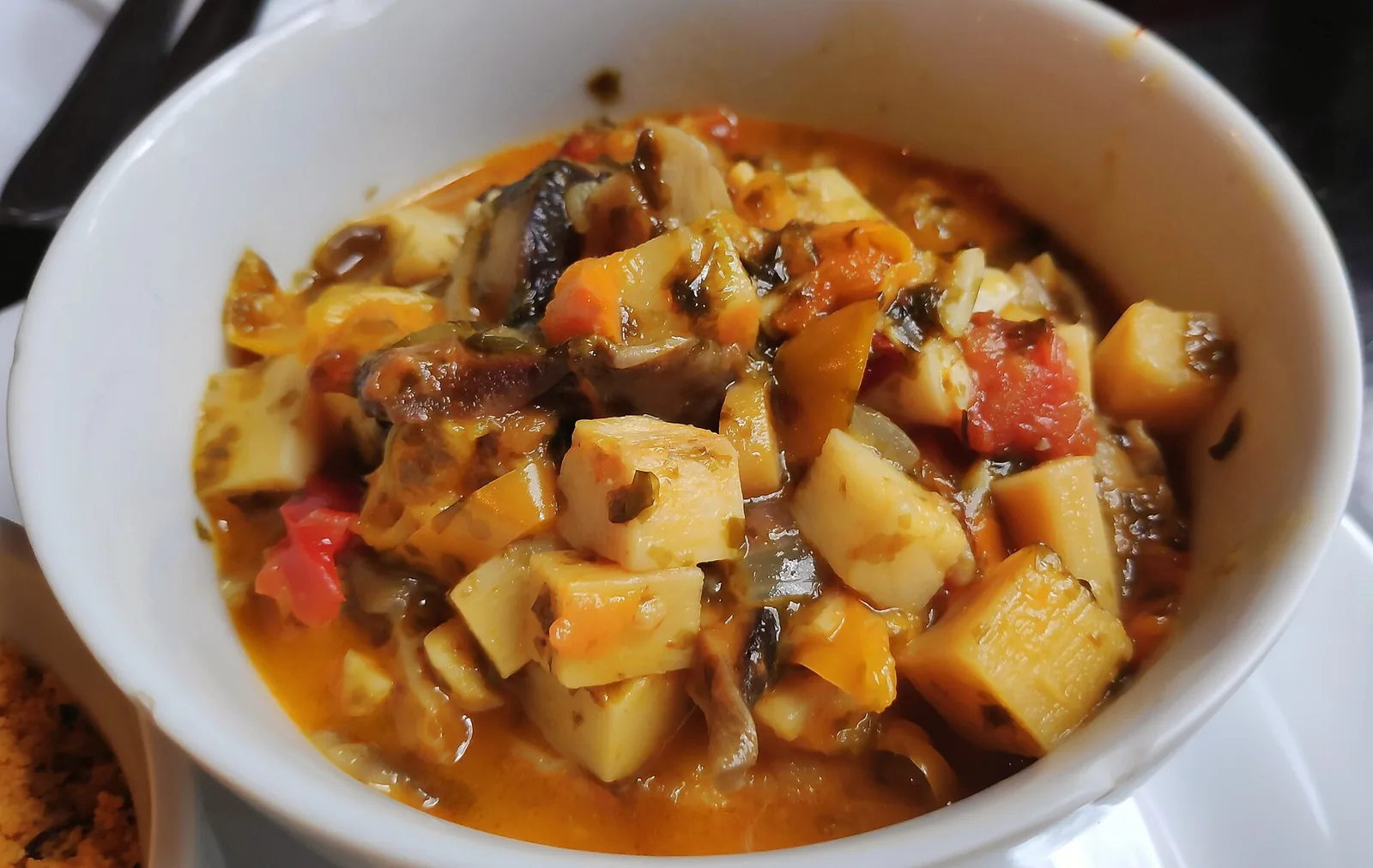
The dish that crowns this tradition is feijoada: a slow-cooked stew of black beans and an array of pork cuts, served with white rice, sautéed collard greens (couve), slices of orange, farofa and a sprinkle of toasted cassava. It is rich, communal and historically loaded — its roots are usually traced to the resourceful cooking of the plantations, making the most of every cut. Brazilians traditionally eat it at lunch on Wednesdays and Saturdays, taking the rest of the afternoon slowly afterward, and that ritual tells you what kind of dish it is: not a quick meal but an event, eaten with friends and followed by a long sit. If you are invited to a feijoada, accept; if you order one in a restaurant, order it at lunch and clear your afternoon. Wash it down, as Brazilians do, with a caipirinha or a cold beer, and you have had one of the country's defining meals.
Brazil's fine-dining moment
Over the last two decades Brazil has become one of the most exciting countries in the world to eat seriously, and the story of how that happened is, at heart, a story about ingredients. For a long time fine dining in Brazil meant French and Italian cooking, with the country's own larder treated as everyday rather than worthy of a tasting menu. A generation of chefs changed that by turning the lens around — by going into the Amazon and the Atlantic Forest, working with growers and foragers and indigenous communities, and building ambitious restaurants on native Brazilian ingredients that had never been on a white tablecloth before.
The centre of all this is São Paulo, the country's largest city and its undisputed culinary capital. Two restaurants are the ones most often named by international travellers, and they make a useful pair because they represent two faces of the movement. D.O.M., the restaurant of chef Alex Atala, is the standard-bearer for the ingredient-driven, research-led approach: a tasting menu built around Amazonian and Brazilian produce, redesigned regularly, that did as much as any single restaurant to make the world take Brazilian cooking seriously. It has long been a fixture on the major international and Latin American restaurant rankings. A Casa do Porco, chef Jefferson Rueda's pork-focused restaurant, represents the other face — playful, accessible, brilliant value, and just as celebrated, regularly appearing on the world's top-restaurant lists while remaining a place a normal person can get into and afford.
We'd offer two honest caveats. The first is that restaurant rankings move every year — positions on the global and Latin American lists shift, restaurants open and close and chefs move on — so treat any specific ranking as a snapshot and check current standing before you build a trip around a booking. The second is that São Paulo's strength runs far wider than two famous names; the city has a deep bench of excellent restaurants across Japanese-Brazilian, contemporary, regional and casual cooking, and some of the best meals are not the most famous ones. If a serious food trip is part of your plan, give São Paulo a couple of days and book the headline tables months ahead, but leave room to wander. Rio, too, has a strong and improving scene. We can point guests toward current favourites when the time comes; ask us nearer your dates.
What unites the best of this new Brazilian cooking, and what makes it worth crossing the world for, is a particular confidence: a generation of chefs who stopped looking abroad for validation and decided that the cassava root, the Amazonian fish, the forgotten Atlantic-Forest fruit and the humble farm cheese were as worthy of a tasting menu as anything from Europe. That shift — from imitation to self-belief — is the real story, and you can taste it. The São Paulo dining room that serves you an ant from the Amazon for its citrus aroma, or a dessert built on cassava, is not being gimmicky; it is making an argument about what Brazilian food can be, and increasingly the world agrees. Japanese-Brazilian cooking deserves a special mention here too: São Paulo has the largest Japanese diaspora outside Japan, and the result is some of the most interesting sushi and izakaya food anywhere, often at gentler prices than the headline restaurants.
Ingredients to know
Reading a Brazilian menu gets much easier once a handful of native ingredients stop being mysterious. These are the ones worth committing to memory.
- Cassava (manioc, mandioca, aipim): the single most important ingredient in Brazilian cooking, and one most visitors underestimate. This starchy root appears everywhere — boiled and fried as a side, ground into the flour that becomes farofa, fermented and pressed into the tucupi broth of the Amazon, made into tapioca pancakes. If you understand cassava, you understand the backbone of the cuisine.
- Açaí: the dark, iron-rich berry of an Amazon palm. Eaten the traditional northern way it is thick and savoury, served with fish or shrimp; the sweet frozen bowl most travellers know is a southern and export adaptation. Worth trying both ways to understand the gap.
- Jambu: the Amazonian herb behind tacacá, notable for the tingling, mouth-numbing sensation it produces. It is increasingly used by ambitious chefs and bartenders for exactly that effect. A genuinely Brazilian experience, and one you will not forget.
- Cupuaçu: a relative of cacao from the Amazon, with creamy white pulp and a flavour somewhere between chocolate, tropical fruit and something tarter. Found in juices, desserts and increasingly in fine chocolate.
- Cambuci: a small, green, intensely aromatic fruit native to the Atlantic Forest of the southeast, once nearly forgotten and now championed by chefs as a symbol of the rainforest larder. Sour and fragrant, it turns up in sauces, drinks and desserts.
Beyond these, watch for palmito (palm hearts, especially the prized pupunha variety), dendê (the Bahian palm oil), queijo coalho (a firm cheese grilled on skewers on the beach), and the vast world of Brazilian fruits — from familiar mango and passion fruit to the less-travelled graviola, jabuticaba and bacuri. Order the juices; the fruit is the easiest way into the country's flavour, and it is everywhere.
Street food and the markets
Some of the best eating in Brazil costs almost nothing and happens standing up. The country has a deep street-food culture, and the markets are where the regional larders come alive, so we point every guest toward both.
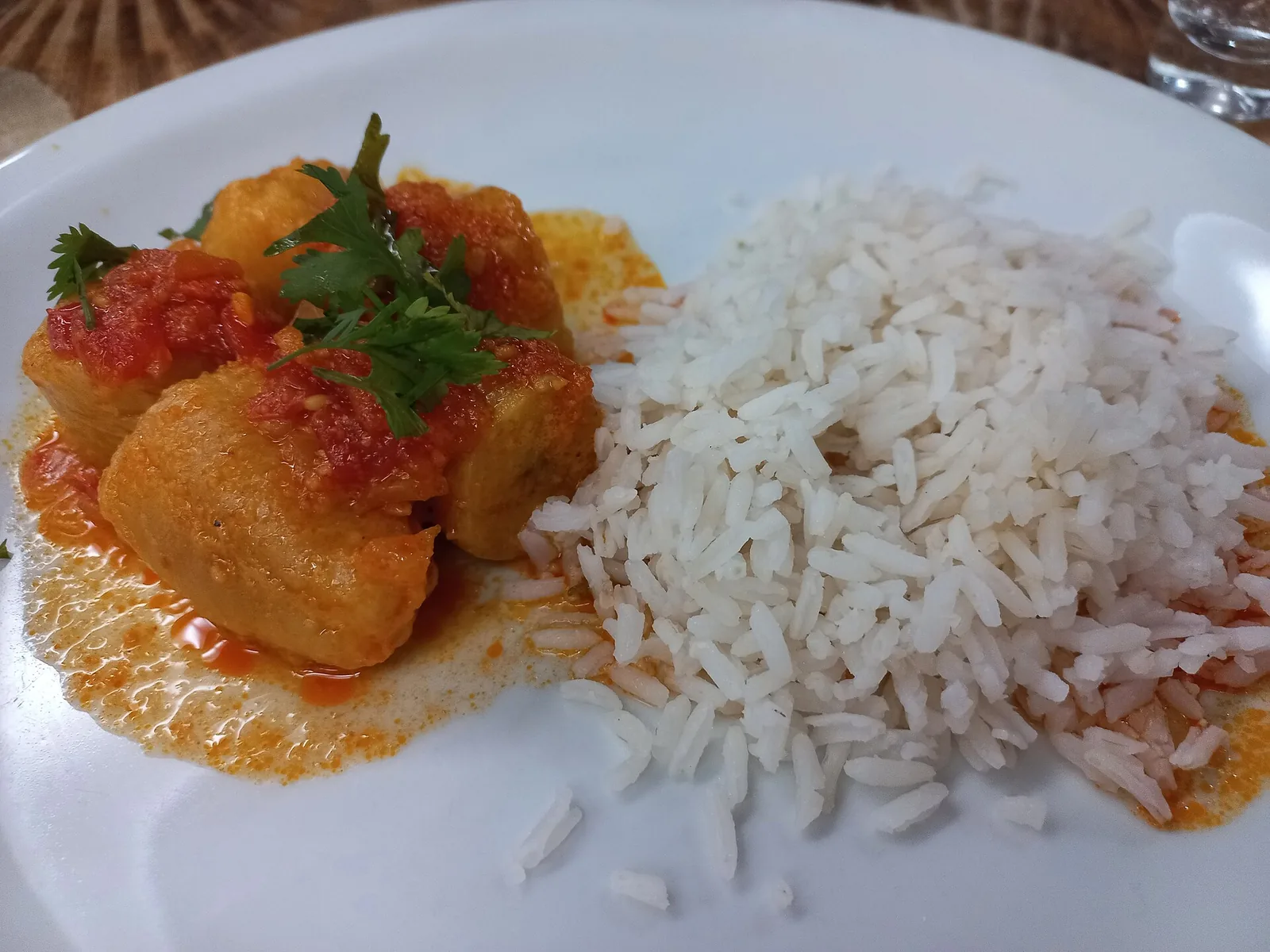
The classics travel well across the country. Pão de queijo — small, chewy cheese breads made with cassava starch — are eaten everywhere, all day, and are addictive. Coxinha, a teardrop of shredded chicken in a soft dough, fried golden, is the king of the salgados, the savoury snacks sold in every bakery and bar. Pastéis, thin crisp pastry parcels with savoury fillings, are a market and fair staple. On the beach you will meet vendors grilling queijo coalho on skewers over little charcoal trays, and selling biscoito de polvilho, the airy cassava-starch crisps. In the north, the street food turns regional fast — the tacacá stands, the açaí sellers, the tapioca pancakes folded around sweet or savoury fillings.
The markets are worth seeking out as destinations in their own right. A good municipal market — São Paulo's grand Mercadão, Belém's Ver-o-Peso on the river, the smaller regional markets everywhere — is the fastest education in what a region eats: the fruits you have never seen, the dried shrimp and beans, the cheeses, the spice and herb stalls, the cachaça counters. Go hungry, taste widely, and ask the vendors what things are; Brazilian market sellers are, in our experience, happy to explain and proud to feed you.
Sweets, coffee and the Brazilian sweet tooth
Brazil has a serious sweet tooth, and a whole tradition of small sweets that came largely from the convent kitchens of the colonial era, where nuns turned egg yolks and sugar into extraordinary things. The everyday star is the brigadeiro — a soft truffle of condensed milk and cocoa, rolled in chocolate sprinkles, present at every birthday and most celebrations. Its coconut cousin is the beijinho. From the convent tradition come richer, more old-fashioned sweets: quindim, a glossy baked custard of egg yolk and coconut; cocada, chewy coconut candy sold on every beach; and the dense fruit pastes — guava (goiabada), quince — that, paired with a slice of mild white cheese, make the beloved dessert affectionately called Romeu e Julieta. Tropical fruit does a lot of the dessert work too: a simple bowl of perfectly ripe mango, papaya or passion fruit is as good a finish to a meal as anything more elaborate.
And then there is coffee. Brazil is the world's largest coffee producer, and the cafézinho — a small, strong, sweet cup — is offered everywhere, all day, as a gesture of welcome as much as a drink. It punctuates Brazilian life. Accept it when it is offered; refusing the little coffee can read as refusing the hospitality behind it. In recent years a genuine speciality-coffee culture has grown up in the cities too, so if you are a coffee person, the good cafés of São Paulo and Rio are worth a detour.
What to drink with Brazilian food
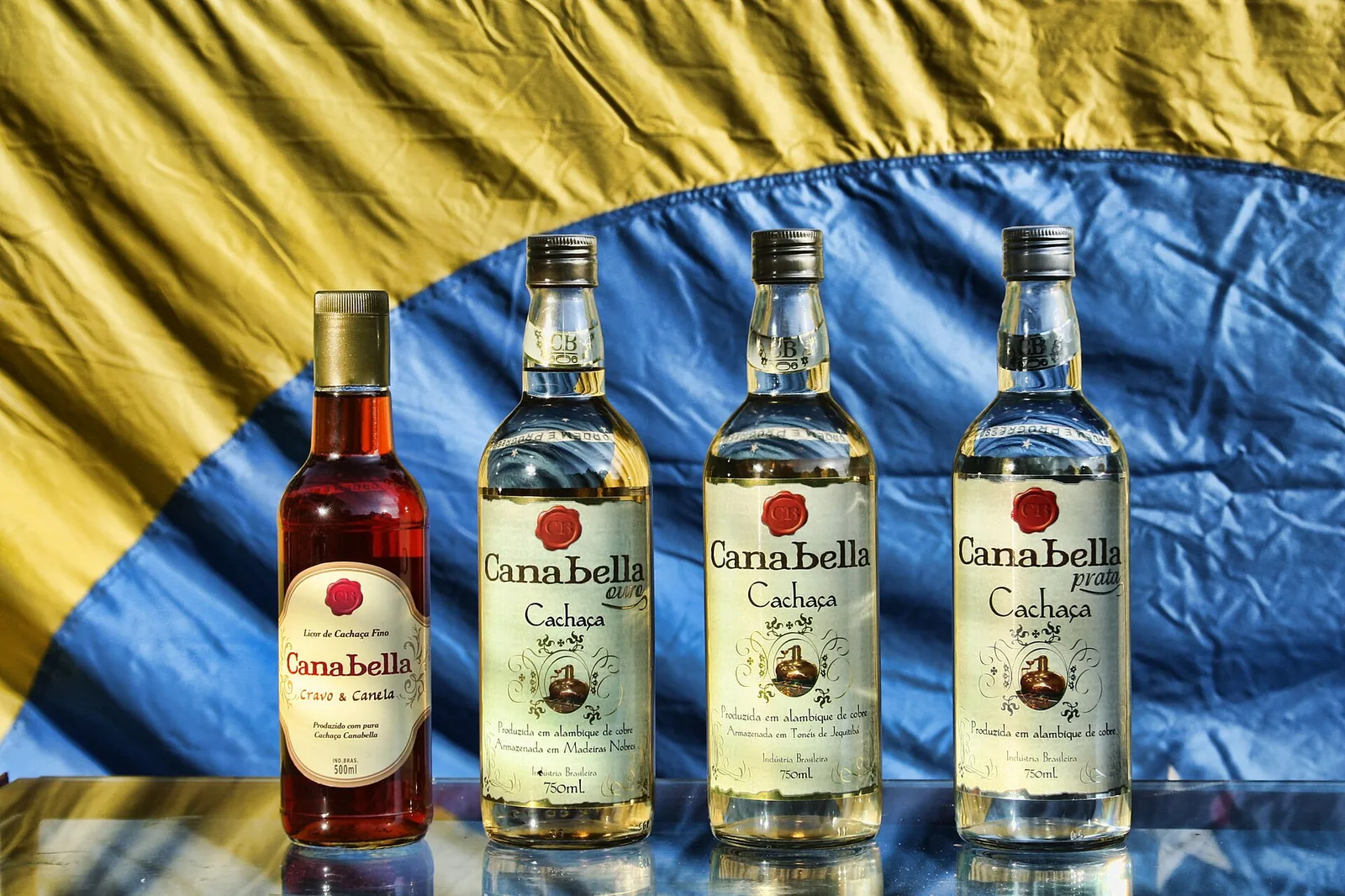
Eating well in Brazil means drinking well alongside, and the pairings are part of the pleasure. The national cocktail, of course, is the caipirinha — cachaça, lime, sugar and ice — and a good one cuts through rich coastal food beautifully; a passion-fruit version is hard to resist on the coast. Cachaça itself, in its finer artisanal and wood-aged forms, deserves to be sipped slowly the way you would a good rum, and we have given it a guide of its own in the companion piece on cachaça and the caipirinha. Beer is the everyday accompaniment — served very cold, often poured into small glasses to keep it that way, and the craft scene has come a long way. The non-alcoholic options are arguably even better: the fresh fruit juices (sucos) are extraordinary, made from fruits you will not have met, and água de coco, coconut water drunk straight from the green coconut on the beach, is the most refreshing thing in the country on a hot day. Brazil also makes increasingly respectable wine, particularly the sparkling wines of the southern Serra Gaúcha. Match richness with acidity and heat with cold, and you will rarely go wrong.
Eating well on the Costa Verde
Which brings us home, to the coast where we host. The food of the Costa Verde around Paraty is caiçara cooking at its best, and the principle for eating well here is simple: keep it fresh, keep it local, keep it unfussy. The sea is the larder. The thing to eat is whatever was landed that day — fish, prawns, squid, the occasional lobster — either simply grilled or made into a local moqueca, lighter than the Bahian one, served with white rice, farofa and palm hearts. Order what the table next to you is having; in a fishing town, the locals know which catch came in.
In keeping with the way we write all our guides, we will recommend by type rather than by name, because restaurants change hands and we would rather you trust the principle than chase a sign that may have come down. In Paraty, look for the seafood houses near the harbour end of the historic centre, where the catch is freshest and the cooking least adorned. For something more refined there are a handful of ambitious kitchens working caiçara ingredients in a contemporary register; our guide to Paraty restaurants describes what to look for and where. And do not overlook the simplest pleasures — a beach lunch of grilled fish with your feet in the sand, a queijo coalho skewer between swims, a bag of fresh prawns eaten on a boat.
The other Costa Verde speciality is liquid. Paraty is one of Brazil's historic centres of fine cachaça, and the local distilleries — the alambiques in the hills around town — produce some of the best artisanal cane spirit in the country. A caipirinha made with a good local cachaça, sipped over a long lunch by the water, is one of the genuine pleasures of eating here. There is a whole world behind that drink, and we have given it its own piece: see our guide to cachaça and the caipirinha for how the spirit is made and how to drink it well, and our guide to the Paraty cachaça distilleries for visiting the stills themselves.
Eating at the chalet
One of the quiet luxuries of staying in a private house on this coast is that you can bring the food home. Many of our guests do some of their best eating in, not out — a morning at the market for fish and fruit, an afternoon cooking on the terrace, or, more often, a private chef brought in to cook a caiçara dinner while you watch the light go down over the bay. There is a particular pleasure to a Brazilian meal at home that no restaurant quite matches: the long table, the dishes arriving in waves, the caipirinhas before and the fruit and little sweets after, and nobody watching the clock. It is how Brazilians themselves prefer to eat — at home, slowly, together — and a private house lets you do it properly. A long, unhurried meal at the table at the chalet, with the lights of Paraty below and a good bottle on the table, is the kind of evening people remember from a trip. We are glad to arrange a chef, a market run, a stocked kitchen, or a tasting of local cachaças to start the night; it is the sort of thing it is worth telling us about in advance, so the right people and the right ingredients are lined up. Just say the word when you get in touch.
How to eat your way through a Brazil trip
If you are planning a trip and want food to be a real part of it, a few principles will serve you better than any list. Eat regionally — order what the place you are standing in is famous for, not a generic "Brazilian" menu. Eat the street food and the market food; it is where the cooking is most honest and often most delicious. Drink the fruit juices and the local cachaça. Book the famous São Paulo tables far ahead if fine dining matters to you, but leave room for the unplanned meal, which in Brazil is frequently the best one. And do not be shy about asking what something is — curiosity is rewarded here, and Brazilians are, almost without exception, delighted to feed a visitor and explain what is on the plate.
If you want a short checklist to carry with you — the dishes that tell you the most about where you are — these are the ones we would not let a food-minded traveller leave Brazil without trying:
- Moqueca on the coast — Bahian if you want it rich, Capixaba if you want it light. The defining dish of the Brazilian seaboard.
- Feijoada at a leisurely lunch — the great communal bean-and-pork stew, ideally on a Wednesday or Saturday.
- Churrasco done properly — over real fire, salted simply, in the south if you can get there.
- Tacacá in the north — the hot, sour, tingling Amazon soup, unlike anything else you will eat.
- Acarajé in Bahia — the dendê-fried fritter from a street baiana, split and filled.
- Pão de queijo and a cafézinho anywhere — the small daily pleasures that anchor Brazilian eating.
- A brigadeiro for the sweet tooth, and a bowl of perfect tropical fruit for the finish.
For the Costa Verde specifically, the formula is the one we keep returning to: fresh seafood simply done, a good caipirinha, a long table and no hurry. It is not the most elaborate food in Brazil — for that, go to São Paulo or the Amazon — but eaten in the right place, with the bay in front of you, it is some of the most pleasurable. To build the eating into a few days here, our Paraty itineraries weave the meals into the days, and the rest of the journal covers the wider food and drink of this coast. Tell us how you like to eat and we will shape the trip around it — that, after all, is half the point of coming to Brazil at all.
Frequently asked questions
The dish most often called national is feijoada, a slow-cooked black-bean and pork stew served with rice, collard greens, orange and farofa. But Brazil is large and regional, and many Brazilians would just as readily name moqueca, churrasco or a regional speciality. There is no single official dish.
Moqueca is a coastal seafood stew, slow-cooked with tomatoes, onions, peppers and coriander. The two best-known styles are the Bahian version, rich with dendê palm oil and coconut milk, and the lighter Capixaba version from Espírito Santo, made without them. It is one of the defining dishes of the Brazilian coast.
São Paulo is the centre of Brazil's fine-dining scene. D.O.M., chef Alex Atala's restaurant built around Amazonian ingredients, and A Casa do Porco, Jefferson Rueda's celebrated pork-focused restaurant, are two of the most internationally recognised. Rankings change year to year, so check current lists before booking.
Dendê is palm oil, brought to Brazil through the African influence on Bahian cooking. It gives Bahian dishes their deep orange colour and a distinctive, slightly nutty richness. It is the single ingredient most associated with the cuisine of Bahia.
Farofa is toasted cassava (manioc) flour, often cooked with butter, onion, egg or bits of meat. It is sprinkled over almost everything — beans, grilled meat, stews — to add texture and soak up sauce. It is one of the quiet staples of the Brazilian table.
Caiçara coastal cooking: very fresh fish and seafood, often simply grilled or made into a local moqueca, with rice, farofa and palm hearts. Eat at the seafood houses near the harbour, drink a caipirinha made with local Paraty cachaça, and keep it simple — the quality is in the freshness.
Generally no, not in the chilli-heat sense. Brazilian cooking leans on freshness, slow-cooking and aromatic ingredients rather than heat. Hot sauce — often a small pot of pimenta — is usually offered on the side so you can add as much or as little as you like.