In this guide
There are two ways to get from Rio de Janeiro to Paraty. One is to sit on a bus and let the coast slide past the window. The other is to take the wheel yourself and make a day of it — and that, if you have the time and the temperament, is one of the most enjoyable drives in Brazil. The road runs for about two hundred and fifty kilometres along the Costa Verde, the green coast, with the Atlantic on one side and the wall of the Serra do Mar rainforest on the other, threading past bays, islands and beaches the whole way. On paper it is four hours. In practice, done properly, it is a full and lovely day.
I have driven this route more times than I can count, in good weather and bad, in a hurry and at leisure, and I have learned that the people who enjoy it are the ones who plan for the road it actually is rather than the one they assume. It is not a motorway. It is a winding coastal highway, beautiful and slow, with patches of rough surface, the odd truck to overtake, and a final stretch of curves that demands your attention. Treat it as a destination in itself rather than a transfer to be endured, and the Rio to Paraty drive becomes one of the highlights of a Costa Verde trip rather than its dull beginning.
This is the practical, honest guide: the route, the distance and time, the stops worth making, the driving conditions and how to stay safe, the business of car hire and tolls, the bus alternative for those who would rather not drive, and a brief word for anyone coming the other way from São Paulo.
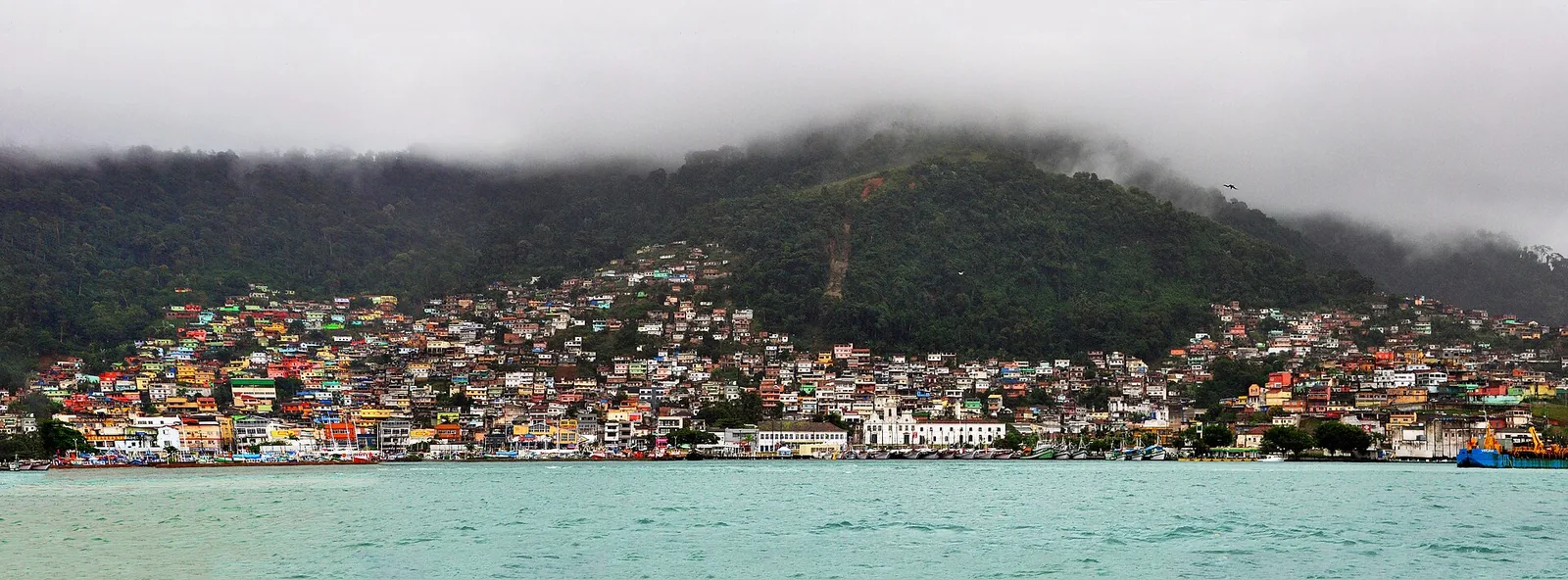
The drive in brief
The essentials, before the detail. The distance from central Rio de Janeiro to Paraty is roughly two hundred and fifty to two hundred and sixty kilometres depending on exactly where you start and finish. The driving time, in normal conditions, is about four hours — call it three and three-quarters if the roads are clear and you don't stop, and rather more if you hit traffic leaving Rio, run into rain, or do the sensible thing and break the journey. The route is almost entirely the BR-101, the Rio-Santos coastal highway, heading west and south. There are a handful of toll plazas, all payable in reais. And the single most important rule is to drive it in daylight.
That is the whole trip in a paragraph. Everything below is how to make it a good one.
It is not a fast road, and you should not want it to be. The slowness is the point.
Getting out of Rio
The least pleasant part of the drive is the beginning: extracting yourself from Rio de Janeiro. The city's traffic is heavy and its road signage can be confusing to a first-timer, so this is the stretch where a navigation app earns its keep. You'll work your way west through the city and its sprawling western suburbs before the urban density finally loosens and the road begins to follow the coast. Give yourself patience here; the scenery has not started yet, and it is tempting to wonder what you've signed up for.
A word on timing. Leaving Rio in the thick of the morning rush, or trying to drive back into it on a Sunday evening when the whole city returns from the coast, will cost you an hour of crawling and fray your nerves. If you can, leave mid-morning on the way out, after the commuter peak, with the whole sunlit day ahead of you. The reward comes soon enough: once you're clear of the metropolitan area and onto the open coast road, the trip transforms.

The route: BR-101, the Rio-Santos highway
The spine of this drive is the BR-101, known along here as the Rio-Santos because it links the two great coastal cities. For the Paraty journey you follow it west and south, and for most of the way it does exactly what a great coast road should: hugs the shoreline, climbs over headlands for the views, drops back down to sea level beside the beaches, and keeps the mountains close on your inland side. This is the heart of the Costa Verde, and the road is the easiest way to understand why the region got its name. The Serra do Mar — the steep coastal range cloaked in Atlantic Forest — comes down almost to the water for long stretches, so you are driving in a narrow green corridor between rainforest and sea.
The stretch past Mangaratiba
The first place where the coast really announces itself is around Mangaratiba, a small bay town that is also one of the mainland ferry ports for Ilha Grande. It makes a pleasant early stop if you left Rio late and want a coffee with a view of the water, though most drivers press on. From here the road settles into its rhythm and the bays begin to come thick and fast.
The stretch through Angra dos Reis
The middle of the drive belongs to Angra dos Reis, and this is where the road and the water are at their most spectacular together. The Baía da Ilha Grande opens up on your seaward side, scattered with the islands the region is famous for, and for a good while you drive with that view beside you. Angra town is the obvious place to break the journey: it sits close to the midpoint, it has somewhere to eat and refuel, and it lets you stretch your legs and take in the bay before the second half. It is also, of course, a destination in its own right — if the islands tempt you, our guide to Angra dos Reis and its 365 islands explains what's worth a boat trip and what isn't. For a road-trip lunch, though, you don't need more than an hour or two: a meal near the waterfront, a look at the bay, and back on the road.
The final stretch into Paraty
The last part of the drive, beyond Angra, is the most beautiful and the most demanding. The road grows more winding as it works around headlands and over rises, with the forest pressing close and glimpses of the sea between the trees. This is the section where you slow down — both because the curves require it and because you'll want to. It is also the section to respect in poor weather, as I'll come to. Then, fairly suddenly, the land flattens, the bay of Paraty appears, and you arrive at the edge of the old town with the water and the islands laid out ahead. It is a genuinely lovely way to first see the place.
Worthwhile stops along the way
The temptation on a four-hour drive is either to stop at nothing or to stop at everything. Neither works. Stop at nothing and you've wasted the best part of the trip; stop at everything and you arrive after dark. The sweet spot is one or two real breaks, chosen well.
- Mangaratiba — an early coffee or leg-stretch by the bay, especially if you left Rio late. Quick and pleasant rather than essential.
- Angra dos Reis — the natural main stop. Lunch near the waterfront, a look at the island-filled bay, fuel and a break around the midpoint. An hour or two is plenty unless you're making a day of the islands.
- A beach — somewhere along the route, pick one cove for a swim and a half hour with your feet in the sand. The coast is lined with them; the joy of driving rather than taking the bus is being able to pull over when one looks irresistible.
There's also good fuel and a clean break to be had simply by pulling into one of the larger roadside stops between the towns, where you can stretch, grab a coffee and a pastry, and let a slow truck convoy clear ahead of you before carrying on. These unglamorous halts are part of how you keep the drive relaxed rather than relentless. What I'd avoid is the death by a thousand stops, where every viewpoint becomes a photo session and the four-hour drive becomes seven and you're navigating the final curves in the dark. Choose your stops, enjoy them properly, and keep moving between them. You can always linger on the way back, or save the deeper exploration of the coast for the days you're based at Paraty — our explore Paraty pages and the Paraty itineraries are there for exactly that.
Driving conditions and safety
I want to be straightforward about this rather than alarmist. Thousands of people drive Rio to Paraty without incident every week. But the road has real characteristics you should plan for, and a little respect goes a long way.
It is winding, not fast
The most common mistake is to look at the distance, divide by a highway speed, and assume you'll be there in three hours. You won't. The Rio-Santos is a two-lane coastal road for much of its length, full of curves, climbs and the occasional slow truck you'll wait to overtake. Plan for an average that feels slow by motorway standards. It is not a road to hurry on, and trying to make up time on the bends is the surest way to spoil the trip. The slowness is the point.
Drive in daylight
This is the rule I'd underline twice. The coastal curves, the variable surface and the lack of lighting on much of the route make night driving genuinely harder and less safe, and you lose the scenery that is the whole reason to drive in the first place. Time your departure so that you arrive at Paraty comfortably before dark, with margin for traffic and stops. If something delays you and you'd be finishing the winding final stretch at night, it is worth slowing down further and accepting the later arrival rather than pushing on tired in the dark.
Rain and landslides
The same rainforest that makes the coast green also makes it wet, and heavy rain changes the road. The winding sections can flood, fog can settle on the higher curves, and after sustained downpours there is a real risk of landslides and rockfall on the steeper stretches, which occasionally close the road for a time. None of this should put you off in normal weather, but in a serious storm the sensible thing is to wait it out rather than drive through it. If you're setting off and the forecast is for heavy rain, build in extra time and patience, and don't be surprised by slow going or temporary holdups.
General good sense
Keep valuables out of sight, particularly at stops and toll plazas. Lock the car. Keep the fuel topped up rather than running it low between towns. And carry a little cash in reais for tolls and small purchases in case a card reader is uncooperative. These are ordinary travel precautions rather than anything specific to this road, but they apply.
Driving in Brazil as a visitor
If you've never driven in Brazil, a few words to set expectations, because the experience is perfectly manageable but not identical to home.
Licences and paperwork
Many foreign visitors can drive in Brazil on their home licence for a tourist stay, and an International Driving Permit, obtained before you travel, is a sensible companion that translates your licence into a form local police and rental firms recognise easily. Requirements vary by nationality and change over time, so confirm the current rules for your own country and licence before you rely on them, and check exactly what your rental company needs at pickup. Carry the licence, the IDP if you have one, the rental documents and your passport whenever you drive.
Fuel, etiquette and the road
Fuel stations are plentiful in the towns along the route and many are full-service, with an attendant who fills the tank for you — a small tip is customary. Brazilian highway driving has its own rhythm: overtaking on two-lane roads requires patience and clear sightlines, drivers flash lights and use the hard shoulder in ways that take a little getting used to, and you'll meet everything from fast cars to slow trucks and the occasional cyclist or pedestrian at the roadside. None of it is alarming once you've settled in; the key is to drive defensively, leave room, and not let impatient drivers behind you push you into rushing the curves. Speed is enforced in places by cameras, often in the approaches to towns, so watch the posted limits as they change.
If something goes wrong
Keep your rental company's assistance number to hand, note the car's details, and in the event of a breakdown pull well off the road and make yourself visible. Mobile coverage is good in and around the towns and patchier on the remoter forested stretches, which is another reason to start with a full tank and an offline map. These are ordinary precautions, but on a winding coastal road in an unfamiliar country they're worth taking seriously rather than leaving to chance.
Car hire and tolls
Renting a car
Most travellers who drive this route pick up a rental car in Rio, often at the airport, and either drop it in Paraty or keep it for the duration of a coastal trip and return it later. A standard small car is fine for the road; you don't need anything rugged for the highway itself. Do think about where you're staying, though — if your accommodation is up a steep or unpaved hillside lane, as many of the nicest places on this coast are, a car with a bit of ground clearance and a willing engine makes the last few hundred metres easier. We can advise guests on the approach to the chalet and the best way to handle the final climb; it's the kind of thing worth checking before you book the car rather than after.
Tolls
There are toll plazas along the BR-101 between Rio and Paraty. The charges are modest and payable in Brazilian reais, by card or cash, and many rental cars come fitted with an electronic tag that lets you use the automatic lanes without stopping — worth confirming with the rental company when you collect the car. As a backstop, keep some small notes to hand: card readers occasionally fail, and a cash lane will always get you through. Factor the tolls into your budget as a small, predictable cost rather than a surprise.
The bus: the Costa Verde line from Novo Rio
If you'd rather not drive — and plenty of people sensibly prefer to leave the coastal curves to someone else — the bus is an excellent option. The Costa Verde company runs regular services from Rio's main bus terminal, the Rodoviária Novo Rio, direct to Paraty along the same coastal highway. Buses leave throughout the day, from early morning to late evening, and the journey takes a little over four hours, following the same route past Angra so you still get the coastal views from your seat.
The practicalities are easy. You can buy tickets in advance, online or at the terminal, and seats are allocated, so on busy weekends and holidays it's worth booking ahead rather than turning up and hoping. The coaches are comfortable and air-conditioned, the fare is inexpensive, and you arrive in central Paraty within easy reach of the old town. The one thing the bus can't give you is the freedom to stop at a beach on a whim — but in exchange you get to watch the coast go by without having to keep your eyes on the road, which on this particular drive is no small thing. Once you're in Paraty, getting around is straightforward; our getting around guide covers taxis, transfers and the local lay of the land, and we're happy to arrange a transfer up to the chalet for arriving guests.
Private transfers and shuttles
Between the do-it-yourself car and the public bus sits a third option that many of our guests prefer: a private transfer or shared shuttle door to door from Rio. A private car with a driver costs considerably more than the bus but takes all the strain out of the day — no navigating out of the city, no curves to drive, no parking to find, and the freedom to ask for a stop along the way if you'd like one. Shared shuttles, which gather several travellers into one vehicle, sit in between on price and pick you up from your Rio hotel rather than a bus terminal. For arriving guests who want to step off a long international flight and simply be delivered to the door, a transfer is often the easiest answer of all, and it's the kind of thing we're glad to arrange in advance so there's a friendly driver waiting rather than a queue and a question. Whichever way you come, the route and its rules are the same — daylight, patience on the curves, and an eye on the weather.
Why drive at all?
It's a fair question, given that the bus does the same route in comfort. The honest answer is that driving and taking the bus are two genuinely different trips, and which is right depends on what you want from the day.
The bus is the better choice if your priority is simply to arrive: it's cheap, it's restful, someone else handles the curves, and you can doze or read while the coast goes by. For solo travellers, for anyone nervous about Brazilian roads, and for those who won't want a car once they're in Paraty, the bus is the sensible pick and there's no shame in it.
Driving wins when the journey is part of the holiday. A car turns the four hours into a day you can shape: pull over when a beach looks irresistible, linger over lunch at Angra, detour to a viewpoint, stop for fruit at a roadside stand. It also gives you independence once you arrive — useful on a coast where the best spots are spread out and not all are easy to reach by public transport, and all but essential if your accommodation sits up a hillside lane. The trade-off is that you're the one driving the curves, paying the tolls and watching the weather. If you enjoy driving and want the freedom, the car is worth it. If you'd rather switch off the moment you leave the city, take the bus. There's no universally right answer — only the one that fits how you like to travel.
What the drive actually feels like
People sometimes ask what the drive is "like," expecting either a dull transfer or a white-knuckle ordeal, and it is neither. Once you're clear of Rio, it settles into a pleasant rhythm. There are long, easy stretches beside the water where you can relax and take in the view, broken up by climbs over headlands and the slower, twistier sections around the bays. You'll share the road with a mix of local traffic, holidaymakers and the occasional truck, and you'll do a fair amount of patient following and careful overtaking rather than open-road cruising.
The scenery does most of the work. For much of the way you have the sea on one side — sometimes open, sometimes the calm island-dotted bays — and the green wall of the mountains on the other, so close in places that you're driving in their shade. It changes constantly: a beach, a fishing village, a stretch of forest, a bay full of boats, a climb that opens onto a long coastal view. The drivers who don't enjoy it are usually the ones in a hurry, fighting the road's pace. Accept that pace, keep the music low and the windows down where the air is good, and it becomes one of those drives you remember fondly rather than one you endure.
Planning your timing
Because daylight matters so much on this route, it's worth thinking about timing deliberately rather than just setting off when you're packed.
The ideal departure
For a one-day drive, aim to leave Rio mid-morning, after the worst of the commuter traffic has cleared but with the whole sunlit day ahead. That gets you through the city's congestion at its easiest, onto the coast road in good light, into Angra for lunch around the midpoint, and into Paraty comfortably before dark with margin to spare for a beach stop or a slow lunch. Leaving at first light works too if you're an early riser and want a beach swim built in; what you want to avoid is a late-afternoon start that leaves you finishing the winding final stretch after sunset.
Days of the week and the holiday calendar
Weekends, and especially holiday weekends, transform this road. Friday evenings see Rio empty out toward the coast, and Sunday evenings see it all come back, and on both the traffic out of and into the city can be heavy and slow. If you have any flexibility, driving on a weekday is more pleasant in both directions. The peak summer holidays around New Year and Carnival are busiest of all, both on the road and at every stop along it — worth knowing whether you're planning around the crowds or into them. Our best time to visit guide covers the seasonal picture in full.
A practical checklist for the drive
A few things worth having sorted before you set off:
- A working navigation app and an offline map. Signal can drop on the remoter stretches, so download the route in advance rather than relying on live data the whole way.
- Cash in reais for tolls, as backup for the card lanes, plus a little for roadside stops.
- A full tank leaving Rio, and a habit of topping up in the towns rather than running low between them.
- Water, snacks and sun protection — the sun through the windscreen is strong, and you may want to swim.
- Swim things within reach, not buried in the boot, so a tempting beach stop is actually easy to take.
- Your accommodation's exact directions, including any notes on the final approach. Hillside lanes and the last few hundred metres are where apps most often go astray; we send guests precise directions for the climb to the chalet for exactly this reason.
- A relaxed attitude to the schedule. Build in slack. The drive punishes a tight timetable and rewards a loose one.
Coming from São Paulo instead
Not everyone arrives from Rio. If you're coming from São Paulo, the trip is a similar distance and shares much of its character, but approaches Paraty from the other end. The usual way is to drop down from the São Paulo plateau to the coast and join the Rio-Santos highway from its southern, São Paulo-state side, then follow it northeast along the coast. On this approach you pass through Ubatuba — itself a worthwhile stop, with a long string of beaches, covered in our Ubatuba guide — before crossing into Rio de Janeiro state and reaching Paraty. The road is the same kind of winding coastal highway, with the same scenery and the same rules: drive in daylight, respect the curves, and watch the weather on the mountain descents. For many visitors, in fact, the neatest trip is to fly into one city and out of the other, driving the coast once in between, so you never double back.
Arriving up at the chalet
However you make the journey — at the wheel or in a bus seat, from Rio or from São Paulo — the arrival is the same and it is a fine one. The road delivers you to the edge of Paraty's bay, and for guests staying with us the last stage is the climb up the hillside to the chalet, several hundred metres above the water, where Paraty, the bay and the islands lay themselves out below you. The final approach is a steep lane rather than a highway, so it pays to take it slowly and in daylight, especially after rain; if you've timed the drive as I've suggested, you'll be making that last climb in the gold of late afternoon, which is the best possible introduction to the place. We send arriving guests precise directions for the lane and the gate, and a transfer can meet you in the town if you'd rather not tackle the climb yourself after four hours on the road. After four hours of coast road there is something very satisfying about pulling in, cutting the engine, and walking out to the terrace to see the whole sweep of the Costa Verde you've just driven, with Angra's islands away to one side and Paraty's old town just below.
The drive down from Rio is genuinely part of the holiday rather than a chore to get through. Give it a daylight start, one good lunch at Angra, a swim if a beach tempts you, and an early-enough finish to arrive in the light, and you'll understand why so many of our guests say the journey set the tone for the whole stay. When you're planning the trip, we're glad to help with the details of the route, the transfer, or anything else — just reach us on the contact page — and once you've arrived, the whole coast is yours to explore, starting with our Paraty overview and the wider Costa Verde guide.
Frequently asked questions
Plan on about four hours of actual driving for roughly 250 to 260 kilometres, and allow more with stops, traffic out of Rio, or rain. The road is scenic and winding rather than fast, so don't judge the time by the distance alone. With a lunch stop and a beach, it makes a relaxed full day.
Take the BR-101, the Rio-Santos coastal highway, heading west and south along the Costa Verde through Mangaratiba and Angra dos Reis. It is the scenic route and the one almost everyone uses. There is no faster inland alternative worth taking for this trip.
It is a normal, well-travelled route, but drive it in daylight and with care. The final stretch is winding, the surface can be patchy, and heavy rain raises the risk of landslides and fog. Leave Rio with enough daylight to arrive before dark, don't rush the curves, and keep valuables out of sight at stops.
Both work. A car gives you freedom to stop at beaches and viewpoints along the way and is ideal for reaching a hillside property. The Costa Verde bus from Rio's Novo Rio terminal is comfortable, inexpensive and frequent if you'd rather not drive, taking a little over four hours direct to Paraty.
Yes, there are toll plazas on the route, payable in Brazilian reais by card or cash, and many rental cars carry an electronic tag for the automatic lanes. The amounts are modest. Keep some small notes handy in case a particular plaza's card reader is down.
Good breaks include Mangaratiba on the bay, the town and waterfront of Angra dos Reis, and one of the beaches along the way for a swim. Angra makes a natural lunch and leg-stretch around the midpoint. Keep it to one or two real stops so you still arrive in good light.
Yes. From São Paulo you usually come down to the coast and join the same Rio-Santos highway from the southern, São Paulo-state end, passing Ubatuba before reaching Paraty. It is a similar distance and character of road, and also best done in daylight.