In this guide
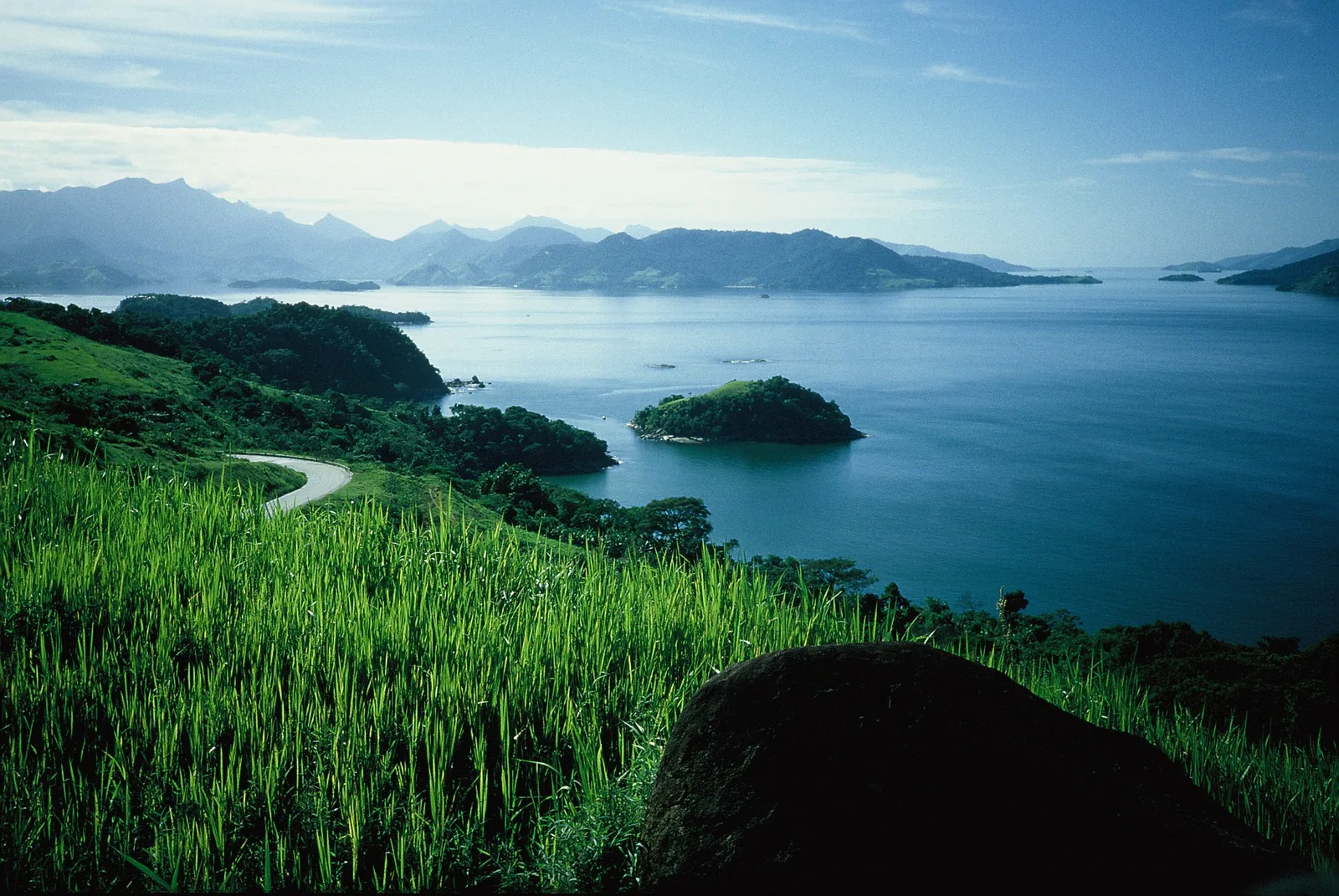
There are no cars on Ilha Grande. You arrive, you step off the boat, and the world slows to walking pace. The village has sand streets and a single small church; the rest of the island is rainforest running straight down to the water, with more than a hundred beaches tucked into its coves and almost nothing built on any of them. It is one of the largest pieces of intact coastal Atlantic forest left in Brazil, and the reason it survived is one of the stranger stories on this coast.
This is the full guide to staying on the island — not the quick version. If you only have a single day and want to come over from the mainland and back, read our Ilha Grande day-trip guide instead, which is built around the boat schedules and the highlights you can fit between crossings. What follows here is for people who want to sleep on Ilha Grande: how to get there, where to base yourself, what to do with two days or four, when to go, and how to fold the island into a longer trip on the Costa Verde.
I have crossed to the island in every season, in flat calm and in a downpour, with a daypack and with a family in tow. It rewards a little planning and punishes none of the things you'd expect a tropical island to punish — but it does ask you to bring cash, sensible shoes, and the willingness to walk. Get those right and the rest takes care of itself.
What Ilha Grande actually is
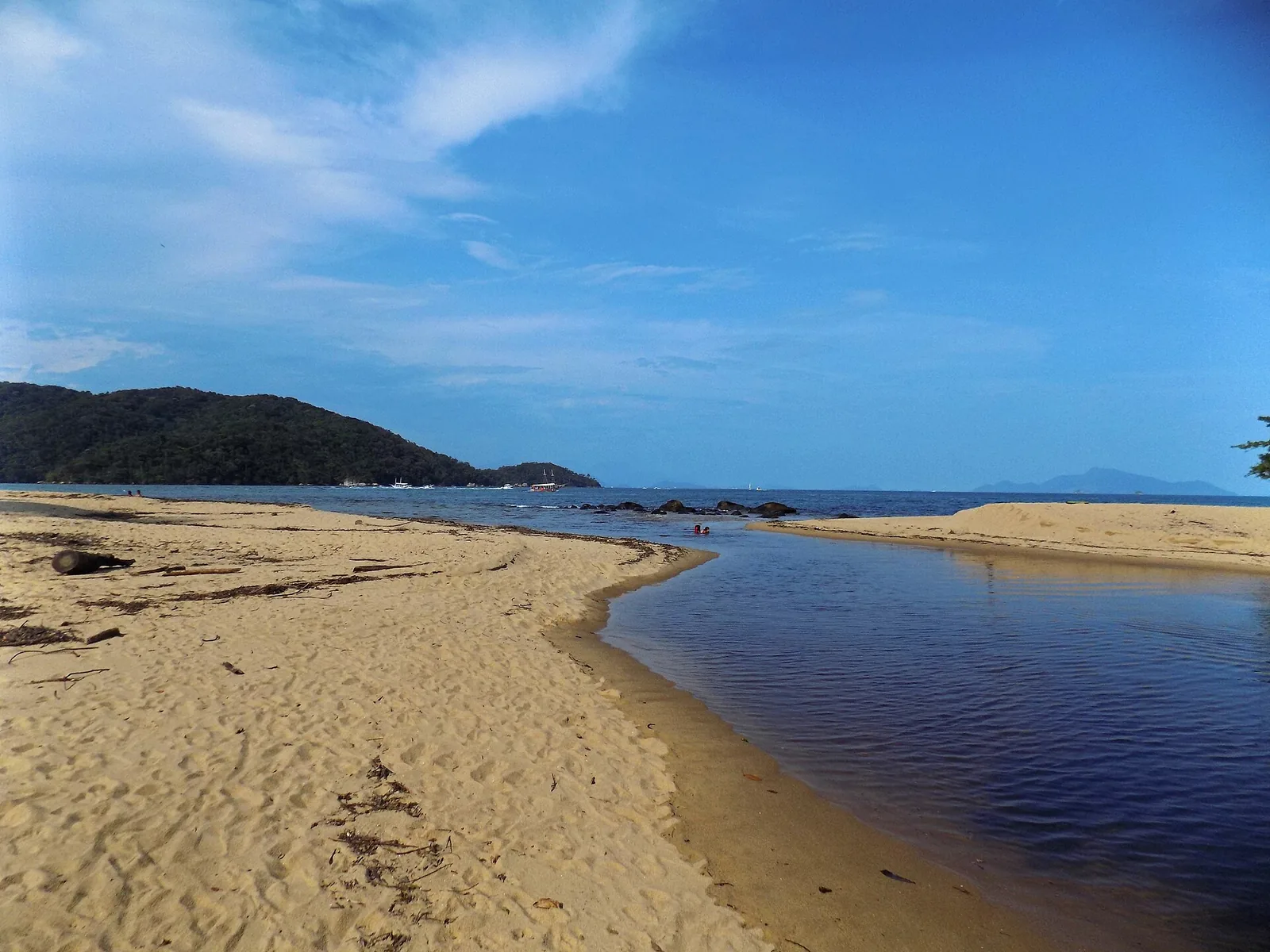
Ilha Grande — the name simply means "big island" — sits about twelve kilometres off the mainland town of Angra dos Reis, in the south of Rio de Janeiro state. It covers roughly 190 square kilometres, which makes it large enough to lose yourself in and small enough to grasp: a single mountainous island, its ridges climbing to over a thousand metres, cloaked almost entirely in dense Mata Atlântica, the Atlantic rainforest that once ran the length of Brazil's coast and now survives in fragments. Here it is not a fragment. Standing in the bay and looking back, you see green from the waterline to the cloud, broken only by the pale crescents of beaches and the cluster of roofs at the village.
Most of the island is formally protected, split between a state park and other conservation areas, and building is tightly controlled. That is why there are no resorts marching along the shore, no coast road, no chain of hotels. What development exists is concentrated in one village and a few tiny settlements, and even there it stays low and modest. The effect, after a day or two, is genuinely restorative — the soundtrack is birds, cicadas, the occasional outboard motor, and water.
The history that saved it
The island looks pristine today partly by luck and partly because, for most of the twentieth century, the Brazilian state kept ordinary people off it. Ilha Grande's modern history is a chain of institutions nobody wanted near them: a quarantine station, the Lazareto, built to hold arriving immigrants suspected of carrying disease; later a leprosarium; and, for decades, a prison. The most notorious was the Cândido Mendes penal colony at Dois Rios, on the wild ocean side of the island, which held political prisoners under the military dictatorship and later some of the country's most hardened criminals. It was finally shut down and largely demolished in 1994.
A prison island is not a pretty idea, and the reality was grim. But the long decades of restricted access had one accidental consequence: no one was allowed to clear the forest, build roads, or develop the coast. While the rest of the Brazilian seaboard was paved and resorted, Ilha Grande was left almost entirely alone. When the prison closed and the island reopened to travellers, its tree cover and its beaches were largely intact — a museum of what this whole coast once looked like. You can still walk to the old prison ruins at Dois Rios, where a small museum tells the story; more on that in our hiking guide.
It's a history worth carrying with you while you're there, because it explains the texture of the place. The quiet isn't a marketing decision; it's the residue of decades when this was somewhere people were sent, not somewhere they chose to go. You feel it most on the wild ocean side, around Dois Rios, where the near-empty beaches and the ruined prison sit in an almost unsettling calm. Even the village of Abraão grew up partly to serve the institutions on the island. Knowing that, the absence of the usual coastal clutter reads less as luxury and more as a kind of reprieve — the island getting to be itself again after a long time being put to other uses.
A UNESCO island
In 2019, UNESCO inscribed Paraty and Ilha Grande together as a World Heritage site — a rare mixed listing that recognises both the cultural landscape of colonial Paraty and the natural value of the surrounding forest, sea and islands. It is the same designation that protects the old town across the bay, and it ties the two places together on paper as well as on the map. Practically, it is a useful reminder that you are travelling through one of the more important conservation areas in the Americas, not just a pretty beach destination.
There are no cars on Ilha Grande. You arrive, you step off the boat, and the world slows to walking pace.
Vila do Abraão: your base
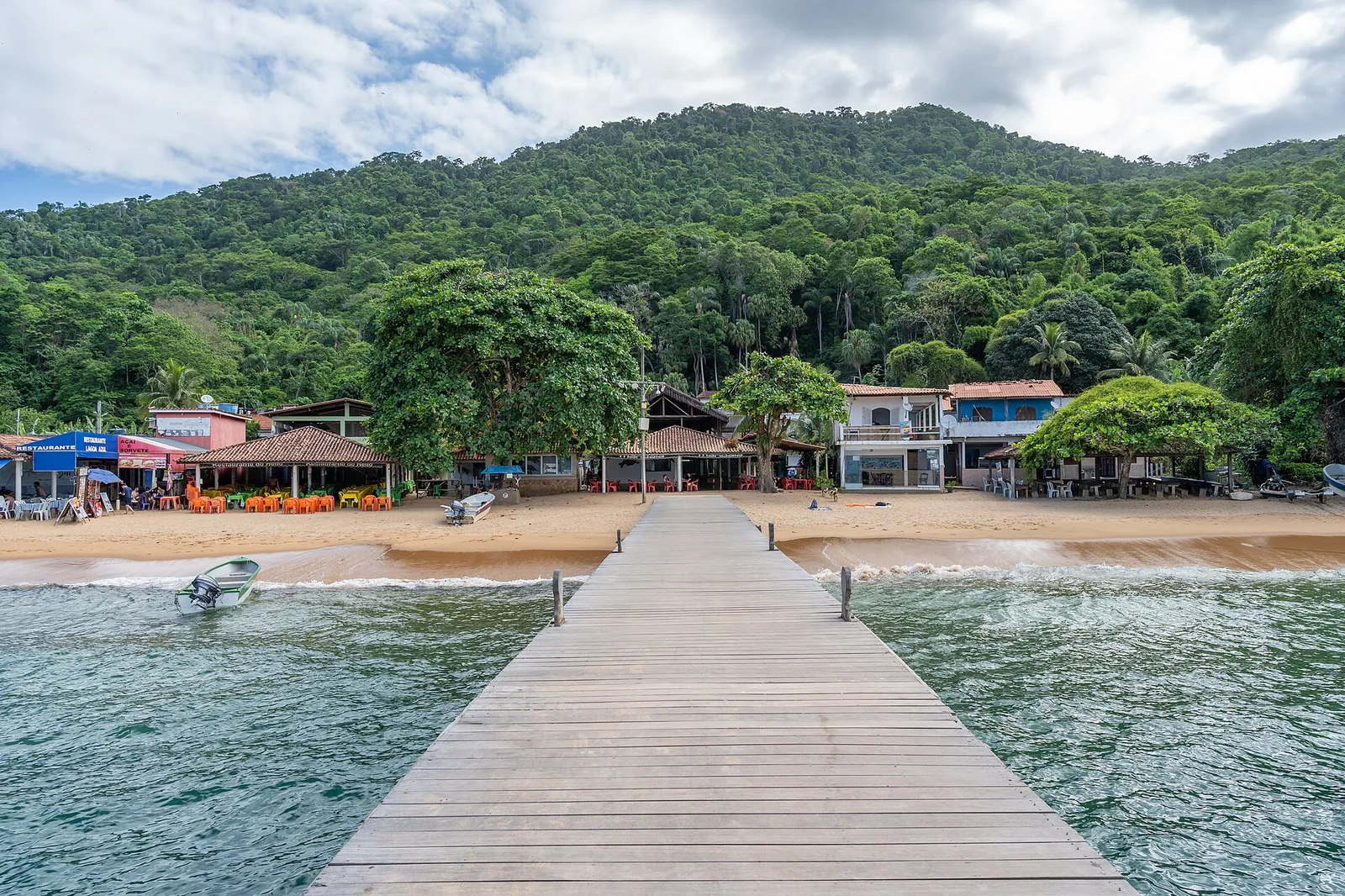
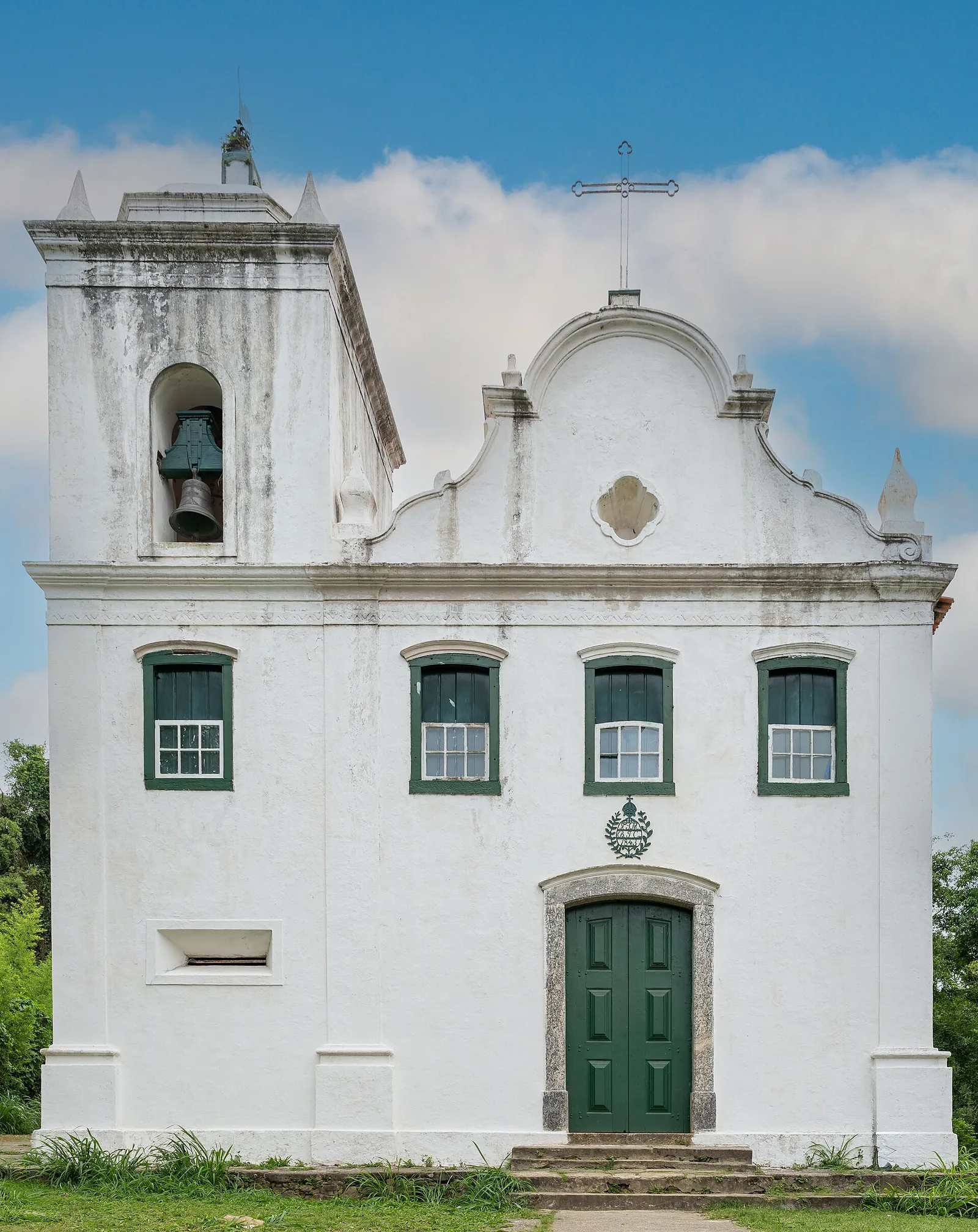
Almost everyone who stays on Ilha Grande stays in Vila do Abraão, the island's only real village and the place nearly all boats land. It is small — a handful of sand streets running back from a curving beach, a little blue-and-white church dedicated to Santana, a square, and a strip of pousadas, guesthouses, restaurants and dive shops. There are a couple of thousand residents, a school, a clinic and a pier. That is essentially the whole town, and you can walk across it in ten minutes.
Abraão works as a base because everything radiates from it. The trails start at its edges; the water taxis and tour boats leave from its beachfront; the restaurants and the few shops are here; and it is close enough to the calm northern coves and the eastern beaches that most day trips begin and end at the pier. In the evening it has just enough life — bars, music, people eating outside, the smell of grilled fish — without ever feeling like a party town, although a younger crowd does keep things going late in high season. It suits couples and families equally; nobody here is out of place.
The brief I'd give a first-timer: don't expect polish. Abraão is charming and friendly, not slick. Power and water can be temperamental in a downpour, Wi-Fi is patchy, and the nicer rooms are simple by mainland standards. You are paying for the setting, not the thread count. If you want genuine comfort and reliable everything, the smart move is to keep your base on the mainland and treat the island as an excursion — more on that combination below, and on what a properly comfortable Costa Verde base looks like at the chalet.
How to get to Ilha Grande
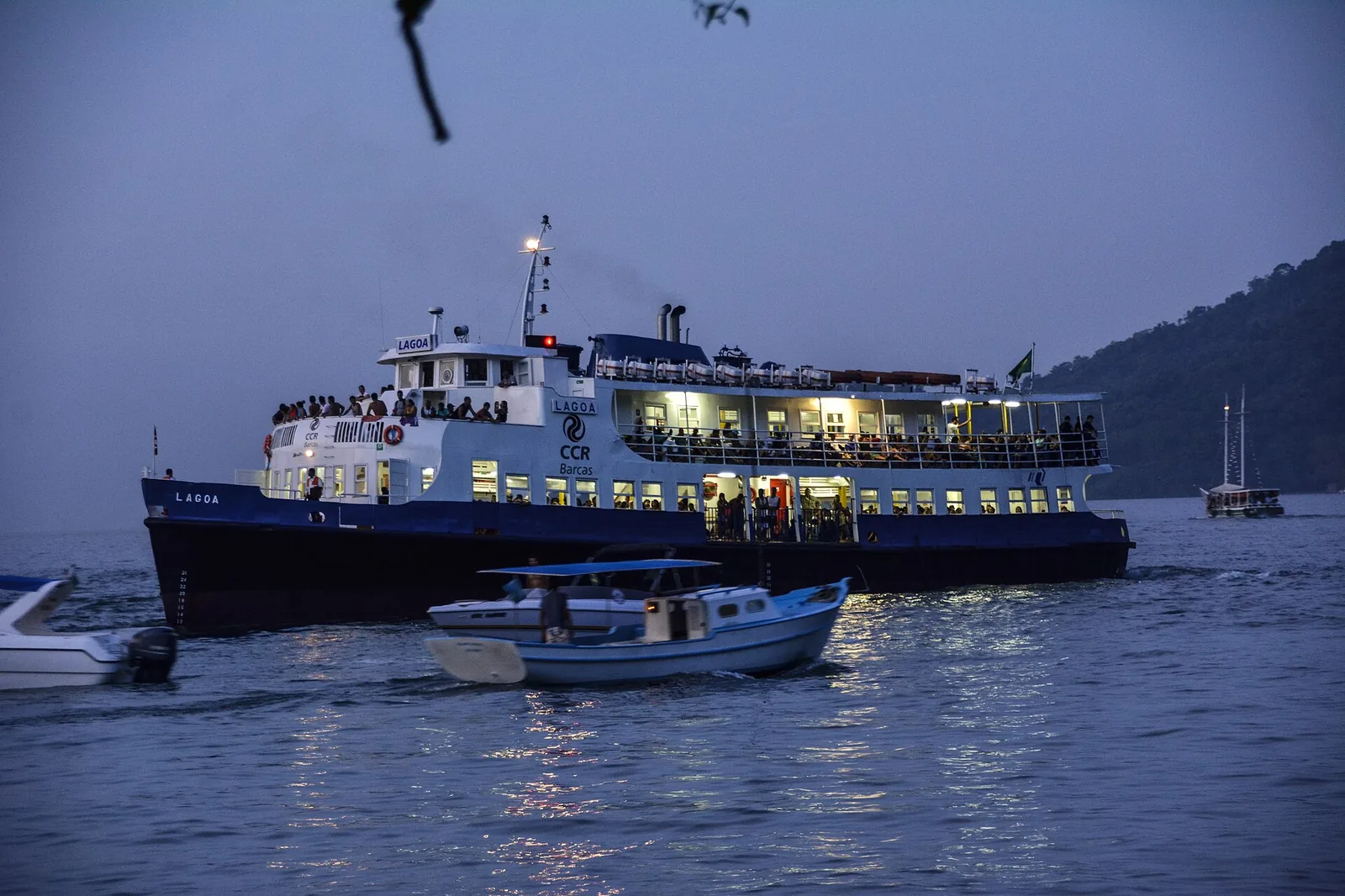
Getting to the island is a two-stage trip: first you reach one of three mainland ports by road, then you cross the water. The crossing is short and scenic and rarely rough inside the sheltered bay, but the boat schedules are the thing that shapes your day, so it pays to understand the options.
The three mainland ports
- Conceição de Jacareí is the closest port to the island and, for most travellers, the most convenient. The crossing is the shortest — roughly half an hour by the faster boats — and the cheapest, and small boats run frequently through the day rather than on a sparse timetable. If you are coming from Paraty or driving down the coast, this is usually the port to aim for.
- Angra dos Reis is the larger town and a transport hub, with the traditional vehicle-and-passenger ferry as well as faster catamarans. The catamarans run several times a day; the slower car ferry is cheap but sails only once or twice a day and takes around ninety minutes. Angra is handy if you are arriving by bus from elsewhere. See our Angra dos Reis guide for the town itself and its own scatter of islands.
- Mangaratiba is further up the coast towards Rio and has a daily ferry crossing of around eighty minutes. It is the right choice mainly if you are coming directly from the Rio direction and the timing works.
Schedules and prices change every season, and an extra late sailing is sometimes added on Fridays, so always check current times the week you travel rather than trusting any timetable you read months ahead. Buy your crossing ticket at the port; in high season the popular sailings can fill, so arrive with time in hand. If your timing doesn't line up with a scheduled boat, the shared water taxis and small private launches at every port will take you across for more money but on your own schedule — a good fallback if you land late.
Getting to the ports
From Rio de Janeiro, regular coaches run down the Costa Verde to all three ports — it is broadly the same route — taking roughly two to three hours depending on the port and the traffic. From Paraty, the drive up to Conceição de Jacareí or Angra is shorter still. If you are driving, note the obvious: you cannot take a car onto the island, so you will leave it on the mainland. The ports have guarded car parks where you can leave a vehicle for a few days for a daily fee. If you are based near Paraty with a car, many people simply drive to the nearest port, park, and cross as foot passengers — see getting around for how the logistics fit together.
Getting around the island
Once you are off the boat, you move in exactly two ways: on foot, and by water. There are no cars, no buses, no scooters for hire. This is the single most important thing to internalise about Ilha Grande, because it changes how you plan every day.
On foot covers the village and the network of forest trails that link Abraão to the nearer beaches, viewpoints and the old prison village. The trails are marked with a simple T-and-number system and range from a flat half-hour stroll to a punishing summit climb. They are how you reach the famous ocean beaches and the high views, and they are a pleasure in themselves — shaded, alive with birdsong, occasionally steep and slippery. Our trail guide covers the whole network in detail.
By water covers everything the trails don't, and a great deal of the island's best is only reachable by boat. Water taxis — small open launches — wait along the Abraão beachfront and will run you to a specific beach and back, or drop you and collect you at an agreed time. Organised boat tours, leaving each morning, loop the calmer northern and western coves with stops for swimming and snorkelling. And the same boats are how most people reach Lopes Mendes: a short hop to the bay below, then a walk over the headland. Agree the price and the pickup time before you step aboard a water taxi, and carry cash to pay.
A practical note on the two main kinds of boat trip, because newcomers muddle them. The shared schooner or speedboat tour is a fixed itinerary — typically a loop of three or four calm-water stops over most of a day, at a set price per person, leaving mid-morning. It's sociable, good value, and the easy way to see the lagoons if you don't mind a group and a timetable. The private water taxi, by contrast, goes where you tell it: you negotiate a destination and a return time directly with the boatman on the beach. It costs more but gives you control, and it's the right choice for reaching a specific beach like Pouso for Lopes Mendes, or for a small group that wants its own day. Most stays end up using both at different points. In high season, book the popular shared tours a day ahead through your pousada; in the quiet months you can usually just turn up.
The best beaches
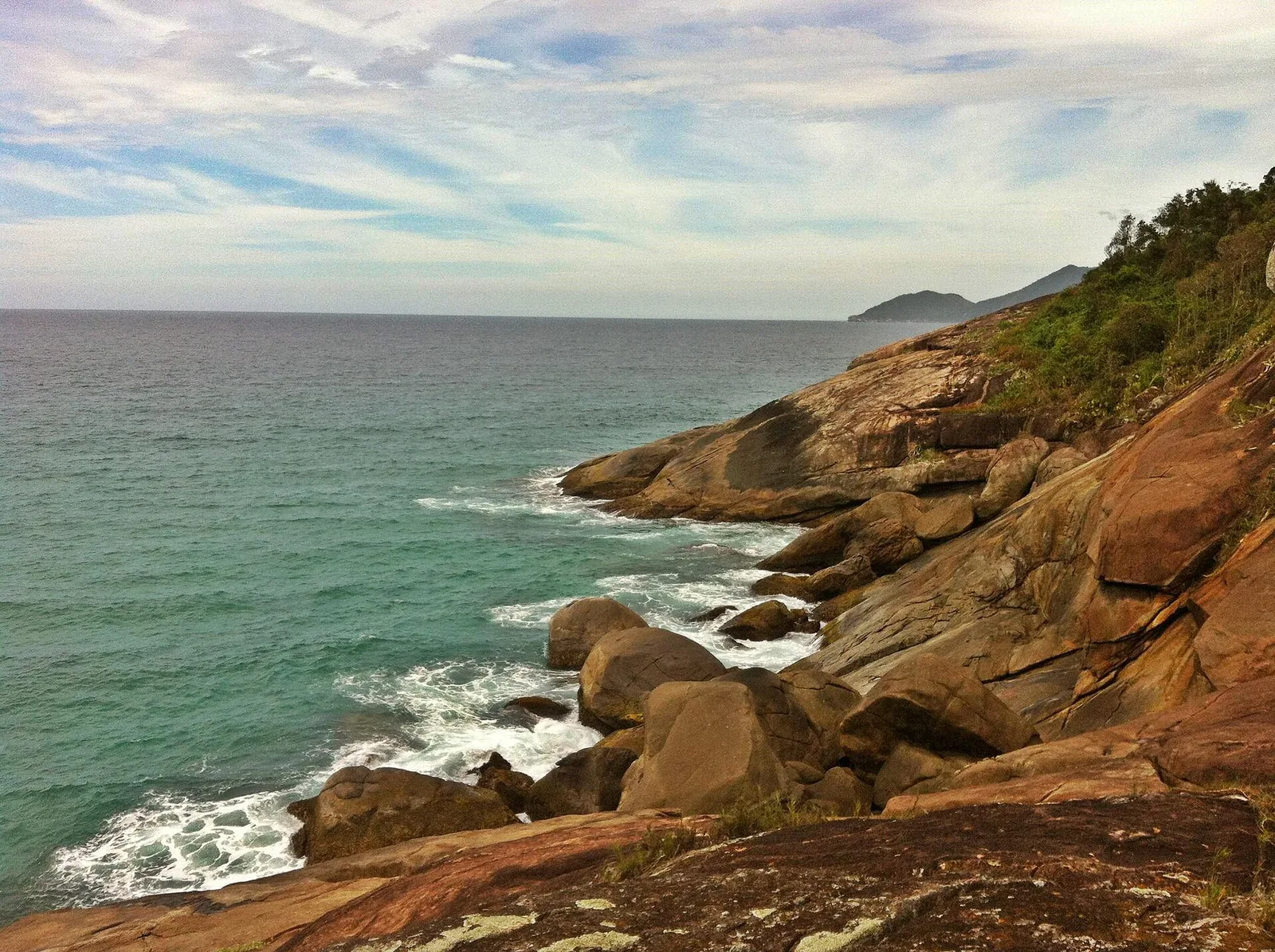
Ilha Grande is, by reputation, a beach island, and the reputation is earned — there are well over a hundred, and the good ones are genuinely beautiful. They divide roughly into two worlds. The sheltered north and west, facing the mainland, give you flat, clear, warm water and the calm coves and lagoons that the snorkelling tours visit. The exposed south and east, facing the open Atlantic, give you the long, wild, surf-washed beaches that the island is most famous for. Knowing which world you're in tells you what to expect from the water.
Lopes Mendes and the ocean side
The single most celebrated beach is Lopes Mendes, on the ocean side: nearly three kilometres of fine white sand, clean rolling surf, and almost nothing built on it. It regularly turns up on lists of Brazil's best beaches, and on a sunny day it deserves the billing. It takes some effort to reach — a boat to nearby Pouso and a short forest walk over the headland, or a longer hike from the village — which is part of why it stays so unspoiled. There are no real facilities, so you bring what you need. It earns its own full write-up in our Lopes Mendes guide.
Further round the wild coast are remoter ocean beaches like Parnaioca and the long sands near the old prison at Dois Rios — beautiful, almost empty, and a serious walk or a longer boat ride away. These are for the day you want distance and solitude rather than convenience.
The calm coves and lagoons
On the sheltered side, the water turns the postcard shades of green and turquoise and lies almost flat. Lagoa Azul, the "blue lagoon," is the classic snorkelling stop — a shallow, clear pool among small islets where shoals of fish gather and the boats anchor. Lagoa Verde nearby is similar. Saco do Céu, a deep, calm inlet, is a favourite for its still water and its sunsets. These are the staples of the standard island boat tour, and an easy, low-effort day even if you are not a strong swimmer or hiker — good for families with younger children. You reach all of them by boat from Abraão.
Closer to the village
If you want a swim without a trek, the beaches within easy walking distance of Abraão — among them the dark-sand Praia Preta, a short stroll from the village past the old aqueduct and the ruins of the Lazareto quarantine station — are perfectly pleasant for a morning dip and a sense of where you are. They are not the island's headline beaches, but they're free, immediate, and quiet outside peak hours.
Where the trails go
The trail network is one of Ilha Grande's great pleasures and the only way to reach much of it on your own steam. The signed routes link Abraão to the eastern beaches, to viewpoints, to the high peaks and across the island to the old prison village. A flat coastal walk to a snorkelling cove is one thing; the summit climb to Pico do Papagaio, with its enormous view over the whole bay, is quite another, and not to be underestimated. Because difficulty, timing and safety matter so much here — the heat is real, the forest swallows the light early, and people do get lost — I have given the trails their own detailed treatment in the Ilha Grande hiking guide. Read it before you set off on anything longer than an afternoon stroll.
Beyond the beaches: diving, wildlife and food
Ilha Grande is more than its sand, and a couple of days here leave room for the rest of it.
Snorkelling and diving
The clear, sheltered water on the island's bay side makes for some of the most accessible snorkelling and diving in southeast Brazil. The calm coves are good for a mask-and-snorkel float straight off a tour boat, and there are dive operators in Abraão running trips to reefs, wrecks and the rocky drop-offs around the island for certified and beginner divers alike. Visibility is best in the drier, calmer months. Even non-divers tend to be surprised by how much life there is just under the surface of the green lagoons — it's worth bringing or hiring a mask even if you do nothing more ambitious than that.
Wildlife and the forest
This is a serious chunk of Atlantic forest, and it shows. You'll hear, and sometimes see, a lot: the dawn and dusk roar of howler monkeys carrying across the canopy, smaller monkeys in the trees near the village, an abundance of birds, butterflies, and the odd capybara or agouti at the forest edge. The waters around the island host turtles and, in season, dolphins that often shadow the tour boats. None of it is a zoo; it's simply what an undeveloped tropical island sounds and looks like, and slowing down enough to notice it is one of the quiet pleasures of staying a few nights rather than dashing through.
Eating in Abraão
The village punches above its size for food. The obvious strength is seafood — grilled fish, prawns, the seafood stews of the coast — eaten simply at the casual places along the waterfront and the sand streets, often with your feet more or less in the sand. There are also relaxed bars, a few more ambitious kitchens, juice and açaí spots, and the inevitable end-of-day caipirinha. Nothing here is formal; the appeal is fresh fish, cold drinks and an easy atmosphere. Carry cash, as not every place takes cards, and don't expect late dinners outside the busy season — the island keeps early hours.
How many days do you need?
The honest answer depends on how you like to travel, but here is how the days tend to stack up.
- One day (a day trip): possible, but you'll spend a lot of it on boats, and you won't sleep to the sound of the sea. Workable if you're short on time and want a taste; covered in the day-trip guide.
- Two nights: the comfortable minimum to feel you've actually been here. One full day for Lopes Mendes or a wild beach, one for a calm-water boat tour or a shorter trail, and an evening or two in the village.
- Three to four nights: the sweet spot. Enough to do Lopes Mendes properly, take a full boat tour of the lagoons, walk to Dois Rios or up to a viewpoint, and still have a slow morning or two. This is what I'd aim for if the island is the centre of your trip.
- Longer: easily filled if you love hiking, diving or simply doing very little. There is enough coastline and enough trail to keep you busy for a week, and the pace suits a longer, quieter stay.
If it helps to see it laid out, a good three-night shape is: arrive and settle into Abraão on the first afternoon, with a swim at a village beach and dinner out; a full day at Lopes Mendes on day two; a calm-water boat tour of the lagoons on day three, perhaps with a snorkel and an easy walk; and a final morning for a short trail or a last swim before the boat back. Swap a beach day for the Pico do Papagaio sunrise or the Dois Rios walk if you're a keen hiker. The island flexes easily around what you most want from it.
When to go
Ilha Grande is a year-round destination, but the seasons are real. The drier, more settled stretch runs roughly from April to early January, and the most reliable sunshine and calmest seas tend to fall between about August and December, when rain is scarce and the water is at its clearest for snorkelling. The southern-hemisphere summer — December through March — is the hottest and busiest time, with Brazilian holidaymakers in force around New Year and Carnival, and it also brings the heaviest, most sudden downpours. March in particular can be wet.
My own preference is the shoulder months: April and May at the end of the warm season, or September and October before the summer crowds and rain arrive. You get warm days, thinner crowds, lower prices and a good chance of settled weather. Whenever you come, accept that this is a rainforest island — a passing shower is part of the deal, and the green you came to see is the reason for it.
Money, packing and practical notes
A few things genuinely matter here, and getting them wrong can spoil a day.
- Bring cash. This is the big one. There is no dependable ATM on the island, and many kiosks, water taxis and smaller restaurants take only cash. Work out roughly what you'll spend across your whole stay — boats, meals, tours, a margin for the unexpected — and bring it in reais before you cross. Running short on the island is a real and avoidable headache.
- Pack light, and carry your own bags. There are no porters and no cars; you'll walk from the pier to your room over sand, sometimes a fair way. A soft bag or a backpack beats a hard suitcase with wheels.
- Real shoes for the trails. The forest paths are rooty, rocky and slick after rain. Trainers or light hiking shoes, not flip-flops, for anything beyond the beach.
- Sun and water. The tropical sun is strong even under cloud. High-factor sunscreen, a hat, and more drinking water than you think you need, especially on the trails and the facility-free beaches.
- Insects and a light rain layer. Repellent for dusk, and a packable rain jacket for the showers that come and go.
- Manage your expectations on connectivity. Phone signal and Wi-Fi are limited and patchy. Treat it as a feature, not a fault — it's part of why the island feels the way it does.
Combining Ilha Grande with Paraty
Ilha Grande and Paraty are close neighbours on the same coast, share one World Heritage listing, and complement each other beautifully — one is wild island and forest, the other a perfectly preserved colonial town. Pairing them makes for one of the best short trips in Brazil, and there are two sensible ways to do it.
The first is to split your stay: a few nights on the island for the beaches and trails, then several nights based near Paraty for the historic centre, the bay schooner trips, the waterfalls and the cachaça distilleries inland. You change beds once and get the best of both. The second, which I'd argue is the more comfortable, is to keep a single base on the mainland near Paraty and treat the island as a day trip or an overnight excursion from there. You drive to the nearest port, cross, and come back to a proper home with a kitchen, a pool and reliable hot water — rather than carrying everything onto and off the island.
That second pattern is exactly what Château Portofino is built for. The chalet sits high above the Bay of Paraty with a view that takes in Paraty, Angra dos Reis and Ilha Grande itself on the horizon — you can look out at the island over breakfast and be standing on it by lunch. From here the nearer ports are an easy drive, and the rest of the Costa Verde — the waterfalls, the gold trail, the boat tours, Trindade — is on your doorstep. For ideas on stitching the whole region into an itinerary, start with the explore page, and when you want help shaping a trip around an island day or two, just get in touch. We do this for our guests all the time, and we're happy to tell you which crossing to take on the day you actually arrive.
The short version
Ilha Grande is a rare survivor: a big tropical island left almost entirely to its forest and its beaches, with a single small village, no cars, and water clear enough to see your feet. Get there by crossing from Conceição de Jacareí, Angra dos Reis or Mangaratiba; base yourself in Vila do Abraão if you sleep on the island, or keep your base near Paraty and visit; bring cash and real shoes; give it two nights at the least and ideally three or four; and time it for the drier, calmer months if you can. Do that, and you'll understand why people who come here once tend to come back — and why it pairs so naturally with a longer, more comfortable stay on the Paraty coast just across the bay. Few places this close to a major city still feel this far from one, and that, more than any single beach or trail, is what makes the island worth the trip.
Frequently asked questions
You drive or take a bus to one of three mainland ports — Conceição de Jacareí, Angra dos Reis or Mangaratiba — and then cross by ferry, catamaran or water taxi. Conceição de Jacareí is the closest and quickest crossing; nearly all boats land at Vila do Abraão. The crossing takes roughly twenty-five minutes to ninety minutes depending on the port and the boat.
Two nights is the comfortable minimum and lets you do one big beach day plus one trail or boat day. Three to four nights is better if you want Lopes Mendes, a boat tour of the calm-water coves, and a serious hike without rushing. Day trips are possible from the mainland but you spend most of the day on boats.
No. There is no reliable cash machine on the island, and many smaller restaurants, beach kiosks and water taxis are cash-only. Bring enough Brazilian reais in cash for your whole stay, plus a margin, before you cross from the mainland.
No. The island is car-free apart from a handful of service vehicles. You get around on foot, by water taxi, or on organised boat tours. Pack light, because you carry your own bags from the pier to your room.
The drier, more settled months run roughly from April to early January, with the most reliable sunshine and calm seas from around August through December. The southern-hemisphere summer (December to March) is hottest and busiest and brings the heaviest rain. April, May, September and October are quiet and pleasant.
Yes, and many people do. They are close neighbours on the same stretch of coast and share one UNESCO World Heritage listing. A common pattern is a few nights on the island followed by several nights based near Paraty on the mainland, where you have a comfortable home, a car and easy access to the historic town.
Yes. It is a quiet, low-crime place built around walking and the water, and it suits couples, friends, families and solo travellers alike. The main things to plan around are the heat, the cash-only economy, and the fact that some beaches and trails are genuinely remote with no shade or facilities.