In this guide
Stand on the terrace of the chalet at first light and the forest tells you it is there before you can see much of it. The howler monkeys begin somewhere up the slope, a low roar that carries for kilometres and sounds, the first time you hear it, less like a monkey than like wind in a tunnel. A pair of toucans clatter across the gap between two trees. Somewhere below, hidden in the green, a stream is running toward the bay. This is the Atlantic Forest — the Mata Atlântica — and it is climbing the mountain directly behind you, the same forest that once covered most of Brazil's eastern coast and now survives in fragments, of which the great block behind Paraty is one of the most important.
Most visitors to Brazil come for the Amazon, and the Amazon deserves the pilgrimage. But the forest you actually wake up inside on the Costa Verde is a different one, and in some ways a more remarkable one. The Atlantic Forest is older than the Amazon. It holds more endemic species — plants and animals that exist nowhere else on the planet — packed into a far smaller area. And it has paid a far higher price for Brazil's history, because it is the forest that the country was built in. Nearly every major Brazilian city, from Rio to São Paulo to Salvador, sits on land that was once Atlantic Forest. What remains is precious precisely because so little of it is left.
This piece is an attempt to introduce that forest properly: what it is and how it differs from its famous cousin, how much of it survives, the extraordinary life it shelters, the great conservation effort to save it, and — most usefully for anyone staying with us — how to experience it well and responsibly from a hillside above the sea. You do not have to go to the Amazon to stand in a world-class rainforest. You only have to walk out the door.
What the Atlantic Forest is
The Mata Atlântica is a biome, not a single park — a vast band of rainforest and associated ecosystems that historically ran the length of Brazil's eastern seaboard, from the northeast down through the southeast and into the south, with fingers reaching inland and over the border into Paraguay and Argentina. It is not one uniform jungle but a mosaic: lowland coastal forest, the dense moist forest of the mountain slopes, higher-altitude cloud forest, drier interior forest, and the restinga and mangrove systems where the land meets the sea. Behind Paraty you can climb through several of these zones in a single morning, from beach to cloud, which is part of what makes the area so rich.
It is worth being clear about the distinction from the Amazon, because the two are often blurred together as 'the Brazilian rainforest'. The Amazon is a single enormous basin in the north and west, the largest rainforest on earth, still substantially intact. The Atlantic Forest is a separate, narrower coastal biome in the east, geologically older, evolutionarily distinct, and reduced to a small fraction of its former self. They share some families of plants and animals, but each has its own cast of species, and the Atlantic Forest's cast is unusually full of endemics — life that evolved here, in this band of coast and mountain, and exists nowhere else.
There is a reason the two forests diverged so completely. For long stretches of geological history the Atlantic Forest was effectively an island of green, cut off from the Amazon by a belt of drier vegetation across central Brazil. Isolation is the engine of endemism: separated populations drift apart over millions of years until they become entirely new species. The Atlantic Forest is, in a sense, an evolutionary laboratory that ran its own experiments for a very long time, in isolation, which is why so much of what lives here is found nowhere on the planet but here. When you understand that, the forest stops being a slightly smaller version of the Amazon and becomes its own thing entirely — older, stranger, and more singular.
The forest's vertical worlds
A rainforest is not one habitat but several stacked on top of each other, and learning to think in layers changes how you see it. At the top is the canopy, a sunlit roof of interlocking crowns where most of the fruit, most of the flowers and a great deal of the animal life actually are — the toucans, the monkeys, the canopy birds. Below that is the understorey, a dim middle world of smaller trees and the trunks of the giants, draped in lianas and epiphytes. At the bottom is the forest floor, surprisingly open and dark, where little grows because little light reaches it, and where the work of decay and recycling happens. Behind Paraty there is a fourth axis to all this — altitude. As you climb the Serra, the lowland forest gives way to montane forest and finally, on the highest slopes, to a moss-dripping cloud forest with its own specialised plants and animals. To walk uphill here is to travel through several forests in a morning, each with a different cast.
The Amazon is the forest the world knows. The Atlantic Forest is the one most Brazilians actually live in — and the one that has paid the highest price for it.
How little remains
Here is the figure that defines the Atlantic Forest, and it is worth stating carefully because estimates vary. The most widely cited scientific assessment, a landmark 2009 study, concluded that only about 12 percent of the original forest cover survives — roughly an eighth of what once stood. Other studies, using different definitions of what counts as forest, land anywhere from under 8 percent to around a quarter; the spread comes from methodology, not disagreement about the basic fact, which is that the great majority of this forest is gone.
Worse than the total loss is the shape of what is left. The same research found that most surviving forest exists in very small fragments — isolated islands of green in a sea of farmland, pasture and city — with a large share of all remaining forest sitting close to an exposed edge. Fragmentation matters because a forest is not just trees; it is a working system of seed dispersers, pollinators and predators that needs space and connection to function. A monkey troop, a jaguar, a large fruiting tree that depends on a particular bird — these need continuous habitat, and a patch of forest the size of a few football fields cannot hold them for long.
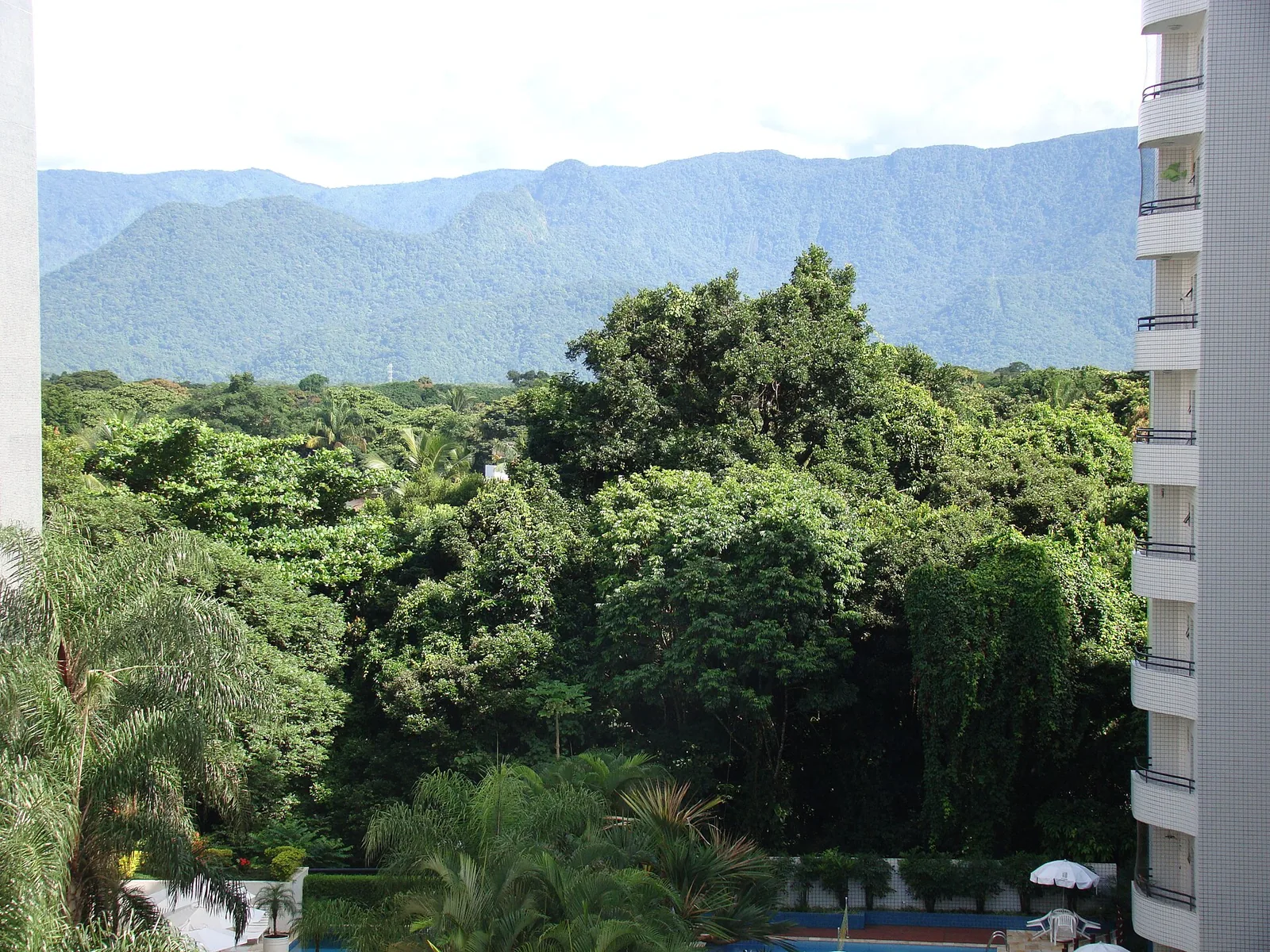
This is exactly why the forest behind Paraty matters out of all proportion to its size on a map. The Serra do Mar here forms one of the largest continuous blocks of Atlantic Forest still standing, a forest-to-coast continuum protected across several reserves. It is big enough and connected enough to hold the animals that vanish from smaller fragments. When you walk into the hills from the chalet, you are not walking into a remnant; you are walking into one of the strongholds.
A forest of endemics
What makes the Atlantic Forest extraordinary, and what earns it a place among the world's recognised biodiversity hotspots, is the combination of how rich it is and how much of that richness is unique to it. The numbers are genuinely hard to take in. The forest holds thousands of tree species, a large proportion of them endemic. It shelters a remarkable share of the planet's vertebrate diversity in its sliver of coast. Its amphibians in particular are a wonder — the great majority of the forest's frog species are found nowhere else, which is why a night walk after rain, when the whole slope seems to be singing in a dozen voices at once, is one of the forest's quiet marvels.
Endemism is the word that keeps recurring, and it is the heart of why conservation here is so urgent. In the Amazon, losing a patch of forest is a tragedy, but many of its species range across an enormous area. In the Atlantic Forest, a species may live in a single valley. When that valley goes, the species goes with it, everywhere, forever. The forest is both a treasure house and a fragile one, and that fragility is the case for treating it gently.
The plants are the wonder, too
It is easy to come to a rainforest hunting for animals and overlook the fact that the forest is the plants — the animals are guests in a structure the plants have built. The Atlantic Forest holds an enormous diversity of trees, a great many of them endemic, including the laurels, the figs, and the towering jequitibás that can live for centuries. It also gave the country, and arguably the world, some of its most familiar botanical exports: the brazilwood tree, pau-brasil, whose red dye was the colony's first commodity and gave Brazil its very name, was an Atlantic Forest species, logged so heavily for export that it became rare in the wild.
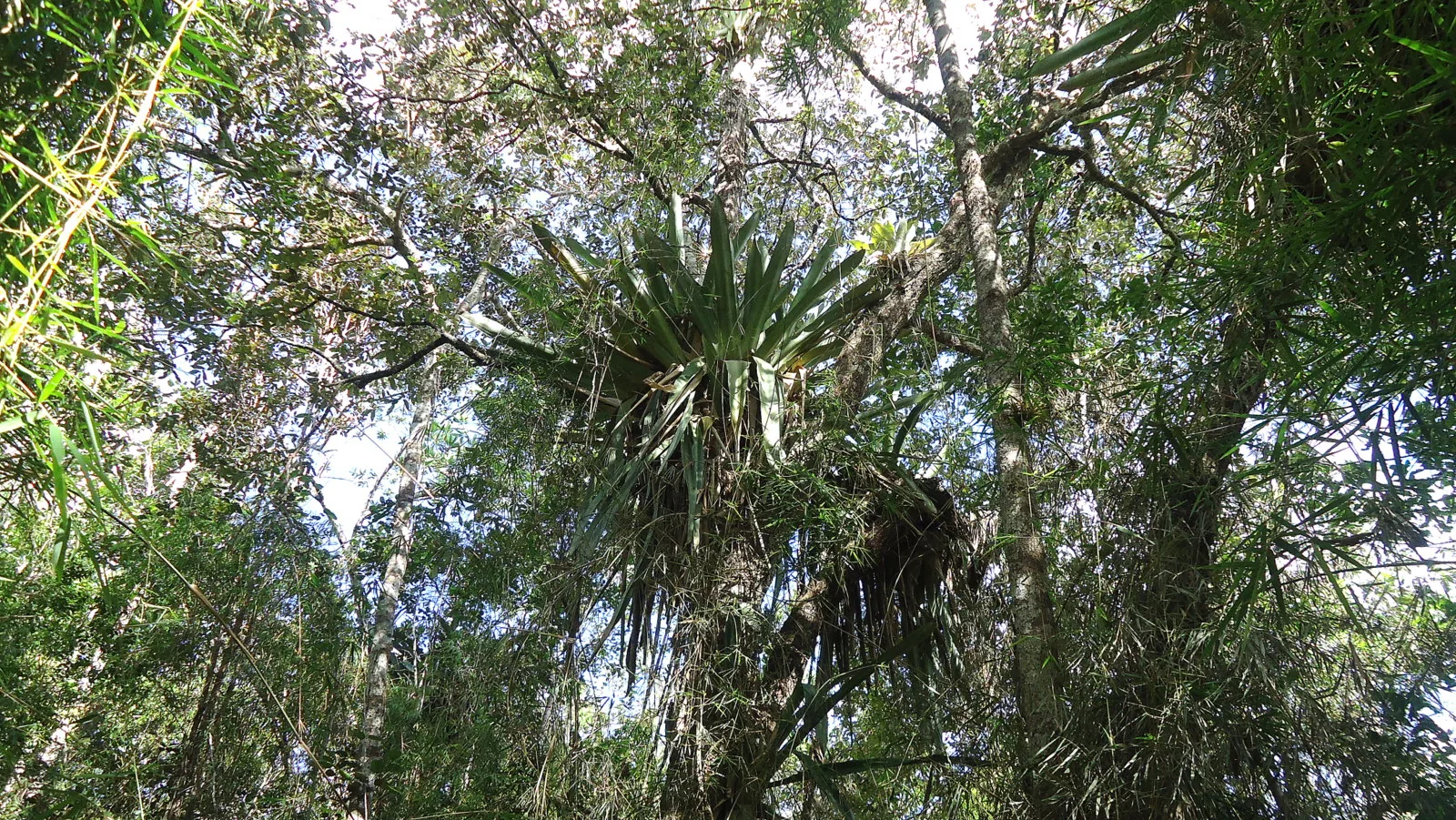
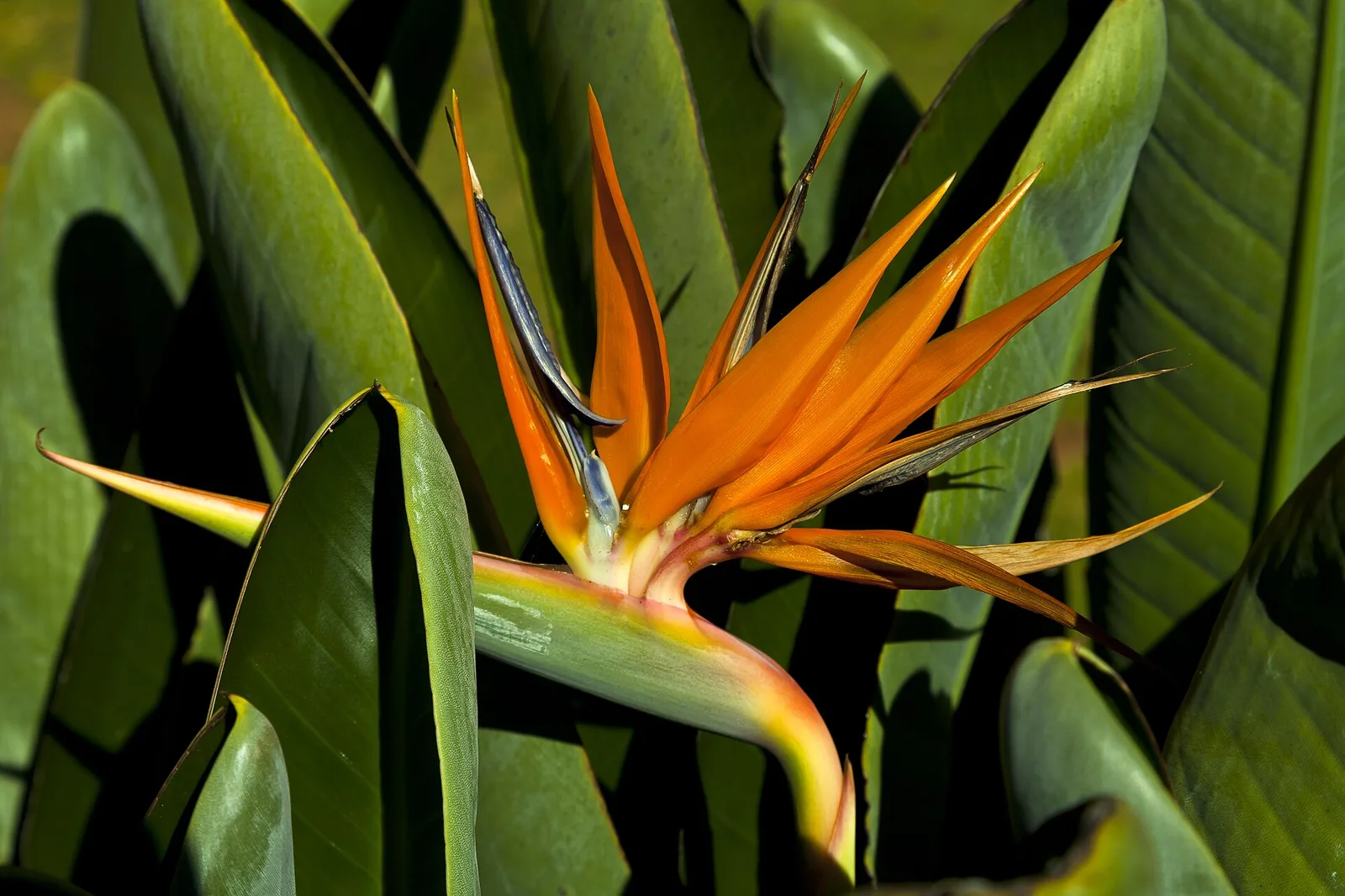
The showier plants are everywhere once you start looking. Bromeliads perch on branches, each rosette holding a little pool of rainwater that becomes a whole ecosystem in miniature, home to frogs and insects that complete their lives metres above the ground. Orchids cling to bark in their thousands of species. Heliconias and gingers flare red and orange in the clearings, their flowers shaped precisely to fit the bills of the hummingbirds that pollinate them. The strangler figs begin life in the canopy and send their roots down to the ground, eventually engulfing the host tree entirely. None of this asks for binoculars. It asks only that you slow down and look at the green as something other than a backdrop.
The flagship wildlife
You will not see everything. Rainforests do not work that way; most of the life is small, nocturnal, high in the canopy or simply very good at not being seen. But the Atlantic Forest's flagship species are worth knowing, both because some of them you may genuinely encounter and because they are the animals around which the whole conservation effort turns.
The golden lion tamarin
No animal symbolises the Atlantic Forest more than the golden lion tamarin, a small monkey the colour of fire with a lion-like mane around its face. By the 1970s it had been hunted and squeezed by deforestation to the brink — perhaps a few hundred individuals left in the wild, in shrinking lowland fragments of Rio de Janeiro state. What happened next is one of conservation's better stories: a long programme of captive breeding, careful reintroduction of zoo-born animals, rescue of stranded family groups, and patient replanting of forest corridors to link isolated patches. The wild population has since climbed back into the thousands. It is not safe yet — a yellow fever outbreak set it back sharply in recent years — but it is alive, and that is not nothing.
An honest note for travellers: you are unlikely to see one near Paraty. The main populations live in lowland forests further north in the state, mostly in and around protected reserves, not in the mountain forest of the Serra. The tamarin matters here as a symbol of what the whole forest faces and what dedicated effort can achieve, rather than as something to tick off a list. If seeing one is a genuine goal of your trip, it is better planned as a dedicated excursion to the right region, and we are happy to point you to the reputable reserves.
Primates of the Serra
The forest behind Paraty has its own primates, and these you have a real chance of meeting. Brown capuchins, intelligent and endlessly curious, move through the mid-canopy in troops. Howler monkeys announce the dawn and dusk with that astonishing roar. Tiny marmosets flit through the understorey. And the forest is home, in places, to the muriqui — the woolly spider monkey, the largest primate in the Americas, a gentle, peaceable, leaf-eating giant of the canopy that has become one of the great emblems of Atlantic Forest conservation. The nearby Serra da Bocaina National Park is one of its strongholds. Seeing a muriqui takes luck, patience and usually a good guide, but knowing it is up there changes how you listen to the forest.
Birds, butterflies and the smaller life
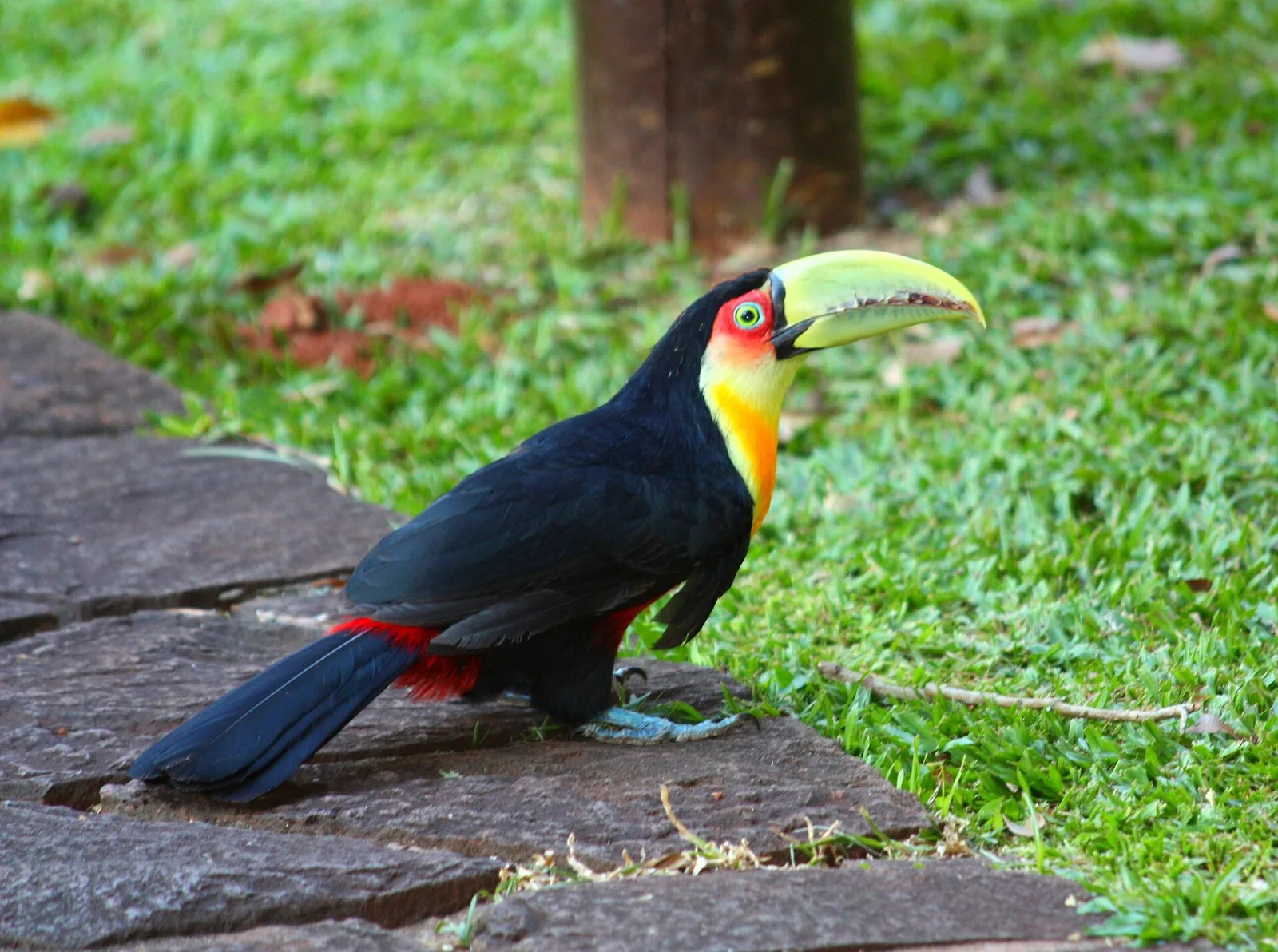
For many visitors the birds are the real reward, and the Atlantic Forest is one of the world's great birding destinations. Toucans and toucanets with their absurd, beautiful bills; tanagers in every shade of green, blue and red; hummingbirds working the flowers; trogons, woodpeckers, antbirds and the strange, bell-loud bare-throated bellbird, whose metallic call carries across whole valleys. The Paraty stretch of forest is recognised for holding a very large share of the entire biome's bird life — by some counts close to half of the Atlantic Forest's birds and a majority of its endemic species occur within the protected landscape around Paraty and Ilha Grande. That concentration is part of why the area earned its World Heritage status, and it is what makes a quiet morning here so rewarding. You do not need to be a serious birder to enjoy it; a pair of binoculars and an unhurried hour will hand you more colour than you expected, and a guide who knows the calls will double what you find. Among the prizes the keen come looking for are the bright saffron toucanet, the black-fronted piping-guan, cotingas, and a long roll-call of small, secretive forest species that exist only in this biome and reward the patient.
And then there is everything smaller. Blue morpho butterflies the size of your hand drifting through a clearing. Orchids and bromeliads growing on the trunks of trees, each a little garden in the air. Leafcutter ants carrying their green flags along the trail. Frogs of every size and voice. The Atlantic Forest rewards looking down and looking close as much as looking up, and children, in our experience, often see more than the adults precisely because they are nearer the ground and more willing to be amazed.
The day's two great hours
If there is one practical thing to know about watching this forest, it is that life runs on two tides — dawn and dusk — and the middle of the day is comparatively dead. In the hour around first light the forest wakes all at once: the howlers roar to mark their territory, the birds run through the dawn chorus, the monkeys move out to feed, and the air is cool enough that everything is active. Then, through the heat of the day, much of it falls quiet and still, animals resting in the shade where you will not find them. As the light softens in the late afternoon the forest stirs again, and after dark a whole second shift comes on — the frogs in full chorus, the bats over the water, the night birds, the rustle of things you will hear far more often than see. We hosted a couple last autumn who came expecting jaguars and went home talking about the howlers at dawn and a single owl that called all night from the slope above the pool. The forest gives you what it gives you, and it is usually better than the thing you came for.
The forest behind Paraty: Serra do Mar and Bocaina
The particular forest you are staying within is the southern stretch of the Serra do Mar, the coastal mountain range that runs like a green wall along this part of Brazil. Behind Paraty it rises steeply and quickly — within a short distance of the beach you can be high in cloud forest — and much of it is protected. The Serra da Bocaina National Park, established in 1971 and covering on the order of a hundred thousand hectares, straddles the border of Rio de Janeiro and São Paulo states and forms the mountainous heart of the protected landscape. It was this combination of intact forest and historic town that led UNESCO, in 2019, to inscribe Paraty and Ilha Grande together as a mixed cultural and natural World Heritage Site — Brazil's first — recognising the forest, the islands and the colonial centre as a single landscape of outstanding value.
What this means on the ground is that the green you see from the terrace is not a scrap. It is a substantial, connected, legally protected block of one of the planet's most threatened forests, with the animals and birds that go with real forest still in it. Our guide to the Serra da Bocaina goes into the trails, the access points and the practicalities for those who want to head up into it properly.
Conservation: a forest being stitched back together
The story of the Atlantic Forest is not only one of loss. For several decades now it has also been the focus of one of the most determined conservation movements anywhere in the tropics. Because so much of the forest is privately owned and broken into fragments, the work here is unusually patient and unusually local: replanting corridors to reconnect isolated patches so that animals can move between them; protecting the largest surviving blocks as national and state parks; restoring degraded land back to forest; and, crucially, working with the people who live in and around the forest rather than against them.
That last point deserves weight. The forest's survival depends on the communities who share it — the caiçara fishing and farming people of this coast, the small landowners, the guides and the operators who make a living from showing visitors a living forest rather than a felled one. Conservation that pays its way through low-impact tourism, sustainable harvesting and genuine local employment is conservation that lasts. When you hire a local guide, walk a maintained trail, or simply stay somewhere that values the forest behind it, you are part of that economy of keeping the forest standing. It is a quiet thing, but it is real.
The threats that remain
Honesty requires naming what the forest is still up against, because the story is not finished. The historic driver of loss was clearance — for sugar, for coffee, for cattle, for cities — and although the rate has slowed sharply under modern law, mature forest is still being lost in places even now. Beyond outright clearance, the surviving forest faces subtler pressures: the edge effects that dry out and degrade the margins of every fragment, the spread of invasive species, illegal logging of valuable hardwoods, poaching of birds for the cage-bird trade and animals for bushmeat, and the looming, system-wide threat of a changing climate, which shifts the bands of temperature and rainfall that each species depends on. There is also disease — the yellow fever outbreaks that periodically sweep through monkey populations, golden lion tamarins and muriquis among them, are a reminder of how exposed small, isolated populations can be.
Set against all that is a genuinely robust legal framework. The Atlantic Forest is protected by specific national legislation that restricts clearance of remaining native vegetation, and large parts of it sit within an internationally recognised biosphere reserve. The forest behind Paraty enjoys some of the strongest protection of all, layered within national park, state park and environmental protection areas and crowned by the UNESCO World Heritage listing. Protection on paper is not the same as protection on the ground — enforcement is the perpetual challenge — but the framework exists, and it is one reason this particular stretch of forest is in such comparatively good health.
When to go, and what the forest is doing
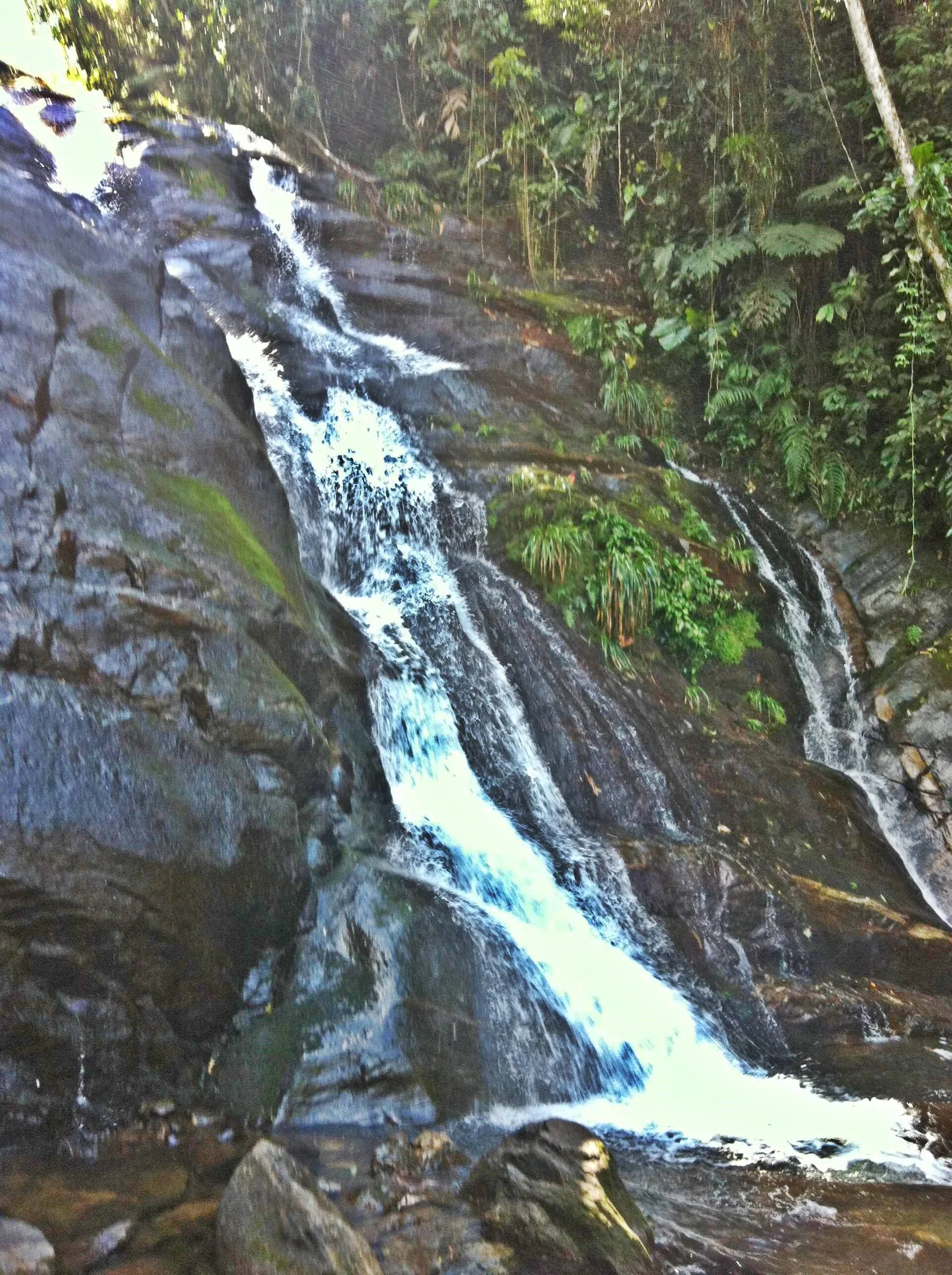
The Atlantic Forest is green all year, but it does not feel the same in every season, and a little timing improves the experience. This coast has a wetter, warmer half of the year, roughly from late spring through summer, when the rains are heaviest, the rivers fullest, the waterfalls at their most dramatic and the forest at its most lush — but also when the trails are muddiest and the afternoons most likely to be washed out by a downpour. The drier, cooler half, broadly autumn into winter, brings clearer skies, easier walking, lower humidity and, for many, more comfortable wildlife watching, though the cascades run lighter.
Neither is wrong; it depends on what you want. If your heart is set on thundering waterfalls and the forest at full saturation, come in the green season and accept the rain as part of the deal. If you want long, clear mornings for walking and birding, the drier months serve you better. The animals are present year-round, but the dawn chorus is loudest in the breeding season, and the great butterfly emergences tend to follow the warmth and wet. Our fuller breakdown of the seasons lives in the guide to the best time to visit Paraty, which weighs the trade-offs for the beaches and the bay as well as the forest.
Watching wildlife well
The forest is generous to people who approach it on its own terms and stingy to people who don't. A few principles will do more for your chances, and for the forest, than any amount of gear.
- Go early, go quietly. The hour after dawn is the richest, for birds and monkeys alike. Move slowly, talk little, and stop often to simply listen — most encounters begin with a sound, not a sighting.
- Keep your distance and never feed. Feeding wild animals, however charming the marmoset that approaches your terrace, harms them: it changes their behaviour, spreads disease and makes them dependent. Admire, photograph, and let them be wild.
- Stay on the trails. Marked paths protect both you and the forest floor, where much of the life and the regeneration is happening. Trampling off-trail does more damage than it looks.
- Hire a local guide for at least one walk. A good guide hears the bird you missed, knows where the troop feeds, and reads the forest like a text. It is the single best investment in actually seeing things, and it puts money where it does good.
- Bring binoculars and patience, and lower your expectations of drama. This is not a safari park. The pleasure of the Atlantic Forest is cumulative and subtle — a morning's worth of small wonders rather than one big set piece. Let that be enough and it will be plenty.
Wear real shoes; the trails are steep, rooty and slick after rain, which on this coast is often. Carry water and insect repellent. And if you walk to one of the forest waterfalls — there are several beautiful ones in the hills, cold and clear and worth the climb — go in the morning and check conditions first, because the rivers rise fast after a downpour. Our guide to the Paraty waterfalls covers which ones suit which kind of walker.
Experiencing the forest from above the coast
There is a particular pleasure, distinct from hiking, in simply living inside the forest's edge for a few days. From the chalet, set some four hundred metres up the slope, the Mata Atlântica is not a place you visit but a place you are in. You hear it before breakfast and after dark. Hummingbirds work the flowers by the pool. Toucans and parrots cross the view. On a still evening the howlers carry up from the valley, and the bats come out to hunt the insects over the water. You can spend a whole day without leaving the terrace and still feel you have spent it in the rainforest, because you have.
For those who want to go deeper, the forest is right there, and it asks for very little planning. The old Gold Trail climbs straight into it through some of the loveliest standing forest near the town, an easy way to be among real trees within minutes of leaving the coast. The higher Bocaina trails wait further up for those who want a serious day on the mountain, and any number of guided walks, from gentle to demanding, can be arranged through reputable local operators who know exactly where the troops feed and the birds gather. We can help you match the day to the walker — a gentle forest stroll for a family with young children, a serious dawn birding outing for the keen, a waterfall hike with a swim at the end for everyone in between. You can see how the chalet sits in all this on the page for the chalet itself, and our wider guide to the region gathers the forest, the bay and the town in one place.
The Atlantic Forest has lost most of itself in five hundred years, and what remains it remains by a combination of luck, law and the stubborn care of the people who love it. To spend a few days inside one of its great surviving blocks — listening to the howlers, watching the toucans, walking the old stone road through the trees — is to be reminded what the rest of Brazil's coast once was, and what, in this corner of it, has been kept. If you would like help building a few of those forest days into your stay, the wildlife mornings and the waterfall walks and the quiet hours on the terrace, simply tell us on the contact page what you would most like to see. The forest is patient. It will wait for you to come and listen.
Frequently asked questions
The Atlantic Forest, or Mata Atlântica, is a separate rainforest biome running along Brazil's eastern coast, distinct from the Amazon in the north. It is older, more fragmented and far more reduced by human settlement, but it has exceptionally high endemism — a great many of its species live nowhere else on earth.
Estimates vary with method, but the most widely cited study found that only about 12 percent of the original forest cover remains, scattered largely in small fragments. Larger, well-connected blocks like the Serra do Mar behind Paraty are therefore especially valuable for conservation.
Among its flagship animals are the golden lion tamarin, the muriqui (the largest primate in the Americas), howler and capuchin monkeys, toucans, tanagers and hummingbirds, sloths, and an extraordinary diversity of frogs, butterflies and orchids. A high share of these species are endemic to the forest.
The forest rises directly behind the town in the Serra do Mar, protected within the Serra da Bocaina National Park and surrounding reserves. You can experience it on the Caminho do Ouro trail, on walks to forest waterfalls, and simply from a hillside terrace above the coast.
Not reliably — the main wild populations live in lowland forest fragments further north in Rio de Janeiro state, where they are the focus of a long conservation programme. Around Paraty you are more likely to see other primates such as capuchins, howlers and marmosets, along with a great wealth of birds.
Go quietly and early, keep your distance, never feed wild animals, stay on marked trails and hire a local guide who knows the forest. Patience matters more than equipment; the forest reveals itself slowly to people who move gently through it.
Yes. It is recognised as one of the world's biodiversity hotspots — regions with exceptional concentrations of endemic species under serious threat. The combination of very high richness and very high loss is exactly what defines a hotspot, and the Atlantic Forest is a textbook case.