In this guide
Planning a first trip to Brazil can feel top-heavy before you start. The country is the size of a continent, the flights are long, the visa rules changed recently, and every guide seems to assume you already know the difference between GIG and GRU. Take a breath. The practical part of a first trip to Brazil planning process comes down to four things: sorting your entry paperwork, flying into the right city, getting a couple of health notes in order, and knowing how you will reach wherever you are staying. Everything after that is the good part.
We host first-timers on this hillside all year round. They arrive a little wide-eyed, usually a little tired from a red-eye, and within a day they have found the rhythm of it: a slow morning by the pool, a boat or a beach in the afternoon, a plate of grilled fish and a cold caipirinha at night. The point of this piece is to get you from your front door to that first swim with as little friction as possible, and to be honest about the trade-offs along the way rather than selling you a fantasy.
We are writing from Château Portofino, a chalet about four hundred metres above the Bay of Paraty on the Costa Verde, the green coast between Rio de Janeiro and São Paulo. From one deck you can see three shorelines at once — Paraty, Angra dos Reis and Ilha Grande — which is a useful thing when you are trying to picture where a coastal trip fits into the map of Brazil. Keep that picture in mind as you read. It is closer, and simpler, than it looks.


First trip to Brazil planning: the shape of the whole thing
Before the details, hold the shape of the trip in your head, because it makes every smaller decision easier. A first trip to Brazil almost always has two or three anchors: a city, a stretch of coast, and sometimes one further region — Iguaçu Falls, the Amazon, the northeast beaches, or the Pantanal wetlands. You cannot see all of it in one visit, and trying to will leave you exhausted and constantly in transit. Pick two or three anchors, connect them sensibly, and leave the rest for a second trip. There is always a second trip.
For most first-timers, the natural spine is Rio de Janeiro plus the Costa Verde. Rio gives you the icons and the energy; the coast gives you the water, the quiet and the recovery time. Paraty sits at the far southern end of that coast, a preserved colonial town with a car-free centre, wrapped in Atlantic rainforest and facing a bay full of islands. It is the kind of place a first trip is built around rather than squeezed in. If you want a fuller sense of the season you are booking into, our note on the best time to visit Brazil and the town-specific guide to the best time to visit Paraty both go deeper than we can here.
The single most useful habit in planning is to sort the things with lead times first — visa, vaccinations, long-haul flights — and leave the flexible things — day trips, restaurants, beach choices — until you are closer or even until you arrive. First-timers who over-plan the flexible parts end up locked into a schedule that fights the weather and their own jet lag. First-timers who nail the fixed parts early travel relaxed.
Sort the visa, book flights into the right city, get the health notes in order early, and everything after that is just a pleasant drive to the sea.
Visas: check your passport before you book anything
This is the part that trips people up, because Brazil's rules changed in 2025 and a lot of older advice online is now wrong. What follows is a plain summary, but treat it as a prompt to check your own government's current guidance and the official Brazilian portal rather than as the final word. Entry rules move, and they move with little warning.
United States, Canada and Australia: you now need an eVisa
Since 10 April 2025, ordinary passport holders from the United States, Canada and Australia need a visa to enter Brazil, even for tourism. The good news is that it is an electronic visa you apply for online, not a consulate appointment. Apply through the official government-authorised portal at brazil.vfsevisa.com — be careful to use the official site and not a look-alike that charges a markup. The fee at the time of writing is around US$80.90 per person.
The validity is generous. For US citizens the eVisa is valid for ten years with multiple entries; for Canadian and Australian citizens it is valid for five years, also multiple-entry. Each individual stay can be up to 90 days, with a cap of 180 days total in any twelve-month period. Approvals often arrive within a few days, but the official processing window can stretch during busy periods, so apply at least two or three weeks before you fly. One thing worth underlining: airlines will not issue you a boarding pass without a validated eVisa code, so this is genuinely the first thing to do, not the last.
United Kingdom, European Union and many others: still visa-free
UK passport holders and most European Union nationals can still enter Brazil visa-free for tourism for up to 90 days, extendable in-country through the Federal Police for a further period up to a 180-day annual limit. Your passport should generally be valid for at least six months from your date of arrival. One small but real detail: make sure the border officer physically stamps your passport on arrival, because an unstamped entry can lead to a fine when you leave. Nationals of many other countries also enjoy visa-free access, but the list is specific — check your own country's status rather than assuming.
Whatever your nationality, print or screenshot your entry documents and your first night's accommodation confirmation. Immigration occasionally asks first-time visitors for proof of onward travel or a place to stay, and it is a two-minute problem to solve in advance and a stressful one to solve at a desk.

Choosing your gateway airport
Brazil has two main international gateways in the southeast, and for a coastal trip to Paraty the choice is really between them. There is no airport at Paraty itself, so wherever you land, part of the journey is over land — which, as it happens, is one of the nicer parts.
Rio de Janeiro (Galeão, GIG)
Rio's international airport, Galeão (code GIG), is the gentler introduction and the closer one to the coast. If Rio is one of your anchors — and for a first trip it usually should be — landing here lets you spend a few days in the city before heading down, which also gives your body time to shake off the flight before a long drive. Rio's second airport, Santos Dumont (SDU), sits right on the bay in the city centre and handles domestic flights; you may use it for internal connections but not for long-haul arrivals. Our guide to Rio de Janeiro is a good companion if you are stitching the two together.
São Paulo (Guarulhos, GRU)
São Paulo's Guarulhos (GRU) is Brazil's largest airport and often has the widest choice of long-haul routes and the keenest fares, especially from Europe and North America. The trade-off is distance: the drive from São Paulo down to Paraty is longer, roughly five to six hours, and the exit out of the metropolitan sprawl is less scenic than the Rio approach. If São Paulo is genuinely on your itinerary, or if the flight price difference is large, GRU is perfectly sensible. If not, Rio usually wins on convenience.
Flights and the long haul
From North America you will typically fly overnight and land in the morning, which is the kinder direction for jet lag — Brazil is only one to three hours ahead of US Eastern time depending on the season, so the clock adjustment is small even if the flight is long. From Europe the offset is larger, three to five hours, and again overnight flights landing in the morning are the norm. From within Brazil, domestic carriers connect Rio and São Paulo to everywhere else cheaply and frequently; if you are adding a further region like Iguaçu or the northeast, you will almost certainly do it by a short internal flight rather than by road.
A word on booking those internal flights: buy them as separate domestic tickets once your international dates are fixed, and give yourself a generous buffer between an international arrival and any onward domestic connection. Three hours is not too much when you factor in immigration, baggage reclaim and a possible change of terminal. First-timers who book a tight connection on the same day as a long-haul arrival are the ones you see sprinting through the airport. There is no need for that. Land, rest, and fly onward the next day if the schedule allows.
Health, vaccinations and a word on insurance
None of this should alarm you. A trip to the Costa Verde is not an expedition, and the vast majority of first-timers need nothing dramatic. But a first trip to Brazil planning checklist is incomplete without a short, honest health section, and the sensible move is to talk to a travel clinic or your own doctor six to eight weeks before you fly.
Yellow fever
Brazil does not require a yellow fever certificate for entry from most countries. However, health authorities recommend the yellow fever vaccine for travel to Rio de Janeiro state, which includes both Paraty and Ilha Grande. This is worth taking seriously: there have been cases among unvaccinated travellers in this region in the past, including on Ilha Grande. If you and your doctor decide the vaccine is right for you, have it at least ten days before travel so it has time to take effect, and carry the certificate. One more practical point — some onward countries ask for proof of yellow fever vaccination if you are arriving from Brazil, so if Brazil is part of a longer multi-country trip, check what comes next.
Routine vaccines and everyday care
The Brazilian Ministry of Health suggests travellers arrive up to date on routine vaccinations — measles, rubella, diphtheria, tetanus, polio — the same boosters you would want current for any international trip. Beyond that, the Costa Verde is a warm, humid, forested coast, so the practical health measures are the boring, effective ones: a good insect repellent for dawn and dusk, high-factor sun protection, and drinking bottled or filtered water while you settle in. Malaria is not a concern in this part of the southeast. Bring any personal medication in its original packaging with a copy of the prescription.
Travel insurance
Buy travel insurance that covers medical care and, ideally, trip interruption. Private clinics in Brazil are good but not free, and a policy that covers a doctor's visit and repatriation turns a bad day into an inconvenience rather than a crisis. This is the least glamorous item on any list and the one seasoned travellers never skip.


Money, phones and the practical everyday
The small logistics are what make the first 48 hours smooth or stressful, so it is worth a few minutes of preparation.
Cards and cash
Brazil is largely cashless in the places you will spend time. Cards are accepted almost everywhere, and the domestic instant-payment system, Pix, is ubiquitous, though as a visitor you will mostly rely on cards. Tell your bank you are travelling, bring at least two cards from different networks in case one is not accepted, and carry a modest amount of Brazilian reais in cash for small purchases, tips, a beach kiosk or a rural stretch where signal is thin. Withdraw from ATMs attached to bank branches rather than standalone machines, and shield the keypad — ordinary caution, nothing more.
Phones and connectivity
An eSIM is the simplest solution for most first-timers: buy a Brazilian data plan before you leave, activate it on landing, and skip the queue for a physical SIM. Coverage is strong in cities and good in towns like Paraty, though it thins out on the water and on remote beaches, which is part of the appeal. Download offline maps of the coast before you set off, and if you are self-driving, download the route in advance. We keep the wireless strong at the chalet, but half the pleasure of a hillside above the bay is that the phone stops mattering for a while.
Plugs and small things
Brazil uses its own plug standard (type N) and a mix of 110V and 220V depending on the region, so bring a universal adapter and check your chargers handle dual voltage, which most modern ones do. Pack light, breathable clothes, proper walking shoes for the cobbles of the historic centre and the forest trails, a swimsuit you can live in, and one warmer layer for cooler evenings between May and August.
When to come
There is no wrong month for the Costa Verde, only trade-offs, and understanding them helps you set expectations rather than fight them. The southern-hemisphere summer, December to March, is hot, green and lively, with the biggest crowds and the highest prices, and also the most rain — often short, heavy afternoon downpours that clear as fast as they arrive. This is peak season, and it has real energy, but book early.
The shoulder seasons are, to our mind, the sweet spots. April to June and August to October bring warm days, calmer water, thinner crowds and better value. July is cooler and busier again, partly because of FLIP, Paraty's international literary festival, which fills the town with readers and events for a few days and is worth planning around either way. Whatever window you choose, the pattern of a good day rarely changes: mornings are for the water and the trails, afternoons for the town or the pool, evenings for a long, unhurried dinner. For a fuller month-by-month breakdown, our best time to visit Paraty guide lays it all out.

_(51338403464).jpg)
Building a first itinerary, and where the coast fits
Here is where the abstract planning becomes a real trip. The question first-timers ask most is simply how many days, and how to divide them.
How long to give it
Two weeks is the comfortable answer. It lets you have a proper few days in Rio, three or four nights on the coast at Paraty, and one further region — Iguaçu, say, or a stretch of the northeast — without ever feeling rushed or spending your holiday in transit. Ten days works well if you keep it to two bases and resist the urge to add a third. A week is enough for Rio plus the Costa Verde if you move with intent and accept that you are sampling rather than seeing everything. Whatever the length, the rule that never fails is to reduce the number of moves. Each hotel change costs you the better part of a day; two or three good bases beat six mediocre ones.
A simple, proven spine
A first-trip structure we watch work again and again looks like this:
- Land in Rio, and give the city three to four nights — the beaches, the viewpoints, one long walk, one good dinner.
- Drive or transfer down the Costa Verde to Paraty for three or four nights, using it as a base for boat trips, waterfalls and beaches.
- If you have time and appetite, fly onward from Rio or São Paulo to one further region for the last stretch.
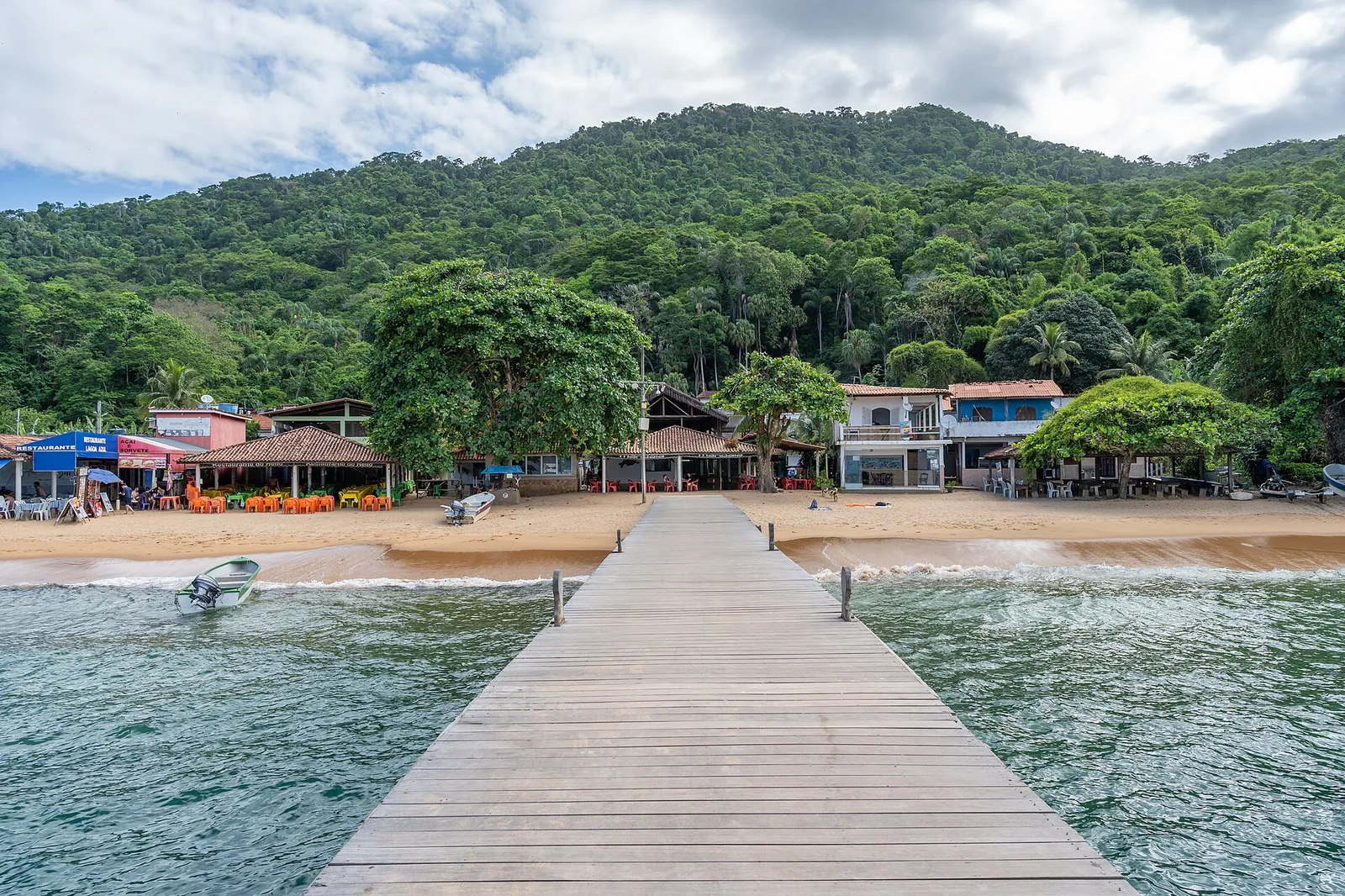
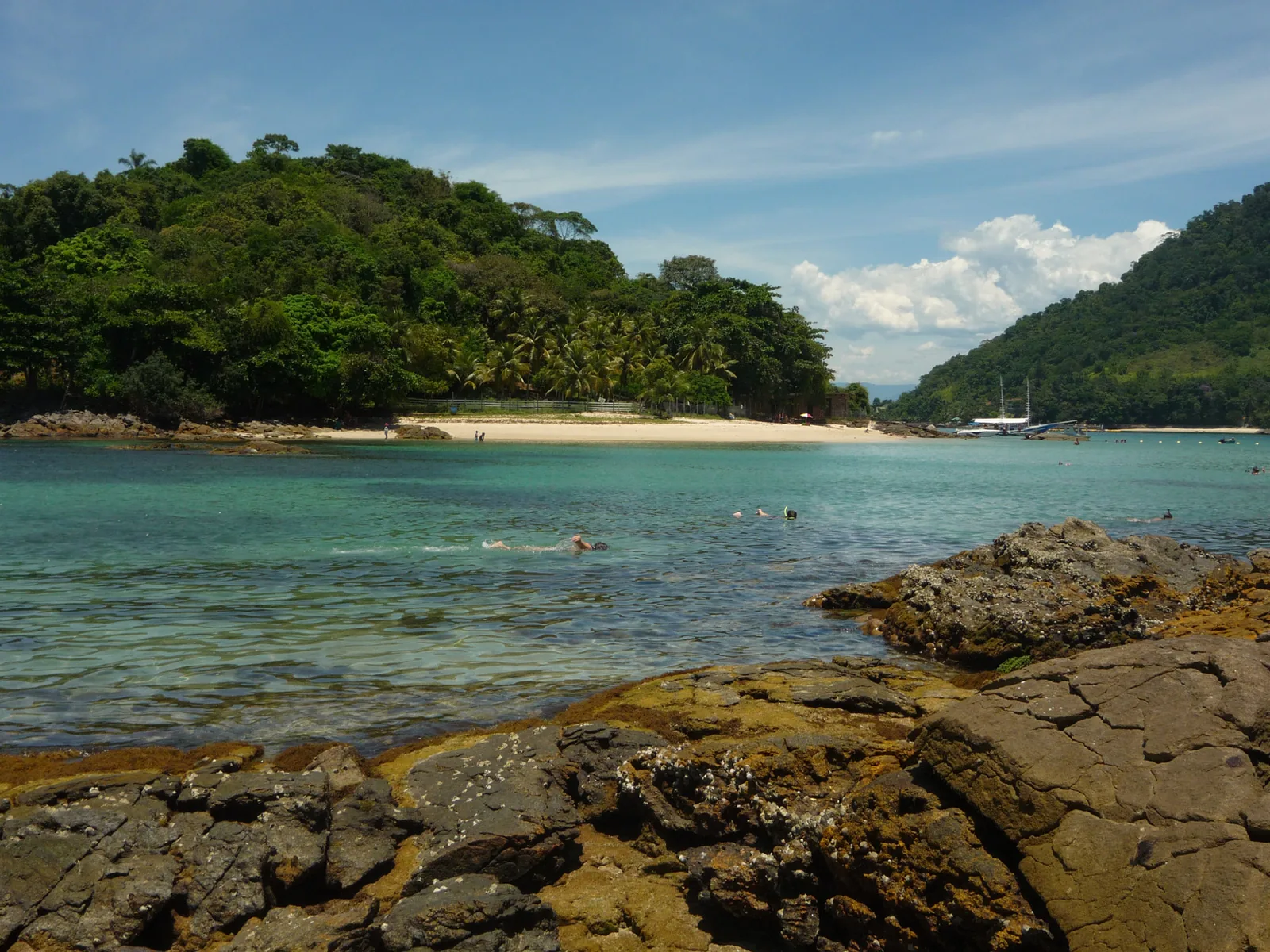
Around the Paraty base, the days almost plan themselves. A boat trip out into the bay to swim off the islands. A morning in the car-free historic centre, whose cobbled streets and whitewashed churches are among the best-preserved colonial architecture in Brazil. A run of forest-backed beaches at Trindade, a short drive south. A cool swim under one of the waterfalls in the hills behind town. And, for many first-timers, a full day out to Ilha Grande, the car-free island across the water. If you want the day-by-day version, our Paraty itineraries do the sequencing for you.
The reason a coast base earns its keep on a first trip is recovery. Cities are wonderful and tiring. A few nights where the only decision is which beach and what to eat resets the whole holiday, and it is far easier to enjoy Rio's intensity when you know a quiet swim is waiting at the end.
Reaching the coast: getting down to Paraty
This is the last logistical piece, and it is genuinely one of the pleasures rather than a chore. Paraty sits roughly 250 kilometres southwest of Rio de Janeiro, a little more than halfway to São Paulo, on the coastal road officially numbered BR-101 and known locally as the Rio–Santos. The road hugs the shoreline for much of the way, with the forested mountains of the Serra do Mar rising on one side and the sea appearing and disappearing on the other.
Private transfer or self-drive
From Rio, the drive is about four to four and a half hours depending on traffic and how many times you stop for the view. A private transfer is the easiest option for first-timers: you are collected at the airport or your Rio hotel, and you arrive at the door without touching a wheel, which is a mercy after a long-haul flight. Self-driving is very doable and gives you freedom, but go in daylight, use a navigation app, and know that the Rio–Santos has speed cameras and occasional rough patches of asphalt. It is a beautiful road, not a fast one. From São Paulo the same drive runs five to six hours. Our getting around page has the current detail on transfers and timings, and if you would like us to arrange a car to meet you, just get in touch and we will set it up.
By bus
If you are travelling on a budget or simply prefer not to drive, regular long-distance buses connect Rio and São Paulo to Paraty several times a day. They are comfortable and inexpensive, and the coastal stretch is scenic from a bus window too. The trade-off is time and rigidity — you travel on the operator's schedule and finish at the town bus station rather than your door — but for many first-timers it is a perfectly good way in.
The last climb
However you arrive in town, there is one short final leg that surprises people: the road up. Château Portofino sits about four hundred metres above the bay, a few minutes' drive above the historic centre, on a hillside that catches the breeze and the long view. The climb is quick and the reward is immediate — the town, the water and the islands laid out below you, and the pool waiting. It is the moment first-timers stop planning and start being on holiday.

A base above the bay
We are biased, of course, but the logic of a hillside base on a first trip is not just about the view, though the view does a lot of the persuading. From the chalet you look out over three shorelines at once — Paraty directly below, Angra dos Reis and its islands to the east, and Ilha Grande out across the water — which turns an abstract stretch of coast into something you can read at a glance. The infinity pool sits at the edge of the deck, so the water seems to run straight out toward the bay, and after a day on a boat or in the forest that pool is the whole point of coming home.
A base you return to matters more than first-timers expect. You go out for the day — a beach, a waterfall, an island — and you come back to somewhere calm and familiar rather than a new hotel lobby and a new set of decisions. Families settle into it quickly; couples treat the deck as the trip's centre of gravity; friends spread out and let the afternoons go slow. If you want a sense of the wider area before you shape your days, our explore Paraty pages gather the boat trips, beaches, town and trails in one place.
Safety and a few myths worth retiring
First-timers often arrive carrying more worry about Brazil than the country deserves, usually assembled from headlines rather than experience. Here is the honest version. Brazil's big cities reward the same ordinary caution you would use in any large city anywhere: keep phones and jewellery out of sight in crowds, use registered taxis or ride apps rather than hailing on the street at night, do not walk unfamiliar areas alone after dark, and leave the expensive watch at home. Do that, and Rio and São Paulo are rewarding, not frightening.
Small coastal towns are a different register entirely. Paraty is relaxed, walkable and used to visitors; the pace is slow and the mood is easy. You will spend your evenings wandering cobbled streets between restaurants and bars without a second thought. The most common first-trip mistakes are not crime at all — they are sunburn, dehydration and misjudging how long the drives take. Respect the sun, drink water, build in buffer time, and you have handled the real risks. Keep a digital copy of your passport and eVisa, note your accommodation's address, and enjoy yourself.
One myth worth retiring specifically: that you need to speak the language or hire a fixer to get around safely. You do not. The tourist-facing coast is set up for visitors, transfers are easy to arrange, and a friendly manner opens more doors than fluent Portuguese ever would. The other myth is that Brazil is a single, uniform place. It is not. The caution that makes sense in a big city centre at night has almost nothing to do with a sleepy afternoon on a Costa Verde beach, and treating the two the same way just robs you of the relaxed version of the trip you came for.
Language and small courtesies
Brazil speaks Portuguese, not Spanish, and a little effort here goes a surprisingly long way. English is widely understood in hotels and tourist-facing businesses but far less so once you step off that path, which is most of the interesting places. You do not need fluency; you need warmth and a handful of words. Bom dia (good morning), obrigado or obrigada (thank you, depending on your own gender), por favor (please) and quanto custa (how much) will carry you through most days and earn you genuine smiles. Download an offline translation app for the rest.
Brazilians are, as a rule, generous and unhurried with visitors who meet them halfway. Greetings matter; rushing does not. Meals are late and lingering by northern-European or North-American standards — dinner at nine is normal, and no one is trying to turn your table. Lean into the pace rather than fighting it. It is one of the quiet lessons of a first trip: the country runs on a warmer, slower clock, and once you match it, everything is easier.
A first-timer's short checklist
To pull the practical threads together, here is the sequence we would follow, roughly in order:
- Check your visa status for your specific passport, and if you need an eVisa, apply through the official portal at least two to three weeks before you fly.
- Confirm your passport validity — six months from arrival is the safe rule — and make digital copies of everything.
- Book long-haul flights into Rio (GIG) or São Paulo (GRU), favouring overnight flights that land in the morning.
- See a travel clinic six to eight weeks out to discuss yellow fever and routine vaccines, and buy travel insurance with medical cover.
- Arrange connectivity and money — an eSIM, two cards, some cash, and a heads-up to your bank.
- Plan two or three bases, not six, and pencil in day trips loosely so the weather and your energy have room to move.
- Sort the transfer down the coast — private car, self-drive or bus — and do the road in daylight.
Do those seven things and the hard part of a first trip to Brazil is behind you before you have left home. What remains is the easy part, which is also the good part: warm water, green mountains, slow evenings and a coast that looks even better in person than it does in the planning.
Where it all lands
Sort the visa, book flights into the right city, get the health notes in order early, and everything after that is just a pleasant drive to the sea. That is the whole trick of a first trip to Brazil, stripped of the noise. The country is enormous, but the piece of it you are coming to see — a preserved colonial town, a bay full of islands, forest running down to the water — is compact, welcoming and easy to reach once the paperwork is done.
When you are ready to shape the coastal part of your trip, we are here to help you fit it together, from the drive down to the days on the water. Have a look at the chalet and the three-way view from the deck, browse what there is to do across Paraty and the bay, and when the dates start to firm up, tell us what you have in mind. First trips have a way of turning into first of many, and this hillside is a good place to start.
Frequently asked questions
It depends on your passport. Since April 2025, citizens of the United States, Canada and Australia need an eVisa, applied for online before travel. Most European Union nationals and UK passport holders can still enter visa-free for up to 90 days. Always check your own government's current advice, because these rules changed recently and can change again.
Apply online through the official government portal at brazil.vfsevisa.com. The fee is about US$80.90, the US eVisa is valid for ten years with multiple entries, and each stay can be up to 90 days. Approvals often come within a few days, but apply at least a couple of weeks ahead. Airlines will not board you without a validated eVisa code.
There is no airport at Paraty itself. Most first-timers fly into Rio de Janeiro (Galeão, GIG) or São Paulo (Guarulhos, GRU) and drive down the coast. Rio is closer, roughly a four to four-and-a-half hour drive. São Paulo is about five to six hours. Both work; Rio is the gentler introduction.
Brazil does not require it for entry from most countries, but health authorities recommend the yellow fever vaccine for travel to Rio de Janeiro state, which includes Paraty and Ilha Grande. If you decide to have it, get it at least ten days before you travel and carry the certificate. Speak to a travel clinic about your own situation.
Two weeks is a comfortable first visit. It lets you spend a few days in a city like Rio, three or four nights on the coast at Paraty, and still have room for one more region without living out of a suitcase. Ten days works if you keep it to two bases; a week is enough for Rio plus the coast if you move efficiently.
Yes, with ordinary big-city sense. Cities like Rio and São Paulo reward the same caution you would use anywhere: keep valuables out of sight, use registered taxis or apps, and stay aware at night. Small coastal towns like Paraty are relaxed and walkable. Most first trips pass without any trouble at all.
April to June and August to October are the sweet spots: warm, greener, and quieter than the summer peak. December to March is hot, lively and busy, with more rain. July is cooler and popular for the FLIP literary festival. There is no bad month, only trade-offs between heat, crowds and price.