In this guide
Cross the border out of Rio de Janeiro state, drive an hour south on the coast road, and the air changes before the scenery does. Paraty hands you to São Paulo state somewhere among the green folds of the Serra do Mar, and on the far side of that line is Ubatuba: not a colonial set-piece like the town you have just left, but a working beach municipality with a coastline so long and broken that nobody seems to agree on how many beaches it actually has. The number you will hear most often is more than a hundred. It is the kind of place where, given a week, you stop counting and start choosing favourites.
We send guests south to Ubatuba more often than they expect us to. It sits about seventy kilometres from Paraty by road, near enough to fold into a longer Costa Verde holiday and exactly the right distance to break a drive to or from São Paulo. If Paraty is the place you come for cobblestones, churches and the slow theatre of the historic centre, Ubatuba is the place you come for the sea itself: surf on the open beaches, glassy pools at the sheltered coves, sea turtles you can actually meet, and an Atlantic-forest backdrop that climbs almost straight out of the sand. This guide is how we think about it, and how to do it well.
A word on the name, because it tells you something. Ubatuba comes from Tupi, and the most common reading is roughly "place of many canoes" or "gathering of boats". Locals have a wetter joke: they call it Ubachuva, swapping in chuva, the Portuguese for rain, because the mountains wring a great deal of water out of the passing clouds. Both names are honest. This is a coast of boats and weather, and once you accept the second you can plan around it.
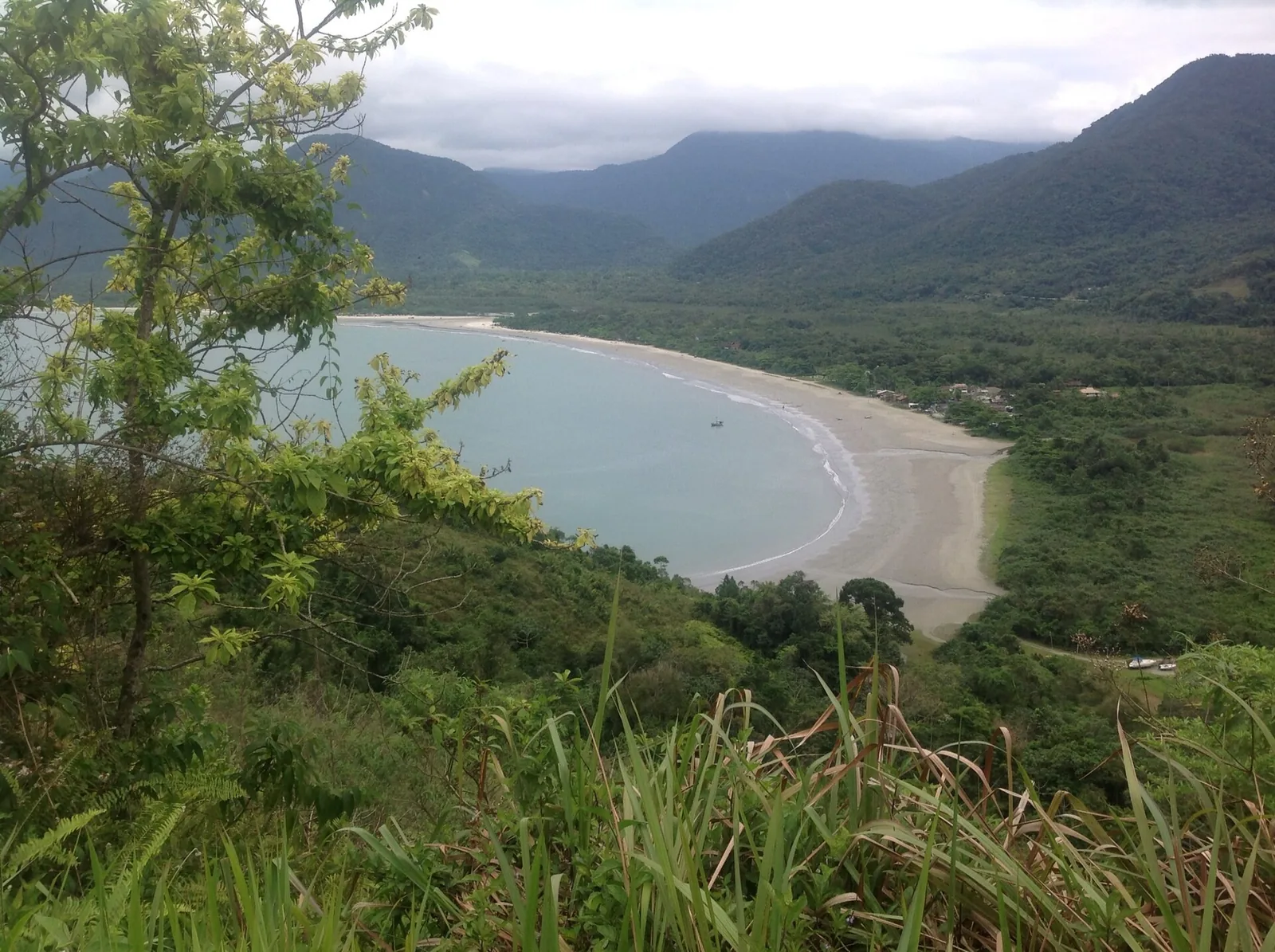
Where Ubatuba sits, and why it feels different from Paraty
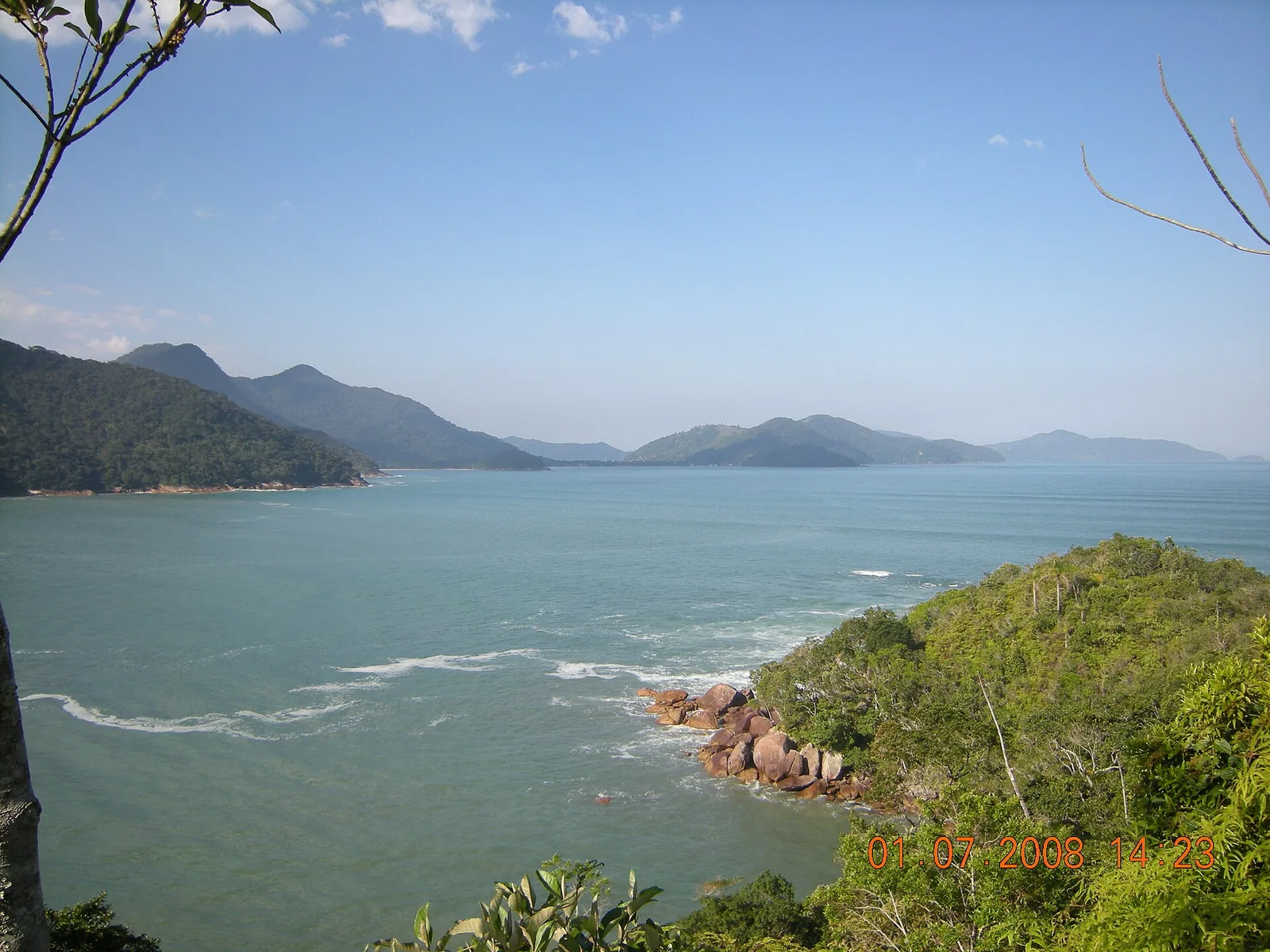
Ubatuba is the southern reach of the Costa Verde, the green coast that runs from the edge of greater Rio all the way down toward Santos. The defining feature of the whole stretch is the Serra do Mar, the coastal escarpment that drops almost to the waterline and then carries on as islands offshore. In Ubatuba a remarkable share of the municipality lies inside the Serra do Mar State Park, which is why the forest feels so close: on many beaches the treeline and the tideline are only a few dozen paces apart, and the same range that shelters the bays also feeds the rivers and waterfalls behind them.
That geography is the real difference between Ubatuba and Paraty, more than the state line is. Paraty grew up as a port — first for gold coming down from Minas Gerais on the old mule trail, later for coffee and cachaça — and its centre is a preserved eighteenth-century town that, together with Ilha Grande, was inscribed as a UNESCO World Heritage site in 2019. You go to Paraty to walk the historic centre and to take the boat out into its calm bay. Ubatuba never became that kind of town. Its old centre is modest; its energy is spread along the coast road and out at the beaches. Think beach-resort rather than open-air museum — sunnier in mood, younger in crowd, more about boards and barracas than about baroque.
For our guests the practical upshot is simple. Base yourself at the chalet above Paraty and you have the colonial town, the bay tours and the trail beaches on your doorstep; spend a day or two pointed south and you add a hundred kilometres of São Paulo coast, the best surf in the region, and one of Brazil's most loved conservation centres. The two places complement each other. Neither replaces the other.
If Paraty is the place you come for cobblestones, Ubatuba is the place you come for the sea itself.
How to combine Ubatuba with a Paraty trip
The drive from Paraty to Ubatuba is about an hour in normal traffic — call it seventy-odd kilometres of winding, scenic coast road. It is genuinely pretty, climbing and dipping through the forest with the sea appearing and disappearing on your right, and there are pull-offs and small beaches the whole way down. In high summer, on weekends and over Brazilian holidays, that hour can stretch considerably; the road is two lanes for much of it and it does not forgive a São Paulo bank-holiday exodus. Leave early and you will have the best of both the road and the beaches.
Here is how we usually suggest fitting it in:
- As a long day trip from Paraty. Doable, and plenty of people do it, but you will spend two hours in the car and have to pick one or two beaches rather than graze. Worth it mainly if there is a specific beach or the turtle centre you have your heart set on.
- As an overnight, the smarter version. One night near the beaches lets you surf or swim in the late afternoon when the day-trippers have gone, eat seafood by the water, and catch a calm morning sea before driving back. This is the option we steer most couples and families toward.
- As a stop on the São Paulo run. If you are flying in or out of São Paulo (Guarulhos or Congonhas), Ubatuba breaks the journey naturally. Spend the morning on a beach, have lunch, and carry on. It turns a transfer day into a holiday day.
However you do it, treat the just-across-the-border beaches as the easy win. Trindade — technically still Paraty, on the Rio side of the line — is barely twenty-five minutes from the state border and is itself one of the loveliest stretches of this whole coast; we cover it in full in our guide to Trindade, and it makes a natural first or last stop on a southbound day. Once you cross into São Paulo the beaches start almost immediately, so you do not need to drive all the way into Ubatuba town to find sand.
A note on driving and parking
Ubatuba is spread out. The town centre, the turtle centre and the most famous surf beaches can be twenty or thirty minutes apart, and in summer the beach access roads fill up. Bring small cash for the informal parking attendants you will meet at the popular beaches, keep your valuables out of sight, and do not plan to see five beaches in a day — you will see the inside of your car instead. Two or three, chosen for different moods, is a good day.
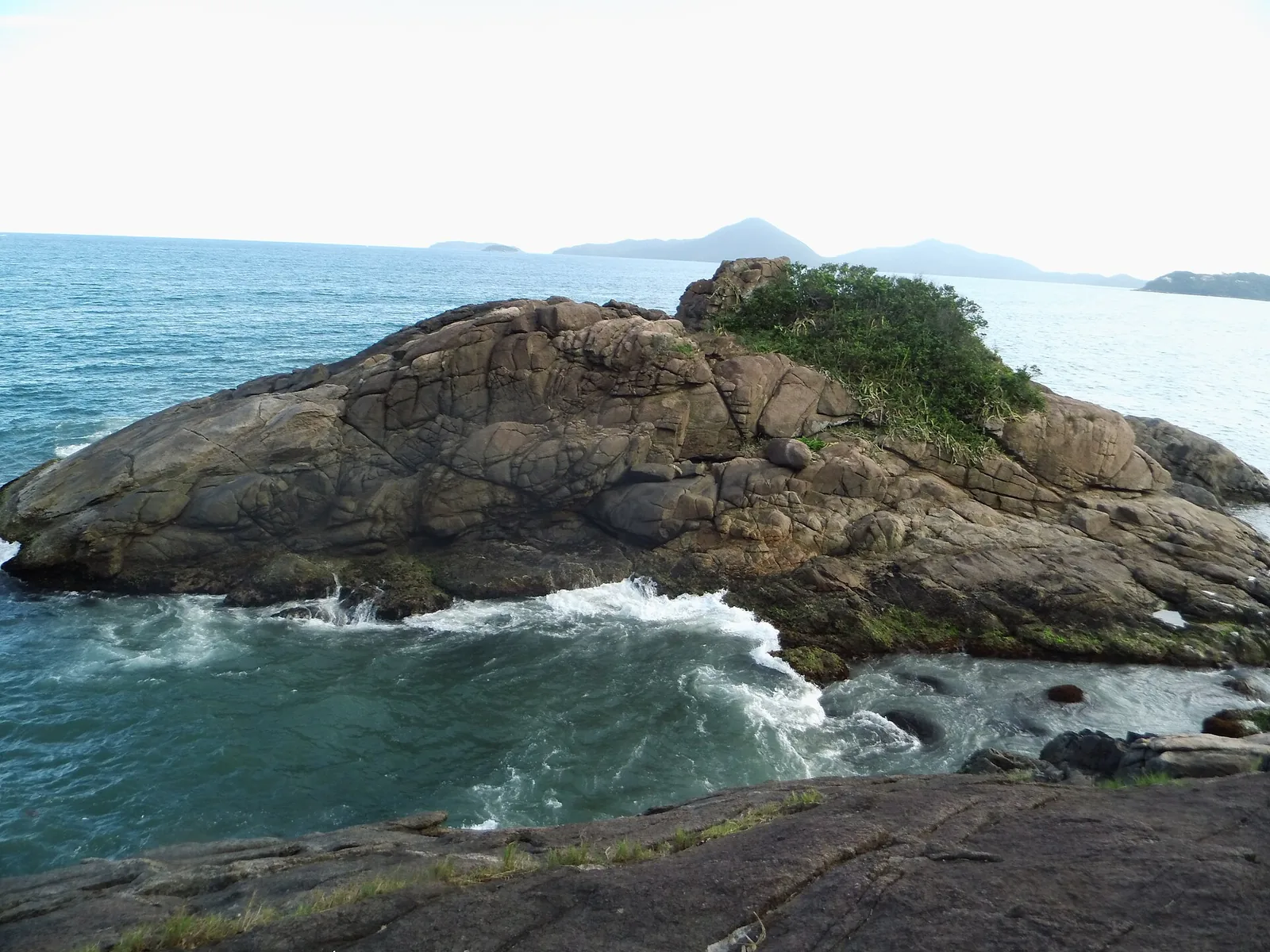
The beaches: from calm family bays to serious surf
With well over a hundred beaches, the only sane way to approach Ubatuba is by mood. The coast alternates between two kinds of beach almost rhythmically: long open strands that face the swell and pick up real waves, and tucked-in coves protected by headlands where the water lies flat and warm. Knowing which is which saves you from the classic mistake of carrying a toddler into a surf break or a longboard into a paddling pool.
For surfers and big-wave days
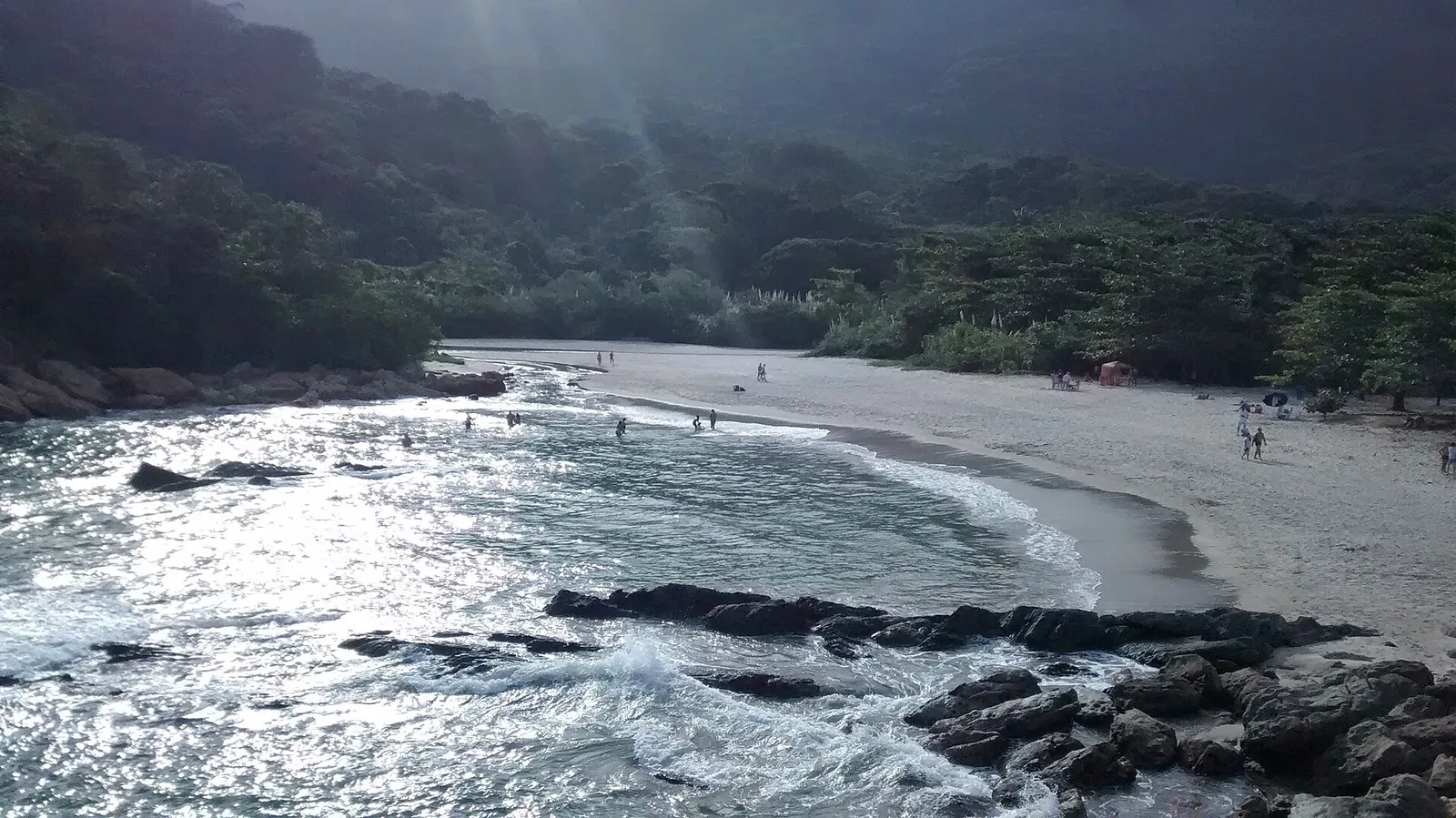
Ubatuba is, with good reason, called the surf capital of São Paulo state. The standout is Praia de Itamambuca, northeast of town: a long, consistent beach backed by native forest, with a river running out across the sand that forms shallow pools where small children paddle while their parents watch the line-up. Itamambuca hosts some of the country's most important surf competitions, and on a good swell it is as serious as Brazilian beach-break gets. Even if you do not surf, it is a beautiful place to spend a morning — the forest comes right down to the beach and, in the warmer months, turtles are sometimes seen out beyond the break.
Other open beaches worth knowing: Praia Vermelha do Norte and Praia Vermelha do Sul for their reddish sand and reliable waves, Praia do Félix, which neatly splits into a calm end for swimmers and a livelier end for surfers, and Praia Grande, the big town-side beach where one end works for bodyboarders and the long middle stays gentle enough for a family swim. If you are travelling with a board, the broad rule is that the beaches facing the open ocean to the north and east carry the swell, while the sheltered southern coves are for floating, not riding.
For families and gentle swimming
When you want flat, clear, shallow water, head for the protected coves. Praia do Lázaro and the neighbouring Praia do Domingas Dias, on the more sheltered southern side, are the names you will hear most: calm, green-blue, and backed by enough shade and small kiosks to make a whole day comfortable. Praia da Lagoinha and Praia da Enseada are similarly easy. For families with very young children, the river-mouth pools at Itamambuca and the calm corners of Praia Grande are reassuringly tame even on days when the surfers are happy out the back.
If you have older children or teenagers, the appeal flips: the surf beaches, the boat trips out to the nearer islands, and the turtle centre give them more to do than a paddling cove. We talk through that age-by-age calculus in our guide to Paraty with family, and most of it applies just as well one state south.
For walkers and the wilder beaches
Some of Ubatuba's best beaches ask for a short walk through the forest, which is exactly what keeps them quiet. To the south, near the small settlement of Picinguaba — a fishing village inside the Serra do Mar park, and one of the most atmospheric corners of the whole municipality — a cluster of beaches including Praia da Fazenda and the harder-to-reach Praia Brava da Almada reward the effort with near-empty sand. Bring water and real shoes; the trails are forest paths, slick after rain, not promenades. The payoff is a beach you may have largely to yourself even in a busy week.
Projeto Tamar: meeting Brazil's sea turtles
If you do one non-beach thing in Ubatuba, make it the Projeto Tamar visitor centre. Tamar is Brazil's national sea-turtle conservation programme, and its Ubatuba base — in the Itaguá neighbourhood, near the town centre — is a proper visitor attraction built around the work: tanks and aquariums holding turtles of every size, a panoramic viewing window onto the largest animals, an auditorium, exhibitions on the threats turtles face, and a shop whose proceeds support the project. It is the rare conservation centre that is genuinely good with children and genuinely substantial for adults.
The practical details, which are worth getting right: it generally opens late morning and closes in the late afternoon, and it is closed one day a week (often midweek — check before you go, as the schedule shifts between the school-holiday and term seasons). There is an entry fee, with reduced rates for children, students and seniors and a family ticket that works out well for two adults and two children. Allow an hour and a half at least; on a hot afternoon it is a welcome break from the sun, and it pairs neatly with the town-centre beaches and the seafood places nearby.
What makes Tamar more than an aquarium is the context. You leave understanding why turtles strand, why beach lighting and plastic matter, and why the same warm waters that draw you also draw the animals. Guests who have spent a morning watching turtles glide behind glass tend to look differently at the open sea for the rest of the trip — and at Itamambuca, where wild turtles really do appear, the connection lands.
Beyond the sand: forest, waterfalls and the Atlantic-forest backdrop
The same mountains that make Ubatuba rainy make it green, and the inland half of a good Ubatuba day belongs to the forest. Because so much of the municipality sits inside the Serra do Mar State Park, you are never far from a trail, a river or a waterfall. The cool, tannin-dark pools beneath the falls are a fine antidote to a salt-crusted afternoon, and on a grey day — of which Ubatuba has its share — they are often a better bet than the beach.
Picinguaba, mentioned above, is the gateway to the wildest part of all this: a traditional fishing community where the caiçara culture of the coast — the mixed Indigenous, Portuguese and African heritage of the fishing and farming people who have lived here for centuries — is still a living thing rather than a heritage display. You will find the same culture, and the same food and music, all along the Costa Verde; we write about it from the Paraty side in our piece on caiçara culture, and Ubatuba's southern villages are among the places it is most intact.
For waterfall-lovers in particular, this coast is generous on both sides of the state line. If your trip is anchored in Paraty, you do not have to drive to São Paulo to find them — our guide to the waterfalls around Paraty covers a string of falls within easy reach of the chalet. But if you are already in Ubatuba and it clouds over, ask locally for the nearest cachoeira; there is almost always one within a short drive.
The islands and boat trips offshore
The Serra do Mar does not stop at the shoreline; it carries on as islands, and a good number of them lie just off Ubatuba. The largest and best known is Ilha Anchieta, a state park island a short crossing from the mainland with calm swimming beaches, forest trails and the brooding ruins of an old prison colony that gives the place a strange, quiet weight. Boats run out from the Saco da Ribeira marina; it is the easiest island day in Ubatuba and the one we point most families toward, because the beaches are gentle and there is real history to walk through between swims.
For snorkelling, the smaller rocky islands closer to shore are the draw — clear water, schools of fish, and the kind of natural aquarium that needs nothing more than a mask and an hour of patience. Schooner trips and faster speedboats both leave from Saco da Ribeira, the main departure point, and most do a loop of a few islands and coves with time to swim. As with everything on this coast, the boats run best in the calmer shoulder seasons; a choppy summer afternoon can turn a pretty cruise into a damp one. If island-hopping is the part of the coast you love most, it is worth knowing that the richest archipelago of all sits just back across the state line — the bay of Angra dos Reis and its hundreds of islands, and the beaches of Ilha Grande, are both within reach of the chalet and arguably the headline act of the whole region. Ubatuba's islands are a lovely supporting cast.
One honest comparison worth making: the boat experience out of Ubatuba is good, but it is the open São Paulo coast, more exposed and less sheltered than the island-studded bay around Paraty and Angra. If a flat, glassy day weaving between dozens of green islands is what you are picturing, that picture belongs to the Rio side. If what you want is surf, long open beaches and a turtle centre, that is Ubatuba's to give. Knowing which you are after keeps expectations and reality on the same page.
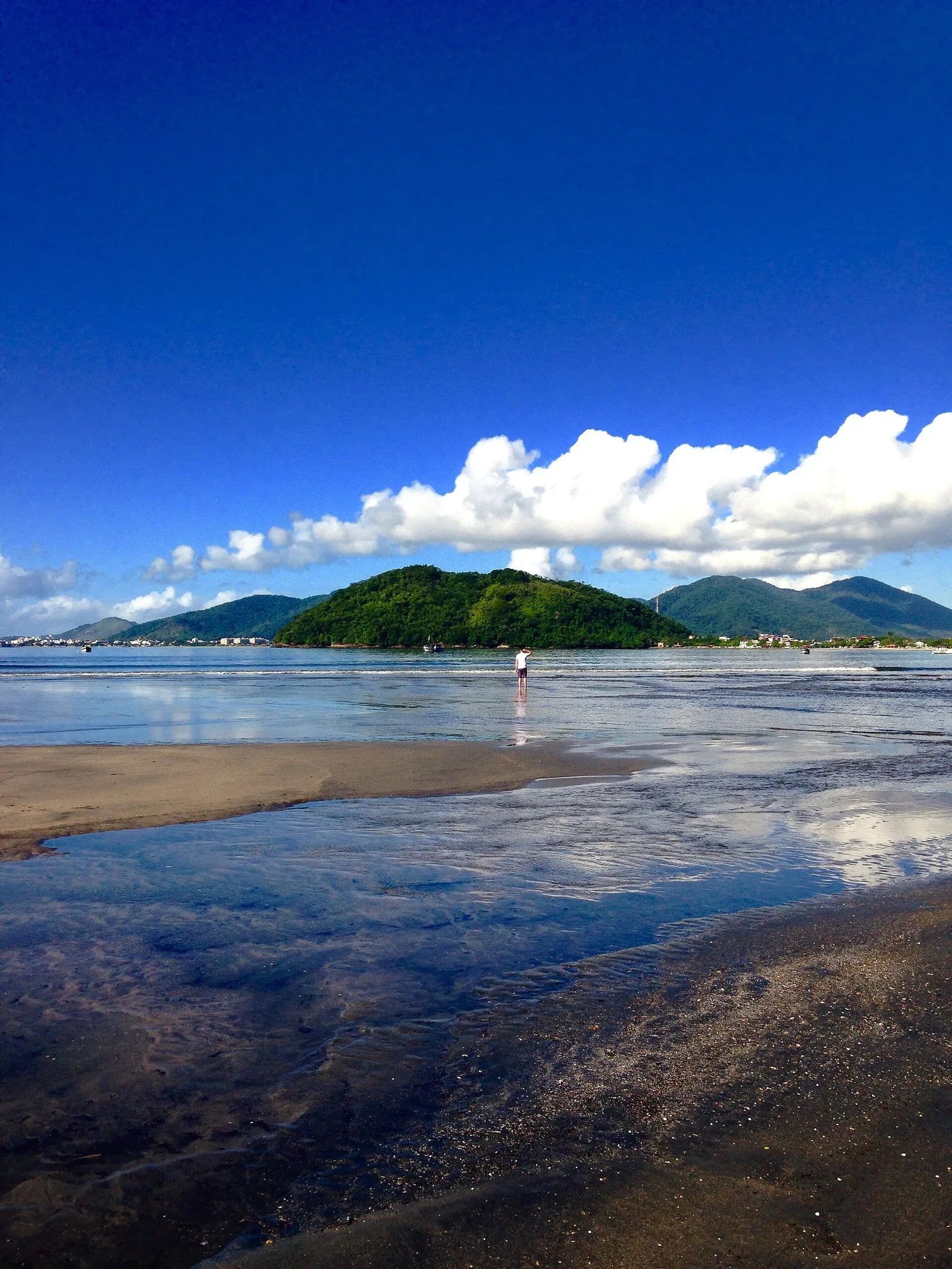
Getting there, in detail
For guests staying with us, the route is straightforward: south out of Paraty on the BR-101 coast road, through Trindade's turn-off, across the state border, and down into Ubatuba. The whole drive is around seventy kilometres and about an hour without traffic. There is no toll drama and no navigation puzzle — it is essentially one road — but it is a mountain road by the sea, with curves, the occasional slow truck, and stretches where you will want both hands on the wheel rather than the camera.
If you are not driving, there are buses along the coast between Paraty and Ubatuba, and onward to São Paulo, but they are slow and tie you to a timetable that does not suit beach-hopping. For a day or overnight from the chalet, a car — your own or a hired driver for the day — is far the better tool, because Ubatuba's beaches are spread out and the good ones are not the ones the bus stops at. We are glad to help arrange a driver who knows the coast; it turns the drive itself into part of the day rather than a chore. The same goes for the longer connection to and from São Paulo's airports, where a private transfer that pauses for a few hours on a beach is one of the nicer ways to start or end a Brazil trip. We sketch the wider logistics of moving around the region in our notes on getting around.
Surf culture, up close
Surfing is not a sideline in Ubatuba; it is part of the town's identity. The competition calendar centres on Itamambuca, but the culture is everywhere — board-shapers and surf schools along the main beaches, kids carrying foamies down to the shorebreak, the particular unhurried rhythm of a town that organises itself around the swell forecast. You do not have to surf to enjoy it. Watching a good session at Itamambuca on a clean swell, coffee in hand, is one of the genuine pleasures of the place.
If you do want to get in the water, the entry points are easy. Surf schools on the main beaches rent boards and give beginner lessons, and the gentler ends of beaches like Félix and Praia Grande are forgiving places to start. The honest caveat: this is the open Atlantic, and the surf beaches have real currents and real waves. Swim between the flags where there are lifeguards, ask before you paddle out somewhere unfamiliar, and treat a big-swell day at an exposed beach as a spectator sport unless you genuinely know what you are doing. Beginners are far better off on the calm coves; the surf will keep.
When to go
Ubatuba has two faces, and which one you meet depends entirely on timing. The warmest, busiest season runs roughly from December through February — São Paulo's summer holidays — when the water is at its warmest, the town is full, and the rain, when it comes, comes hard and fast in tropical afternoon storms before clearing. This is the season for warm swimming and high energy, and the season to book ahead and brace for traffic on the coast road.
For most of our guests, the quieter shoulder months are the sweet spot. From roughly April into June, and again from September into November, the crowds thin, the prices ease, the sea often settles, and you get long runs of clear, mild days — comfortable for hiking the forest beaches as well as lying on them. Surfers have their own calendar: the more consistent swells tend to favour the cooler half of the year, broadly autumn through late winter, so a board-led trip and a swimming-led trip do not necessarily want the same week.
The one thing to keep in your back pocket is the rain. Ubachuva earns the nickname; the mountains pull moisture out of the sky in every season, just more of it in summer. That is not a reason to stay away — it is a reason to keep the day flexible. Have a wet-weather plan (the turtle centre, a waterfall, a long lunch by the harbour) and the weather stops being a problem. We make the same case for the Paraty side in our guide to the best time to visit Paraty, and the logic carries straight across the state line.
What to bring, and a few honest cautions
Ubatuba is an easy place to enjoy and an easy place to get mildly wrong. A short, practical list saves most of the avoidable mistakes:
- Real shoes for the forest beaches. The trails to the quieter sand — around Picinguaba especially — are genuine forest paths, rooty and slick after rain. Flip-flops will fail you.
- Cash in small notes. Beach kiosks, informal parking attendants and the smaller seafood houses often prefer it, and card signal can be patchy out at the further beaches.
- Sun protection that survives the water — the sun here is strong even on a hazy day, and the reflected glare off the open beaches is no joke.
- A dry bag or a plan for valuables. The popular beaches are busy and relaxed, which is lovely, but do not leave phones and wallets unwatched on a towel while you swim.
- A wet-weather alternative in your back pocket. Ubachuva rains; have the turtle centre, a waterfall or a long lunch ready and the weather never ruins a day.
- Insect repellent for the forest and dusk. The Atlantic forest is alive, which is the point, and the mosquitoes are part of that.
The cautions are few but worth stating plainly. The surf beaches have real currents — swim where there are flags and lifeguards. The coast road is beautiful but demands respect, particularly in rain or after dark. And on a busy summer weekend the most famous beaches and the access roads to them do fill up; the reward for an early start, or for choosing a walk-in beach, is genuine space. None of this is unusual for a great coast in high season; it just pays to plan around it rather than be surprised by it.
Paraty or Ubatuba — which, and why not both
Guests sometimes ask us to choose for them, and the honest answer is that they are not really rivals; they are two moods of the same coast. Here is the short version of how we frame it:
- Choose Paraty as your base for the historic town, the calm island-studded bay, the trail beaches like Sono and the run out to Ilha Grande. This is the centre of gravity, and where the chalet sits.
- Add Ubatuba for the open ocean: surf, the longest beaches, the turtle centre, and the southern fishing villages. It is the wilder, more oceanic counterpoint.
- Do both if you have more than a few days — and most people who try it are glad they did. A single day or overnight south gives the trip a second texture without uprooting your base.
What you should not do is treat Ubatuba as a second-rate Paraty, or Paraty as a Ubatuba that happens to have old buildings. They are different in kind. One is a preserved colonial port with a sheltered bay; the other is a sprawling beach municipality on the open coast. Travel with that distinction in mind and each delivers exactly what it is good at.
A little more on the forest, and why it rains so much
It is worth understanding the rain rather than just enduring it, because the same mechanism is what makes this coast so green and so alive. Warm, moist air comes in off the Atlantic, hits the wall of the Serra do Mar, and is forced up and over; as it rises it cools, and the water falls out as rain on the seaward slopes. That is why the mountains immediately behind Ubatuba are some of the wettest country in southeastern Brazil, and why the forest is so dense, the rivers so full and the waterfalls so reliable. The cloud that smudges out your beach afternoon is the same cloud that, an hour earlier, was filling the pool you will swim in tomorrow.
That forest — the Mata Atlântica, the Atlantic Forest — is one of the most biodiverse and most threatened biomes on earth, and the protected blocks around Ubatuba and across the state line into the Serra da Bocaina are among its most important surviving stretches. The same range shelters jaguars, peccaries and several primate species, including the southern muriqui, Brazil's largest monkey. You will not see those from the beach, but knowing they are up there, in the dark green above the sand, changes how the place feels. We go deeper into the wildlife of these forests in our journal piece on Atlantic Forest wildlife, which is good reading before a trip that puts you this close to it.
Eating and the seafood question
Ubatuba eats from the sea, and eats well. The fishing villages still land their catch, and the simplest, best meals on this coast are the ones built around it: whole grilled fish, prawns, the seafood moquecas that are the regional showpiece, and the fried casquinha de siri you pick at over a cold drink while your feet are still sandy. Rather than name places that change hands from one season to the next, the rule we give guests is to eat where the boats come in and where the menu is short — the kiosks and seafood houses clustered at the busier beaches and around the town harbour do the classics best, precisely because they do little else.
The caiçara kitchen is worth seeking out for its own sake: banana-leaf-wrapped fish, cassava in a dozen forms, palm heart, and the particular smoky-sweet flavour of food cooked the way the coast has always cooked it. It is the same tradition we celebrate in our guide to Brazilian gastronomy, and Ubatuba's beach kitchens are one of the most unselfconscious places to taste it.
How we'd spend a perfect day in Ubatuba
For a couple or a family staying with us at the chalet, here is the shape of a day that gets the best of Ubatuba without spending it in the car:
- Leave Paraty early — on the road by eight or so — and take the coast south, stopping if you like at one of the small beaches along the way.
- Mid-morning at Itamambuca: swim in the river pools, watch the surf, walk the length of the sand under the forest.
- Lunch by the water: grilled fish or a moqueca at a beach kitchen, taken slowly.
- Early afternoon at Projeto Tamar, out of the strongest sun, meeting the turtles.
- Late afternoon at a calm cove like Lázaro or Domingas Dias for a final flat-water swim as the day-trippers leave.
- Drive back to Paraty in the gold light, or — better — stay the night and let the morning sea decide tomorrow.
It is an unhurried day, and that is the point. Ubatuba rewards picking a few things and doing them properly far more than it rewards a checklist.
Fitting Ubatuba into the bigger picture
Ubatuba is the southern bookend of a coast that, taken whole, is one of the great stretches of shoreline anywhere — Atlantic forest tumbling into a warm sea, scattered with islands, dotted with villages that still fish for a living. Most of our guests come for Paraty and the bay, and rightly; but a day or two south adds a genuinely different texture, more open and more oceanic, and it closes the loop on the region. If you are building a longer itinerary, we lay out how the pieces fit — town, bay, islands, trail beaches and the run south — in our Paraty itineraries, and we are always happy to sketch a route over a message before you arrive.
To see how the chalet itself sits in all this — four hundred metres up, with the bay, Angra and Ilha Grande laid out below and the coast road south to Ubatuba an easy hour away — have a look at the chalet, or read our wider overview of how to explore Paraty and the coast around it. And if you would like us to help shape your days, including a run down to Ubatuba and the turtles, simply get in touch; this is the kind of planning we most enjoy.
Frequently asked questions
About seventy kilometres by the coast road, which is roughly an hour’s drive in normal traffic. It can take considerably longer on summer weekends and Brazilian holidays, when the two-lane road fills up, so leave early.
Ubatuba is in São Paulo state. Driving south from Paraty you cross the Rio de Janeiro–São Paulo border shortly after Trindade, and the Ubatuba beaches begin not long after the line.
More than a hundred, spread along about a hundred kilometres of broken coastline. They range from long surf beaches facing the open ocean to sheltered coves with flat, warm water for swimming.
Itamambuca, northeast of town, is the best-known surf beach and hosts major competitions on a good swell. Praia Grande, Félix and the Vermelha beaches also pick up waves. For calm swimming, head instead to sheltered coves like Lázaro and Domingas Dias.
Projeto Tamar is Brazil’s national sea-turtle conservation programme, and its Ubatuba visitor centre in the Itaguá neighbourhood has tanks, aquariums and a panoramic window onto large turtles. It charges an entry fee, opens late morning to late afternoon, and closes one day a week, so check the schedule before you go.
Yes, though you’ll spend about two hours in the car and should pick just one or two beaches plus the turtle centre. An overnight is more relaxed: you get the late-afternoon and early-morning sea without the day-trip crowds.
December to February is warmest and busiest, with hot, tropical-shower weather. The shoulder months — roughly April–June and September–November — bring thinner crowds and often calmer seas. Surfers tend to prefer the cooler half of the year for more consistent swells. Expect some rain in any season; locals nickname the town ‘Ubachuva’.