In this guide
If you have looked at a photograph of this coast and wondered where the water turns that impossible shade of pale blue, the answer is almost always the same stretch of sea. Lagoa Azul Angra — the Blue Lagoon in the waters of Angra dos Reis — is the shallow, turquoise pool that gives the Costa Verde its reputation, and it sits within easy reach of a day out from Paraty. It is not a lagoon in any strict sense, and it is not in the town of Angra itself, but the name has stuck because the colour is real and the marine life is genuinely abundant.
What most first-time visitors do not realise is that the Blue Lagoon is only the headline act. The same run of coast holds dozens of sheltered coves, a large island called Ilha da Gipóia with beaches for every mood, and the long ocean sands of Ilha Grande beyond. Some are calm enough for a child’s first snorkel; others are lively floating-bar affairs with music carrying across the water. Learning which is which, and how to string a few of them into one good day, is the difference between a rushed boat trip and a day you remember.
We host guests up at the chalet on the hillside above the bay, and the islands come up in almost every conversation before arrival. This guide is the version we give in person: honest about crowds and trade-offs, specific about how to get there from Paraty, and clear about what the water actually looks like in each season. Use it to plan a day on the boat, then come back for a swim in the infinity pool when the salt and sun have done their work.

What “Lagoa Azul Angra” actually means
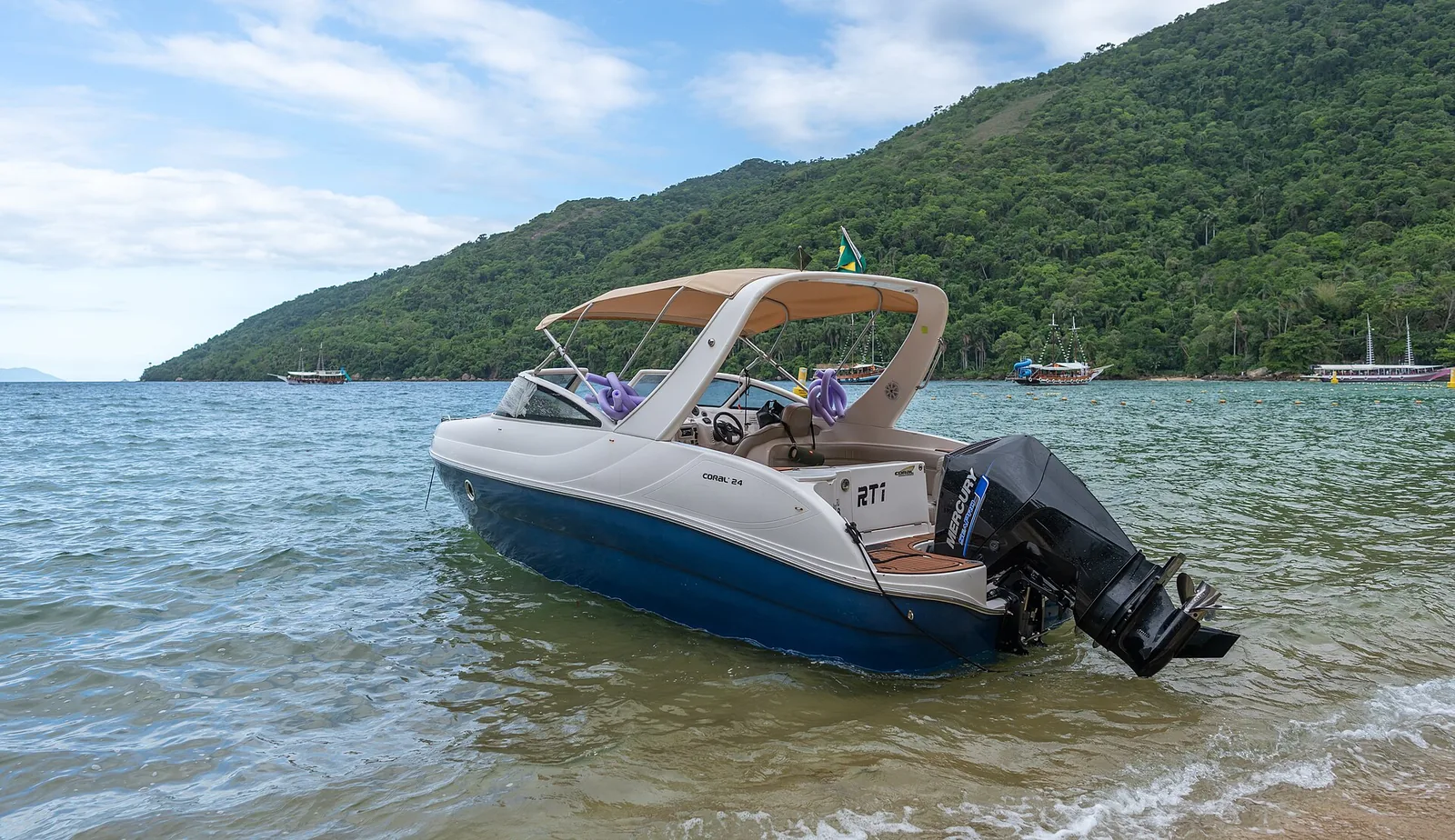
Two small confusions are worth clearing up before you book anything, because they trip up a lot of people. First, the Blue Lagoon is not a lagoon. It is an open patch of shallow sea, sheltered by small islands, where a pale sandy bottom turns the water a bright Caribbean blue. There is no enclosing ring of land and no fresh water. Boats simply anchor over the shallows and people slip in to swim and snorkel.
Second, “Angra” here means the municipality, not the town. Lagoa Azul lies on the calm, mainland-facing side of Ilha Grande, close to a small island called Ilha dos Macacos, all of which falls inside the sprawling municipality of Angra dos Reis. So a tour “to Lagoa Azul in Angra” does not dock at the Angra waterfront; it heads out into the archipelago that fills the bay between the mainland and Ilha Grande. Once you understand that, the map makes a great deal more sense.
The bigger picture is this: between Paraty in the west and Angra dos Reis in the east lies one of the most broken, island-strewn coastlines in Brazil — hundreds of islands, islets and hidden beaches sheltered by the mountains of the Serra do Mar. Calm water, warm temperatures and that pale-sand clarity are the norm here, not the exception. The Blue Lagoon is the most famous single spot, but it is one bead on a very long string.
One more practical note on the name. Because “Blue Lagoon” is such a good label, you will hear it attached to more than one place along this coast, and a few operators use it loosely for any bright, shallow anchorage. That is not dishonesty so much as marketing, but it means it pays to ask exactly which stops a tour includes rather than booking on the promise of a single famous word. A good boat day is defined by the string of coves it links together, not by one name on a flyer.
The Blue Lagoon is not really a lagoon and Lagoa Azul is not really in Angra town — but the water lives up to every version of the name.
The Blue Lagoon: snorkelling the natural aquarium
The reason the Blue Lagoon earns its fame is what happens when you put your face in the water. The shallows here act like a natural aquarium: schools of small, curious reef fish gather in numbers, drawn partly by the shelter and partly, honestly, by decades of visitors feeding them. You do not need to be a strong swimmer or a trained diver. A mask, a calm float and a metre or two of clear water are enough to see plenty.
The bottom is a mix of pale sand and rock, which is what produces the colour. On a bright, flat day the visibility is excellent and the blue is almost luminous. The water is shallow enough over much of the anchorage that you can stand, though we always tell guests to keep an eye on where the rock and any coral sit and to float rather than trample. Go on an overcast day and the colour dims noticeably — the blue is a trick of sunlight on pale sand, so the same water that dazzles at noon can look flat and grey under cloud. It is one more reason to keep an eye on the forecast and, if you have the flexibility, to hold the island day for a clear morning rather than lock it in weeks ahead.
What you will see underwater
Expect clouds of small silvery and striped fish, the occasional larger fish cruising through, and, if you are patient and drift toward the edges rather than the busy centre, sometimes a sea turtle grazing on the bottom. This is not a coral-wall dive site — it is a gentle, sunlit shallow — so set your expectations toward abundance and colour rather than dramatic reef structure. For a couple hovering quietly at the fringe of the anchorage, it is genuinely lovely; for children, the sheer number of fish is the whole show.
A word of honesty about feeding: some boat crews still hand out bread or biscuits to bring the fish in close. It makes for a swarm and a good photo, but it is not good for the fish or the water, and it draws every other swimmer to the same spot. If you want the calmer version, snorkel a little apart from the feeding scrum and let the fish come to you. If you want to go deeper on technique and the better reef spots along this coast, our diving and snorkelling guide covers the details.
When to go, and the crowd question
Here is the trade-off no brochure mentions: the Blue Lagoon is popular, and on a summer weekend or a holiday it can be genuinely busy, with dozens of boats rafted up over the same shallows. The water is still clear and the fish are still there, but the atmosphere is a floating car park rather than a quiet swim, and you will occasionally catch a whiff of boat fuel.
The fix is timing. Go on a weekday. Go outside the December-to-Carnival peak if you can. And choose an early departure so you reach the lagoon before the mid-morning armada arrives, or a later run so you are there as the day-trippers head home. A private or small-group boat can also aim to arrive off-peak on purpose, which is one of the quiet advantages of chartering rather than taking the big scheduled schooner. More on that below.

Ilha da Gipóia: the clear-water anchorages
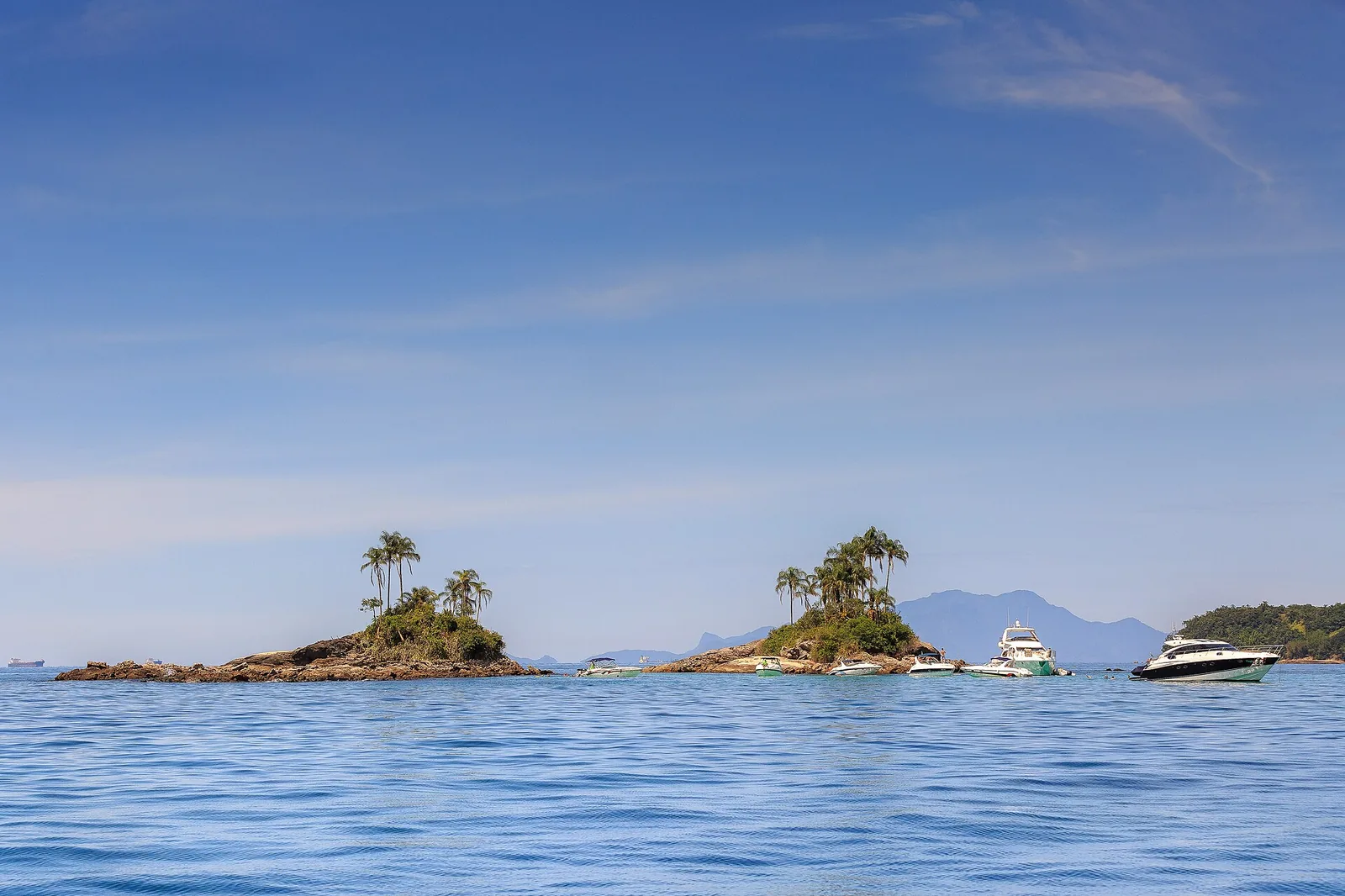
If the Blue Lagoon is the headline, Ilha da Gipóia is the island most days actually revolve around. It is the second-largest island in the bay after Ilha Grande, and it sits close to the mainland, roughly half an hour by boat from Angra town. Because it is big and varied, it offers several beaches with quite different characters, so you can tailor the stop to your group.
Praia do Dentista — the lively one
Praia do Dentista, sometimes called Jurubáiba, is the beach people mean when they talk about the party side of Angra. In high season it fills with floating bars and pontoons anchored just off the sand, music plays, and the water fills with boats and swimmers. It is genuinely beautiful — clear green water against a curve of forested hill — but it is a scene, not a retreat. If your idea of a good island day involves a caipirinha handed over the side of a floating bar and a bit of a crowd, this is your beach. If it is not, know its reputation and treat it as a quick photo stop rather than your long anchor.
Praia da Piedade — the calm one
At the other end of the mood scale is Praia da Piedade, a small strip of sand backed by dense green, with a little white chapel, the Igreja da Piedade, built in the 1960s, sitting just above the beach. The cove is well sheltered, the water is calm and clear, and it is shallow enough that children can play safely and beginners can snorkel without any nerves. This is the kind of stop we point families toward: gentle, pretty, and rarely as frantic as the Dentista. The chapel gives the beach a quiet, slightly timeless feel that photographs beautifully in the late-afternoon light.
Praia das Flechas and the quieter coves
For emptier water still, Praia das Flechas is worth asking your skipper about. It is quieter, more natural, and looks out across to the small Ilhas Botinas and toward Ilha Grande. Turtles are seen here fairly often, and because it draws fewer boats it keeps a more peaceful feel. Around Gipóia’s edges are several smaller beaches — Vitórino and others — where a few simple beachside restaurants serve fresh fish and cold drinks at fair prices, reachable by short trails between coves. A good boat day often means anchoring at one calm cove for a long swim and lunch, then pausing at a livelier beach only briefly on the way past.
Reaching the islands from Paraty
From the chalet, the islands are a day trip east along the coast, and there are two honest ways to think about it: a boat straight out of Paraty, or a drive to Angra and a boat from there. Both work; which suits you depends on your group and your appetite for a longer day.
By schooner, the slow and sociable way
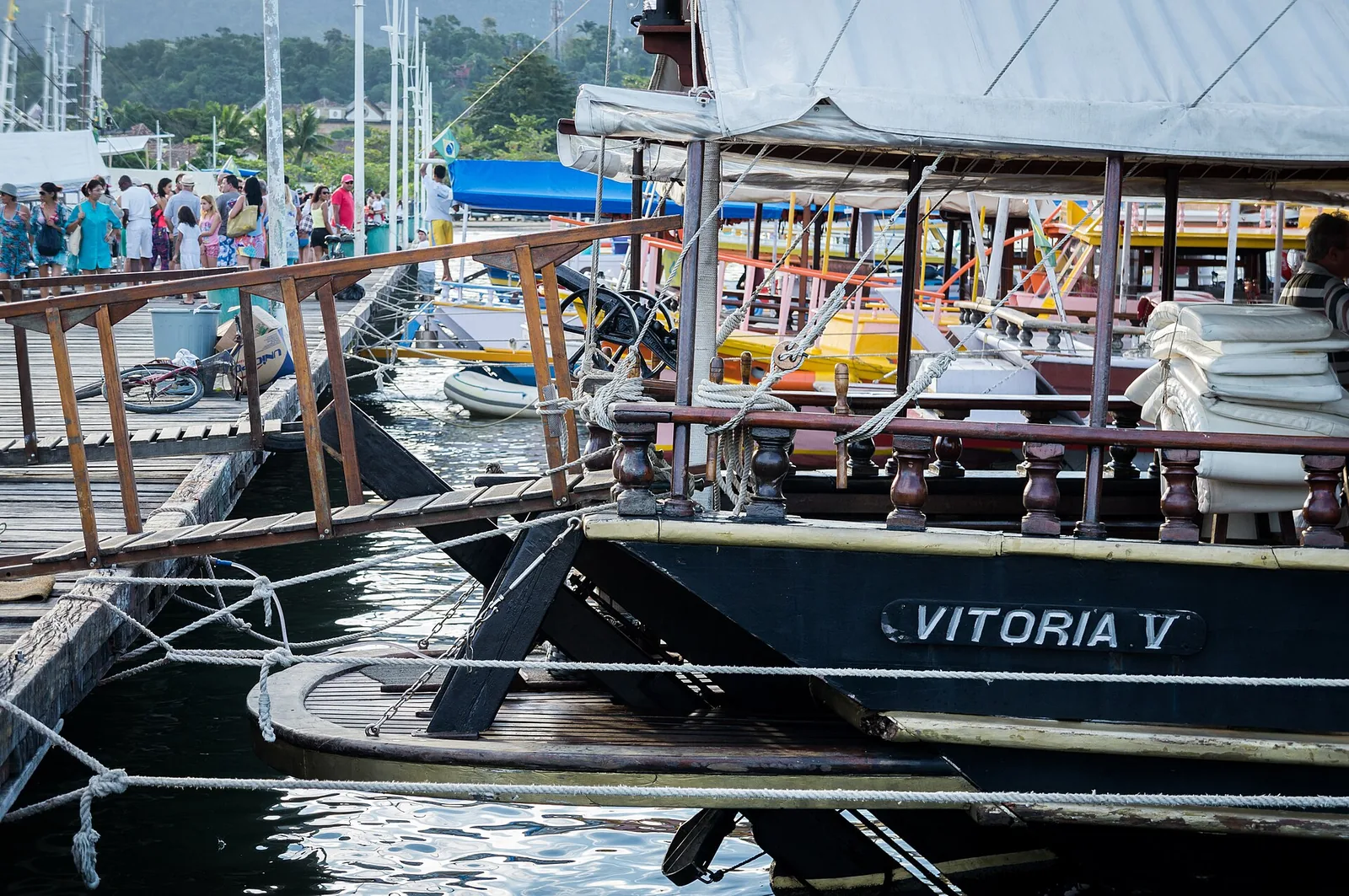
The classic option is a wooden schooner — a broad, unhurried motor-sailer that carries anywhere from a couple of dozen to a hundred passengers, with a sun deck, a shaded lower deck and usually a simple bar and lunch on board. Schooners leave from Paraty’s own bay for the closer islands, and from Angra and nearby Conceição de Jacareí for the run that takes in the Blue Lagoon and Gipóia. A schooner day is typically six to eight hours with three to five swimming stops, moving at a gentle pace between them.
The appeal is the rhythm. You are not rushing; you are drifting from cove to cove, with time to swim properly at each, eat a slow lunch and doze on deck between stops. For couples, families and anyone who treats the boat itself as part of the holiday, a schooner is the right call. The trade-off is that the big scheduled boats visit the popular anchorages at the popular times, so you share the water. If you like the idea, our overview of Paraty boat tours lays out the main routes and what each covers.
By fast boat or private charter
The faster alternative is a lancha — a speedboat — taken as a shared tour or, better, as a private charter for your group. A fast boat covers far more ground: it can reach the Blue Lagoon, dip into two or three Gipóia coves and still find a quiet beach for lunch, all in the time a schooner spends on half that itinerary. Chartered privately, it also buys you control — you decide when to leave, which beaches to skip, and whether to arrive at the lagoon early to beat the crowd.
The honest downsides are cost and ride. A private lancha is the most expensive way to do this, and a speedboat over choppy afternoon water is a firmer ride than a broad schooner. For a special day, a honeymoon, or a family that wants to set its own pace, it is money well spent. For a relaxed, sociable, lower-cost day, the schooner wins. If you are weighing the styles against each other, our note on planning a villa-based week touches on how to balance the splurge days against the slow ones.
.jpg)
Going from Angra dos Reis instead
There is a case for driving to Angra and starting your boat day from there, and it comes down to geography. The Blue Lagoon and Gipóia sit in the eastern half of the bay, closer to Angra than to Paraty. Starting from Angra means less transit on the water and more time swimming, which matters if the lagoon is your main target.
The drive from Paraty to Angra dos Reis is about 90 kilometres along the BR-101, the Rio–Santos coastal highway, and takes roughly an hour and a half in normal traffic. It is a scenic run, hugging the mountains and the sea, though the road twists and the surface varies, so it is not a fast motorway. From Angra’s waterfront you will find schooners and fast boats leaving through the day. Our fuller Angra dos Reis guide covers the town and its departure points in more detail, and the practical business of getting between towns is in our getting-around notes.
For most of our guests, though, the calculus favours leaving from Paraty. A boat straight from the bay means no early drive, no car to leave in an Angra car park, and a return that puts you back at the chalet by early evening. Unless the Blue Lagoon is the single non-negotiable of your trip, we usually suggest a Paraty departure and letting the day unfold from there.
Ilha Grande and Lopes Mendes, if you have another day
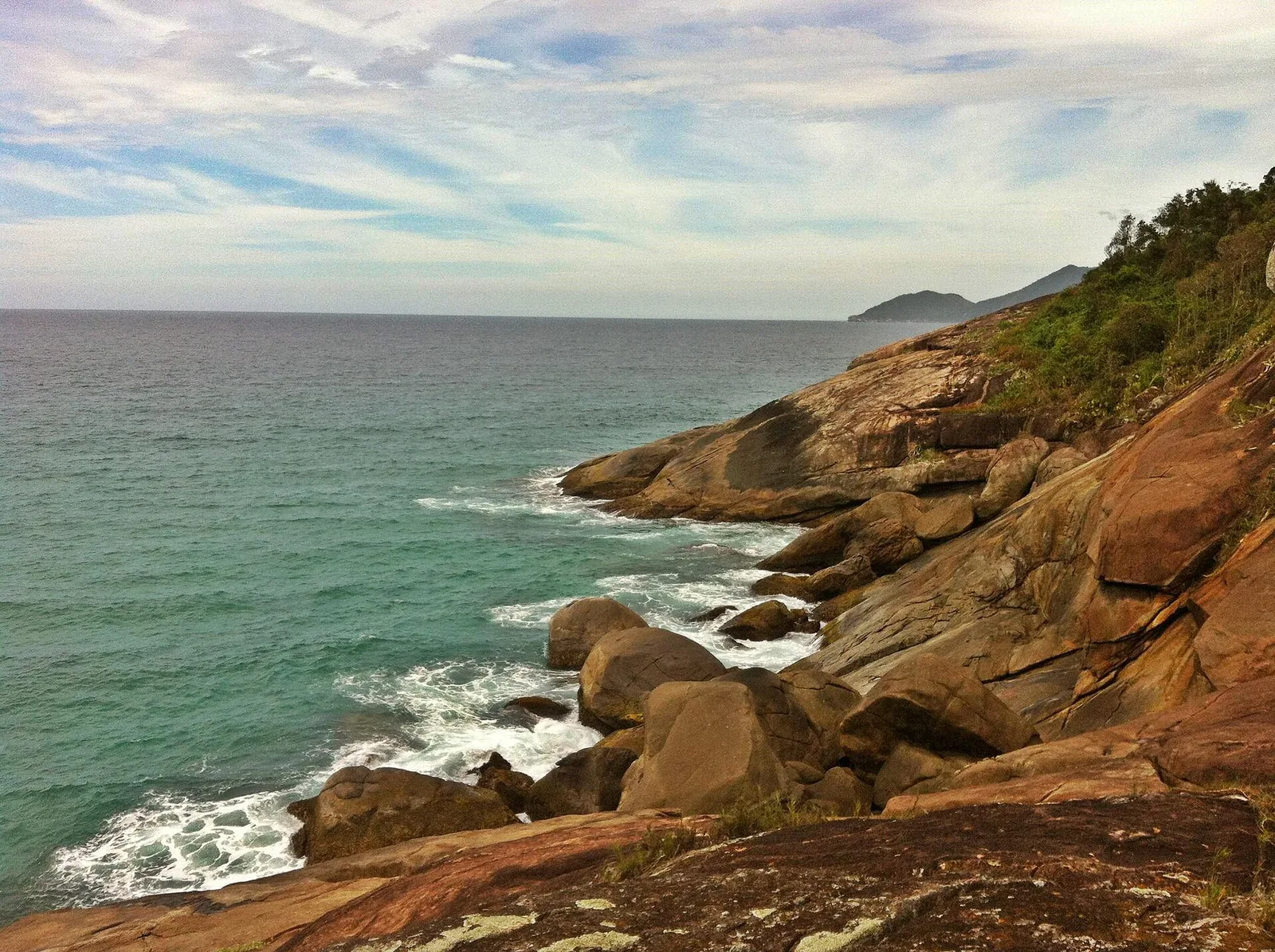
The archipelago does not stop at Gipóia. Ilha Grande, the big island that shelters this whole coast, is a destination in its own right — car-free, forested, laced with hiking trails and ringed by beaches, including Lopes Mendes, regularly called one of the finest ocean beaches in Brazil. You can glimpse Ilha Grande on a Blue Lagoon day, but you cannot do it justice in the same trip.
If the islands hook you — and they often do — set aside a second day for Ilha Grande proper. From Angra it is a straightforward crossing to the main village of Abraão, and from there boats and trails fan out to the beaches. It makes a good contrast to a lagoon day: less about anchoring and snorkelling, more about walking through Atlantic forest to a long empty strand. We cover it fully in our complete Ilha Grande guide, with the specific walk out to Lopes Mendes written up separately, and a shorter day-trip plan for those short on time.
.jpg)
What the water is really like
Photographs set an expectation, and it is worth being straight about what you will actually find, because the sea here changes with the season and the weather.
Clarity and season
The clearest water comes in the drier, calmer stretch of the year, broadly from April into October. Less rain means less river run-off carrying sediment into the bay, and flatter seas mean less stirred-up sand. This is when the Blue Lagoon and the sheltered coves look their absolute best. The summer months, December to March, are warmer and livelier but bring afternoon rain that can cloud the water for a day or two after a heavy downpour. None of this ruins a trip — the water is calm and warm year-round — but if a mirror-clear sea is your priority, aim for the shoulder and winter months. Our guide to the best time to visit Paraty goes through the seasons in full.
Temperature and comfort
The sea here is warm and swimmable all year. In summer it is bath-like; in the cooler months it is fresh but perfectly comfortable for a long snorkel without a wetsuit. The bigger comfort factor is sun, not cold. These sheltered anchorages sit under strong tropical light with little shade on the water, so the risk is sunburn and dehydration far more than a chill. Plan around the sun, not the temperature.
How to plan the day from the chalet
Because the chalet sits up on the hillside a short drive above Paraty, with a view over the bay toward Angra and Ilha Grande, an island day has a natural shape to it. You look out at the water over breakfast, you go and swim in it, and you come home to rinse off the salt with the same view from the pool. Here is how we usually suggest fitting the pieces together.
A sample island day
- Early start. Have breakfast at the chalet and aim to be on the boat by mid-morning at the latest. Earlier is better — it means reaching the popular anchorages before the crowd and giving yourself margin for a longer lunch stop.
- First swim at a calm cove. Whether you leave from Paraty or Angra, start somewhere sheltered — a Gipóia cove or a quiet beach — to settle in, fit masks and get the children comfortable before the busier spots.
- The Blue Lagoon. Time this for when it is quietest if you can. Snorkel at the edges, keep off the rock and coral, and give yourself a proper hour rather than a rushed fifteen minutes.
- Lunch on the water or ashore. Either the boat’s own lunch or a stop at one of the simple beach restaurants for grilled fish and a cold drink.
- A last quiet beach. Finish somewhere calm on the way back, then let the boat carry you home in the low afternoon light.
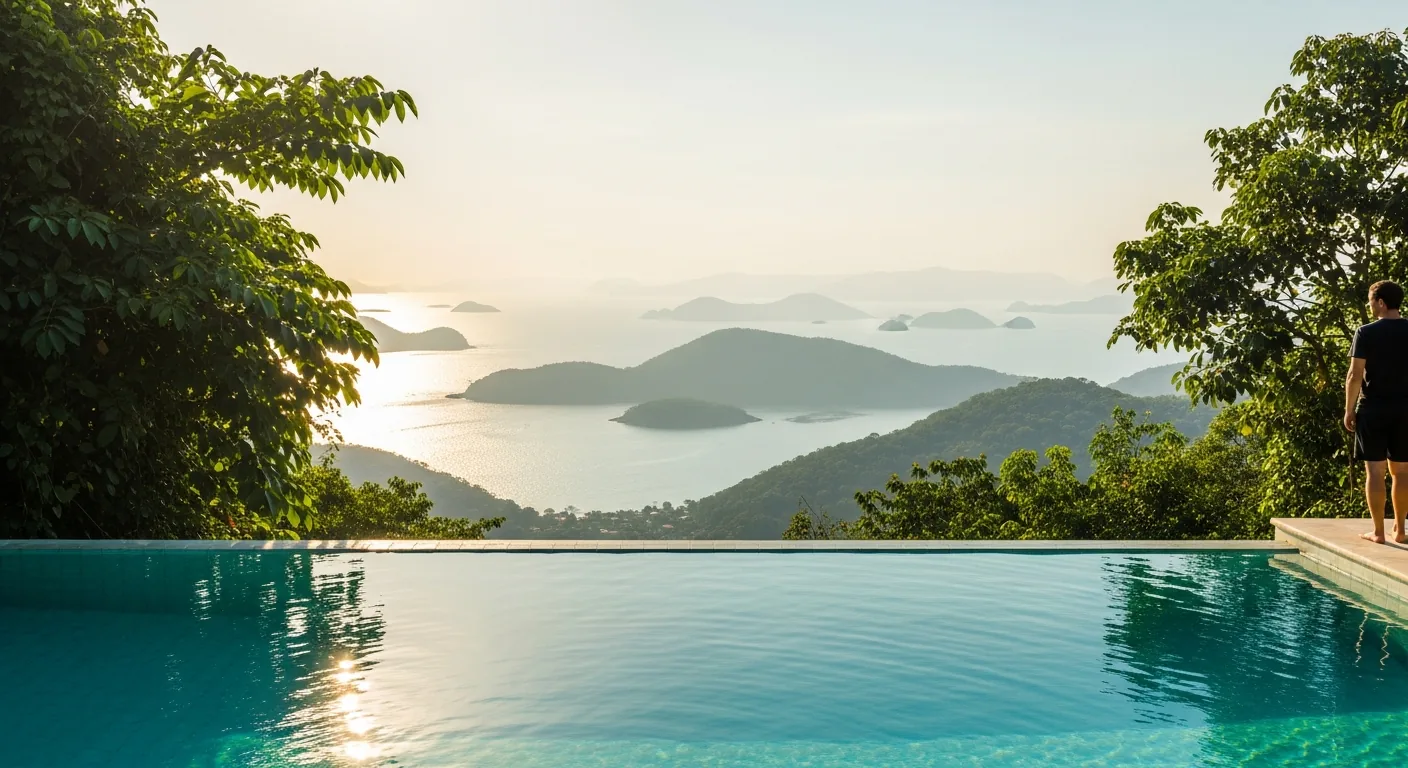
- Back to the pool. Rinse the salt off in the infinity pool as the sun drops behind the hills, with Paraty, Angra and Ilha Grande all laid out below.
That last point is not a small thing. After a full day of salt, sun and boat, coming back to a private pool with a three-way view of the same bay you have just been swimming in is the kind of contrast that makes a trip. It is why we think of the chalet as a base you return to, rather than a place you merely sleep. If you want help slotting an island day into a wider week, our Paraty itineraries show a few worked examples.
Packing and practicalities
A good island day rewards a little preparation, and the mistakes are always the same ones — too little sunscreen, no cash, a phone soaked by spray on the crossing. None of it is complicated, but the difference between a comfortable day and a slightly miserable one is usually made the night before, when you pack. Here is what we tell guests to bring, and what to leave behind.
- Reef-safe sunscreen, and plenty of it. The sun on the water is fierce and there is almost no shade at anchor. A rash vest or long-sleeved swim top does more than any amount of cream.
- Your own mask and snorkel if you have them. Rental gear on the boats is fine but variable; a mask that fits your own face makes the whole experience better. Children in particular do much better with kit that fits.
- Water and a hat. Dehydration sneaks up on you between swims. Bring more water than you think you need.
- A dry bag. For phone, keys and anything you do not want soaked by spray on a fast boat.
- Cash in reais. The floating bars and beach kiosks do not always take cards, and signal on the water is patchy.
- Motion-sickness tablets if you are prone to it, taken before you board — the schooners are steady, but the open crossings can roll.
- Sensible shoes for landing. Some beaches have rocky entries; a pair of water shoes saves sore feet.
What to leave: valuables you would hate to lose overboard, and any expectation of constant phone signal. The point of the day is to be off-grid for a few hours. Treat it that way.
Snorkelling with children and mixed groups
One of the quiet strengths of this coast is how well it suits mixed ages and abilities. Not everyone in a group wants the same thing from a beach day, and the archipelago is forgiving of that. The Blue Lagoon’s shallows and Gipóia’s calm coves like Piedade are genuinely gentle: warm, sheltered, shallow enough that a nervous swimmer or a small child can stand and a confident one can drift out to the fish. That range in a single anchorage is rare.
For families, we make three suggestions. Choose a schooner over a fast boat for a steadier ride and more room to move about. Pick a mid-week departure so the anchorages are calmer and safer with fewer boats churning through. And build the day around one long, easy cove rather than trying to hit every famous stop — children do far better with time to settle than with a checklist. Our guide to Paraty with family goes further on this, and the chalet’s pool means the youngest members of the group always have a calm fallback on the days they would rather not be on a boat at all.
Couples and friends travelling without children have the opposite freedom: chase the quieter, emptier beaches, charter a small boat and set your own pace, or fold an island day into a slower romantic trip. Our note on a Paraty honeymoon leans into that, and there is no rule that says a good island day has to be busy or scheduled.
Visiting the islands responsibly
This coastline is beautiful because it is, for now, largely intact, and it stays that way only if visitors are careful. None of this is onerous — it is mostly common sense — but it matters.
- Do not touch or stand on coral and rock. Float, do not trample. What looks like stone is often living and slow to recover.
- Skip the fish feeding. It looks fun and photographs well, but it changes fish behaviour and fouls the water. The fish are plentiful without it.
- Use reef-safe sunscreen and apply it well before you swim, so less washes into the water.
- Take everything back. Nothing over the side, especially not plastic. The best boats are strict about this; hold your crew to it.
- Give wildlife room. If a turtle appears, keep your distance and let it feed. The reward is watching it behave naturally.
The Atlantic Forest that runs down to these beaches is one of the most biodiverse and most threatened ecosystems on earth, and the marine life in the bay is part of the same living system. If that side of the coast interests you, our journal piece on Atlantic Forest wildlife is a good companion read for a rainy afternoon.
Where an island day fits in a Paraty week
An island day is a highlight, but it is best as one note in a wider week rather than the whole tune. Two or three days on the water in a row can blur together; the trip that lands is the one that alternates. Spend a day among the Blue Lagoon and the Gipóia coves, then give the next day to something completely different — the cobbled streets and white churches of Paraty’s historic centre, a forest walk to a waterfall, or the still, mangrove-lined inlet of the Saco do Mamanguá, which is a gentler, greener kind of water day.
The other beaches of the coast reward exploring too. The town-facing bay, the surf-washed sands out at Trindade, the boat-only coves down toward Praia do Sono — each has its own character, and our roundup of the best beaches around Paraty helps you match a beach to the mood of the day. Read alongside our broader piece on Brazil’s most beautiful coastlines, the point becomes clear: the Costa Verde packs an unusual amount of variety into a short stretch of coast, and the clear-water islands are only its most photographed corner.
Through all of it, the chalet works because it stays still while the days change around it. You go out to the islands, the waterfalls, the town; you come back to the same quiet hillside, the same pool, the same long view over Paraty, Angra and Ilha Grande. On the evenings after an island day, when the salt is rinsed off and a cold drink is in hand, that view does a particular kind of work — it lets you see, all at once, the whole stretch of water you spent the day inside.
When you are ready to shape a trip around a day like this, we are happy to help with the practical side — which departure suits your group, when the water runs clearest, how to fit the islands around the rest of a Paraty week. The best island days here are the planned-but-unhurried kind, and a little local knowledge goes a long way. Get in touch and we will point you toward the version of the day that fits how you like to travel, and you can read more about the setting on our explore Paraty pages before you come.
Frequently asked questions
Lagoa Azul is a shallow, turquoise natural pool on the sheltered side of Ilha Grande, near the small Ilha dos Macacos, within the municipality of Angra dos Reis. It is reached only by boat, usually on a schooner or fast-boat tour that leaves from Angra town, Conceição de Jacareí or Paraty.
The most common way is a full-day schooner or fast-boat tour that runs east along the coast to the Angra archipelago. By road it is about a 90-minute drive from Paraty to Angra dos Reis, then a boat from there. Many Paraty operators also run direct boat days that reach the outer islands without changing at Angra.
Yes. The water is shallow, calm and clear, and small reef fish gather in large numbers, which is why it is often called a natural aquarium. Bring or rent a mask, keep off the coral, and go early or late to avoid the midday crowd of boats.
Ilha da Gipóia is the usual favourite — the second-largest island in the bay and close to the mainland, with calm coves like Praia da Piedade and the livelier Praia do Dentista. For emptier water, the smaller beaches of Ilha Grande and the outer islets tend to be quieter.
A typical schooner day runs roughly six to eight hours, with three to five swimming stops. Fast boats cover the same ground in less time and reach more spots, but a schooner is the slower, more sociable way to spend the day on the water.
Clarity is best in the drier, calmer months, broadly from April to about October, when there is less river run-off and the sea is flatter. Summer (December to March) is warmer and busier, with occasional afternoon rain that can cloud the water for a day.
Yes, and it is one of the better spots for families because the water is shallow and calm. Choose a schooner rather than a fast boat for an easier ride, bring shade and reef-safe sunscreen, and pick a mid-week departure to avoid the busiest anchorages.