In this guide
Paraty surprises people who arrive expecting a town for couples and culture buffs. The cobblestones, the gold-rush churches, the candlelit restaurants at night — all of that is real, and it suggests a place built for grown-ups with time on their hands. Then you watch a six-year-old spend forty minutes hauling a plastic bucket of warm seawater across the flats at Jabaquara, completely absorbed, and you realise the town has a quieter talent. It is unusually good with children. The water is calm where it counts, the days move at a manageable pace, and almost everything worth doing — a boat, a waterfall, a wander through the old streets — happens to be the kind of thing kids enjoy too, often more than the adults do.
We host families here through every season, and the trip that works is rarely the one that tries to do too much. Children set the tempo, and the parents who relax into that come away rested rather than wrung out. The trick is knowing which beaches are gentle and which are not, where the shade is, how to read the afternoon weather, and how to build a day around a pool and a nap rather than against them. This is a practical, honest guide to Paraty with kids — what suits which ages, what to skip, where the stones will defeat a stroller, and how to pace a family day from a villa above the bay so that everyone, including the smallest traveller, ends the week wanting to come back.
None of it requires heroics. Paraty rewards a slow hand. What follows is the advice we give arriving families over coffee on the first morning, written out in full.
Why Paraty works for families
Three things make this stretch of the Costa Verde forgiving for travelling families. The first is geography. Paraty sits at the back of a deep, sheltered bay studded with islands, which means the open ocean swell breaks far offshore and the beaches nearest town are protected. For young swimmers, that calm water is everything. The second is scale. The historic centre is small, flat and entirely closed to cars, so once you are inside it there is nothing to dodge — a rare thing to be able to say to a parent of a wandering toddler. The third is the rhythm of the place. Paraty is not a resort strip with a thousand things shouting for attention. It is a town and a coastline, and a good family day here tends to be one big outing followed by a long, lazy afternoon. Children do well on that diet.
It helps to know where you are. Paraty lies on the coast of Rio de Janeiro state, roughly halfway between the cities of Rio de Janeiro and São Paulo — about 240 km from Rio, a drive of around four and a half hours along the coastal Rio–Santos road, and a little farther from São Paulo. In 2019 the town and the neighbouring island of Ilha Grande were jointly inscribed on the UNESCO World Heritage List as a mixed cultural and natural site, recognised both for the colonial centre and for the Atlantic Forest that climbs the mountains behind it. For families that translates into an unusual combination: a genuinely walkable historic town and a wall of green, waterfall-laced jungle, both within a short drive of calm beaches. You rarely get all three in one place. Our own guide to the Paraty historic centre goes deeper on the town itself; here the focus stays on the children.
A last point in Paraty's favour: Brazilians travel with their families constantly, and the town is set up for it without making a fuss. Kitchens will happily plate something plain for a child. Beach kiosks expect sandy toddlers. No one minds a stroller parked beside a table or a baby asleep in a sling at dinner. That cultural ease is hard to quantify, but parents feel it within a day.
Paraty does not try to be a children's destination, which is exactly why it is such a good one.
The calm beaches: where small children swim happily
The single most useful thing to understand about Paraty's beaches is that they are not all the same animal. Some are bay beaches — flat, shallow, almost lake-like — and some are surf beaches on the open Atlantic, beautiful and energetic and not where you want a four-year-old paddling unwatched. Sorting one from the other is the foundation of a good family week.
Jabaquara
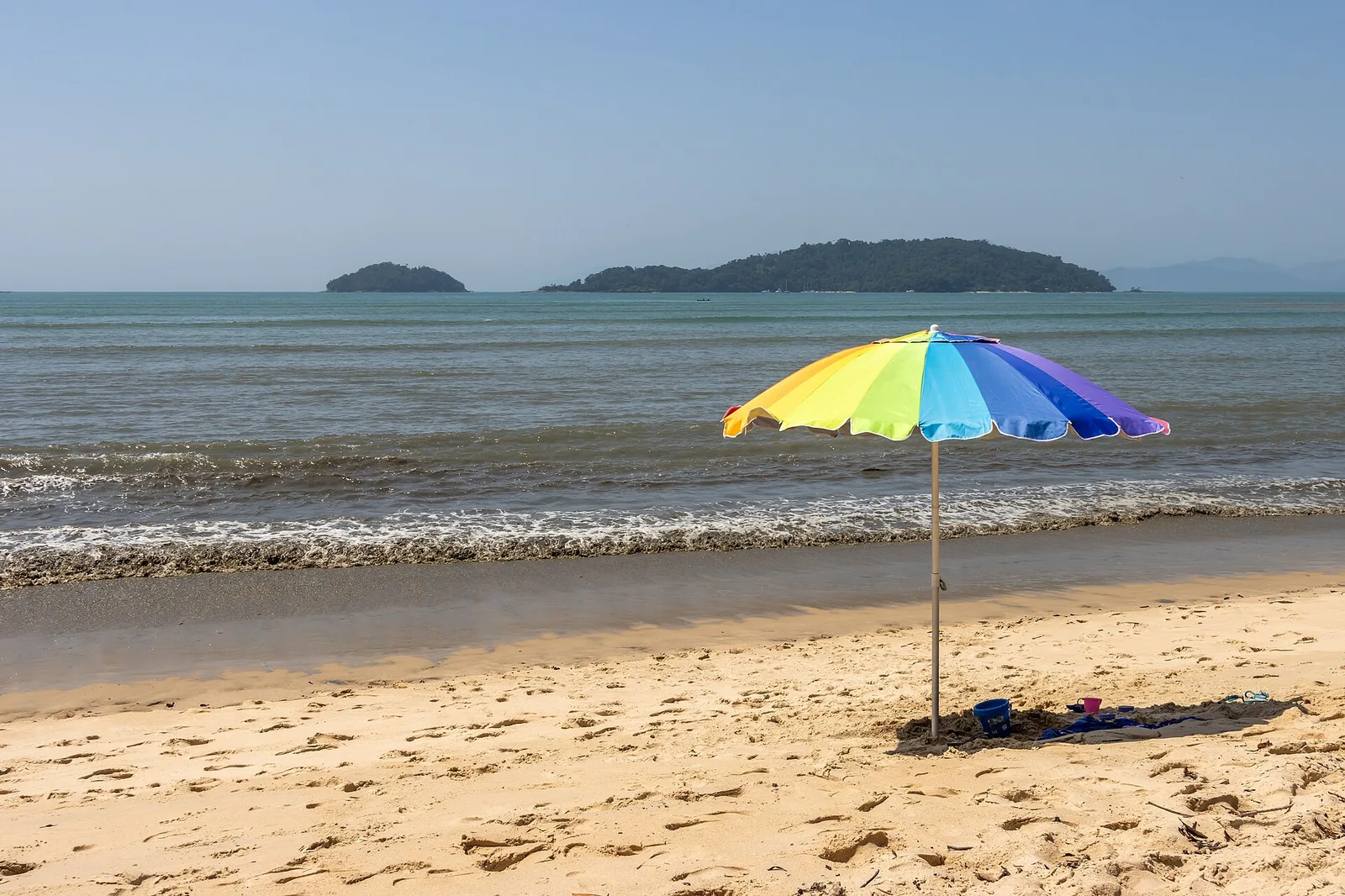
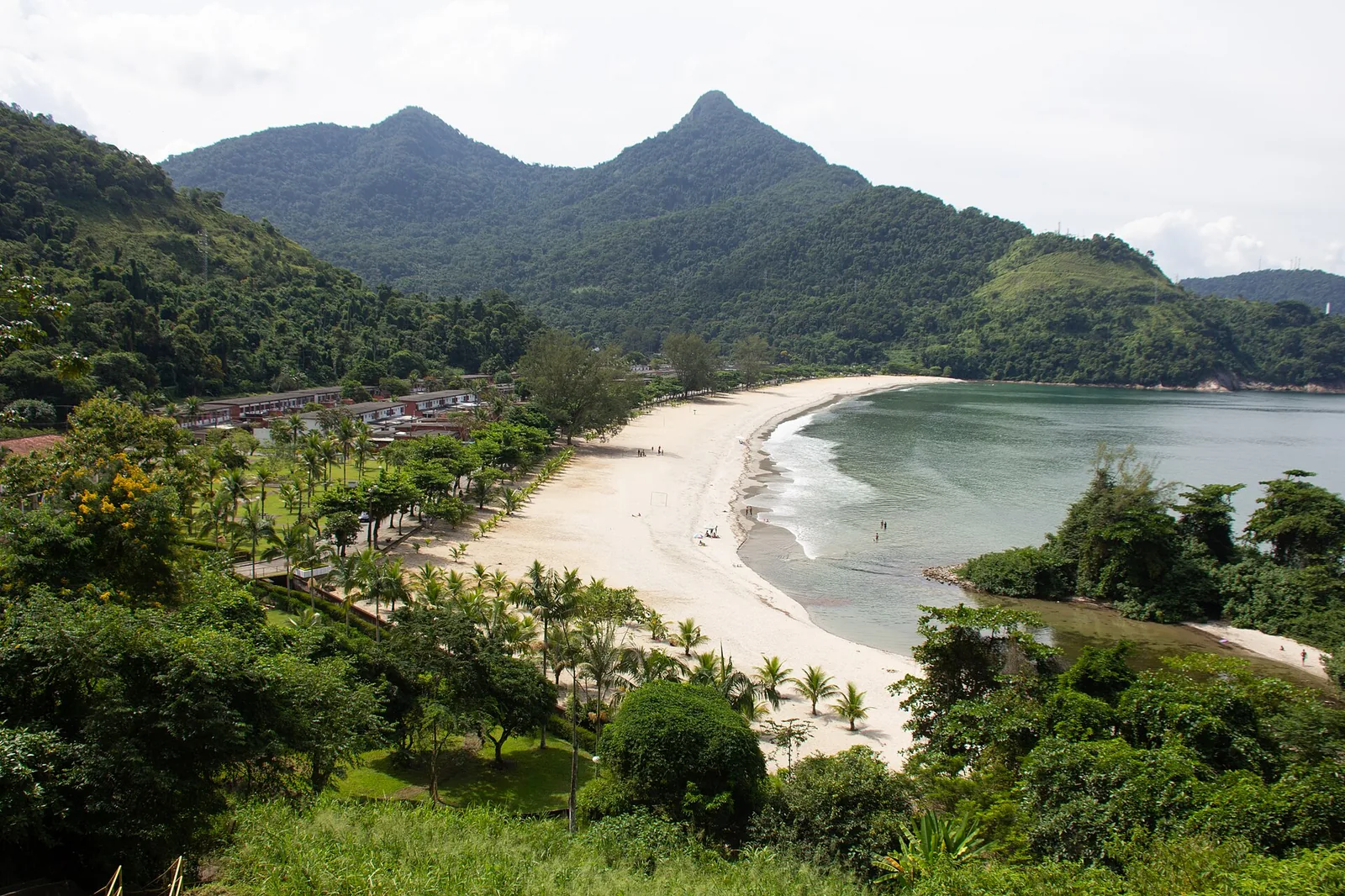
Jabaquara is the family default for good reason. It sits a short walk or a five-minute drive north of the historic centre, which means you can fold a beach morning into a town day without a production. The bay here is broad and the water shelves so gently that small children can wade a long way out and still be standing. A river, the Jabaquara, meets the sea at one end, and the dark mineral mud near the river mouth is a local fixture — children paint themselves with it cheerfully while parents pretend to disapprove. There are kiosks for lunch, juice and the inevitable second ice cream, and enough space that a family can stake out shade and stay put for hours. If you do one easy beach all week, make it this one.
Paraty-Mirim
Paraty-Mirim rewards a slightly longer drive — roughly forty minutes south of town on a partly unpaved road — with a calmer, emptier, more old-fashioned beach day. The water is shallow and warm, retreating a long way at low tide to leave a wide apron of firm sand that toddlers treat as a private kingdom. As at Jabaquara, a river empties into the sea midway along the beach, so children get the novelty of fresh water and salt water side by side. There are simple kiosks and the small ruins of an old church to give the grown-ups something to look at. It feels a generation removed from anywhere busy, and for families with very young children that quiet is the whole point. Our guide to the best beaches around Paraty ranks these and others by mood and access.
The bay beaches you reach by boat
Some of the gentlest swimming around Paraty is on the little beaches and island coves you can only reach by water — sheltered, shallow, often with a sandbar you can stand on far from shore. These come into their own on a boat day, which we will come to. For now, the rule of thumb: anything tucked inside the bay tends to be calm; anything facing the open sea may not be.
The surf beaches: lovely, but mind the water
Trindade is the name every visitor hears, and it deserves the love — a former fishing village down the coast with a string of beaches backed by forest and granite. But it is honestly a mixed bag for small children, and parents should know that before they commit a whole day to it. Some of Trindade's beaches take real Atlantic surf; the waves are fun for confident older kids and a hazard for little ones. The saving grace, and the reason to go anyway with younger children, is the Piscina Natural — a natural tidal pool ringed by rock at one end of the village, where the sea is held calm and clear and children can snorkel over fish in waist-deep water. Go for that, treat the open-surf beaches as look-don't-swim for the smallest, and you will have a good day. Read our dedicated Trindade guide before you plan it, because access and parking there reward an early start.
Praia do Sono, reached by a walk over a headland or a short boat hop, is gorgeous and worth it for families with school-age children who can manage the trail, but it is not a stroller-and-baby proposition. Out toward the open ocean, the swell builds. The simple discipline is this: ask one question at any beach before the children go in — is this a bay beach or an ocean beach? — and let the answer set the rules. A calm bay means free play. An open-surf beach means you stay close, you stay shallow, and you treat the waves with respect. Lifeguard coverage in Brazil is patchy outside the busiest beaches and busiest weeks, so the adults are the lifeguards. Plan accordingly and the surf beaches become a pleasure rather than a worry.
Boat days: the thing kids remember
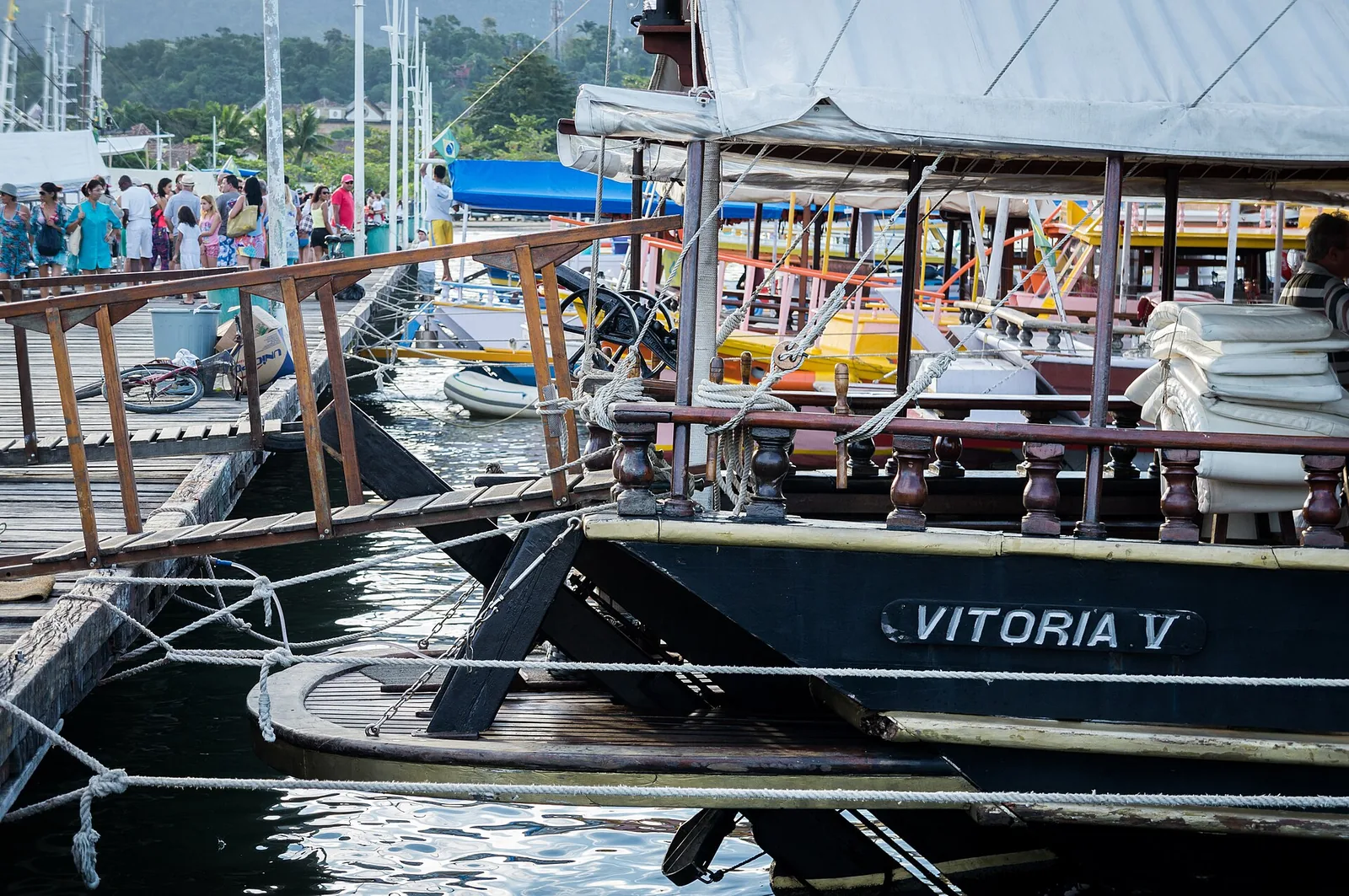
If there is one Paraty experience that lands with children, it is a day on the water. The classic outing is the schooner trip — a broad, slow wooden boat that loops out into the bay and stops at a handful of islands and calm coves for swimming and snorkelling. A typical schooner runs around five hours with four or so stops of roughly forty minutes each, which is, conveniently, about the attention span of a happy child: long enough to get in the water and feel like an explorer, short enough that boredom never sets in. Boats leave from the pier by the historic centre across the morning, with mid-morning departures common; the later ones can be busier, so an earlier boat usually means a calmer deck and first pick of shade.
For families we often steer toward a private boat instead, and the reasons are practical rather than precious. On your own boat you set the route, you skip stops that do not suit, you can stay longer at the cove the kids love and leave the one they find dull, and you are not negotiating a crowded ladder with a nervous five-year-old. A small private launch is also quicker between stops, which matters when a toddler's patience is the binding constraint. Either way, the bay is the star — green islands, water the colour of weak tea over sand and stronger green over reef, the occasional turtle. Our overview of Paraty boat tours walks through the schooner-versus-private decision in detail.
Making a boat day work with children
- Go early. Calmer water, cooler sun, fewer boats at each cove. The bay tends to firm up with wind in the afternoon.
- Pack for the deck, not just the water. Shade is limited on a schooner; bring hats, long-sleeve rash tops and sunscreen you have already applied before boarding.
- Bring snacks and water you trust. Boats sell food and drink, but a child's hunger does not wait for the next island.
- Mind motion. The bay is sheltered and rarely rough, but a sensitive child can still feel it; sitting low and looking at the horizon helps.
- Floatation for non-swimmers. Bring your child's own well-fitting life vest or arm bands rather than relying on what is aboard.
Waterfalls: jungle adventure, with real safety notes
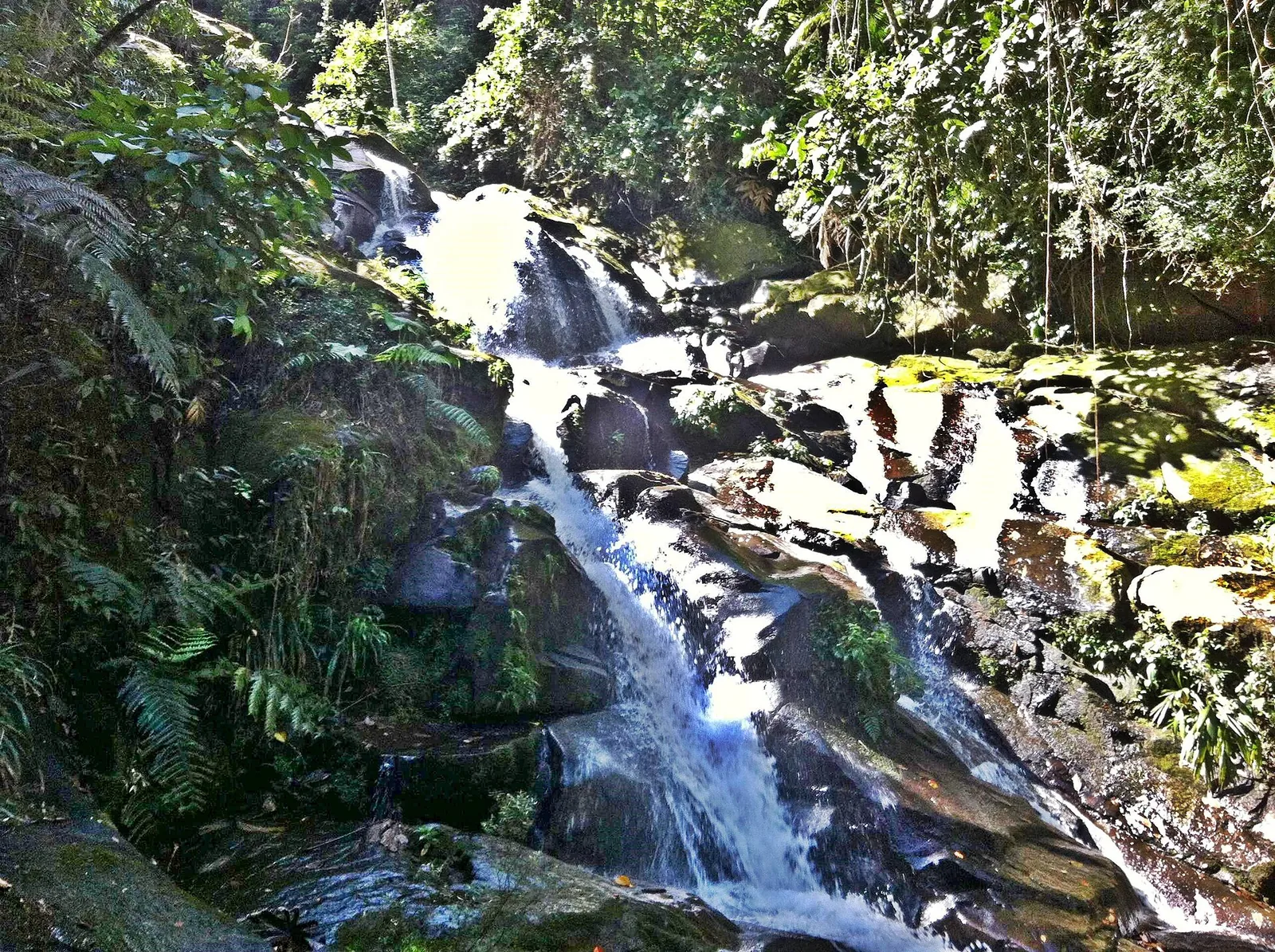
Behind Paraty the land rises fast into Atlantic Forest, and the rivers coming down it form a string of waterfalls that make a brilliant change of scene from the beach. The best known is the Cachoeira do Tobogã, where the river runs over a long, smooth slab of rock that locals and braver visitors ride like a natural slide into the pool below. Children are mesmerised by it. Near it, in the same Penha area along the Paraty–Cunha road, are other falls and pools, and many families combine the waterfalls with a stop at one of the traditional cachaça distilleries — the alambiques — that sit along the same route, where the grown-ups taste and the kids drink guaraná in the shade. Our waterfalls guide and the cachaça distilleries guide map the route properly.
Now the honest part, because waterfalls are where families get into trouble. The rock at the Tobogã and similar falls is genuinely slippery, coated in a fine algae that is invisible and treacherous. People fall every season, and a child who slips on wet granite can be hurt badly. The natural slide itself is for confident, supervised older children and adults who know what they are doing — it is not a toddler activity, full of charm as it looks. Keep small children to the calm pools at the edges, hold hands on any wet rock, and put real shoes or proper water shoes on every pair of feet; flip-flops are worse than bare feet on that surface. Watch the water level and the sky. Mountain rivers can rise fast and without warning when it has rained upstream, even if it is dry where you stand, so in heavy or recent rain the falls are a place to admire from a safe rock rather than to swim. Done with that respect, a waterfall morning is one of the happiest things you can do here with kids. Done carelessly, it is the one outing that can spoil a trip.
The cobblestone town with a stroller — the honest version
Paraty's historic centre is one of the loveliest places in Brazil to walk, and it is also, for anyone pushing a stroller, a genuine workout. You should know this before you arrive picturing easy promenades. The streets are paved with pé-de-moleque — large, irregular, rounded stones laid in undulating waves that follow the lie of the land. They are beautiful and they are murder on small wheels. A lightweight umbrella stroller will buck and jam; a child inside it will be shaken like a cocktail. Big rugged wheels do better, but nothing rolls smoothly over those stones.
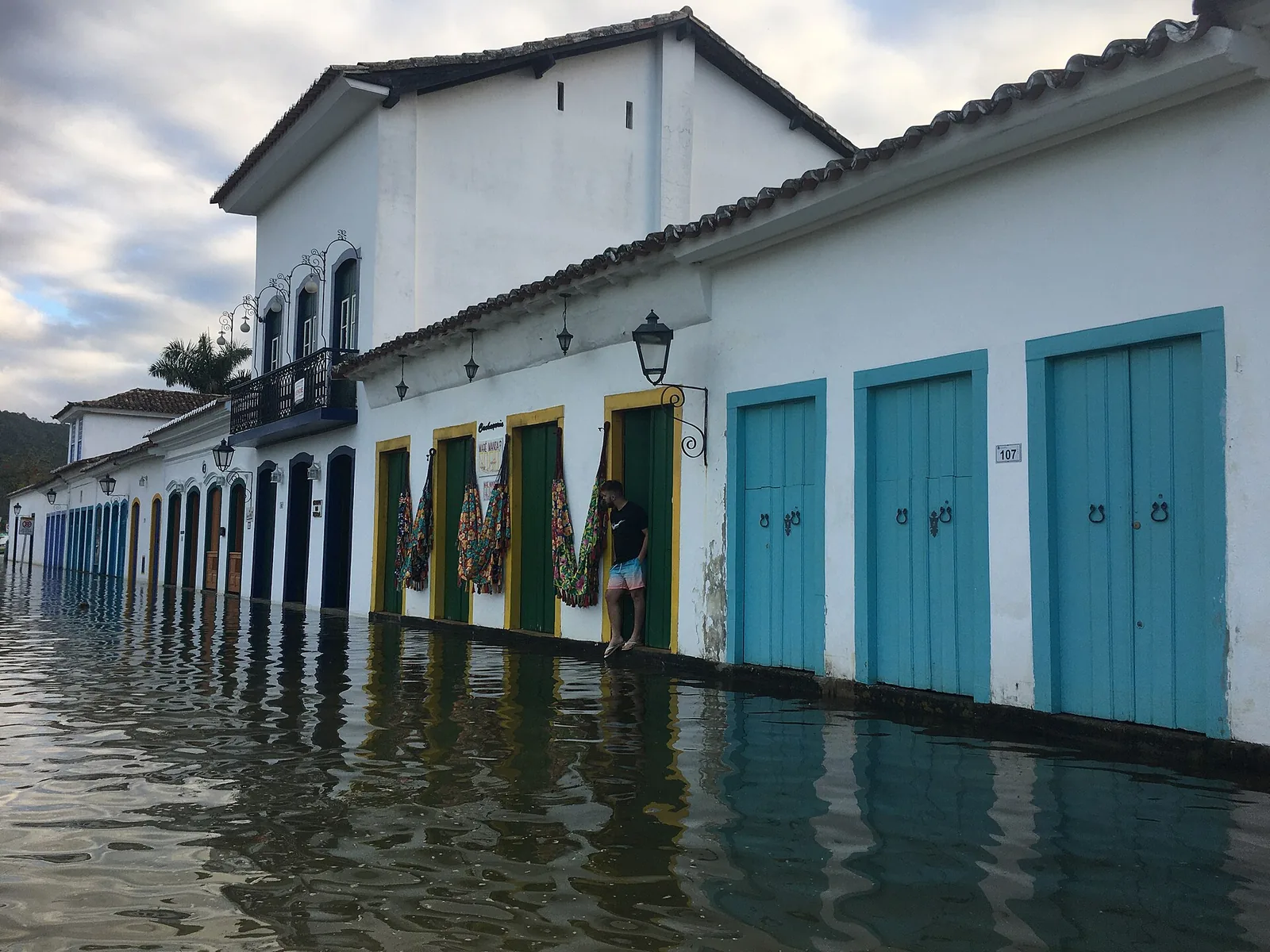
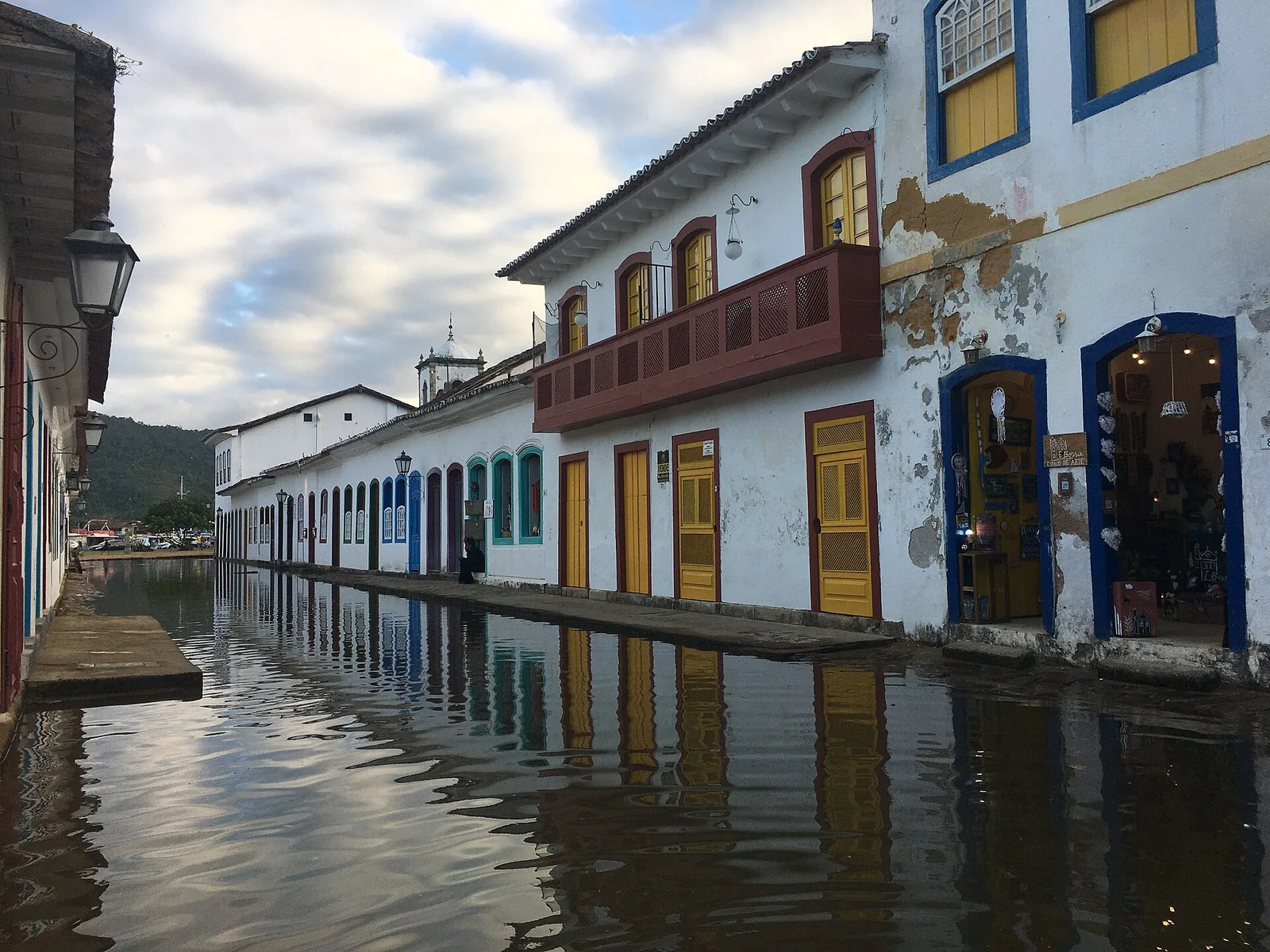
The honest advice is to leave the stroller behind in the historic centre and carry babies and small toddlers in a sling or soft carrier instead. It is more comfortable for the child, far less frustrating for you, and it leaves your hands free on the uneven footing. There is a second quirk worth knowing: the old streets were built to flood. On the spring tides around the full and new moon, seawater rises up through the lanes for a few hours and then drains away — a deliberate piece of eighteenth-century design that once rinsed the streets clean. It is a wonderful thing to witness, children love the novelty of a flooded street, and it is also a reason to keep an eye on little ones near the water's edge and to time a town visit for when the lanes are dry if you would rather not paddle. The flooding is predictable; locals and your host will know the day's tide.
For all that, the town is a joy with children once you adjust. It is car-free, so you can let school-age kids run ahead. The scale is small enough that nobody gets too tired before the next ice cream. And the visual richness — horses clopping over the stones, brightly painted shutters, boats at the quay, the great white church facing the water — keeps young eyes busy. Go in the cooler hours, morning or late afternoon, carry the baby, and the historic centre becomes one of the easiest parts of a family week rather than the hardest.
Rainy-day options that actually work
Plan for rain and it will not derail you. In the summer months, roughly December through March, the standard Paraty day is sunny and increasingly humid until a dramatic afternoon thunderstorm clears the air, after which the evening is often lovely. It rarely rains all day or for days on end, but the downpours are heavy and well worth respecting — boats stay in, and the waterfall rocks turn lethal. The good news is that a wet afternoon with children has plenty of pleasant answers.
- Walk the town under the eaves. The deep colonial overhangs keep you reasonably dry, the streets empty out, and the whole centre takes on a hushed, glistening calm that is arguably its best mood.
- Duck into the churches and the sacred-art museum. The little Igreja de Santa Rita, built in 1722, now houses Paraty's Museum of Sacred Art — small enough not to test a child's patience and atmospheric in the rain.
- Make it a kitchen afternoon at the villa. Children love a project; a simple Brazilian recipe, fruit they have never seen, or a batch of brigadeiros turns a grey hour into the best part of the day.
- Let the pool do the work. A warm-rain swim in a sheltered pool is, to a child, an event rather than a consolation prize.
- Café and chocolate stops. The cafés do unhurried rainy afternoons beautifully; a hot chocolate and a board game waits out most storms.
We have written a full Paraty rainy-day guide for the wider trip, but for families the headline is simply this: a downpour is a signal to slow down, not a disaster. The hillside view from a villa, watching the storm sweep across the bay, is one of the trip's quiet highlights — and the children, blessedly, tend to nap right through it.
Food kids will actually eat
Feeding children is mercifully easy here. Brazilian home cooking is built around things small people like: rice and black beans, grilled chicken, simple cuts of beef, pasta, and an embarrassment of fruit. Almost any kitchen will plate a child something plain on request, and no one will think it odd. The classic comfort dish is a plate of rice, beans, a piece of grilled meat or chicken and a few chips — bland by design and reliably accepted by the fussiest eater.
Beyond the safe defaults, Paraty is a chance to widen young palates without a fight. The fruit alone does half the work: sweet bananas, mango, papaya, fresh juices in flavours they have never met. Pão de queijo, the warm little cheese breads, are a near-universal hit and travel well as a beach or boat snack. Tapioca crêpes, folded around cheese or banana and cinnamon, please most children. For the brave, the seafood houses near the harbour will grill a simple white fish that even cautious eaters often take to. And brigadeiros — dense chocolate fudge balls — are the local currency of childhood; you will not finish a trip without them. Our restaurants guide describes the food scene by type, which is the only sensible way to recommend it, since the good places change hands. One practical tip: Brazilian dinner runs late by northern-European or North-American standards. With young children, eat early — the kitchens are quiet, the welcome is warm, and you are home before the meltdown.
Pacing a family day from a villa with a pool
The single biggest difference between a hard family trip and an easy one is pacing, and a villa with a pool changes the maths entirely. When base camp is its own destination, you stop needing to fill every hour. The shape of a good day here is almost always the same: one real outing, then home to the pool, then a slow evening. Resist the urge to stack two big things into one day. With children it backfires every time.
A day that works looks something like this. Out early, while it is cool, for the main event — a calm beach, a boat, a waterfall. Back to the villa by the heat of the early afternoon, which is also, in summer, when the rain tends to arrive. Lunch at home, then the pool, then quiet: a nap for the little ones, a book or a film for the older ones, an actual rest for the adults. As the afternoon cools and the light turns gold, an easy second act — a wander into the historic centre, an ice cream, dinner early. The pool is the secret weapon throughout. It absorbs the hours between outings, it tires children out happily, and it means a beach morning that ends in tears is not the end of the day, only the start of the swimming. From a hillside villa you also get the view as a free entertainment: boats crossing the bay, the storms rolling in, the lights of the town coming up at dusk. The chalet itself sits a few hundred metres above the water with an infinity pool facing Paraty, Angra dos Reis and Ilha Grande, which is precisely the kind of base that makes this rhythm possible.
One more piece of pacing advice: build in a do-nothing day. Somewhere in a week, give the children a day with no outing at all — pool, snacks, repeat. It sounds like a waste of a trip and it is the opposite. It is the day that lets the other days work, and it is often the one the kids talk about afterwards.
Beach-river play and small natural pleasures
It is worth dwelling for a moment on a thing Paraty does that many beach destinations cannot, because it is the secret to keeping young children content for hours at almost no cost. At several of the calm beaches — Jabaquara and Paraty-Mirim chief among them — a freshwater river runs down to meet the sea right across the sand. For a child, this is endlessly absorbing. There is a warm, shallow river to dam and divert, a tidal flat to dig, a place where fresh water and salt water mingle and the temperature changes underfoot. We have watched children ignore expensive toys entirely in favour of a stick, a bucket and a river mouth for an entire morning. Bring the bucket and spade, choose a beach with a river, find shade nearby, and you have bought yourself a long, peaceful stretch in which the adults can actually read a book.
The same principle holds at the gentler waterfall pools and at the natural tidal pool at Trindade: it is the calm, contained, shallow water with something to explore in it that holds a child, not the dramatic scenery the adults came for. Lean into that. Pick the spots that offer it, and let the children potter. A holiday built around three or four of these slow, watery, low-stakes places — plus the villa pool — is far more restful for a family than one that chases a different headline sight every day. The bay is unusually rich in them, which is much of why the town works so well with kids in the first place.
Ages and what suits them
Paraty flexes to fit, but different ages get different things from it. Here is how it tends to break down.
Babies and toddlers (0–3)
Easier than you would think, with a villa as a base. The calm bay beaches — Jabaquara, Paraty-Mirim — are made for this age: shallow, warm, endlessly entertaining with a bucket. Carry the baby in the historic centre rather than fighting the stones with a stroller. Keep outings short, lean hard on the pool and nap, and eat early. Skip the waterfalls' slippery rocks and the open-surf beaches for swimming. The bay is your whole world at this age, and it is enough.
Young children (4–7)
Arguably the sweet spot. Old enough to love a boat day and a waterfall pool, young enough to find a flooded street or a beach river endlessly magical. The schooner's stop-and-swim rhythm suits them perfectly. They can manage the town on foot, snorkel in the calm tidal pool at Trindade with arm bands, and ride the gentler edges of a day. Supervision near surf and wet rock is non-negotiable, but this is the age that comes home talking about Paraty.
Older kids and teenagers (8+)
Now the whole menu opens. Confident swimmers can take on the Tobogã slide under supervision, snorkel properly, walk the forest trail over to Praia do Sono, and handle a longer boat day or even a trip out to Ilha Grande. Teenagers tend to like the independence the car-free town allows and the genuine adventure of the waterfalls and islands. For this age, the constraint is keeping them off their phones long enough to notice where they are — the bay usually manages it within a day.
What to pack for Paraty with kids
A short, opinionated list, refined over many arriving families.
- Water shoes for everyone. The single most useful item. Essential on slick waterfall rock and welcome on rougher beaches and boat ladders.
- A soft baby carrier or sling instead of, or in addition to, a stroller — for the cobblestones.
- Reef-safe sunscreen and plenty of it, plus hats and long-sleeve rash tops. The tropical sun is stronger than it feels, especially on the water.
- Your child's own well-fitting life vest or arm bands for boat days and unfamiliar water.
- A dry bag for phones, cameras and a change of clothes on boats and at waterfalls.
- Insect repellent suitable for children, particularly near the forest and rivers at dawn and dusk.
- A light rain layer for each child — the summer storms are warm but heavy.
- Any specific medicines, sun-after-care and a basic first-aid kit; pharmacies are good but a scraped knee at a waterfall wants treating on the spot.
- Snacks and a refillable water bottle per child for the gaps between kiosks.
- A modest cash float in reais for kiosks, parking and small stalls that do not take cards.
Practical notes for travelling parents
A few last things that smooth the trip. Drive times matter when planning around naps: the closest calm beach is minutes away, but Paraty-Mirim, Trindade and the waterfalls are each a real drive on roads that are partly unpaved and slow, so treat them as half-day commitments rather than quick hops. Getting to Paraty itself is a journey — several hours by road from either Rio or São Paulo — so build a gentle first and last day around the travel and do not schedule a big outing for arrival day. Our getting-around notes cover transfers and the practicalities of moving between town, beaches and the villa.
Sun and heat are the real risks here far more than anything exotic; the discipline of early outings, shade in the middle of the day and constant water does more for a child's holiday than any precaution. The water in the bay is calm but the adults are the lifeguards, and that is the mindset that keeps beach days happy. And finally, lean into the slowness. Families who come to Paraty trying to tick a list leave tired. Families who pick one good thing a day, swim a lot, eat early and let the pool and the view carry the rest leave already planning the next visit. If you would like help shaping an itinerary around the ages of your children, or arranging a private boat or a transfer, do get in touch — and for the wider lay of the land before you arrive, our explore Paraty hub gathers every guide in one place.
Paraty does not try to be a children's destination, which is exactly why it is such a good one. It hands a family a calm sea, a green mountain full of waterfalls, a town with no cars and a pace that nobody fights. Add a pool above the bay to come home to, and the trip more or less runs itself.
Frequently asked questions
Yes. The bay beaches nearest town, such as Jabaquara and Paraty-Mirim, are calm and shallow, the historic centre is small and car-free, and the slow pace suits children. A villa with a pool to return to between outings makes it especially easy.
Jabaquara, a short walk or drive from the centre, and Paraty-Mirim, about forty minutes south, are both shallow, warm and protected. Bay beaches and island coves reached by boat are also calm. Open-ocean surf beaches like parts of Trindade need close supervision.
Not easily. The streets are paved with large, uneven cobblestones called pé-de-moleque that jolt small wheels badly. A soft carrier or sling is far more comfortable for babies and toddlers and leaves your hands free on the uneven footing.
They can be, with care. The rock is genuinely slippery, so keep small children to the calm edge pools, hold hands on wet stone, and put water shoes on everyone. The natural slide at Tobogã is for confident, supervised older kids and adults only. Avoid the falls in heavy or recent rain, when water can rise fast.
Plenty. Walk the town under the deep colonial eaves, visit the small sacred-art museum, cook a simple recipe at the villa, swim in the pool in warm rain, or settle into a café for hot chocolate. Summer storms are usually short, so a wet afternoon rarely lasts.
Brazilian cooking suits children well: rice and beans, grilled chicken, pasta, and lots of fruit. Pão de queijo (cheese breads), tapioca crêpes and brigadeiros are reliable hits. Most kitchens will plate something plain on request. Eat early, as Brazilian dinner runs late.
Most families settle in well over five to seven days, which leaves room for a calm beach day, a boat day, a waterfall morning, town time and a do-nothing day by the pool, without rushing. Build gentle first and last days around the long drive from Rio or São Paulo.