In this guide
Brazil's Costa Verde — the green coast that runs from the edge of greater Rio down to the São Paulo line and beyond — has so many beaches that any ranking is partly an argument waiting to happen. We have lived above this coast long enough to have the argument cheerfully, and to have changed our own minds more than once. What follows is our honest, opinionated fifteen: the beaches we send guests to, the ones we go back to ourselves, and a few we love precisely because they make you work for them.
A word on how we ranked. This is not a list of the fifteen most photogenic spits of sand — half the coast would qualify on looks alone. It is a list weighted toward the whole experience: the water, yes, but also the journey, the setting, who the beach actually suits, and whether the reality lives up to the photograph once you are standing on it. So a beach that takes a two-hour walk to reach can outrank a prettier one you can park beside, because the walk is part of why it is still wonderful. We have tried to be honest about trade-offs throughout — the crowds, the swims you should not attempt, the days a place is magic and the days it is mobbed.
The geography to keep in your head: the Serra do Mar mountains drop almost into the sea here and then carry on as islands, so the coast is a constant alternation of sheltered bays, forest headlands and offshore archipelagos. Paraty and Ilha Grande sit at the heart of it — together a UNESCO World Heritage site since 2019 — with Angra dos Reis and its hundreds of islands to the north and Trindade and Ubatuba to the south. Nearly every beach below is within a day of the chalet. Here is the coast, counted down to our favourite.
What makes a Costa Verde beach great
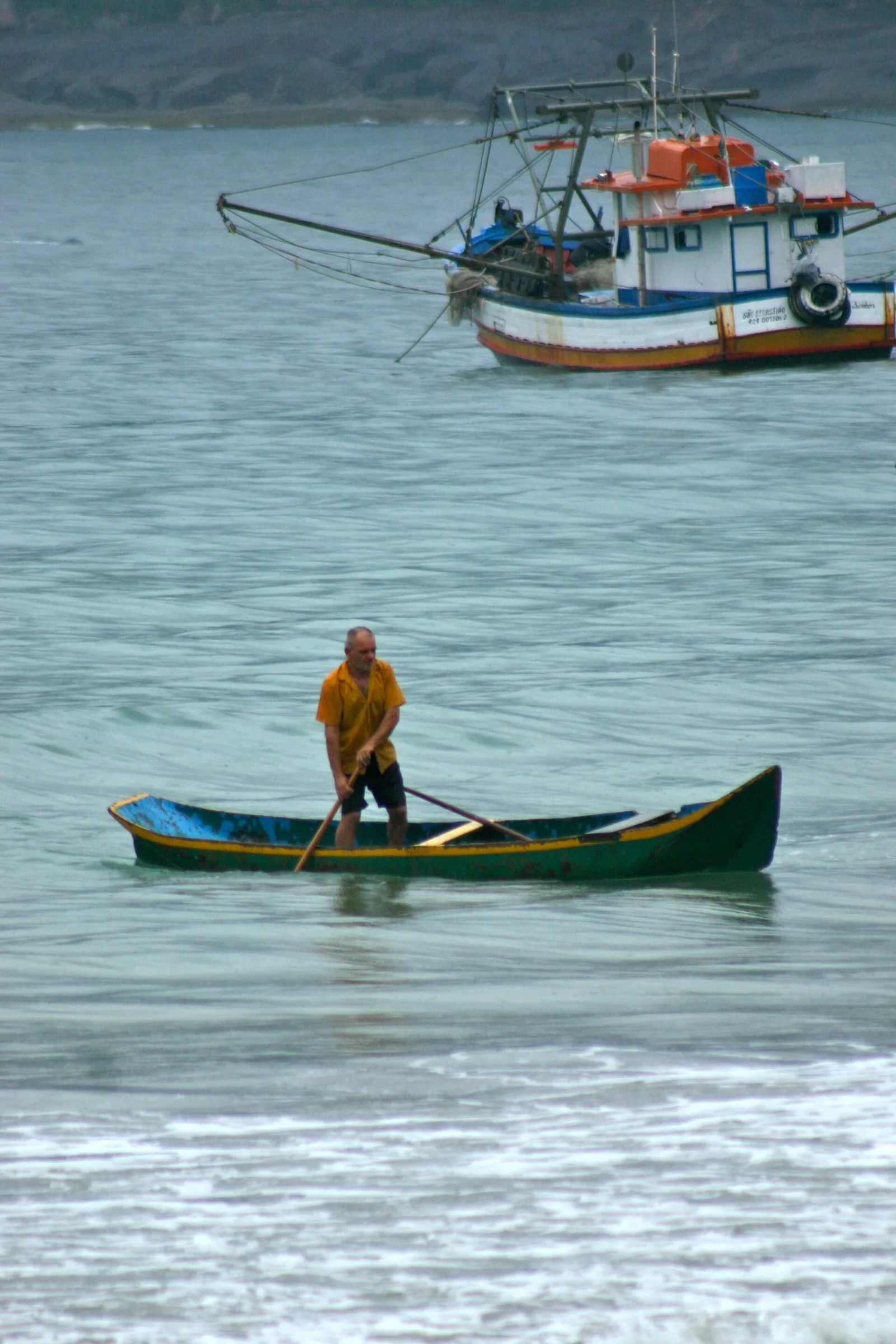
Before the countdown, it helps to say what we are actually judging, because the beaches here are not interchangeable. The coast offers two fundamentally different kinds of beach, and the best of each are doing different jobs. There are the sheltered beaches — the bays, coves and natural pools tucked behind headlands and out among the islands, where the water lies flat and warm and clear, and the appeal is floating, snorkelling and easy family swimming. And there are the open-ocean beaches — the long strands and exposed coves that face the swell, where the sand is broad, the surf is real, and the appeal is waves, wide horizons and a sense of being out at the edge of the continent.
A great beach, to our minds, is one where the setting, the water and the journey all line up. The setting is rarely the problem here: nearly every beach on this coast has the Atlantic Forest rising behind it and, more often than not, islands floating offshore. The water varies more — some beaches are postcard-clear, others stir up in a swell. And the journey, far from being a cost, is frequently the thing that protects a beach's character: the ones you can only reach by walking through the forest or crossing by boat are, almost without exception, the ones that have kept their magic. That is why our ranking leans toward effort. A beach you stroll to from a car park has to be exceptional to outrank one you earned.
One more thing to hold in mind: this is a coast best taken slowly. The temptation, with so many beaches, is to tick off as many as possible. Resist it. Two beaches done properly — a morning swim somewhere wild, a long lunch, an afternoon at a calm pool — beat six seen from a hot car. The whole region rewards depth over breadth, which is exactly the spirit our wider explore Paraty overview is written in.
A beach that takes a two-hour walk to reach can outrank a prettier one you can park beside, because the walk is part of why it is still wonderful.
15. Praia Grande, Ubatuba — the easy all-rounder
We start across the São Paulo state line, on the open coast, with a beach that earns its place by being good at almost everything. Praia Grande is Ubatuba's long town-side strand: surf and bodyboarding at one end, a gentle middle where families swim, kiosks and shade behind the sand, and enough room that even a busy day rarely feels crammed. It is not the most dramatic beach on this list, but it is the one that asks least of you and gives a reliable, sunny day in return.
How to reach it: by car, about an hour south of Paraty on the coast road, right in Ubatuba town. Who it suits: families and mixed groups who want one beach to do several jobs. Swim/surf note: swim toward the calm middle, leave the wavier end to the boards, and stay between the flags. We put Ubatuba in full context in our Ubatuba guide.
14. Praia de Paraty-Mirim — history at the water's edge
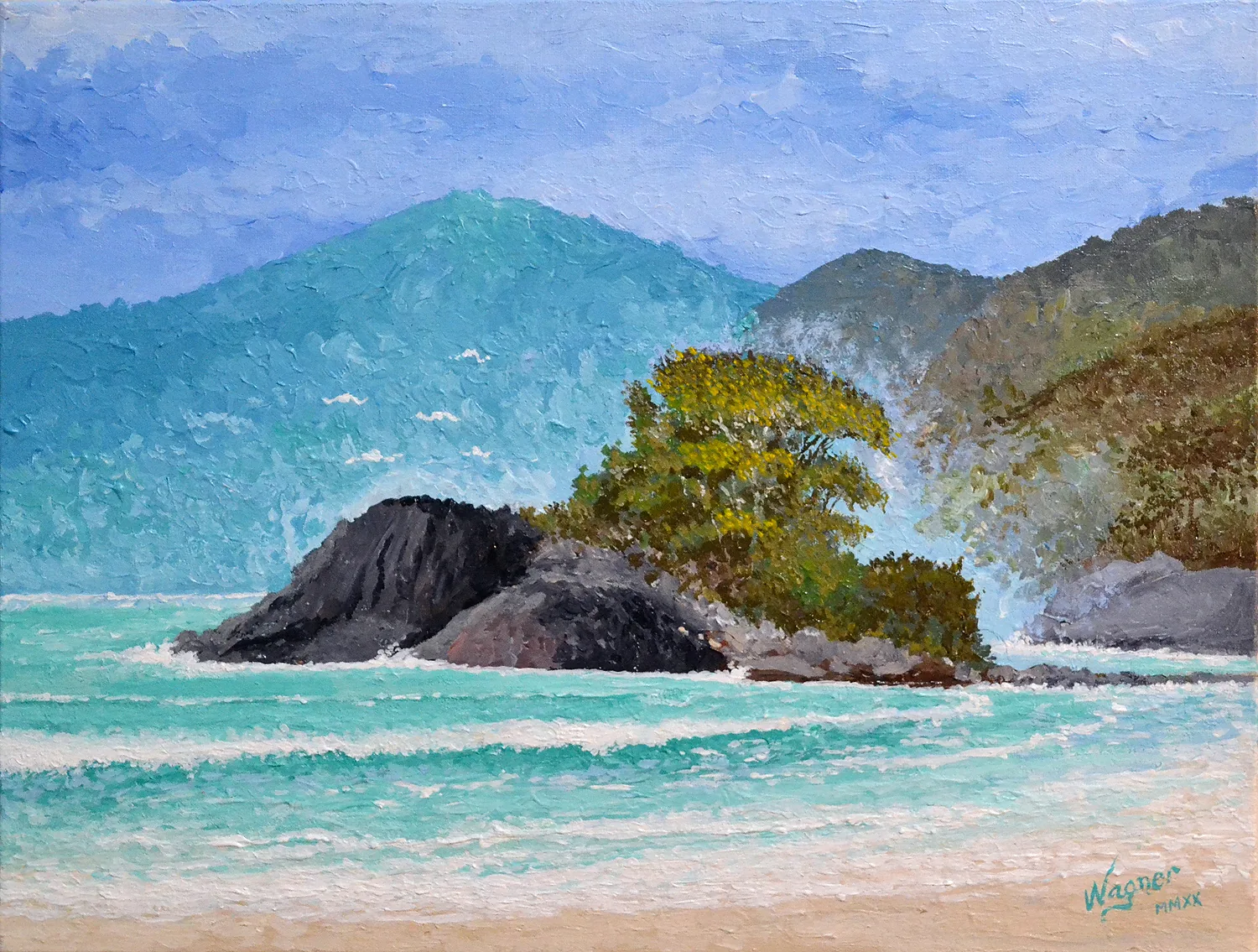
About fifteen kilometres south of Paraty, down a side road, Paraty-Mirim is a crescent of calm, warm, shallow water where a river meets the sea and mangroves edge the sand. What lifts it above an ordinary swimming beach is the past lying around in plain sight: the simple eighteenth-century church of Nossa Senhora da Conceição, and the overgrown stone ruins of old estates among the trees. It is also the easiest launch point for boats into the Saco do Mamanguá.
How to reach it: a short drive plus a rough final stretch of road; passable but slow. Who it suits: families wanting flat water, and anyone with a taste for quiet history. Swim/surf note: calm and shallow, no surf — pure float-and-paddle water. From here, fishermen's boats and speedboats run into the Saco do Mamanguá, the long green inlet often called Brazil's only tropical fjord.
13. Ilha de Cataguases, Angra dos Reis — the sandbank in the bay
Out in the Angra archipelago — 365 islands, the local boast goes, one for each day — Cataguases is a low sandbank ringed by water so shallow and clear it barely looks real. There is little to it but sea, sun and a strip of sand, which is exactly the appeal: it is a stop on a day on the water rather than a beach you sit at all day, and as a place to drop anchor and slip into bath-warm shallows it is hard to beat.
How to reach it: by schooner or speedboat from Angra dos Reis, usually as one stop on a multi-island loop. Who it suits: day-boat travellers, snorkellers, anyone collecting bright water. Swim/surf note: calm and shallow, ideal for floating; bring shade, there is none. The whole archipelago is laid out in our guide to Angra dos Reis.
12. Praia da Fazenda, Ubatuba — forest, river and a quiet south
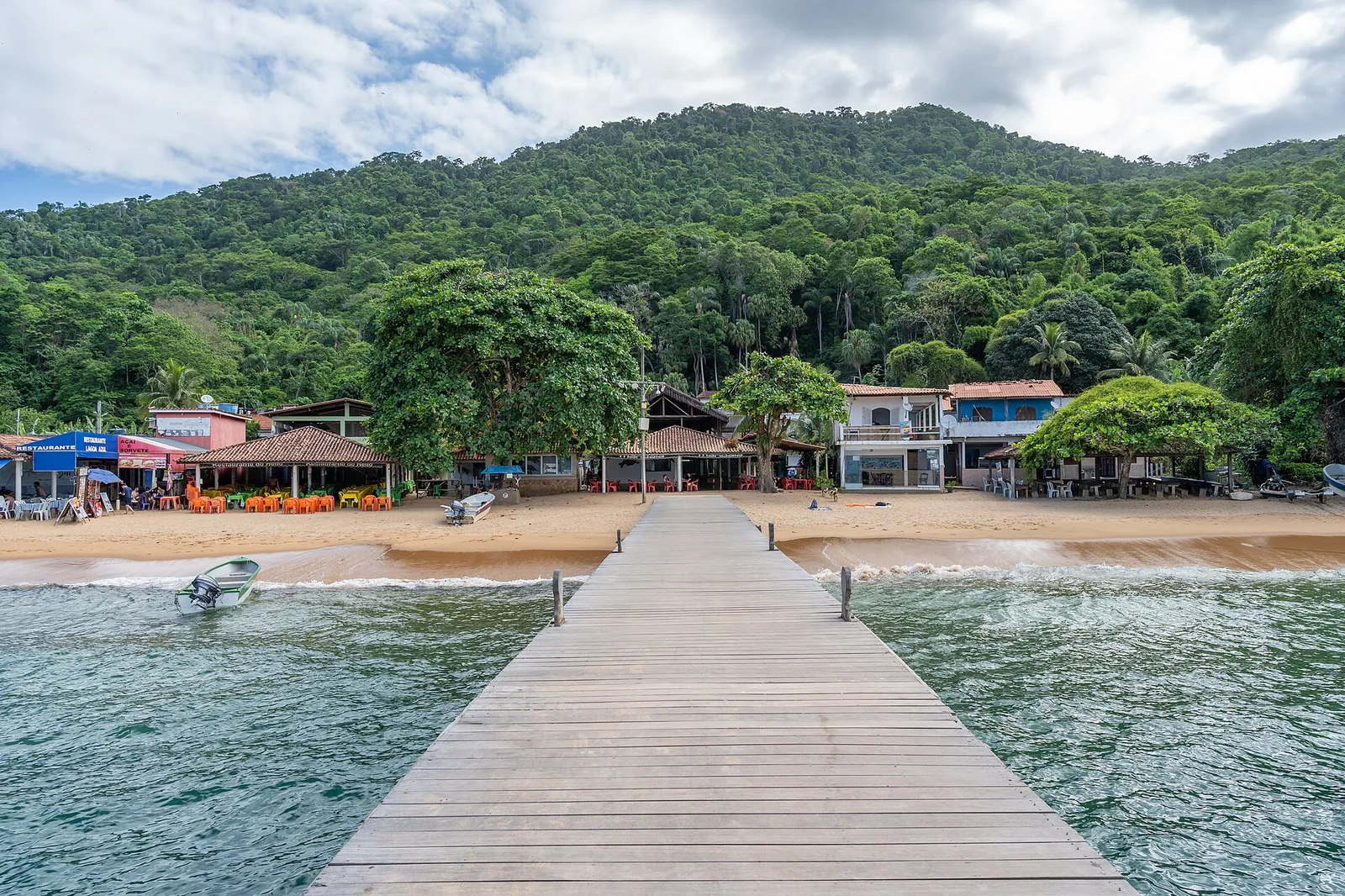
In the far south of Ubatuba, near the fishing village of Picinguaba and inside the Serra do Mar park, Praia da Fazenda is the kind of beach that explains why people fall for this coast. Forest behind, a river running out across the sand, a long quiet curve of beach, and the slow rhythm of a place that is part nature reserve, part living caiçara community. It takes a little effort to reach, which is precisely why it stays calm.
How to reach it: by car to the Picinguaba area, then a short walk; allow time on the coast road. Who it suits: walkers, families who don't mind a stroll, anyone after space. Swim/surf note: generally gentle, with river pools for small children. The coastal fishing culture you'll meet here is the same one we describe in our piece on caiçara culture.
11. Praia dos Antiguinhos, Paraty — the reward beyond the reward
Past Praia do Sono, over the headland and along a rougher trail, Antiguinhos is the smaller, wilder sibling of the better-known Antigos. It is the beach you reach when you have already reached a wonderful beach and decided to keep walking — and the extra half hour buys you near-total solitude on a small, beautiful cove. There is essentially no infrastructure, which is the entire point.
How to reach it: on foot from Praia do Sono, roughly half an hour over a headland trail; real shoes, water, no shops. Who it suits: confident walkers and seclusion-seekers, not first-timers or small children. Swim/surf note: a small wild cove; check the sea before committing and don't swim alone. It sits on the same trail system as the beaches in our Praia do Sono guide.
10. Praia do Cepilho, Trindade — the surfers' end of Trindade
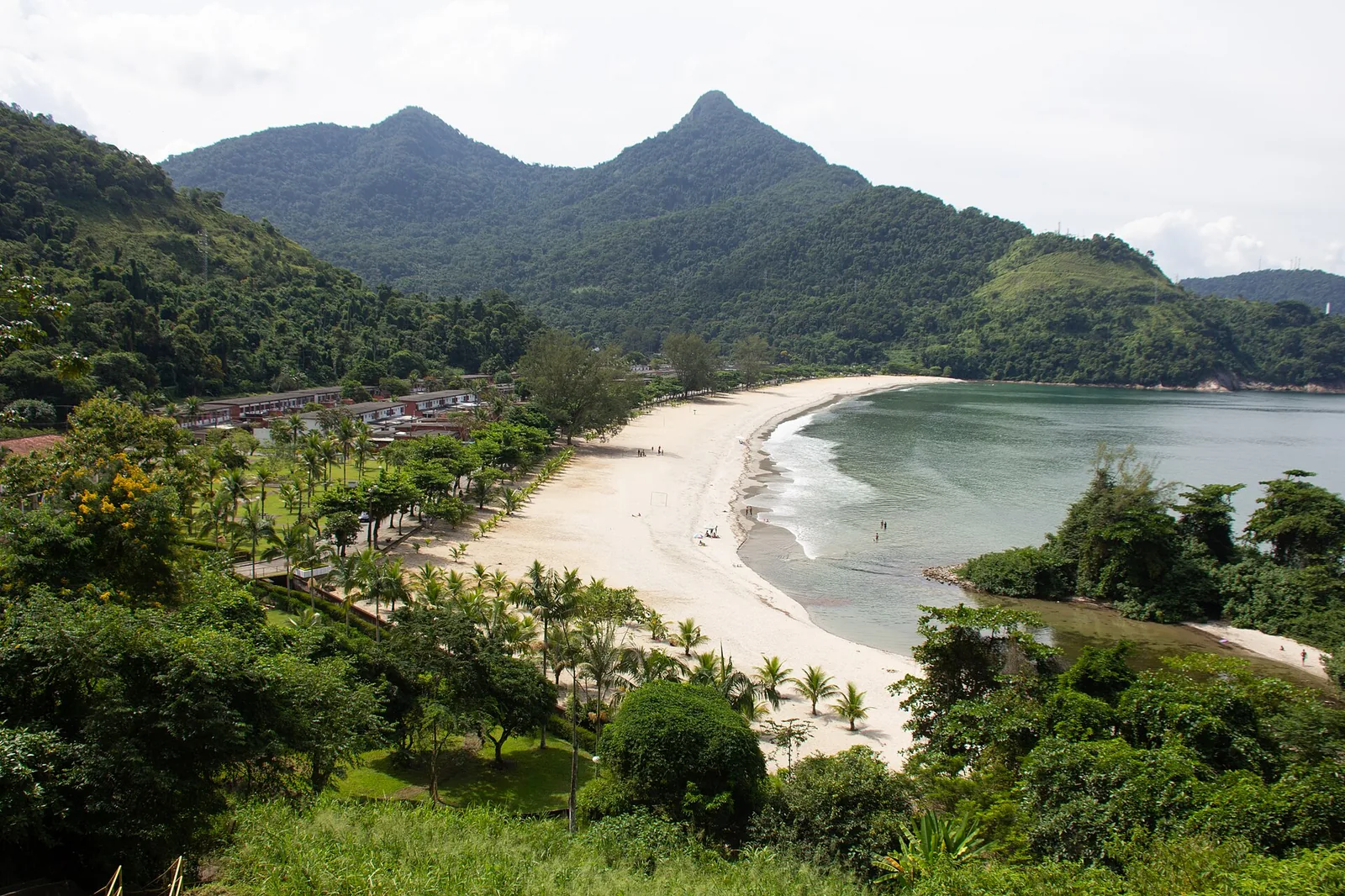
Trindade strings several beaches along one stretch of coast, and Cepilho is the one with the punch: a shorter beach that catches a proper swell and draws the surfers and bodyboarders who want it. On a flat day it is a pretty, pebbly-edged swim; on a swell it is one of the better beach breaks within easy reach of Paraty. The contrast with the calm pools a short walk away is part of what makes Trindade such a complete day.
How to reach it: drive to Trindade village (about an hour from Paraty), then it's right there. Who it suits: surfers and bodyboarders; spectators who like a bit of drama. Swim/surf note: this is the wavy one — swimmers are better off at the calmer Trindade beaches nearby. The full village is covered in our Trindade guide.
9. Lagoa Azul, Ilha Grande — the snorkelling stop everyone remembers
Lagoa Azul is not really a beach at all but a shallow, sheltered inlet on the northern side of Ilha Grande where the water turns a transparent blue-green and fills with fish. It is the headline stop on almost every Ilha Grande and Angra schooner trip, and for good reason: drop a mask in here and the bay does the rest. It can get busy with boats at midday, so the trick is to be among the first or last anchored.
How to reach it: by boat, as part of an island tour from Abraão, Angra or Paraty. Who it suits: snorkellers and families; anyone who wants the bright-water postcard. Swim/surf note: calm, shallow, made for floating and snorkelling. Go early — the day boats pile in around late morning. More on the island in our complete Ilha Grande guide.
8. Praia da Parnaioca, Ilha Grande — the far side of the island
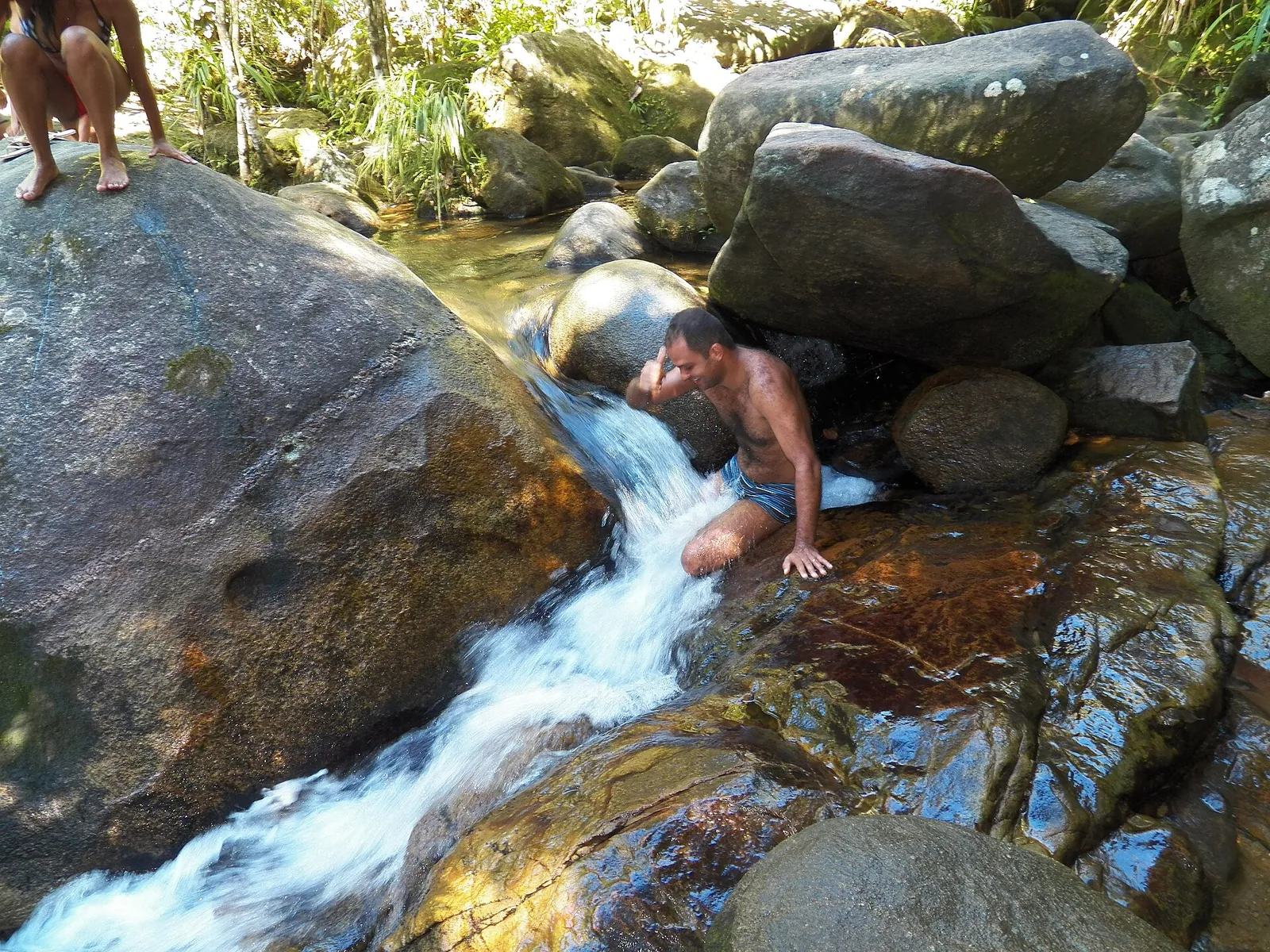
On the wilder ocean side of Ilha Grande, far from the Abraão crowds, Parnaioca is a long, open beach backed by forest and the scattered remains of an old community — a place that rewards the considerable effort of getting there with a sense of genuine remoteness. The surf is real, the swimming honest, and the feeling of being at the edge of things complete.
How to reach it: a long hike across the island or a boat charter; this is a committed half- or full-day, not a casual stop. Who it suits: strong hikers and travellers chasing the island's quietest corners. Swim/surf note: open water with currents — competent swimmers only, and mind the conditions. We map the island's footpaths in our notes on Ilha Grande trails.
7. Praia dos Antigos, Paraty — the classic walk-in beach
Over the headland from Praia do Sono, Antigos is the one many walkers rate as the prettiest of the Sono trio: a wide, clean, forest-backed beach with the open feel of a place you had to earn. It is quieter than Sono itself, has just enough shade and the occasional simple kiosk, and rewards a slow afternoon as much as a swim. The walk in from Sono is short and very worth it.
How to reach it: drive to Laranjeiras, walk to Praia do Sono (about an hour), then a further fifteen to forty minutes over the headland. Who it suits: walkers and couples after a beautiful, low-key day. Swim/surf note: generally good swimming with some wave action; read the sea on the day. It anchors the trail in our Praia do Sono guide.
6. Praia da Trindade (Praia do Meio), Trindade — the village heart
The main Trindade beaches — Ranchos, Meio, Cepilho and the long Praia de Fora — together make one of the most complete beach days on the whole coast, and the central stretch around Praia do Meio is its warm, sociable heart. Golden sand, the forested Serra da Bocaina rising straight behind, simple beach kitchens, and within a short walk both a surf break and a string of natural pools. It is the beach that converts day-trippers into return visitors.
How to reach it: drive to Trindade village, about an hour south of Paraty; arrive early in season, parking is limited. Who it suits: everyone — families, surfers, couples, walkers — which is exactly its strength. Swim/surf note: generally fine swimming, with the wavier action at Cepilho and the calmest water at the pools beyond. The whole village day is in our Trindade guide.
5. Cachadaço natural pool, Trindade — the aquarium in the rocks
A short forest walk past the Trindade beaches brings you to the Piscina Natural do Cachadaço, a set of clear pools held in place by big rocks where the water lies warm and calm and small fish drift around your legs. It is one of the most beloved spots on the coast, and in high season it can be loved half to death — go early, or out of season, and you may have a near-perfect natural aquarium close to yourself. The depth is gentle, the visibility is excellent, and on the right morning it is as good as snorkelling gets without a boat.
How to reach it: a walk of about a kilometre and a half from Praia do Meio, through the forest (roughly half an hour to an hour); or a short boat hop from the village beaches. Who it suits: snorkellers, families with steady walkers, anyone who loves clear calm water. Swim/surf note: a sheltered pool, shallow and calm — wear something on your feet, the rocks are sharp and slick, and go early to beat the crowd. It's a centrepiece of our Trindade guide.
4. Saco do Mamanguá, Paraty — the calm green fjord
Strictly this is an inlet rather than a single beach, but it earns its high place as the most distinctive piece of water on the coast. The Saco do Mamanguá is a long, narrow arm of sea reaching deep into the mountains — often called Brazil's only tropical fjord — lined with tiny beaches, mangroves, oyster beds and a handful of caiçara homesteads, with the Pico do Pão de Açúcar rising at its head for those who hike it. The water is flat and still, the silence is real, and a day spent paddling or boating its length is unlike anything else here.
How to reach it: by boat or kayak, usually from Paraty-Mirim; a stand-up paddle or sea-kayak trip is the classic way in. Who it suits: paddlers, quiet-seekers, hikers (for the peak), couples after something different. Swim/surf note: sheltered, calm, no surf — this is flat-water country. The full picture is in our Saco do Mamanguá guide.
3. Praia do Sono, Paraty — the great walk-in beach
For many people Praia do Sono is the beach that defines the Paraty coast: a broad, deep, golden bay you reach only on foot (or by boat), backed by forest and a small village that still runs at the pace of the tide. The walk in from Laranjeiras is an easy hour, the swimming is excellent, the simple kitchens grill fish on the sand, and the absence of a road keeps the whole place honest. It is busy in peak weeks and still wonderful; out of season it is close to perfect.
How to reach it: drive to the end of the Laranjeiras road, then walk about an hour over a well-marked, mostly flat forest trail; or take a boat across. Who it suits: almost everyone willing to walk — families, couples, friends, walkers heading on to Antigos and Antiguinhos. Swim/surf note: a generous swimming beach with gentle-to-moderate waves; among the safest of the wilder beaches here. Everything you need is in our Praia do Sono guide.
2. Praia do Aventureiro, Ilha Grande — the wild one with the leaning palm
On the exposed ocean side of Ilha Grande, inside a protected reserve, Aventureiro is the beach of the famous leaning coconut palm that bends almost flat to the sea — but it would earn its place even without the photograph. It is small, wild, hemmed by forest and rock, with a real surf break and a tiny caiçara community that, after years of restriction, hosts a strictly limited number of visitors. The combination of beauty, remoteness and genuine protection makes it one of the most special places on the coast, and one of the least spoiled.
How to reach it: by boat, typically a longer trip around the island; access is regulated, so go with an operator who handles the permits. Who it suits: travellers chasing the island's wildest, most protected corner; surfers; anyone who values scarcity. Swim/surf note: open Atlantic with a strong break and currents — for competent swimmers and surfers, not a casual paddle. We set it in context in our complete Ilha Grande guide and the footpaths in our trails guide. For the near-Paraty beaches we couldn't fit, see our round-up of the best beaches around Paraty.
1. Lopes Mendes, Ilha Grande — the one against which the rest are measured
It usually tops these lists, and we are not going to be contrary for its own sake: Lopes Mendes is, by common consent, one of the most beautiful beaches in Brazil, and it lives up to it. Nearly three kilometres of fine, almost powder-white sand on the open ocean side of Ilha Grande, uninhabited, backed by forest, with clean water and a steady, surfable swell. There are no buildings, no road, no clutter — by design and by protection. You earn it with a boat ride and a walk, and it is worth every minute.
How to reach it: from Vila do Abraão, take a taxi-boat to Praia do Pouso then walk the marked trail (about a kilometre, twenty to twenty-five minutes); or hike the full route from Abraão, a moderate-to-hard couple of hours each way. Boats may not dock at Lopes Mendes itself. Who it suits: surfers, walkers, anyone who wants the definitive Costa Verde beach and doesn't mind the journey. Swim/surf note: open Atlantic with a real swell and currents — fine for confident swimmers and surfers, less so for small children; bring water, food and your rubbish back out, as there is no infrastructure at all. The full approach is in our Lopes Mendes guide, and the island around it in our complete Ilha Grande guide.
Beaches we left off, and why
Any honest list is as much about what it excludes as what it includes, and on this coast the cut was painful. A few we agonised over:
- The town-side beaches at Paraty itself. Pretty for a stroll and handy for a sunset, but the swimming near the historic centre isn't the reason you come — the great beaches are out of town. We cover the close-in options in our best beaches around Paraty guide.
- Praia do Pouso, Ilha Grande. It just misses, mostly because for nearly everyone it's the stepping-stone to Lopes Mendes rather than a destination in its own right — though it's a fine swim while you wait for the boat back.
- The Vermelha beaches and Félix in Ubatuba. Excellent surf beaches that lost out only to keep the Ubatuba representation tight. If you surf, they belong on your own list — see the Ubatuba guide.
- The further Angra islands beyond Cataguases and Lagoa Azul. There are dozens, several gorgeous, but they blur together for a first-timer; pick a good schooner and let the captain choose. The Angra dos Reis guide has the lay of the archipelago.
None of these are bad beaches. There are no bad beaches here, really — only beaches that suit a different day, a different sea or a different traveller than the fifteen above. Spend a week and you'll likely add one of your own that we'd never have predicted, which is rather the point of a coast this generous.
Reading the sea and staying safe
The single most useful skill on this coast is learning to read the sea before you swim, because the difference between a sheltered cove and an open-ocean beach is the difference between a paddle and a serious swim. A few plain rules keep beach days happy:
- Match the beach to the swimmer. Small children and nervous swimmers belong at the sheltered bays and pools — Paraty-Mirim, Cachadaço, Lagoa Azul, the calm end of Praia Grande. The open beaches with surf are for confident swimmers.
- Watch for currents. On the open beaches, water moving sideways or pulling out is a sign to stay in the shallows. Where there are lifeguards, swim between the flags; where there aren't, don't swim alone.
- Footwear matters more than you'd think. The natural pools and rocky entries are slick and sharp — a pair of water shoes saves cut feet and bad falls.
- Carry your own water and food to the wild beaches, and carry your rubbish out. Lopes Mendes, Antiguinhos, Parnaioca and the Picinguaba beaches have little or no infrastructure by design.
- Check the forecast and the season. A wild beach in a storm is a wasted day; a sheltered pool in the same weather can still be lovely. Build flexibility into the plan.
These aren't reasons for caution to spoil the fun — they're how you have more of it, by spending your good-weather days on the wild beaches and saving the sheltered ones for when the sea is up. That kind of day-by-day matching is most of what good planning on this coast amounts to.
How to use this list
A ranking is a starting point, not an instruction. The right beach for you on any given day depends on three things the list can't know: the weather, the sea state, and what you feel like. A wild walk-in beach is glorious in clear, calm conditions and miserable in driving rain; a sheltered pool is bliss with small children and dull for a surfer chasing a swell. So read the sea before you commit, ask locally what's working that week, and don't be too proud to change plans.
A few patterns hold across all fifteen:
- The walk-in and boat-only beaches stay the best precisely because they're hard to reach. The effort is a feature.
- Go early. The famous spots — Cachadaço, Lagoa Azul, Lopes Mendes, Trindade in summer — are transformed by arriving before the day boats and beating the parking crush.
- The shoulder seasons are kindest. Roughly autumn and spring bring calmer seas, thinner crowds and better light. We make the seasonal case in detail in our best time to visit guide.
- Respect the open-ocean beaches. Lopes Mendes, Parnaioca, Cepilho and the exposed Ubatuba surf beaches have currents and waves that the sheltered bays don't. Swim between flags where there are any, and never swim alone where there aren't.
Why these beaches have stayed this good
It is worth pausing on the reason this coast still has beaches worth ranking at all, when so much of the world's shoreline has been built over. The answer is partly geography — the Serra do Mar mountains pressing the sea so hard against the rock that there was never much flat land to develop — and partly protection. Paraty and Ilha Grande were together inscribed as a UNESCO World Heritage site in 2019, a mixed cultural and natural listing recognising both the colonial town and the surrounding Atlantic Forest and its biodiversity. Around them sit a cluster of national and state parks and biological reserves — the Serra da Bocaina, Ilha Grande's state park, the Praia do Sul reserve that shields Aventureiro and Parnaioca — that keep large stretches of coast off-limits to building.
That protection is exactly why the best beaches on this list are the hardest to reach: no road, no resort, no clutter, because the rules and the terrain forbid them. It also asks something small of you in return. Carry out what you carry in, tread lightly on the reef and the rock pools, respect the limits on the regulated beaches, and support the caiçara communities whose presence is part of what these places protect. The reward for a coast that has been left largely alone is a coast that still feels, on the right morning at the right beach, like the first people to find it. That is rarer than any single stretch of sand, and it is the real luxury here.
Getting to the beaches from the chalet
One of the quiet luxuries of basing yourself above Paraty is how much of this list is within a day's reach. The trail beaches at Laranjeiras and the village at Trindade are roughly an hour by road; Paraty-Mirim and the Mamanguá launch are closer still; Ilha Grande and the Lopes Mendes boats are a drive-plus-crossing day; the Angra islands and the run south to Ubatuba both sit at the edges of an easy day out. From four hundred metres up, you can quite literally look down on much of the coast you're about to explore and pick your beach by the morning's weather.
We help guests turn that into a plan — which beach for which day, when to leave to beat the boats, when to swap the open coast for a sheltered pool because the swell's up. The shape of a good week, weaving these beaches together with the town, the bay and the forest, is laid out in our Paraty itineraries; the boat options that reach the island and inlet beaches are in our notes on boat tours; and the lay of the land is in our overview of how to explore Paraty. To see where the chalet sits above it all, visit the chalet — and when you're ready to shape your own version of this list, just get in touch. Picking beaches for our guests is one of the best parts of the job.
Frequently asked questions
By common consent Lopes Mendes on Ilha Grande tops most lists, and we agree — nearly three kilometres of white sand on the open ocean side of the island, uninhabited and backed by forest. It takes a boat and a walk to reach, which is part of why it stays so beautiful.
Trindade, about an hour south, gives you the most complete beach day within driving distance: village beaches, a surf break at Cepilho, and the Cachadaço natural pool a short forest walk away. Praia do Sono is close behind but needs a one-hour walk from the road.
The sheltered, shallow ones: Paraty-Mirim and Ubatuba’s Praia Grande for calm swimming, the Cachadaço natural pool for clear, gentle water, and Lagoa Azul for snorkelling from a boat. Save the open-ocean beaches like Lopes Mendes and Parnaioca, which have real currents, for older or stronger swimmers.
From Vila do Abraão on Ilha Grande, take a taxi-boat to Praia do Pouso and walk a marked trail of about a kilometre (20–25 minutes), or hike the full route from Abraão — a moderate-to-hard couple of hours each way. Boats can’t dock at Lopes Mendes itself, and there’s no infrastructure, so bring water and food.
It’s a set of clear, calm pools held in place by large rocks near the Trindade beaches in Paraty, where shallow warm water and resident fish make a natural aquarium. It’s reached by a forest walk of about 1.5 km from Praia do Meio, or a short boat hop, and it’s best visited early before the crowds arrive.
Yes — the open-ocean beaches carry real swell. Lopes Mendes and Parnaioca on Ilha Grande, Cepilho at Trindade, and Ubatuba’s surf beaches (especially Itamambuca) are the standouts. The sheltered bays and natural pools, by contrast, are for calm swimming rather than surfing.
The shoulder seasons — roughly autumn (April–June) and spring (September–November) — bring calmer seas, thinner crowds, better light and lower prices. High summer (December–February) is hottest and busiest, with warm water but afternoon storms and crowded access roads to the famous beaches.