In this guide
Stand on the seawall in the old town early on a still morning and you understand Paraty at once. The colonial streets are lovely, but the bay is the reason the place is here at all. Three centuries ago this was the port where Brazilian gold left for Lisbon; today the same sheltered water, scattered with more than sixty green islands, is the single best day out you can have. Almost everyone who visits takes a boat, and almost no one regrets it. The only real mistake is not planning the day at all.
Our guests ask about boats more than anything else, and the honest answer is that there is no single right way to do it. A seat on a shared schooner and a private speedboat charter are two entirely different days, and the better choice depends on who you are travelling with, what you want from the water, and how much you mind sharing a swimming stop with forty other people. This guide goes well beyond the short summary on our tours page. It covers the geography of the bay, the classic island circuit, every type of boat with its real trade-offs, what a typical five-hour day actually looks like, the snorkelling, the Saco do Mamanguá, sea conditions and seasickness, and how to run a boat day smoothly from a house up on the hill.
We have hosted enough boat days to have opinions, and we will share them. Where something is a matter of taste we will say so; where there is a clear better answer we will tell you that too.
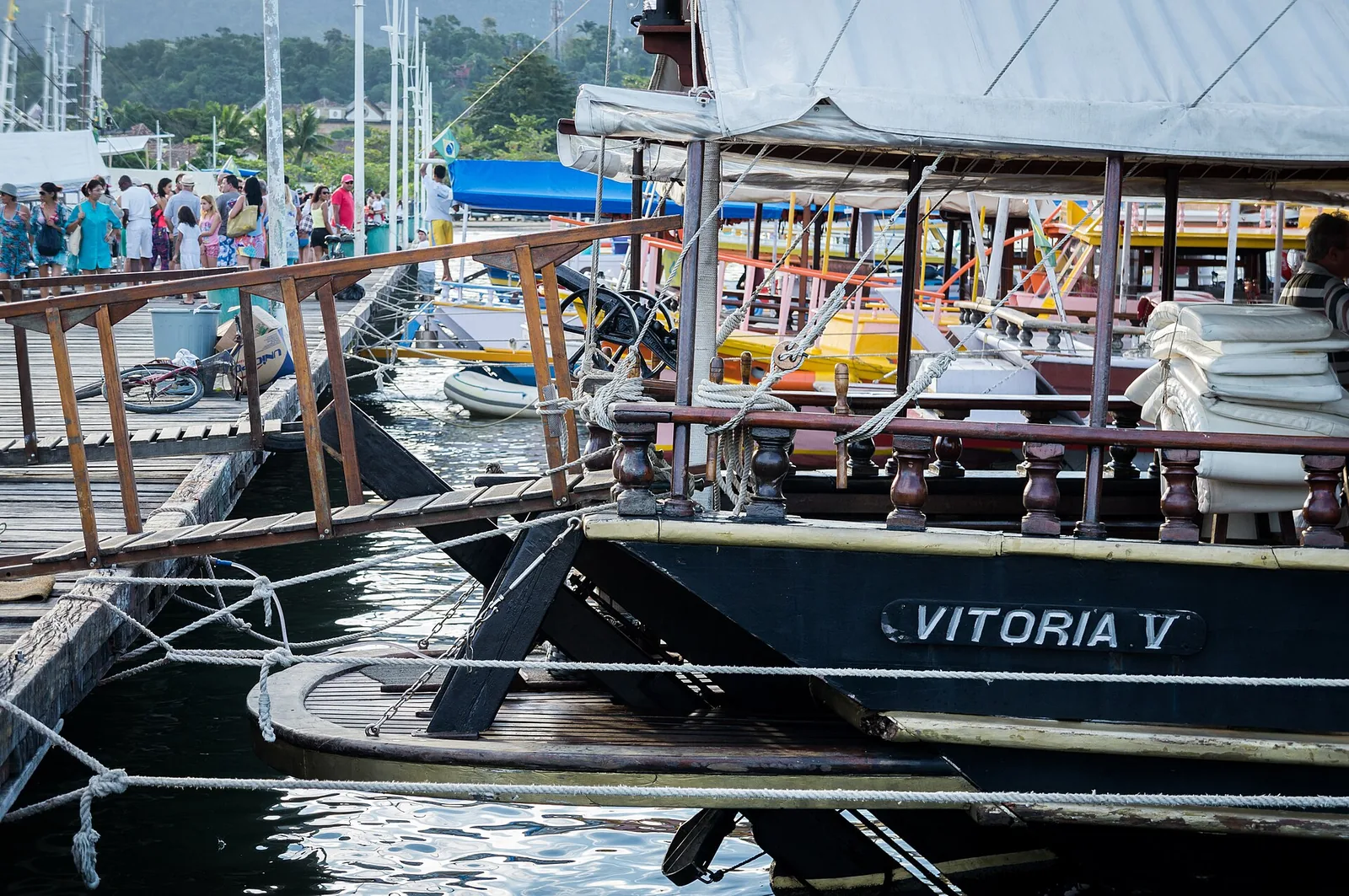
The shape of the bay: why Paraty is so easy on the water
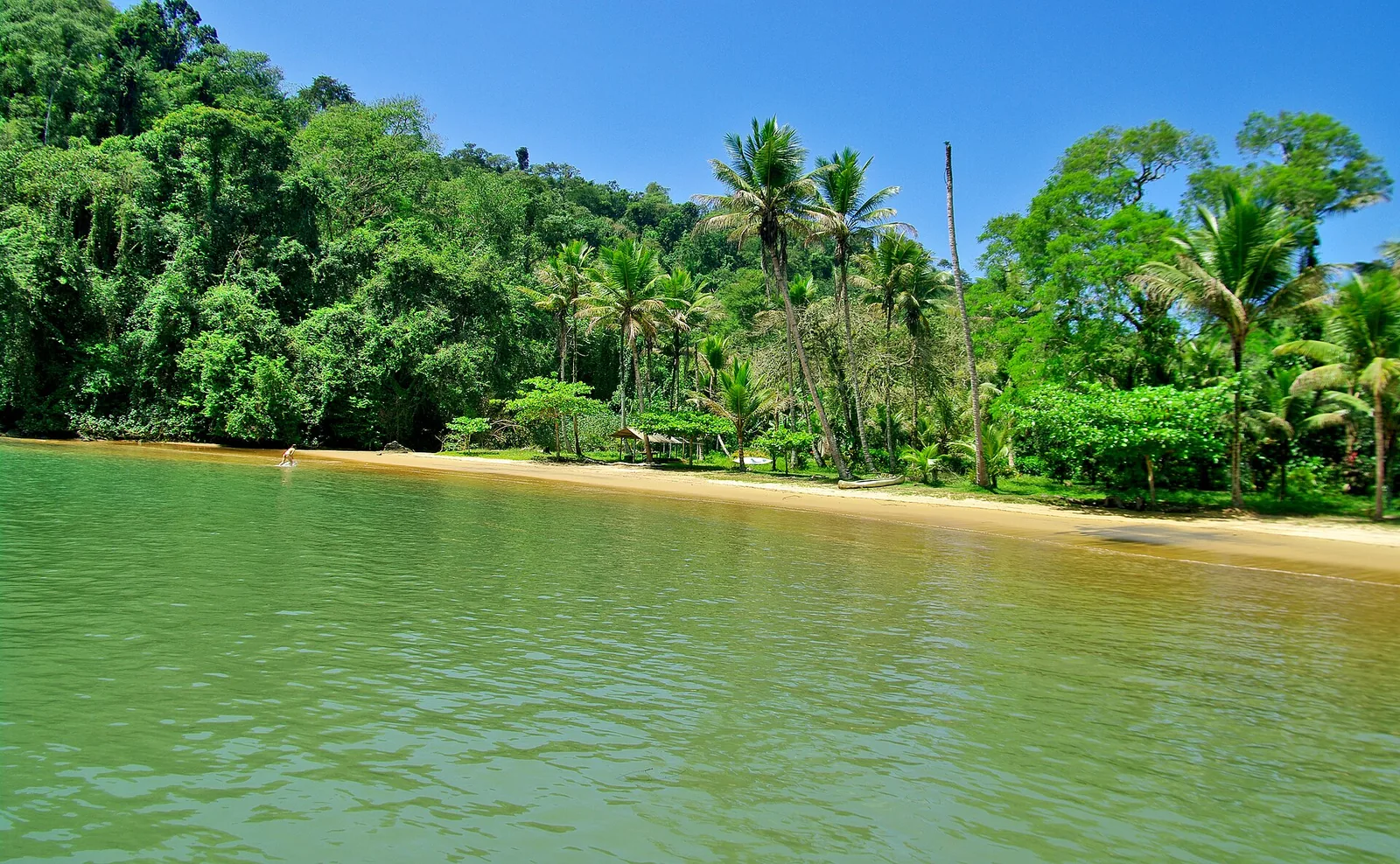
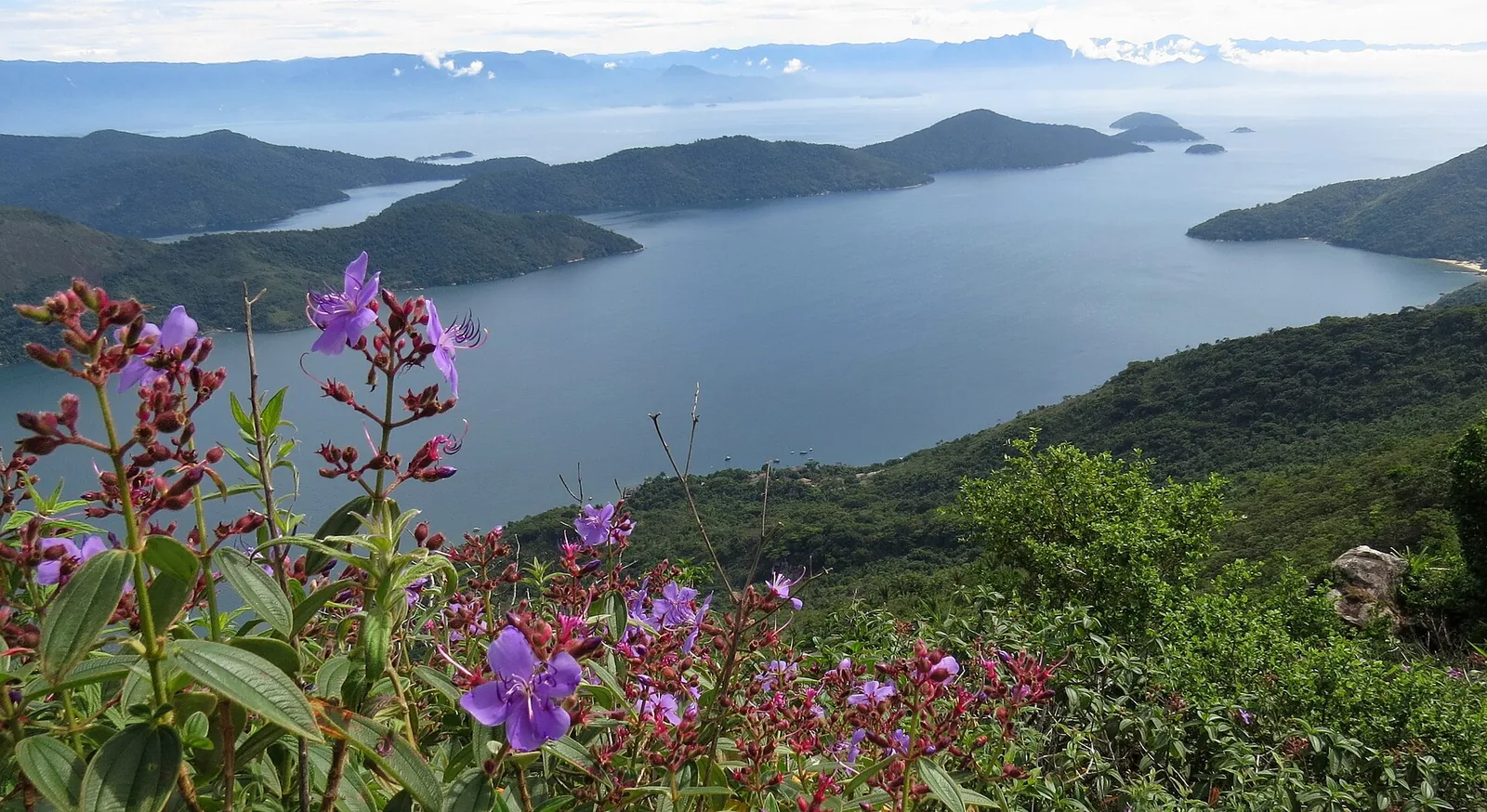
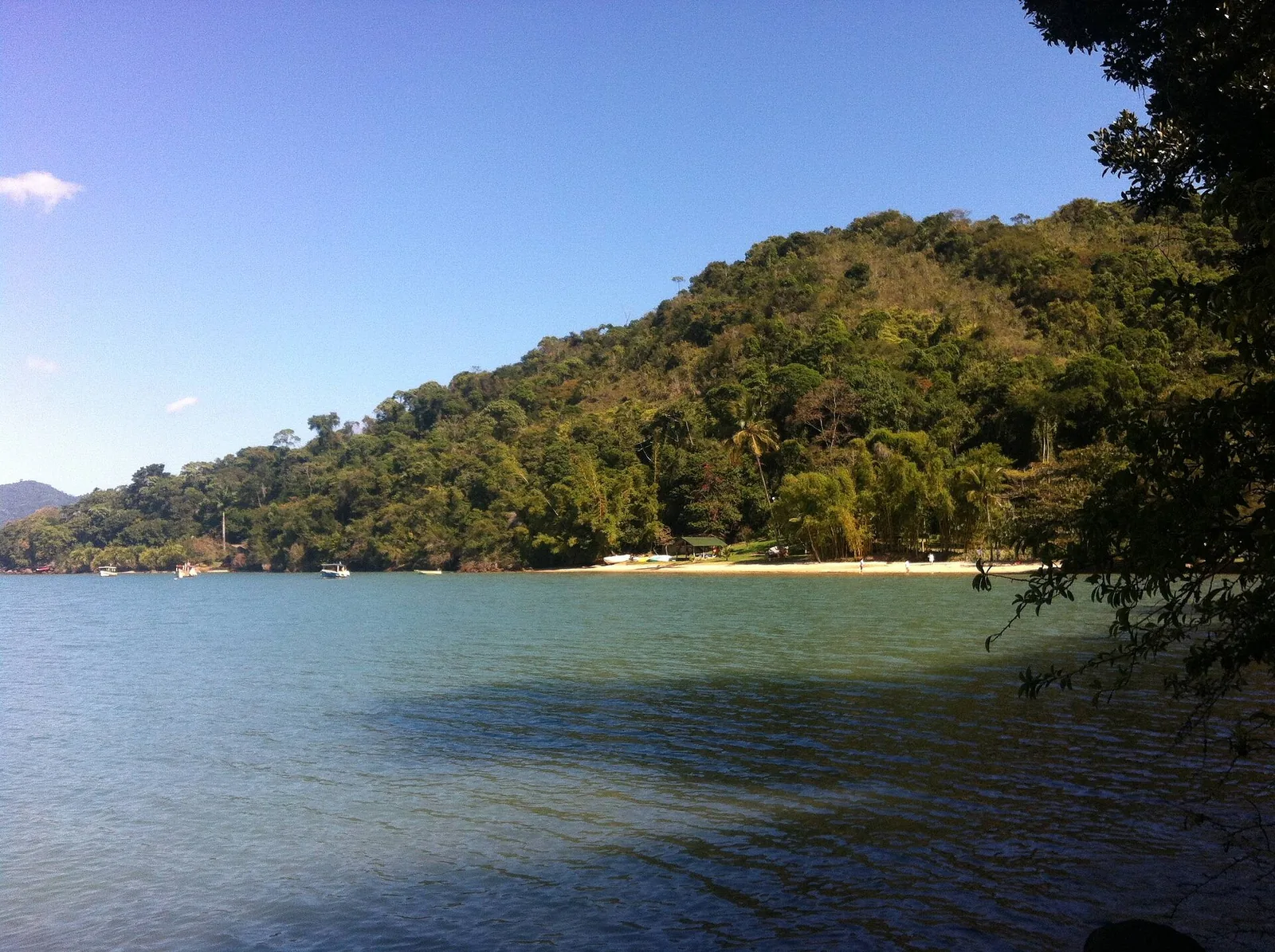
The Bay of Paraty is the southern lobe of a much larger system, the Baía da Ilha Grande, which curves along the Costa Verde between Paraty and Angra dos Reis. What makes it so forgiving for boats is its geography. A wall of islands sits between the open Atlantic and the inner bay, so the swell breaks up long before it reaches the coves where you swim. The result is water that is usually flat, often the colour of green glass, and almost always warm enough to get straight in.
The town sits at the head of the bay, where several rivers come down off the Serra da Bocaina. The mountains rise steeply behind, which is why the views from a hillside are so good and why the rain, when it comes, can be heavy. From the harbour the islands fan out south and east. Closest in are the busy, easy stops the schooners favour. Further out and to the south the water gets quieter, the islands less developed, until you reach the long inlet of the Saco do Mamanguá at the bay's southern corner. Knowing roughly where things sit helps you read any itinerary you are offered and ask the right questions.
One practical point that shapes every boat day: the inner bay is sheltered, but it is not a swimming pool. Cross open water between islands in the afternoon and you will usually feel a little chop as the sea breeze fills in. Mornings are calmer and the light is better, which is the first reason we steer guests towards early starts.
The other thing the geography gives you is a sense of scale that is hard to grasp from the seawall. The Baía da Ilha Grande as a whole holds hundreds of islands, of which Paraty's lobe is only the southern corner. You will never see more than a fraction of it in a day, and that is fine; the joy is in the closeness of the next island, the way one cove leads to another, and the constant green of the forest coming right down to the tideline. Even the busiest schooner route only touches the edge of what is out there, which is part of why people who fall for the bay come back to explore it by water again and again.
The islands close to town
The bay is dense with islands, some no bigger than a tennis court, a few large and inhabited. You do not need to memorise them, but a handful come up again and again on the standard circuit, and it helps to recognise the names when a skipper rattles them off. The closest islands sit twenty minutes or so from the harbour, which is why they carry the bulk of the day traffic; they are the easy, reliable stops a schooner can reach, fill an hour at and move on from without burning much fuel or time. The further you go from town, the quieter the water gets and the more the islands feel like discoveries rather than scheduled stops, but reaching them takes a faster boat or a longer day, which is the central trade-off of planning any trip out here.
A small thing worth knowing: many of the islands are privately owned or have a single house tucked into a cove, and a few are protected. You can anchor off and swim almost anywhere, but you cannot simply wander ashore onto private land, and a good skipper knows which beaches welcome visitors and which to admire from the water. This is rarely an issue on the standard circuit, where the stops are well established, but it is worth understanding why your boat lands at some beaches and only drifts past others.
Almost everyone who visits Paraty takes a boat out, and almost no one regrets it. The only real mistake is not planning the day at all.
The classic island and cove circuit
Most group tours follow a loose version of the same loop, chosen because the stops are close together, well sheltered and reliably pretty. The exact list changes with the weather, the tide and how crowded each spot is on the day, so do not be surprised if your boat swaps one for another. That flexibility is a feature, not a failing; a good skipper is reading conditions and trying to keep you out of the worst of the crowds.
The names you will hear most are these:
- Ilha Comprida — the one almost every boat visits, and the best-known snorkelling stop. Locals call it the bay's natural aquarium; the water is clear and shallow over rock, and fish gather in numbers. It gets busy, but for good reason.
- Praia Vermelha — a small beach with reddish sand at the back of a calm cove, an easy swimming stop and a common lunch anchorage.
- Praia da Lula — a quieter pocket beach that boats use when they want to spread the day out and dodge the busiest spots.
- Ilha do Algodão — a larger island with a sheltered anchorage; some boats stop near it to swim, others pass it on the way further out.
- Saco da Velha and the smaller coves — calm, green inlets that fill the gaps in an itinerary and tend to be quieter than the headline stops.
Treat any printed route as a sketch. The day is built around three or four stops of roughly an hour each, with a sail of twenty to forty minutes between them. If a skipper tells you the order has changed because the wind has come round, that is the day working as it should.
The boats, honestly compared
This is the part that matters most, because the boat you pick decides the whole character of the day. There are four broad types, and each suits a different traveller. None is wrong. We will lay out what you actually get with each.
The group schooner
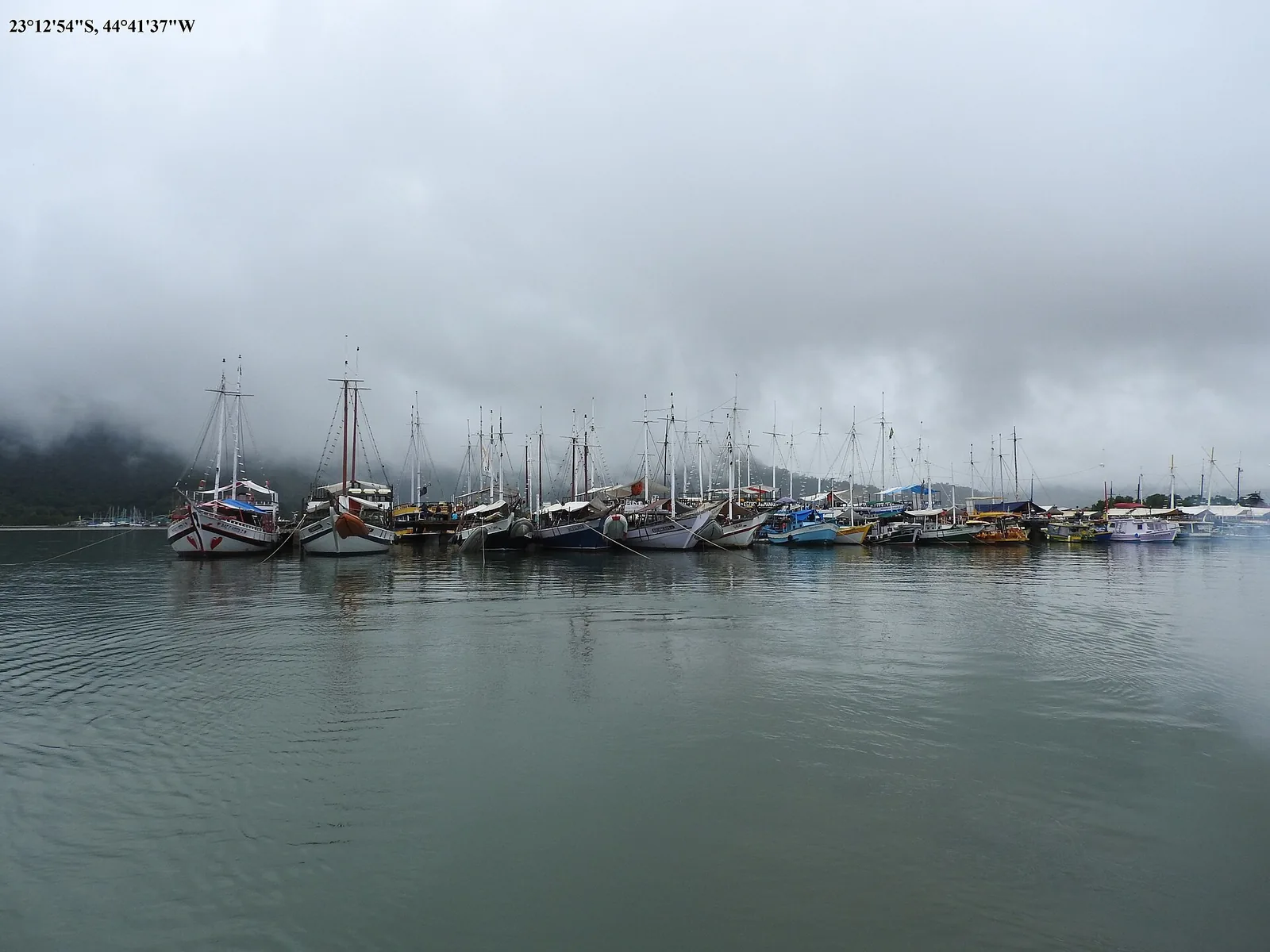
The wooden schooner, the escuna, is the classic Paraty boat and the one you see lined up along the seawall. You buy a single seat, the boat fills with thirty to sixty people, and it follows the standard circuit over about five hours. There is usually a sun deck, shade below, a bar selling drinks and caipirinhas, and lunch available on board or at a stop. Music plays. It is sociable, easy and by far the cheapest way onto the water.
The honest trade-offs: you go where the boat goes, on its schedule, and you share each swimming stop with everyone else aboard, plus whatever other schooners arrive at the same time. The popular spots can feel crowded around midday when several boats converge. A schooner is a big, stable platform, though, so it rides the chop well and is the most comfortable option for anyone worried about seasickness. For a first visit, for solo travellers and for people who enjoy a relaxed, social day without managing anything, it is a genuinely good choice.
The private schooner
The same kind of boat, taken privately. You pay for the whole schooner rather than a seat, so you set the route and the timing, you are not sharing with strangers, and you can ask to linger somewhere quiet or skip a stop you do not fancy. You keep the comfort and stability of the big wooden hull and the room to spread out, while losing the crowd. For a larger family or a group of friends, or for a celebration, this is often the sweet spot: not as fast or as flexible as a speedboat, but roomy, calm and unhurried, and the cost split across a dozen people is reasonable.
The lancha, or speedboat
The lancha is a fast motor launch, typically taken privately for a half or full day. Speed is the point. You reach further coves, you cover more ground, and you can outrun the schooner crowds by arriving early and moving on. It is the only practical way to do the Saco do Mamanguá and the bay's far corners in a single comfortable day. The water feels closer, the day feels more like an adventure, and you have a skipper to yourself who can read the conditions and take you to whatever is best that day.
The trade-offs are real. A speedboat costs considerably more than a schooner seat, it gives less shade and less room to move around, and a small fast hull moves more in a chop, so it is the least forgiving option for anyone prone to seasickness. For couples, active travellers and small groups who value time and flexibility over cost and lounging room, it is the best boat in the bay.
One refinement worth knowing: speedboats come in a range of sizes, from small open launches that take a handful of people to larger rigid-hulled boats with a canopy and proper seating. If you are a family or a group leaning towards a speedboat, ask for one of the larger, covered ones; you keep most of the speed and reach, but gain shade and stability and a dry place to stow bags. The smallest open boats are exhilarating and nimble but expose you fully to sun and spray for hours, which is more than some people want. Match the boat to the day you actually want to have.
The water taxi
Not a tour at all, but worth knowing about. Water taxis are point-to-point transfers, run by local boatmen, that take you to a specific beach and either wait or come back at an agreed time. They are how you reach trail-only beaches such as those near Laranjeiras, and how you skip the walk to places like Praia do Sono. Fares are usually set per person each way. If your aim is to get to one particular beach and relax, rather than to tour the islands, a water taxi is simpler and cheaper than chartering.
What a typical five-hour day actually looks like
It helps to picture the day before you book. Here is the rhythm of a standard bay trip, the one a group schooner or a half-day private follows.
You board near the seawall late morning, usually somewhere between ten and eleven. The boat motors out of the harbour, and within twenty minutes or so the town has shrunk behind you and the first island is ahead. The first stop is usually a swimming and snorkelling anchorage; you have roughly an hour to get in the water, drift over the rocks with a mask, and warm up again on deck. Then a short sail to the second stop, often a beach where you can wade ashore, walk a little and buy something cold from a kiosk. Lunch falls around the middle of the day, either served on board or eaten at a beach stop. A third stop, sometimes a fourth if the day is going well, and then the run back to town, arriving mid to late afternoon.
Two things to understand about this rhythm. First, the popular early stops are quietest before about eleven, which is exactly when the day boats are leaving the harbour. A private boat that starts at eight or nine can have the best spots almost to itself, then be back before the afternoon wind. Second, the day is built around swimming, not sightseeing from the deck. If you do not get in the water you will have a pleasant but slightly aimless time; the whole point is the swimming and snorkelling stops.
It also helps to know how the time really breaks down, because the headline figure of five hours is less generous than it sounds. Of those five hours, the better part of two are spent travelling between stops, and lunch eats into another. That leaves roughly three hours of actual stopped, in-the-water time, spread across the day. This is not a complaint; it is simply how a relaxed bay day works, and the travelling is pleasant in its own right, with the islands sliding past and the breeze on deck. But if your idea of the perfect day is hours of uninterrupted swimming at one beautiful spot, a boat tour is not quite that. A private charter, where you can choose to drop anchor somewhere lovely and simply stay, comes closer.
What it costs, and how to budget the day
Money is the question everyone asks and few guides answer straight, so here is the honest shape of it without quoting figures that will be out of date by next season. The cheapest way onto the water by a wide margin is a seat on a group schooner, where you pay a modest per-person fare and then buy your own food and drinks aboard. A family of four can do a schooner day for a fraction of what a private boat costs. The catch is everything covered above: the crowd, the fixed route, the shared stops.
A private boat, whether a chartered schooner or a speedboat, flips the maths. You pay for the whole boat regardless of how many are aboard, so the cost per head falls fast the more of you there are. For two people a private speedboat is a genuine splurge; for six or eight it becomes very reasonable, often not much more per person than a schooner seat once you account for the crowd you have escaped and the stops you would otherwise have missed. The single biggest lever on value is therefore group size: a private boat shared among a houseful of people is one of the best-value days in Paraty, while the same boat for a couple is a treat you pay properly for.
Budget, too, for the extras that creep in on any boat day: drinks and lunch on a schooner, fuel surcharges if you ask a private boat to go far, a tip for a skipper who has looked after you well, and cash for the beach kiosks at the stops. Bring more cash than you expect to need, because card machines on the water and at the kiosks are unreliable. None of this is expensive in the scheme of a trip, but it adds up, and it is better planned than discovered.
Snorkelling in the bay
Paraty is not a coral-reef destination, and it is fair to set expectations: this is the warm, green, fish-rich water of the southeastern Brazilian coast, not the gin-clear blue of the Caribbean. What it does have is calm, shallow, rocky coves where small fish gather in good numbers, and on a clear day you can see them well with nothing more than a mask.
The standout stop is Ilha Comprida, which the boats visit precisely because the snorkelling there is reliable. You drift over rock and sand in a couple of metres of water, and shoals of small fish come close, especially where people have been feeding them, which we would gently ask you not to do. Other coves on the circuit offer similar, quieter snorkelling. Bring your own mask if you care about a good fit, because the shared gear on the boats is basic and one-size. For a fuller picture of the underwater scene, including the better spots and what you will actually see, our guide to diving and snorkelling in Paraty goes into detail.
A few habits make the snorkelling much better. Get in as soon as the boat anchors, before the rest of the deck does and stirs up the bottom; the first ten minutes at a stop are usually the clearest. Swim away from the boat and the crowd, towards the edges of the rocks where the fish gather, rather than floating directly under the hull where everyone else is. Keep your fin-kicks gentle near the bottom so you do not raise a cloud of sediment that ruins the view for everyone. And take a waterproof pouch for your phone if you want photos; the colours are best in the shallows on a bright day, and you will want a record. None of this is hard, but it turns a quick splash into a proper look at the bay's underwater life.
Private charters: how to book one and do it well
If you decide a private boat is right for you, a little planning makes a large difference. The boats are run by independent skippers and small local operators, and they change hands and names often, so we describe by type rather than recommending a business that may not exist next season. The questions to ask are the same whoever you book with.
- Boat and capacity. Confirm whether it is a schooner or a speedboat, how many it comfortably takes, and how much shade there is. A group that wants to lounge needs a different boat from a couple who want to move fast.
- Hours and start time. Push for an early start. The single best thing you can do with a private boat is be on the water before the schooners, when the stops are empty and the sea is calm.
- The route, and its flexibility. Agree a rough plan but ask the skipper to adapt to conditions. The good ones will steer you away from crowds and towards whatever is best on the day.
- What is included. Fuel, the skipper, snorkelling gear, water, ice, any lunch. Know what you are bringing and what is provided.
- Fuel and the Mamanguá. If you want to reach the Saco do Mamanguá or the far islands, say so when you book; it is a longer trip, uses more fuel and is priced accordingly.
We are glad to help guests sort a boat to suit the group and the day, and to time it around the weather and the rest of your trip. It is one of the things we know well, so do get in touch and we will point you the right way.
The Saco do Mamanguá by boat
The Saco do Mamanguá deserves its own mention because it is unlike anything else in the bay. It is a long, narrow inlet, often called a tropical fjord, that reaches several kilometres inland between two ranges of forested mountains at the southern end of the bay. The water inside is exceptionally calm, shallow and green, fringed with mangrove and tiny beaches, and the mountains drop almost straight to the shore. At its mouth stands the Pico do Pão de Açúcar, a peak you can climb on a steep forest trail for one of the best views on the whole coast.
You reach the Mamanguá by boat rather than on the standard circuit, usually on a dedicated speedboat trip or a longer charter, and it makes a wonderful contrast to the island day: quieter, wilder, more about the landscape than the swimming stops, though the snorkelling and kayaking inside the inlet are lovely. Many guests do both on separate days. We have written a full guide to the inlet, the hike and how to plan it in our piece on the Saco do Mamanguá, which is worth reading before you go.
Beyond the bay: Ilha Grande and the far beaches
The Paraty boat circuit is the obvious day on the water, but it is not the only one. To the northeast lies Ilha Grande, the large car-free island that anchors this stretch of coast, with its own beaches, trails and snorkelling. It is too far for the standard Paraty schooner loop and is better visited on a dedicated trip; our Ilha Grande day trip guide explains how to do it well and whether a day is enough.
Closer to home, several of Paraty's loveliest beaches are reached by boat as easily as by road, or more so. The trail-only beaches south of Laranjeiras, the coves around Trindade, and the quieter stretches the road does not touch all open up once you have a hull under you. If you are working out which sands are worth your time, our roundup of the best beaches around Paraty pairs naturally with a boat day, because half of them are easiest to reach from the water.
Sea conditions and the best time to go
The bay is swimmable and boatable all year. Sea temperatures sit comfortably in the low to mid twenties Celsius, warm enough that you rarely hesitate to get in. What changes through the year is the weather above the water, and that matters more than the water itself.
The dry winter months, roughly June through August, give the most reliable boat days: big blue skies, little rain and clear water. It is cooler, but pleasantly so, and the sea is at its clearest because there is less runoff from the rivers. The summer, from December to March, is hotter and the swimming is glorious, but it is also the wet season, and heavy afternoon rain is common. Rain itself does not stop a boat, but a real downpour flattens the mood and, more importantly, the runoff clouds the water and kills the visibility for a day or two afterwards. If clear snorkelling matters to you, watch the forecast and go on a day that has been dry.
Whatever the season, mornings beat afternoons on the water. The sea is calmer, the light is better and the stops are emptier. We cannot say this often enough. If you would like help matching your boat day to the season and the forecast, our notes on the house and the bay below it and the wider picture of when to come, set out in the Paraty overview, are a good place to start.
Boating with families and nervous sailors
A boat day is one of the easiest things to do with children here, with a little thought. The water is warm and shallow at the stops, the bay is calm, and most children are happy in and out of the sea all day. A few honest pointers make it smoother.
- Choose the right boat. A larger schooner is steadier and has more room for a child to move about safely than a small speedboat. For families, the extra stability is worth more than the speed.
- Go in the morning. Calmer water, gentler on small stomachs, and you are home before anyone melts down in the afternoon heat.
- Bring shade and sun cover. Children burn fast on the water, where the glare comes off the surface as well as the sky. A rash vest, a hat and high-factor reef-safe sunscreen are not optional.
- Manage seasickness early. If anyone in the family is prone to it, treat it before you board rather than after it starts. Looking at the horizon, staying on deck in the air, and keeping a snack in the stomach all help.
- Bring snacks and water. Hungry children on a boat are unhappy children. Pack more than you think you need.
For more on travelling here with children, including how a hillside house with a pool works as a base between boat days, see our guide to Paraty with family.
Common mistakes, and how to avoid them
Having watched a great many boat days unfold, the same few avoidable problems come up again and again. Sidestep these and you are most of the way to a perfect day on the water.
- Leaving it too late. Booking on the morning of, in high season, often means the good boats are gone and you take whatever is left. Decide a day or two ahead, especially for a private charter or over busy dates.
- Starting late. The single most common regret. A boat that leaves at eleven hits every popular stop at its most crowded and meets the afternoon chop on the way home. Earlier is better in every way.
- Underestimating the sun. The glare comes off the water as well as the sky, and a long day on deck burns even careful people. Cover up, reapply, and bring shade.
- Bringing no cash. Kiosks, tips and on-board bars often want cash, and there is no machine on the water. Carry more than you think you need.
- Treating the itinerary as fixed. The route changes with the conditions, and that is the skipper doing their job. Roll with it rather than counting off a checklist.
- Not getting in the water. The day is the swimming. Bring swimwear you are happy to spend hours in, and get wet at every stop.
Running a boat day from a house on the hill
Staying up above the bay, the way our guests do, changes the logistics of a boat day in small, pleasant ways. The harbour and the seawall where the boats gather are a short drive down into town, so the practical pattern is to come down in the morning, do your day on the water, and climb back up to the house in the afternoon.
A few things make this work well. Pack the boat bag the night before, because mornings move quickly when you are trying to make an early departure. Drive down rather than relying on finding transport at the last minute; parking near the historic centre is straightforward outside the busiest dates, and our notes on getting around Paraty cover the details. Most of all, lean into the contrast that a hillside base gives you: a salty, sun-warmed day on the bay, then the climb back up to a quiet pool with the whole bay laid out below, the same water you spent the day on now turning gold as the light goes. The day boats are coming in, the town is small in the distance, and you have the best seat on the coast.
That contrast, the water by day and the height by evening, is the particular pleasure of doing Paraty from above. Plan one good boat day at least, two if you can, one on the island circuit and one out to the Mamanguá or Ilha Grande, and you will have seen the bay the way it is meant to be seen. If you would like a hand arranging any of it, that is exactly what we are here for.
Frequently asked questions
A seat on a shared group schooner is the cheapest option and runs at a modest per-person rate, lunch and drinks usually paid separately on board. A private speedboat or a privately chartered schooner costs far more because you pay for the whole boat, but split between a family or group it becomes reasonable, and you control the route and timing.
The standard bay tour lasts about five hours, usually leaving late morning and returning mid to late afternoon, with three or four stops for swimming and snorkelling. Half-day private trips of three to four hours are common, and full-day charters of seven or eight hours let you reach the Saco do Mamanguá or the far islands without rushing.
Most circuits link a handful of the bay's calmest spots: Ilha Comprida, Praia Vermelha, Praia da Lula, the Ilha do Algodão area and nearby coves. The exact list shifts with the weather, the tide and how busy each stop is, so treat any itinerary as a guide rather than a fixed plan.
The bay is well sheltered by its islands, so the water is usually calm, especially in the morning and close to shore. Open crossings can get a light chop in the afternoon when the wind picks up. If you are prone to seasickness, take a remedy beforehand, choose a morning departure and pick a larger schooner, which moves less than a small speedboat.
Sun protection above all: reef-safe sunscreen, a hat, a light layer and sunglasses. Then water, a towel, a dry bag for your phone, cash for kiosks and tips, and your own mask if you are particular about fit. Most boats supply basic snorkelling gear.
Yes. The Mamanguá sits at the southern end of the bay and is reached on a dedicated trip rather than the standard island circuit, usually a faster speedboat or a longer charter. It is a long, mountain-walled inlet with very calm water, good for kayaking and snorkelling, and a peak you can climb for the view.
If you are a couple after a quiet day, a family with children, or a group who want to set the pace, a private charter is well worth it. You skip the crowds, choose the stops, swim where the group boats do not go, and the cost per head drops quickly the more of you there are.