In this guide
There is a particular kind of afternoon that Paraty does better than almost anywhere on this coast, and it costs very little to have. You walk down to the water, take a plastic chair at a kiosk with its feet in the sand, order a plate of fried fish and a caipirinha built from local cachaça, and then you simply stay. The boats rock offshore, the light softens, someone brings another round, and three hours disappear without your noticing. If you want to understand Paraty beach kiosks and bars, start there, with the pace, because the pace is the whole thing.
The Brazilian word is quiosque, and it means something looser than the English "bar" or "beach club" suggests. A quiosque is a small kitchen and bar planted on the sand, with tables spread around it under umbrellas or a thatched roof, and a menu leaning hard on things you eat with your hands and share across the table. There is no door policy, no cover charge to sit, no minimum spend. You arrive, you order as you go, you pay at the end. On the busy town beaches the kiosks are even numbered, so you can send a friend to find quiosque seven and know they will actually find it.
This guide walks the whole scene by type: which beaches near town have proper kitchens, what to order when the menu is all petiscos, how the caipirinha works here and why it is worth taking seriously, where to watch the sun go down with a drink in your hand, and which beaches have nothing at all so you know to pack your own lunch. We host guests just up the hill at the chalet, a short drive above all of this, and a slow kiosk afternoon followed by a swim back at the pool is one of the easiest good days you can have in Paraty. Let us get you a table.
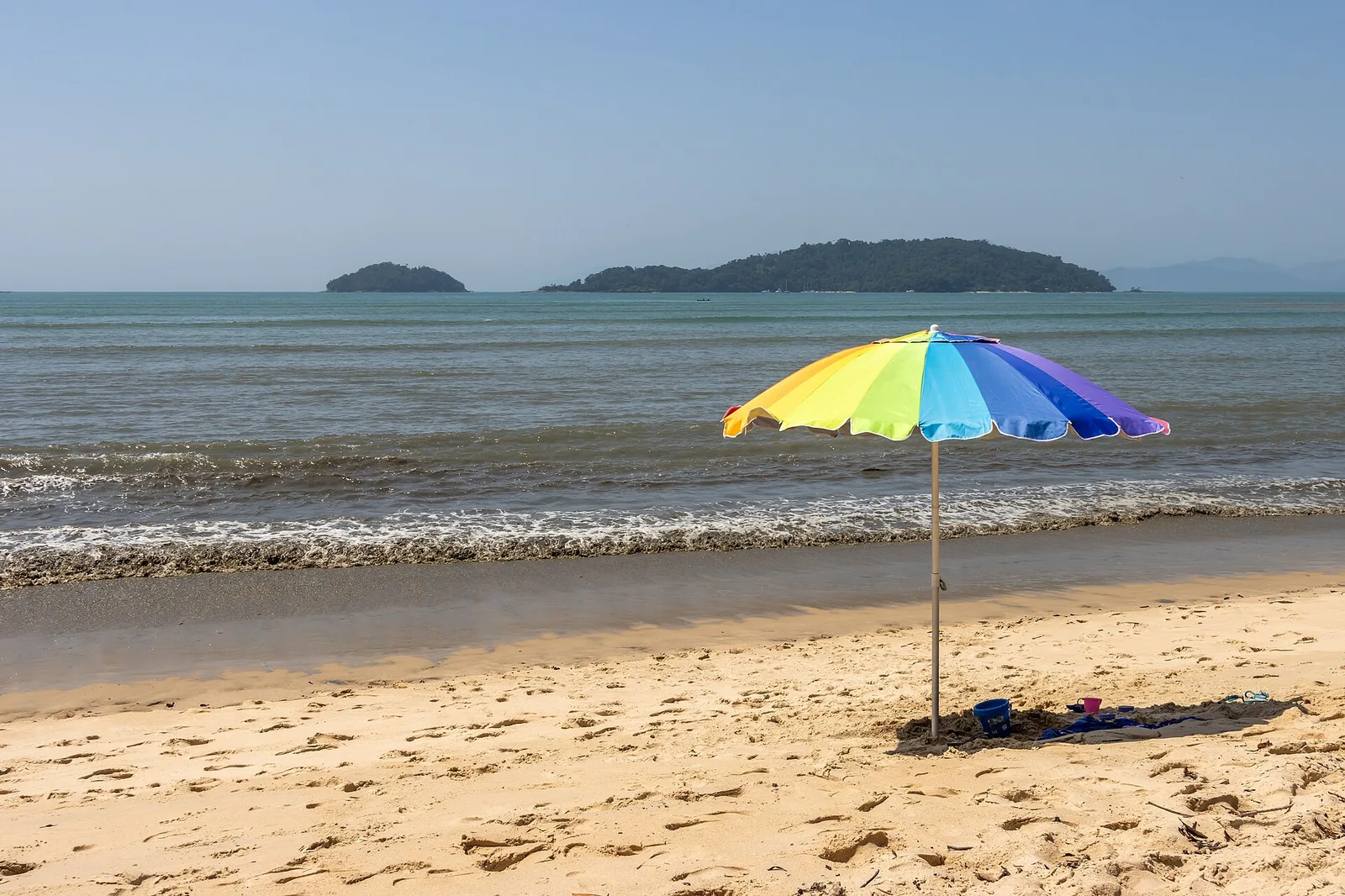

Paraty beach kiosks and bars, explained
Before the where, the how, because a quiosque runs on its own quiet logic and knowing it makes the day smoother. When you arrive at a beach with kiosks, you do not queue at a counter and carry a tray to a table. You choose a kiosk, sit at any free table, and wait a moment for someone to come and take a drinks order. Food follows when you are ready. There is rarely a rush to turn the table; the assumption is that you will be there a while, which is exactly why the model works.
A few things are worth understanding up front. The tables and chairs belong to the kiosk you are ordering from, so you sit with one kiosk and order from that one rather than mixing and matching down the row. Sitting costs nothing in itself; you pay only for what you eat and drink, settled at the end. On the town beaches the kiosks tend to be permanent little structures with a real kitchen; on the outer beaches they get simpler, sometimes just a family grill and a cooler of beer. And the food is built to be shared. You will see the word porção, meaning a portion or platter, and a porção is generous, meant for two or three people picking at the middle of the table.
The other thing to know is that a good kiosk afternoon has no plan beyond the next round, and that is exactly the point. Do not treat it like a restaurant with a start and an end. Treat it like a long, low-key picnic that someone else is cooking, and let it stretch. If you want a fuller sense of how eating out works across the town, our guide to Paraty restaurants covers the harbour fish houses and colonial-centre kitchens that make up the other half of the picture.
A good kiosk afternoon has no plan beyond the next round, and that is exactly the point.
The two beaches you can walk to: Pontal and Jabaquara
If you want the classic kiosk experience with the least effort, you barely have to leave town. Just north of the historic centre, across the Perequê-Açu river, sit the two beaches that Paraty locals treat as their own front garden: Praia do Pontal and Praia do Jabaquara. Neither is the most beautiful beach in the region, and you should be honest with yourself about that. They are town beaches, close and convenient rather than pristine. But for a drink and a plate of something with your feet in the sand and no drive involved, they are unbeatable, and they are where the kiosk culture is at its liveliest.
Praia do Pontal
Pontal is the closer of the two, a short walk over the little bridge at the northern edge of the old town. It is a relaxed, slightly scruffy strip of sand fronted by a run of rustic kiosks and small bars, and it fills in the late afternoon with a mix of locals, students and travellers who have wandered over for a sunset drink. The water is calm and shallow, more for wading and cooling off than for real swimming, and the appeal is less the beach itself than the scene along it: fishing boats swaying just offshore, cachaça in the glass, the light going gold over the bay.
This is my first recommendation for anyone who wants the quiosque afternoon without committing to a whole beach day. Order a porção of shrimp, a round of caipirinhas, and settle in as the sun drops. The kiosks here are unpretentious and inexpensive, and the walk back into the centre for dinner takes minutes. If you are staying up the hill, it is an easy early-evening run down before the light goes.
Praia do Jabaquara
A little further north, Jabaquara is the bigger, sandier beach, wide enough that it never feels crowded even when the kiosks are busy. The water is shallow and warm, which makes it a genuinely good beach for families with small children who want to paddle safely. Along the sand runs a longer line of numbered kiosks, several of them doing proper food rather than just snacks, and the setting at sunset is broad and open, the shallow water mirroring the colours of the sky.
Jabaquara is where I send people who want to make an afternoon of it rather than just catch the sunset. There is room to spread out, the kiosks range from simple drink-and-snack stands to ones grilling fish and steak, and the mood is unhurried. It is also where you are most likely to be offered a caipirinha made with a fruit you have never heard of, or the local speciality drink nicknamed the Jorge Amado. Between the two beaches, think of Pontal as the quick sunset drink and Jabaquara as the long lazy lunch. For the wider lay of the land, our guide to the best beaches around Paraty puts these town beaches in context against the outer ones.
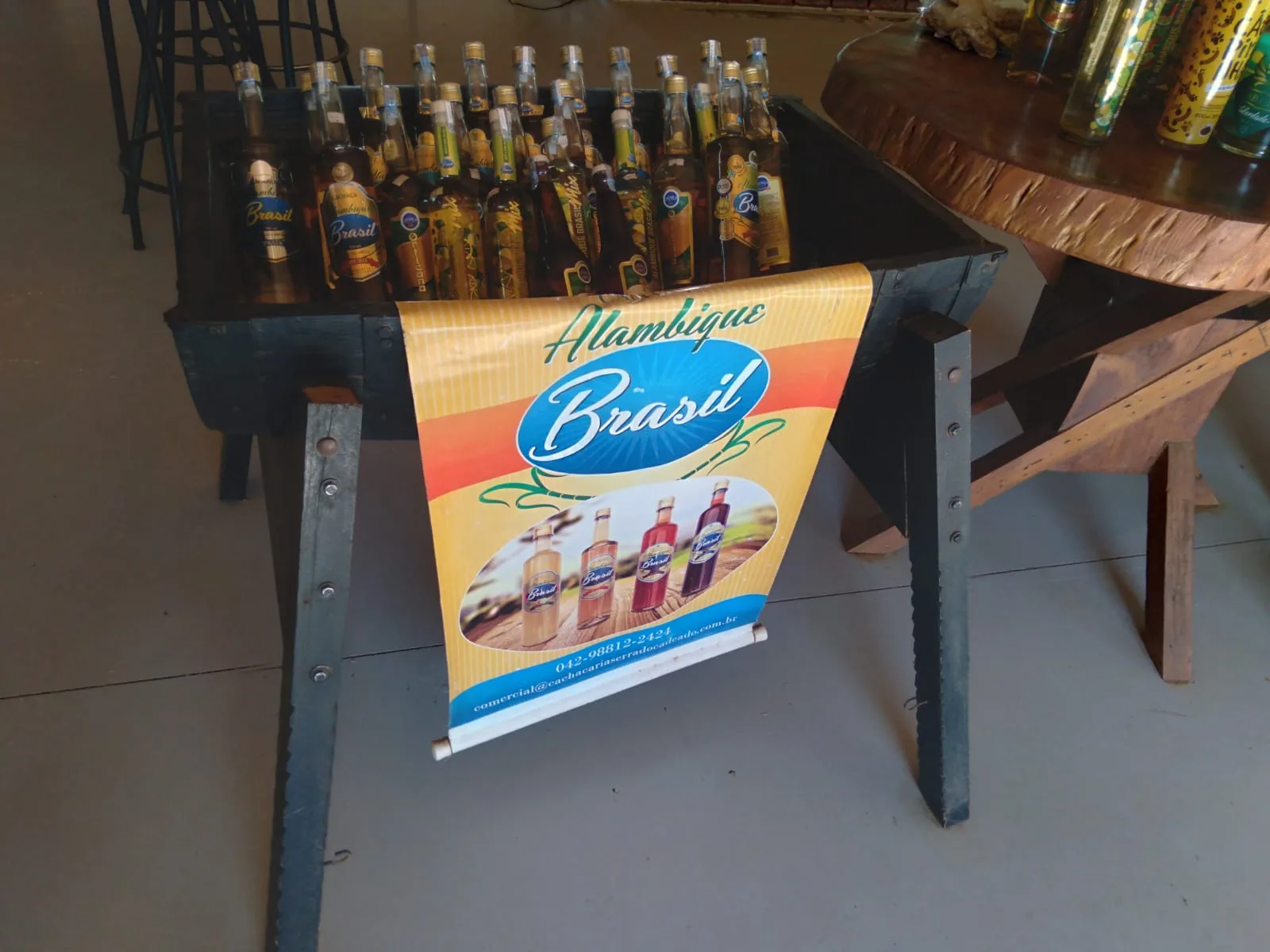

What to order: the petiscos that make a kiosk lunch
A kiosk menu is really a short list of shared plates, and the whole art of ordering well is choosing three or four things for the middle of the table rather than a main course each. Petiscos are the small dishes, the snacks-to-share, and they are the soul of this kind of eating. Here is what you are looking at, and how I would build an order.
From the sea
The best kiosk food comes straight off the boats that work this coast, and the fried and grilled seafood is where you should spend most of your order. The reliable stars are these:
- Isca de peixe — strips of white fish, lightly floured and fried, served with lime. The default good order, crisp and clean, and hard to get wrong.
- Camarão ao alho e óleo — shrimp in garlic and oil, often served sizzling. Sweet local shrimp, sometimes cooked in the shell, which keeps them firm and is worth the peeling.
- Camarão empanado — breaded, fried shrimp, a crowd-pleaser and especially good with cold beer.
- Lula frita — fried squid rings, when the kitchen is busy and turning them over fresh.
- Bolinho de bacalhau — salt-cod fritters, a Portuguese inheritance, golden outside and soft within. A classic first plate.
- Casquinha de siri — seasoned crab meat baked and served in a shell, richer and worth trying if you see it.
On some beaches, particularly the outer ones, a kiosk will grill a whole fresh fish over coals, peixe na brasa, and if the catch looks good that is the plate to order and share. The caiçara fishing communities still work this coast, and the fish at a good kiosk can be genuinely of the day. Our Paraty seafood guide goes deep on the fish, the shrimp and the moqueca if you want to understand what you are eating.
From the grill and the land
Not everything at a kiosk comes from the sea, and a well-rounded order mixes in a few things from the grill and the fryer to balance the table. Common land plates include batata frita (chips, usually a mountain of them), a porção of grilled sausage (linguiça) or steak strips (carne), fried polenta, and pastéis, the crisp fried pastry parcels stuffed with cheese, meat or heart of palm. Farofa, the toasted cassava flour, turns up alongside almost everything and soaks up the garlic and oil. For a hot afternoon, a plate of isca de peixe, a porção of chips, some farofa and a round of drinks is a complete and cheerful lunch for two, and you will spend far less than you would in a restaurant in the centre.
The one honest caution on ordering: porções are large, and it is easy to over-order when everything sounds good and you are three drinks in. Start with two plates for a table of two, or three for a table of four, and add more only when you have finished. You can always order again; a kiosk is in no hurry to see you leave.
The caipirinha, and why it is better here
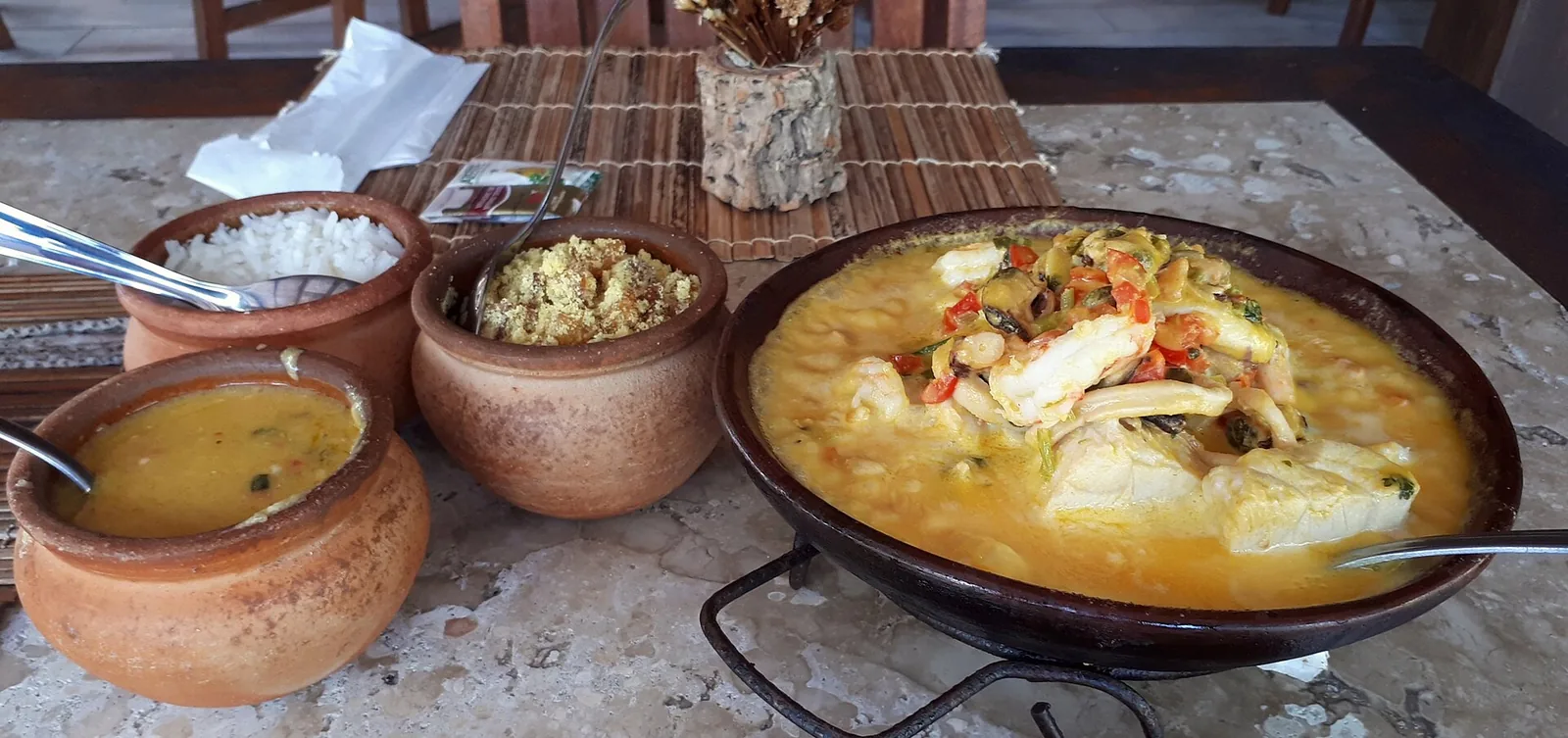
Paraty is one of the historic homes of cachaça, the sugarcane spirit that is the base of the caipirinha, and that single fact changes the drink completely. The valleys around town have been distilling cachaça since the colonial era, when it fuelled the gold trade and the port, and the small family distilleries here make some of the finest in Brazil. So when a kiosk builds you a caipirinha from Paraty cachaça, fresh lime muddled with sugar and plenty of ice, you are drinking a local product at close to its source, and it shows.
A proper caipirinha is simple and strong: cachaça, lime cut into chunks, sugar, ice, muddled together in the glass. Made well it is bright, grassy and clean, the sourness of the lime cutting the sweetness and the spirit warming underneath. Made lazily it is a sugary lime drink that hides the cachaça. On the town beaches you will get a decent one almost anywhere; the difference between kiosks is usually the quality of the cachaça they pour, so if you have a favourite from the distillery trail, it is worth asking whether they stock it.
Beyond the classic, a few variations are worth knowing. A caipifruta swaps or adds fresh fruit, so you will see caipirinhas built on passion fruit (maracujá), strawberry (morango), kiwi or whatever is ripe; these are gentler and good for a hot afternoon. A caipiroska uses vodka instead of cachaça, milder and less characterful, worth choosing if the raw spirit is too much for you. And Paraty has its own house drink, often nicknamed after the novelist Jorge Amado, a sweeter cachaça cocktail you will see on the beach menus. If cachaça catches your interest, spend a morning on the cachaça distillery trail around town, or read our journal essay on cachaça and caipirinha culture to understand what you are tasting. The one piece of advice I give every guest: pace yourself. A beach caipirinha here is generous and stronger than the ones served abroad, and the sun does half the work.
_(51338403464).jpg)
Sunset drinks: timing it right
The sunset drink is the reason many people come to the town beaches in the first place, and getting the timing right is the difference between a good evening and a scramble for a table. The move is to arrive before you need to. In high summer, from December through February, the good waterfront tables at Pontal and Jabaquara start filling by five in the afternoon, so aim to be sitting with a drink in hand by then rather than turning up at golden hour to find every kiosk full.
Both town beaches face roughly west across the bay, which is why they are the classic sunset spots; the light drops behind the hills and islands and the calm water holds the colour. Pontal is the quicker option, close enough to the centre that you can watch the sun go and then walk straight to dinner. Jabaquara gives you more room and a broader horizon. Either way, order a first round early, let the afternoon settle, and do not plan anything tightly scheduled for right after; the whole pleasure is in not watching the clock. For more on where and when the light is best, our Paraty photography guide maps the good hours, and the town's famous flooded streets at high tide are a separate spectacle worth timing.
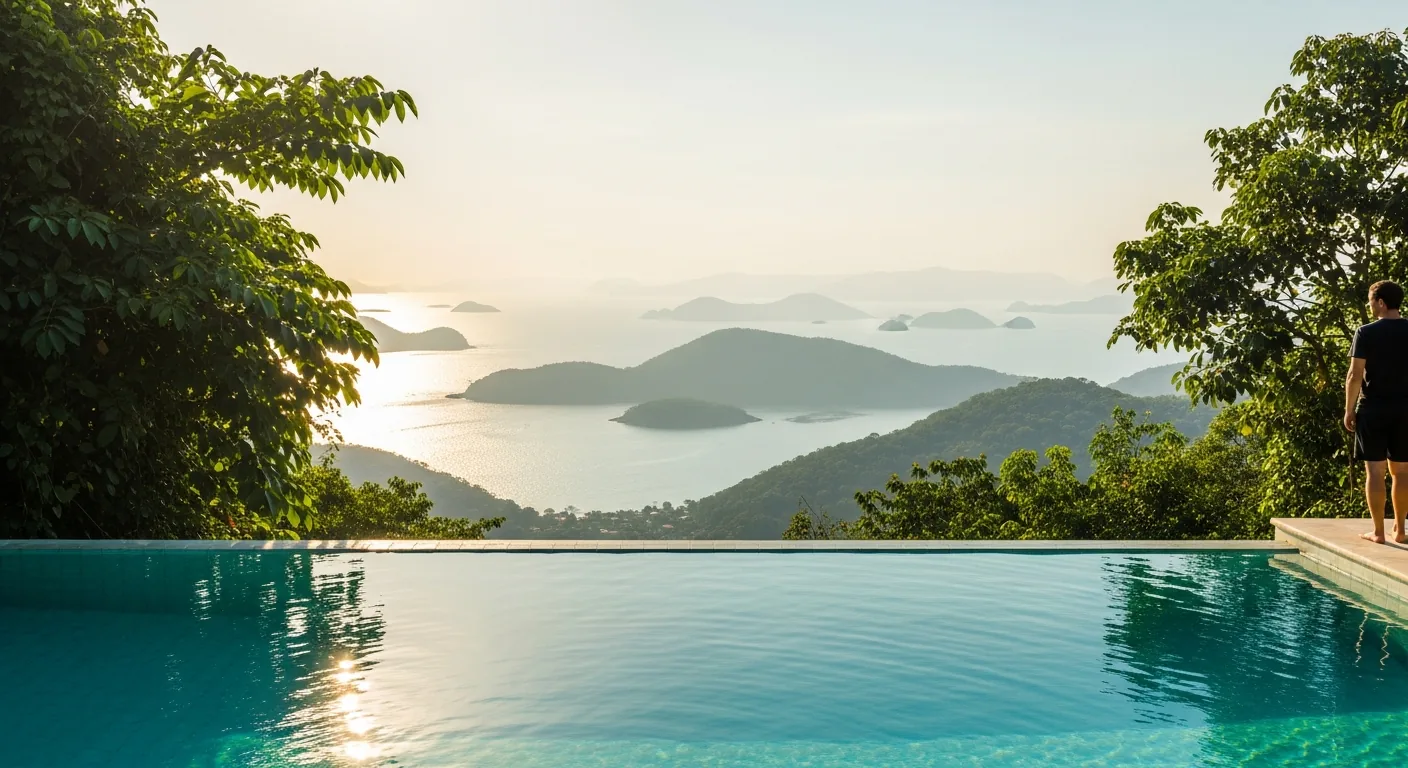
One quiet alternative worth mentioning: the sunset from the water, on a late-afternoon boat trip, is arguably better than from any beach, and many of the schooner and speedboat tours time their return for it, drinks on deck as the bay turns pink. And for those staying up the hill, the deck at the chalet has its own three-way view over Paraty, Angra dos Reis and Ilha Grande that makes a strong case for a caipirinha at home before you even go down.
The outer beaches: Trindade
When you want a real beach day rather than a town-beach sunset, you head out of Paraty, and the most popular destination is Trindade, a former fishing village turned laid-back beach town about forty minutes south along the coast road. Trindade is beautiful in a way the town beaches are not, a string of coves backed by forested hills, and it has just enough kiosk infrastructure to keep you fed without spoiling the wildness.
Where the kitchens are, and where they are not
Here is the practical thing to understand about Trindade: not every beach has food. The kiosk infrastructure is concentrated at Praia dos Ranchos, the main village beach, where a run of kiosks and simple restaurants serves grilled fish, petiscos, cold beer and caipirinhas straight onto the sand. This is your base for a fed beach day. Praia do Cachadaço, reached by a short trail, has a few rustic bars grilling fresh fish that you can eat with your feet in the sand, simpler and more atmospheric. But the celebrated Piscina Natural, the natural tidal pool at the far end, has nothing at all. If you plan to spend the day there snorkelling in the clear water, carry your own food and drink in, because there is nowhere to buy so much as a bottle of water once you are out on the rocks.
The rhythm most people settle into at Trindade is to anchor at a Ranchos kiosk for lunch and drinks, then walk out to Cachadaço or the natural pool for the swimming and the scenery, then drift back for a late-afternoon beer before the drive home. Our full guide to Trindade lays out the beaches, the trails between them and the parking, which matters, since the village bans most cars in high season and you park at the entrance and walk in.
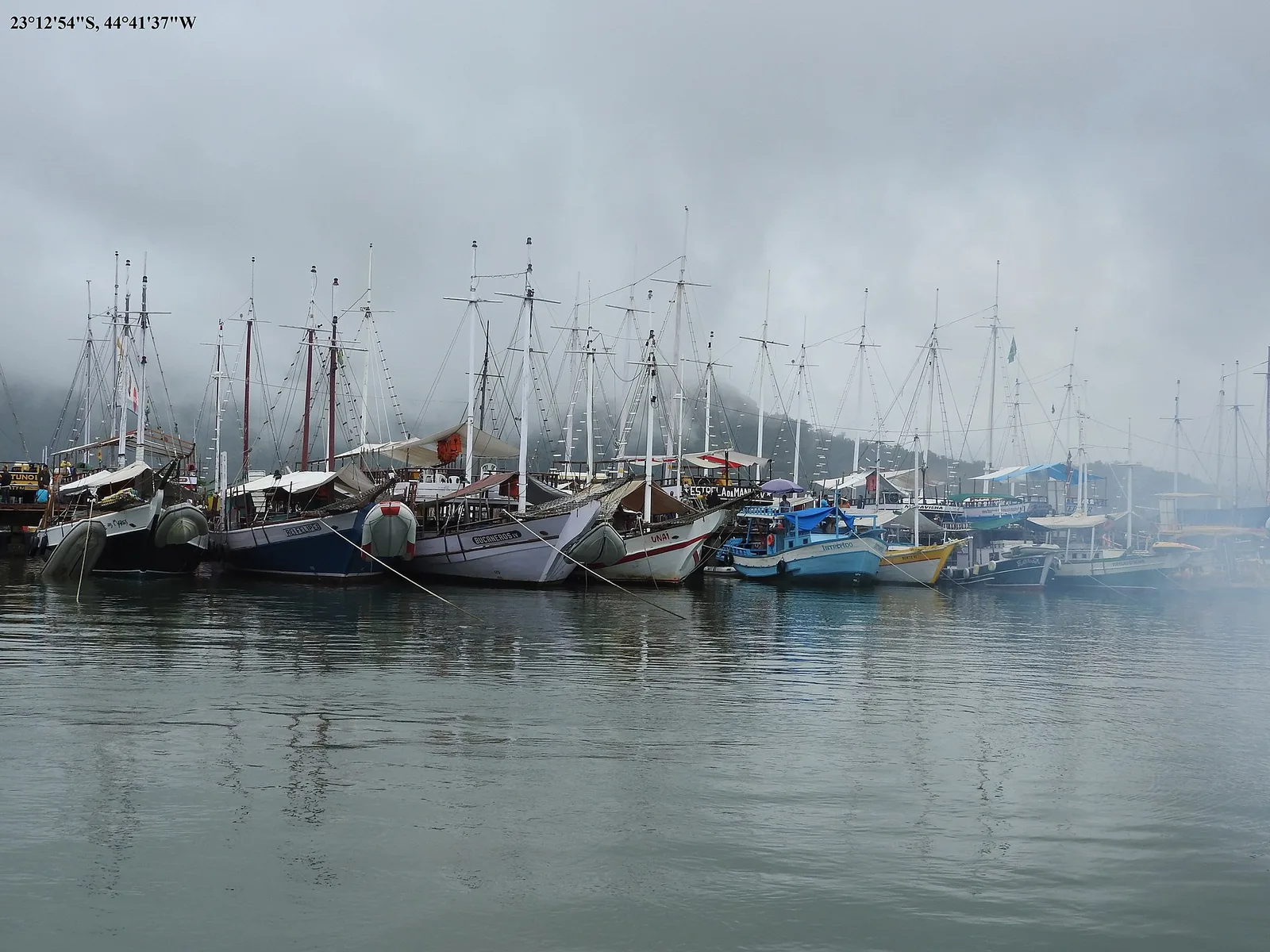

Praia do Sono and the trail beaches
South of Trindade, the coast gets wilder and the kiosks get scarcer, and this is worth knowing before you set out with an empty stomach. Praia do Sono is the best-known of the trail-access beaches, reached by a walking track of roughly an hour from the end of the road at Laranjeiras, or by a short boat hop. It is a broad, beautiful beach with a small caiçara community, and it does have a handful of rustic bars and simple family kitchens serving cold drinks and home-cooked meals, so you will not go hungry. But the offering is basic and the prices reflect the effort of hauling supplies in, so keep expectations modest and cash handy.
Beyond Sono, the neighbouring coves of Antigo and Antiguinho are quieter still, with even less infrastructure, and the remote beaches of the peninsula have effectively nothing. The rule for this whole stretch is simple: the further you walk from the road, the more you should carry. If a beach requires a real hike or a boat to reach, assume the food situation is minimal and pack accordingly. Our guide to Praia do Sono covers the trail, the boat options and what to bring, and for the string of coves along the mangrove inlet, our piece on Saco do Mamanguá covers the oyster bars you reach by water.
The beaches with nothing: pack your own
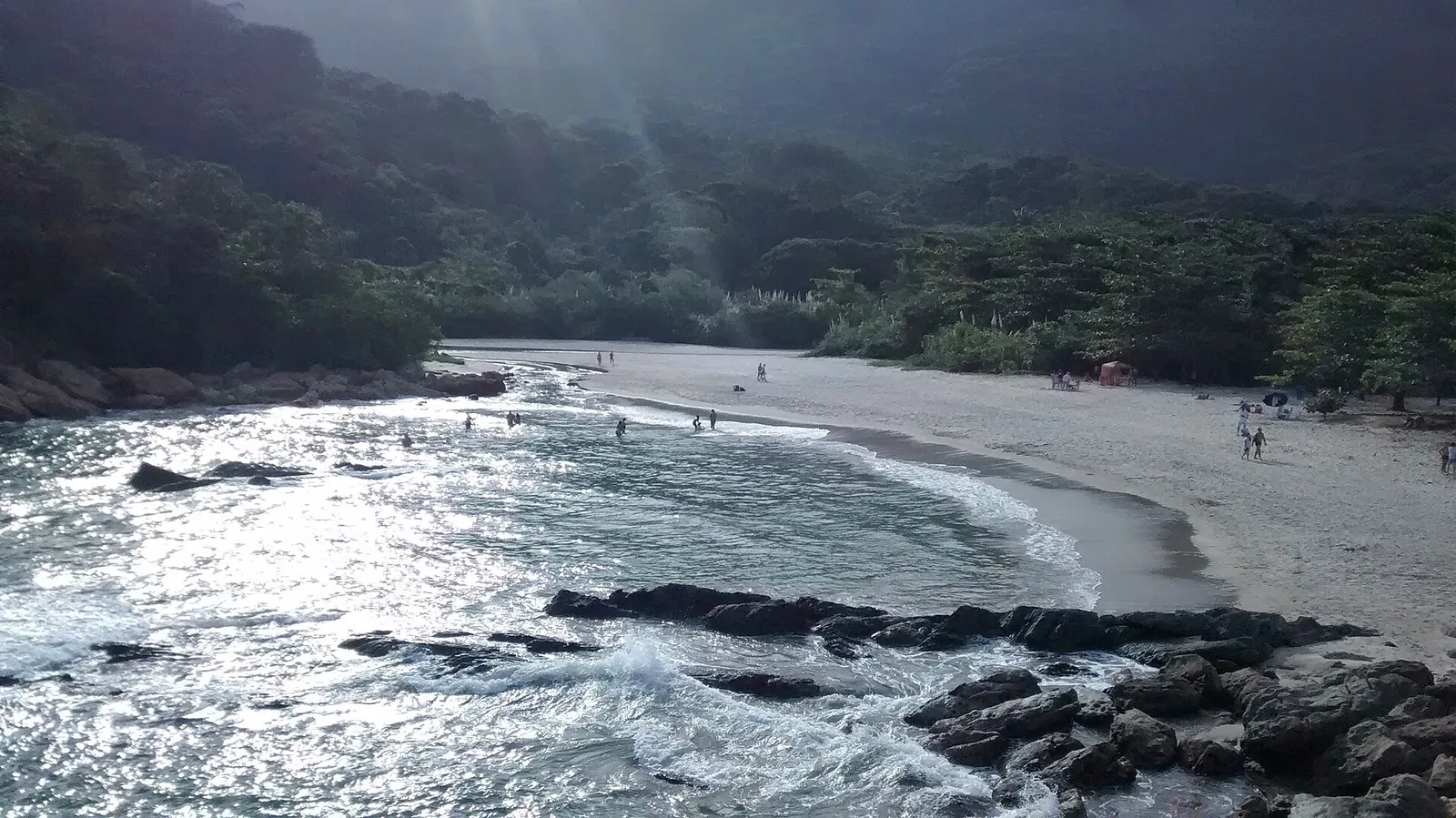
Not every beautiful beach around Paraty comes with a kitchen, and some of the best ones come with nothing at all. This is not a flaw; it is why they stay quiet. But it means the single most useful habit you can build is knowing, before you leave, whether the beach you are heading to has kiosks or not. Get this wrong and you spend a hungry, thirsty afternoon on paradise-quality sand wishing you had brought a sandwich.
As a rough guide, the beaches you reach easily by road or a short walk near town tend to have at least a kiosk or two. The beaches you reach by boat, by a long trail, or by four-wheel-drive tend not to. The natural pools and the island beaches almost never do. So when you plan a beach day, sort it into one of two kinds. If it has kiosks, travel light and let them feed you. If it does not, pack a proper cooler: water first and plenty of it, fruit, sandwiches or a picnic from a town bakery, and a bag for your rubbish, since these beaches have no bins and the caiçara communities and the national park depend on visitors carrying their waste out. A little planning here is the difference between a lazy day and a logistics failure, and it is worth the five minutes before you go. Our boat tour guide notes which island stops include lunch and which expect you to bring your own.

How the money works
Kiosk eating is one of the better-value pleasures in Paraty, but a few things about how you pay are worth knowing so nothing surprises you at the end. There is no charge to sit down and no cover charge at a beach kiosk, unlike some sit-down bars in the centre that add a couvert for bread and nibbles. You pay only for what you order. A porção of fried fish or garlic shrimp is priced to share and is modest by the standards of a restaurant; a round of caipirinhas or cold beers is inexpensive on the town beaches and climbs a little at the more remote or fashionable spots where everything has to be carried in.
On payment, card is widely accepted at the town-beach kiosks, but carry cash for two reasons. First, the smaller and more remote the kiosk, the more likely it prefers cash or Pix, Brazil's instant bank-transfer system that locals use for almost everything; if you have a Brazilian account, Pix is the smoothest way to pay. Second, in the peak weeks a busy kiosk may be slow to run a card and a bit of cash keeps the afternoon moving. Tipping is simple: service is often already included at around ten percent (the taxa de serviço), so check the bill, and rounding up or leaving a little extra for good service is appreciated but not expected. Prices everywhere rise in the high season, roughly December to Carnival and again in July, and during the town's literary festival, so budget a little more if you are visiting then. Our guide to the best time to visit Paraty lays out the seasons and the crowds.
Etiquette, comfort and the practical stuff
None of this is complicated, but a handful of small things will make your kiosk afternoons more comfortable, especially if you are coming from abroad and this style of beach day is new to you.
- Shade fills up early. On a hot day the umbrella tables and the shaded decks go first. Arrive by late morning for lunch, or bring a hat and accept some sun. Reapply sunscreen; the reflected light off the water is stronger than it feels.
- Order as you go. There is no need to decide everything at once. Start with drinks and one or two plates, then add more. The kitchen expects it.
- Keep an eye on your things. The town beaches are relaxed and generally safe, but do not leave a phone or wallet unattended on a towel while you swim. Take turns in the water or keep valuables at the table.
- Cash and Pix for the outer beaches. Carry small notes for the remote kiosks and for anywhere you are not sure takes cards.
- A little Portuguese goes far. "Uma porção de camarão" and "mais uma rodada" (another round) will get you a warm response. Spanish is understood but Portuguese is the language, and the effort is noticed.
- Carry your rubbish out from any beach without bins. It is expected, and it is why the quiet beaches stay beautiful.
One more comfort note for families: the calm, shallow town beaches suit small children well, the kiosks are entirely relaxed about kids moving between tables, and the shared-plate format means even fussy eaters find something. Bring water, sun cover and a change of clothes, and plan around the heat of the middle of the day. Our guide to Paraty with family has more on making the beaches work with children.
Coming from São Paulo, Rio or abroad
Guests arrive with very different beach habits, and a few origin-specific notes help you settle into the Paraty rhythm faster.
From São Paulo and Rio
If you are driving down from São Paulo or Rio de Janeiro, you already know the quiosque and the caipirinha, and Paraty will feel gentler and more rustic than a Rio beachfront or a paulistano beach club. That is the appeal. The kiosks here are less about being seen and more about slowing down, and the seafood is closer to the boat. The drive is roughly four to five hours from either city depending on traffic and the state of the coast road, so plan your first afternoon as a low-effort one: settle in, then wander down to Pontal for a sunset drink rather than attempting a big beach expedition the moment you arrive. Our guides on getting here from São Paulo and along the Costa Verde cover the road.
From abroad
For international guests, a few practicalities smooth the first day. The language is Portuguese, not Spanish; a little effort is warmly received. The caipirinha is stronger and more generous than the ones you have had at home, so treat it with respect, especially in the sun. Fish and shrimp often arrive whole or in the shell, which is normal and part of the pleasure. Card works on the town beaches but carry cash for the outer ones, and if you are in Brazil long enough to set up Pix it will make everything easier. And the pace is genuinely slower than you may be used to; service is not inattentive, it is simply unhurried, on the assumption you came to relax. Lean into it. If Paraty is one stop on a wider Brazilian trip, our journal piece on Brazilian gastronomy gives useful context for the table, and our overview of exploring Paraty ties the beaches to the rest of the town.
Building the kiosk day around the chalet
The way a kiosk day works best, in my experience, is when you are not staying far away and racing back and forth. From Château Portofino, up the hill above the bay, the town beaches are a short drive down, Trindade is about forty minutes along the coast, and the boat harbour for the island beaches is minutes away. That closeness changes the shape of the day. You can go down for a long lunch at a Jabaquara kiosk, come back up for a swim and a nap through the hottest part of the afternoon, then drive down again for a sunset caipirinha at Pontal without any of it feeling like an effort.
A family we hosted last autumn fell into exactly this rhythm and never really left it. Late mornings at the shallow town beach with the children paddling and a table of petiscos; back up the hill for the afternoon by the infinity pool; down again as the light went for a drink on the sand. Their teenager took to ordering the fruit caipiroskas; the parents worked their way through the local cachaças. At breakfast on the last morning they said the thing they would miss was not any single beach but the ease of moving between the water and the pool, the town and the quiet. That is the trade the hillside gives you: you get the kiosk culture and the beach afternoons, and you get to leave the crowd behind at the end of the day.
A simple kiosk-day plan
If you would rather not think about it, here is a sequence that covers the range without rushing, easily stretched or shortened.
- Late morning: drive down to Jabaquara, claim a shaded table at a kiosk before noon, and order slowly, drinks first, then two or three petiscos to share.
- Early afternoon: swim in the shallow water, dry off, and if the catch looked good, order a whole grilled fish and a last round.
- Mid-afternoon: back up the hill to the chalet for a swim in the pool and a break from the sun through the hottest hours.
- Late afternoon: down again to Pontal, arriving by five, for a caipirinha and a plate of shrimp as the sun drops over the bay.
- Evening: walk from Pontal into the historic centre for dinner, or drive back up for a quiet night on the deck.
- A bigger beach day, any spare day: out to Trindade for lunch at a Ranchos kiosk and an afternoon at the natural pool, carrying water in for the pool itself.
Adjust the beaches to the weather and your mood; the kiosks will hold up, and the pace is forgiving by design.
A few honest cautions
Because I would rather you have a good day than a surprised one, a short list of the things worth knowing. Kiosk quality varies, and the busiest kiosk is usually the best sign, since a full kitchen turns food over fresh; an empty one on a hot day may be serving from yesterday. Prices on the outer and more fashionable beaches climb, so glance at the menu before you settle in rather than after. Porções are big; under-order and add more. The natural pools and remote beaches have no food or water, so pack in. And the sun off the water is deceptive; the breeze at a kiosk hides how much you are getting, and a long afternoon of caipirinhas and reflected light will find you if you are careless. Wear a hat, drink water between rounds, and take the shade when you can. On the rare grey day, our rainy-day guide has better ideas than a wet kiosk table.
None of this should make you cautious about the thing itself. The kiosk afternoon is one of the great cheap pleasures of this coast, honest and unhurried and close to the water. Go with an open plan, order a little at a time, keep a caipirinha in hand and let the day stretch. The boats will rock, the light will turn, and you will understand why the locals treat the town beaches as their own.
Making a base of it
The pleasure of all this compounds when you are not commuting to it from far away. Staying up the hill at Château Portofino puts the town beaches a short drive down, Trindade along the coast, and the boat harbour within reach, and it gives you somewhere to return to between the sand and the sunset, an infinity pool and a deck with the three-way view over Paraty, Angra dos Reis and Ilha Grande. Do a long kiosk lunch one day, a wilder beach the next, and let the afternoons blur together in the best way. When you are ready to plan the trip and time it to the seasons, our team is glad to help; just get in touch, and take a wider look at the region through our guide to exploring Paraty. Come thirsty, stay a while, and let the coast set the pace.
Frequently asked questions
The two closest to the historic centre, Praia do Pontal and Praia do Jabaquara, are lined with numbered kiosks and are the easiest for a drink and a snack near town. Further out, Trindade has kiosk infrastructure mainly at Praia dos Ranchos, and some beaches like Cachadaço and Praia do Sono have a few rustic bars. Remote beaches and the natural pools have nothing, so you pack your own.
A quiosque is a beach kiosk: a small kitchen and bar with plastic tables and chairs spread out on the sand or a shaded deck. You sit, someone takes your order, and food and drinks come to the table. There is no cover charge to sit; you simply order as you go and pay at the end. Many are numbered so you can find your way back.
Mostly petiscos, shared plates meant for the middle of the table. Expect fried fish (isca de peixe), garlic shrimp (camarão ao alho e óleo), breaded shrimp, fried squid (lula), salt-cod fritters (bolinho de bacalhau), chips and farofa. Some kiosks also grill a whole fish or do simple grilled meats. Portions (porções) are large and priced to share.
It is usually better, because Paraty is one of the historic homes of cachaça and the local distilleries are excellent. A beach caipirinha here is made with Paraty cachaça, fresh lime and sugar, and it is generous. You will also see fruit caipirinhas and a local speciality nicknamed the Jorge Amado. Pace yourself; they are stronger than the versions served abroad.
Praia do Pontal and Praia do Jabaquara, both a short walk over the river from the historic centre, are the classic sunset spots. The water is calm, fishing boats sit just offshore, and the kiosks put tables near the waterline. Arrive by about five in high summer to claim a good table before the light turns.
Card is widely accepted, but smaller kiosks and the more remote beach bars often prefer cash or Pix, Brazil's instant bank transfer. Carry some cash for the outer beaches and for tipping. In the peak weeks a busy kiosk may be slow to run a card, so cash keeps things simple.
Yes. The calm, shallow beaches near town suit small children, the kiosks are relaxed about kids running between tables, and the shared-plate format means fussy eaters can pick at chips, fried fish and rice. Bring sun cover and water, since shade at the kiosks fills up early on hot days.