In this guide
If you live in São Paulo, Paraty is closer than you think and further than the map suggests. On paper it is a couple of hundred kilometres down the coast, an easy line on a screen. In practice it is a proper journey: out through the sprawl of the Grande São Paulo, along the Paraíba Valley, and then a choice between two roads that both end at the same whitewashed town on the same three-cornered bay. Getting Paraty from São Paulo right is less about speed than about picking the version of the trip you actually want.
This is the busiest route into Paraty by a wide margin. More visitors arrive from the São Paulo metro area than from anywhere else, which is why the highways fill on Friday nights and empty again on Sunday, and why the smartest travellers learn to travel against that tide. The good news is that the trip is genuinely part of the pleasure. Depending on how you go, you can drop through cloud forest on a mountain road, or trace the Atlantic along a coast road strung with beaches, or simply put your feet up on a comfortable bus and let someone else do the driving.
We host guests at a hillside chalet about four hundred metres above the water, with an infinity pool and a deck that looks out over Paraty, Angra dos Reis and Ilha Grande all at once. A lot of them make this exact drive, and over the years we have fielded every version of the same question: which way is fastest, which is prettiest, is the bus any good, should we fly. Here is the honest answer to all of it, from people who watch cars pull up the hill most weekends of the year.

The short version, if you are in a hurry
Before the detail, the quick comparison. There are really four ways to get from São Paulo to Paraty, and each suits a different kind of traveller.
- Drive via Cunha — over the Serra do Mar and down a winding forest road. The most scenic mountain option, slightly the quickest of the two driving routes, and it puts a genuinely lovely ceramics town on your path. Roughly five to six hours.
- Drive via Ubatuba and the coast — down to the sea and along the Rio-Santos highway. Longer in kilometres but full of beaches, and the choice if you want to swim on the way. Also five to six hours, more with stops.
- Take the bus from Tietê — direct, comfortable, cheap, no parking to worry about. About six and a half to seven hours, several departures a day.
- Fly, then drive — mostly for international visitors connecting through Guarulhos or Viracopos, or Paulistanos short on time who would rather hop a domestic flight elsewhere. You still have a four-to-five-hour drive at the end, because Paraty has no airport.
Whichever you choose, plan the trip around arriving in daylight. The last hour into Paraty — whether you come down the mountain or along the coast — is a two-lane road through the forest, and it is far nicer, and safer, in the sun. Now the detail.
The drive from São Paulo is not the price of admission to Paraty. On the right route, it is already the holiday beginning.
Driving: the default, and usually the right one
For most people leaving from São Paulo, driving is the obvious call. You get door-to-door freedom, you can stop where you like, and once you reach the region a car is genuinely useful — Paraty's beaches, waterfalls and the villages up and down the Costa Verde are spread out, and having your own wheels turns a good trip into an easy one. If you want the full picture of getting about once you arrive, our guide to getting around Paraty covers the local roads, parking and boat connections.
The drive divides into two clear halves. The first half is the same whichever route you take: you leave São Paulo on the Rodovia Presidente Dutra, the great artery that links São Paulo and Rio, and run northeast up the Paraíba Valley past Guarulhos, Jacareí, São José dos Campos and Taubaté. This part is fast, flat, well-served motorway with tolls and plenty of petrol and coffee stops. It is also where São Paulo's traffic can bite, so the single most useful thing you can do is time your departure to clear the city early.
The second half is where the two routes split, and where the character of your journey is decided. One turns off toward Cunha and climbs over the mountains. The other continues to the coast at Ubatuba and follows the sea. They are close in total time and completely different in feel.
Route one: over the mountains via Cunha
The mountain route leaves the Dutra in the Paraíba Valley and climbs up to the hill town of Cunha, then drops down the far side of the Serra do Mar on a winding, forested road that spills you out just north of Paraty. It is the slightly quicker of the two driving options and, for our money, the more memorable.
Cunha itself is worth the detour and then some. It sits high and cool in the mountains on the São Paulo side of the range, and over the last few decades it has become Brazil's capital of high-temperature ceramics — a community of potters, several wood-fired noborigama kilns, and studios you can visit and buy from directly. The light is soft, the air is thin and clean, and the mood is a world away from the coast you are heading toward. Many guests build in an hour or two here on the way down, or stop for lunch at one of the roadside places serving trout and mountain cooking.
From Cunha the road down to Paraty is the star of the drive. It descends through the Serra da Bocaina in a run of curves, with the Atlantic forest closing in and, on clear days, sudden openings where the whole bay appears far below. There is a well-known viewpoint on this stretch — the Pedra da Macela area — where the coast, the islands and the sea lay out in front of you in a single sweep. It is the sort of view that makes people pull over without meaning to. If mountains and forest are your thing, our Serra da Bocaina guide goes deeper on the national park this road passes through.
Two honest caveats. First, the descent is a genuine mountain road: narrow in places, with tight bends and the occasional patch of rough surface, and it deserves respect. Take it in daylight, keep your speed sensible, and do not attempt it in a hurry or in heavy fog, which the high ground attracts. Second, it is not the road for anyone prone to travel sickness in the back seat; the curves are relentless for the last part of the descent. For a confident driver in good conditions, though, it is a pleasure from top to bottom.
Route two: down to the coast via Ubatuba
The coastal route leaves the Dutra earlier, around Taubaté, and drops down to the ocean at Ubatuba by way of the Rodovia dos Tamoios and the mountain descent to the sea. From Ubatuba you turn north onto the Rio-Santos highway, the coastal BR-101, and follow the shoreline all the way to Paraty. It is a little longer in kilometres than the Cunha route but it trades mountains for a near-constant view of the Atlantic.
The appeal here is water. Ubatuba is a beach town in its own right, ringed by dozens of coves and strands, and the last stretch of road between it and Paraty is one long invitation to stop and swim. If you are travelling with children, or with anyone who would rather break the journey with a dip than a mountain viewpoint, this is the route to take. You can turn the drive into a slow beach-hop and arrive salty and happy in the late afternoon.
The trade-offs are real too. The Rio-Santos is a beautiful road but a busy and winding one, shared with trucks, cyclists and holiday traffic, and in high summer it can crawl. Sections have been prone to landslides and roadworks in wet weather, so it pays to check conditions before you set off in the rainy months. And because the temptation to stop is constant, it is easy to lose track of time — build the extra hours in on purpose rather than fighting them.
How long it really takes
Both routes come out at roughly five to six hours of driving from central São Paulo, covering something in the order of 250 to 285 kilometres depending on which one you pick. The Cunha route is usually a shade quicker. But those numbers assume clear roads, and clear roads are exactly what you cannot count on around São Paulo.
The variable that matters most is not the route — it is when you leave. Getting out of the Grande São Paulo on a Friday evening can add well over an hour before you have even reached open highway, and the coastal roads bunch up badly on summer weekends. A midweek departure, or an early Saturday start before the city wakes, can be the difference between a relaxed drive and a frustrating one. As a rule we tell guests: leave São Paulo before the traffic does, and you will beat most of it all the way to the coast.
It is also worth being realistic about fatigue rather than fixating on the clock. Five to six hours behind the wheel, with a mountain descent or a run of coastal curves at the end, is a real drive — not a hardship, but not a nap-and-arrive either. Plan at least one proper stop of half an hour or so around the halfway mark, longer if you are making a meal of Cunha or the beaches, and split the driving if there are two of you who can. Arriving fresh and unhurried, with time to settle in before dark, does more for the start of a holiday than shaving twenty minutes off the total ever will. The road is not a race, and Paraty is not going anywhere.

Taking the bus from Tietê
Not driving? The bus is a genuinely good option, and one plenty of our guests use — especially couples who would rather arrive relaxed and rely on boats, taxis and the odd transfer once they are here.
Direct coaches run from São Paulo's main long-distance terminal, the Terminal Rodoviário Tietê in Santana, straight to Paraty's bus station a short walk from the historic centre. Several companies operate the route, with a good spread of departures through the day, and you can book online in advance or at the counter. The journey takes about six and a half to seven hours including a rest stop, and the coaches are comfortable — air-conditioned, reclining seats, the standard Brazilian intercity standard, which is high.
What you gain is simple: no driving, no fatigue, no parking, and a fare that is a fraction of the fuel and tolls for the same trip. What you give up is flexibility once you arrive. Paraty's old centre is walkable and the town is small, so you will not miss a car for the historic streets or a boat trip on the bay. But for reaching the further beaches, the waterfalls inland, or a hillside base above town, you will lean on taxis, tour transfers or a hire car picked up locally. For a first visit centred on the town and the water, that is often no hardship at all. Weigh it against how much of the wider region you intend to explore.
One practical tip: buy ahead for weekends and holidays, when popular departures sell out, and aim for a service that arrives in daylight so your onward transfer up to wherever you are staying is easy. If your base is up the hill with us, let us know your arrival and we will make sure the last short leg is sorted — a quick note through the contact page is all it takes.
Flying in, then driving the last stretch
Here is the thing to know first: Paraty has no commercial airport. The small airstrip in town handles private and charter aircraft only, so every flying option ends with a drive. That makes flying mostly a choice for two groups — international visitors arriving into São Paulo's big hubs, and Paulistanos who, for whatever reason, would rather connect by air than sit in a car for the whole trip.
Through Guarulhos or Viracopos
São Paulo's main international gateway is Guarulhos (GRU), and it is the most common way in from abroad. From GRU, Paraty is roughly a four-and-a-half to five-hour drive, and because the airport sits on the northeast side of the metro area you actually skip some of the worst city traffic — you are pointing toward the Dutra almost from the terminal. Hire a car at the airport, or arrange a private transfer, and you slot straight onto the same routes described above.
Campinas–Viracopos (VCP) is the other option, further out to the northwest and a longer drive of well over five hours, but sometimes cheaper for domestic connections and blessedly calmer than GRU. Weigh the flight price and schedule against the extra road time. For international arrivals who want the shortest possible drive, it is worth knowing that Rio de Janeiro's Galeão (GIG) is a similar distance from Paraty on the other side — around four hours — so if your itinerary touches both cities, you have a real choice about which end to fly into.
Is flying worth it from within São Paulo?
Honestly, for most people leaving from the city itself, no. By the time you have driven to the airport, checked in, flown and driven the rest, you have spent as long as you would simply driving the whole way — and you have handed over the freedom a car gives you at the other end. Flying makes sense when you are already at the airport, arriving from another country or another Brazilian city, or when a short domestic hop replaces a much longer overland leg. For a straightforward São Paulo-to-Paraty run, the road wins.
One combination does work nicely for international guests, though. If you are landing at Guarulhos after a long-haul flight, it can be kinder to spend a night in or near the airport, sleep off the jet lag, and start the drive fresh the next morning rather than pointing a hire car at the mountains straight off a red-eye. You arrive in daylight, you are alert for the winding final stretch, and the drive becomes a gentle first day of the trip instead of an ordeal at the end of a travel marathon. A private transfer is the other sensible choice here — hand the driving to someone who knows the road, and watch the Serra go by from the back seat.
The best stops along the way
The mistake is to treat the drive as dead time to be endured. Get it right and the journey is a string of good reasons to slow down. Here are the stops worth planning around, depending on your route.
Cunha, for the mountain air and the ceramics
If you take the mountain route, Cunha is the obvious break — and a good one whether you want lunch, a walk, or an afternoon in the pottery studios. The town sits high enough to be genuinely cool, a welcome contrast before you drop to the humid coast, and the ceramics scene gives it a creative, unhurried character. Buy a piece straight from a kiln, eat trout at a roadside table, and stretch your legs before the winding descent. Our full Cunha town guide lists what is worth your time.
Serra viewpoints and waterfalls
The descent from Cunha passes some of the best views of the whole trip, where the road opens onto the bay far below. Give yourself permission to pull over safely and look. The wider Serra da Bocaina and the Serra do Mar are laced with waterfalls, some of them a short walk from the road, and a cold swim halfway down is a fine way to break the drive. Once you are settled in, our guide to Paraty's waterfalls maps out the ones closest to town for a return visit.
Ubatuba's beaches
On the coastal route, Ubatuba is the natural stopping point and the start of the beach-hopping. The town and its surroundings hold dozens of beaches ranging from big and lively to small and quiet, and the road north toward Paraty threads past cove after cove. Pick one, swim, eat something simple by the sand, and carry on. It turns a transfer into a day out.
Trindade, almost at the door
If you come up the coast and still have daylight and appetite, the village of Trindade sits just off the road a little before Paraty proper — a laid-back beach community with clear water and natural pools among the rocks. It is closer to Paraty than to Ubatuba, so it works better as an easy day trip once you have arrived than as a mid-drive stop, but it is worth knowing it is there. Read more in our Trindade guide when you are planning your days.
Timing the trip: days, seasons and traffic
When you travel changes the drive more than which car you are in. A few patterns are worth building your plans around.
Avoid the weekend crush. Paraty is a favourite São Paulo and Rio weekend escape, which means the coastal roads fill on Friday evenings and empty on Sunday afternoons and evenings. If you can, travel out on a weekday or early Saturday and travel back on a Monday, and you will dodge the worst of it. Same-day Friday-out, Sunday-back trips are the ones that end in traffic stories.
Mind the high season. The Brazilian summer holidays from mid-December through Carnival, plus the long weekends scattered through the year, bring the heaviest crowds and the slowest roads, along with the highest prices and the busiest beaches. Paraty is lovely then and buzzing with life, but the drive is at its most demanding. For the smoothest journey and the clearest mountain views, the drier, cooler months from about April to September are hard to beat. Our month-by-month guide to visiting Paraty breaks the seasons down properly.
Watch the festival calendar. Paraty's big events fill the town and the roads. The literary festival FLIP in the middle of the year and the Festa do Divino around Pentecost are wonderful reasons to come, but book far ahead and expect company on the drive. If a festival is your reason for the trip, plan the journey around it rather than into it; see our overview of FLIP and Paraty's festivals for the dates that matter.
Drive the last stretch in daylight. This one bears repeating because it matters most. Both final approaches — the mountain descent from Cunha and the coastal curves of the Rio-Santos — are far better in the light. Aim your departure so you are arriving in the afternoon, not fumbling down a foggy mountain after dark.

What to pack and check before you go
None of this is complicated, but a little preparation makes the drive smoother. A short, practical checklist for the São Paulo run:
- Cash and card for tolls. The Dutra and the São Paulo highways are tolled. An automatic toll tag saves stopping; otherwise keep small notes and a card handy.
- A full tank before the mountains. Fill up on the Dutra while stations are frequent. On the Cunha descent and the quieter stretches of the coast road they thin out.
- Offline maps. Mobile signal drops in the Serra do Mar. Download the route in advance so a dead zone does not leave you guessing at a junction.
- Motion-sickness remedies for anyone who needs them, especially on the Cunha route's long run of curves.
- Swim things within reach if you are taking the coast road, so a beach stop does not mean digging through the boot.
- Water, snacks and good playlists. Simple, but they turn five hours into an easy afternoon.
- A rain check in wet season. Between roughly November and March, glance at road and weather reports; the coastal highway can be affected by heavy rain and the occasional landslide closure.
If you are hiring a car, an ordinary vehicle handles both routes perfectly well — you do not need anything with high clearance for the paved roads. What you do want is a car you are comfortable driving on winding two-lane roads, and brakes you trust for the descent.
Arriving in Paraty, and finding your feet
However you come, the town greets you the same way: a grid of whitewashed buildings with brightly painted doors and windows, cobbled streets that were laid to drain with the tides, and no cars allowed in the historic core. That last point is the one drivers need to know. You cannot drive into the old centre, and you would not want to — the rough cobbles, the Pé de Moleque, are hard on both car and driver. Leave the vehicle at one of the car parks on the edge of the historic zone and walk in, which takes minutes and is the only way to see it properly. Our historic centre guide is the one to read before your first evening's wander.
From town, the region opens up. The bay itself is the main event — schooners and small boats run out to the islands and the calm-water beaches, and a day on the water is close to compulsory; start with the boat tours guide. Inland, the old Gold Trail and a scatter of cachaça distilleries fill an easy day, and the bigger island of Ilha Grande is within reach for those with time. If you would rather someone else sketch the shape of your stay, our suggested itineraries pull it all together, and the wider explore Paraty pages are a good place to browse once you have arrived.
.jpg)
Which way is right for you?
To pull the threads together, here is how we actually advise guests when they ask, based on who they are travelling as.
- Couples who want the trip to feel like part of the holiday: drive via Cunha, break for lunch and ceramics in the mountains, and time the descent for late afternoon light on the bay.
- Families and anyone travelling with restless passengers: take the coastal route via Ubatuba and turn the drive into a beach-hop, so the journey has its own rewards along the way.
- Travellers who would rather not drive at all: take a direct bus from Tietê, arrive relaxed, and lean on boats and local transfers once you are here.
- International visitors: fly into Guarulhos or, from the other side, Rio's Galeão, hire a car or book a transfer, and treat the four-to-five-hour drive as your scenic introduction to the Costa Verde.
- Anyone short on time from within São Paulo: just drive. Flying rarely saves you enough to justify losing a car at the other end.
There is no wrong answer here, only different flavours of the same good trip. What ties them together is the ending — the moment the road delivers you to the water and the town, and the drive is behind you.
The place you are driving toward
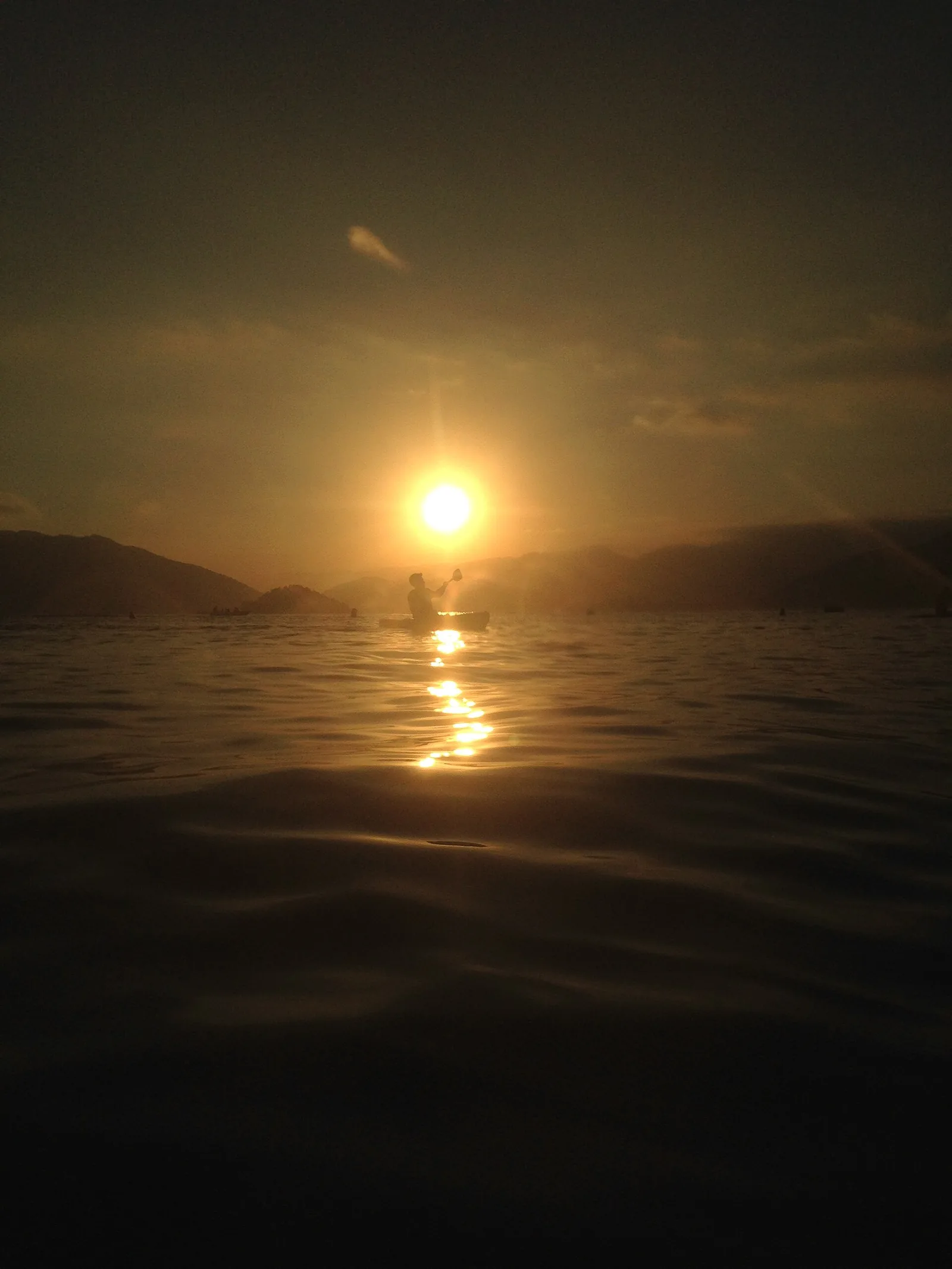
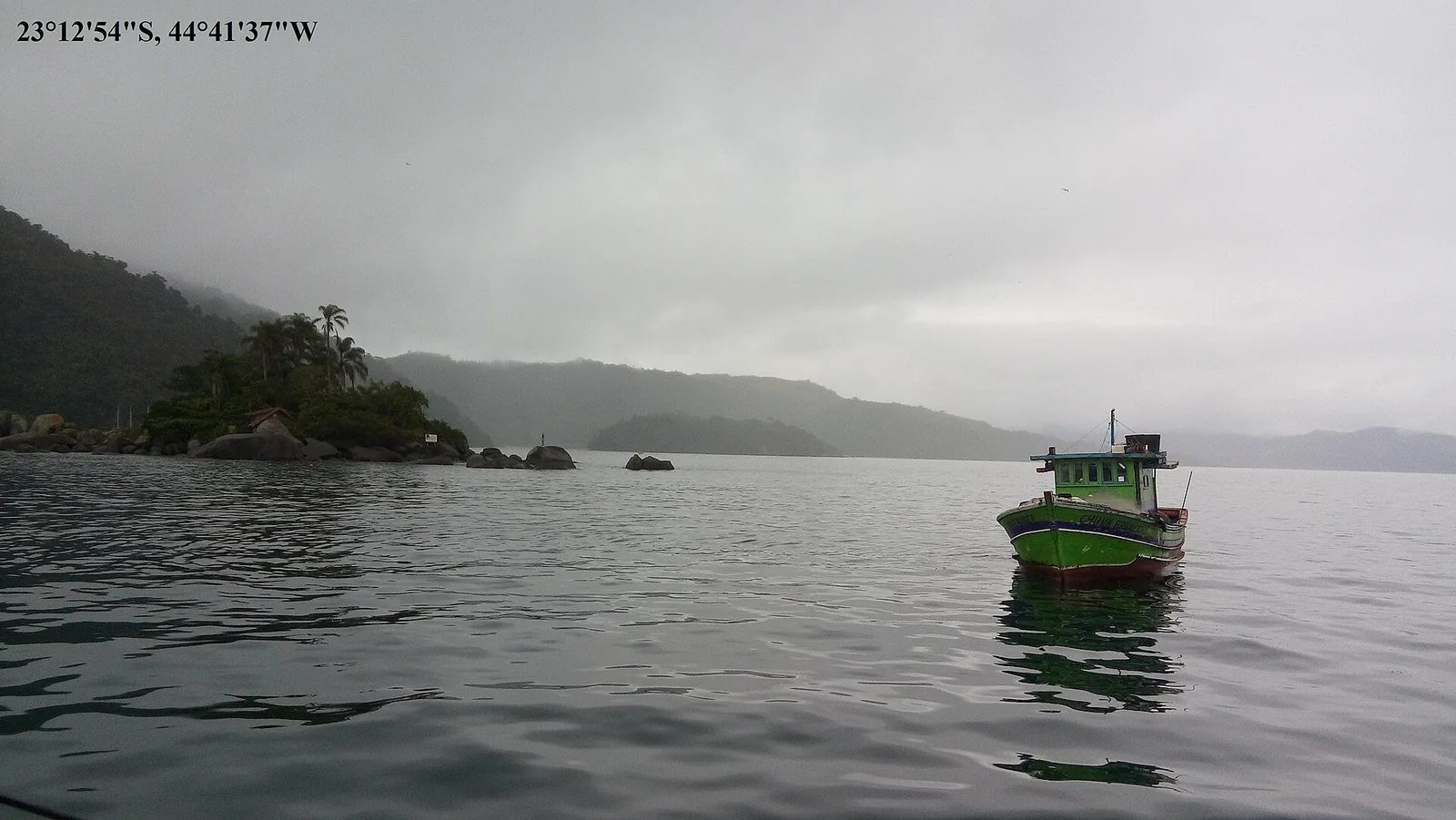
Every one of these routes ends the same way: the bay comes into view, the town appears, and the journey settles into memory. From our hillside above Paraty, that arrival has a particular shape. The chalet sits about four hundred metres up, and the deck looks out over three horizons at once — Paraty in the foreground, Angra dos Reis away to the east, and the long green line of Ilha Grande beyond. The infinity pool runs right to the edge of that view, so the first thing most guests do after unloading the car is drop their bags and get in the water.
That is really what makes the drive worth planning well. It is not a place you pass through on the way somewhere else. It is somewhere to come back to at the end of each day — after a boat trip on the bay, a waterfall walk in the Serra, or an evening in the old town — and swim, and watch the light go down over the islands. A family we hosted last autumn drove up the Cunha road frazzled from a São Paulo work week and, by their own account, only really exhaled when they saw the pool and the bay together for the first time. That is the reaction the hill is built for. You can see more of the house and its view on the chalet page, and if you would like help matching your travel dates to a stay, a quick message through our contact page is the easiest way to start.
The drive from São Paulo is not the price of admission to Paraty. On the right route, at the right hour, it is already the holiday beginning — the mountains, the forest, the first sight of the sea. And if you would like to understand why Paraty holds onto people the way it does, our note on Brazil's colonial towns is a good companion for the road. Whichever way you choose to come, come rested, come in daylight, and leave a little room in the plan to stop when the view asks you to.

Frequently asked questions
Plan on five to six hours of real driving from central São Paulo, covering roughly 250 to 285 kilometres depending on your route. The coastal road via Ubatuba is a little longer in kilometres but scenic; the mountain road via Cunha is a touch faster. Getting out of São Paulo itself adds time, so leave early to avoid the city's traffic.
Yes. Several companies run direct services from the Tietê bus terminal in São Paulo straight to Paraty's rodoviária, with multiple departures a day. The trip usually takes about six and a half to seven hours including stops, and it is an inexpensive, comfortable option if you would rather not drive.
Paraty has no commercial airport of its own. From São Paulo, most travellers fly into Guarulhos (GRU) or Campinas–Viracopos (VCP) and drive from there — about four and a half to five hours from GRU. Rio's Galeão (GIG) is a similar drive from the other direction, so international visitors often compare the two.
Both are good. The Cunha route climbs over the mountains and drops down a winding forest road into Paraty — quieter, greener and slightly quicker. The Ubatuba route runs down to the coast and follows the sea along the BR-101, with beaches the whole way. Choose Cunha for the mountains and ceramics, Ubatuba for the ocean and swimming stops.
It is straightforward for a confident driver but not a motorway cruise. The final stretches — the descent from Cunha or the curves of the Rio-Santos — are winding two-lane roads through the Serra do Mar. Drive them in daylight, keep to the speed the road allows, and watch for fog, cyclists and the occasional slow truck.
You can, but it is a long day and not the way to see it. With five to six hours each way, a same-day return leaves only a few hours in town. Paraty rewards at least two nights, which lets you fit the historic centre, a boat trip on the bay and a waterfall or two without rushing.
Avoid leaving São Paulo on Friday evenings and returning on Sunday afternoons, when the coastal roads clog with weekenders. For the smoothest drive and the best weather, travel midweek and outside the December-to-February holiday peak. The drier months from about April to September give you clearer mountain views.