In this guide
Rain in Paraty is not a problem to be solved. It is part of the place, and once you understand its rhythm it stops feeling like bad luck and starts feeling like punctuation. In the summer months, roughly December through March, the classic Paraty day begins under a clear blue sky, grows steadily more humid through the afternoon, and ends in a dramatic tropical downpour with thunder rolling off the mountains — after which the air is washed clean and the evening is often the loveliest part of the day. It rarely rains all day, and it rarely rains for days on end. The storms are heavy and brief, and a traveller who plans around them barely loses an hour. A traveller who panics at the first cloud loses the trip.
So this guide is not a list of consolation prizes. Plenty of what makes Paraty worth visiting is better in the rain, not worse: the historic centre under its deep colonial eaves, hushed and glistening and empty of crowds; a tasting room where the cachaça is exactly the right thing for a grey afternoon; a café with a hot chocolate and the rain drumming on the roof; the waterfalls, which in a light rain can be at their most beautiful — with one large caveat we will come to. And there is the simple, underrated pleasure of watching a storm sweep across the bay from a dry seat on a hillside, glass in hand, with nowhere you need to be. This is how to spend a wet day in Paraty well, what to avoid when it really pours, and why a downpour is one of the easiest things to wait out here.
A word on where you are, for context. Paraty sits on the Costa Verde coast of Rio de Janeiro state, backed by the steep Atlantic Forest of the Serra da Bocaina — and it is precisely that wall of green mountain catching the moist sea air that gives the region both its lushness and its rain. The same weather that makes the forest drip with waterfalls is the weather that fills the streets on a summer afternoon. You cannot have one without the other, and you would not want to.
Understanding Paraty's rain: when and why it pours
The single most useful thing to know is the shape of a Paraty summer day. Mornings are typically clear and bright; humidity builds through the day; and the rain, when it comes, arrives in the late afternoon as a short, heavy, often spectacular storm. This pattern is so reliable that you can plan around it almost as a timetable: do your active outings — a boat, a beach, a waterfall walk — in the morning, and treat the afternoon as the time to be somewhere with a roof. Summer is the wettest season here, with substantial monthly rainfall, but it falls in concentrated bursts rather than a steady grey drizzle. The winter months, roughly June to August, are much drier, and the shoulder seasons drier still; if reliably clear skies matter more to you than warm sea, our best-time-to-visit guide lays out the trade-offs season by season.
Why so wet? The geography. The Serra da Bocaina rises sharply just behind the coast, and when humid air off the Atlantic hits that barrier it is forced upward, cools, and releases its water — orographic rain, the same process that drapes the mountains in cloud and feeds the rivers that become the waterfalls. It is the engine of the whole landscape. The Atlantic Forest you have come to see exists because of this rain. Reframed that way, an afternoon storm is less an interruption than a glimpse of the thing that makes Paraty Paraty.
The practical upshot is simple and worth internalising before you arrive: build your trip so that the morning carries the outdoor plans and the afternoon can flex. Do that, and most days the rain will find you already indoors, contentedly, with the day's adventure behind you.
It also helps to adjust your expectations about what rain means here. A traveller from a cool northern climate tends to picture rain as a grey, all-day, temperature-dropping affair that shuts everything down. Paraty's summer rain is nothing like that. It is warm — often the air barely cools — and it is dramatic and brief, a cloudburst with thunder and sheeting water that lasts perhaps an hour and then moves on, leaving the town fresher and the light extraordinary. Swimming in it is pleasant rather than miserable. Walking in it, suitably shod, is atmospheric. The storms are part of the tropics, not a malfunction of them, and the sooner that lands the more relaxed your trip becomes. If your dates fall outside summer, you will see far less of this; the cooler months trade the storms for clearer, drier, calmer skies, which our best-time-to-visit guide describes in detail.
Rain in Paraty is not a problem to be solved. It is part of the place, and once you understand its rhythm it stops feeling like bad luck and starts feeling like punctuation.
Walking the historic centre in the rain
If you do only one thing on a wet afternoon, do this. The historic centre of Paraty was built in the eighteenth century, when its merchants grew rich shipping gold down from the interior, and the colonial architecture comes with a feature that turns out to be perfect for rain: deep, overhanging eaves that throw the footpaths into shade and shelter. You can walk a surprising amount of the old town and stay reasonably dry, ducking under the overhangs from one block to the next.
And the town is genuinely better this way. The crowds thin to nothing; the day-trippers retreat to their coaches; the cobblestones — the large, uneven, rounded stones the locals call pé-de-moleque — turn dark and shining and reflect the painted shutters above them. The whitewashed walls, the bright window frames, the great church facing the water all take on a depth they lack in flat midday sun. Photographers know this; the wet, empty, low-lit old town is the version that ends up on the wall at home. Wear shoes with grip, because those stones are slick when wet, and accept that you will get a little damp at the edges. It is worth it.
Make a loop of it rather than wandering aimlessly. Start at the waterfront and the main church facing the bay, work back through the grid of lanes that fan out behind it, pause under the deepest eaves when a heavier band of rain comes through, and use those pauses to step into whatever doorway you happen to be sheltering beside — a gallery, a cachaça shop, a café. That stop-start rhythm, dictated by the rain itself, is honestly one of the nicer ways to see the centre; it slows you down to the pace the old town deserves and turns the weather into the day's loose itinerary. An umbrella helps for the open crossings between blocks, and most shops will happily let you drip in the doorway while you browse. Our historic-centre guide maps what you are walking past; the photography guide is the companion if you have come for the pictures.
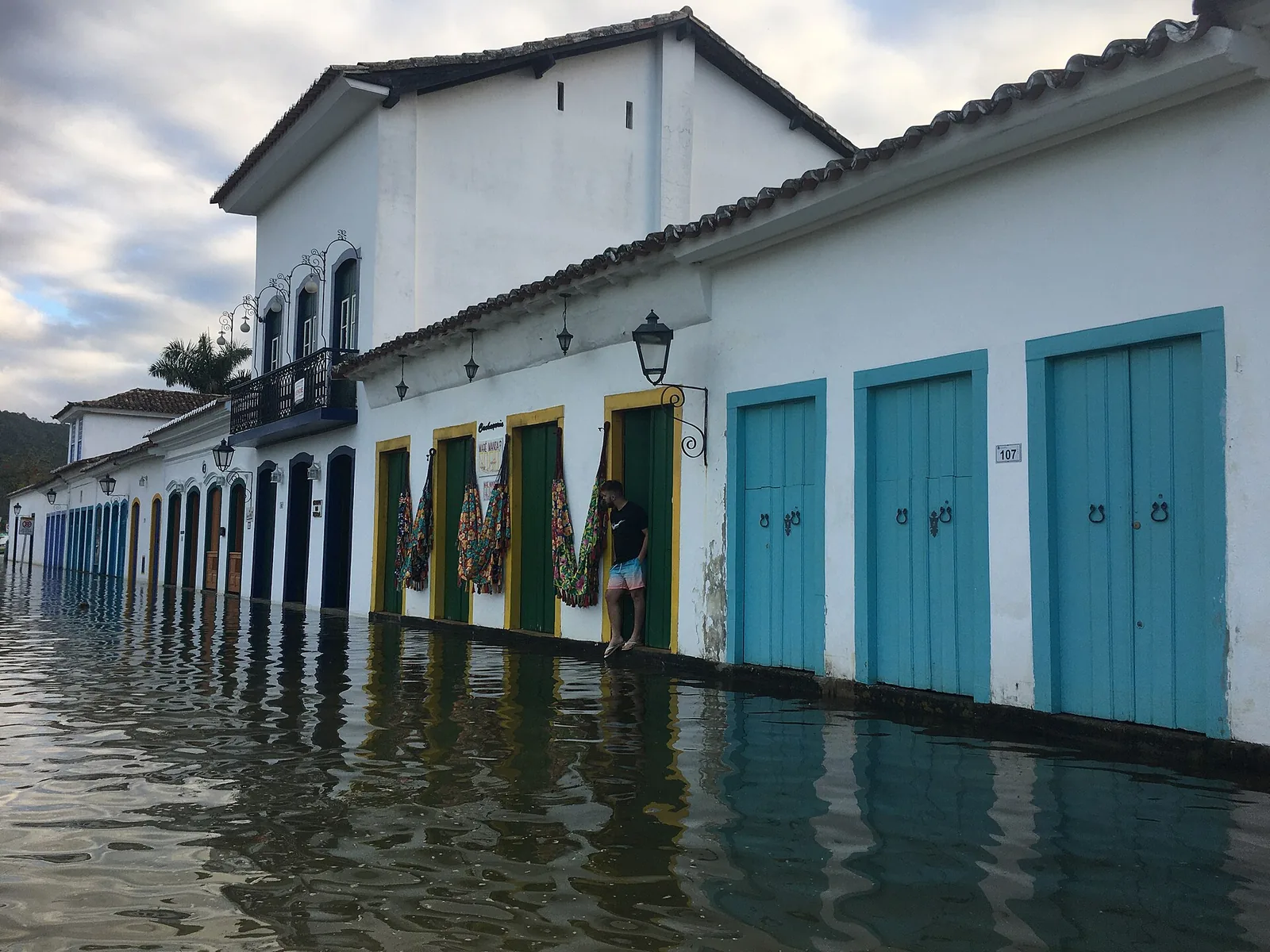
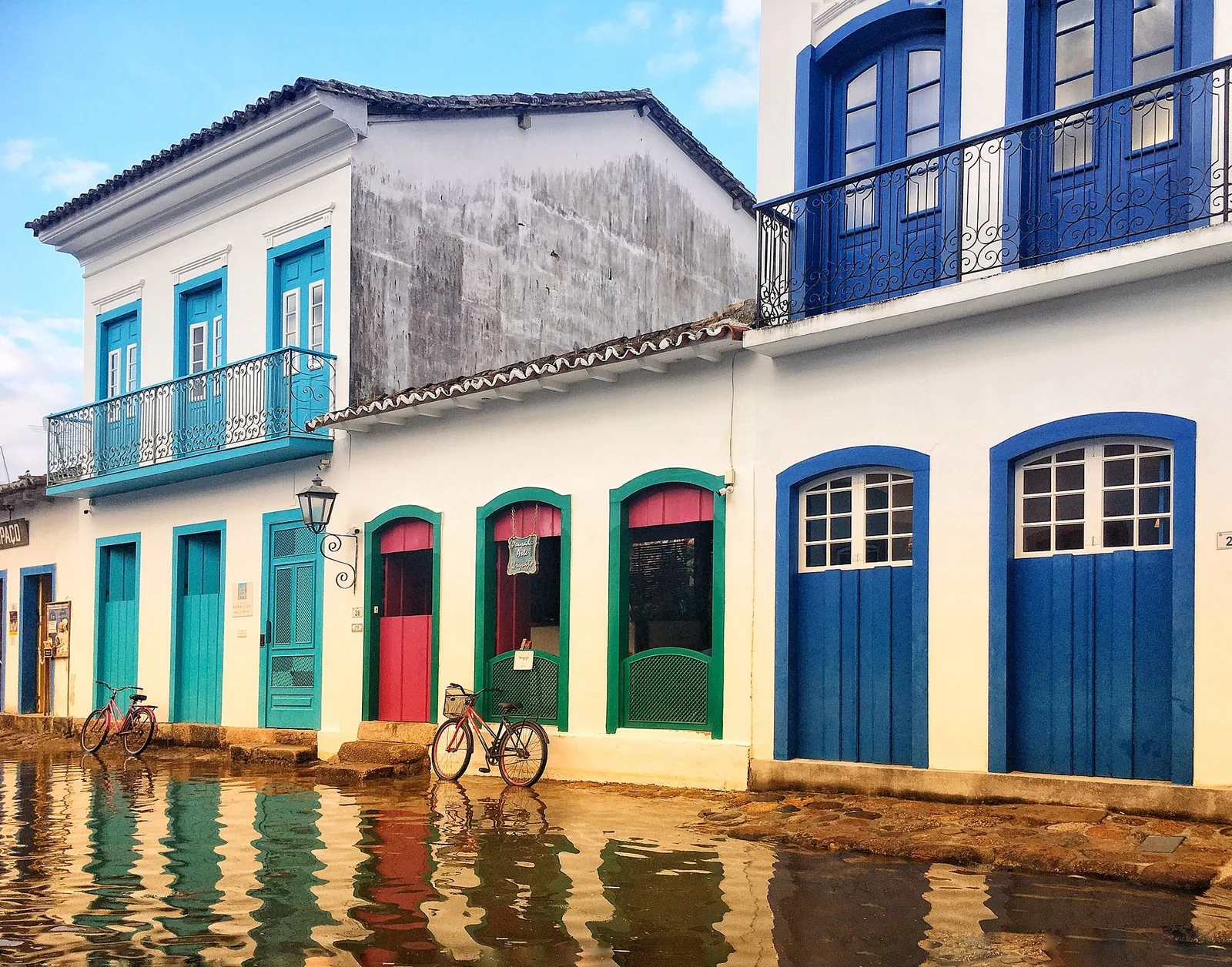
There is a second piece of rainy-day theatre unique to Paraty. The old streets were deliberately built to flood: on the spring tides around the full and new moon, seawater rises up through the lanes for a few hours and then drains away, an eighteenth-century design once used to rinse the streets clean. Catch a high spring tide and a downpour together and the centre becomes a mirror — strange, beautiful, and completely characteristic of the place. The flooding is predictable to the tide tables, so it is easy to seek out or avoid; your host will know the day's tides.

Churches and the sacred-art museum
Rain is the right weather for Paraty's churches, which are among the most atmospheric things to see in town and entirely indoors. The colonial town has several, built by the different brotherhoods of eighteenth-century Paraty, and they reward an unhurried look. The one to seek out is the little Igreja de Santa Rita, completed in 1722 and one of the most photographed buildings in Brazil, standing where the old town meets the water. It is lovely from outside and more interesting within, because it now houses Paraty's Museum of Sacred Art.
The museum is small — which is a virtue on a wet afternoon, since it asks for half an hour rather than half a day — and its collection is a quiet window into the town's religious life across the seventeenth, eighteenth and nineteenth centuries: carved images of saints, including the town's patroness Nossa Senhora dos Remédios, along with silverware, processional crowns and liturgical objects gathered from Paraty's churches and brotherhoods. It is the kind of place that rewards looking slowly, and the rain outside only deepens the hush. Combine it with a wander past the other churches — each tied historically to a different community of colonial Paraty — and you have an easy, rich, dry hour or two that connects directly to the gold-rush history that built the town. For more on that history, our Gold Trail guide traces how the port grew rich.
Cachaça tasting rooms: the right drink for the weather
There is no better excuse for a cachaça tasting than rain, and Paraty is one of the great places in Brazil to do it. Cachaça — the sugar-cane spirit at the heart of the caipirinha — has been made around here since colonial times, and the region's small distilleries, the alambiques, produce some of the country's most respected examples, many of them aged in barrels of native Brazilian wood that lend the spirit colour and character. Several have tasting rooms, and a wet afternoon is the ideal time to settle into one.
A good tasting is a real education. You learn the difference between a clear, unaged branca and a wood-aged amarela; you taste how the native woods — each imparting its own colour and flavour — shape the spirit; and you understand why a well-made cachaça is a sipping drink, not just the base of a cocktail. It is a genuinely different category from the harsh, mass-market spirit many visitors arrive expecting, and the moment of recalibration when you taste a fine aged cachaça for the first time is one of the small revelations of a trip here. Paraty even celebrates the spirit with its own annual festival, a reminder of how central cachaça is to the town's identity and history. The shops in the historic centre carry a wide range and will let you taste before you buy, so even without leaving town you can spend a happy, dry hour comparing bottles out of the rain. If the weather clears and you want to see where it is made, the distilleries along the Paraty–Cunha road run tours; our cachaça distilleries guide covers them, and the cachaça and caipirinha journal piece goes deeper into the culture. Drink responsibly, of course, and if you have found a bottle you love, it is the best thing you can take home from Paraty.
Cafés, chocolate and cambuci: waiting out a downpour deliciously
Some of the most pleasant rainy hours in Paraty are spent doing very little, in a café, watching the storm. The town does this beautifully. Tucked among the cobbled lanes are cafés and tea rooms that seem made for a wet afternoon — a hot chocolate, a coffee, a slice of cake, a book or a conversation, and the rain on the roof. There is no hurry, and the empty streets outside only make the warmth indoors more inviting.
Paraty also has a sweet-toothed side worth exploring while you shelter. Artisanal chocolate has become a local craft, with shops in the centre making their own, and you will meet flavours you do not get elsewhere. The most distinctive is the cambuci, a fragrant, intensely sour native Atlantic Forest fruit that local makers turn into sweets, liqueurs, jams and preserves — tart, green-tasting and unmistakably of this region. It is the kind of thing you can only really try here, and a rainy afternoon spent tracking down cambuci chocolate, cambuci liqueur and a jar of cambuci jam to take home is an oddly satisfying small mission. The little chocolate fudge balls called brigadeiros are everywhere and never unwelcome. And the warm cheese breads, pão de queijo, are the perfect thing with a coffee while the sky empties.
A wet afternoon is also a fine time for a longer, slower lunch than a sunny day allows. With no beach calling you back and no boat to catch, you can take a table at one of the seafood houses near the harbour end of the centre and let the meal unspool over a couple of hours while the rain runs down the windows — exactly the sort of unhurried, generous meal that gets squeezed out of a busier day. None of this is fine dining for its own sake; it is the small, specific, edible pleasure of a place, and a downpour is the ideal occasion to indulge it. For where to eat more seriously, our restaurants guide describes the scene by type, and the journal's Brazilian gastronomy guide sets the local food in its wider context.
A cooking afternoon at the villa
If you are staying somewhere with a proper kitchen, a rainy afternoon is a gift rather than a setback — it is the perfect excuse to cook. Brazilian home cooking is generous, unfussy and deeply satisfying, and learning to make a dish or two is one of the more memorable things you can do with a wet day, especially with a group or a family. The classic to attempt is the caipirinha itself, which is gloriously simple — good cachaça, lime, sugar, ice — and a fine way to put your tasting-room education to use. Beyond that, a pot of black beans, a simple grilled fish, or a tray of brigadeiros for after dinner all reward an unhurried afternoon indoors.
Shopping for the storm: a market run first
Source your ingredients before the rain arrives, in the morning, from the town's market and shops: fish and prawns from the day's catch, tropical fruit you have never cooked with, the herbs and chillies of Brazilian kitchens. Then spend the storm hours at the stove with the doors open to the sound of the rain. We can help arrange a private cook or a market visit for guests who would rather be taught than left to it — a wonderful way to spend a wet afternoon and come away with recipes you will make at home. Do get in touch if that appeals. There is a particular contentment in eating something you have made yourself while a tropical storm runs its course outside, and it is one of the trip's quiet highlights for many of the families and groups we host.
Galleries, workshops and shopping out of the rain
The historic centre is full of small indoor pleasures that a sunny, busy day tends to rush you past, and a wet afternoon is the moment to slow down and actually go in. Paraty has long drawn artists, and its lanes are dotted with galleries, ateliers and craft shops occupying the old colonial houses — a far better use of a downpour than most people realise. You can spend a contented hour or two moving from one to the next under the eaves, and come away with something genuinely of the place rather than a generic souvenir.
What is worth seeking out: regional ceramics, much of it from the nearby mountain town of Cunha, which is one of Brazil's important centres for wood-fired pottery and whose studios supply many of the shops here; prints, paintings and photographs of the town and bay by local artists; handmade textiles, baskets and the carved wooden pieces of the coastal caiçara culture; and, of course, the cachaça shops, which double as tasting rooms. Browsing is unhurried and nobody minds you sheltering. If the rain has you curious about where the pottery comes from, the mountain town itself makes a good clear-day outing; our wider guides cover the region around Paraty if you want to range further. For now, the point is simple: the shops and galleries of the old town turn a wet hour into a small treasure hunt, entirely under cover.
A rainy afternoon with children
Travelling families can find a downpour daunting, but Paraty handles it better than most places, and a little planning makes a wet afternoon with kids genuinely good. The pool is the obvious hero: a swim in warm rain is, to a child, an event rather than a disappointment, and a sheltered pool at the villa can absorb a whole grey afternoon happily. Beyond that, the same indoor options that work for adults bend easily to children — a café with a hot chocolate and a board game, the small and quick sacred-art museum, a chocolate shop where they can pick their own, the novelty of the flooded streets on a spring tide.
The best of all, though, is the kitchen. Children love a project, and a rainy cooking afternoon — rolling brigadeiros, squeezing limes, meeting a fruit they have never seen — turns a stuck-indoors hour into the part of the trip they talk about afterwards. Keep a few things in reserve for exactly these afternoons: a pack of cards, a film, a simple recipe. A wet day is not the enemy of a family holiday here; handled well, it is one of its softer pleasures. Our dedicated family guide covers travelling with children in Paraty in full, rain and shine.

Spa, massage and slowing down
Rain gives you permission to do nothing, and there is no better day to take it. A massage or a spa afternoon is exactly the right use of a downpour — the weather that would otherwise frustrate an outdoor plan becomes the cover for the kind of rest people rarely allow themselves on holiday. Paraty has spas and independent therapists who will come to you, and an in-villa massage with the rain on the windows and the bay grey and soft beyond them is about as restorative as travel gets.
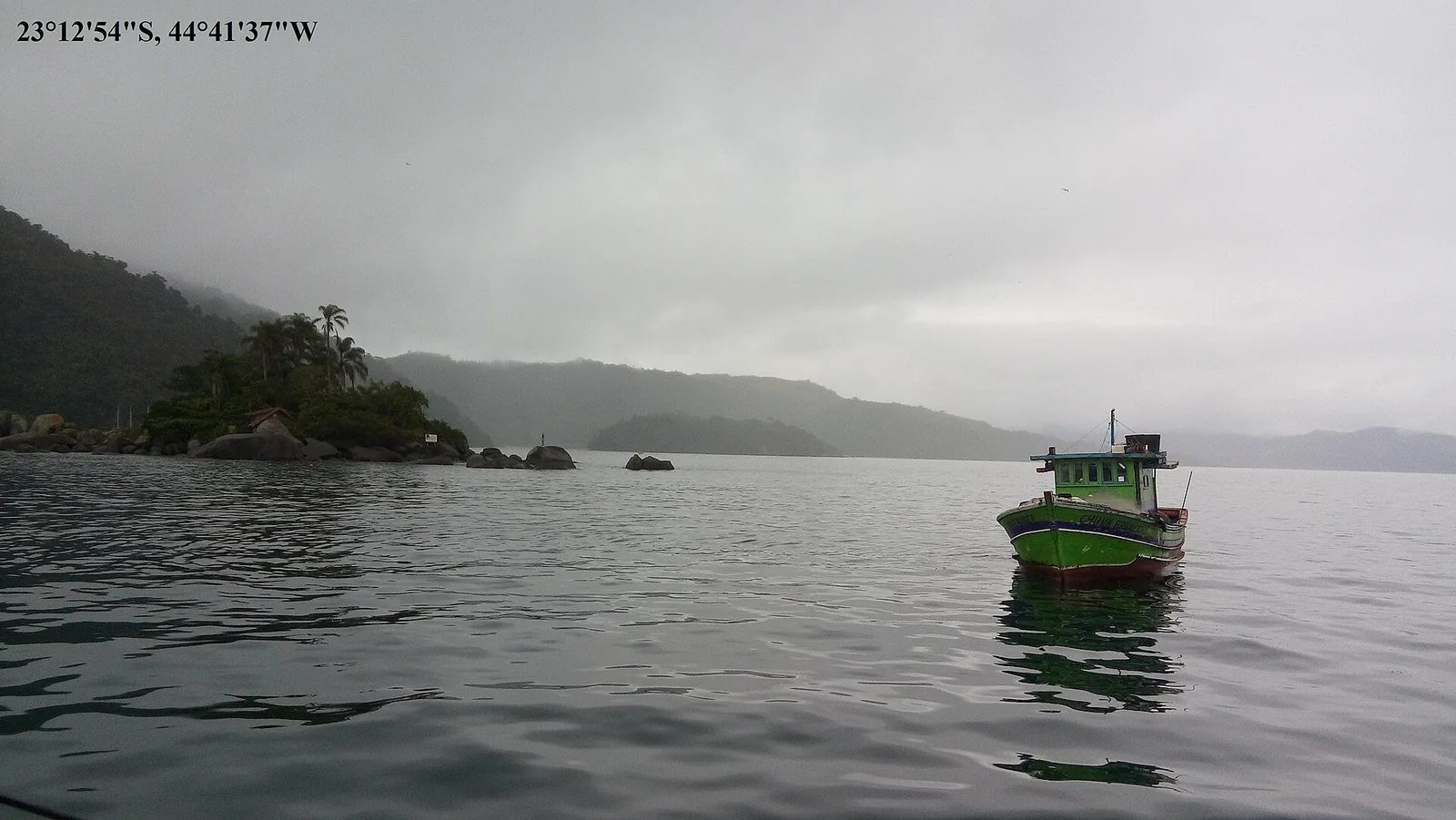
More broadly, a wet day is an invitation to recalibrate the whole pace of the trip. So much of travelling well is knowing when to stop, and the rain makes the decision for you. Read the book you packed and have not opened. Sleep in the afternoon. Sit on a covered terrace and simply watch the weather, which over Paraty's bay is a genuine spectacle — curtains of rain moving across the islands, the mountains appearing and vanishing in the cloud, the light shifting by the minute. There is nothing to fix and nowhere to be. A trip that includes a day like this is a better trip than one that does not, and the rain is doing you a favour by insisting on it.
Waterfalls in light rain: wonderful, with real caveats
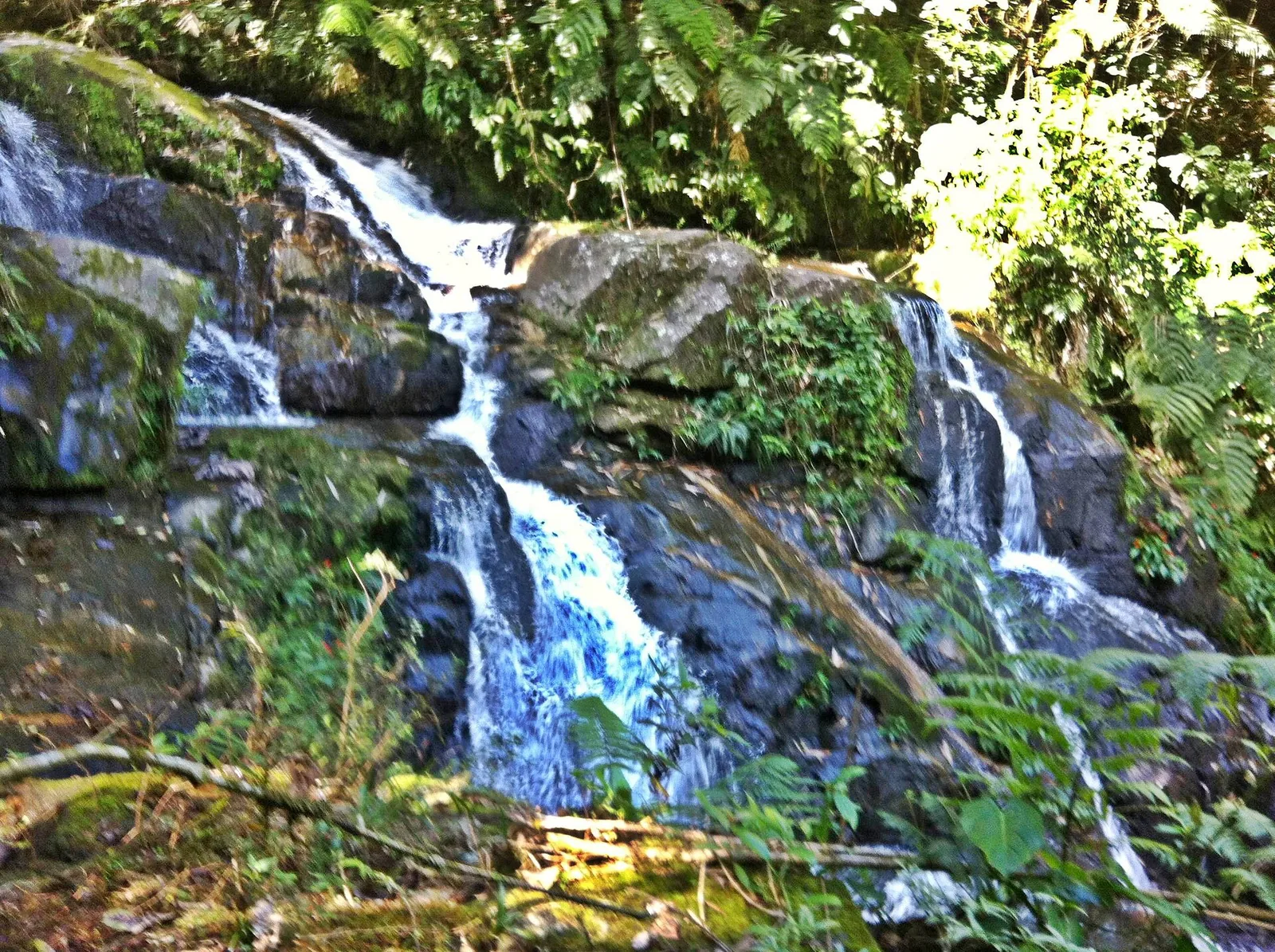
Here is the counter-intuitive truth: a waterfall in light rain can be the best version of itself. The forest is greener, the air is cool and fragrant, the falls run fuller, and the crowds stay away. A gentle rain on a waterfall walk, far from spoiling it, can make it the most atmospheric outing of the trip. So a wet day does not automatically rule out the forest — under the right conditions, it positively recommends it.
The slippery-rock and rising-water warning
But this is also where the most important safety warning in this guide belongs, and it is not a small one. The rock around Paraty's waterfalls — the famous Cachoeira do Tobogã and its neighbours up the Paraty–Cunha road — is genuinely treacherous when wet, coated in an invisible algae that turns granite into ice. People are injured there every season. And mountain rivers can rise with frightening speed when it has rained upstream, even if the sky above you is clear, turning a calm pool into a dangerous current in minutes. So the line is this:
- Light rain, stable conditions: a waterfall walk can be lovely. Wear proper shoes or water shoes — never flip-flops — keep off the steep wet slabs, and admire the natural slide rather than riding it.
- Heavy rain, or recent heavy rain upstream: stay away from the water entirely. Do not swim below a fall, do not cross a swollen river, and do not trust a pool that looked calm an hour ago. Rising water is the real danger, and it gives little warning.
If in any doubt, save the waterfalls for a clear morning and choose an indoor option instead. The falls will be there tomorrow. Our waterfalls guide sets out the conditions and the safe way to visit; please read it before you go in any wet spell.
What not to do when it really pours
For all that a downpour is easy to wait out, a few things genuinely should not be attempted in heavy rain, and it is worth being blunt about them.
- Do not take a boat out in a storm. The bay is sheltered, but a real summer thunderstorm brings wind, poor visibility and lightning, and no view is worth being on the water for that. Reputable operators cancel; if yours does not, decline. The boats run again the moment it clears, and the sea is often glassy afterwards. Our boat-tours guide covers how operators handle weather.
- Do not swim at the waterfalls in heavy or recent rain. As above: slick rock and fast-rising rivers are the two real hazards of the Paraty area, and both peak in a downpour.
- Do not drive the mountain roads carelessly in a storm. The roads inland to the waterfalls and toward Cunha are steep, winding and partly unpaved, and they get slippery and occasionally washed in heavy rain. If you must drive, go slowly; better, wait it out.
- Do not write off the whole day. This is the commonest mistake. A heavy shower at three in the afternoon almost never means a ruined evening; more often it means a washed, fresh, beautiful sunset and a perfect night to be out in the lamplit town. Wait an hour before you despair.
- Do not hike the forest trails in heavy rain. The Atlantic Forest paths, including stretches of the old Gold Trail, turn to mud and the streams across them rise quickly. Save the walking for a drier day; the forest is there all week.
The thread running through all of these is the same: the hazards of a Paraty downpour are on the water, on wet rock and on the mountain roads, not in the town. Move your day off those three things when it pours and there is nothing left to worry about — only a warm, dramatic storm to enjoy from somewhere dry. That is a very easy adjustment to make, and once you have made it a couple of times it becomes second nature.
Why a hillside villa is the best place to wait out the rain
Everything in this guide is easier, and the rain itself more enjoyable, if you have somewhere you actively want to be when the sky opens. That is the quiet argument for choosing your base carefully. A room you only sleep in makes a wet afternoon a problem; a comfortable house with a view makes it a pleasure. And the view, in Paraty, is half the point. From a hillside above the bay, a storm is not an inconvenience but a performance — you watch it gather over the mountains, sweep in across the islands, drench the town below, and move on out to sea, all from a dry seat with a drink to hand. The bay turns silver, the islands fade and reappear, and the light does things you will not see on a cloudless day.
A villa with a covered terrace, a real kitchen, a pool you can swim in through warm rain and a wide outlook over the water is, frankly, the ideal rainy-day venue Paraty has to offer. It turns the one thing travellers fear about a tropical trip into one of its pleasures. The chalet sits a few hundred metres above the Bay of Paraty, looking out toward the town, Angra dos Reis and Ilha Grande, with exactly that kind of long view of the weather coming and going — which is why, on the wet afternoons, our guests so often tell us they were quite happy to stay put. If you would like help planning a trip that takes the rain in its stride, or arranging an in-villa cook or massage for a wet day, do get in touch, and see the explore Paraty hub for every guide mentioned here.
It is worth keeping a small wet-weather kit in mind when you pack, too: shoes or sandals with real grip for the slick cobblestones, a light rain layer that breathes in the warm air, a dry bag for a phone or camera, and a compact umbrella for the open crossings between sheltered blocks. None of it is much, and it is the difference between a rainy afternoon you enjoy and one you merely endure. The travellers who enjoy Paraty most are the ones who stop fighting the weather and start reading it. Take your adventures in the bright mornings, keep the afternoons soft, and when the storm rolls in off the mountains, let it. A downpour here is brief, beautiful, and easy to wait out — and the place it leaves behind, rinsed and golden in the evening light, is the Paraty people come back for.
Frequently asked questions
Plenty that is better in the rain: walk the historic centre under its deep colonial eaves, visit the churches and the small sacred-art museum, settle into a cachaça tasting room or a café, cook at the villa, or take a massage. Summer storms are usually short and arrive in the late afternoon.
Summer (December to March) is the wet season, with heavy rainfall, but it tends to fall as short, dramatic late-afternoon storms rather than all-day drizzle. Mornings are usually clear. Winter and the shoulder months are much drier. It rarely rains all day or for days on end.
In light, stable rain a waterfall walk can be wonderful — fuller falls, greener forest, fewer people. But the rock is treacherously slippery when wet, and rivers can rise fast after rain upstream, so in heavy or recent heavy rain you should stay clear of the water entirely and never swim below a fall.
Not in a storm. The bay is sheltered, but a real summer thunderstorm brings wind, lightning and poor visibility, and reputable operators cancel. Boats run again as soon as it clears, and the water is often glassy afterwards, so it is simply a matter of waiting.
Arguably at its best. The deep eaves keep you reasonably dry, the crowds vanish, and the wet cobblestones reflect the painted colonial buildings. Wear shoes with grip, as the stones are slick. Catch a high spring tide with the rain and the streets, built to flood, can become a mirror.
A cachaça tasting suits the weather, and the town's cafés do hot chocolate, coffee and cake beautifully. Look out for artisanal local chocolate and treats made from cambuci, a sour native Atlantic Forest fruit, along with brigadeiros and warm pão de queijo cheese breads.
The wettest months are the summer, roughly December through March, when humid Atlantic air meets the coastal mountains and falls as heavy afternoon storms. The driest period is winter, June to August, with the shoulder months offering a reliable middle ground of warm days and little rain.