In this guide
Paraty is one of those rare places that photographs almost too easily. The colonial centre is a closed grid of lime-washed walls, hand-cut cobbles and shutters painted in deep blues, ochres and reds; behind it the Atlantic Forest climbs into cloud, and in front of it a bay scattered with islands and wooden schooners runs out toward Ilha Grande. Point a camera in any direction and something will look good. The trick to coming home with pictures you actually love, rather than a thousand near-identical frames, is knowing when the light is right for each subject and being there at that hour rather than the convenient one.
I have lived above this bay for years, and I still plan my best shooting around two things: the angle of the sun and the height of the tide. Get those right and Paraty does most of the work. Get them wrong and you join the midday crowd photographing flat, washed-out streets under a hard sky. This guide walks through the genuinely photogenic subjects here — the empty centre at dawn, the famous flooding tide, the Church of Santa Rita and its reflection, the bay and its boats, the waterfalls, the islands from above, and the long view from the hillside — with honest advice on timing, gear and the ethics of pointing a lens at a living town.
None of this requires expensive equipment or a guide. It requires getting up early, watching the sky, and being a considerate guest in a place that people call home. If you do that, Paraty is as generous a subject as anywhere I know on the Brazilian coast.
The colonial centre: shoot it empty, shoot it early
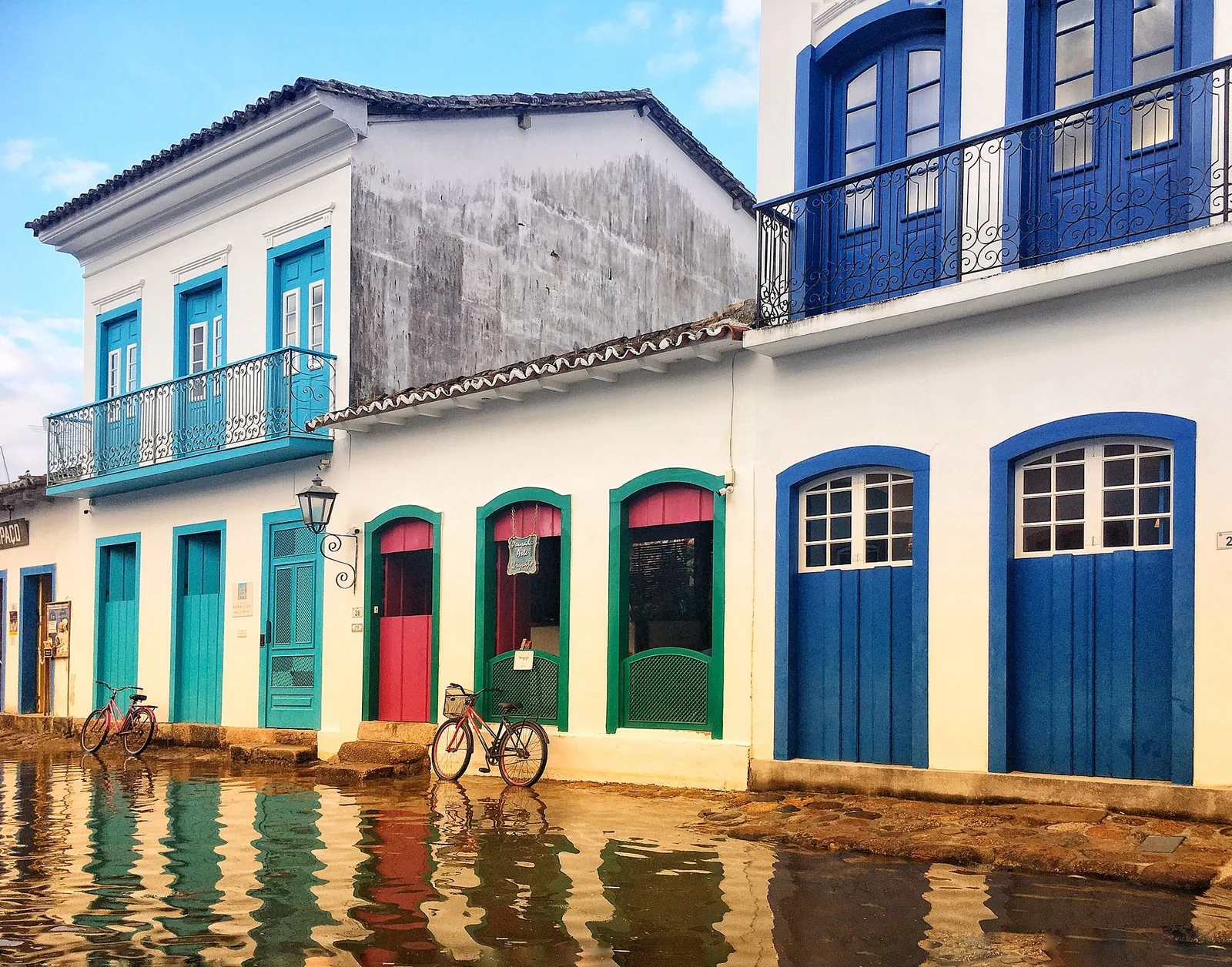
The single most useful thing I can tell you about photographing Paraty is to be in the historic centre before eight in the morning. The centre is small, walkable and built on an irregular grid of large, uneven stones the locals call pé de moleque. In the early light those stones catch a long shadow, the lime-washed walls glow rather than glare, and — this is the part that matters — the streets are empty. The cafés have not opened, the shops are still shuttered, and the day-trippers who pour off the tour buses and boats have not yet arrived. You get the town to yourself.
By late morning everything changes. The light climbs overhead and goes flat and contrasty at once, bleaching the white walls and blocking up the shadows. The lanes fill with people. A street that read as a clean, graphic composition at seven o'clock becomes a tangle of bodies and parasols by eleven. There is nothing wrong with a lively street photograph, but if you want the quiet, painterly Paraty you have seen in magazines, you have to earn it with an early alarm. A couple we hosted last autumn grumbled about the six o'clock start on their first morning and then went back out at dawn every day after, because the difference in their pictures was that obvious.
What to actually photograph in the streets
The centre rewards a hunt for repeated simple shapes rather than grand vistas. Look for:
- Doorways and window frames. The colour combinations — a deep indigo frame on a white wall, a mustard door against grey stone — are the signature of the place. Shoot them straight-on and flat, like a typology, and they become a series.
- Looking down the cobbles. Crouch low so the big stones fill the foreground and lead the eye down a lane toward a church tower or a slice of green hillside at the end.
- Detail and texture. Iron lanterns, old locks, peeling paint, a bougainvillaea spilling over a wall. The centre is a UNESCO World Heritage site for good reason, and the craftsmanship rewards a close look.
- People at work. A shopkeeper sweeping, a delivery on a handcart, a fisherman crossing the square. Early morning is when the town does its real business, before it performs for visitors.
A wide-to-normal lens is plenty here; I shoot most of the centre between roughly 24mm and 50mm equivalent. A phone is genuinely excellent for this kind of work — the streets are well-lit once the sun is up, and the latest phone cameras handle the white walls and coloured frames cleanly. If you want to go deeper into the centre's history and which buildings and churches matter, our guide to the historic centre is the companion piece to this one.
The best photograph in Paraty is almost always the one you take before breakfast, when the streets belong to nobody yet.
The tide that floods the streets — the shot most people miss
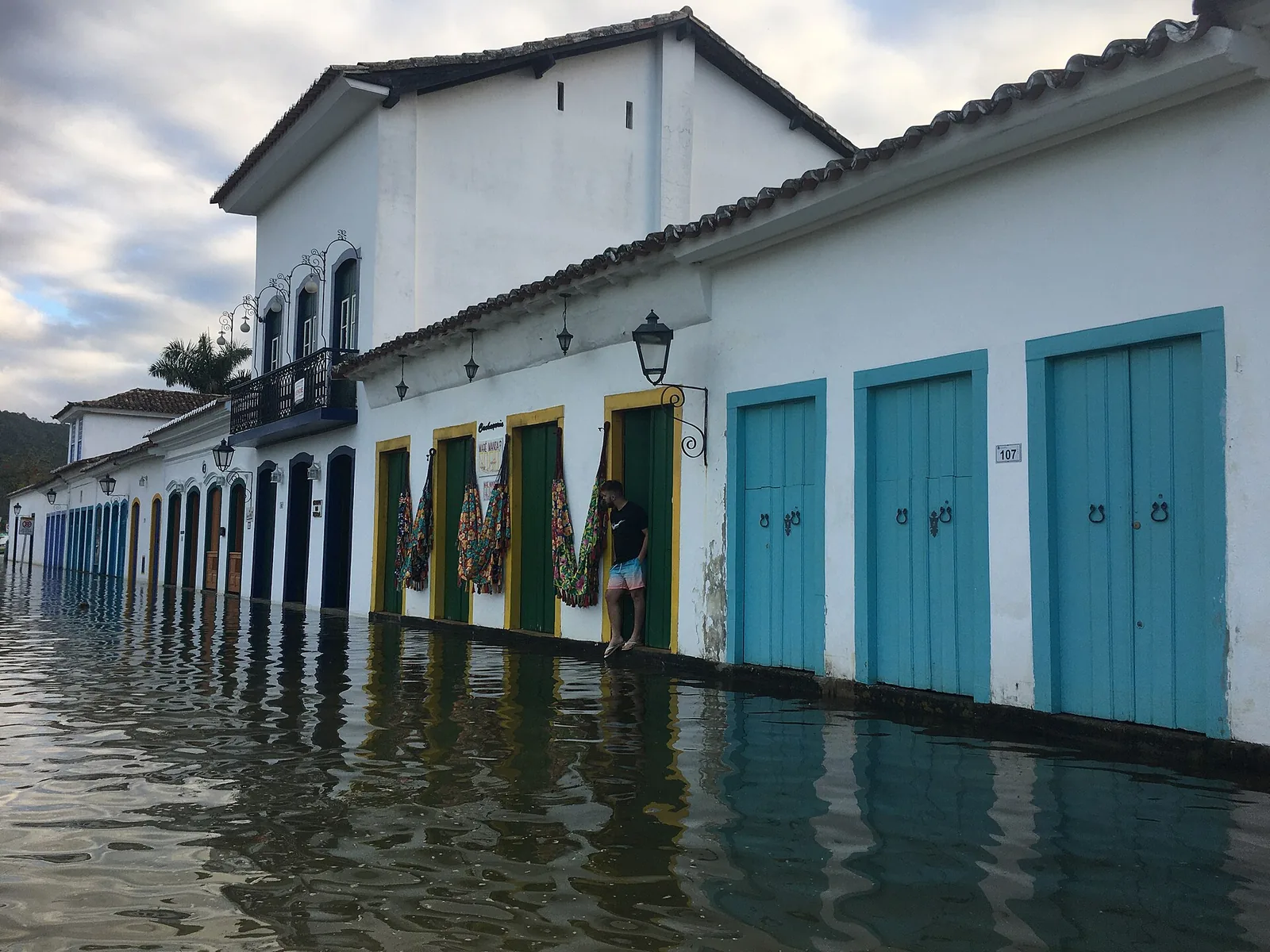
Paraty's most unusual photograph is also its most misunderstood. On the higher tides, seawater rises up through the old town and floods the lowest streets near the waterfront, turning the cobbles into a mirror that reflects the colonial facades and the sky. It is genuinely striking, and it is the frame that makes people stop scrolling. But it does not happen every day, and you cannot just turn up and hope.
Here is how it works. The eighteenth-century builders left deliberate gaps in the seawall and graded the streets so that the sea would wash in on the highest tides and carry the day's dirt back out as it retreated — a kind of self-cleaning drainage. The water that comes in is usually shallow, somewhere around ankle to shin depth, and it sits in the streets for an hour or two around the peak of the tide before draining away. The merchants nearest the water sometimes lay little planks across the lanes so people can cross dry.
Getting the timing right
The flooding follows the spring tides — the larger tidal range that comes around the new moon and the full moon, roughly twice a month. It is not, despite what you will read, a once-a-month full-moon event; the new-moon tides flood the streets too. To photograph it well:
- Find a Brazilian tide table for Paraty before your trip and look for the days when the predicted high tide is largest. Several free apps and sites cover the Brazilian coast.
- Match the high tide to good light. The magic shot is when a big high tide peaks close to sunrise or sunset, so the wet streets catch warm colour. A midday flood under a hard sky is far less interesting.
- Arrive before the peak. Get into position as the water is still rising so you can work the reflection as it deepens, then stay as it drains for a different, glassier look.
- Protect your feet and your gear. You will be standing in seawater. Wear sandals you do not mind soaking, and keep your bag off the ground.
For composition, get the camera low — almost at the waterline — so the reflection occupies the bottom half of the frame and a church tower or a row of facades sits in the top half. A puddle the size of a dinner plate, shot from low enough, can mirror an entire building. This is the one Paraty subject where I will sometimes wait an entire evening for the conditions to line up, and it is worth it. If your dates do not coincide with a spring tide, do not despair — there is more than enough else to shoot, and our guide to the best time to visit can help you plan a trip around the moon if the flooded streets are a must-have.
The Church of Santa Rita and its reflection
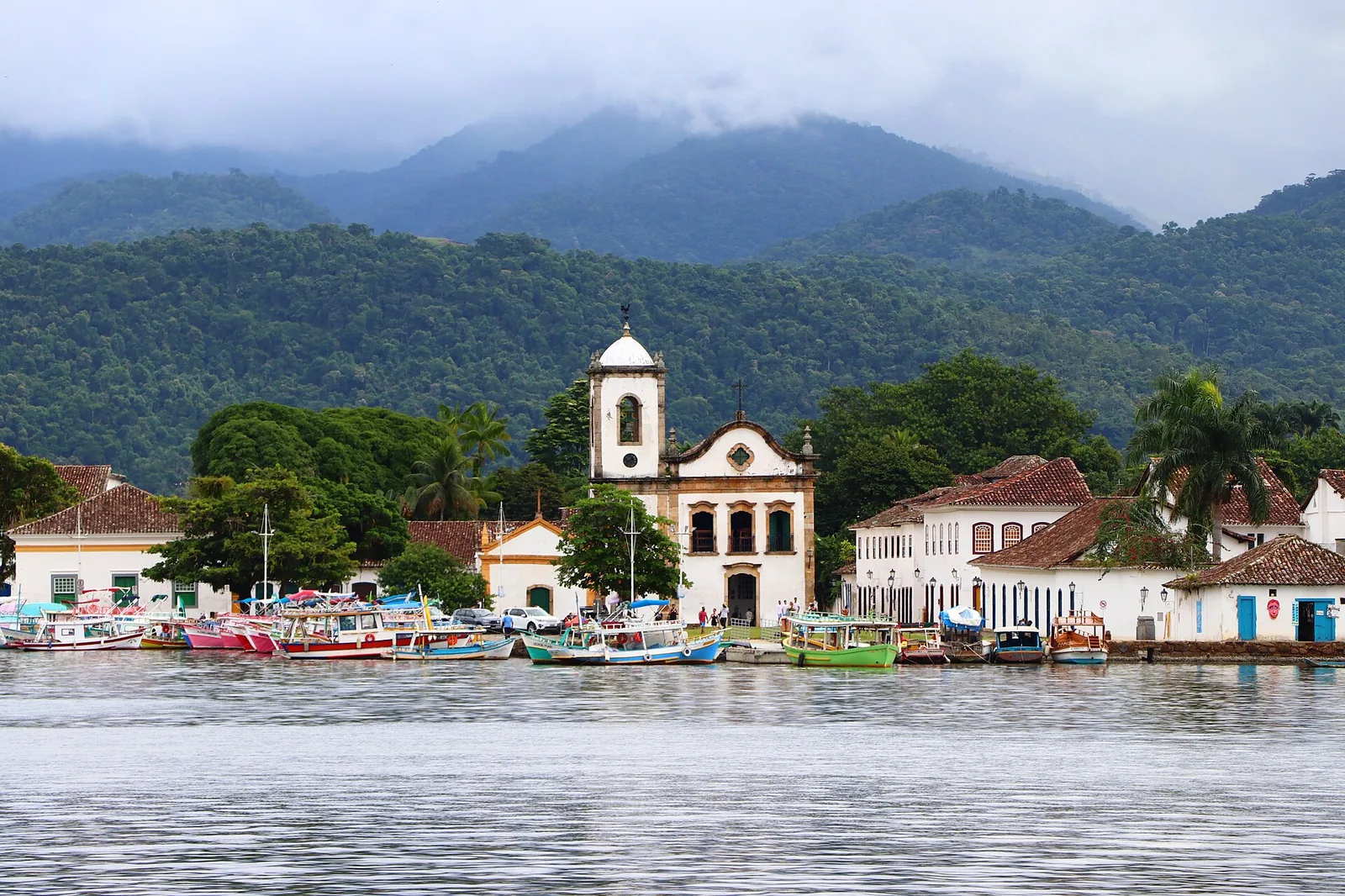
If Paraty has a single emblem, it is the little Church of Santa Rita standing alone on the waterfront with the bay behind it. It is the oldest church in town, built in 1722, and its history is part of why it sits where it does: it was the church of Paraty's free Black and mixed-race community, the pardos, who were kept out of the grander churches built for the white elite. Its plain whitewashed front, three simple windows and single bell-tower make it one of the most photographed buildings in Brazil, and unlike a lot of famous subjects, it deserves the attention.
Photograph it from the open square in front, looking back toward the water, or from the water itself looking in. The classic frame puts the church on the left or right third with the bay and a moored schooner balancing it. Two timing notes make all the difference:
- High tide gives you a reflection. When the water is up, the wet foreground or the shallow flooding throws a mirror of the white facade — the same spring-tide logic as the streets. A church doubled in still water is a far stronger image than a church on dry cobbles.
- End of day gives you warmth. The white front takes warm light beautifully in the last hour before sunset, and the sky behind it over the bay can turn pink and orange. Early morning works too, with softer, cooler light and almost nobody around.
The church now holds a small museum of sacred art, so you can photograph the interior and its old wooden saints as well, but the exterior at the right tide and the right hour is the picture you will keep. Treat it as the anchor of an evening's shooting: do the church as the light warms, then turn around and walk thirty seconds to the harbour for the boats.
The bay, the boats and golden hour
The Bay of Paraty is the other half of the town's character, and it is at its best in the hour around sunrise and the hour before sunset — the golden hours photographers chase everywhere, but which the bay earns honestly. In that low light the wooden schooners moored off the centre turn warm against the dark green hills, the water goes still and reflective, and the layered islands and headlands stack into bands of receding blue.
From the shore
The waterfront by the centre and the long pier are the obvious vantage points, and they are good ones. At sunrise the boats sit silhouetted against a brightening sky; at sunset the whole harbour can light up. A short telephoto (something around 70–135mm equivalent) is your friend here — it compresses the boats, the islands and the mountains into stacked layers, which is the look that makes the bay feel as deep and three-dimensional as it really is. A polarising filter cuts the glare off the water and saturates the greens and blues; it is the one filter I would not photograph this coast without.
From the water
The classic Paraty experience is a day on a schooner out among the islands and swimming coves, and it is also a fine photographic platform — you get angles on the coastline you simply cannot reach from land. Bring a polariser, keep a dry bag or even a zip-lock for your camera, and shoot early or late in the trip when the light is kind; the middle of the day on the water is bright and flat. Note the honest trade-off: the calmest, emptiest water for photographs is early, but the boats mostly leave mid-morning and the popular coves fill up by late morning, so you are often choosing between good light and an empty cove. Our guide to the boat tours walks through the different kinds of trip and how to pick one that suits a camera rather than a party.
Waterfalls and the forest road
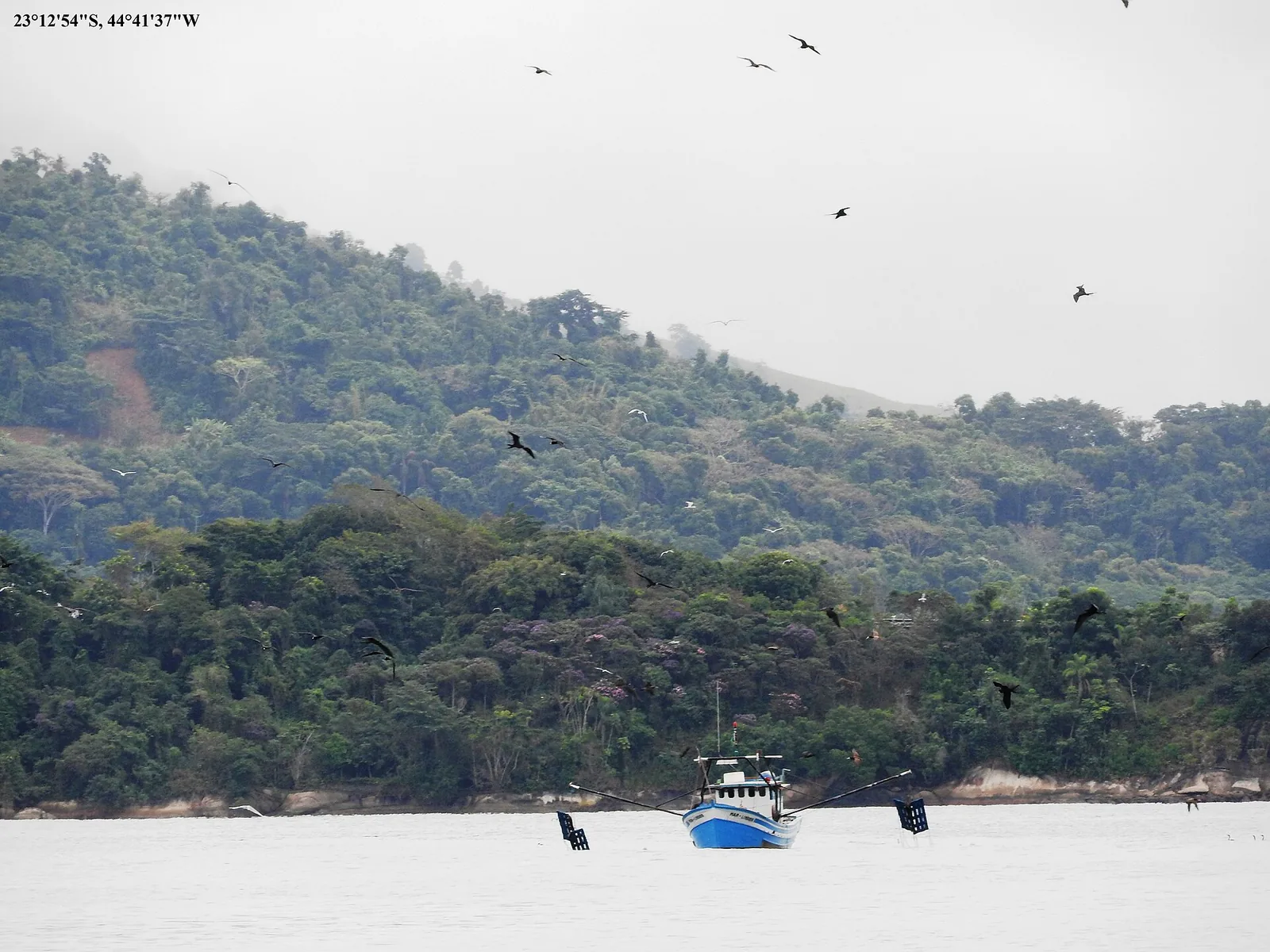
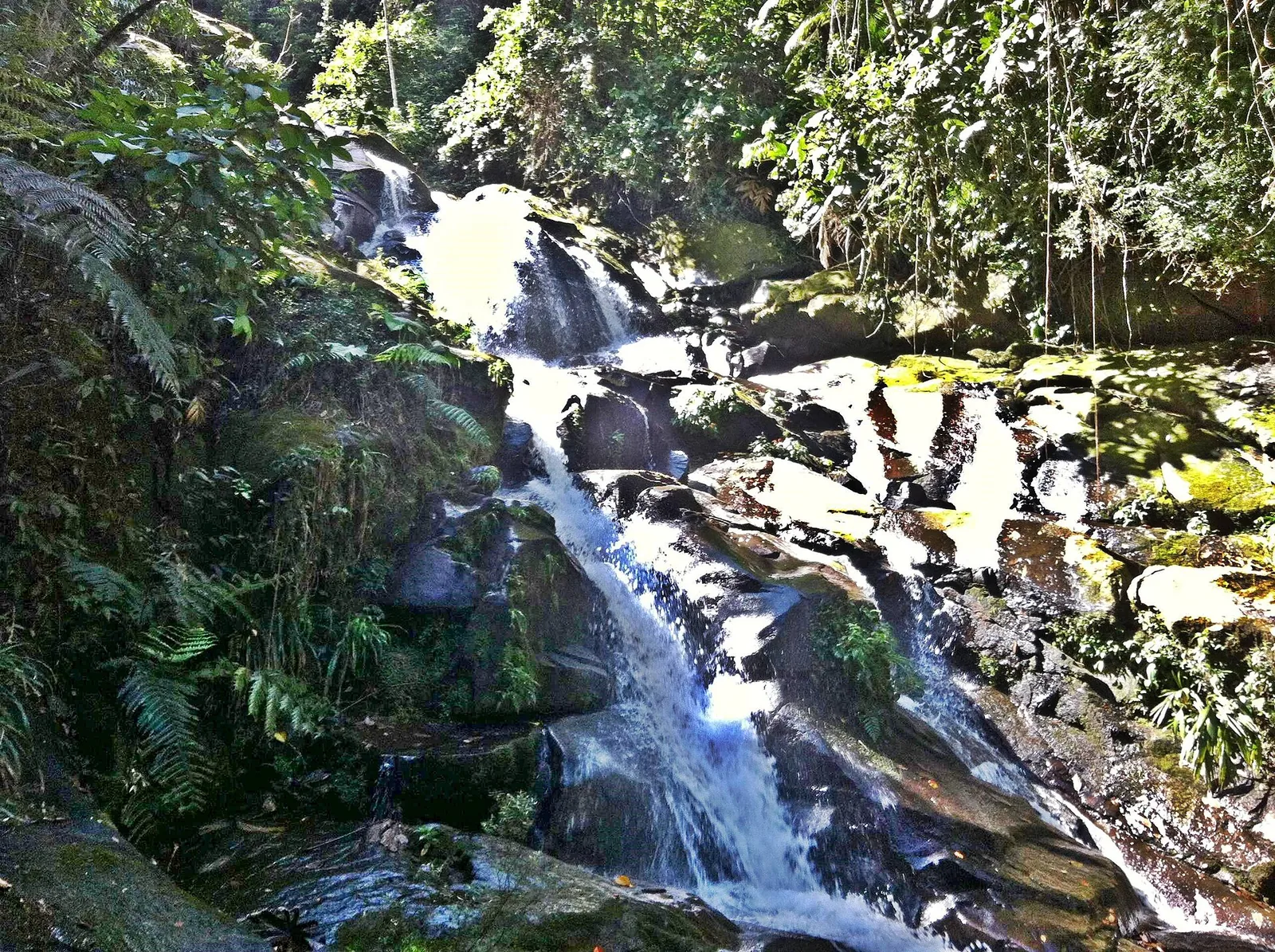
Behind Paraty the land rises fast into the Serra da Bocaina, and the road up toward the mountains and the old gold trail passes a string of waterfalls and clear river pools set in dense Atlantic Forest. These are a completely different photographic problem from the bright streets and bay, and the good news is that the weather that ruins a beach day is exactly what you want here.
- Go on an overcast or lightly rainy day. Flat, soft light is ideal for water in forest — it tames the contrast between bright spray and dark foliage and lets you see detail in both. Bright sun through the canopy gives you blown-out highlights and inky shadows.
- Bring something to steady the camera. To get that silky, blurred water you need a slow shutter, which means a tripod or at least a rock to brace against, plus a polariser or a neutral-density filter to cut the light. On a phone, a long-exposure or 'live photo' mode can fake the effect surprisingly well.
- Wear real shoes. The rocks around the falls are smooth granite and genuinely slippery when wet. This is the most common way visitors hurt themselves up here. Sturdy footwear with grip, and a slow, careful approach to the water's edge, matter more than any lens.
- Protect against humidity and spray. Lens cloths, a rain cover or a plastic bag, and patience while your gear adjusts to the temperature when you arrive.
The same road carries the historic Caminho do Ouro, the old gold trail, where you can photograph the original stone-paved path running up through the forest — a strong, atmospheric subject in misty weather. Pair a forest morning with a cachaça-distillery visit on the way back down and you have a full, varied day for the camera; many of the family distilleries make handsome subjects too, which our distilleries guide covers.
The islands from above and the long view
The view that surprises most first-time visitors is the one from height, looking down on the whole bay with its islands scattered toward Ilha Grande and the peaks of Angra dos Reis beyond. This is the wide, layered, almost map-like image of the Costa Verde, and it needs elevation.
There are a few ways to get it. You can climb — the hike up the Pico do Pão de Açúcar above the Saco do Mamanguá, Brazil's only tropical fjord, rewards a steep walk with a genuinely spectacular outlook over the long green inlet. You can take certain headland trails near town. Or you can simply stay somewhere high. Our own chalet sits about four hundred metres above the Bay of Paraty, with an open, unobstructed view over the water toward Angra dos Reis and Ilha Grande, which means the layered-islands shot at dawn and the bay turning gold at dusk are available from the deck without going anywhere — a real luxury when the best light comes at the least convenient hours.
The deck-and-pool panorama
One frame worth planning for is the infinity-pool-and-bay composition: the still water of the pool in the foreground appearing to spill into the bay beyond, with the islands and mountains as a backdrop. It works best in the soft light just after sunrise, when the pool is glassy and the air is clear, or in the warm minutes before sunset. Shoot it wide, keep the horizon level, and let the pool's edge lead the eye out to the water. It is the kind of picture that does a place justice precisely because it does not need a wide-angle distortion or a trick — the geography does the work.
A note on drones — proceed with real caution
An aerial of the bay is tempting, and I want to be straight with you about the rules rather than encouraging you to risk a fine or worse. Brazil regulates drones through its civil aviation authority, ANAC: any drone over 250 grams must be registered in the national system, which requires a Brazilian tax ID, and there are standard limits — a maximum height of 120 metres, keeping the aircraft in sight, and staying well clear of people who are not part of your flight.
The bigger issue around Paraty is that much of what you would want to fly over is protected. The bay, the islands and the mountains sit within a national park and several conservation areas — the same status that earned the region its UNESCO listing — and flying a drone in these federally protected areas generally requires a permit from ICMBio, the conservation authority, granted case by case. Add to that the obvious courtesies: never fly over crowds in the historic centre, never over private homes or the fishing villages, and never where the noise would intrude on people's daily life.
My honest advice: unless you have done the paperwork and confirmed in writing that a specific flight is permitted, leave the drone packed. The high view from a hillside or a hike gives you most of what an aerial would, legally and without disturbing anyone. If a sanctioned aerial really matters to your trip, ask us in advance and we can point you to current local information — rules change, and I would rather you get a fresh answer than rely on a blog. You can always get in touch before you travel to check.
The ethics of photographing a living place
Paraty is not a film set. People live and work in the historic centre and in the fishing communities around the bay, and the caiçara culture of this coast — the descendants of Indigenous, Portuguese and African people who have fished and farmed here for generations — is part of what makes the region extraordinary, not a backdrop for your feed. How you behave with a camera matters.
- Ask before you make a portrait. Photographing the town and its streets is fine; photographing a specific person up close is different. A smile, a few words of Portuguese, and a gesture toward the camera go a long way. Most people are gracious; some would rather not, and that is their right.
- Be especially careful with children, and with people at work or at home. A fisherman mending nets, a woman in her own doorway, kids playing — these make tempting pictures, but consent and respect come first.
- Do not treat the fishing villages as a photo safari. If you visit a community at Praia do Sono or in the Mamanguá, you are a guest. Buy a meal, hire a local boatman, and learn a little about the place — our piece on the caiçara culture of the coast is a good primer. The photographs you take after a real exchange are almost always better than the ones you grab from a distance.
- Leave no trace, including with a drone. Noise and intrusion are a kind of litter. The quietest cameras and the most considerate photographers are the ones locals remember kindly.
Good travel photography and good manners are not in tension. The most memorable images I have made here came from slowing down, talking to people and being invited a little further in — never from sneaking a shot and hurrying off.
Reading the weather and the seasons
The light in Paraty is not the same all year, and a little understanding of the seasons will save you from disappointment and hand you conditions you cannot plan for in the moment. The Costa Verde is wet and green for a reason: the mountains catch moisture coming off the Atlantic and wring it out over the coast. That means clouds, mist and sudden rain are part of the deal — and, crucially, part of what makes the place beautiful.
The wetter, warmer months from roughly December through March give you dramatic skies, lush, saturated forest and the best chance of those moody, cloud-wrapped mountain mornings — but also the highest odds of an afternoon downpour and humid haze on the bay. The drier, milder stretch from about May to September brings clearer air, more reliable golden hours over the water and cooler, more comfortable shooting, at the cost of greener-but-less-electric skies. Neither season is wrong; they simply photograph differently. I love the wet season for the forest and the dry season for the bay.
Working with cloud and mist
Do not put the camera away when the weather turns. Some of the strongest Paraty images happen in exactly the conditions most visitors hide from:
- Low cloud on the mountains turns the green hills behind town into layered, atmospheric backdrops — the classic Atlantic-coast look of ridgelines fading into mist.
- After a rain shower the cobbles go dark and reflective, the colours of the walls deepen, and the light often breaks through for ten golden minutes that feel like a gift.
- Overcast skies are perfect for the waterfalls and the forest, and surprisingly kind to the coloured doorways of the centre, which can look garish under hard sun.
- Sea mist at dawn over the bay, burning off as the sun climbs, gives you a few minutes of soft, silver light on the boats that is worth setting an alarm for.
The practical lesson is to keep your gear protected and ready rather than packed away, and to treat a grey morning as an opportunity rather than a write-off. For a fuller month-by-month breakdown of what the weather does and when, our best-time-to-visit guide goes deeper than I can here.
Beyond the centre: beaches, Trindade and the wider coast
Most photographers spend all their time on the centre and the bay, which is understandable, but the coast around Paraty has subjects the postcards miss. A short drive or boat ride opens up beaches, surf and dramatic rock formations that shoot completely differently from the gentle, sheltered bay.
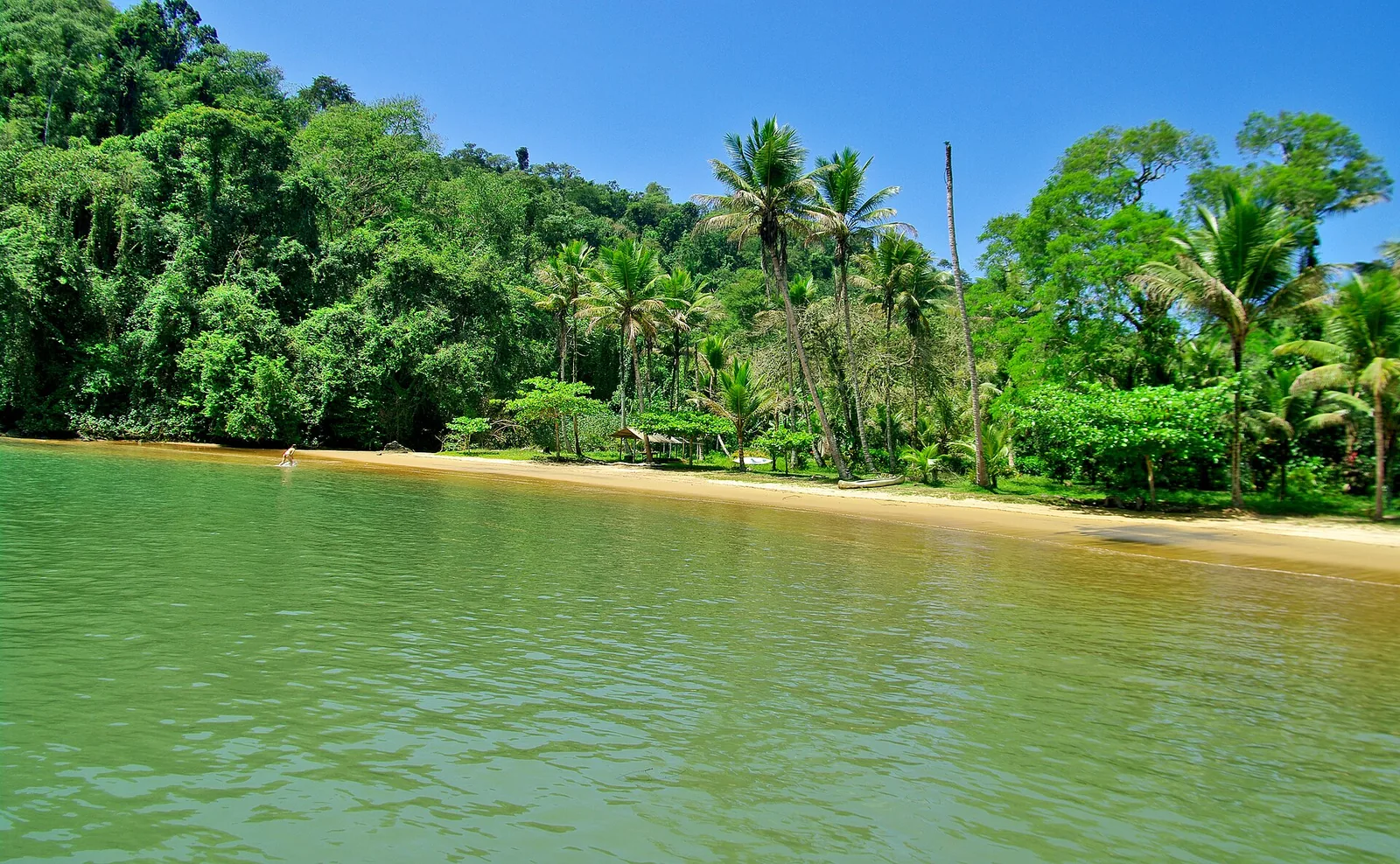
The village of Trindade, down the coast toward São Paulo state, is the obvious one: open surf beaches, a natural tidal pool among the rocks, and headlands of granite boulders that take low side-light beautifully at the start and end of the day. The energy there is the opposite of the calm bay — waves, spray, surfers — and a fast shutter freezes the action while a slower one blurs the water into mist against the rocks. The beaches around Paraty range from busy and easy to reach to remote coves you can only get to by boat or on foot, and the remote ones reward the effort with empty sand and clean compositions.
Out in the bay and beyond, Ilha Grande offers a whole island of forest-backed beaches and clear water — a serious day out, but a rewarding one for anyone willing to carry a camera up a trail to a viewpoint. Wherever you go on this coast, the same two rules apply: shoot at the edges of the day, and protect your gear from salt, sand and humidity, which are harder on equipment here than the gentle scenery suggests.
Post-processing that respects the place
A quick word on what happens after the shutter. Paraty's colours are real and they are strong — the indigo frames, the lime walls, the emerald water — and the temptation is to crank the saturation until the whole set looks like a brochure. Resist it. The town's beauty is understated, and the most convincing edits keep it that way.
- Protect the whites. The lime-washed walls are the backbone of the centre. Let them stay clean and slightly warm rather than blown out or pushed grey.
- Be gentle with saturation. A small lift brings the coloured doors and the bay to life; a heavy hand makes everything look fake and dates the picture instantly.
- Use the polariser in-camera rather than trying to fake reflections and glare reduction afterward — it almost never works as well in software.
- Keep horizons level and verticals straight on the architecture. Wonky walls are the quickest way to make a careful composition look careless.
The goal is a set of images that looks the way Paraty actually felt to stand in — quiet, warm and a little timeless — rather than a hyper-real version of it. That restraint is, in the end, the same instinct that makes for good manners with the camera: trust the place, do not overwhelm it.
A practical kit and timing checklist
To pull it together, here is how I would actually pack and plan a few photo-focused days in Paraty, without overthinking it.
What to bring
- One camera body with a moderate wide (around 24–35mm) for streets and a short telephoto (around 70–135mm) for the bay and islands. A single mid-range zoom covers most of it.
- A capable phone — genuinely all you need for the streets and a great backup everywhere.
- A polarising filter for the bay, the boats and the rivers; it earns its place.
- A small tripod or beanbag for waterfalls and any low-light or long-exposure work.
- Rain and humidity protection: a dry bag for the boat, lens cloths, and a plastic bag for sudden showers. The coast is humid and the weather turns fast.
- Spare batteries and cards. Heat and humidity drain batteries quicker than you expect.
- Sandals you can soak for the flooded streets and the rocky river edges, plus proper grippy shoes for the waterfalls and trails.
How to structure your days
- Dawn: the empty colonial centre, every morning, before the crowds.
- Mid-morning to midday: the worst light for the streets, so use it for travel, a boat trip out to the islands, or an overcast-friendly waterfall.
- Late afternoon to sunset: the bay, the boats and the Church of Santa Rita as the light warms, plus the long view and the pool from up the hill.
- Spring-tide days: build an early morning or an evening around a big high tide for the flooded streets and the church reflection — the one subject worth waiting for.
That rhythm — early for the town, the middle of the day for movement and forest, and the end of the day for the water and the high view — is how every good set of Paraty photographs I have seen was made. Plan around the sun and the tide, be kind to the people whose home you are photographing, and the town will hand you images that look like the place actually feels. If you want help lining up your dates with the right tides and light, or simply somewhere high to wake up before the rest of the bay does, take a look at everything there is to explore in Paraty and come and find your own frames.
Frequently asked questions
Early morning, before about eight o'clock. The cafés are still closed, the cobbled streets are empty, and the low side-light rakes across the whitewashed walls and coloured doors. By late morning the day boats have arrived and the light goes flat and harsh.
The flooding happens on the higher spring tides, which fall around the new moon and the full moon each month. Seawater rises through gaps left in the old seawall and covers the lowest streets near the water for an hour or two, then drains back out. Check a Brazilian tide table for Paraty and aim for a high tide that peaks near sunrise or sunset.
Yes — it is the most photographed building in town. Shoot it from the small waterfront square in front of it, ideally at high tide when the wet ground or shallow water throws a reflection, and at the end of the day when the white facade picks up warm light.
With real caution. Drones over 250 grams must be registered with Brazil's civil aviation authority (ANAC), and much of the bay and mountains around Paraty sits inside protected areas and a national park where drone flights generally require a permit from ICMBio. Never fly over crowds or private homes. Treat 'I'm not sure if it's allowed here' as a no.
Less than you think. A single body with a moderate wide and a short telephoto covers nearly everything; a phone with a recent camera does beautifully in the streets. Bring a polariser for the bay, something to keep gear dry on the boat, and lens cloths for the humidity.
Photograph the place freely, but treat people as people, not scenery. Ask before making a portrait, especially of children, fishermen at work or anyone in their own doorway. A short conversation first almost always turns a stolen snapshot into a better, warmer picture.
From the hillsides above town. Our chalet sits about four hundred metres up with an open view over the Bay of Paraty toward Angra dos Reis and Ilha Grande, which is the easiest place to shoot the islands stacking into layers at dawn and dusk without climbing anything.