In this guide
There is no road to Praia do Sono, and that is the whole point. To reach this wide arc of sand south of Paraty you either walk an hour through the Atlantic Forest or cross the bay by boat. Either way you arrive having made a small effort, and the beach rewards it: a long sweep of pale sand backed by green hills, a tiny fishing community living much as it has for generations, and water clear enough to make the walk worthwhile twice over. It is one of the beaches that people remember from a Paraty trip long after they have forgotten the others.
Praia do Sono sits within the Reserva Ecológica da Juatinga, a protected stretch of coast and forest that has kept the developers out and the caiçara villages in. The word caiçara describes the traditional coastal people of this part of Brazil, fishing families of mixed Indigenous, Portuguese and African descent who have lived along these shores for centuries. The community at Sono is small, a few hundred people, and the lack of a road has shaped everything: the simple kiosks, the rustic pousadas, the unhurried pace. This guide covers how to get there by both routes, what you will find when you arrive, the walk on to the wilder beaches beyond, how to swim safely, what to pack, and whether to come for the day or stay the night.
We send guests here often, and we have walked the trail enough times to be straight with you about it. It is not difficult, but it is not a stroll in sandals either, and a little preparation turns a good day into an easy one.
Where Praia do Sono is, and why it feels remote
Praia do Sono lies on the coast south of Paraty town, beyond the cluster of beaches around Laranjeiras. On a map it is not far; by the realities of the terrain it is another world. The mountains of the Serra da Bocaina come down almost to the sea here, the forest is dense and protected, and no road has ever pushed through to the beach. That isolation is exactly what has preserved it. While much of the Brazilian coast has filled with apartment blocks, this corner has stayed forest, sand and a handful of houses, because the reserve protects it and because getting building materials in without a road is hard.
For the visitor, the practical upshot is simple. You cannot drive to Praia do Sono. You drive, or take the local bus, as far as Vila Oratório near Laranjeiras, and from there you go on foot or by water. That barrier is what keeps the beach from being overrun, and it is why everyone you meet on the sand has earned their place there. It also means you should treat it as a small expedition rather than a casual stop: bring what you need, because there is no shop to nip to.
There is no road to Praia do Sono, and that is the whole point. Everyone who reaches it has made a small effort, and the beach rewards it.
A little about the caiçara people
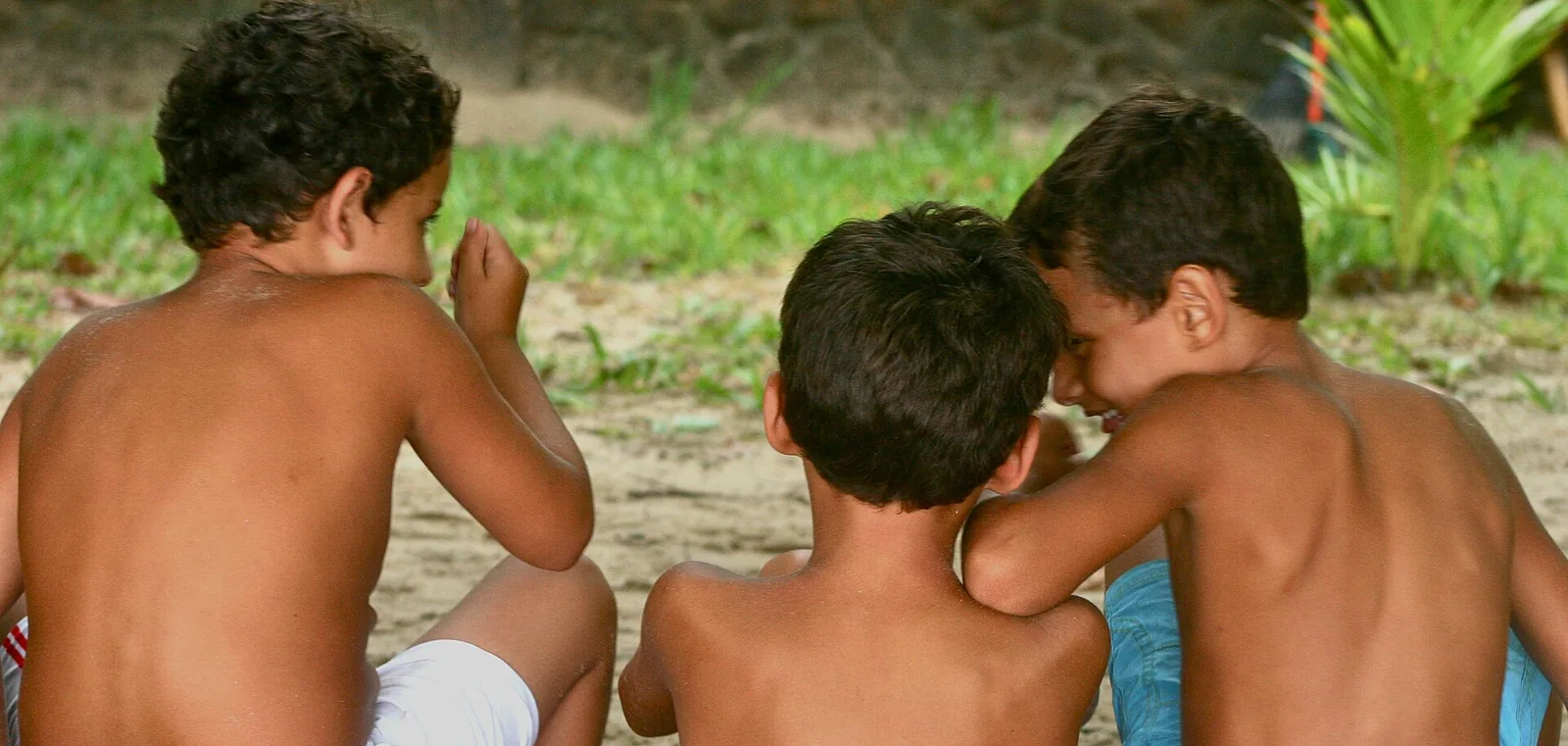
It is worth pausing on who lives here, because the community is as much a part of Praia do Sono as the sand and the sea. The caiçara are the traditional coastal people of southeastern Brazil, the descendants of Indigenous Tupi peoples, Portuguese settlers and, in places, Africans, who for centuries have lived along this coast by fishing, by small-scale farming of cassava and bananas in clearings in the forest, and by a deep, practical knowledge of the sea and the tides. Their culture is a quiet, distinctive thread running through the whole Paraty region, in the food, the music, the boatbuilding and the rhythm of life.
At Praia do Sono and the beaches beyond it, that way of life persists in a way it no longer can in the more developed parts of the coast, precisely because the reserve and the lack of a road have held modern development at bay. The families who run the kiosks and pousadas, who ferry visitors across in their boats and who fish the same waters their grandparents fished, are not a tourist attraction; they are a living community whose home you are visiting. Treat the place and its people with the courtesy you would want shown to your own home, spend your money locally, ask before photographing people, and you will find a warmth here that is part of what makes the beach special. If the culture interests you, our guide to caiçara culture in Paraty goes further.
Getting there on foot: the trail from Vila Oratório
The classic way to reach Praia do Sono is to walk. The trail begins at Vila Oratório, the small settlement at the end of the road past Laranjeiras, where the bus from Paraty terminates and where you can also park. From there the path runs roughly three kilometres through the Atlantic Forest to the beach, and most people take between an hour and an hour and a half at a comfortable pace, with stops to breathe and look around.
It is a moderate walk, not a hard one, but it is a real trail rather than a promenade. There are sections of up and down, roots and rocks underfoot, and stretches where the forest closes overhead and the air goes cool and green. After rain the path turns muddy and slick, and that is the single most common way people come unstuck, going over in flip-flops on a wet root. Wear shoes with grip. Trail shoes or trainers are ideal; sandals are a mistake.
What the walk is actually like
The trail is genuinely lovely, and for many guests the walk is half the experience. You climb gently away from Vila Oratório into the forest, with glimpses of the sea through the trees, then over a low headland and down towards the sound of surf. Birdsong, the occasional rustle of something in the undergrowth, butterflies in the clearings; this is living Atlantic Forest, one of the most biodiverse and most threatened habitats on earth, and walking through it is a small privilege. Go gently, keep to the path, and you will likely have stretches of it entirely to yourself, especially if you start early.
A few practical notes for the walk. Carry water, more than you think you need, because there is nowhere to refill until the beach and it is humid under the canopy. Start in the morning to beat the heat and to give yourself the whole day at the other end. Watch your footing on the descents, which are where the slips happen. And do not rush it; an extra fifteen minutes spent enjoying the forest costs you nothing and the beach is not going anywhere.
On getting to the trailhead in the first place: the simplest way for most guests is to drive to Vila Oratório and leave the car there, where informal parking is available, usually for a small fee paid to a local. If you would rather not drive, a local bus runs from Paraty's bus station out towards Vila Oratório and terminates near the start of the trail; it is cheap and reliable but infrequent, so check the times for the return as well as the outward leg, because being stranded at the trailhead at the end of a long day is no fun. Whichever you choose, build in time at the start; the drive or bus out from town takes a while, and you want to be walking in the cool of the morning rather than the heat of midday. Our notes on getting around Paraty cover the transport options in more detail.
One question we are often asked is whether you need a guide for the trail. For Praia do Sono itself, the answer is no; the path is well used, clear and hard to lose, and plenty of people walk it independently every day. The trail is signed at the key junctions, and on a normal day you will rarely be out of sight of other walkers. That said, the forest is real wilderness, so use common sense: tell someone your plan, do not walk it alone if you are nervous, and turn back if the weather closes in. For the longer routes beyond Sono, towards Ponta Negra and deeper into the reserve, a local guide is a sensible idea, both for the navigation and for the insight into the forest and the communities along the way.
Getting there by boat: the water taxi from Laranjeiras
If the walk does not appeal, or if you want to save your legs for the beaches beyond Sono, you can cross by boat instead. Local boatmen run water taxis from Praia de Laranjeiras across the bay to Praia do Sono, a short hop that lands you straight on the sand. The fare is usually set per person, charged each way, and you arrange the return time with the boatman or simply flag a boat when you are ready to leave.
The boat is the easy option, and it is the right one for anyone who would find the trail hard going, for families with small children, or for a day when the path is a mud bath after rain. It is also the kindest way to do both: take the trail in one direction while you are fresh, then ride the boat back when you are tired and salty. Many of our guests do exactly that. If reaching beaches by water appeals more broadly, the same skill of catching a local boat opens up much of this coast, as we cover in our guide to Paraty by boat.
What you will find at the beach
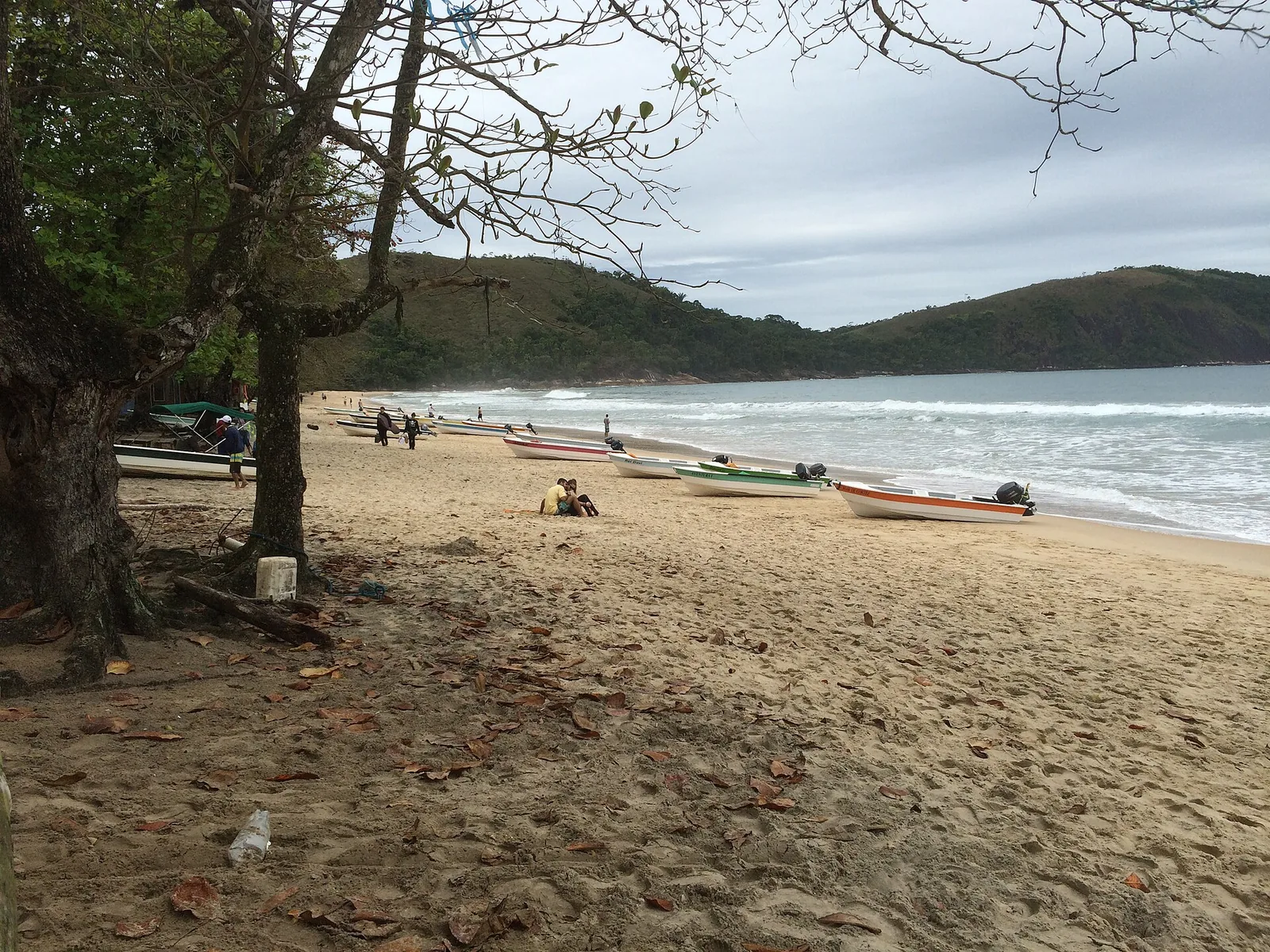
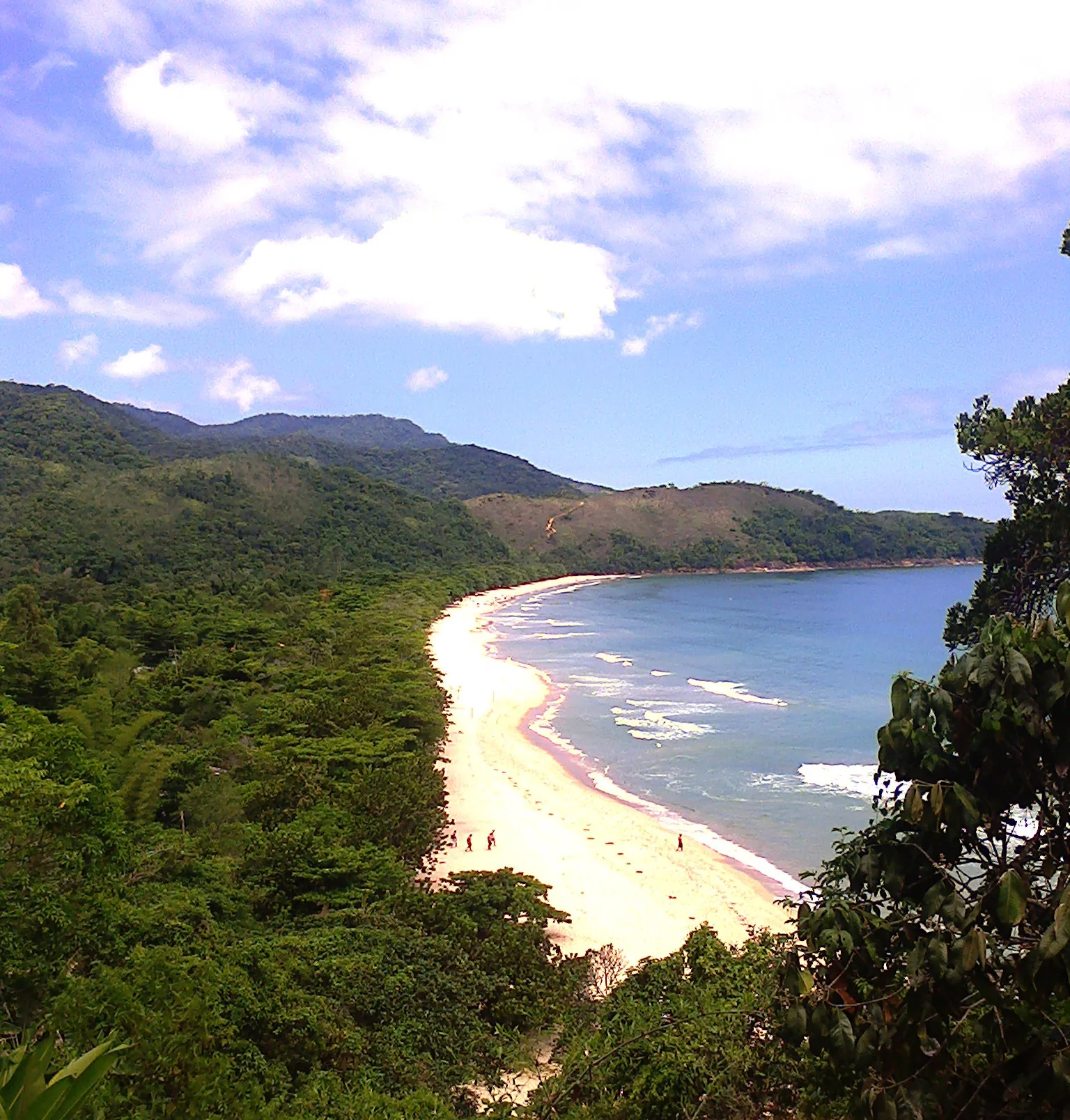
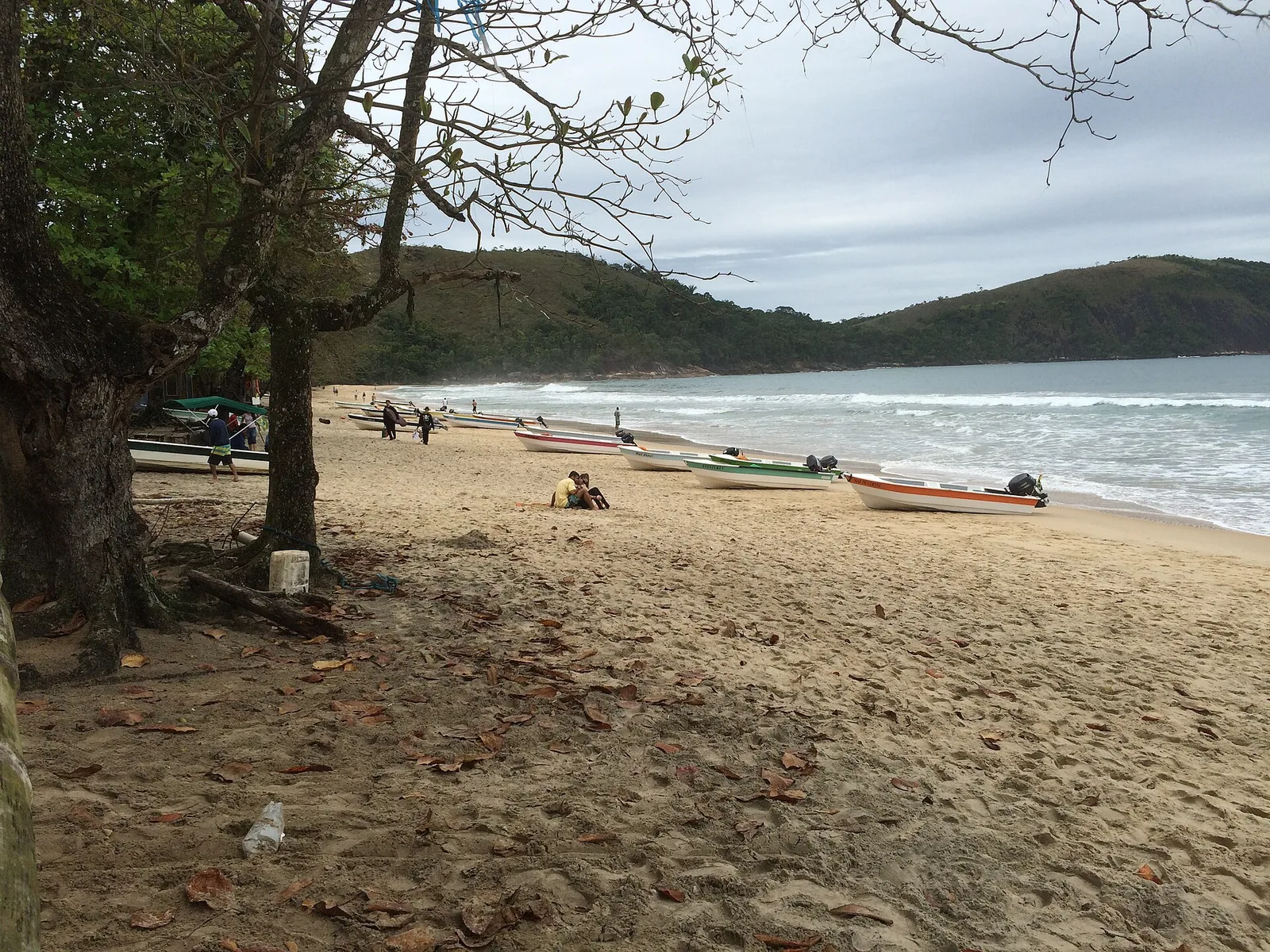
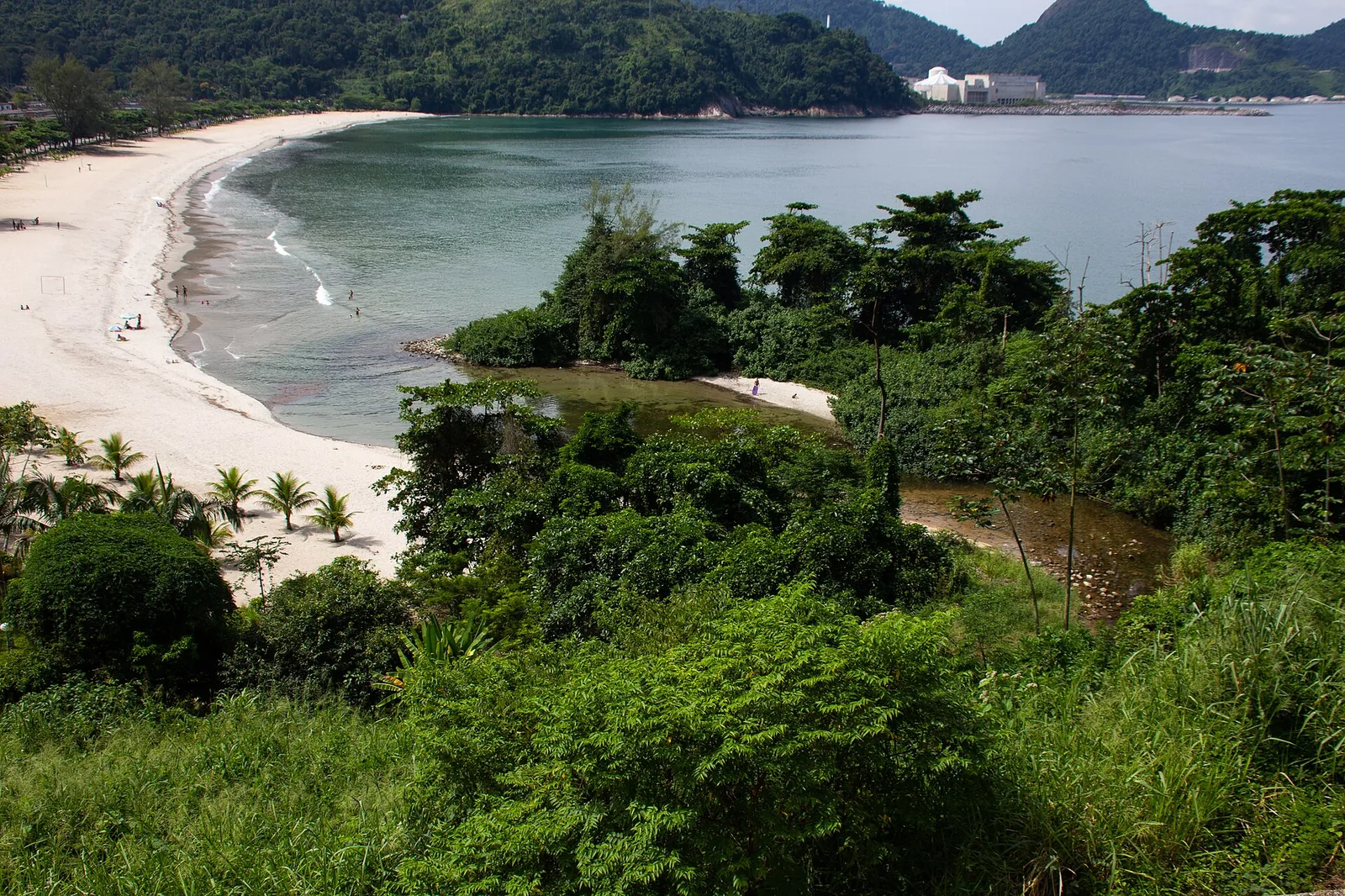
Praia do Sono is a long, wide beach, perhaps a kilometre of pale sand curving between two green headlands, with the forest pressing close behind. The water is warm and clear, the sand is soft, and there is room enough that even on a busy day it never feels packed. Behind the sand sits the village, a scattering of simple houses, kiosks and pousadas among the palms, where the caiçara community lives and where you will find food, drink and a place to sleep if you want one.
It is important to set expectations honestly. This is not a developed beach. There are no sun loungers in neat rows, no beach club, no smart restaurant. What there is, is simple and real: kiosks serving cold drinks and fresh fish, a couple of small bars that come alive in the evening with reggae, forró and samba when the place has guests staying over, and the unhurried life of a fishing village going on around you. That simplicity is the appeal. Come expecting a rustic, beautiful, slightly ramshackle paradise rather than a resort, and you will love it.
Eating and drinking
The village kiosks and small restaurants cover the basics well: grilled or fried fish caught locally, rice, beans, salad, the universal Brazilian beach lunch, plus cold beer, soft drinks and caipirinhas. One kiosk sits about halfway along the beach and makes an easy lunch stop. Prices are fair, the fish is fresh, and you eat with your feet more or less in the sand. We will not name a particular place because, as everywhere along this coast, the kiosks change hands; just walk the beach, see what is open and busy, and choose by eye.
The one thing to plan for is money. Card payment is patchy at best out here, and there is no bank, no cash machine and no certainty of a signal. Bring enough cash for the whole day, including the boat fare if you are taking it, lunch, drinks and a little extra. Running out of money at a roadless beach is an avoidable problem, so avoid it.
The food itself is worth coming hungry for. The fish is as fresh as fish gets, often landed that morning by the same family cooking it, and a simple grilled fish with rice, beans and a squeeze of lime, eaten in the shade with the sea a few steps away, is one of the honest pleasures of this coast. If you see a moqueca on offer, the slow-cooked fish stew with coconut and palm oil, it is well worth ordering, though it takes time to prepare, so put your order in early and settle in. The kiosks also do the universal beach snacks, fried pastéis and the like, and cold coconuts straight from the palm. Do not expect a menu or quick service; expect good, simple food cooked without hurry, which is exactly right for the setting.
Swimming and surf: reading the sea
The water at Praia do Sono is one of its best features, warm and clear and inviting, but like any open beach it deserves a little respect. The bay is not uniform: one end sits more sheltered behind the headland and stays calm, while the open side picks up swell and can throw up a decent shore break. Surfers know this and come for the waves on the livelier side, particularly the right of the beach. Swimmers should favour the calm, protected corner.
The sensible approach is the one you would take at any beach without lifeguards. Look at the sea before you get in. If it is breaking hard and dragging, stay shallow or move to the calmer end. Keep children where you can reach them and favour the sheltered water for them. Do not swim far out alone. The sea here is usually gentle and the swimming is a joy, but there is no one on duty to fish you out, so a little caution costs nothing. On a calm day at the protected end it is as easy and pleasant a swim as you will find anywhere on the coast.
It is worth a word on rip currents, the one real hazard at any open beach like this. A rip is a narrow channel of water flowing back out to sea, often where the waves are noticeably smaller or the water looks slightly different in colour. They catch out strong and weak swimmers alike. The rule, if you are ever caught in one, is not to fight it by swimming straight back to shore, which only exhausts you; instead swim parallel to the beach until you are out of the channel, then come in on the waves. On a calm day at Praia do Sono this is rarely a concern, but on a day with surf running it pays to know it, to keep children in the shallows, and to swim where others are swimming rather than off on your own. Respect the sea and it will treat you well.
The walk on: Antigos, Antiguinhos and Ponta Negra
For many people the real magic of Praia do Sono is that it is not the end of the line. From the far end of the beach a trail continues over the headland to a string of smaller, wilder beaches, and walking on is the thing that turns a beach day into a small adventure.
The first you reach is Praia dos Antigos, roughly half an hour to forty-five minutes further on a rougher path that climbs over the point and drops to the sand. Antigos is smaller and quieter than Sono, often nearly empty, a perfect spot to escape even the modest crowd at the main beach. Just beyond it lies Antiguinhos, smaller still, a pocket of sand for those who want true solitude. The path is steeper and less maintained than the main trail, with some scrambling, so it asks for real shoes and a head for uneven ground.
Push on further and the trail eventually reaches Ponta Negra, a more remote caiçara village around an hour and a half or so beyond Sono, with its own rustic community and restaurants. The full walk out to Ponta Negra and back is a proper half-day on the trail, and is best done by people who are comfortable hiking and who carry plenty of water. For most visitors, walking as far as Antigos for a swim and then back to Sono is the sweet spot: enough effort to feel you have explored, not so much that the day becomes a slog. Whatever you attempt, carry water, wear good shoes and turn back in good time to make your trail or boat home before dark.
Two honest cautions about the onward trails. First, they run through the Juatinga reserve, and the further you go the wilder and less marked the paths become; this is genuine backcountry, not a managed park, so do not push beyond your comfort. Second, the timings people quote, including ours, are approximate and assume a steady pace and good conditions. After rain the paths slow right down, and a route that takes ninety minutes dry can take far longer when it is slick. Plan for the slow version, carry more water than you think you need, and always know how you are getting back, whether on your own legs or by arranging a boat to collect you from one of the beaches. A boat pickup from Antigos or Ponta Negra, agreed in advance with a local boatman, is a lovely way to walk out one direction and ride back the other without retracing your steps.
Day trip or overnight?
Most people visit Praia do Sono as a day trip, and for most that is exactly right. A day gives you ample time to reach the beach, swim, eat a long lunch, walk on to Antigos and still get back to Paraty by evening. If you are based comfortably nearby, a day out and a return to your own bed is the easy, low-fuss way to do it.
Staying overnight is a different proposition, and it appeals to a particular kind of traveller. The reward is real: when the day visitors leave on the afternoon boats, the beach empties and you have it nearly to yourself, the village settles into its evening rhythm, and a night under the stars at a roadless beach is genuinely memorable. The catch is the accommodation. Your choices are camping or simple pousadas, all rustic, with basic facilities and none of the comforts of a proper hotel. Power can be limited, the rooms are plain, and you should arrive prepared to rough it a little.
Our honest steer: stay over if the simplicity is the appeal, if you are the sort who loves a beach hammock and a cold beer and does not need a comfortable bed. If you want comfort at the end of the day, do Sono as a day trip and come back to somewhere with a hot shower and a proper bed. Many of our guests find the ideal version is the day trip, the beach and the walk in the cool of the morning, and then the drive back up to the hill for the evening. There is a particular pleasure in trading the wildness of Sono for a quiet pool with the bay spread out below, and you can read more about that contrast on our page about the chalet.
If you do stay, a few things make the night go smoothly. Book ahead in the busy season, because the handful of pousadas and the better campsites fill up fast over holidays and summer weekends, and turning up without a plan can mean no room. Bring a head torch, because lighting is limited and the paths between the village and the sand are dark once the sun drops. Pack for insects, with repellent and, if you are camping, something to sleep under. And lower your expectations on comfort while raising them on atmosphere; the rooms are plain and the showers may be cold, but the trade is a beach almost to yourself at dawn, a sky thick with stars, and the kind of unplugged quiet that is increasingly hard to find. The two small bars in the village can come alive in the evening with live music when there are enough people staying, so the night is sociable if you want it to be and silent if you do not.
Who Praia do Sono suits, and who it does not
It is worth being plain about fit, because Praia do Sono is not for everyone and that is fine. It suits walkers and the reasonably active, families with older children who can manage the trail or are happy on the boat, couples after a wilder, simpler day than the town beaches offer, and anyone who values a place that has resisted development. If you love the idea of earning a beach and finding it half-empty and unspoilt, you will love it here.
It is a harder sell for those who need comfort and convenience: anyone with serious mobility limitations will find the trail difficult, though the boat opens the beach up to almost anyone; those who want sun loungers, smart restaurants and a beach bar with table service will be happier at a more developed beach; and very small children make the trail hard work, though again the water taxi solves most of that. None of this is a criticism of the beach, which is exactly what it is meant to be. It is simply a question of matching the day to the people. If Sono does not sound like your kind of beach, our roundup of the best beaches around Paraty will point you to ones that do, some of them with a road, a kiosk and a comfortable chair.
When to go
Praia do Sono is good in any season, but the experience shifts through the year. The dry winter months, roughly June through August, give the most reliable trail conditions: a firm, dry path, clear skies and water at its cleanest. It is cooler, but pleasant for walking, and the beach is quieter outside the Brazilian holidays. The summer, December to March, brings the hottest weather and the warmest swimming, but also the rains, which can turn the trail to mud and cloud the water. If you are walking in summer, watch the forecast and pick a dry day for the trail.
The other thing to time around is the Brazilian holiday calendar. Carnival, New Year and the long summer school break draw crowds even to a beach this hard to reach, and the campsites and pousadas fill. Come outside those peaks and you will share the sand with far fewer people. For a fuller picture of the seasons here, see our guide to the best time to visit Paraty.
Within a given day, the rhythm matters as much as the season. Praia do Sono is busiest in the middle of the day, when the day visitors have arrived on the morning boats and walked in along the trail, and it empties again in the late afternoon as they head back to make their transport home. If you want the beach at its quietest, either arrive early, before the bulk of the day crowd, or stay overnight and have the place to yourself once they leave. The midday peak is never overwhelming by the standards of a city beach, but it is the difference between a busy stretch of sand and a near-private one, and on a beach this special the quiet is worth chasing. A weekday in the shoulder season, arriving early, is as close to perfect as Praia do Sono gets.
What to bring: a packing list
Because there is no road, no shop and limited everything, what you carry in is what you have. Pack with that in mind. A good Praia do Sono kit looks like this:
- Proper shoes with grip for the trail, plus sandals to change into on the sand.
- Cash, enough for lunch, drinks, the boat fare and a margin. Cards rarely work and there is no machine.
- Plenty of water for the walk; there is nowhere to refill until the beach.
- Reef-safe sunscreen, a hat and sunglasses. The beach is open and the sun is strong.
- A dry bag for your phone, money and anything else that must stay dry on the boat or in a downpour.
- A towel and swimwear, and a light layer for the shade of the trail.
- Insect repellent, especially towards dusk and if you are camping.
- A small first-aid kit with plasters for blisters and any personal medication.
- A rubbish bag. Carry out everything you carry in; this is a protected reserve and the community keeps it clean.
How Praia do Sono fits a Paraty stay
Praia do Sono is best understood as one of the wilder, more adventurous days in a Paraty trip, the counterpoint to the easy beach lounging and the boat tours. It pairs naturally with the other things on this southern stretch of coast. Many guests combine it with a visit to Trindade, the larger and livelier beach village further along, or fold it into a broader exploration of the best beaches around Paraty, choosing Sono for the day they want to walk and earn their swim.
It works especially well from a base up on the hill above the bay. The morning is cool for the trail, the afternoon swim is the reward, and the drive back up at the end of the day gives you the best of both worlds: a wild, simple, roadless beach by day, and a quiet, comfortable evening above the water. We are always happy to help guests plan the day, sort out the bus or the boat, and time it around the weather, so do ask us when you arrive. And if you want the bigger picture of what to do with your time here, our overview of how to explore Paraty sets Sono in the context of everything else the area offers.
Go for the walk as much as the beach. Go with cash, water and proper shoes. Go in the morning, swim at the calm end, and walk on to Antigos if your legs are willing. Do that, and Praia do Sono will be one of the days you talk about when you get home.
Frequently asked questions
Two ways: on foot or by boat. The forest trail starts at Vila Oratório, near Laranjeiras, and takes about an hour to an hour and a half through the Atlantic Forest. Or you take a water taxi from the beach at Laranjeiras, a short crossing that lands you on the sand without the walk. There is no road to the beach itself.
The trail is roughly three kilometres and takes most people an hour to an hour and a half at a relaxed pace. It is moderate, with some up and down through the forest, and it gets slippery after rain. Wear proper shoes with grip, not flip-flops, and carry water.
Yes. Local boatmen run water taxis from Praia de Laranjeiras across to Praia do Sono. The fare is usually set per person each way. It is the easy option if you would rather not do the walk, or if you want to take the trail one way and the boat back.
Yes, but everything is simple and rustic. The caiçara village behind the beach has a handful of kiosks and small restaurants serving fresh fish and the basics, plus campsites and simple pousadas. There are no resorts, no banks and limited card payment, so bring enough cash for the day.
The water is warm and clear and good for swimming, calmest at the sheltered end of the bay. The open side picks up surf and is better for surfers than for an easy swim. Read the sea before you get in, keep an eye on children, and favour the protected corner if you want calm water.
Most visitors go for the day, which is plenty to see the beach and walk on to Antigos. Staying a night is special if you want the beach quiet after the day crowd leaves, but the accommodation is basic camping and simple pousadas, so go for the simplicity rather than comfort.
From the far end of Praia do Sono a trail continues over the headland to the smaller, wilder beaches of Antigos and Antiguinhos, then on towards Ponta Negra. Antigos is roughly half an hour to forty-five minutes further; the full route to Ponta Negra is a longer half-day. The path is rougher than the main trail, so take water and good shoes.