In this guide
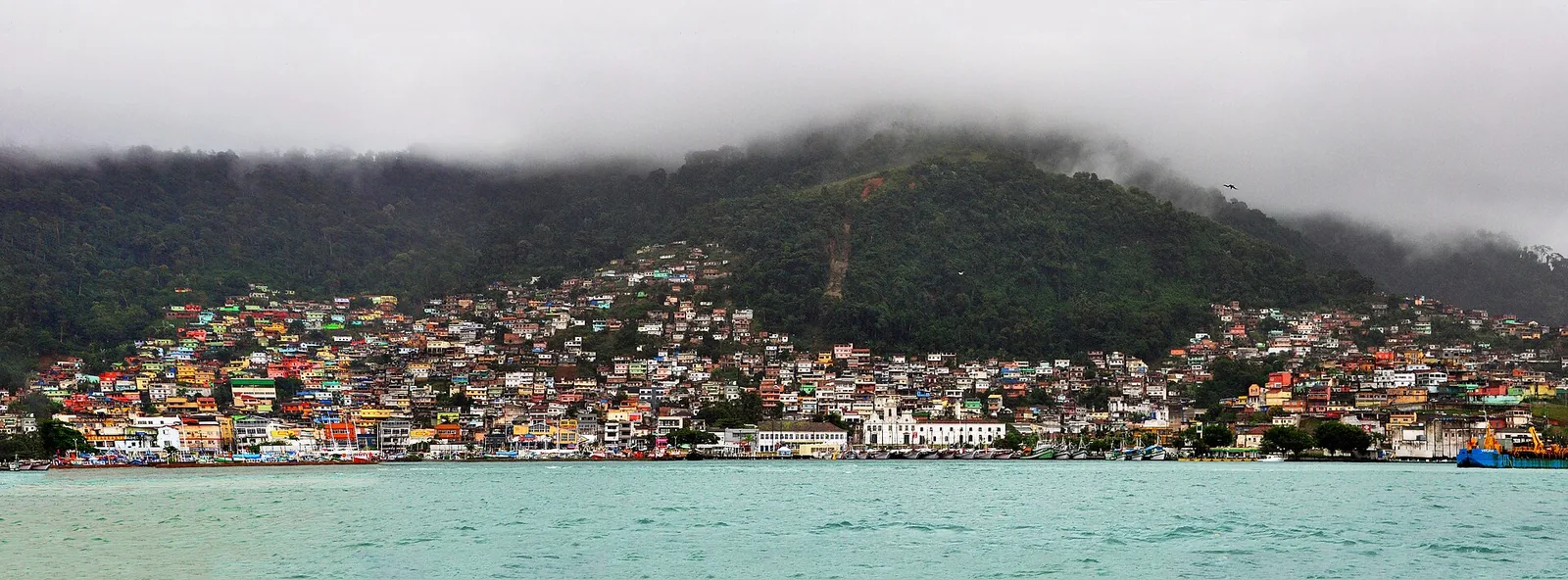
The first thing most people misunderstand about Paraty is that the town is only the front door. The real reason to come is the water: a broad, sheltered bay holding around sixty-five islands and hundreds of beaches, hemmed in by the green wall of the Serra da Bocaina and open to the wider Costa Verde that runs north toward Angra dos Reis and Ilha Grande. You can admire all of that from the shore, and it is lovely from the shore. But the good beaches — the ones with clear, still water and no road behind them — face the sea, and the calm, forgiving way to reach them is to hire your own boat and skipper for the day.
A private boat charter in Paraty is not the extravagance it sounds like. For a small group it is often cheaper per head than a run of restaurant dinners, and it buys you the one thing the shared tours cannot: the freedom to choose. You pick the beaches, you decide how long to stay, you swim where the water is best rather than where the schedule says, and you leave the moment a place gets crowded. For a family, a set of friends or two couples travelling together, that control is the whole point.
This guide walks through the honest version of how it works — the three kinds of boat you can hire and who each suits, what a day actually costs by group size, what the crew does and does not include, the routes that make sense from Paraty, and how to book without paying for the wrong thing. It is written from the point of view of a host, not a broker: we run this stretch of coast for our guests all season, and the advice here is what we would give a friend arriving next week.

Why groups charter a private boat in Paraty
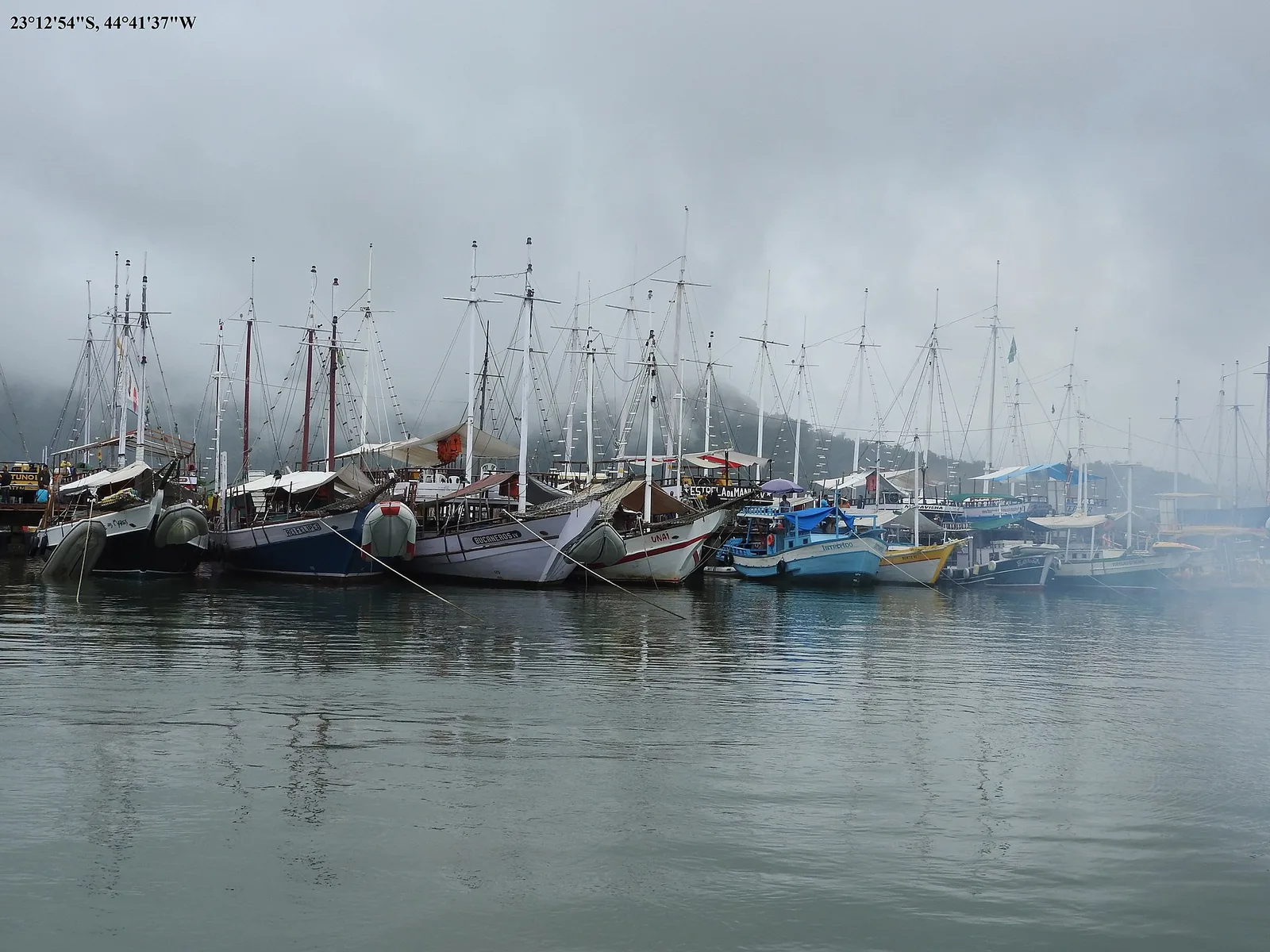
Start with the alternative, because the shared boats are genuinely good value and worth understanding. The classic Paraty outing is the schooner tour — a big wooden boat, a fixed loop of four stops, a fried-fish lunch and a bar on board, all for very little money. It is sociable and easy and, on a quiet day, delightful. The route almost always includes Lagoa Azul, the shallow bright-water channel between the islands, along with a beach or two like Praia da Lula and Praia Vermelha. Everyone piles off for roughly forty minutes at each stop and piles back on when the horn sounds.
The trouble is that in high season those same boats leave the harbour within an hour of each other and converge on the same four places. Lagoa Azul at noon in January can hold a dozen schooners swinging on their anchors, music from three of them at once, and a hundred people in the water. None of that is a scandal — it is just busy, and busy is the opposite of why most people come to Paraty.
A private charter fixes it by putting you in control of time and place. You are not paying for a bigger boat so much as for a quieter one, and for the freedom to leave a beach the moment it fills up. In practice that means you go where the schooners are not: the small island coves on the far side of the bay, a beach that only opens up at low tide, a lunch anchorage the skipper knows will be empty at one o'clock. Groups staying at a villa lean toward this for a simple reason — when you have already chosen a private base with its own pool and view, spending the day herded around a fixed circuit feels like a step down. You want the water to match the house.
Who it suits, and who it does not
Be honest with yourself about the group. A private charter earns its cost when there are enough of you to share it and when you value flexibility over the lowest possible price. Four to ten people is the sweet spot. Couples on a honeymoon or a quiet romantic trip often book a small lancha for a half day precisely because it is private, and that can be worth every real. Solo travellers and pairs on a tight budget are usually better served by the shared schooner or by joining a small-group speedboat run, then saving the private day for something special.
You are not paying for a bigger boat so much as for a quieter one, and for the freedom to leave a beach the moment it fills up.
The three kinds of boat, and what each is for
Almost everything on the water in Paraty falls into one of three families. They are not ranked — a lancha is not a lesser yacht — they are simply built for different days. Choosing well is mostly a matter of matching the boat to your group and to how far you want to go.
The lancha: the everyday private boat
A lancha is a motorboat, and it is what most people picture when they imagine chartering privately in Paraty. Sizes run from modest open boats to larger cabin cruisers, but the character is the same: quick, nimble and personal. A lancha covers ground, which means you are not locked into the nearest cluster of beaches — you can push to the far islands, chase clearer water, and fit three or four genuinely different stops into a day without feeling rushed.
Most lanchas take six to ten people comfortably. The better ones have a small toilet, a cooler or fridge, a sound system, a shaded area and a swim ladder off the back, which matters more than it sounds when you are climbing in and out of the water all day. This is the default choice for a family or a group of friends who want a private day without a formal, dressed-up feel. If you read one recommendation from this guide, it is that a mid-sized lancha with a good skipper is the most useful boat in Paraty for the most people.
The schooner and saveiro: shade and space for a crowd
The escuna, or schooner, is the broad wooden boat that defines the harbour skyline. Its cousin the saveiro is the traditional fishing-built version, heavier and slower still. You can hire either privately, and for a large party it is often the right call. A schooner does not go fast and it does not go far, but it gives you something a lancha cannot: room. Two decks, proper shade, space to lay out lunch, somewhere for children to move around and for grandparents to sit comfortably out of the sun.
Book a private schooner when your group is too big for a single lancha — say a dozen or more — or when the day is really about being together on the water rather than covering distance. A three-generation family reunion, a group of old friends who mostly want to anchor, swim, eat and talk: that is a schooner day. The trade-off is honest and simple. You will visit fewer places, and the ones you reach will be the closer, more popular ones, because the boat is slow. If crowds are your main worry, ask the skipper to run the loop backwards or early, so you hit the busy spots before the shared fleet arrives.
The sailing yacht and catamaran: the slow, whole-day option
The third family is sailboats — monohull yachts and, increasingly, catamarans. Chartering under sail is a different proposition. It is slower than a lancha and usually more expensive, and the appeal is the sailing itself: the quiet once the engine cuts, the lean of the boat, a full day given over to being on the water rather than ticking off beaches. Catamarans in particular have become popular for larger groups because they are stable, roomy and shallow enough to nose into anchorages, with big flat decks for lying in the sun.
A sailing charter suits people who already love boats, or couples and small groups who want one long, unhurried day and do not mind trading a few beach stops for the experience. Multi-day charters exist too — you can sleep aboard and work your way along the Costa Verde toward Ilha Grande over several days — but for most guests staying ashore, a single day under sail is plenty, and you come home to a bed that does not rock.
.jpg)
What a private charter costs, by group size
Prices move with the season, the boat and the day, so treat every figure here as a guide rather than a quote. That said, the shape of the pricing is stable enough to plan around.
A private lancha with a skipper for a full day generally starts around R$1,500 for a small group and rises with the size and comfort of the boat. A newer cabin cruiser with a fridge, a good sound system and a toilet will cost more than a plain open boat; a half day runs roughly two-thirds of a full day rather than half, because the skipper still commits the morning or afternoon. For a schooner the base is higher because the boat is bigger and crewed, and a sailing yacht or catamaran for the day typically sits at the top of the range, often several thousand reais depending on the vessel.
The useful way to think about it is per person. Split across eight people, a R$2,000 lancha day is R$250 each — less than a good dinner for two in the historic centre, for an entire day on the water. That maths is exactly why groups staying at a private villa tend to charter: the cost divides cleanly, and everyone gets a better day than the shared boat would give them.
What is included, and what is not
Read any quote carefully, because what is folded in varies. As a rule:
- Usually included: the boat, the skipper's time, fuel and drinking water. Sometimes ice and a basic cooler.
- Usually extra: food and alcohol, snorkelling gear if you want it, and any conservation or park fees for protected areas.
- Worth confirming: whether fuel is genuinely included or billed by consumption, since a long run to Ilha Grande burns a lot more than a lazy bay day.
- Tipping: not obligatory, but a good skipper who has looked after you all day is worth a gratuity, and it is always welcome.
The single most common surprise is fuel on a long-distance day. If you are asking a lancha to run all the way to Ilha Grande and back, ask up front whether that distance changes the price. A straight answer here is also a good sign you are dealing with an honest operator.
The crew: what a good skipper actually does
You are not just renting a hull, you are hiring judgement. A private charter in Paraty almost always comes with a skipper, and on the bay that is not optional in any sensible sense — the weather turns, the water has its moods, and local knowledge is the difference between a great day and a frustrating one. The skipper reads the wind, knows which beaches are sheltered when the southerly blows in, and knows which anchorage will be empty at lunch because the shared boats are somewhere else.
A good one will also shape the day around you rather than around a fixed loop. Tell the skipper at the start what you actually want — clear water for snorkelling, a calm beach for small children, a lively spot with a kiosk and a caipirinha, or simply the quietest coves they know — and a decent skipper will build the route from that. Larger schooners and catamarans may carry a second crew member and sometimes someone who cooks aboard. Language is worth checking in advance: many skippers speak some English, but if that matters to your group, say so when you book, and we are happy to help arrange it.

Where a day on the water actually goes
Paraty's bay is generous enough that no two charter days need look alike. Here are the routes that make sense, roughly from closest to farthest, so you can picture what fits.
The classic bay islands
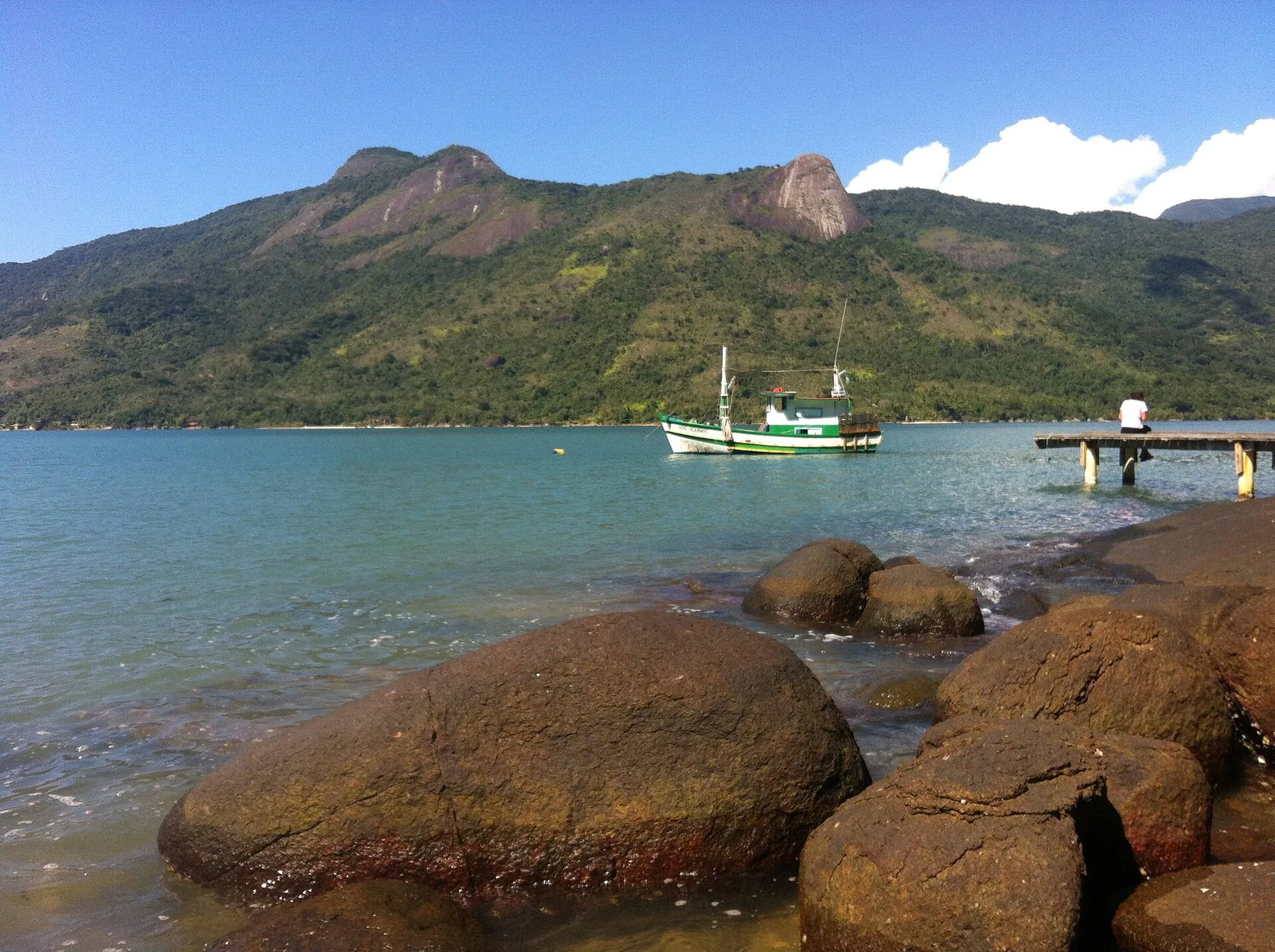
The inner bay is the reliable, beautiful default and the reason most people never need to go farther. The set-piece is Lagoa Azul, the shallow channel of bright green water between Ilha Comprida and its neighbours, where the seabed is pale and the fish gather — a natural aquarium, and the one stop worth timing to avoid the mid-day crowd. Around it lie a scatter of island beaches and calm coves: Praia da Lula, Praia Vermelha, the sandy edges of Ilha Comprida. A private boat lets you thread these in your own order, lingering where the water is clearest and skipping whatever is busy. For the full picture of what is out there, our guide to the best beaches around Paraty is the place to start.
Saco do Mamanguá
South of town lies the bay's most distinctive feature: Saco do Mamanguá, a long, narrow green inlet often described as Brazil's only tropical fjord. It cuts back inland for kilometres between forested ridges, calm and sheltered, with oyster farms, quiet beaches and a hard climb up the Pico do Pão de Açúcar for those who want the view down the whole length of it. A faster lancha reaches it comfortably in a half day, and it is a different mood from the open bay — stiller, wilder, greener. If it appeals, read our dedicated guide to Saco do Mamanguá before you go, and tell the skipper it is the priority, because a slow schooner will struggle to do it justice.
Ilha Grande and the farther coast
East of Paraty, across the mouth of the bay, sits Ilha Grande — a large, roadless island with some of the finest beaches on this coast, including the long pale sweep of Lopes Mendes. It is a genuine draw, and you can reach it on a private charter, but be realistic. It is a full day of running there and back, which eats into the time you actually spend swimming, and the crossing wants settled weather. Many guests are happier treating Ilha Grande as its own outing rather than folding it into a bay day; our Ilha Grande day-trip guide lays out how to do it well. A good skipper will tell you honestly whether the conditions on the day make the crossing worth it.
The southern beaches and Trindade
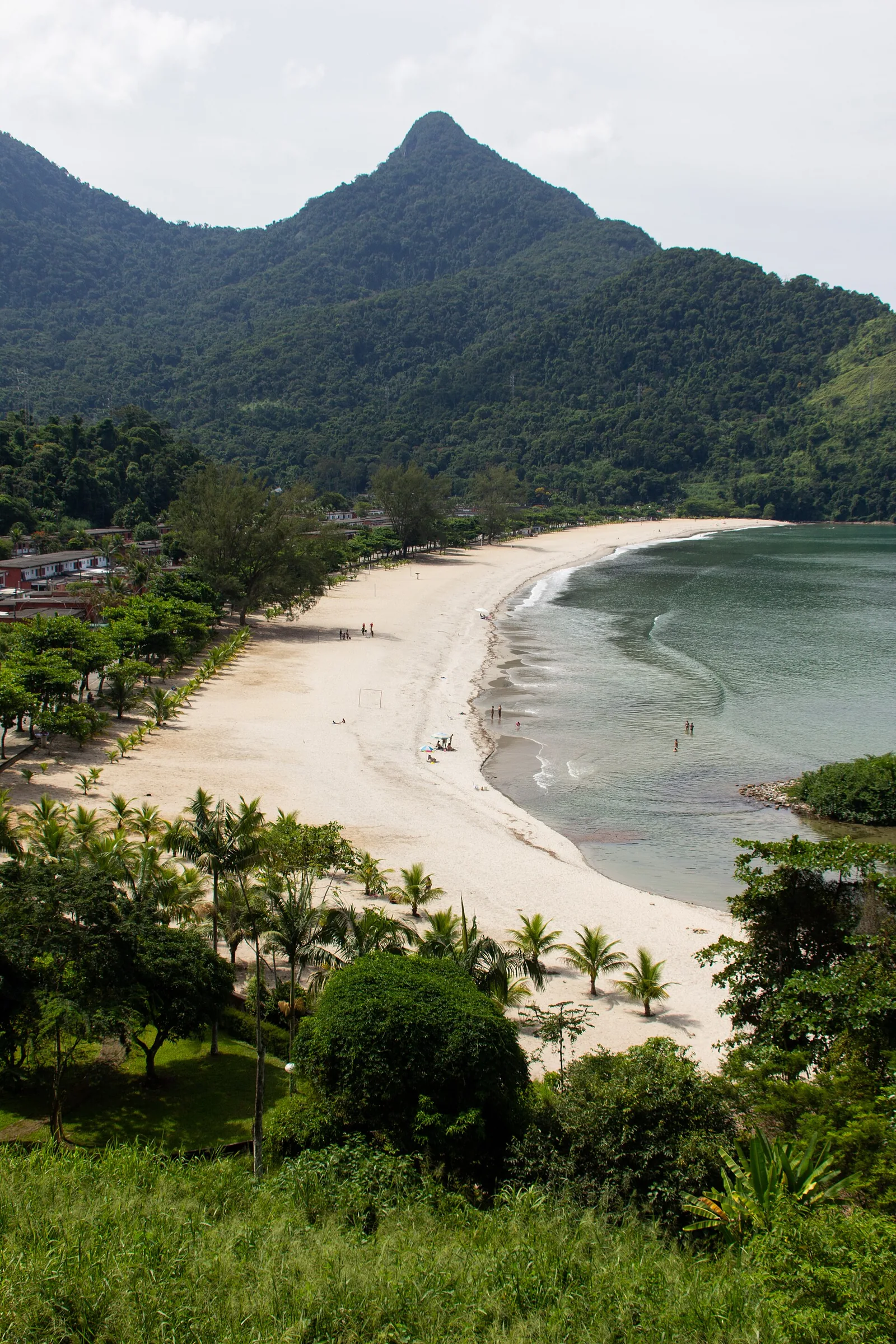
Down the coast toward Trindade the shoreline turns rugged and the beaches get bigger and wilder, with proper surf in places. Some of these — the coves around Trindade, the natural rock pool there — are as easily reached by road as by sea, so a boat is not always the right tool. But approaching them from the water, and dropping into a beach that most people reach only after a long walk, has its own quiet reward. Ask the skipper which southern beaches are showing clean water that week.
Snorkelling, diving and what lies under the water
Much of the reason to charter privately is what happens when you stop the boat and get in. The bay's calmer channels hold a surprising amount of life for how sheltered they are — schools of small silver fish, the occasional turtle grazing on the seabed, and on the clearest days a visibility that makes the shallow sand glow. Lagoa Azul is the obvious snorkelling stop, but a private skipper knows a handful of quieter reefs and rock edges around the outer islands where the fish are just as thick and the water often clearer, because the crowds never make it out that far.
If underwater time is a real priority, say so when you book, and consider building the day around it rather than treating it as an afterthought. Bring your own mask if you are particular, since shared gear is hit or miss, and time your stops for the calm morning hours before the wind picks up and stirs the surface. For anyone who wants to go beyond snorkelling, there are dedicated operators running proper dives on this coast; our guide to diving and snorkelling around Paraty covers where the good sites are and what the water is like at depth. A charter skipper can drop you at a site and wait, but a serious dive day is usually better arranged with a dive outfit that carries tanks and a divemaster.

Reading the season and the weather
The water does not read the calendar the way land does, and the single biggest factor in a good charter day is the sky. Paraty sits in a wet, green corner of the coast — that lushness is the price of frequent rain — and the bay's clarity depends heavily on recent weather. After a run of heavy rain the rivers push sediment out and the inner water goes cloudy for a few days; after a stretch of sun it clears again and the snorkelling turns superb.
Broadly, the warm months from December to March give you the hottest, brightest days and the best swimming, but also the crowds, the highest prices and the most rain. The cooler, drier stretch from around April to June and again from July into early spring often brings clearer water, calmer bays and far fewer boats, at the cost of shorter days and cooler mornings. There is no single right answer, and our guide to the best time to visit Paraty goes through the trade-offs in detail. For chartering specifically, the practical advice is short: keep the plan loose, watch the forecast the day before, and let the skipper move your boat day around a storm rather than sailing into one.
Families, couples and mixed groups
The right boat and the right route shift depending on who is aboard, and it is worth thinking about before you book.
For families with young children, a private boat is one of the easiest good days you can have in Paraty. The calm inner bay is forgiving, the swim stops are shallow and clear, and being able to leave a beach the instant a toddler has had enough is worth a great deal. Choose a boat with shade and a toilet, keep the route short and close, and treat Lagoa Azul and the nearer island beaches as the whole day rather than pushing for distance. Our guide to Paraty with family covers the wider trip; on the water, the rule is simply to under-plan.
For couples, the appeal is privacy. A small lancha for a half day, a couple of quiet coves, a swim and a slow ride back as the light drops — that is a better afternoon than any restaurant can offer, and it is not expensive when there are only two of you paying for one small boat. For mixed groups spanning ages and energy levels, a schooner earns its keep, because it lets the swimmers swim and the sitters sit without anyone feeling stranded.

How to book without paying for the wrong thing
The Paraty waterfront is full of boats and the people who sell them, and the quality varies. A few simple habits keep you out of trouble.
- Match the boat to the day first. Decide whether you want speed and beaches (lancha), space and shade (schooner) or sailing (yacht/catamaran) before you talk price. The wrong category at a good price is still the wrong boat.
- Get the inclusions in writing. Fuel, skipper, water, gear, park fees — know what is in and what is out, so the number you agree is the number you pay.
- Ask about the skipper, not just the boat. Local knowledge, language and how they will build the route matter more than the upholstery.
- Book ahead in high season. From December through Carnival and on holiday weekends, the good boats go days or a week in advance. Off-peak, a day or two is usually fine.
- Keep the weather clause loose. Agree up front what happens if the day is stormy — a reschedule is normal and reasonable.
Because we run this coast for our guests every season, we are glad to take the guesswork out of it and point you to skippers we trust rather than leaving you to sort the harbour touts on arrival. A quick note through the contact page before you travel is usually all it takes, and it means the boat, the route and the crew are matched to your group before you land.
A day on the water, from the chalet
Here is how the good version of a charter day tends to run for the people who stay with us. The town harbour, where the boats leave from, is a short drive down the hill — close enough that you are not committed to a dawn start or a long transfer. You go down mid-morning, meet the skipper, load a cooler, and spend the day threading the islands: a swim at Lagoa Azul before the fleet arrives, a quiet cove for lunch, an hour of snorkelling somewhere the water is glass-clear, a slow run back as the afternoon softens.
Getting to the boat is easier than most people expect. Paraty is small, the harbour sits at the edge of the old town, and the whole logistics of a charter day amount to a short drive down and a short walk along the quay. There is no airport transfer, no ferry queue, no early alarm unless you want one — details we cover in our note on getting around Paraty. That proximity is part of why chartering works so well from a base above the town: the water is close enough to be a casual decision rather than an expedition, and you can look at the morning sky, decide it is a boat day, and be on the bay within the hour.
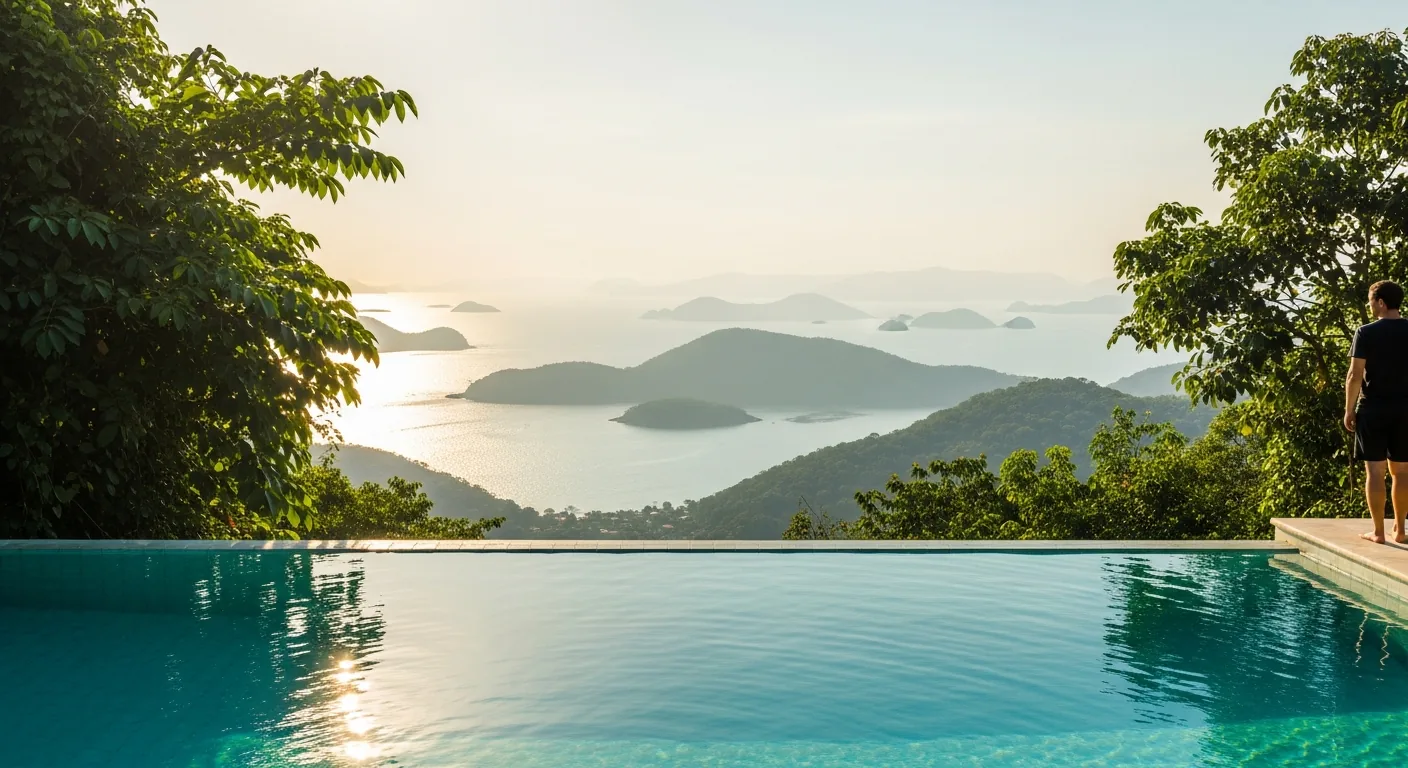
Then you come home. That last part is the quiet advantage of a hillside base. Château Portofino sits about four hundred metres above the bay, and its one long deck looks out at Paraty, Angra dos Reis and Ilha Grande at once — the same water you have just been swimming in, laid out below you. After a day of salt and sun, you rinse off, put a drink in your hand and slide into the infinity pool while the light goes down over the islands. A boat day that ends at a beach car park is a good day; a boat day that ends in a pool above the whole bay is a better one.
You do not need to charter every day you are here, and you should not. The pleasure of the place is the rhythm — a day on the water, a day in the cobbled historic centre, a slow day at the house doing very little. But somewhere in a Paraty trip there should be one day given entirely to the bay, on your own boat, on your own terms. It is the day people talk about afterward.
What to bring on a boat day
Pack light but pack right. A short list saves the day from small annoyances:
- Reef-safe sunscreen and a hat. The sun on the water is stronger than it feels, and the burn arrives after you are home.
- A light layer or windbreaker. The ride out can be breezy even on a hot day, especially on a faster lancha.
- A dry bag. For phones, keys and cameras — spray finds everything on an open boat.
- Cash in reais. Beach kiosks, oyster sellers and any park fees rarely take cards.
- Water and any food or drink you care about. The skipper usually provides water; anything beyond that, bring or arrange in advance.
- Snorkelling gear, if you have a preference. Some boats carry it, some do not, and shared masks are not to everyone's taste.
- Towels and a change of clothes. Obvious, and still the thing people forget.
Leave the rest. The best boat days are the simple ones, and half the point of a private charter is not having to think — you tell the skipper what you want, and the bay does the rest.
One last practical note on drinks. It is tempting to load the cooler and treat the boat as a floating bar, and a caipirinha at anchor is one of the good things in life. But the sun, the salt and the motion do their work quickly, and the swimming is safer and the day longer if the serious drinking waits for the pool at the top of the hill. Keep the boat civilised and save the celebration for the deck.
Making it part of a wider trip
A charter is at its best as one thread in a longer stay rather than the whole reason for it. Paraty rewards a mix — mornings on the water, afternoons among the cachaça distilleries in the hills behind town, a day walking a stretch of the old Gold Trail, an evening at the seafood houses by the harbour. If you are still shaping the trip, our overview of what there is to do in Paraty and the wider Brazilian coastlines journal are good places to see how the water fits with everything else. Book the boat for the settled day, keep the rest loose, and let this quiet corner of the Costa Verde unfold at its own pace — with a view of the bay waiting for you at the top of the hill each evening.
Frequently asked questions
For a full day, a private lancha with a skipper typically starts around R$1,500 for a small group and climbs from there with the size and comfort of the boat. A larger schooner or a sailing yacht for a bigger party will run higher, often into several thousand reais. Fuel, the skipper and usually water are included; food, drinks and any national-park fees are normally extra.
A lancha is a motorboat — quick, private and good for small groups who want to cover ground and pick their own beaches. A schooner (escuna or saveiro) is a broad, slow wooden boat built for shade and space, better for larger, relaxed groups. A sailing yacht or catamaran trades speed for the experience of sailing and works well for a full, unhurried day.
Most private lanchas comfortably take six to ten people. Larger schooners and catamarans can carry twenty or more. If your group is bigger than a single lancha holds, it is usually more comfortable to book a schooner than to split across two speedboats.
In the high season — December through Carnival, and holiday weekends — yes, book several days to a week ahead, as the good boats and skippers fill quickly. Outside those peaks you can often arrange a boat a day or two before, and the harbour is easy to reach from the chalet.
Saco do Mamanguá, the long green inlet south of town, is an easy half or full day by a faster boat. Ilha Grande is farther — a full day of running that leaves less time on the beaches, so many guests treat it as its own trip rather than a bay day. A good skipper will tell you honestly what fits the conditions.
It depends on what you want. Shared schooner tours are inexpensive and sociable, with a fixed route and set stops. A private charter costs more but lets you choose the beaches, skip the crowded ones, set your own pace and swim where you like. Groups staying at a villa usually prefer the private option for that freedom.
Bring reef-safe sunscreen, a hat, a light layer for the ride, cash for beach kiosks and park fees, a dry bag for phones, and any food or drink you want beyond what the skipper provides. Towels and swimwear go without saying. Confirm in advance whether snorkelling gear is on board.