In this guide
There is a particular hour on the Bay of Paraty when the water goes still and the light turns the colour of weak honey. The wind that has pushed the schooners around all day drops off, the sails go slack, and the skipper cuts the engine so the boat drifts on its own weight. That is the hour a Paraty sunset cruise is built around, and it is the single easiest way to understand why people fall for this stretch of the Costa Verde. You are sitting low on the water, a warm drink in hand, watching the light slide off the Serra do Mar and the old town lamps flicker on one by one behind you. It asks nothing of you except that you show up before the light goes.
Paraty sits at the head of a wide, island-scattered bay in the far south of Rio de Janeiro state, roughly halfway between the cities of Rio and Sao Paulo. The bay itself is protected water, sheltered by Ilha Grande to the east and a wall of forested mountains behind, which is exactly why a boat trip here feels calm rather than choppy. Sixty-odd islands sit within an easy afternoon's reach, and the town faces roughly northwest across the water, so the sun sets over the far hills and drags a long streak of colour across the whole bay. You do not need to be a sailor or a photographer to feel it. You just need to be on the water at the right time.
This is a practical guide to doing exactly that: what a golden-hour trip on the bay is actually like, the difference between a schooner and a small sailboat, how to book without overpaying, which months give you the best light and the calmest water, and how to fold the whole thing into a wider few days on the coast. We host guests up the hill at Chateau Portofino, a short drive above the town, and the sunset boat is the outing that comes back to us most often as the highlight of a trip. Here is how to get it right.
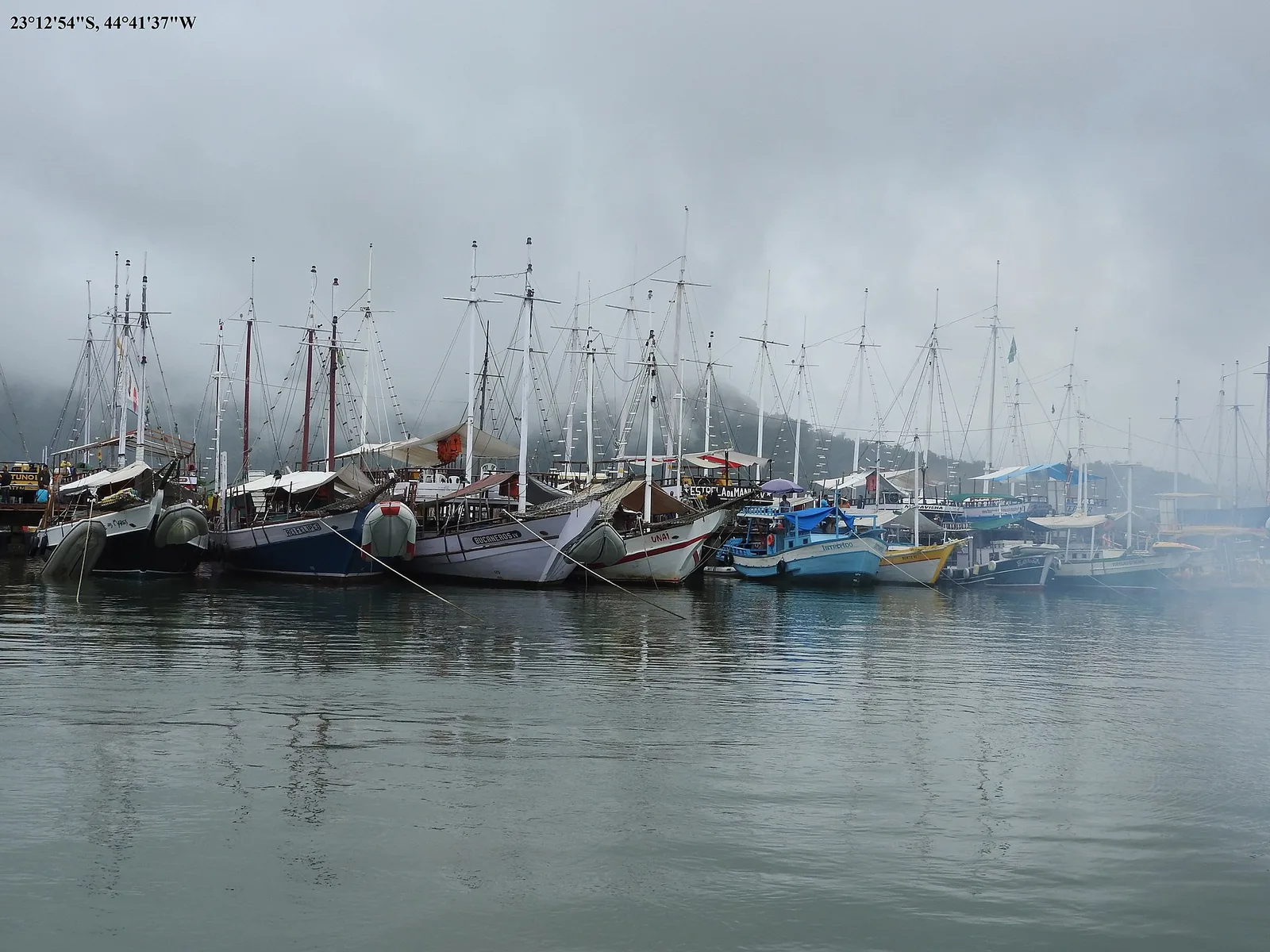

Why the Bay of Paraty is made for a sunset cruise
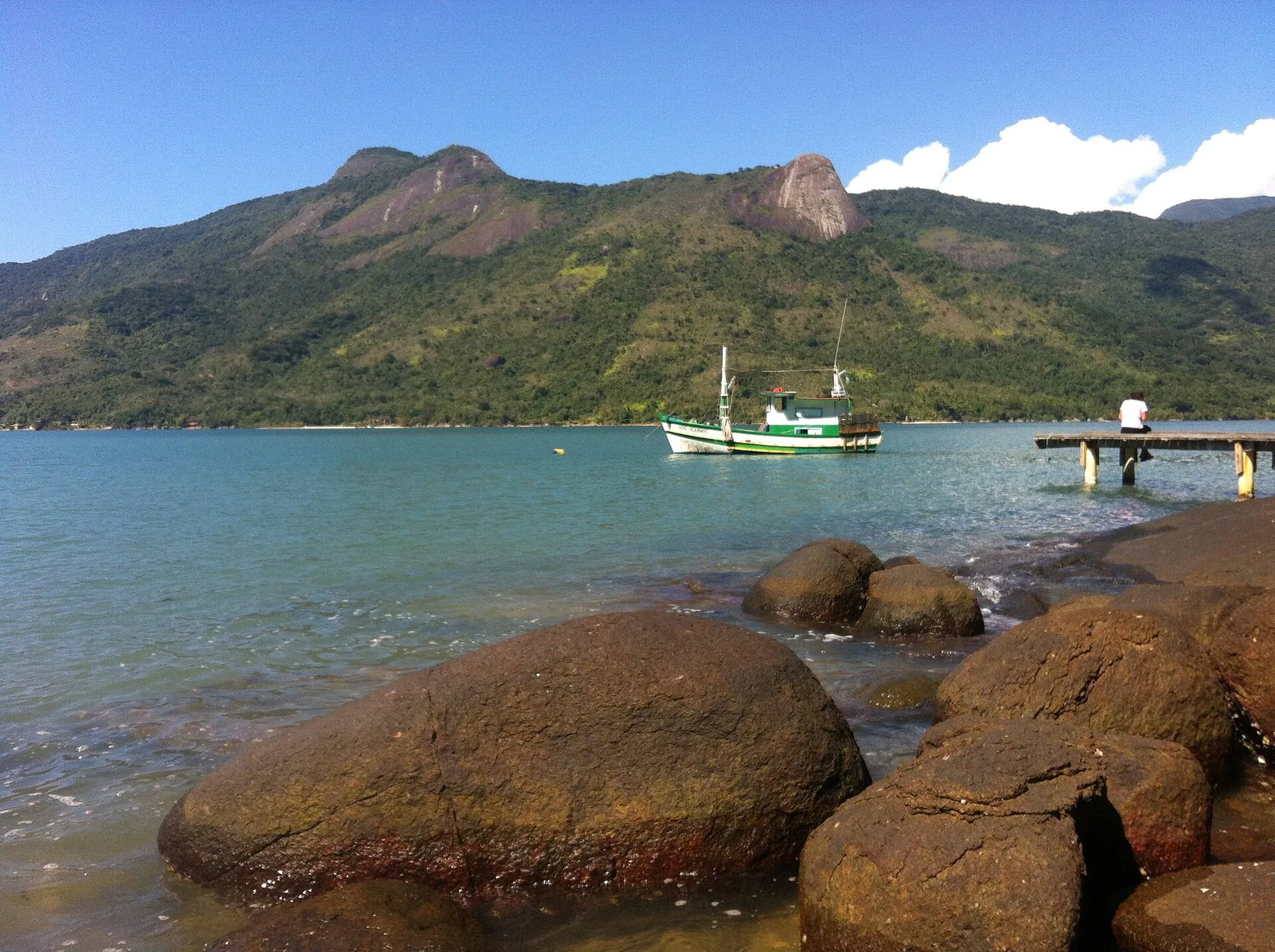
Most famous sunset spots are a headland or a rooftop, where you stand still and watch the sun go down over something. The Bay of Paraty is different because the whole bay is the view, and you move through it. The water is shallow and protected, dotted with small islands that each catch the low light on their own western faces, so the scene keeps rearranging itself as the boat drifts. One minute you are looking at a bare rock topped with a single lighthouse; the next, a curve of white sand with two or three boats swinging on their moorings.
The geography does the heavy lifting. Behind the town rises the Serra da Bocaina, a steep wall of Atlantic forest that stays green year-round and turns deep blue-grey as the sun drops behind it. To the east, across the mouth of the bay, sits the long bulk of Ilha Grande. On a clear evening from a boat, or from the deck of a hillside house above the town, you can hold Paraty, the islands off Angra dos Reis and the silhouette of Ilha Grande in a single glance. That three-way view is rare, and it is the reason the light here reads as layered rather than flat.
There is also the matter of the town itself. Paraty's historic centre is a preserved eighteenth-century gold port, all whitewashed walls and hand-cut cobbles, and it is a UNESCO World Heritage Site for good reason. As the sun goes down, the low light rakes across those white facades and the old church fronts turn the colour of a peach. From the water you get the whole postcard at once, the town, the mountains and the light, without a single modern building to break the line. If you want the history behind that skyline, our guide to the Paraty historic centre fills it in.
The engine goes quiet, the boat drifts, and the whole bay turns gold and then rose and then a deep bruised blue.
What a golden-hour trip actually feels like
Let me walk you through a typical evening, because the reality is calmer and less produced than the booking photos suggest, and that is the point. You board at the tourism pier in the historic centre in the late afternoon. The exact time shifts with the season, but you want to be leaving the dock somewhere between ninety minutes and two hours before sunset. The boat noses out past the moored fishing craft, the town falls away behind you, and within ten minutes you are among the first islands with the engine at a low burble.
On a traditional schooner the deck is open and broad, with bench seating around the rails and usually an upper sundeck. There is space to move around, a small bar, and a shaded section for anyone who has had enough sun for one day. The crew will often anchor in a sheltered spot for a swim while the light is still high, since the water in the bay is warm and clear enough that people go in without a second thought, before repositioning to an open stretch of water for the sunset itself. Somewhere in there a caipirinha appears, made with the local cachaca that Paraty has distilled for three centuries.
The last half hour is the reason you came. The engine goes quiet, the boat drifts, and the whole bay turns gold and then rose and then a deep bruised blue. Phones come out, then go away again. On a smaller sailboat the feeling is more intimate and more elemental, since you hear the water against the hull and the creak of the rigging instead of a dozen other passengers, but the arc of the evening is the same. By the time you are back at the pier the town lamps are lit and the restaurants along the waterfront are filling up.
The romance and celebration angle
A sunset cruise is the closest thing Paraty has to a guaranteed romantic moment, and couples book it for exactly that reason. If you are marking an anniversary, a proposal or a honeymoon, a small private sailboat with just the two of you and a skipper is hard to beat. You set the pace, you choose whether to stop for a swim, and there is no schedule but the sun. We have had guests arrange a bottle of something cold and a plate of petiscos to come aboard, and quietly tip the skipper to take the long way home. It works. For more on planning the wider trip around a moment like that, our Paraty honeymoon guide and the romantic getaway guide go deeper.
It is not only for couples, though. A shared schooner at sunset is a genuinely good outing for a group of friends or an extended family, precisely because it asks nothing of anyone. There is space for kids to move around, a bar for the adults, and enough happening that no one gets bored. A family we hosted last autumn put their two teenagers on the upper deck with the crew and spent the hour themselves at the rail with a drink, and everyone came off the boat happy, which is not a sentence you often get to write about a family with teenagers.
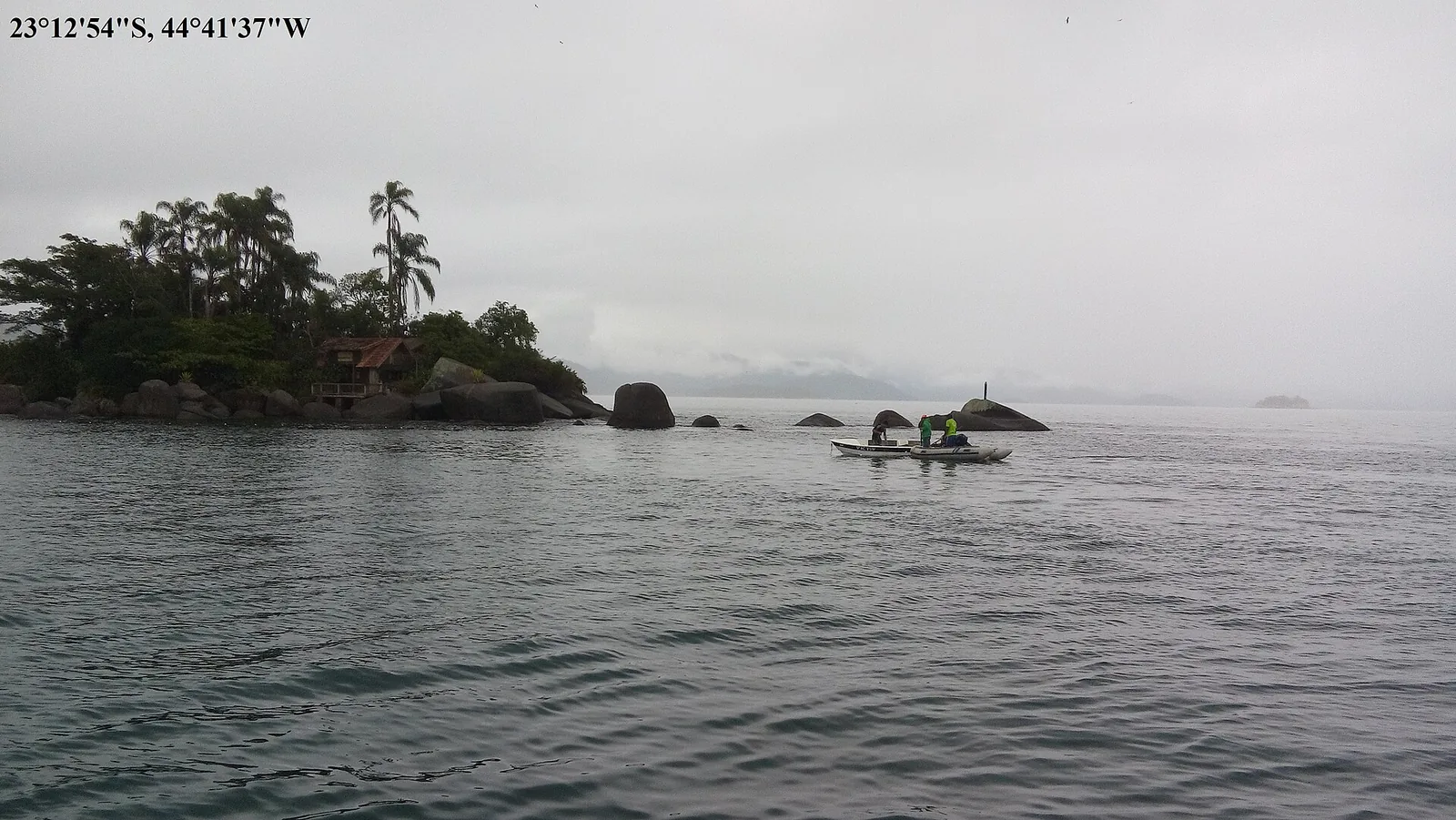

Schooner, saveiro or private sailboat: choosing your boat
The word you will see most is schooner, in Portuguese escuna, which here means a broad wooden tour boat, usually two-masted, that carries anywhere from twenty to eighty passengers. These are the workhorses of the bay and the cheapest way onto the water. You will also hear saveiro, which strictly means a traditional flat-bottomed sailing craft but is used loosely for the smaller, more characterful wooden boats. And then there are private charters: small sailboats, speedboats and modest yachts you hire by the boat rather than the seat.
Here is the honest trade-off. A shared schooner is sociable, inexpensive and reliable, but you are on someone else's timetable and sharing the deck. A private boat costs several times more but buys you the whole evening on your own terms: your pace, your stops, your music, your silence. For a sunset trip specifically, the case for going private is stronger than it is for a daytime island-hop, because the whole appeal of golden hour is calm and intimacy, and forty strangers with selfie sticks can undercut that.
- Shared schooner (escuna): best value, sociable, fixed departure and route, bar and toilet on board. Good for first-timers and groups who want the classic experience without a big spend.
- Small sailboat, private: quiet, romantic, flexible, powered by wind when there is any. Best for couples and anyone chasing the postcard sunset without a crowd.
- Speedboat, private: fast, covers more ground, good if you want to reach a specific far island before the light goes. Less atmospheric than sail, but efficient.
Whichever you choose, ask two questions before you pay: how many people are on the boat, and does the itinerary actually keep you on the water through sunset rather than docking beforehand. Some cheaper daytime tours are dressed up as sunset trips but have you back at the pier by five. Our broader Paraty boat tours guide lays out the daytime island-hop options if you would rather do a full day on the water and treat the sunset as a separate, dedicated evening.
Where the boats go: islands, beaches and the bay's set pieces
A sunset trip is shorter than a full-day tour, so it usually visits fewer stops, often just one swim spot before the light show, but it helps to know the landmarks the skipper is threading between. The classic daytime circuit hits a handful of names that come up again and again, and a good sunset route will pass within sight of several of them.
The islands you will hear named
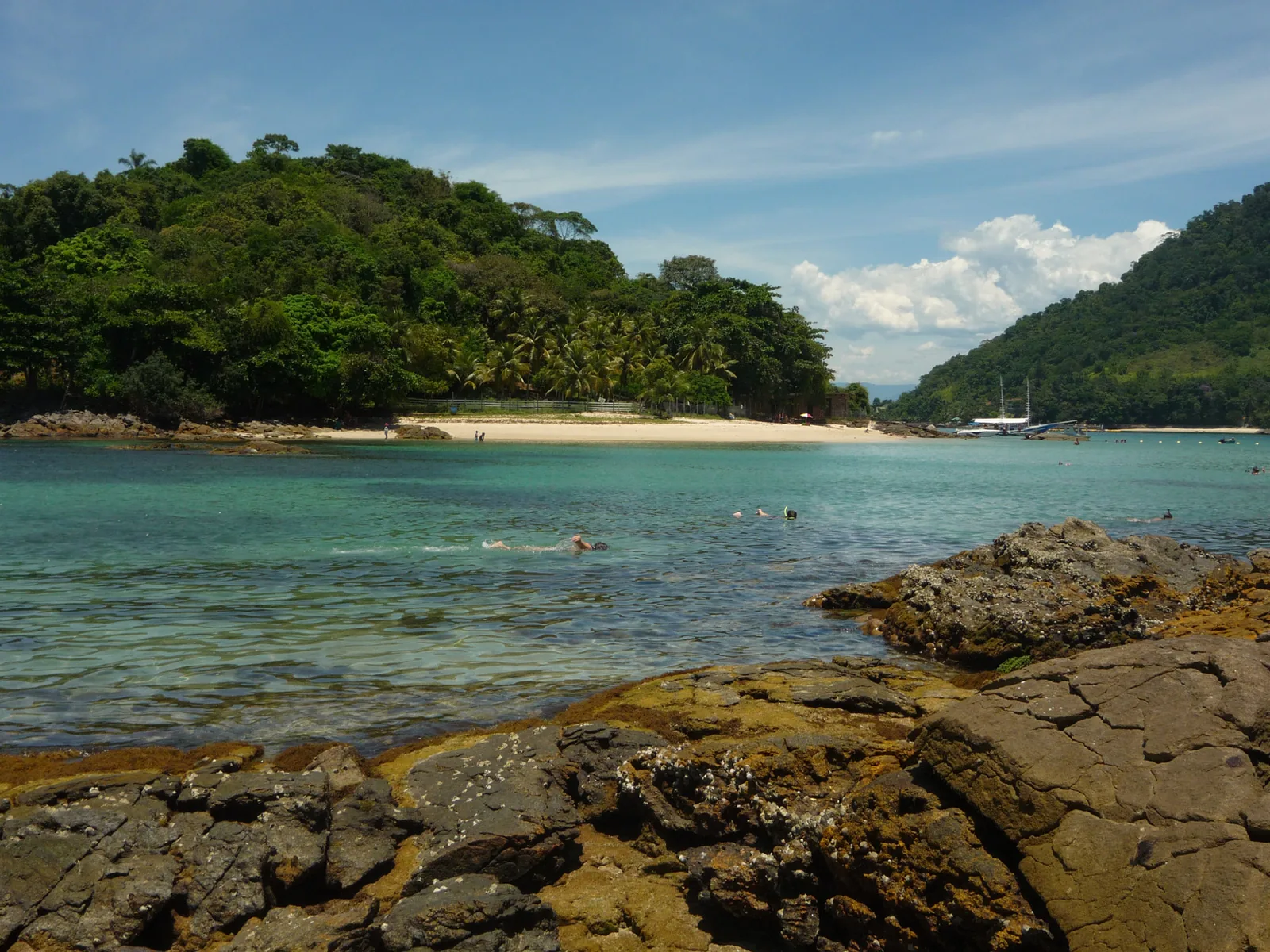
- Ilha Comprida is a small island so busy with fish that locals call it the natural aquarium of Paraty. It is the reliable snorkel stop on almost every tour.
- Lagoa Azul, the blue lagoon, is a sheltered patch of unusually clear, calm water between islands, and the single most photographed swim spot in the bay.
- The bare islets and lighthouses scattered across the bay catch the last light and make the best silhouettes as the sun drops.
Further out, toward Angra dos Reis, the bay opens into a much larger scatter of islands and the water deepens. A sunset trip rarely goes that far, since there is not time, but on a clear evening you can see that expanse from the deck, and it is worth a separate day. If the islands pull at you, our Ilha Grande day trip guide and the Angra dos Reis guide cover the bigger crossings.
The mangroves at Saco do Mamangua
South of the town lies Saco do Mamangua, a long narrow inlet often called Brazil's only tropical fjord, a finger of calm water lined with mangroves and backed by a distinctive sugarloaf peak. It is too far for a standard sunset cruise, but some private charters will run there for the evening, and the light on the mangrove channels is extraordinary. It is a quieter, wilder alternative to the classic bay trip, and we cover it in full in the Saco do Mamangua guide.
The best time of year for a Paraty sunset cruise
Paraty has a wet, warm climate, and the single biggest variable in your trip is rain. The town sits at the foot of a mountain range that wrings the moisture out of Atlantic air, so it rains more here than a few kilometres up or down the coast. Getting the season right is the difference between a clear golden sunset and an hour of grey drizzle, so it is worth planning around.
Season by season
- Summer, December to February: hot, humid and by far the wettest. January is the peak of the rains. Long daylight and sunsets after 6:30pm are the upside, but you are gambling on the weather, and the town is at its busiest and priciest. Book flexible, cancellable trips.
- Autumn, March to May: the sweet spot for many. The summer rains ease, the crowds thin out after Carnival, and April in particular is quiet and often clear. Prices soften and boats are easier to book.
- Winter, June to August: the driest, clearest season, with pleasant days around 23 to 24 degrees and the best odds of a cloudless sunset. The trade-off is shorter days, with the sun setting closer to 5:20 to 5:40pm, so your sunset trip starts earlier in the afternoon. Water is cooler but still swimmable.
- Spring, September to November: a transition. Warming up, rains building again toward November, but plenty of clear evenings and moderate crowds.
If your trip is fixed and you cannot choose the season, the practical move is to keep the sunset cruise flexible and go on the clearest evening of your stay rather than committing to a specific date on arrival. Watch the sky for a day, then book. For a fuller month-by-month breakdown, see our best time to visit Paraty guide.
How to book, and what it costs
You have three sensible routes to booking, and the right one depends on how much you want to leave to chance.
- Walk the pier. The tourism pier in the historic centre is lined with boats and their crews touting the day's trips. Turning up in the early afternoon lets you see the actual boat, judge the crowd and often negotiate, especially in the quiet season. This is the cheapest route for a shared schooner and the most Brazilian way to do it. The downside is no guarantee a specific boat runs a true sunset slot that day.
- Book online in advance. The big activity platforms list Paraty schooner and sunset trips with fixed prices and free cancellation. A shared schooner seat runs modestly, think in the region of a good restaurant main course per person, while a small private sunset sailboat is several times that for the boat. Booking ahead is worth it in high summer and around festivals when boats fill up.
- Let your host arrange it. This is what we do for guests, and it is the least friction. We know which skippers actually keep you out for the sunset, which boats are comfortable, and who will run a private charter at short notice on a clear evening. A quick message to us and it is handled.
A few honest notes on money. Drinks are usually extra even when lunch is included, so a cheap schooner can add up once the caipirinhas start. Private charters are quoted per boat, not per head, so they get better value the more of you there are. Four to six people on a small private boat can work out per-person close to a busy schooner, with none of the crowd. And always confirm the cancellation terms, because the one thing you cannot control here is the weather. If you would like us to set it up, get in touch before you arrive and we will match the boat to your evening.
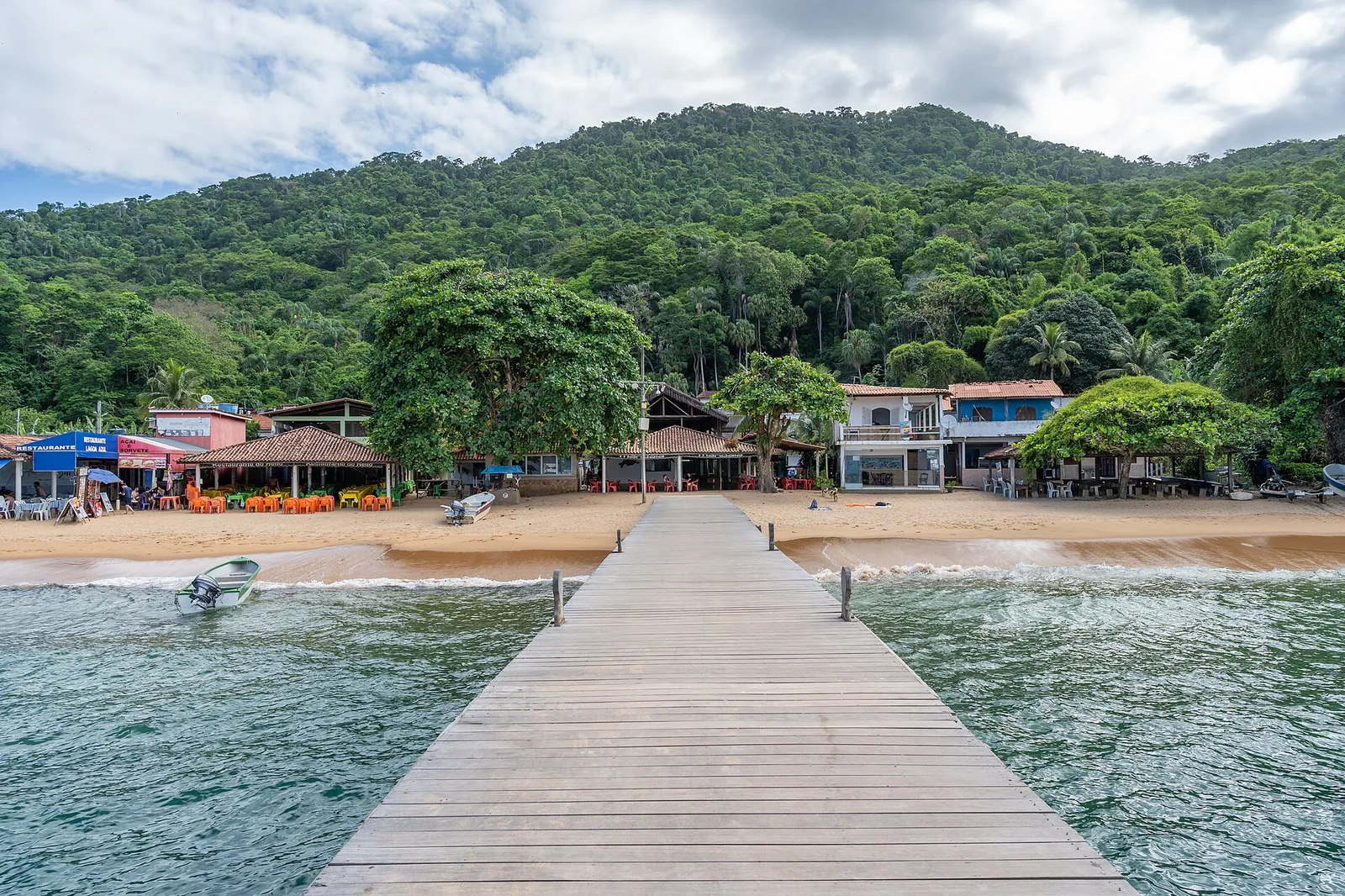

What to bring, and what to leave behind
A sunset trip is short and low-effort, but a few small things make the difference between comfortable and cold-and-fumbling-in-the-dark. Keep it light.
- A light layer. Even in summer, the wind picks up on open water and the temperature drops once the sun is gone. A thin sweater or windbreaker earns its place.
- Sun protection for the first hour. The pre-sunset light is still strong. Reef-safe sunscreen, a hat and sunglasses, especially if you will swim.
- Swimwear and a towel if the trip includes a swim stop, since most do, and the water is worth it.
- A dry bag or zip pouch for your phone and anything you would hate to lose over the side.
- Cash for the on-board bar and a tip for the crew, since card machines on small boats are unreliable.
- Flat shoes or bare feet. Decks are wet and often varnished; heels are a bad idea.
Leave behind anything you would mourn dropping in the sea, and do not overpack. You want your hands free for a drink and a camera, not a beach bag. If you are the one taking the photos, our Paraty photography guide has notes on shooting golden hour on the water without ending up with a phone full of overexposed blobs.
Combining the cruise with the rest of your day
The sunset trip slots naturally into the back half of a day, which frees the front half for something else. This is where staying above the town pays off, because you can do a proper outing, come back for a swim and a shower, and roll down to the pier unhurried rather than travel-worn.
A morning on the water, an evening on the water
If you love being afloat, do a full-day island tour in the morning, the classic four-stop schooner circuit with swims at Lagoa Azul and Ilha Comprida, then take a break in the afternoon and return for a dedicated sunset trip. It sounds like a lot of boat, but the two trips feel completely different. The day one is about swimming and sun, the evening one about light and stillness. Between them, come back up the hill, rinse the salt off in the pool and eat something.
Town in the day, bay at dusk
The more common rhythm: spend the day on land, the cobbled historic centre, a waterfall, a cachaca distillery, and save the water for the golden hour. The town's whitewashed streets are best walked in the morning before the heat, and the cachaca distilleries in the hills behind Paraty make a fine late-morning stop, not least because it is the same spirit you will be drinking on the boat. There is a pleasing symmetry to touring the still and then toasting the sunset with what it made. Our journal piece on cachaca and caipirinha culture explains why the drink and the place are so tied together.
Fold it into a longer plan
If you are building several days, the sunset cruise is a natural centrepiece for an arrival day or a final evening, low effort, high reward, and it does not depend on an early start. Our Paraty itineraries guide sketches out two, three and four-day plans that build the boat trips, the town and the beaches into a sensible order without over-scheduling you.
.jpg)
Sunsets from land, when the boats do not run
Weather does not always cooperate, and not every evening is a boat evening. It is worth knowing your land-based options so a grey afternoon does not cost you the sunset entirely.
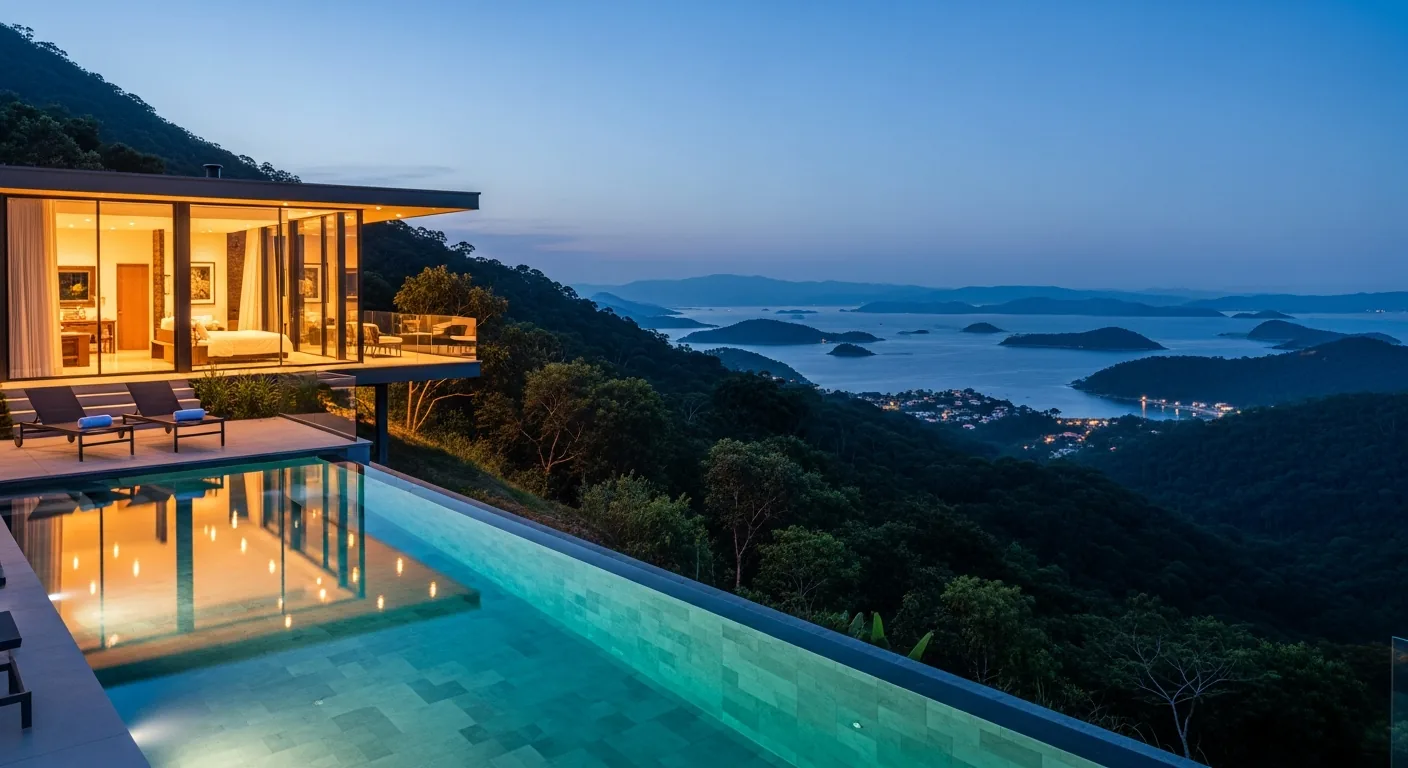
The town waterfront itself is the obvious spot. The stone quay by the historic centre looks straight out across the bay, and it fills with people at dusk for exactly that reason. The Capela de Santa Rita, the little eighteenth-century chapel on the water's edge, makes a classic foreground. For a higher vantage, the small forts and hills around the town give you the whole bay at once. And there is the reason we are biased: a hillside house above the town, a few hundred metres up, puts the entire three-way view, Paraty, the Angra islands and Ilha Grande, in front of you from a single deck, with no boat required and no crowd to share it with.
That is the quiet argument for where you base yourself. On the evenings the boats stay in, you still get the show. Our own infinity-pool deck at Chateau Portofino was positioned for precisely this. You can be in the water, drink in hand, watching the same sun the schooners are chasing go down over the same bay, and simply not have gone anywhere. It is not a replacement for the cruise. It is the fallback that happens to be excellent, and the place you come home to afterwards.
What you are actually looking at out there
Part of what makes an evening on the bay stick with people is that the water has a working life, not just a scenic one, and once you can read it the whole scene gets richer. The wooden schooners you share the bay with are descended from the boats that carried gold, coffee and cachaca out of this port for two centuries, when Paraty was one of the busiest harbours in colonial Brazil and the sea was the only road. The town turned its back on the water only when the highways arrived. The fishing skiffs you pass belong to caicara families, the coastal fisher communities whose culture still shapes how the bay is used, and whose knowledge of tides and weather is the reason the tours run as smoothly as they do.
Look toward the shoreline and you will see the forest coming almost down to the waterline in places, one of the last big stretches of Atlantic rainforest left on the Brazilian coast. Herons work the shallows, frigatebirds hang over the islands, and in the right months you may see the splash of fish being worked by dolphins near the mouth of the bay. None of this is staged for you, which is exactly why it lands. You are not watching a light show so much as sitting quietly inside a place that carries on with its own business while the sun goes down, and the drink in your hand happens to have been distilled a few kilometres away by people whose grandparents fished this same water.
That layering, the history, the working boats, the forest and the light, is what separates a Paraty sunset from a generic pretty view. It rewards a little curiosity. If the culture behind the coast interests you, our guide to caicara culture in Paraty is a good next read, and the wider natural setting is covered in the journal piece on Atlantic forest wildlife.
Safety, comfort and the honest caveats
None of this is risky, but a few realities are worth naming so nothing catches you out.
Seasickness is rare in the sheltered bay, since this is not open ocean and the water is usually calm, but if you are prone to it, the smaller the boat the more you feel the swell, so a larger schooner is the gentler choice. Sun is the bigger hazard than the sea; people underestimate the reflected light off the water and come home burned. Weather is the genuine wildcard: a clear forecast can cloud over, and the honest truth is that some evenings the sunset simply does not deliver. Flexible booking is your insurance.
On drinking: the bar is part of the fun, but the caipirinhas here are strong and the sun is dehydrating, so pace it and drink water between. On children: shared schooners are family-friendly and the crews are used to kids, but keep an eye on little ones near open rails, and bring their own sun cover. And on timing: build in slack. Paraty runs on its own clock, boats leave when they leave, and the one thing you cannot rush is the sun. For families weighing up which outings suit which ages, our Paraty with family guide is the place to start.
Getting to the pier, and getting back up the hill
The tourism pier sits in the heart of the historic centre, which is pedestrianised and closed to cars. From most of the town it is a short, flat walk on cobbles, and comfortable shoes help, because those stones are uneven and can be slick when wet. If you are staying outside the centre, a taxi or a lift drops you at the edge of the old town and you walk the last few minutes in.
Coming from further afield, Paraty is about four hours by road from both Rio de Janeiro and Sao Paulo along the coastal Rio-Santos highway, the BR-101, which is a scenic drive in its own right but demands daylight and patience on the mountain sections. There is no commercial airport in Paraty itself; most international guests fly into Rio or Sao Paulo and drive, or arrange a private transfer. However you arrive, the sunset cruise is a gentle first-evening outing precisely because it needs no early start and no long journey. You can land, settle in and be on the water the same evening. Our explore Paraty hub pulls together the practicalities of getting here and getting around once you have.
The return is the easy part. When the boat docks the town is lit and awake, the waterfront restaurants are serving, and you are a short ride from a hot shower. If you are up the hill with us, that ride ends at a quiet deck above the bay, and the day closes the way it should, salt still on your skin, the last of the light gone, the pool glowing. When you are ready to plan the evening, or the whole trip, send us a note and we will take it from there.
A short answer to the question everyone asks
People often ask whether the sunset cruise is worth it, or whether it is a tourist trap. It is worth it, with one condition: go on a clear evening, on a boat that actually stays out through sunset, and treat it as an unhurried hour rather than a box to tick. Do that and it is one of the best-value experiences on the whole Brazilian coast, an hour on calm water, watching one of the country's prettiest bays turn to gold, for the price of a decent dinner. Rush it, book it on a grey day, or end up on a boat that docks before the light show, and it is just a boat ride. The difference is entirely in the planning, which is the whole reason this guide exists.
Frequently asked questions
A seat on a shared schooner is modest, roughly the price of a good restaurant main per person, while a small private sunset sailboat is several times that for the whole boat rather than per head. Drinks are usually extra, so budget for the bar, and private boats get better value the more of you there are.
It depends on the season, because sunset shifts from around 5:20pm in winter to after 6:30pm in high summer. Aim to leave the pier ninety minutes to two hours before sunset. Most trips board in the mid to late afternoon from the tourism pier in the historic centre.
Winter, from June to August, is the driest and clearest, giving the best odds of a cloudless sunset, though days are shorter. Autumn, March to May, is a strong second choice with thinner crowds. Summer has long daylight but is the wettest season, so keep bookings flexible.
In the quiet months you can walk the tourism pier and negotiate on the day. In high summer and around festivals, book ahead online or through your host, as boats fill up. Whenever possible, keep it flexible and go on the clearest evening of your stay.
A shared schooner is cheaper and sociable; a private sailboat is quieter, more romantic and lets you set the pace. For sunset specifically, where the appeal is calm and intimacy, a private boat is worth the extra if the budget allows, especially for couples or a proposal.
Yes. Shared schooners are family-friendly, with room to move, a bar for adults and crews used to children. Keep an eye on little ones near open rails and bring sun cover. It is a low-effort outing that suits mixed-age groups well.
Book a trip with free cancellation and watch the forecast, then go on a clear evening rather than committing to a fixed date. If the boats stay in, you can still catch the sunset from the town waterfront or a hillside deck above the bay.