In this guide
Let me set expectations honestly, because it is the kindest thing I can do for anyone planning an evening here. Paraty is not a nightlife town in the way Rio or Búzios are. There is no strip of clubs, no thumping bass rolling down to the water, no velvet-rope scene. What Paraty has instead is something I would not trade for any of that: live Brazilian music drifting out of candlelit colonial dining rooms, old cachaça bars where the conversation is the entertainment, squares that fill with people and guitars on a warm night, and the kind of long, slow evening that you remember long after the loud ones blur together.
If you come expecting a party capital you will be disappointed; if you come ready to be charmed by an evening rather than a night out, Paraty is one of the loveliest places in Brazil to be after dark. The historic centre is pedestrian, lamplit and traffic-free, the day-trippers leave around dusk, and the town settles into a rhythm that is unhurried and genuinely sociable. This is a guide to that rhythm — what the evenings actually feel like, where the music tends to happen, how the seasons and festivals change the energy, and what it is like to wander the cobbles after dinner and then climb back up to a quiet hillside above the bay.
I will describe things by type rather than handing you a list of bar names, partly because places here change hands and reinvent themselves from one season to the next, and partly because the joy of a Paraty evening is wandering and stumbling on the room where the music is good tonight. Follow the sound; it rarely lets you down.
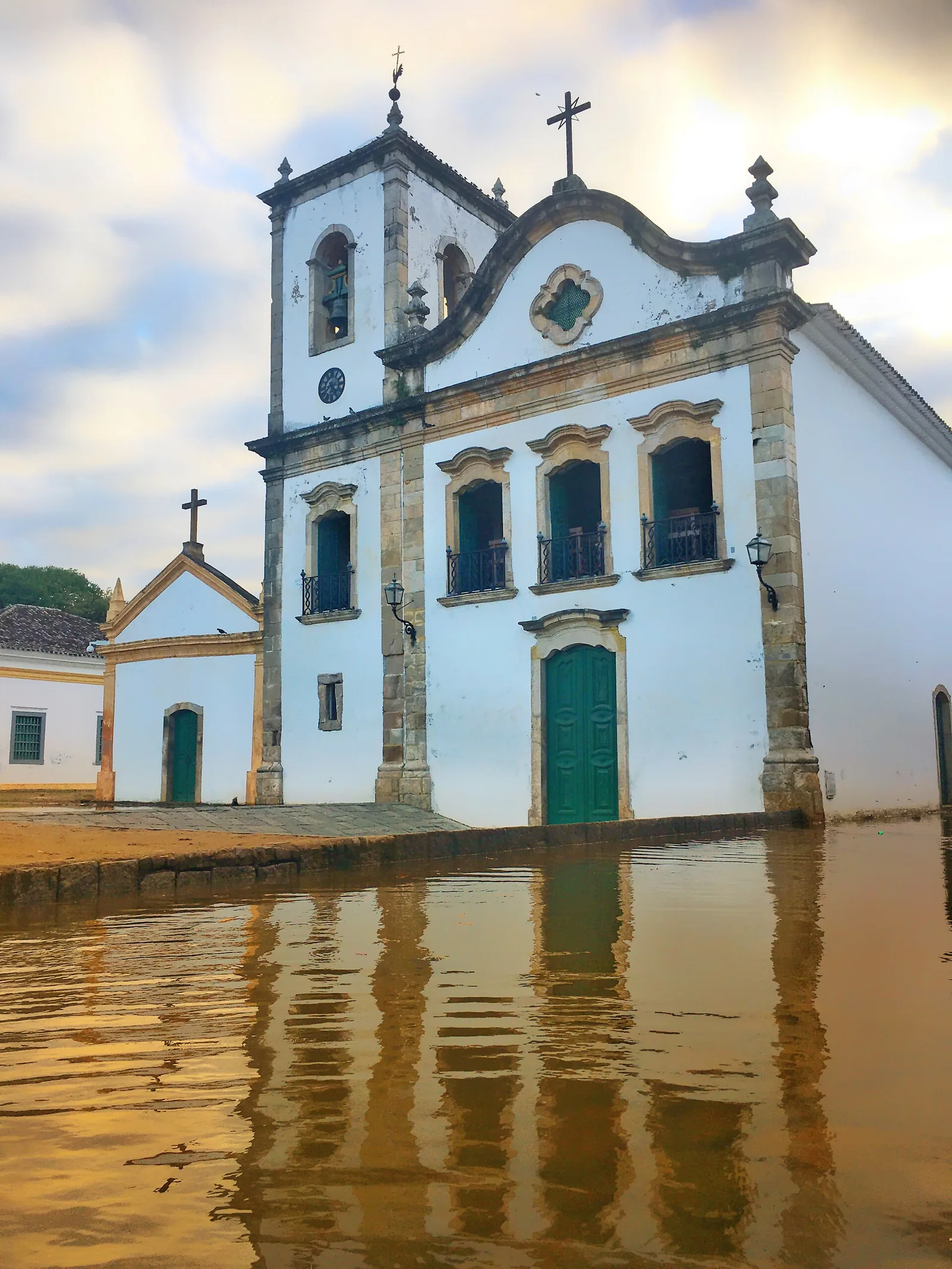
The shape of a Paraty evening
A night out here has a shape, and it is worth understanding so you can lean into it rather than fight it. The town runs on two clocks. By day the historic centre belongs to visitors — the boats arrive, the shops open, the streets fill. Then, in the hour around sunset, the day-trippers drift back to their buses and boats, the light goes golden on the white walls, and the centre exhales. That handover, as the place shifts from sightseeing to supper, is my favourite moment of the Paraty day, and the cue that the evening has begun.
From there it unfolds slowly. People drift out to the squares for a first drink as the light fades. Dinner is long and unrushed — Brazilians eat late, and so should you, which means a table that fills around half past eight or nine rather than seven. Somewhere a guitar starts up. By mid-evening the better dining rooms have music, the cachaça bars are busy, and the squares hum with overlapping sound. There is no peak-and-crash the way a club night has; it is more of a long, warm plateau that winds down gently. On a weeknight outside the festival season the centre is quiet again by late evening. At weekends, in summer, or during a festival, it runs much later.
The point is that you do not really plan a Paraty evening the way you plan a night out elsewhere. You eat well, you wander, you follow the music, you have one more cachaça than you meant to, and you walk home over the cobbles under the lanterns. If that sounds like your kind of night, you are going to love it here. If you want help fitting the evenings around the days, our overview of things to do in Paraty sets the whole picture.
Paraty does not so much have a nightlife as a long, unhurried evening — and that is exactly its charm.
The historic centre at night
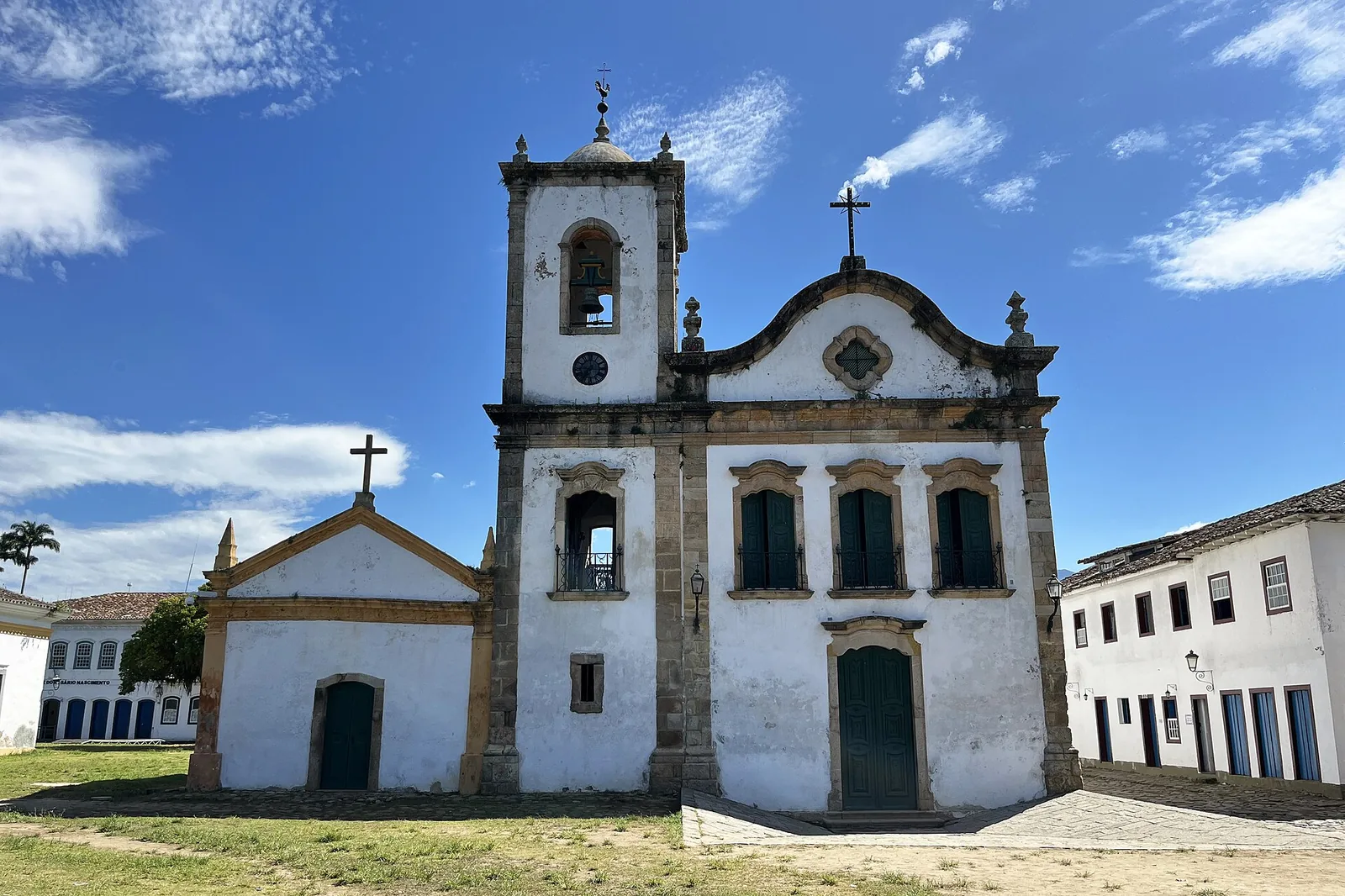
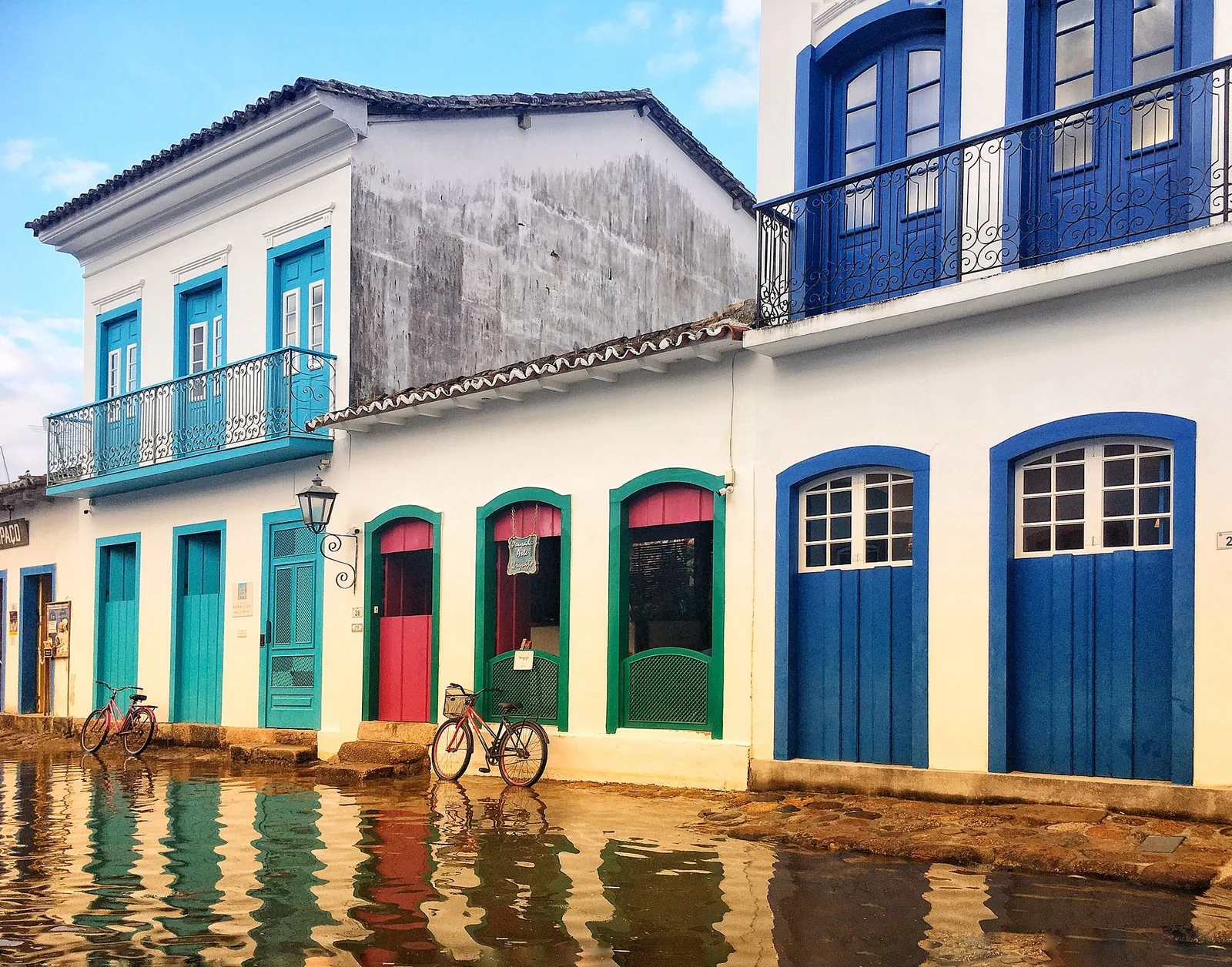
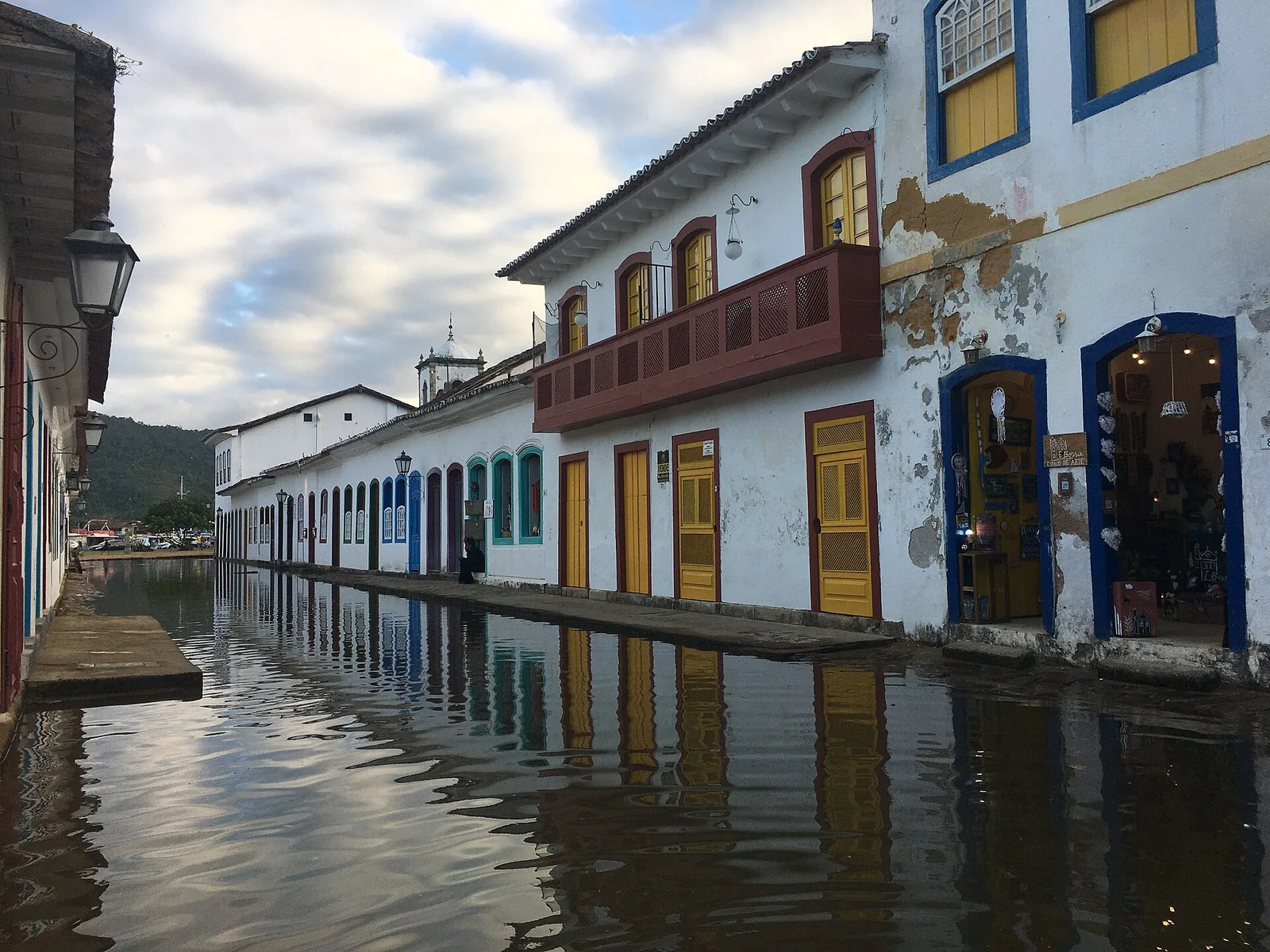
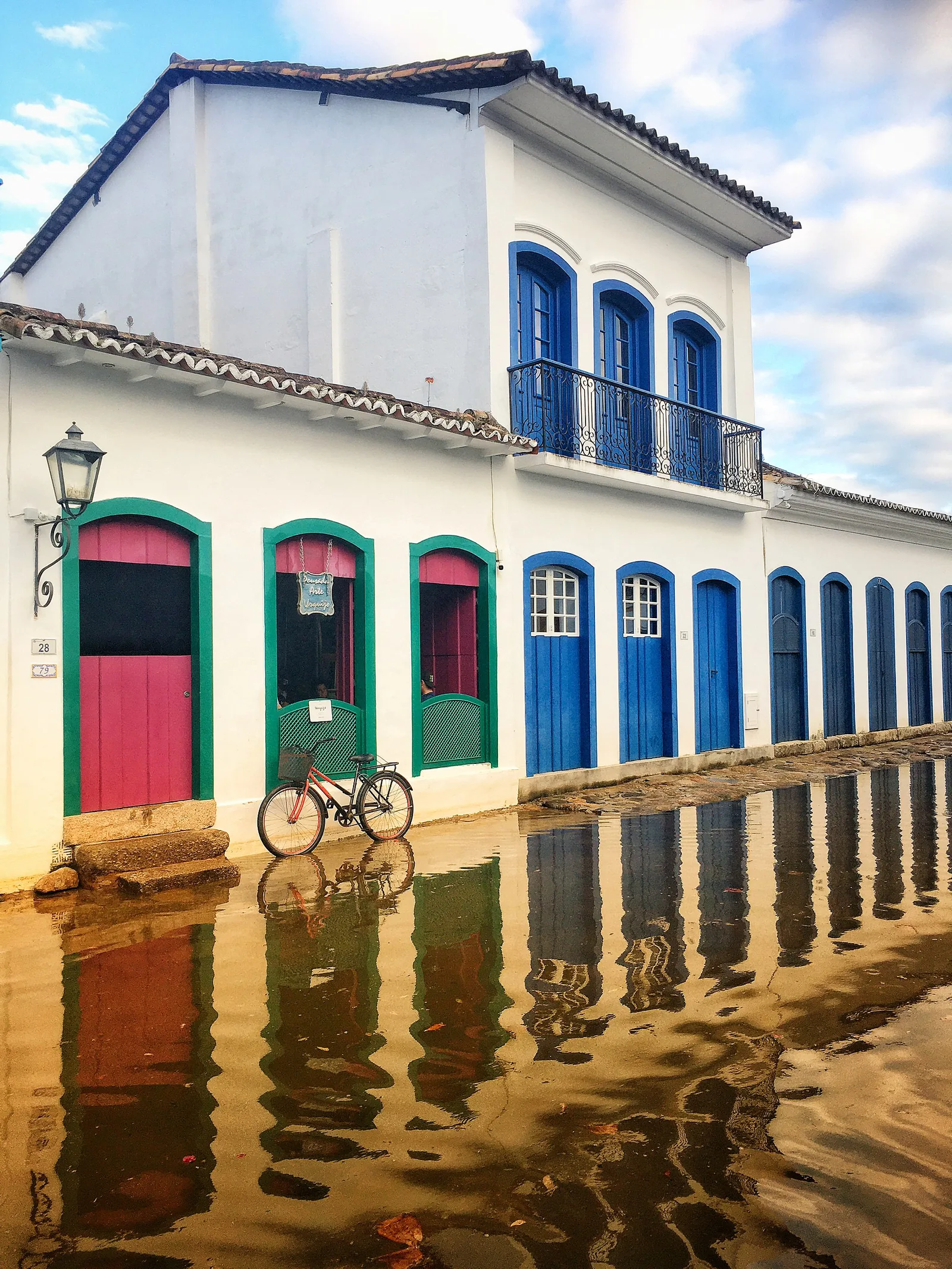
Almost everything happens in the historic centre, and the centre at night is a different creature from the centre by day. The same streets that were busy with sightseers are now lamplit, traffic-free and quiet enough to hear your own footsteps on the big uneven stones. The colonial facades that look so photogenic in daylight take on a softer, warmer character under the old-style lighting; the Church of Santa Rita on the waterfront sits dark against the last light over the bay. It is, simply, a beautiful place to walk after dinner, and walking is most of what a Paraty night is.
The centre is small and entirely on foot — no cars on the cobbles — so you orient yourself around the main squares and the waterfront and let curiosity do the rest. The bars and restaurants cluster, so you are never more than a couple of minutes from the next pool of light and sound. Some practical truths that will make the evening better:
- Wear flat, grippy shoes. I cannot say this often enough. The cobbles — the locals call them pé de moleque — are large, irregular and properly slippery after rain. Heels are a genuine hazard here, and even good shoes deserve a careful step.
- Eat late and let it stretch. Tables come alive after half eight. An early dinner means an empty room and no atmosphere; a later one drops you into the heart of the evening.
- Bring a light layer. Evenings off the bay can turn cool, especially in the drier winter months, and you will be sitting outside.
- Let the squares be your compass. The clusters of tables around the main squares and near the water are where the town gathers; start there and wander out.
If you want the centre to yourself, the very late evening — after the dinner crowd thins — is magical for a last walk, the streets emptied of everyone but a few stragglers and the occasional musician packing up. It is one of the quiet luxuries of a town this small. For the history behind those streets, and what you will be walking past in the dark, our historic-centre guide is the daytime companion to this night-time one.
The music: choro, bossa, samba and forró
Music is the real heart of a Paraty evening, and it is overwhelmingly Brazilian music, which is exactly as it should be. You will not find much in the way of international club sounds; what you will find is the warm, intimate, melodic tradition of Brazil's own genres, played live in rooms and squares small enough that you can hear the instruments breathe.
What you will hear
- Choro (chorinho) — Brazil's oldest urban popular music, instrumental, fast-fingered and joyful, built around guitar, cavaquinho, flute and pandeiro. A choro group in a small colonial dining room is the quintessential Paraty sound, and one of my favourite things about evenings here.
- Bossa nova and MPB — the cooler, quieter end of the spectrum: a singer and a guitar, the smoky, gentle standards everyone half-knows, perfect for a long dinner. MPB, música popular brasileira, is the broad church most acoustic sets draw from.
- Samba — livelier, rhythmic, made for tapping and singing along, often spilling out of the busier bars and squares on weekend nights.
- Forró — the accordion-driven dance music of the northeast, irresistible and participatory; where there is forró there is usually dancing, and you will be welcome to join however badly you do it.
- The occasional jazz, blues or acoustic set, especially around the May music festival, when international and Brazilian players fill the town.
The music lives mostly inside the restaurants and bars rather than in dedicated venues — the line between dinner and a gig is happily blurry here. A place that served you a long seafood supper at nine can be a live-music room by half ten, the tables pushed aside a little, a trio in the corner. Weekends are reliably the best for live music; weeknights outside the high season can be quiet, with only a square or two humming. My honest advice is the same as for everything else here: do not lock yourself into a plan. Walk the centre, listen at the doorways, and go in where the sound pulls you.
Why the scale matters
What makes the music here special is precisely what makes it un-spectacular: scale. There is no stage, no sound system to fight, no crowd between you and the players. You sit close enough to watch a cavaquinho player's hand and to catch the glance a singer gives the guitarist before a key change. The intimacy changes the music itself — a choro group plays differently for forty people in a low-ceilinged colonial room than a band does for a festival field, and that difference is the whole point. It is music as conversation rather than performance, and it suits the town's whole unhurried temperament.
It also means the experience is wonderfully unpredictable. The musicians are often locals or seasonal players who know each other, so sets wander, guests sit in, and a quiet acoustic evening can tip into something livelier when the right person picks up an instrument. Some of my best nights here were the ones I did not plan — a casual supper that became a three-hour session because a couple of friends of the house turned up with their guitars. You cannot book that. You can only put yourself in the centre on a good evening and let it find you.
Cachaça bars and the old botecos
You cannot talk about Paraty after dark without talking about cachaça. This is one of the historic homes of Brazil's national spirit — the sugarcane distillate that, with lime, sugar and ice, becomes the caipirinha — and the region's small family distilleries have been making it in these hills for centuries. The evening drinking culture reflects that. Alongside the music rooms you will find cachaçarias, bars built around the spirit, where the point is to taste and compare rather than to get hammered.
A good cachaçaria will pour you aged, barrel-rested cachaças you would never find abroad, often from tiny local producers, sometimes infused with fruit, honey or spices. Order a flight, ask the person behind the bar what they are proud of, and treat it the way you might a tasting of good whisky or rum — because at its best, that is exactly what it is. The caipirinha, meanwhile, is the easy, joyful default, and a well-made one in a Paraty square on a warm night is hard to beat.
Then there are the botecos — the unpretentious neighbourhood bars that are the backbone of Brazilian sociability. A boteco is not trying to impress you; it is a few tables, cold beer, simple petiscos (bar snacks) like fried fish, pastéis or grilled cheese, and conversation that runs late. The botecos around the centre fill with a mix of locals and visitors and are, for my money, the most authentic place to spend a Paraty evening. Sit, order a cold beer or a caipirinha and a plate to share, and let the night come to you.
If the spirit itself catches your interest, the daytime visit to the working distilleries in the hills is one of the best half-days the region offers — our guide to the cachaça distilleries covers the family alembics you can tour, and the wider story of the drink lives in our journal piece on cachaça and caipirinha culture. Taste it where it is made, then drink it where it belongs, in a colonial square after dark.
Dinner that becomes the evening
Because the music and the dining rooms are so intertwined, dinner in Paraty is rarely just a meal — it is the evening's centre of gravity. The town eats well: the bay and the open coast supply genuinely good seafood, the caiçara fishing tradition shows up in the local cooking, and the long, sociable Brazilian dinner is the natural way to spend the first half of a night.
The seafood houses near the harbour end of the centre do the local catch simply and well — fish, prawns, the regional moqueca stew rich with coconut milk and dendê oil. Elsewhere you will find everything from rustic Brazilian home cooking to more ambitious kitchens, and many of the better rooms layer live music over the back half of service so that one thing flows into the next. The rhythm is to arrive late, eat slowly, share, and then stay for the music or wander out to find it. I have lost count of the evenings that began as a quick supper and ended, three hours later, with a choro band and a second caipirinha I did not need.
A few habits make these long dinners better. Order to share — Brazilian portions are generous and the table is more fun when everything is communal, a whole grilled fish, a moqueca, a plate of bolinhos passed around. Do not rush the gap between courses; the pause, with a drink and the music starting up, is part of the meal, not dead time. And ask your waiter what came in fresh that day rather than reaching for the same dish you would order at home — the catch changes, and the kitchens are proud of it. The reward for eating the Paraty way, slowly and curiously, is that dinner stops being a thing you do before the evening and becomes the evening itself.
It is worth saying, too, that the food here is not separate from the culture that surrounds it. The fish on your plate was very likely landed by one of the caiçara fishing families whose communities ring the bay, cooked in ways handed down through generations of this coast. Eating well in Paraty is, in a small way, taking part in that living tradition — one more reason the long evening over a shared table feels like it belongs to the place rather than being staged for visitors.
For where to eat and the local dishes worth seeking out, our restaurants guide goes into far more detail than I can here, and the deeper story of the region's food — the moqueca, the manioc, the fishing economy behind it — is bound up with the caiçara culture of the coast, which is worth reading before you eat so that you taste it with some context.
Festival nights: when Paraty is at full voice
If you want to catch Paraty genuinely lively, time your visit to one of its festivals. The town's calendar has a handful of standout events that fill the centre with music, crowds and energy late into the night, and they are when the place is least like its sleepy everyday self.
FLIP — the literary festival
The Festa Literária Internacional de Paraty, known as FLIP, is the big one — Brazil's most important literary festival, held since 2003, usually in late July or early August. It brings authors and audiences from all over the world, and for its few days the whole town becomes a venue: talks and debates by day, and a centre that buzzes with bars, music, pop-up events and crowds well into the night. It is intellectual and convivial at once, and the nights during FLIP are the busiest of the Paraty year outside high summer. If you want the town at its most alive — and you book well ahead, because it fills completely — FLIP is the moment. Our guide to FLIP and the festivals has the practical detail.
The Festival da Cachaça
In August, the town celebrates the spirit that built it with the Festival da Cachaça (often called the Festa da Pinga), days of tastings, music and street life devoted to the local distilleries. It is exactly as fun as it sounds, and the evenings run long.
Carnival and the Bloco da Lama
Carnival, usually in February, transforms Paraty. Alongside the giant puppet parades and the street blocos, the town hosts its own famous oddity: the Bloco da Lama, the 'mud block', where revellers coat themselves head to toe in dark mangrove mud and parade through the centre like a tribe of joyful swamp creatures. It is messy, surreal and a genuinely local tradition, and the nights through Carnival are the wildest the town gets. Be warned that the town is packed and prices climb steeply over Carnival and New Year — the two peaks of the Paraty calendar.
The music festivals and religious feasts
A jazz, blues and soul festival typically lands in May, drawing serious musicians and filling the bars with live sets — for many photographers and music lovers it is the sweet spot of the year, lively but not overwhelmed. For a few nights the colonial rooms swap their usual choro and samba for brass, blues guitar and soul vocals, and the town takes on an unexpected, late-night cosmopolitan edge while keeping its small scale. It rarely sells out the way FLIP and Carnival do, which makes it one of the easier festivals to build a relaxed trip around. The town also keeps its old religious feasts, above all the Festa do Divino around Pentecost, which brings processions, traditional music and a different, deeper kind of evening rooted in the community rather than tourism. For help lining your trip up with the right moment, our best-time-to-visit guide lays the calendar out month by month.
The squares: the town's living room
If the dining rooms are where Paraty's evening starts and the botecos are where it loosens up, the squares are where it all spills together. The historic centre is built around a handful of open praças, and after dark these become the town's shared living room — clusters of outdoor tables under the colonial facades, lit by warm lamplight, where the boundary between one bar and the next dissolves into a single sociable sprawl.
This is the most democratic and, I think, the most authentic face of Paraty after dark. You do not need a reservation or a plan. You find a table, order a cold beer or a caipirinha, and watch the evening happen around you — buskers moving from corner to corner, families out for an after-dinner stroll, children chasing each other across the cobbles, a samba group setting up in one corner while a guitarist plays quietly in another. On a good weekend night the overlapping music and chatter give the squares a hum that is unmistakably Brazilian: relaxed, unhurried, and welcoming to anyone who pulls up a chair.
What I love about the squares is that they belong to everyone. There is no scene to gatecrash, no sense of who does or does not fit. A solo traveller with a book, a couple on a first night away, a big group of friends, a local family marking nothing in particular — they share the same space and the same easy mood. Spend one evening simply parked in a square, ordering slowly and letting the town flow past, and you will understand Paraty after dark better than any list of venues could teach you.
For different kinds of travellers
Paraty's evenings flex to suit whoever you are travelling as, which is one of the quiet strengths of a town built on atmosphere rather than a single scene.
Couples
For couples the town is a gift. A long candlelit dinner in a colonial room, a choro band playing softly, a wander hand-in-hand through empty lamplit lanes, a nightcap somewhere quiet — it is romantic without trying to be, which is the best kind. The lack of a loud party scene works in your favour here. Our romantic-getaway guide leans into exactly this.
Friends and groups
Groups do well in the squares and botecos, where the table can grow as the night does and there is always another bar a few steps away. Time a trip to a festival and you will find all the energy you could want; come in the quiet season and you make your own, which a good group always can.
Families
Families are genuinely well served, which surprises people. The pedestrian centre means children can roam the squares safely while the adults linger over dinner, the early evening is lively and unthreatening, and there is no edgy late scene to navigate. An after-dark stroll for ice cream through the traffic-free streets is a simple pleasure that travels well with kids — more in our family guide.
Solo travellers
And solo travellers should not hesitate. The squares and botecos are easy, unintimidating places to sit alone, the live music gives you something to be part of without needing company, and the town is small and friendly enough that an evening on your own here never feels lonely.
Lively seasons and quiet ones
Be realistic about how much the season changes the experience, because it changes it a great deal. Paraty has a clear high and low rhythm, and your evenings will feel very different depending on when you come.
- The peaks — New Year, Carnival in February, the July school holidays and the festival dates — are when the town is full, the centre runs late, and the nightlife is at its most energetic. If you want bustle and reliable late music, come then; just expect crowds and higher prices, and book far ahead.
- The shoulder seasons — much of autumn and spring — are my favourite. The town is comfortable rather than crowded, you can still find live music at weekends, and the evenings keep their charm without the crush.
- The quiet weeks — midweek in the low season — are genuinely sleepy. Some places close early, the streets empty by late evening, and the appeal shifts from going out to a long quiet dinner and a moonlit walk. For some travellers that is precisely the point; for others it can feel too still. Know which you are.
There is no wrong answer, only a trade-off, and it is worth choosing on purpose. A honeymooning couple may treasure the quiet; a group of friends may want the festival weeks. Whatever you are after, our notes on Paraty for honeymooners and on visiting with family can help you weigh the seasons for your own party.
Coming home to a quiet hillside
Here is the part of a Paraty evening that the town itself does not advertise, and that I think matters most. However warm and musical the night in the centre, the loveliest moment often comes after — when you leave the lamplit cobbles, climb up out of town, and the noise falls away into the sound of frogs, insects and the breeze off the bay.
This is the rhythm I would design a stay around: down into the centre for dinner, music and a wander; back up the hill to somewhere quiet and dark to sleep. The two halves complete each other. The evening in town is sociable and full of sound; the night above it is still, with the bay spread out below and the lights of Paraty small in the distance. Our own chalet sits about four hundred metres above the bay, far enough from the centre that the only thing you hear at night is the forest, close enough that an evening out is an easy trip down and back. After a long supper and a couple of caipirinhas, a nightcap by the pool with the dark water and the island lights below is the kind of ending the brochures cannot really sell you — you have to be there.
That contrast is, honestly, the secret to enjoying Paraty after dark: embrace what the town is rather than wishing it were a different kind of place. Go down for the music and the warmth and the cachaça, and come back up for the quiet. Do it that way and the evenings here become some of the best of any trip.
Practical notes for evenings out
A few last, useful things to make your nights run smoothly.
- Getting around: the centre is entirely on foot, so the main question is getting between your accommodation and town. If you are staying up in the hills or out of the centre, sort out transport for the journey home in advance rather than at midnight; our getting-around guide covers the options.
- Cash and cards: the bigger restaurants and bars take cards, but smaller botecos, street musicians and some squares are easier with a little cash. Carry some.
- Timing: aim to be eating by half eight or nine for the best atmosphere; arrive earlier and you will be ahead of the evening.
- Footwear, once more: flat and grippy, always. The cobbles are unforgiving and worse after rain.
- Pace yourself with the cachaça. The good stuff goes down deceptively easily, and the caipirinhas are stronger than they taste. Water between rounds is your friend.
- Be a good guest in the squares. The music and the street life are part of people's living, not a performance laid on for visitors. Tip the musicians, buy from the bars, and keep the noise friendly rather than rowdy on your way home through residential lanes.
Paraty after dark is, in the end, a quieter pleasure than the word 'nightlife' suggests, and far richer for it. It is choro in a candlelit room, cachaça in an old bar, a square full of guitars, and a slow walk home under the lanterns — and then the deep quiet of the hill above the bay. If that is the kind of evening you are after, plan a few days, leave the schedule loose, and let the town set the tempo. When you are ready to build a trip around it, get in touch and we will help you do it well.
Frequently asked questions
It depends what you mean. If you want big clubs and DJs, no — Paraty is not that kind of town. If you want live Brazilian music, samba and choro spilling out of colonial dining rooms, cachaça bars and lively squares, and long warm evenings out, then yes, it is genuinely lovely. The pleasure here is atmosphere, not volume.
Mostly Brazilian: choro (chorinho), bossa nova and MPB on quieter nights, samba and forró on busier ones, with the occasional acoustic set or jazz. It tends to be in restaurants, small bars and squares rather than dedicated concert venues, and at weekends it is at its best.
Almost all of it is in the pedestrian historic centre — the cobbled, traffic-free grid of colonial streets and squares. The bars and restaurants around the main squares and near the waterfront are where the evening gathers. It is small and walkable, so you wander rather than plan.
Rarely, and not as a scene. The town is busiest and latest during festivals and the high summer holidays around New Year and Carnival; outside those times the centre winds down by late evening on weeknights. People come to Paraty to slow down, and the nights reflect that.
The big ones are FLIP, the international literary festival in late July or early August; the Festival da Cachaça in August; a jazz and blues festival usually in May; and Carnival in February, when the famous Bloco da Lama mud parade and street blocos fill the centre. Festival nights are when Paraty is at its liveliest.
The historic centre is generally calm and easy to walk in the evening, well-used and well-lit around the busy streets. As anywhere, keep your wits about you on darker, quieter lanes, and arrange transport in advance if you are staying outside town. Walking the cobbles after dinner is one of the real pleasures here.
Smart-casual and comfortable. There is no dress code and no glamour scene to keep up with — but wear flat, sturdy shoes, because the cobblestones are large, uneven and slick after rain. Heels and the historic centre do not get along.