In this guide
The Brazilian summer runs from December to March, and it is the season that shows Paraty at its loudest and most alive. If you picture this stretch of the Costa Verde as a warm, green, half-sleepy colonial town by a calm bay, summer is when that picture cranks up to full volume: the sea turns bath-warm, the waterfalls thunder, the historic centre fills with holidaymakers, and almost every afternoon a towering cloud builds over the Serra do Mar and breaks in a warm, drenching storm that clears as fast as it arrives. Paraty in summer is vivid, generous and a little chaotic, and it is not the same experience as Paraty in the quiet, dry winter.
I want to be honest about all of it, because summer is the season travellers most often get wrong. Some arrive expecting endless sun and are caught out by the daily rain; others avoid the summer entirely on the strength of that rain and miss the warmest sea and the best of the region's water. The truth sits in between. Summer here is a season of genuine trade-offs, and the aim of this guide is to lay them out plainly, so you can decide with open eyes whether December to March is the right window for the trip you have in mind.
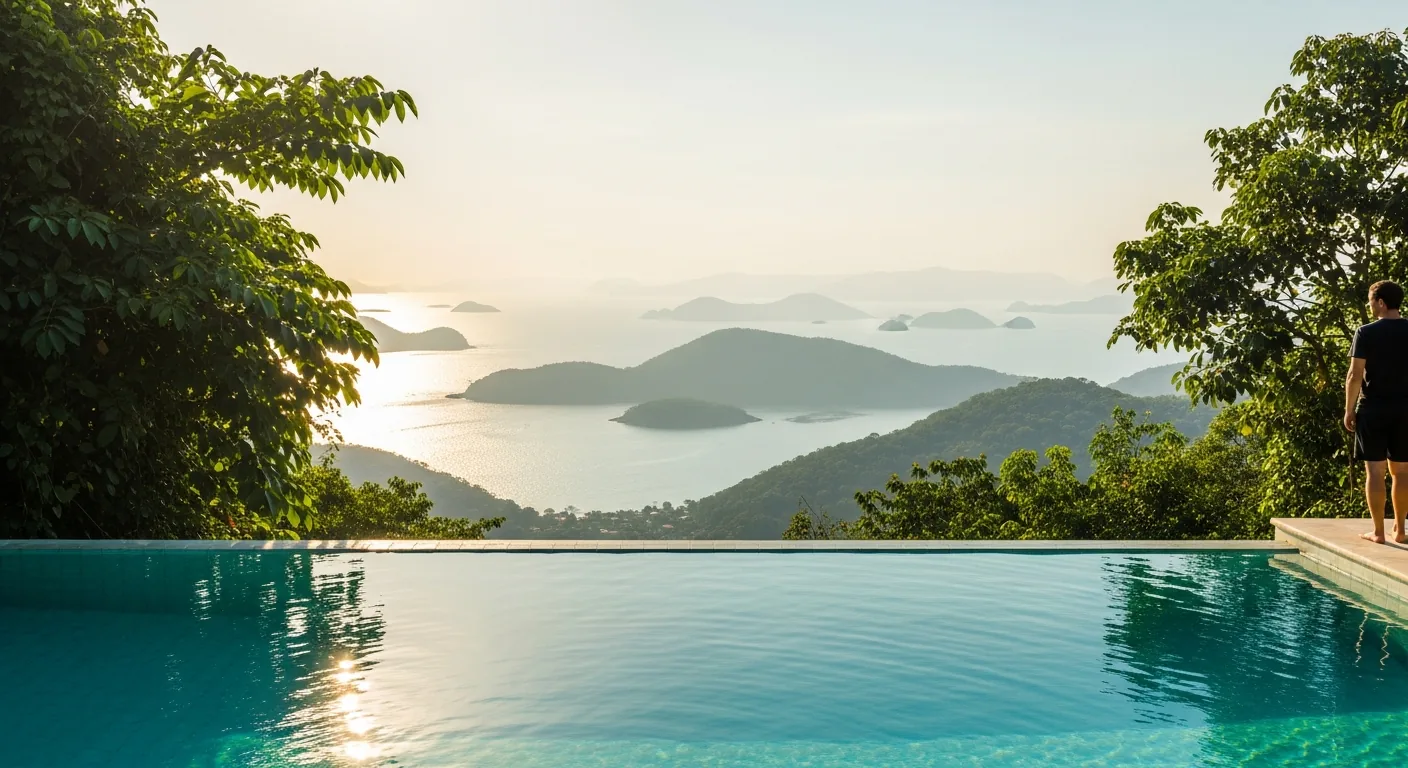
We host guests at a hillside chalet a short drive above the town, at around 400 metres, with an infinity pool and a single deck that looks out over Paraty, Angra dos Reis and Ilha Grande at once. That vantage point shapes how I think about summer, and I will come back to it, because a base up in the cooler air, with a pool to come home to, changes the calculation of a hot, humid season more than you might expect. First, though, the season itself.
.jpg)
What "summer" means here, and why the calendar is upside down
The first thing to fix in your head, especially if you are travelling from the northern hemisphere, is that the seasons in Brazil run opposite to the ones you grew up with. Paraty sits well south of the equator, so its summer falls across the months you think of as winter: December, January, February and into March. The winter here, cool and dry, lands in June, July and August. Get that the wrong way round and you can book a beach holiday straight into the wettest weeks of the year, or plan a quiet trip into the busiest.
For travellers coming up from São Paulo or across from Rio de Janeiro, none of this is news; the Brazilian summer is simply the high season, the school-holiday season, the time the whole country heads for the coast. For guests arriving from abroad, it is worth repeating, because "summer in Brazil" and "summer at home" almost never mean the same months. When this guide talks about summer, it means December through March, the hot and rainy half of the Costa Verde's year. If you want the full year-round comparison, our companion guide to the best time to visit Paraty sets every season side by side; this piece goes deep on just the summer.
One more distinction matters. The Costa Verde has a clear wet-and-dry pattern rather than a hot-and-cold one. Summer is not only the warm season, it is the rainy season, and the two arrive together. That single fact drives almost everything that follows, from what to pack to which activities to plan for the morning.
Summer in Paraty is not the easy season; it is the vivid one, and the two are not the same thing.
The heat and the humidity: what the days actually feel like
Summer days in Paraty are hot, and the humidity makes them feel hotter still. Daytime highs usually sit around 28 to 31 degrees Celsius, and in a hot spell the thermometer can push well past that. The numbers alone undersell it, though, because the air is heavy with moisture coming off the sea and the forest. A 30-degree day here is stickier and more tiring than a 30-degree day in a dry climate, and by early afternoon most people are ready for shade, water or air-conditioning.
The upside of that heat is the length and brightness of the days. The sun is strong and high, mornings tend to be clear, and there are long hours of good light for the beaches, the boats and the water. The downside is that midday can be genuinely draining, particularly for older travellers, small children, or anyone walking the colonial centre's stone streets, which hold and throw back the heat. The practical rhythm that works in summer is an early start, a slow and shaded middle of the day, and a second wind in the late afternoon once the worst of the heat, and often the day's rain, has passed.
This is where being based up in the hills earns its keep. The chalet sits high enough above the bay that the air moves and the nights cool off, and a pool at the edge of the deck turns the fierce part of the day into the best part of it. Guests who spend a hot, humid summer morning down at the beaches often come back not for lunch out but for a long swim up here, where it is a few degrees kinder and there is a breeze. The heat is real; you plan around it rather than fight it.

The summer rain, and why it need not spoil the trip
Summer is the wettest season on this coast by a wide margin. December is typically the rainiest month of all, and January runs it close, with heavy totals spread across many days. If you look only at the rainfall figures, you might write summer off. That would be a mistake, because the way the rain falls matters far more than how much of it there is.
The classic summer day starts sunny. The morning is bright and clear, often the best part of the day; humidity climbs through the late morning and midday; and then, in the afternoon or early evening, a tall storm cloud that has been building over the mountains lets go in a warm, heavy downpour with thunder and lightning. Often it clears within an hour or two, sometimes leaving a fresh, washed evening behind it. This is tropical rain, dramatic and brief, not the settled grey drizzle of a temperate winter. It does not usually rain all day, and it rarely rains all morning.
Reading the sky and planning your day
Once you understand the pattern, you plan for it rather than against it. Do the weather-dependent things early: the beach mornings, the boat trips, the hikes, the long swims. Keep the afternoons flexible, and treat a late-day storm as the cue to be somewhere it does not matter, whether that is a long lunch, the historic centre under an umbrella, or the pool with a drink while it passes. Boat operators read the same sky you do, and on unsettled days trips tend to leave in the morning for exactly this reason. If you are set on a full day on the water, our guide to Paraty boat tours explains how the schooners and small-boat trips work and why an early departure is the summer default.
What to do when it does pour
Some summer days simply rain, and a wet day in Paraty is no disaster. The colonial centre is at its most atmospheric with rain on the cobbles and the crowds thinned out; the churches, the small museums, the cachaça cellars and the covered restaurants all come into their own. This is also the season the region's waterfalls are worth building a day around, since heavy rain feeds them. We keep a full list of indoor and weather-proof ideas in our rainy-day guide to Paraty, which is written for exactly the kind of afternoon the summer throws at you. The single most useful mindset is to hold your plans loosely: the traveller who insists on a fixed beach day comes off worse in summer than the one who lets the sky decide.
The warm sea: summer's real prize
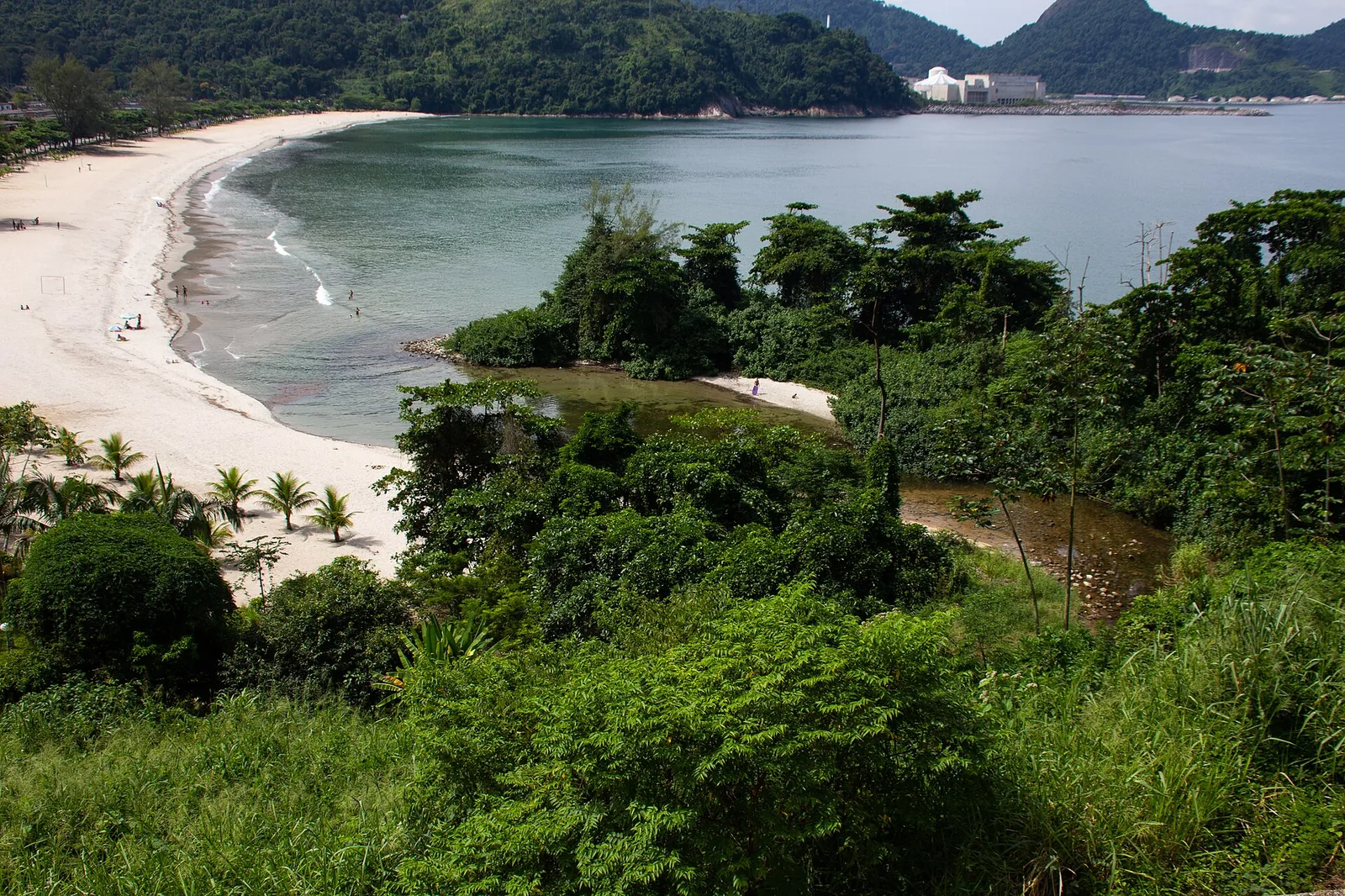
If there is one thing summer does better than any other season, it is the sea. The water off the Costa Verde reaches its warmest of the year in the summer months, climbing to around 26 or 27 degrees Celsius by February, close to bath temperature. After the cooler, brisker swimming of winter, the summer sea is an easy, lingering pleasure, warm enough to stay in for as long as you like, gentle enough for children, and inviting at any hour.
The bay itself helps. Paraty sits inside a sheltered, island-scattered bay, so much of the swimming is calm and protected rather than surf-battered, which suits families and unhurried swimmers. The warm water is the reason so many Brazilian families take their summer holidays here, and it is genuinely one of the best arguments for coming in this season rather than another. Our guide to the best beaches around Paraty covers where to find the calmest coves and the cleaner sand, both of which matter more in a crowded, rainy season.
Two honest caveats. First, heavy rain can cloud the water near river mouths and the town beaches for a day or two, washing sediment down off the hills; the clearest swimming after a storm is usually out at the island beaches reached by boat rather than at the town's edge. Second, if flat, glass-clear water for snorkelling and diving is your priority, summer's warmth comes with slightly less reliable visibility than the settled shoulder months; our note on diving and snorkelling goes into the timing. For plain warm swimming, though, nothing beats the summer.
Waterfalls and rainforest at their fullest
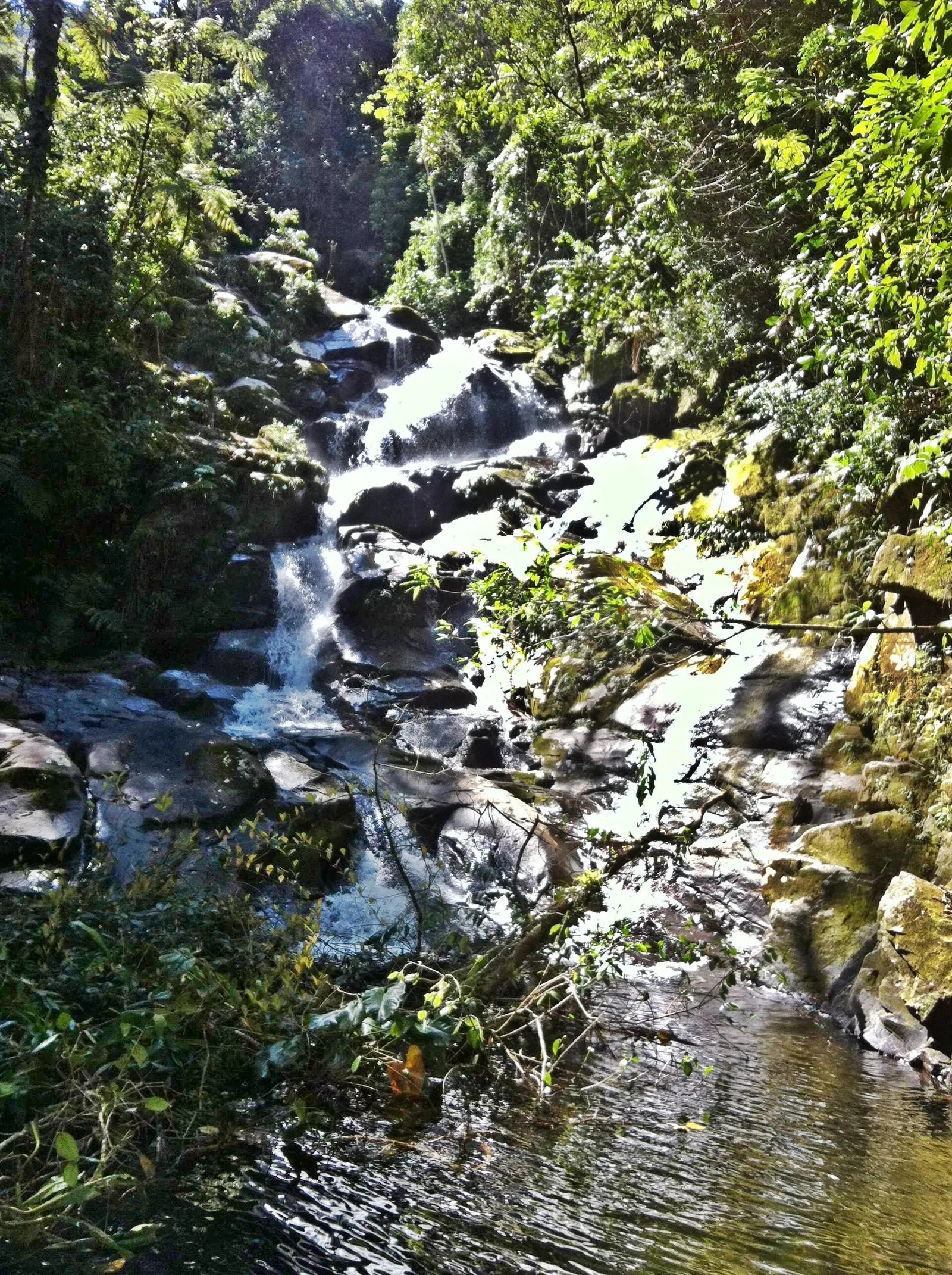
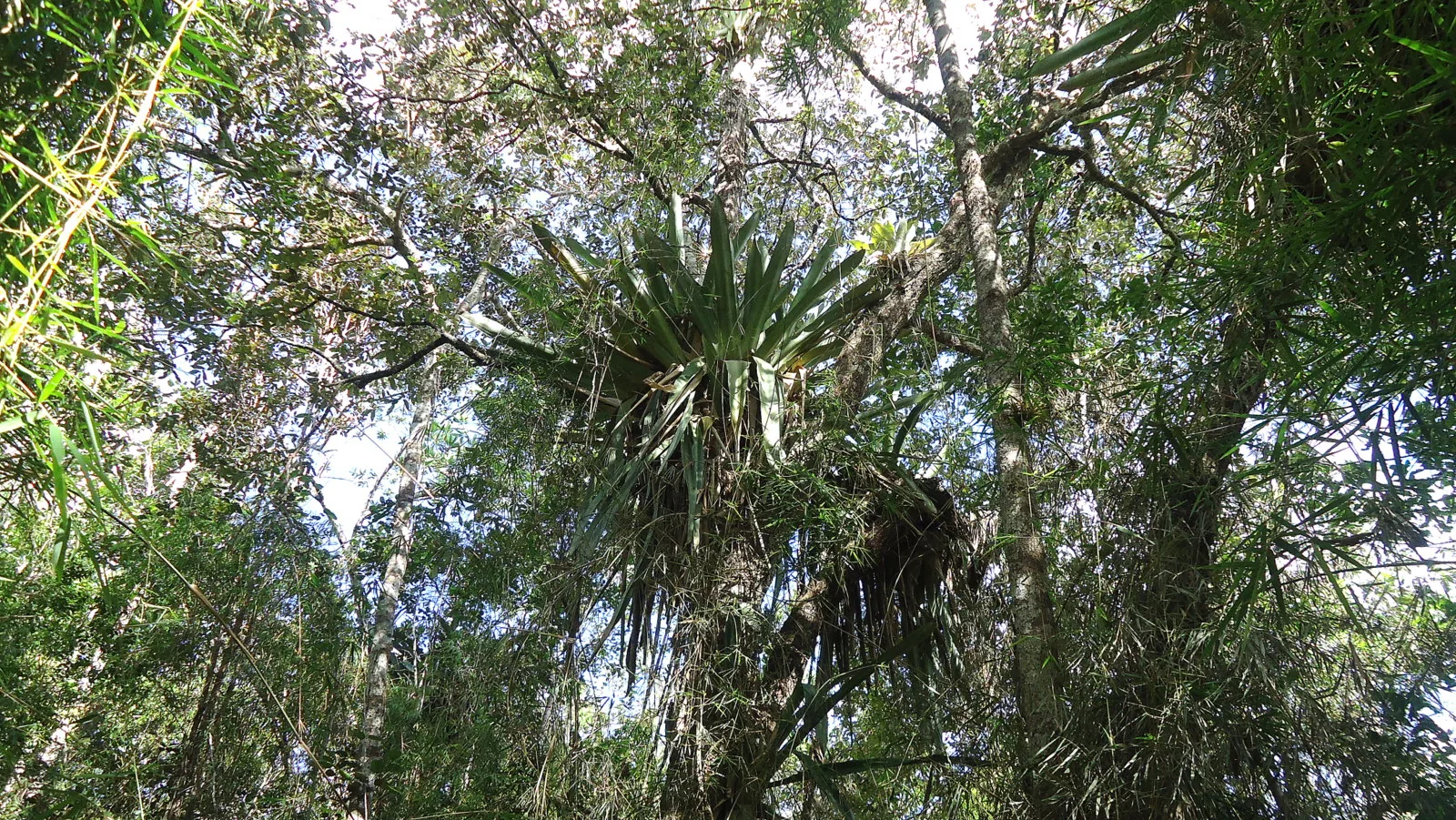
The summer rain is not only a cost; it is also what makes the green coast green. The Serra do Mar behind Paraty holds some of the best-preserved Atlantic Forest anywhere, and it is at its most lush and dripping in the wet months, the canopy heavy, the rivers high, the whole landscape saturated with colour. If you love rainforest, summer shows it at full power.
The waterfalls follow the same logic. The cachoeiras on the rivers around Paraty and up the old mountain road run hardest after summer rain, and a hot summer day is the ideal time to seek out a cold forest pool and a natural rock slide. It is one of the season's genuine gifts: when the beach is rained off or the heat is too much, the waterfalls are at their most powerful and the cool water is at its most welcome. Our guide to the waterfalls of Paraty maps out which are easiest to reach and which reward a longer walk, and summer is the season it was written for. The historic Gold Trail, the Caminho do Ouro, runs up into this same forest, though be aware the stone path can be slick underfoot after rain.
New Year and Carnival: the two crowded peaks
Summer contains the two biggest dates in the Brazilian calendar, and they sit at opposite ends of the season. Both are wonderful. Both are also the busiest, priciest and most crowded times of the entire year, and you should decide deliberately whether you want to be in the middle of them or comfortably clear.
New Year, Réveillon
Réveillon, New Year's Eve, is a major event on this coast. Paraty fills for it, the restaurants and bars are packed, there is live music and fireworks, and the town carries a festive charge for several days either side. It is a lovely time to be here if that is the energy you want. It is also the single hardest window to travel quietly: accommodation books out months ahead, minimum-stay requirements and premium pricing are the norm, and the whole southeast coast fills with Brazilians on their own summer holidays, so roads and towns are at their busiest.
My practical advice is simple. If Réveillon is the dream, plan it early and embrace the scale. If it is not, look at the first or second week of January instead: you get the same warm sea and long days, the town settles from its New Year peak, and the prices ease from their absolute high, even though January remains firmly high season.
Carnival and the Bloco da Lama
Carnival moves every year because it is tied to Easter, usually landing in February or occasionally early March. For planning purposes, in 2027 the main run falls around the 5th to the 9th of February. Paraty's Carnival has its own character, quite different from Rio's: street parties and drumming through the colonial centre, the tall carnival puppets known as bonecões, and, most famously, the Bloco da Lama, when revellers coat themselves head to toe in dark mangrove mud and parade along Jabaquara beach. It is playful, muddy, loud and completely unlike a beach holiday.
The same warning as for New Year applies, only more so. Carnival is the peak of the peak: the town is full, prices are at their highest, restaurants and boats are booked solid, and the whole rhythm of the place turns to the party. Come for it on purpose and it is a memorable few days. The worst outcome is arriving in the middle of it by accident, expecting a quiet colonial town and finding a mud-streaked street party at full tilt with every room taken. Check the Carnival dates for your travel year before you book anything. Our guide to FLIP and Paraty's festivals tracks the moving dates and the smaller events around them.
A note on FLIP
One festival that is worth clearing up here, because travellers often assume it is a summer event: FLIP, the international literary festival that is Paraty's most famous cultural draw, is a winter festival, usually held in July. It does not fall in the December-to-March summer at all. If your reason for coming is FLIP, you are planning a winter trip, not a summer one. The festivals that belong to summer are New Year and Carnival, and they are celebrations of a very different kind.

Crowds, prices and the domestic holiday calendar
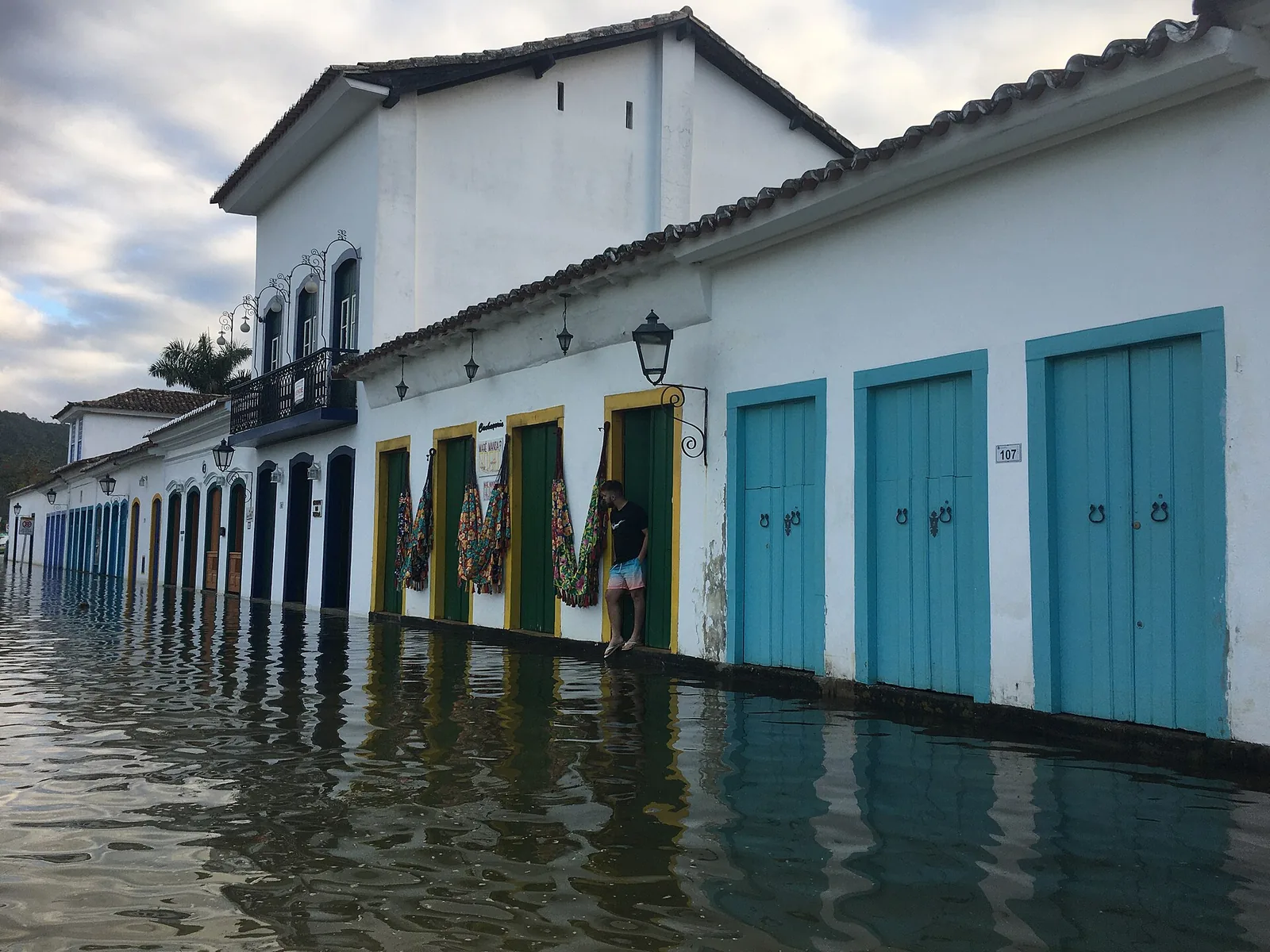
Even setting aside the two headline events, summer is high season across the board, and it pays to understand the domestic rhythm that drives it. Brazilian school summer holidays run through January into early February, and this is when families from São Paulo, Rio and beyond take to the coast in their greatest numbers. January in particular is a busy, sociable, fully booked month, with the beaches lively and the town humming. There is also a string of long weekends and public holidays scattered through the season, and because Paraty is within driving reach of both Rio and São Paulo, it feels every one of them; the coast fills whenever city-dwellers get a three-day weekend.
What this means for you is straightforward. Summer is the season to book early, to accept higher prices than the shoulder months, and to expect company at the popular beaches and on the water. None of that need spoil a trip; a busy Brazilian beach town in summer is a happy, warm-hearted place, and the crowds are part of the season's character rather than a fault in it. But if quiet is high on your list, summer is the wrong season to chase it, and you would do better in the shoulder weeks of late March or in the dry winter. If you do come in summer and want a little distance from the crush, this is another argument for a base outside the town itself, up where the noise of the centre does not reach.
The same crowds shape how you get here. The coastal road between Rio and Paraty, and the roads down from São Paulo, are at their busiest on summer weekends and around the New Year and Carnival holidays, so a drive that takes around four to five hours in quiet conditions can stretch well beyond that when the whole coast is on the move. Travellers coming from Rio or São Paulo do best to move midweek where they can, and to avoid setting off on a holiday Friday or returning on the Sunday. Those flying in from abroad usually land in Rio or São Paulo and transfer overland from there, and in peak summer weeks it is worth arranging the road leg well ahead rather than assuming a car or transfer will be free at short notice.
Which summer month is best, and which to avoid
Summer is not one uniform block. The months differ, and knowing how helps you pick your window. What follows is a broad guide, with the usual caution that any given year can break the pattern.
December
December is the start of summer and, on the rainfall charts, often the wettest month of all. Early December, before the festive rush, can be a quiet surprise: warm, green, and much less crowded than the weeks that follow, since the Brazilian school holidays have not fully begun and prices have not yet peaked. That changes sharply in the run-up to Christmas and New Year, when both the crowds and the rates climb toward their high. If you want warm summer weather without the full crush, the first half of December is one of the season's better-kept secrets, rain and all.
January
January is high summer in every sense: hot, humid, very wet, and the busiest month of the domestic holiday calendar. The sea is warm, the days are long, and the atmosphere is at its most festive, but this is also when you will share the beaches and the boats with the most people and pay the most for the privilege. After the New Year peak subsides, mid-January settles a little without ever going quiet. Come in January for the energy and the warm water, not for solitude.
February
February brings the warmest sea of the year and, in most years, Carnival. Outside the Carnival week itself, the back half of February can be slightly calmer than January as the school holidays wind down, while the water stays at its most inviting. The wild card is Carnival: whichever week it falls in becomes the busiest and priciest of the month, so the single most useful thing you can do for a February trip is to find out the exact dates and then choose to be either squarely in them or clear of them.
March
March is the turn of the season, and for my money one of the most underrated windows on the whole calendar. Early March still feels like summer, the sea holding its warmth, the days still long, but the crowds thin as Brazilian families return to school and work, and prices soften. By late March the rain is easing and the first hint of the drier autumn arrives. If you want the warm-sea pleasures of summer with fewer of its costs, March, particularly once Carnival has passed, is where I would point you.
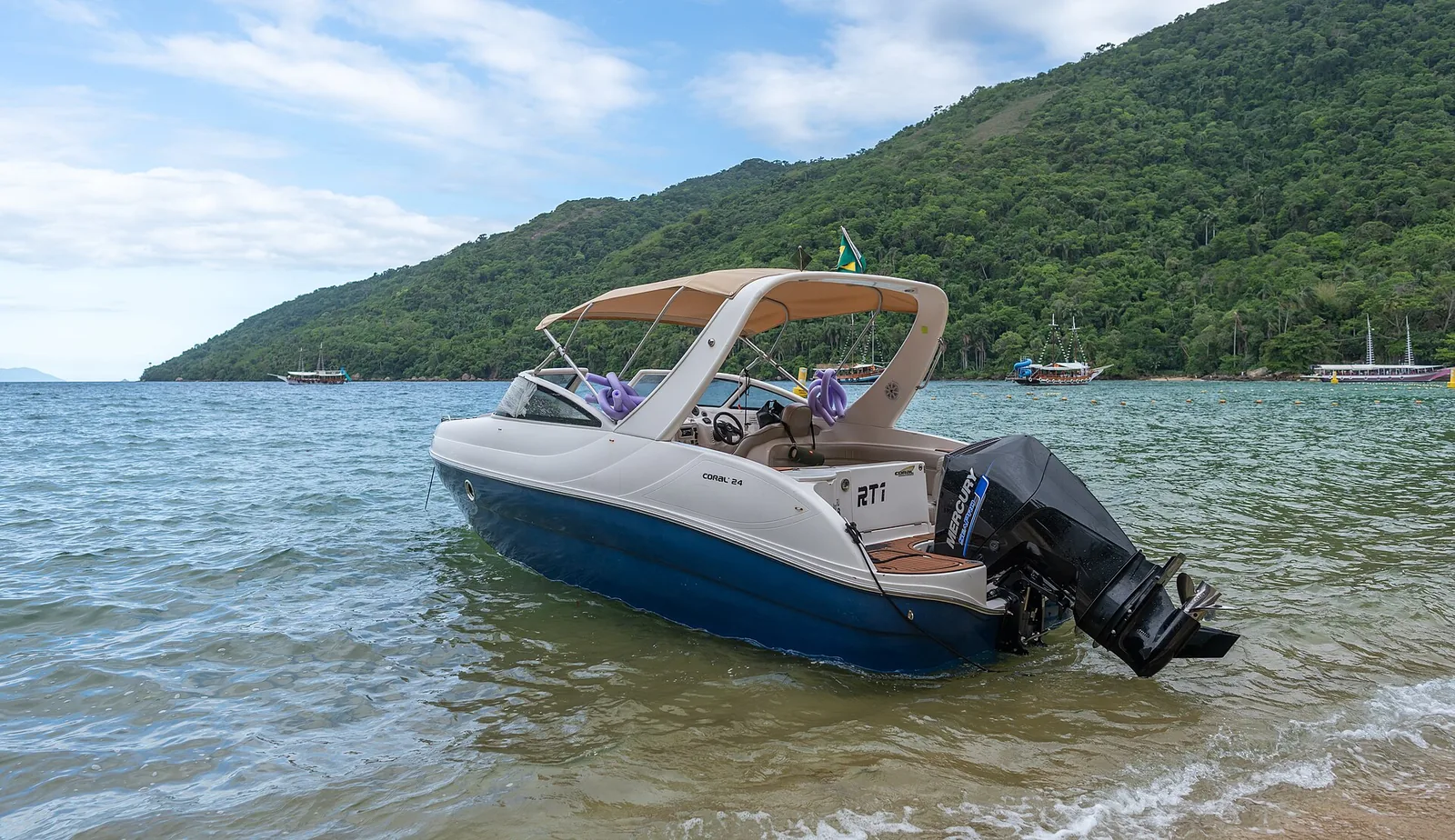

What summer is best for, and what it is worst for
Pulling the trade-offs together, here is the plain summary.
Summer is best for warm-sea swimming, long beach days when the weather cooperates, powerful waterfalls and cold forest pools, lush rainforest at its greenest, long daylight hours, and the festive, sociable energy of the year's high season, including New Year and Carnival if that is what you want. It suits sun-seekers, families who want warm water for children, and anyone who would rather have life and colour than calm and quiet.
Summer is worst for anyone who wants reliably dry days, settled weather for full-day boating and snorkelling, low prices, small crowds, or a quiet, contemplative version of Paraty. It is the least predictable season for a fixed itinerary, the most expensive, the most crowded, and the most physically taxing thanks to the heat and humidity. Travellers whose main aim is calm, clear water and empty beaches are usually happier in the shoulder months of autumn and spring, or in the dry winter, when the famous views come out sharp across the bay.
There is no single right answer, only the honest trade-off. Summer is not the easy season; it is the vivid one, and the two are not the same thing. Decide which you are actually after, and the choice makes itself.
How to plan a summer stay: a practical checklist
If you have settled on summer, a little preparation goes a long way. Here is what I would tell a guest arriving in December, January, February or March.
- Book early. Summer, and above all the New Year and Carnival weeks, sells out months ahead and prices rise as dates fill. This is not a season to leave to the last minute.
- Start days early. Get the beach, boat and hiking hours in during the clear mornings, and keep the afternoons flexible for heat and rain.
- Pack for heat and water both. Light, breathable clothing, strong sun protection and a hat for the fierce sun, plus a genuinely waterproof layer for the downpours. Quick-drying fabrics beat heavy cotton in this humidity.
- Bring proper footwear for wet stone. The colonial centre's cobbles and the forest trails turn slick after rain; grippy sandals or shoes save a fall.
- Plan waterfalls and indoor options as rain backups. Have a wet-afternoon plan ready so a storm changes your day rather than ruining it.
- Insect protection. Warm, wet weather means more mosquitoes, especially near forest and river; pack repellent and think about it at dusk.
- Check the Carnival dates. Know exactly when Carnival falls in your travel year, then decide deliberately whether to be in it or around it.
- Keep the itinerary loose. The travellers who enjoy a Paraty summer most are the ones who let the sky set the daily plan.
For longer trips that fold Paraty into a wider route from Rio or São Paulo, our Paraty itineraries show how the days fit together, and the explore Paraty hub pulls the region's guides into one place. Families in particular should read our guide to Paraty with children, since the warm summer sea and the early-morning rhythm suit young travellers well.
Where the chalet fits into a summer week
A hot, wet, crowded season is exactly the kind of trip a good base transforms. The chalet sits up above the Bay of Paraty, high enough that the air moves and the evenings cool, with a single wide deck that takes in Paraty, Angra dos Reis and Ilha Grande at once, and an infinity pool at its edge. In practice, that shapes a summer week in a specific way: you go out early into town or onto the water while the morning is bright, and when the heat builds or the afternoon storm rolls in off the mountains, you come back up to the pool and the view rather than fighting the crowds in the centre.
That rhythm, out early and back for a swim, is the single best way to enjoy Paraty in high summer. It gives you the warm sea and the lively town on your own terms and a cool, quiet retreat from both when you want it. The pool becomes the centre of the day in a way it never quite is in the milder seasons, and the storm you would resent from a crowded street becomes something to watch from the deck with a drink in hand. You can read more about the house itself on the page for the chalet, and it is worth pairing a stay with a day out to Ilha Grande or an evening tasting on the cachaça and caipirinha trail, both of which reward the warm, festive mood of the season.
Making the call
So, should you come to Paraty in summer? If you want the warmest sea of the year, the fullest waterfalls, the greenest forest and the festive charge of the country's high season, and you are willing to trade for it in heat, humidity, afternoon rain, crowds and higher prices, then yes, December to March will give you a Paraty that few other seasons can match for sheer life and colour. If what you are really after is dry, settled, quiet days and clear views across an empty bay, the shoulder months or the dry winter will serve you better, and there is no shame in choosing them.
The mistake to avoid is coming in summer expecting winter, or dismissing summer on the strength of its rain without weighing what that rain brings with it. Understood on its own terms, the Brazilian summer is a fine time to be here; it simply asks you to travel with the season rather than against it, to start early, hold your plans loosely, and keep somewhere cool and calm to return to when the afternoon cloud opens up.
From the deck up here we watch every version of it: the brilliant, sticky mornings, the storms marching in over the mountains, the warm evenings after the rain has washed the air clean. If you would like help deciding whether summer is the right window for your trip, or shaping a stay around the season's rhythms, we are always glad to talk it through. Start with the Paraty hub to get a feel for the region, look over the chalet, and reach us any time on the contact page.
.jpg)
Frequently asked questions
Paraty's summer, from December to March, is hot and very humid, with daytime highs usually around 28 to 31 degrees Celsius and occasional spikes higher. It is the wettest time of year: most days start bright and clear, then build to a heavy afternoon or evening thunderstorm that often clears again overnight. The sea is at its warmest, close to 27 degrees Celsius by February.
It depends on what you want. Summer gives you the warmest sea, the fullest waterfalls, long days and the liveliest atmosphere, so it suits sun-and-swim holidays and anyone who wants the festive energy. The trade-offs are real: heavy afternoon rain, high humidity, the year's biggest crowds and the highest prices, especially around New Year and Carnival. Many travellers prefer the quieter, drier shoulder months either side.
Carnival moves each year because it is tied to Easter, usually falling in February or early March; in 2027 the main days run around the 5th to the 9th of February. Paraty celebrates with street parties in the historic centre, giant puppets and the famous Bloco da Lama mud parade at Jabaquara beach. It is one of the busiest, priciest weeks of the year, and accommodation books out months ahead.
Rarely. The typical summer pattern is a bright, sunny morning, rising humidity through midday, then a dramatic downpour with thunder in the afternoon or evening that frequently clears within an hour or two. All-day grey does happen, and you should expect to lose the odd day to rain, but most summer days still give you good beach and boat hours if you go out early.
Yes. Summer is the warmest swimming of the year on the Costa Verde, with sea temperatures rising to around 26 to 27 degrees Celsius by February, close to bath temperature. The bay's calm, sheltered water makes it comfortable for long swims and for children, though heavy rain can cloud the water near river mouths for a day or two.
New Year, or Réveillon, is a wonderful but demanding time to be on the coast. Expect fireworks, live music, packed restaurants and a festive crowd, along with minimum-stay requirements, premium pricing and a town far busier than usual. Book well ahead and go for the atmosphere, or choose the first or second week of January instead, when the same warm weather comes without the New Year premium.
No. FLIP, Paraty's international literary festival, is a winter event, usually held in July rather than in the December-to-March summer. If your reason for coming is FLIP, you are planning a winter trip, not a summer one; the summer festivals in Paraty are New Year and Carnival instead.