In this guide
Drive out of Paraty, turn your back on the sea, and climb. The road tilts up into the forest almost at once, the air cools by the kilometre, and after an hour and a half of switchbacks, cobbles and cloud you arrive somewhere that feels like a different country entirely. This is Cunha — a small, cool, artsy town a thousand metres up in the mountains, over the state line in São Paulo, and the unlikely capital of wood-fired pottery in South America.
It is the perfect counterpoint to coastal Paraty, and one of the most rewarding day trips you can make from the chalet. Where the coast is hot, salt and bright, Cunha is misty, green and quiet, smelling of woodsmoke and damp forest. Where Paraty's craft is centuries old and Portuguese, Cunha's is barely fifty years old and came, of all places, from Japan. You go up for the ceramics and stay for everything around them: the lavender fields, the mountain cooking, the cheese and the cachaça, and above all the cloud forest itself, which closes around the town like weather that decided to live there.
This guide is about how to read Cunha, why the potters came, what's actually worth your time, and how to handle the road — because the road, honestly, is half the trip.
A different climate over the mountains
The first thing to understand about Cunha is that it lives at altitude. The town sits at roughly 950 metres above sea level, on a plateau of mountain ridges at the northern edge of the great Serra do Mar forest belt. That height changes everything. You leave a warm, humid coast and arrive somewhere reliably cooler — often ten degrees down on Paraty, frequently wrapped in mist, and in the cooler months of the year genuinely cold at night, cold enough for a fire and a heavy blanket.
What clothes the heights around Cunha is cloud forest — montane Atlantic forest, the kind that lives in near-permanent mist, where moisture condenses out of the air itself and every branch is shaggy with moss, ferns and bromeliads. A protected core of it survives just north of town as part of the Serra do Mar park system, a rare remnant of tall, old cloud forest at over a thousand metres. It is a hushed, dripping, primeval kind of place, and it sets the whole mood of Cunha: cool, green, slightly otherworldly, the opposite of a beach town in every register.
For the visitor, the practical lesson is simple — dress up, not down. Even when you leave Paraty in shorts and a vest, take a fleece and something rainproof for Cunha. The mist can roll in within minutes, the temperature can drop while you're inside a studio, and the charm of the place is bound up with that cool, damp air. Embrace it. A misty afternoon among the kilns, woodsmoke on the breeze and a hot coffee in hand, is Cunha at its best.
The town itself
Cunha is not a resort and makes no effort to be one, which is much of its appeal. It's a real working highland town — a modest centre with a church and a square, a market, a scatter of cafés and craft shops, and the everyday rhythm of a farming community at altitude. The interest is spread around it rather than concentrated in it: studios, inns, farms and viewpoints sit out along the country roads that thread the surrounding hills, so the place reveals itself slowly, by driving and stopping rather than strolling one main street. The town has an old root, too — it grew up centuries ago on the very mountain route that linked the interior to the coast, the same corridor the gold once travelled, which is partly why the road down to Paraty is so historic. But the Cunha that draws visitors today is the one the potters made, and that is a recent and deliberate reinvention. It's worth arriving with that in mind: you're not here for grand monuments, you're here for a mood and a craft and the cool green country they live in.
Seven young potters came up here in 1975 to build one wood kiln in the forest. Fifty years on, the town fires the largest cluster of noborigama kilns in South America.
How a Brazilian mountain town became a pottery capital
Cunha's claim to fame is genuinely strange and genuinely wonderful, and it rewards knowing the story. The town has made simple utilitarian pottery for a very long time — it sits on good clay. But what made it famous is younger than many of the people reading this.
In 1975, a group of seven young artists — three Brazilians, two Portuguese and two Japanese — came up to this quiet, cheap, beautiful mountain town with a shared idea: to build a collective pottery studio with a wood-firing kiln, in the middle of nature. Late that year they fired Cunha's first traditional Japanese wood kiln — a noborigama. The Japanese heritage among that founding group, combined with the one thing the mountains had in abundance — wood — drew them to an ancient, demanding firing technique, and it took.
The original collective eventually dissolved, as collectives do, but the seed had rooted. Half a century on, the town is home to around twenty ceramics workshops and the largest concentration of noborigama kilns in South America. Potters came, trained, stayed, set up their own studios, taught the next ones. A craft that arrived from the other side of the world in the hands of seven people became the identity of an entire town — its economy, its draw, its reason to detour over the mountains for. There is nothing else quite like it in Brazil, and there's a particular pleasure in standing in a misty Atlantic-forest town watching a Japanese kiln technique being practised by Brazilian hands.
What a noborigama actually is
The word is worth knowing, because it explains why the pottery looks the way it does. A noborigama is a climbing kiln — a series of connected chambers built up a slope, so that heat and flame rise from the firebox at the bottom through each chamber in turn. It's fired with wood, and it reaches ferocious temperatures; in Cunha the kilns climb to around 1,400 degrees Celsius. A firing is not a switch you flick. It's a marathon — days of feeding wood, reading the flame, judging the heat by eye and instinct, the whole studio taking turns through the night.
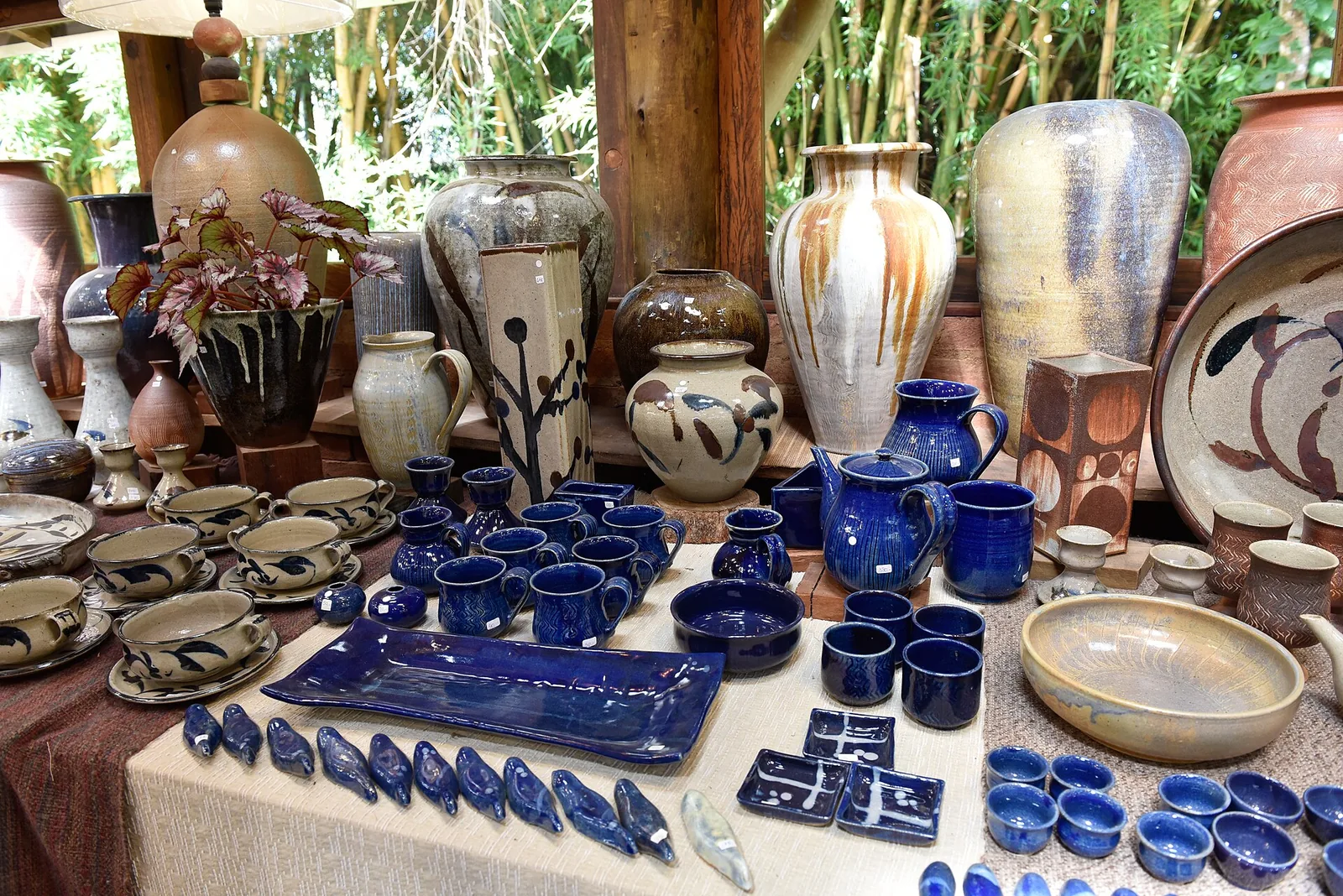
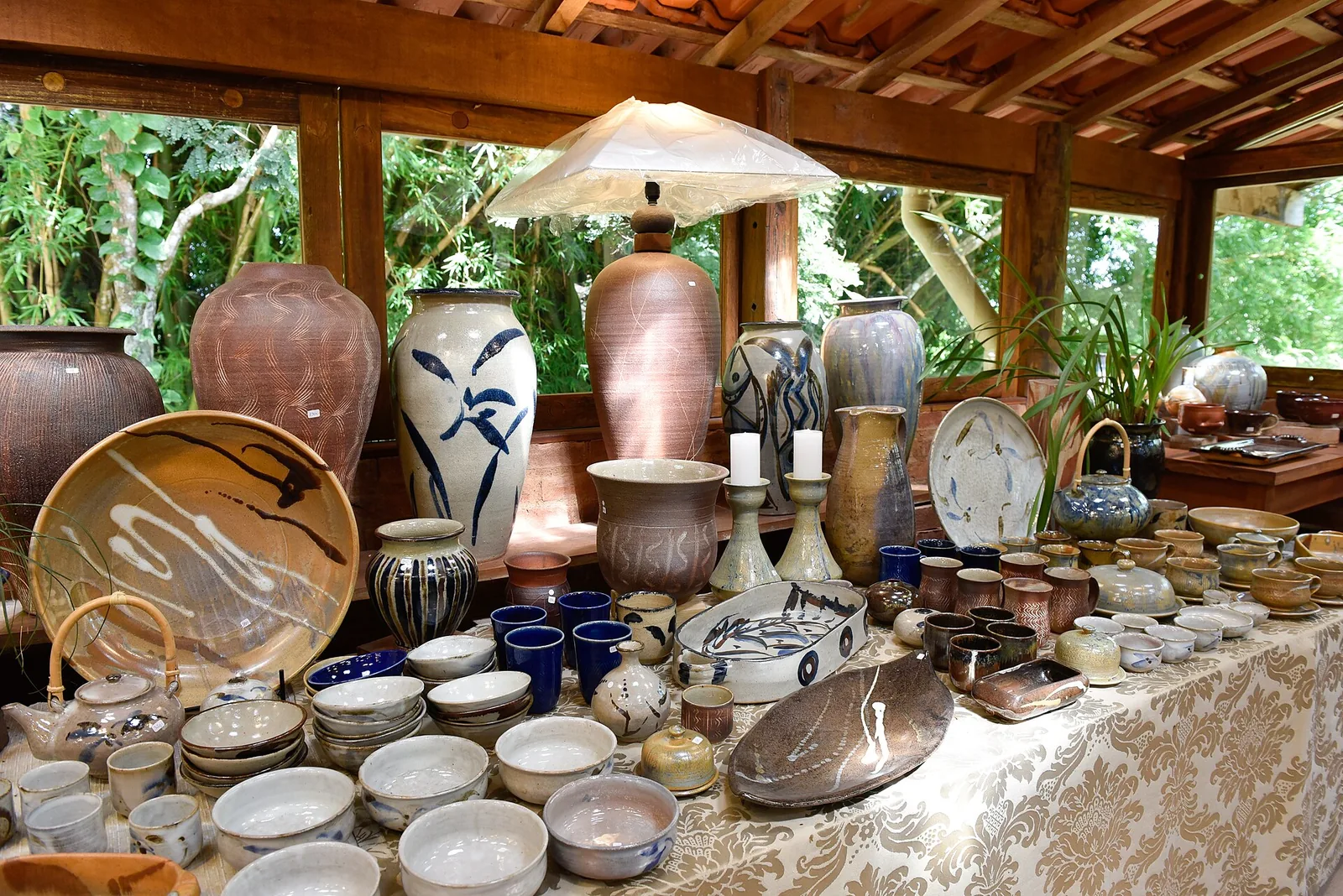
The reward for all that labour is in the surface. Because the heat is wood-driven and uneven, and because flying ash settles on the pots and melts into the glaze, every piece comes out marked by exactly where it sat in the kiln and how the flame and ash reached it. The colours are deep and earthy, streaked and pooled and flashed in ways no electric kiln can reproduce, and no two pieces are ever the same. That unrepeatability is the whole point. When you buy a Cunha pot, you're buying a single outcome of fire that will never happen in quite that way again.
Why a wood kiln, and why here
It's a fair question why anyone would choose so laborious a method in an age of reliable electric kilns that do the same job at the press of a button. The answer is partly the result — there is simply no other way to get those flame-marked, ash-glazed surfaces — and partly the place. The founding potters wanted to make in nature, slowly, with their hands and the materials around them, and the mountains gave them everything the method needs: good clay underfoot and forest for fuel. A noborigama is also, by its nature, a communal thing. A firing is too big and too long for one person; it pulls a studio, and often a circle of friends, into days of shared work and watching. That social, almost ceremonial quality — the woodpiles, the night shifts, the waiting, the unloading when the kiln has finally cooled and nobody yet knows what came out — is part of why the tradition took such deep root here and why the potters who came have tended to stay. The craft and the town shaped each other.
What the potters make
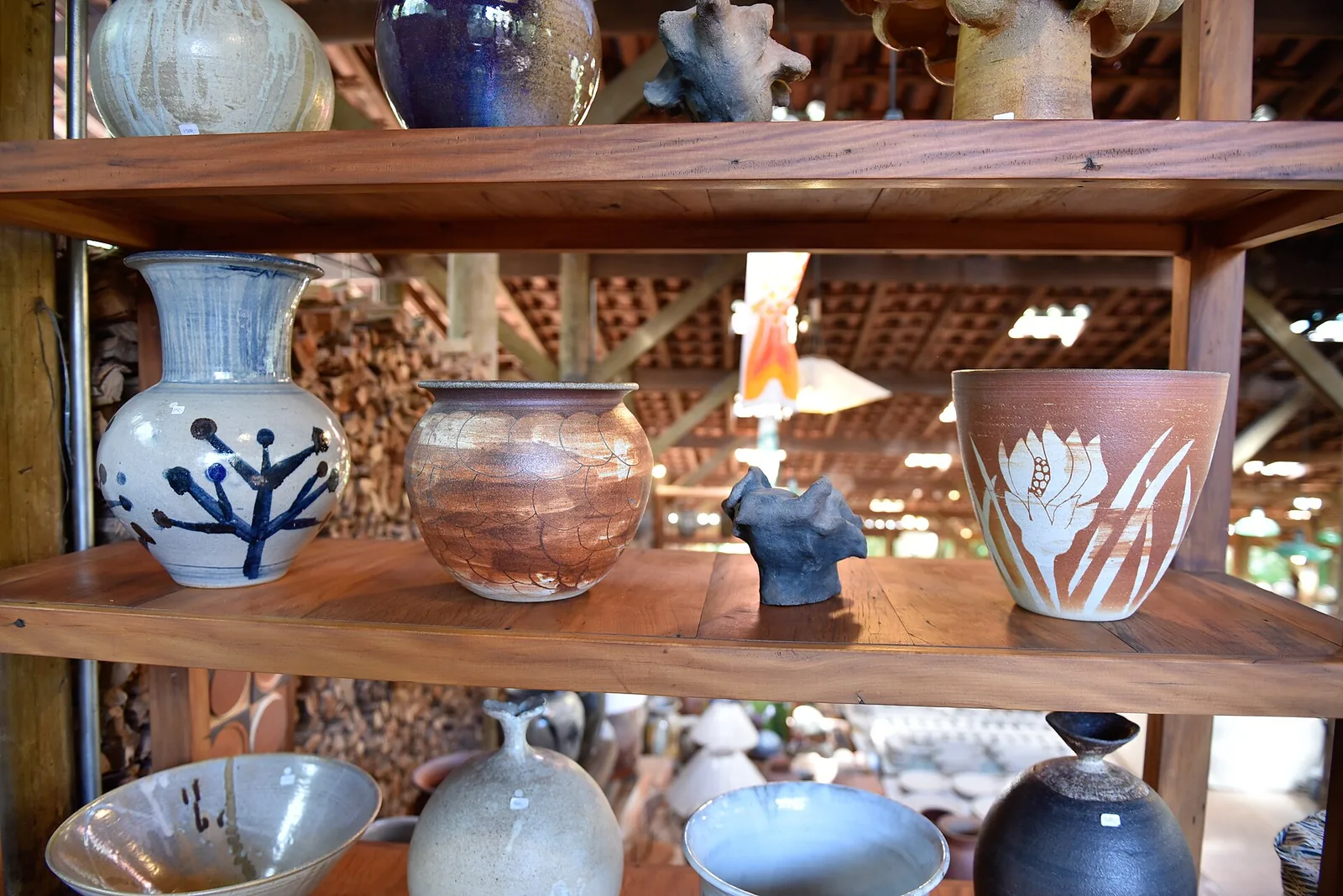
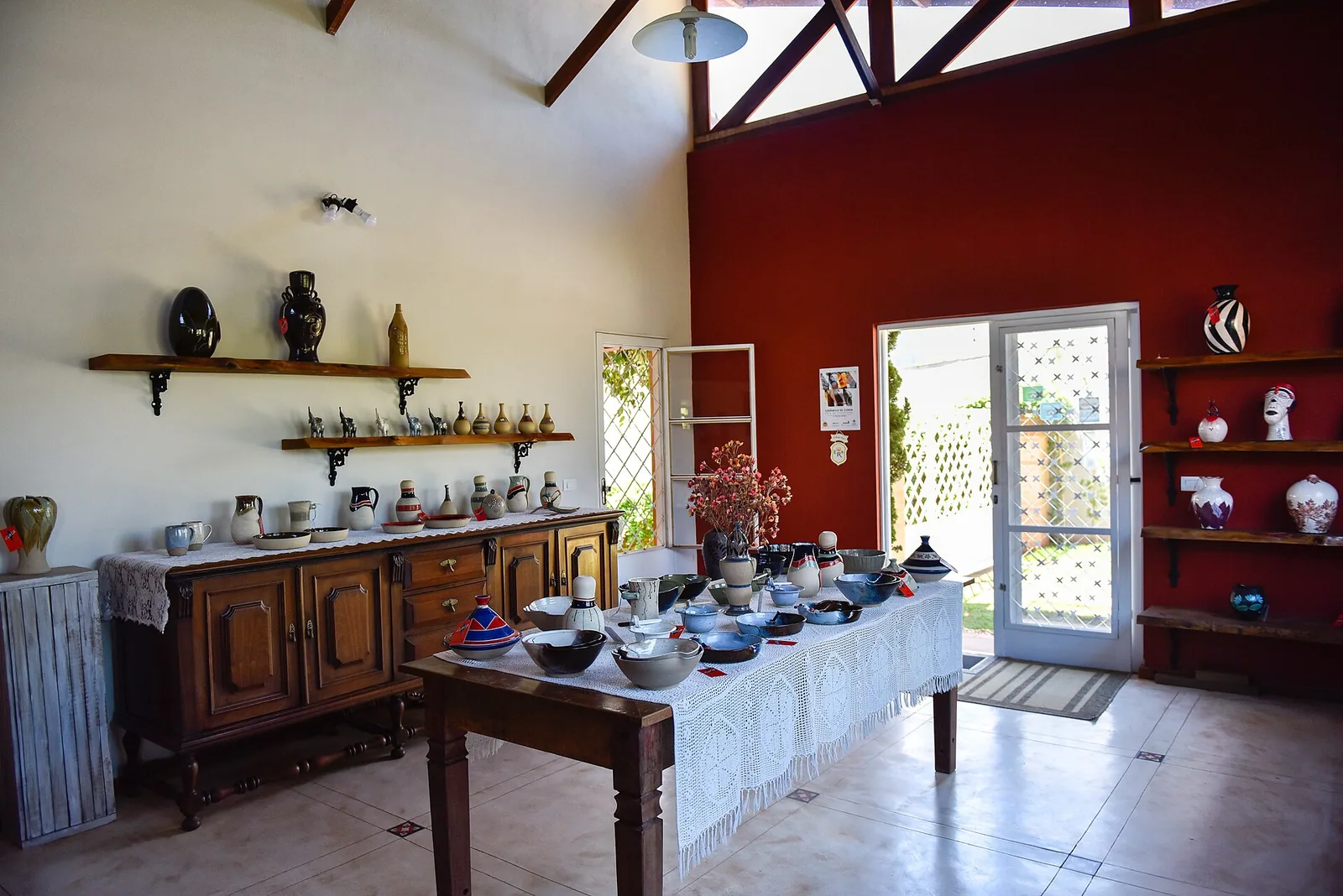
The range of work surprises people who expect rustic brown jugs. Cunha's studios turn out everything from austere, restrained pieces in the spirit of the Japanese tea ceremony — the kind of bowl that looks plain until you hold it and feel how considered it is — to bold, colourful, sculptural work that owes as much to Brazil as to Japan. There are tableware sets you'll actually use, vases and platters, one-off art pieces, and the occasional large architectural form. Half the pleasure of visiting several studios is watching that range open up: you begin to see individual hands, to prefer one maker's glazes or another's forms, to understand that "Cunha pottery" isn't one style but a shared technique in many different sensibilities. Come with an open eye and you'll leave with a favourite you didn't know you had.
Visiting the ceramics studios
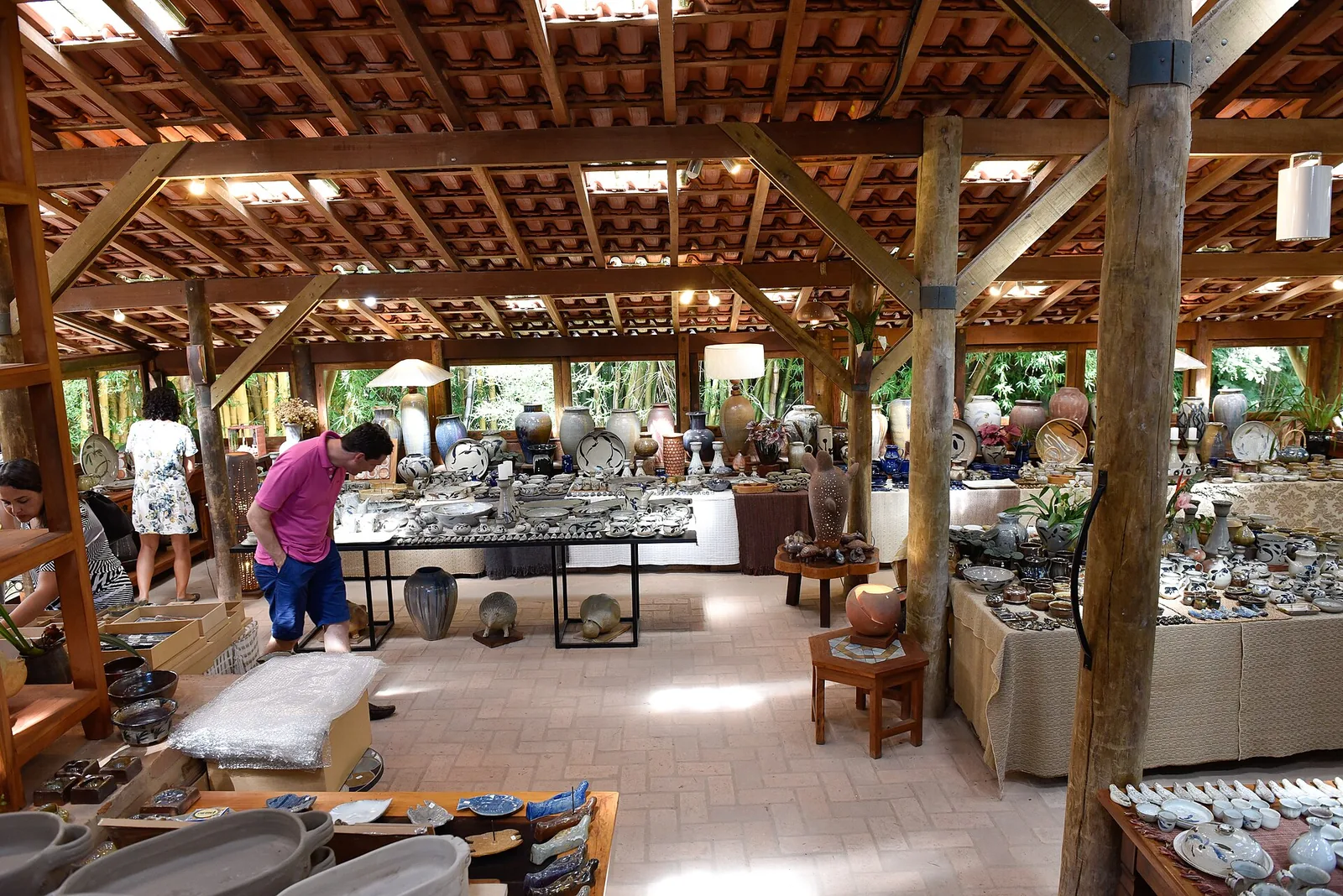
The good news for visitors is that Cunha's pottery world is open. The studios are not closed factories; most welcome people in to watch the potters work, see the great brick kilns, learn how a firing happens, and buy at the source. Wandering between workshops, in and out of the woodsmoke and the cool air, is simply what you do in Cunha, and it's a lovely, unhurried way to spend an afternoon.
A few honest pointers for doing it well:
- Spread out. The studios are scattered around the town and the surrounding hills, not lined up on one street. Part of the pleasure is the drive between them, through forest and farmland. Pick up a local map or ask at the first studio you visit which others are worth the detour.
- Go for variety. Each studio has its own hand, its own forms and glazes. Visit three or four rather than one, and you'll start to see the range of what the noborigama tradition produces here — from severe, tea-ceremony restraint to looser, more colourful work.
- Buy at the source. Prices are better at the studio than in a city gallery, you often meet the person who made the piece, and you can ask about the firing it came from. It's the most direct way to bring real Cunha home with you.
- Plan the packing. Ceramics and a long, bumpy mountain road are not natural friends. Studios will wrap pieces well, but think about how you'll carry them — and how they'll survive the flight — before you commit to the big platter.
- Mind the firing calendar. A noborigama isn't fired every day; it's an event. If you can time a visit to coincide with a firing in progress, the spectacle of it — the heat, the woodpiles, the all-night rhythm — is unforgettable. Ask ahead.
If pottery isn't your passion, don't write Cunha off on that account. Even people who arrive indifferent to ceramics tend to be won over — partly by the craft once they see it up close, and partly by everything else the town has going on.
Trying it yourself
For travellers who want more than to watch and buy, some studios run hands-on experiences — a session at the wheel, a chance to shape a piece under a potter's eye, an introduction to glazing. It's a humbling, absorbing way to spend a morning: clay is far harder to control than the masters make it look, and an hour trying it gives you a real respect for the work on the shelves. These experiences are best arranged in advance rather than turned up for, since a working studio isn't always free to teach, and a piece you make will usually need firing and collecting or shipping later, given the noborigama's slow rhythm. If a workshop appeals, mention it when you plan the day and we can ask around on your behalf; it turns Cunha from a place you looked at into a place you took part in, and that tends to be the version people remember.
When to go
Cunha is good year-round, but the seasons give it different characters, and it pays to know which you'd prefer. The cooler, drier half of the year — roughly from autumn into early spring, May through September — brings clearer skies, firmer footing on the trails, and the long mountain views at their best, along with genuinely cold nights that make the fireplaces and the warming food feel earned. This is the classic time to go up: crisp, bright days and the cloud forest at its most photogenic. The warmer, wetter months from late spring through summer are greener and more dramatic, with the waterfalls running full and the mist more constant, but also more rain — which on the cobbled road means more caution. Cunha keeps a calendar of fairs and craft events through the year, too, when the town fills and the studios are at their liveliest; if you'd like to time a visit to one, it's worth asking ahead. Whenever you come, the rule about layers holds: the mountain runs cool, and the weather turns without warning. Our guide to the seasons sets the regional pattern out in full.
Beyond the kilns: lavender, cheese and cachaça
Cunha has quietly become a small destination for mountain produce, and the studios are only the start. The cool highland climate and the slow, rural pace have drawn a generation of makers and growers, and the result is a town that eats and drinks far better than its size suggests.
The lavender fields
A short way out of town, the cool climate has made room for something you don't expect in Brazil: lavender. A modest farm, styled loosely on Provence, grows rows of it on the hillsides and opens to visitors who come for the landscape, the scent, and a look at how the plants are grown and turned into soaps and oils. It sits roughly midway between Cunha and Paraty, which makes it an easy and pretty stop on the drive. It's a gentle, hour-or-two kind of visit — flowers, views, a coffee — and a nice change of register between the kilns and the road.
Mountain food and drink
The altitude that suits lavender also suits dairy, and the region around Cunha produces good artisan cheeses — the kind of thing you'll find on menus and at roadside stalls and farm gates. There's cachaça too, as there is across this whole region, and the cool-climate cooking has given the town a clutch of restaurants that punch above their weight: mountain bistros and country kitchens doing slow, warming food that's exactly right for a misty highland afternoon. In keeping with how things work up here, the best places change hands and reinvent themselves, so rather than chase a specific name, ask at your studio or your inn where they themselves eat. The honest local steer beats any list.
Taken together, the lavender, the cheese, the cachaça and the kitchens turn Cunha from a single-attraction detour into a proper day's worth of pleasures. You come for the pottery and find a whole mountain larder.
The cloud forest and the walks
For anyone who likes to be outdoors, Cunha's setting is as much a draw as its studios. The town sits at the edge of one of the great surviving stretches of Atlantic forest, and the protected cloud forest just to the north shelters tall old trees, mossy understory and the cool, dripping atmosphere that gives the region its character. This is rich, rare country — part of a biodiversity hotspot where many species live nowhere else — and even a gentle walk in it feels like stepping somewhere ancient. The birdlife is excellent, the air is full of the sound of water and insects, and on a misty morning the forest has a stillness that the coast never quite manages. If the ecology of these mountains interests you, our journal piece on the Atlantic forest's wildlife goes into what actually lives up here.
Around the town, the country roads lead to waterfalls, swimming holes, farm gates and viewpoints, and there are marked trails for walkers of most abilities — from short strolls to a lavender farm or a cascade, to longer hikes into the forest for the genuinely keen. You don't need to be an expert or to plan an expedition; a half-day's wandering on foot, between a studio and a waterfall and a long lunch, is the ideal Cunha pace. Wear shoes that cope with mud and slick rock, take a layer for the cool, and let the mist set the mood rather than spoil it. The forest is the reason the whole place feels the way it does, and walking even a little way into it is the surest way to understand Cunha.
The road from Paraty to Cunha
Now, the road. It is one of the most scenic drives in the region and one of the more demanding, and it deserves a clear-eyed description, because getting your expectations right is the difference between a great day and a fraught one.
Paraty and Cunha are not far apart on the map — roughly fifty kilometres — but the drive takes around an hour and a half, because the route climbs hard over the mountains and changes surface as it goes. From Paraty you head up the RJ-165, which becomes the SP-171 over the state line. The São Paulo side is largely paved and well signed. The Rio de Janeiro side, which climbs through the Serra da Bocaina National Park, is the interesting part: a long stretch of old cobblestones — paralelepípedos — and, in places, rougher, rutted track. It is steep, it twists, and it runs through deep forest the whole way.
This is, by the way, the same historic mountain crossing as the old Caminho do Ouro — part of the colonial Estrada Real that linked the interior to Paraty's port. You are driving, more or less, the route the mule trains walked. Knowing that as you grind up the cobbles in low gear adds something to the experience.
What you need to drive it
For the full crossing, a high-clearance vehicle is strongly advisable, and a four-wheel-drive is the genuinely comfortable choice — especially after rain, when the cobbles are slick and the rutted sections can turn greasy. Inside the national park stretch, traffic is held to a crawl and restricted to daylight hours, both for safety and for conservation. People do make the crossing in ordinary cars in dry conditions, slowly and carefully, but a low-slung hire car after a storm is asking for a hard day. If you'd rather not drive it yourself, a guide or a hired driver who knows the road removes all the stress — and lets you actually look at the forest instead of the next pothole. The Serra da Bocaina guide goes deeper into the park the road climbs through; for our pick of drivers and operators, the concierge note is the place to start.
The waterfalls along the way
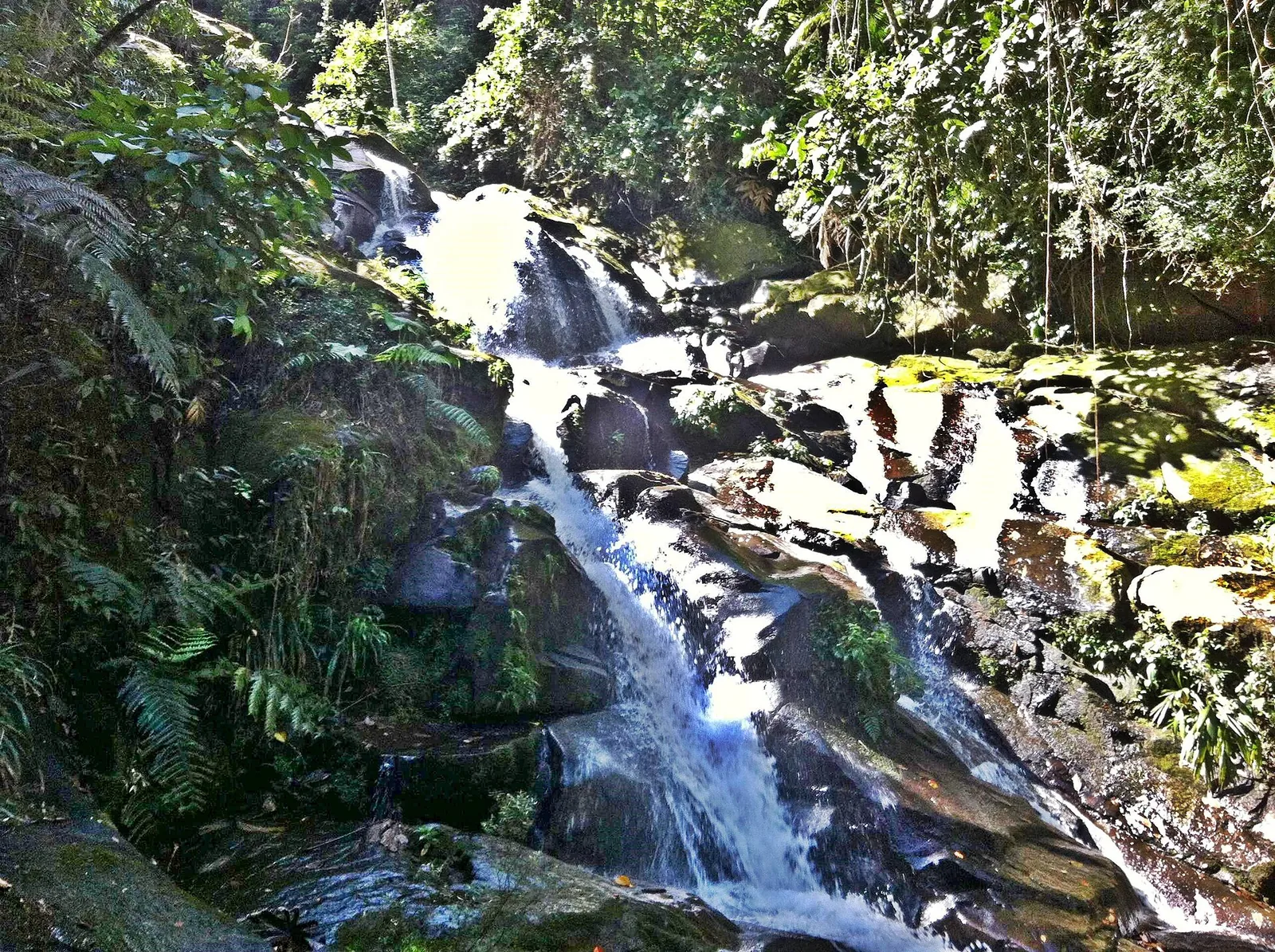
The compensation for the rough surface is what lines it. The mountain road is strung with waterfalls — natural rock slides, deep pools and tall cascades on the Rio Taquari and its neighbours, most of them a short walk from where you park. This turns the drive from a chore into a series of invitations: climb a while, stop, swim in cold clear water, carry on. A swim under a forest waterfall on the way up to Cunha, and another to wash off the day on the way down, is the natural shape of the trip. We've catalogued the falls and their moods in the waterfalls guide, but the rules are simple: go in the morning, wear shoes with grip on the slick approach rock, mind the water level after heavy rain, and brace for cold — this is mountain water, and it is bracing.
Day trip or overnight?
You can do Cunha either way, and both are good. Here's how to choose.
As a day trip
This is how most people do it, and it works well if you start early. A sensible rhythm: leave Paraty after breakfast, give the morning to the road and a waterfall stop or two, arrive in Cunha for late morning, spend the early afternoon touring studios and the lavender farm, sit down to a long mountain lunch, and head back down with enough daylight to spare. The one firm rule is don't drive the mountain road after dark — the cobbles, the curves and the drop-offs are no place to be feeling your way with headlights, and the park section closes to traffic at nightfall anyway. Plan to be off the rough stretch well before dusk.
As an overnight
If the pace of that sounds rushed — and for a true potter, a cook or anyone who falls for the cloud forest, it will — Cunha rewards a night. The town and the surrounding hills are dotted with country inns, the kind with fireplaces, big breakfasts and forest at the windows, and staying over changes the experience entirely. You get the studios without the clock running, an evening in the cool air, a proper dinner, and a morning when the mist sits low and the place is yours before the day-trippers arrive. An overnight also takes the pressure off the drive, since you cross the mountains once in each direction in daylight, unhurried, with time to stop wherever you like. For a couple, a night up in the cool is a romantic change of scene from the coast; for a family, the inns and the open studios make for an easy, slow day.
Who Cunha is for
Some travellers will fall hard for Cunha and some will be content with the coast — both are fine, and it helps to know which you are before you commit a day to the climb.
Go if you like making and makers — if a working studio, a wood kiln mid-firing, or a shelf of pots that each came out different is the kind of thing that holds your attention. Go if you want a break from the heat, a cool, misty, slow day as a deliberate contrast to beach and boat. Go if you're a walker or a forest person and the idea of cloud forest, lavender hills and waterfalls strung along a mountain road sounds like your kind of country. And go if you simply collect places that feel unlike anywhere else — because a Japanese-Brazilian pottery town in the Atlantic cloud forest genuinely is.
Think twice if your trip is short and beach-focused and the rough road sounds like more effort than reward — in which case spend the day on the water instead and save Cunha for next time. And weigh it carefully if you'd be driving yourself and aren't comfortable with steep, cobbled mountain roads; in that case, go with a driver, or not at all. There's no shame in deciding the coast is enough. Paraty has more than enough to fill the days; see the full picture on the explore page.
A couple who stayed with us one cool June set off for Cunha sceptical — he wanted a beach day, she wanted the pottery, and the compromise was grudging. They came back converts, the car smelling of woodsmoke and a carefully swaddled stoneware platter on the back seat. What had won them over, they said, wasn't only the studios, though the firing they'd happened to catch had transfixed them both. It was the whole arc of the day: the climb up through the falling temperature, a swim in a cold pool with the forest dripping overhead, the mist coming and going across the hills, a long lunch somewhere warm while the rain drummed outside, and the slow descent back into the heat with the bay opening up below. They'd gone for one thing and got a day. That platter, they told us later, is the thing on their kitchen wall that people always ask about — and the answer is a longer story than they expect.
How Cunha fits a Paraty trip
The reason Cunha works so well from here is contrast. A week based at the chalet is, naturally, a week oriented to the sea — the bay, the islands, the boats, the long warm light on the water. Cunha gives you the exact opposite, a day's worth, and the two set each other off beautifully. You come back down from the cool, misty, woodsmoke-scented heights to find the warm coast waiting, and both feel better for the comparison.
From the chalet's position on the mountain skirt above Paraty — already four hundred metres up, already in the forest — the climb to Cunha feels less like leaving and more like going further into the same green country. The waterfalls on the road are the same range you watch from the pool deck; the cool air up top is the same cloud you see catch on the high ridges in the afternoon. It's a continuation, not a departure. And it gives the trip a shape: sea and mountain, hot and cool, old Portuguese craft on the coast and young Japanese-Brazilian craft up in the cloud, all within an hour and a half of each other.
Bring something home from it. A single wood-fired bowl, bought at the studio that made it, carried carefully down the mountain, is the most honest souvenir Paraty's hinterland can give you — a piece of the cloud forest, fired in a Japanese kiln, in a town most visitors never reach. Long after the tan has faded, it'll be the thing on the shelf that makes you tell the story of the day you turned your back on the sea and drove up into the cloud.
Frequently asked questions
By road it's roughly 50 kilometres, but the drive takes around an hour and a half because the route climbs steeply over the mountains and part of it is cobbled and rough. It is short in distance and long in character — the journey is half the experience.
Yes, and many people do. Leave early, give yourself the morning for the road and the waterfalls, spend the afternoon in the ceramics studios and over lunch, and be back before dark — driving the mountain road after nightfall is best avoided. For a slower pace, an overnight in one of Cunha's country inns is lovely.
Wood-fired ceramics. Since the 1970s, Cunha has been the heart of Japanese-style noborigama pottery in Brazil, with around twenty studios and the largest concentration of these climbing wood kilns in South America. The town is also known for its cool cloud-forest climate, lavender, mountain cheeses and cachaça.
A noborigama is a traditional Japanese wood-fired kiln built as a series of chambers climbing a slope, so heat rises from one to the next. Fired with wood to very high temperatures, it produces deep, varied glazes shaped by flame and ash that no electric kiln can copy — which is why Cunha's pieces are unique to it.
Partly. The São Paulo side is mostly asphalt, but the Rio de Janeiro side, through the national park, includes a long cobbled stretch and some rough, rutted sections. It's steep and scenic. A high-clearance or four-wheel-drive vehicle is the safe choice, especially after rain.
Yes — the mountain road is lined with them. Natural rock slides, swimming holes and cascades on the Rio Taquari and nearby streams sit a short walk from the road, making them an easy stop on the way up or down. Go in the morning and wear shoes with grip.
Yes. Most of Cunha's ceramic studios are open to visitors, and buying at the source is the whole point — you see where and how a piece was made, often meet the maker, and pay studio prices. Packing fragile pieces for the journey home is worth a thought before you load the car.