In this guide
There is a moment on almost every good boat day out of Paraty when the town has dropped away behind you, the near islands are behind you too, and the water ahead turns a deeper, cleaner green. That is roughly where Ilha do Algodão Paraty begins to matter. Cotton Island sits out past the busy inner circuit, in the part of the bay where the schooners thin out and the coves get quieter, and it is one of the clearest-water snorkelling anchorages the bay has. Beyond it, the coast bends south towards a wide green entrance framed by a single sharp peak. That entrance is the mouth of the Saco do Mamanguá, and the two places together make one of the finest days on the whole Costa Verde.
This is an island guide, written for the outer bay rather than the crowded near stops. It covers where Ilha do Algodão sits and why it is worth the extra time to reach, the other outer islands worth knowing, the difference between the mouth of the Mamanguá and the long inlet behind it, how to string a charter route together, which boat to take and from which pier, and honest advice on snorkelling, wildlife, timing and doing it all with children or a group. We host guests a short drive above this water, so a good day out here usually ends with a swim back at the pool and the whole bay laid out below; we will come to that at the end.
Where something is a matter of taste, we will say so. Where there is a clearer answer, we will give it. The bay rewards a little planning more than almost anywhere we know, and the outer islands most of all, because reaching them well is the difference between a rushed loop and a day you slow right down into.
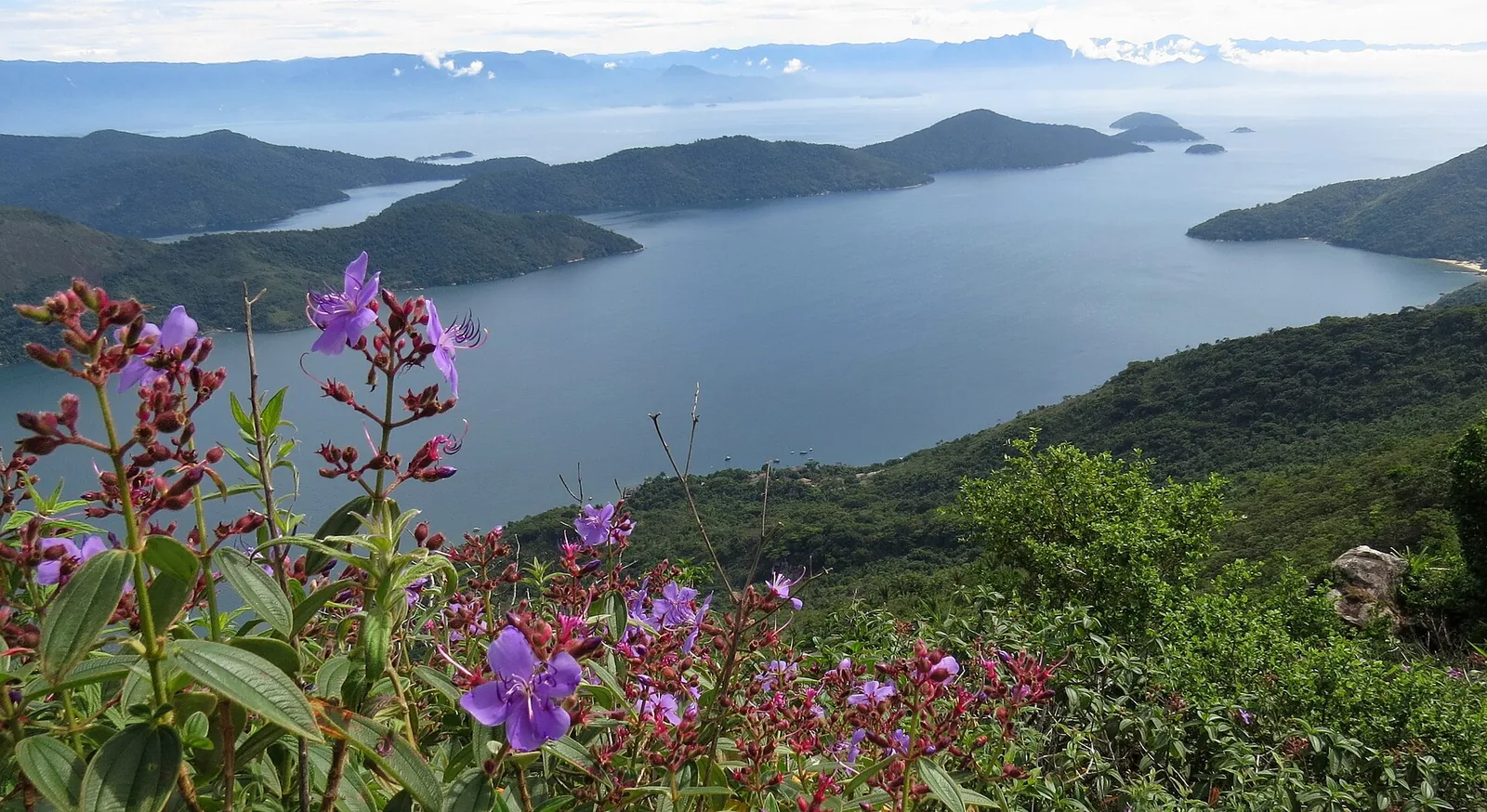

Where Ilha do Algodão sits, and why it matters
The Bay of Paraty is the southern lobe of the larger Baía da Ilha Grande, a stretch of protected water dense with islands that runs along the Costa Verde between Paraty and Angra dos Reis. The town sits at the head of the bay, and the islands fan out south and east from the harbour. Close in are the easy, reliable stops the day schooners favour, the ones twenty minutes from the pier that carry most of the traffic. Further out, the water gets quieter and the islands feel less scheduled and more like discoveries. Ilha do Algodão sits in that outer band, and its distance from town is precisely the point.
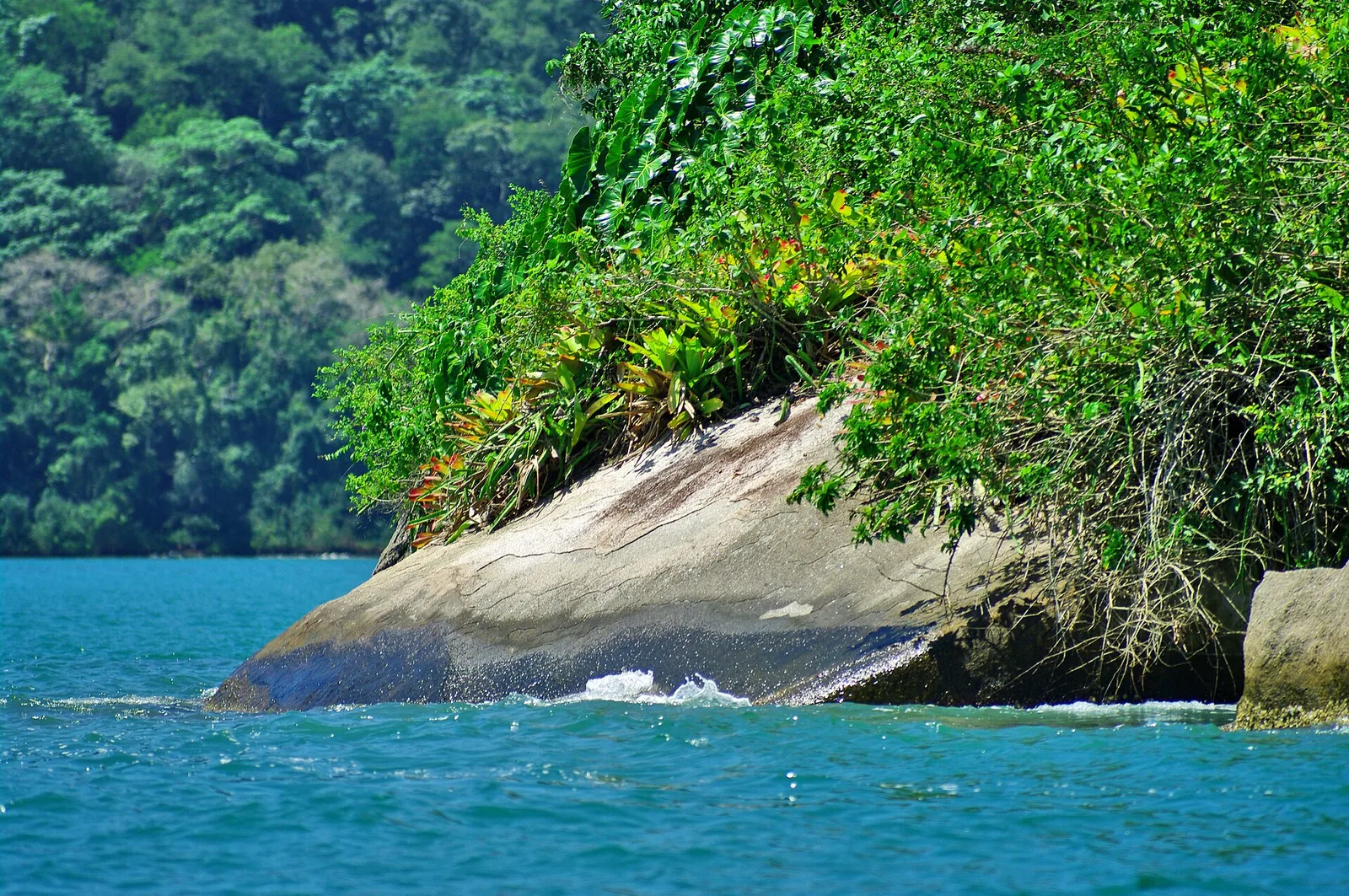
Because it is a fair way out, roughly forty minutes to an hour from the main pier depending on your boat, it does not fill up the way the near islands do around midday. The water around it is comparatively deep and clean, which is why it has a reputation among locals as a free-diving and snorkelling spot rather than a beach. There is no long strip of sand to land on; you anchor off the rocky edges and get straight into the water. That changes the character of a stop here. It is not a place you wade ashore and buy a coconut. It is a place you put a mask on and go and look.
One honest consequence of the distance is that Ilha do Algodão is not on every schooner itinerary, and when it is, the boat may only pause nearby rather than settle in for a proper swim. If snorkelling the outer islands is the reason you are going out, it pays to choose a trip built around them, or a private boat you can point wherever you like. We go into the mechanics of that below, and the wider picture of boats and routes lives in our full guide to Paraty boat tours, which is worth reading alongside this.
The mistake is to treat the outer islands as a checklist. The point is not to touch nine of them; it is to get in the water at three and actually look.
The name, and a little history
Cotton Island is a pretty name with a plain origin. The most repeated local explanation is the soft mist that settles over the outer islands in the early morning, lying on the water like cotton wool before the sun burns it off. Whether that is the true root or a story grown up around a name, it fits what you actually see out there at dawn, when the peaks wear a low band of cloud and the sea is dead calm.
The islands of this bay were never empty. The whole coast is caiçara country, home to the fishing and small-farming communities descended from Indigenous, Portuguese and African families who have worked this water for generations, and many of the islands and shore settlements still carry that heritage. During the gold era, when Paraty was the port through which the wealth of Minas Gerais left for Lisbon, these same sheltered channels carried far more traffic than they do now. Understanding a little of that background changes how the bay reads; it is a working seascape with a long human story, not a blank set of postcards. If the culture interests you, our piece on caiçara culture in Paraty is a good companion to a day among the islands.
Why some islands you can land on and others you cannot
A practical thread runs through the whole bay: many of the islands are privately owned, some have a single house tucked into a cove, and a number sit inside protected reserves. You can anchor off and swim almost anywhere, but you cannot simply wander ashore onto private land, and a good skipper knows which beaches welcome visitors and which to admire from the water. Ilha do Algodão is a swim-and-snorkel stop rather than a landing, and that is partly the water and partly the rules. It is worth knowing so you set out with the right expectation rather than hunting for a beach that is not there.
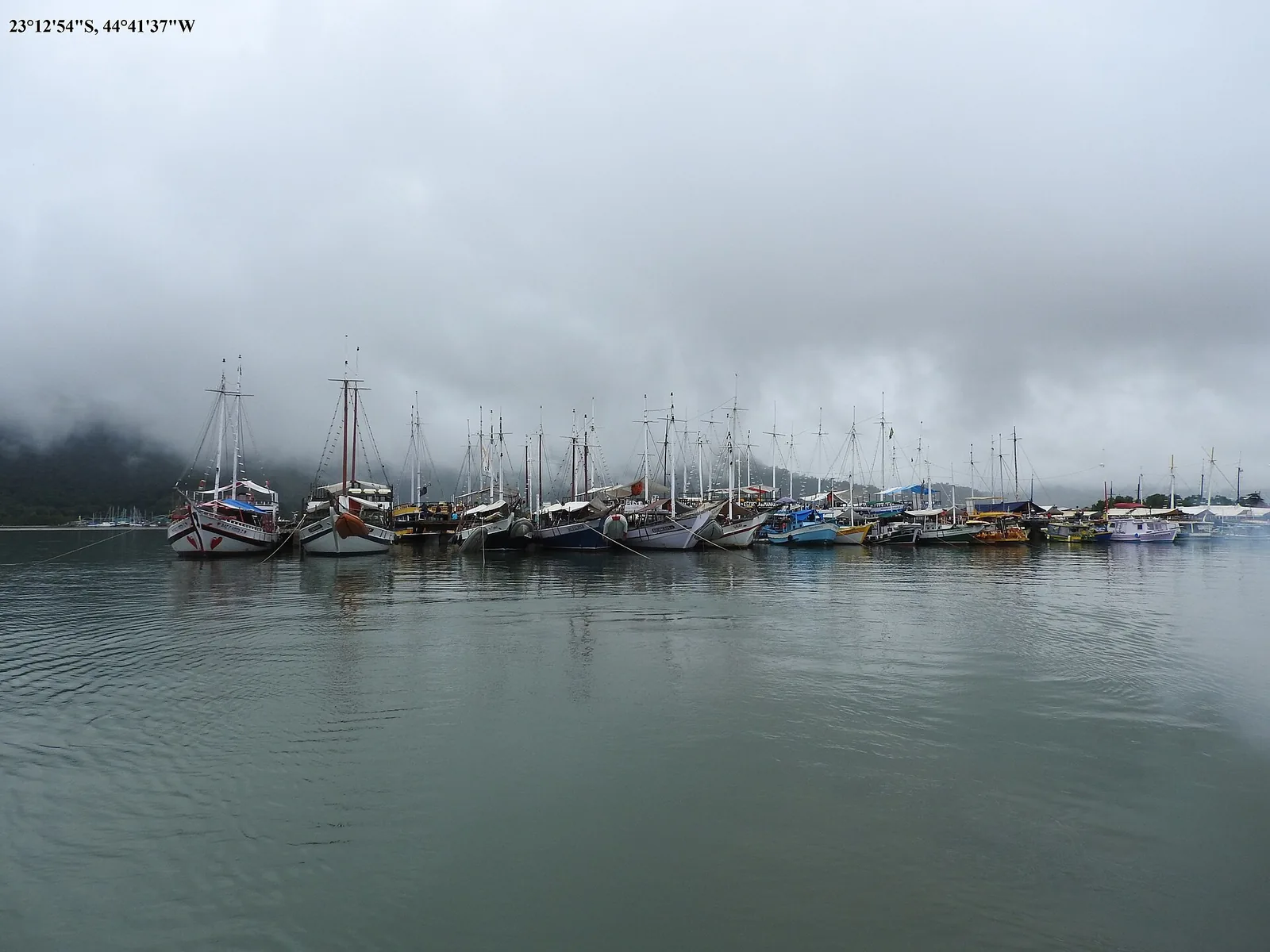

Snorkelling at Ilha do Algodão and the outer islands
Paraty is not a coral-reef destination, and it is fair to set that expectation before anyone puts a mask on. This is the warm, green, fish-rich water of the southeastern Brazilian coast, not the gin-clear blue of the Caribbean. What the outer islands give you instead is clarity and depth: calm water over rock and sand where, on a good day, you can see well down and watch shoals of small fish work the edges. Ilha do Algodão is one of the better spots for exactly this, which is why free-divers and snorkellers make the trip out.
A few habits turn a quick splash into a proper look. Get in as soon as the boat anchors, before the rest of the deck follows and stirs up the surface; the first ten minutes at any stop are usually the clearest. Swim away from the hull and the crowd, towards the rocky margins where the fish gather, rather than floating directly under the boat with everyone else. Keep your fin-kicks gentle near the bottom so you do not raise a cloud of sediment. And carry a waterproof pouch for your phone, because the colours are best in the bright shallows and you will want a record.
The single biggest lever on visibility is not the island; it is the weather in the days before. Heavy rain sends river runoff into the bay and clouds the water for a day or two afterwards, which matters far more out here than the tide or the time. If clear snorkelling is your reason for going, watch the forecast and pick a day that has been dry. Our dedicated guide to diving and snorkelling in Paraty goes deeper on gear, the best coves and what you will actually see beneath the surface.
Bring your own mask
Most boats supply basic snorkelling gear, but it is one-size and often well used. If you care at all about a good seal, bring your own mask; a mask that fits your face changes the whole experience, because you spend the time looking rather than clearing water. A cheap snorkel and mask set bought before the trip is one of the highest-value things you can pack for the bay. Fins are a nice extra but not essential in the calm outer coves, where you can drift comfortably without them.
The outer-bay islands worth knowing
Ilha do Algodão rarely stands alone on a day out. It sits among a cluster of outer stops that a good route strings together, and it helps to recognise the names when a skipper rattles them off. You do not need to memorise a map, but a rough sense of the neighbourhood lets you ask the right questions when you book.
- Ilha Comprida — the best-known snorkelling stop in the whole bay, sometimes called its natural aquarium. Clear, shallow water over rock, fish in numbers, and consequently busy by midday. Reach it early and it is a delight; arrive with three other schooners and it is a scrum.
- Ilha dos Cocos — a small island that has become popular for its pale sand and shallow, bright water, the sort of spot that photographs like somewhere far more remote. It fills up in high season, so early and out of the peak dates is the way to enjoy it.
- Lagoa Azul — not a lagoon so much as a sheltered patch of exceptionally clear, shallow water between islands, a reliable swimming and snorkelling anchorage that appears on most outer routes.
- Praia da Lula and Saco da Velha — quieter pocket beaches and green inlets that boats use to spread the day out and dodge the busiest stops. Calm, pretty and usually less crowded than the headline names.
Treat any printed itinerary as a sketch. The exact list shifts with the wind, the tide and how crowded each stop is on the day, and a skilful skipper is constantly reading conditions to keep you out of the worst of the crush. If someone tells you the order has changed because the breeze has come round, that is the day working as it should, not a failing.
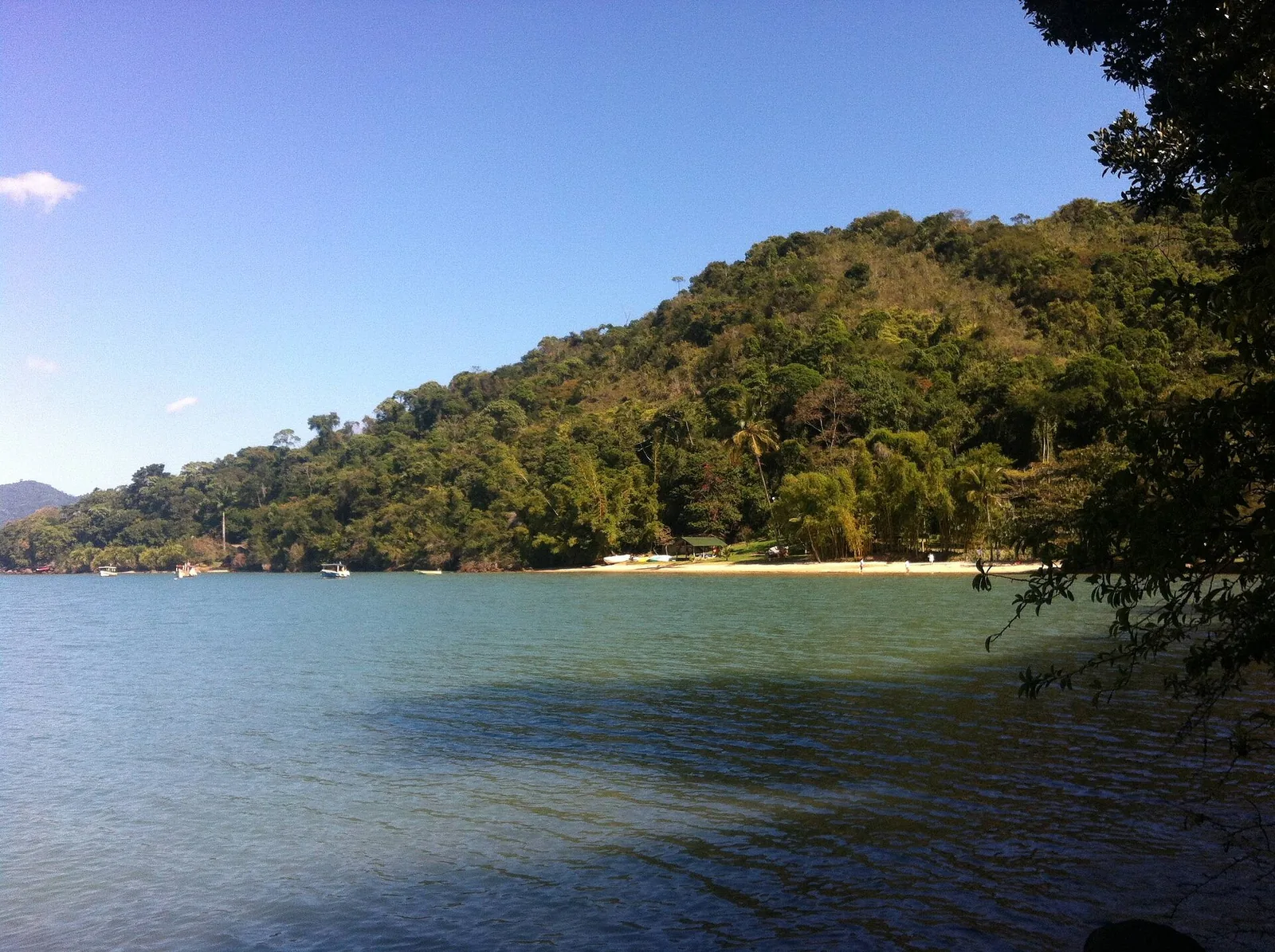

The mouth of the Mamanguá
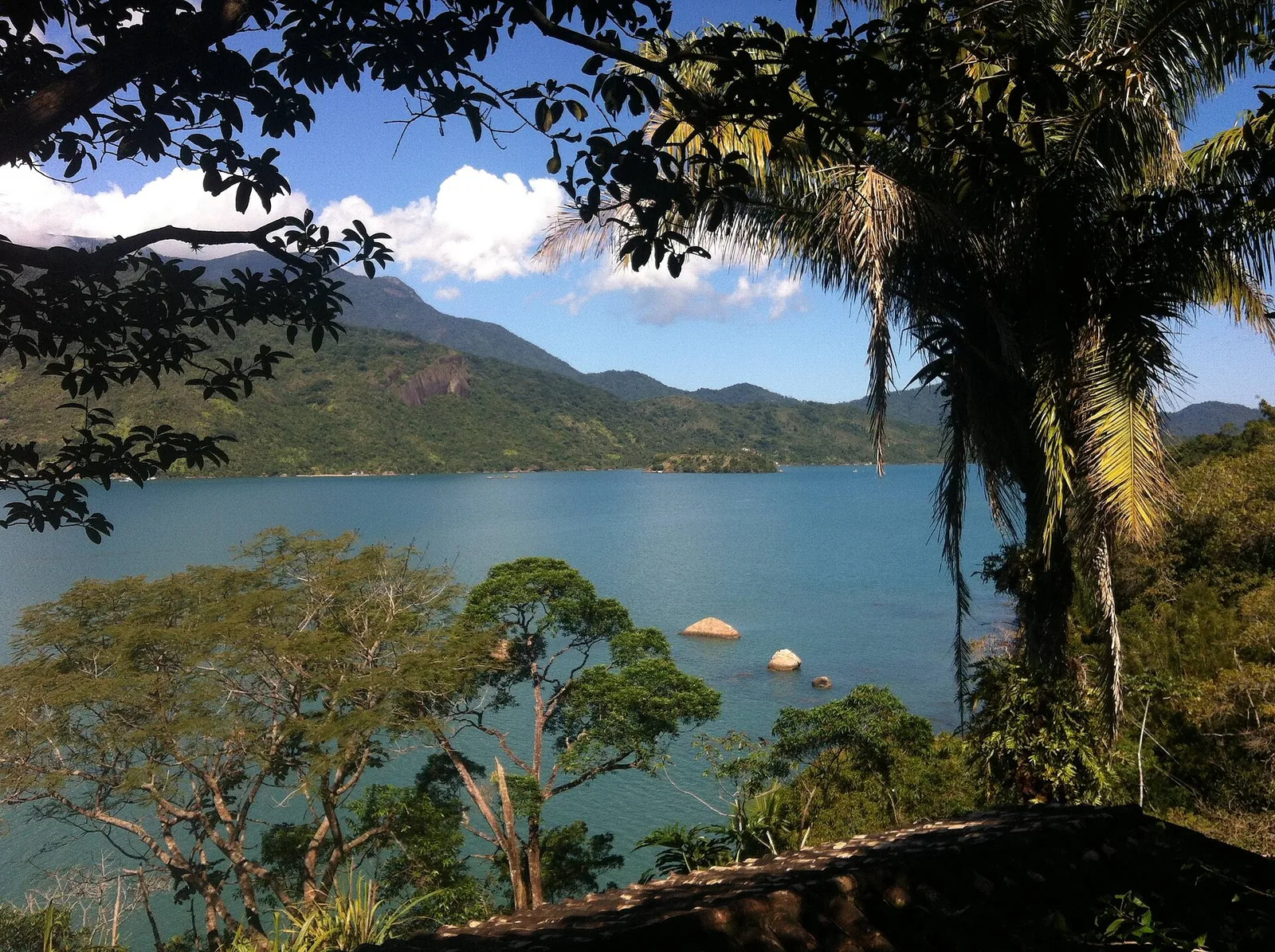
Carry on south past the outer islands and the coast bends into a wide green entrance guarded by a single sharp peak. This is the mouth of the Saco do Mamanguá, and it is worth understanding what it is, because people conflate the mouth with the inlet and end up disappointed one way or the other.
The Saco do Mamanguá is a long, narrow arm of the sea, often described as the only tropical fjord in Brazil. It runs several kilometres inland between two ranges of forested mountains, ending in a well-preserved mangrove, with a scatter of small beaches and caiçara settlements along its shores. The water inside is exceptionally calm and shallow, ideal for kayaking and gentle snorkelling. At its entrance stands the Pico do Pão de Açúcar, a peak you can climb on a steep forest trail for one of the best views on the coast, looking straight back down the length of the inlet.
The mouth is the wide, open beginning of all that: the point where the bay narrows into the inlet, framed by the peak and the mountains behind. Many boat days reach the mouth and the islands and beaches around it, snorkel and swim in the calmer water there, and turn back without pushing deep inside. That is a genuinely lovely day. Going all the way up the inlet, to the mangrove and the quiet beaches at the head, and climbing the peak, is a longer and wilder trip that deserves its own day. We have written that up in full in our guide to the Saco do Mamanguá, and if the inlet itself is calling you, read it before you plan.
Mouth or full inlet: how to choose
If you want one memorable day that mixes clear-water snorkelling with dramatic landscape, aim for the outer islands and the mouth of the Mamanguá, and keep it to that. You get the best of both without rushing. If the fjord landscape itself is the draw, if you want to kayak the calm water, sleep a night at a rustic pousada on its shores, or climb the Pico do Pão de Açúcar for the view, give the inlet a dedicated trip and treat the outer islands as a separate outing. Trying to cram the deep inlet, the peak and the outer snorkelling into a single day means seeing all of it in a hurry and none of it well.
Charter routes: how to string the day together
The pleasure of the outer bay is in how the stops link up, and a good route is built around three or four proper swims rather than a long list of drive-bys. The mistake is to treat the outer islands as a checklist. The point is not to touch nine of them; it is to get in the water at three and actually look. Here is how a well-planned outer day tends to flow.
- Head out past the near islands early, before the day schooners leave the harbour, so you reach the good stops while they are still quiet.
- Snorkel the clear-water islands first — Ilha do Algodão, Ilha Comprida, Lagoa Azul or whichever the conditions favour — while the surface is undisturbed and the light is low and kind.
- Carry on to the mouth of the Mamanguá for a calmer swim in more sheltered water and a change of scene, the open sea giving way to mountains closing in.
- Take lunch at a quiet beach or on board around the middle of the day, anchored somewhere out of the crowd.
- Drift back through the islands in the afternoon, with one last swim if anyone still has the energy, arriving at the pier in the late-afternoon light.
The reason to start early cannot be overstated. The popular stops are quietest before about eleven, which is exactly when the day boats are leaving town. A private boat that starts at eight or nine can have the best snorkelling almost to itself and be off the water before the afternoon breeze puts a chop on the crossings. If you take one piece of advice from this guide, take that one.
Schooner, speedboat or private charter
The boat you choose sets the whole character of the day. A group schooner is the cheapest and most sociable option, a big stable wooden hull that rides the chop well, but it goes where it goes on its own schedule and shares every stop with everyone aboard. A speedboat, or lancha, is faster and reaches the outer islands and the Mamanguá mouth comfortably, which the slow schooners struggle to do in a single relaxed day; it costs more and gives less shade. A private charter of either kind lets you set the route and the timing, escape the crowd, and linger where you like. For the outer bay specifically, speed and flexibility matter more than they do on the near circuit, because the distances are longer and the best stops reward an early, unhurried arrival. We lay out the full trade-offs, and rough costs, in the boat tours guide.
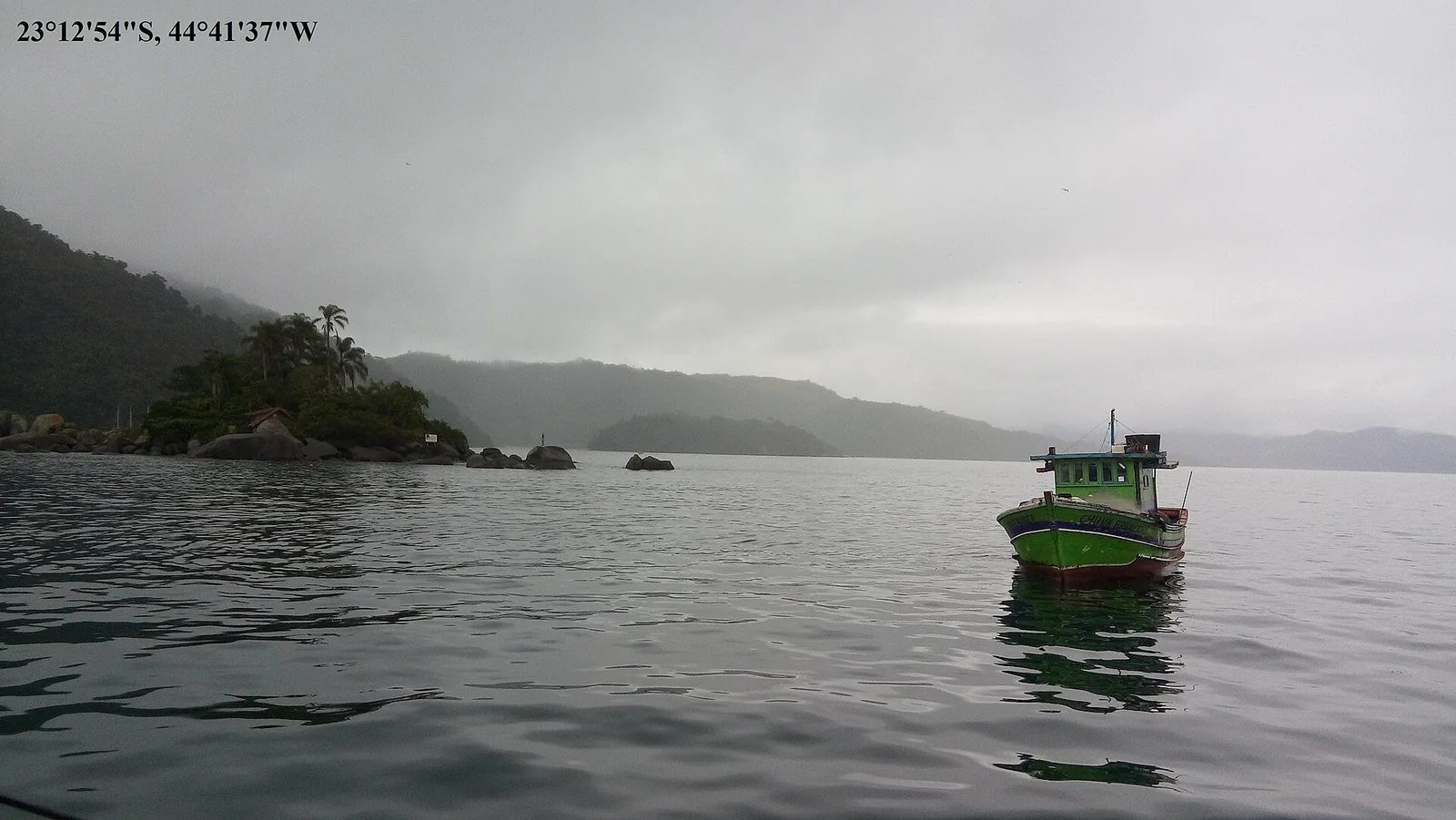

Which boat, and where you leave from
One detail that catches people out is the departure point. Most trips leave from the main tourist pier in the historic centre of Paraty, a short walk from the old town and easy to find. But a good number of outer-island and Mamanguá trips leave instead from Paraty-Mirim, a small bay about half an hour south of town by road. Leaving from Paraty-Mirim shortens the time on the water and puts you noticeably closer to the outer stops and the mouth of the Mamanguá, which is why operators use it for the longer routes.
The practical upshot: when you book, ask which pier you leave from, because it changes your morning. If it is Paraty-Mirim you will need to drive or arrange a transfer out there, and you will want to leave the house earlier. It is not a problem, just something to plan, and our notes on getting around Paraty cover the roads and parking. For a family or group leaning towards a speedboat, ask for one of the larger covered boats rather than the smallest open launch; you keep most of the speed and reach but gain shade, dry stowage and a steadier ride over the longer crossings out to the islands.
A day on the water, hour by hour
It helps to picture the rhythm before you book, because the outer-island day runs longer than the standard near circuit and you should plan for it. A private outer trip might look like this. You leave the pier, or Paraty-Mirim, somewhere between eight and nine. The near islands slide past, and within forty minutes or so the water has changed colour and the first outer stop is ahead. You have the better part of an hour to snorkel Ilha do Algodão or a neighbouring clear-water anchorage while it is still quiet, then a short run to a second stop as the morning warms up.
By late morning you are turning south towards the mouth of the Mamanguá, the open sea giving way to sheltered green water with mountains on either side. Lunch falls around the middle of the day, anchored off a small beach or eaten on board, and there is time for a slow swim in the calm before the light gets hard. In the early afternoon you begin the drift back, perhaps with one final snorkel at a spot the morning boats have now left, and you reach the pier in the late afternoon with salt on your skin and the best of the light behind you.
Two honest things about this rhythm. First, a good part of any boat day is spent travelling between stops; the headline hours are always more generous than the in-the-water time, and the outer route means more time under way than the near loop. That travelling is a pleasure in itself, with the islands passing and the breeze on deck, but if your idea of the perfect day is hours of uninterrupted swimming at one spot, a touring route is not quite that. Second, the day is built around getting wet. If you do not get in the water at the stops you will have a pleasant but slightly aimless time, because the whole point out here is the swimming and the snorkelling.
.jpg)
Wildlife: dolphins, turtles and the forest edge
The outer bay and the Mamanguá mouth are among the better places in the region to see something move. The stretch of water around the outer islands is a known passage for dolphins, which appear more often on cloudy days or after rain, sometimes riding the bow wave of a boat for a while before peeling off. Sea turtles turn up in the calmer green water inside and around the mouth of the inlet, surfacing for a breath before sliding back down. Neither is guaranteed, and you should never let a skipper chase or crowd them; treat a sighting as a gift rather than the reason for the trip.
Above the water, the forest comes right down to the tideline almost everywhere out here, and the islands and mountain slopes are part of the Atlantic Forest, one of the richest and most threatened biomes on earth. Seabirds work the channels, and on a still morning the quiet is broken mostly by birdsong off the nearest slope. If the natural side of the coast draws you, our journal piece on Atlantic Forest wildlife gives the wider context for what you are looking at, on the water and on the hills above it.
When to go, and reading the conditions
The bay is swimmable and boatable all year, with sea temperatures sitting comfortably in the low to mid twenties Celsius, warm enough that you rarely hesitate to get in. What changes through the year is the weather above the water, and out among the outer islands that matters more than anywhere.
The dry winter months, roughly June through August, give the most reliable days: big skies, little rain, and the clearest water because there is less runoff from the rivers. It is cooler, but pleasantly so, and the snorkelling is at its best. The summer, from December to March, is hotter and the swimming is glorious, but it is the wet season, and heavy afternoon rain is common. Rain itself does not stop a boat, but a real downpour clouds the water and kills the visibility for a day or two afterwards, which is the enemy of a good outer-island day. If clear snorkelling is your priority, come in the dry season, or at least go out on a day that has been dry.
Whatever the season, mornings beat afternoons. The sea is calmer, the light is better, the crossings are gentler and the stops are emptier. We cannot say this often enough, and it is doubly true out here where the distances are longer and an afternoon chop makes for a wetter, bumpier ride home. For the full seasonal picture, our overview of exploring Paraty sets out what each part of the year is like.
Doing it with family, couples and friends
The outer islands suit different travellers differently, and a little honesty helps you choose well. For couples, a private speedboat out to Ilha do Algodão and the Mamanguá mouth is one of the finest half-days on the coast: fast, flexible, quiet if you time it right, and easy to shape around a long swim and a slow lunch. For a group of friends, a chartered schooner or a larger speedboat split between six or eight makes the cost per head very reasonable and turns the day into a proper outing, with room to spread out.
Families need a touch more thought, because the outer route is longer and the good snorkelling is in deeper water. A larger, steadier boat beats a small open launch for children, both for safety and for the ride. Go in the morning when the water is calm and small stomachs are happier, treat any tendency to seasickness before boarding rather than after it starts, and bring more shade, sun cover and snacks than you think you need, because the glare comes off the water as well as the sky. Very small children may be happier on a shorter near-island trip, with the outer islands saved for when they are confident swimmers. Our guide to Paraty with family goes into all of this, including how a house with a pool works as a base between water days.
A note for first-timers on the water
If anyone in your party is nervous about boats or prone to seasickness, the outer route is not the place to be brave. Choose a larger, more stable boat, take a remedy well before you board, stay on deck in the air with your eyes on the horizon, and keep something in your stomach. The inner bay is sheltered, but the crossings between the outer islands can pick up a light chop by afternoon, which is another reason to go early. Done sensibly, even a reluctant sailor usually ends the day glad they came.
Running the day from the chalet
Staying up above the bay changes the shape of a water day in small, welcome ways. Château Portofino is a hillside chalet with an infinity pool and a deck that takes in Paraty, Angra dos Reis and Ilha Grande in a single sweep, a short drive above the town. The practical pattern for an outer-island day is simple: pack the boat bag the night before, come down early to the pier or out to Paraty-Mirim, spend the day among the islands and the Mamanguá mouth, and climb back up in the afternoon to a quiet pool with the whole bay laid out below you.
That contrast is the particular pleasure of doing the bay from height. You spend the morning in the water you can see from the deck, and in the evening you are looking down on it, the same green channels now turning gold as the light goes and the day boats crawl back towards town. A cold drink, a warm pool, and the outer islands you swam off in the morning small and blue on the horizon. It is a good way to end a day, and an easy one to repeat; most guests who go out once want to go out again, once for the outer islands and the Mamanguá mouth, and once, if they have the time, to climb into the inlet itself or across to Ilha Grande.
If you would like a hand shaping the day, timing it around the weather and matching the boat to your group, that is exactly the kind of thing we know well and are glad to help with. Have a look at the chalet and the bay below it, browse the best beaches around Paraty to see what else the water opens up, and when you are ready to plan, do get in touch and we will point you the right way. The outer bay is one of the best days this coast has, and it is even better with a quiet place to come home to.
.jpg)
Frequently asked questions
Ilha do Algodão sits in the outer part of the Bay of Paraty, out past the closer schooner islands, roughly 40 to 60 minutes from the town pier depending on your boat. You reach it only by water, on a group schooner, a private charter or a faster speedboat. There is no beach to land on, so it works as a snorkelling and swimming anchorage rather than a place you walk ashore.
Yes, it is one of the better snorkelling anchorages in the bay. The water around it is clear and comparatively deep, with rocky edges where fish gather, so you swim and free-dive off the boat rather than wading in from sand. Bring your own mask if you can, get in before the crowd stirs the surface, and pick a day that has been dry, because river runoff after heavy rain clouds the visibility.
The Saco do Mamanguá is a long, narrow inlet, often called Brazil's only tropical fjord, that runs several kilometres inland between two mountain ranges. Its mouth is the wide entrance at the southern end of the bay, marked by the Pico do Pão de Açúcar peak. Many boat days reach the mouth and the islands around it without going deep inside the inlet, which is a longer, quieter trip in its own right.
Often, yes, if you take a faster boat or a private charter and start early. A common route runs out through the outer islands, snorkels at Ilha do Algodão and nearby coves, then carries on to the mouth of the Mamanguá for a calmer swim and lunch. Doing the full inlet as well is a lot for one day; most people who want the deep Mamanguá give it a trip of its own.
Most leave from the main tourist pier in the historic centre of Paraty. Some trips, especially those heading for the Mamanguá and the outer islands, leave instead from Paraty-Mirim, a small bay about half an hour south by road, which shortens the time on the water and puts you closer to the good stops. Your operator will tell you which pier, so check when you book.
The dry winter months, roughly June through August, give the clearest water and the most reliable days, because there is less river runoff and calmer air. Summer, December to March, is hotter and lovely for swimming but brings heavy afternoon rain that clouds the water for a day or two afterwards. Whatever the season, mornings are calmer and clearer than afternoons.
Sometimes. The stretch of water around the outer islands and the Mamanguá mouth is a known passage for dolphins, which show up more often on cloudy days or after rain, and sea turtles are seen in the calmer green water inside the inlet. Neither is guaranteed, so treat a sighting as a gift rather than the reason for the trip.