In this guide
There is a version of Brazil that exists mostly in other people's worries — the friend who repeats a secondhand story, the news clip stripped of context, the vague sense that a country this big and this famous must be difficult. And then there is the Brazil you actually meet: a fruit seller who insists you try a slice before buying, a boatman who waits ten extra minutes because he can see you are not quite ready to leave the water, a town where the loudest sound after dark is a guitar two streets over. Both are real in the sense that any generalisation is real. But only one of them is useful when you are packing a bag.
This guide is written for the second Brazil, without pretending the first does not exist. The point of good Brazil travel safety tips is not to make you anxious; it is to make you free — to give you a small set of habits so automatic that you stop thinking about them and start paying attention to the country instead. Most of what follows is common sense you already carry from home, tuned slightly for a place where the rhythms, the money and the language work differently. The reward for getting the basics right is that Brazil becomes what it is for the people who love it: relaxed, generous, unhurried, and far easier than its reputation.
We write from the Costa Verde, the green coast between Rio de Janeiro and São Paulo, where the mountains fall straight into a bay scattered with islands. It is a part of the country that makes the case for itself quietly. Towns here are small. Doors stay open. The pace slows the moment you leave the highway. Our own corner of it is a hillside chalet above the Bay of Paraty, and one of the quiet pleasures of a base like that is how little the day asks of you — you go out, you explore, and you come back up the hill for a swim while the light changes over three bays at once. Let us start with the honest part.
.jpg)
The honest picture: how safe is Brazil, really
Brazil is a continent wearing the clothes of a country. Generalising about its safety is like generalising about the safety of Europe — the answer depends entirely on where you are, when, and what you are doing. What is fair to say is this: the overwhelming majority of visits pass without incident, the risks that do exist are mostly opportunistic rather than violent, and they cluster in predictable places — crowded parts of big cities, busy transport hubs, certain neighbourhoods after dark. Travel advisories from most governments sit at a middling "exercise increased caution" level, which is a sensible prompt to prepare rather than a reason to stay home.
The thing worth internalising is the difference between big-city caution and small-town ease. In central Rio or São Paulo you dial your awareness up a notch, the same way you would in any large metropolis on any continent. In a place like Paraty, or the fishing villages along this coast, the dial comes back down. Crime here is low and mostly petty, the community is tight, and the streets fill with families in the evening. That contrast is the single most useful thing to understand about travelling Brazil: the country is not uniformly risky or uniformly gentle, and the smart traveller adjusts to the room they are in.
None of this means switching off. It means the opposite — a light, steady attention that costs you nothing and lets you relax into everything else. The best safety habit in Brazil is not fear; it is attention, worn lightly. Once that becomes a reflex, the country opens up.
The best safety habit in Brazil is not fear; it is attention, worn lightly.
Smart habits that do most of the work
If you only take a handful of things from this guide, take these. They are not dramatic. That is the point — the habits that keep travellers out of trouble are almost boring, and they work precisely because they are small enough to become automatic.
- Carry less than you think you need. Leave the good watch and the spare cards at home or in the safe. Take one card, a modest amount of cash, and your phone. A traveller carrying little makes a poor target and worries less.
- Keep your phone out of your hand in crowds. Most opportunistic theft in Brazilian cities is a phone snatched from a distracted hand near a busy corner or at a red light. Use it, then put it away. On the street, glance at the map before you set off, not while you walk.
- Split your money. Some cash in a pocket, the rest and your card elsewhere. If the worst happens, you hand over a little and keep the rest of your day intact.
- Dress down in cities. Understated clothing and no visible jewellery is the local instinct in urban centres. On the coast, everyone is in shorts and flip-flops anyway.
- Use registered taxis or a ride app. In cities, hail rides through an app rather than flagging cars on the street. It is cheaper, tracked, and removes the fare negotiation.
- Arrive in daylight when you can. First arrivals in an unfamiliar place are simplest by day, especially somewhere like Paraty where the historic streets are cobbled, partly pedestrian, and hard to navigate with luggage in the dark.
That is most of it. Everything else is refinement. Notice how little of this is specific to Brazil — it is the same discipline you would apply in Barcelona or Buenos Aires. The country does not ask for special measures. It asks for ordinary ones, applied consistently.

Why small coastal towns feel so easy
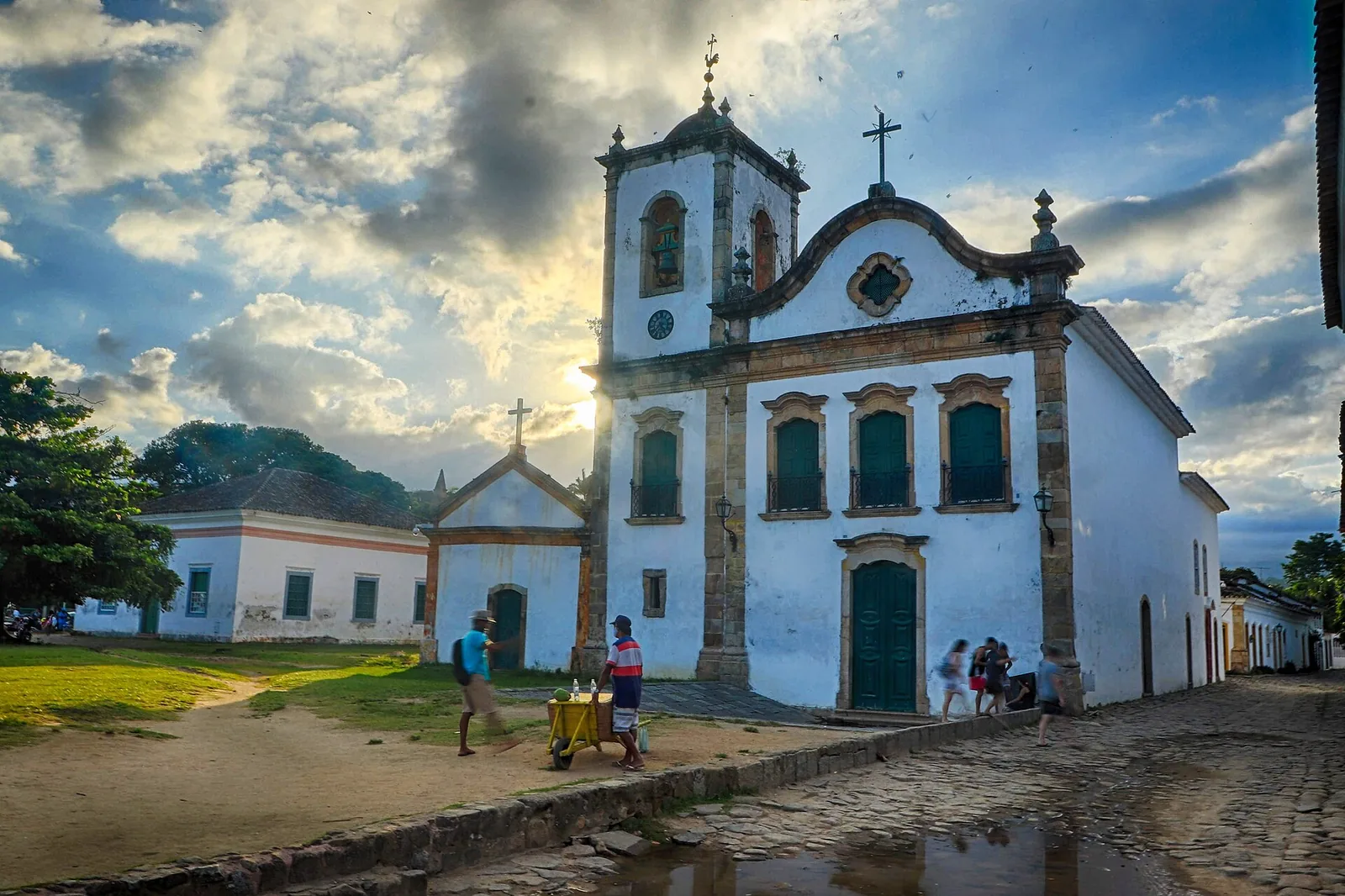
There is a reason experienced Brazil hands so often steer newcomers toward the coast and the smaller towns. The friction that makes a big city tiring — the constant low hum of watchfulness — mostly evaporates. Paraty is a clear example. It has no airport, which has quietly protected it for decades; you have to want to come here, and that filter keeps the pace slow. The historic centre is largely closed to cars, so the streets belong to people on foot. Everyone walks. The town is small enough that you start recognising faces by your second day.
In practical terms that means you can wander after dinner without the calculus you might run in a capital. You can sit at an outdoor table with your bag on the back of your chair. You can lose an afternoon following a street of open doorways and craft shops without checking over your shoulder. This is not a promise that nothing ever goes wrong — no honest guide makes that promise about anywhere — but the baseline is genuinely relaxed, and it changes the texture of the whole trip. If you would like a fuller sense of the town's rhythm, our overview of how to explore Paraty lays out the shape of a good few days.
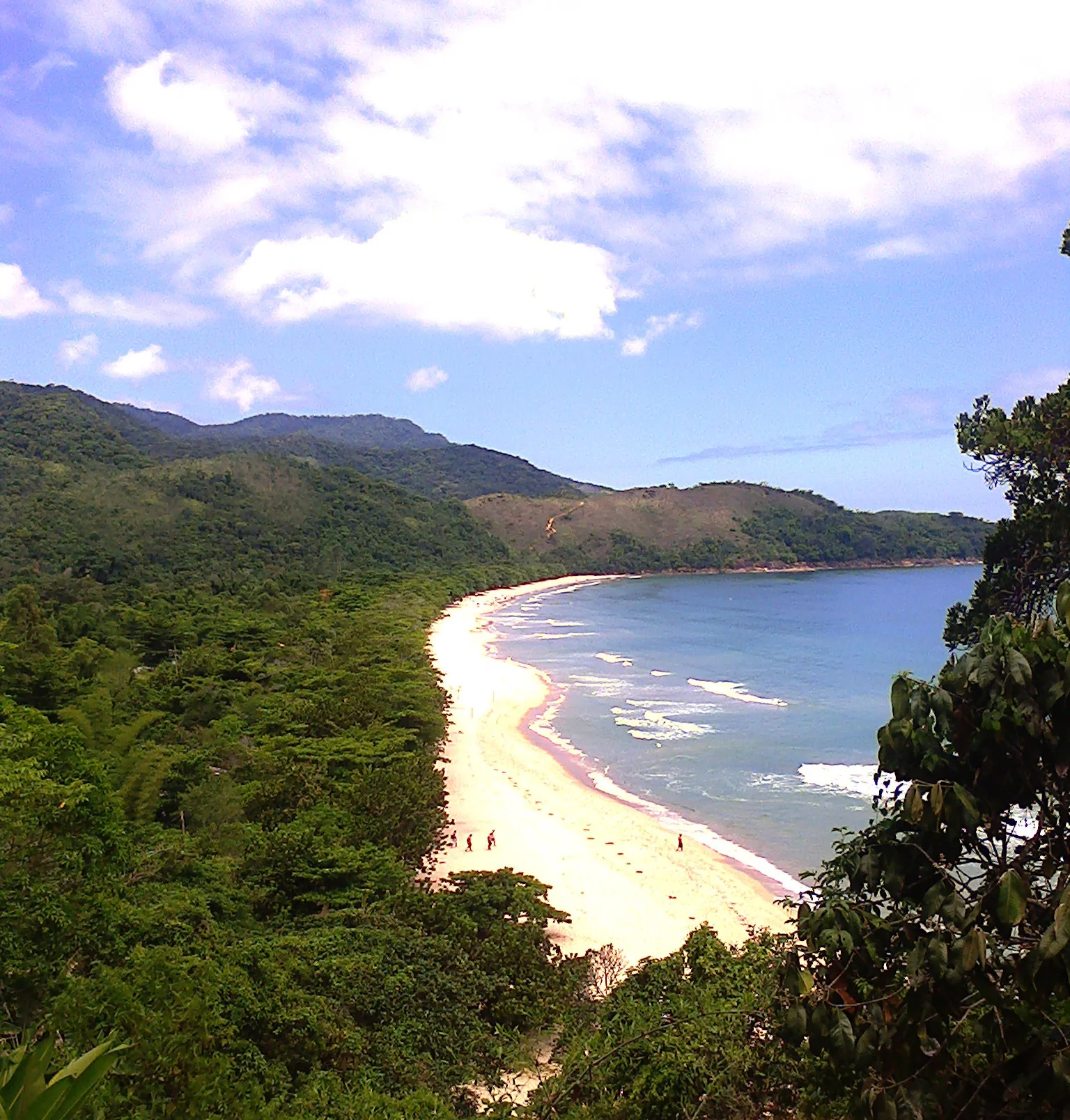
The coast around here rewards the same unhurried attitude. Beaches like Praia do Sono are reached on foot along a trail, which keeps them quiet. Boats leave the harbour all morning for the islands. The best beaches near Paraty tend to be the ones you have to make a small effort to reach, and that effort is its own filter. When the town is your daytime playground and a hillside pool is your evening, the days start to arrange themselves without much planning at all.
Money, Pix and paying for things
Brazil is, quietly, one of the most digitally advanced countries in the world when it comes to payments. Cards are accepted almost everywhere — restaurants, shops, most kiosks, many boatmen — and contactless is normal. For most visitors, a single card with no foreign-transaction fee plus a modest cash float covers everything.
Pix, and why you will hear about it constantly
Pix is Brazil's instant bank-transfer system, and it has become the default way locals pay for almost anything, from a market stall to a dinner bill. You will see the QR codes everywhere. The catch for visitors is that Pix is tied to a Brazilian bank account and a CPF tax number, so most tourists cannot easily use it. That is fine — nowhere expects a foreign visitor to have Pix, and cards or cash always work as a fallback. Do not feel you are missing out; you are simply using the tourist-friendly path.
Cash, ATMs and small vendors
You still want some reais in your pocket. Beach kiosks, small boatmen, a caipirinha from a cart, tips, the occasional market — these run more smoothly with cash. Withdraw from ATMs inside banks, shopping centres or airports rather than isolated street machines, do it by day, and be aware of your surroundings when you do. Take out a sensible amount at once to avoid repeat trips. A practical note that has grown more important lately: in big cities, be wary of anyone who pressures you to move money or make a transfer under duress. It is rare, and it is essentially unknown in a quiet town like this, but the general rule holds everywhere — you never owe a stranger a transaction.
Tipping
Restaurants usually add a ten percent service charge to the bill, and paying it is customary. Beyond that, tipping is relaxed — rounding up for a taxi, a little something for a helpful guide or boatman, nothing rigid. You are not expected to run American-style percentages in your head.

Getting connected: SIMs, eSIMs and staying online
Reliable data changes how a trip feels. It is your map, your ride app, your translator and your restaurant finder all at once. In Brazil, getting online is easy if you plan one step ahead and mildly annoying if you do not.
The simplest route for nearly everyone is a prepaid travel eSIM bought online before you fly. It activates the moment you land, connects to one of the main networks automatically, and skips the queues entirely. Most phones from the last several years support eSIM. Buying a physical local SIM in person is possible but genuinely bureaucratic — it requires your passport and a CPF number, and shop staff are often unused to registering foreigners — so unless you are staying for months, the eSIM is worth it for the friction it removes.
Coverage is strong in cities and along populated stretches of coast, and perfectly good in Paraty and its beaches. Once you head into the mountains, onto the outer islands, or up a forest trail to a waterfall, expect it to drop away. That is not a flaw to fix; it is part of the appeal. Download offline maps of the area before you go, screenshot the key details of any tour, and let the dead zones be dead zones. Some of the best hours here are the ones your phone cannot reach anyway.
A little Portuguese goes a long way
Brazil speaks Portuguese, not Spanish, and the distinction matters more to Brazilians than visitors sometimes expect. Outside big hotels and established tour operators, English is limited, and Spanish will get you understood but not endeared. The good news is that Brazilians are among the warmest people anywhere toward a foreigner who tries, and even a handful of words transforms the tone of an interaction.
You do not need fluency. You need enough to be polite, order food, ask a price and say thank you like you mean it. A translation app on your phone covers the rest. Here are the phrases that earn their keep:
- Bom dia / Boa tarde / Boa noite — good morning / afternoon / evening. Brazilians greet before anything else; skipping it feels abrupt.
- Por favor / Obrigado (men) / Obrigada (women) — please / thank you. The ending changes with the speaker's gender, not the listener's.
- Quanto custa? — how much is it?
- A conta, por favor — the bill, please.
- Você fala inglês? — do you speak English?
- Tudo bem? — all good? It works as both hello and how-are-you, and the answer is usually "tudo bem" right back.
- Com licença — excuse me, for passing through or getting attention politely.
Pronounce them imperfectly and smile. It will be met with patience and often delight. The effort signals that you have come as a guest rather than a consumer, and that changes how you are treated all week.

Etiquette: reading the room in Brazil
Brazilian social life runs on warmth, physical ease and a relaxed sense of time. Understanding a few unspoken rules keeps you on the right side of it and spares you small, avoidable awkwardness.
Greetings and personal space
Brazilians stand closer, touch more and greet more physically than many visitors are used to. Among people who know each other, women and mixed pairs often exchange a kiss on each cheek; men shake hands or embrace. As a newcomer a warm handshake is always safe, and you will feel quickly when a place is more relaxed. Do not read friendliness as familiarity you have to reciprocate perfectly — just meet it with openness.
Time, plans and "jeitinho"
Social time is elastic. If a boat or a dinner is set for a certain hour, expect some flexibility around the edges, and do not take it personally. Formal bookings and transfers run more or less on schedule, but the general culture prizes ease over precision. There is a national concept, the jeitinho, of finding a friendly workaround to a problem; approached in good humour it is charming, and impatience rarely speeds anything up.
At the table
A few small things. Brazilians tend not to touch food with their hands — even a slice of pizza or a piece of fruit is often held with a napkin — so you will be handed a guardanapo for almost anything. Meals are social and unhurried; the bill does not arrive until you ask for it, and lingering is expected rather than rude. If you are eating the local seafood along the harbour, a long lunch is the whole point. Our notes on where and how to eat in Paraty go deeper on that.
Beaches and dress
Beach culture is confident and unfussy. Smaller swimwear is normal and unremarkable, and no one is looking. Away from the sand, though, Brazilians dress with a bit more care than the beach might suggest, and covering up when you walk into town or a restaurant is the polite default. Toplessness is not the norm on most beaches here. Read the local cue and match it.
Health, sun and the small stuff
Serious health worries are rare for a coastal trip like this, but a few practical habits keep the small stuff small.
- Water. Most cities treat their tap water, but visitors commonly stick to filtered or bottled water to avoid a mild stomach upset, since the mineral profile differs from home. Many pousadas and houses have a filter. Ice at reputable places is generally fine.
- Sun. This is the tropics and the sun is stronger than it feels with a sea breeze on you. High-factor sunscreen, a hat and shade in the middle of the day are not optional if you want to enjoy the evening. The reflected glare off the water on a boat day catches people out most.
- Mosquitoes. Repellent is worth carrying, especially at dusk and in forested spots. Check whether any current health advisories suggest particular precautions for the region and season before you travel.
- Pharmacies. Brazilian pharmacies are excellent, widespread and staffed by people who can advise on minor ailments. For anything routine, they are your first stop and often solve it on the spot.
- Insurance. Travel insurance that covers medical care and activities like boating or hiking is simply sensible. You will almost certainly not need it, which is exactly why it is cheap peace of mind.
The gentler pace of a place like this is itself good for you. When your day is a beach, a long lunch and a swim, and your base is a quiet hillside rather than a busy strip, the whole trip tends to leave you in better shape than you arrived.

Getting here and getting around the Costa Verde
Paraty sits roughly halfway between Rio de Janeiro and São Paulo on the coastal road, and how you arrive shapes the first impression. There is no airport in town — you come by road along the BR-101, the Rio–Santos highway that threads along the green coast with the mountains on one side and the sea on the other. It is one of the more scenic drives in the country, and it is also winding, so build in a little more time than the distance suggests.
From Rio de Janeiro
The drive from Rio is around four hours, sometimes a touch more with traffic or a stop. Your options are a private transfer arranged in advance, a rental car, or the regular intercity buses that run the coast and are comfortable and reliable. Many visitors combine the two cities and the coast into one loop; if that is you, our itinerary for ten days across Rio, Paraty and the green coast maps out a route that flows.
From São Paulo
From São Paulo, allow four to five hours by the same means. Paulistas have made this coast a weekend habit for generations, so the buses and transfer services are well established. If you are driving yourself, aim to clear the metropolitan traffic before you settle in for the coastal stretch.
Once you are here
You do not really need a car in Paraty itself — the historic centre is walkable and partly car-free, and a car is more nuisance than help in the cobbled lanes. For the beaches and villages up and down the coast, local buses, taxis and boats do the job, and boats are often the nicest way to travel here anyway. Our practical page on getting around the region covers the specifics. One gentle piece of advice worth repeating: time your arrival for daylight. Wrestling luggage over cobbles and finding a partly pedestrian address is simply easier before dark.
Boats, water and the three bays
Much of what makes this coast special happens on the water, and a little water sense keeps those days easy. The bay in front of Paraty opens onto a scatter of islands and, further out, the larger presence of Ilha Grande and the sheltered waters around Angra dos Reis. From the right vantage point above town you can take in all three at once — Paraty's own bay, the reach toward Angra, and the green hump of Ilha Grande beyond. It is a rare thing to hold three bays in a single view, and it is one of the quiet luxuries of being up on the hillside rather than down at sea level.
On the water itself, the habits are the obvious ones. Choose operators who provide life jackets and do not overload the boat. Bring more sun protection and water than you think you need, because both run out fast at sea. Keep phones and cameras in a dry bag. The tides matter here more than newcomers expect — some of the walkways in Paraty's old town were built to flood at high spring tides, which is by design and part of the town's charm, but it is worth knowing so you are not caught out walking back to dinner. If you are planning your days on the water, our guide to the boat tours and how they work is the place to start, and the classic schooner day is hard to beat for a first outing.
Solo, couples, families and friends
One of the reasons this coast travels so well is that it flexes to whoever you are. The safety picture and the etiquette do not really change; what changes is the shape of the day.
Solo travellers find Paraty unusually comfortable. It is small, sociable and walkable, the kind of place where you can eat alone at the harbour without feeling conspicuous and fall into conversation on a boat the next morning. The ordinary solo-travel discipline applies — tell someone your plan for a trail day, keep your phone charged, trust your read of a situation — but the baseline is relaxed.
Couples get the version of Brazil that is all long lunches, slow evenings and a swim under the stars. If that is the trip, our thoughts on a Paraty honeymoon lean into it.
Families do well here because the pace is gentle and the risks are low. Calm beaches, short boat rides, easy town walks and early dinners suit children, and Brazilians are famously fond of kids, which smooths a lot of edges. We keep a dedicated guide to Paraty with family for exactly this.
Groups of friends tend to want a base with room to spread out and a pool to come back to between outings, which is where a whole house on the hillside earns its keep. Whoever you are travelling as, the through-line is the same: keep the habits light, keep the days loose, and let the place do the work.
Festivals, timing and crowds
When you come changes the trip as much as where you stay. Paraty runs on a calendar of festivals that are genuinely worth planning around — or planning to avoid, depending on what you want.
The Festa Literária Internacional de Paraty, known as FLIP, is Brazil's most important literary festival, held over five days each winter (usually early July, occasionally August). The town fills with writers, readers and events, many of them free and spilling into the main square. It is wonderful and it is busy; book far ahead if you want to be here for it, and expect a different, buzzier town than the sleepy default. The Festa do Divino Espírito Santo, around Pentecost in May or June, is the town's oldest and grandest tradition — processions, music, decorated streets and communal meals — and a remarkable thing to witness. Our roundup of Paraty's festivals and what is on lays out the year.
Outside the festival peaks and the Brazilian summer holidays (roughly late December through Carnival), the town is quieter and easier, and prices ease with it. The green coast is green because it rains, so afternoon showers are part of the deal in the wetter months even as the sea stays warm. For a full breakdown of seasons, weather and crowds, see our guide to the best time to visit Paraty. The short version: shoulder seasons give you the town at its most relaxed.
The base changes everything
Here is the quiet argument this whole guide has been building toward. The single biggest thing that makes travel in Brazil feel easy is not a gadget or a phrasebook — it is having a calm, private base you actively want to return to. When your days end with a real reset, the small frictions of travel stop accumulating. You go into town, you take the boat, you walk the trail, and none of it has to be perfect, because home is a swim and a long view away.
That is the case for staying above the bay rather than in the thick of it. The chalet sits on the hillside a short drive above Paraty, roughly four hundred metres up, with an infinity pool that reads out toward Paraty, Angra dos Reis and Ilha Grande all at once. The town is close enough to drop into for dinner and far enough to leave its bustle behind when you climb back up. After a day on the water or the cobbles, that pool and that three-way view do more for the trip than any itinerary. If you are weighing where to stay, our overview of a private villa in Paraty talks through what a whole-house base gives you that a room in town cannot.
Travelling well is mostly a mindset
The habits in this guide take an afternoon to learn and a day to forget you are doing them. Carry less. Pay attention lightly. Learn a few words. Read the room. Choose a base that lets you exhale. Do those things and Brazil stops being the country of other people's worries and becomes the one its regulars quietly return to — warm, unhurried, absurdly beautiful, and far kinder than its headlines.
A simple pre-trip checklist
Pull the practical threads together and the whole thing fits on one short list. Do these before you fly and the rest of the trip mostly takes care of itself.
- Sort connectivity: buy a travel eSIM before departure and know how to activate it on landing.
- Set up money: a card with no foreign-transaction fee, plus a plan to draw a little cash from safe ATMs. Tell your bank you are travelling.
- Download offline maps of Paraty and the coast, and screenshot your transfer and any tour details.
- Learn ten Portuguese phrases and put a translation app on your phone.
- Buy travel insurance that covers medical care and your planned activities.
- Pack light and understated for cities, plus real sun protection, a hat and a dry bag for boat days.
- Book a daylight arrival, and confirm how you are getting from the airport or bus station to your base.
- Note your festival dates — either to catch FLIP and the Festa do Divino, or to give the crowds a wide berth.
That is the entire discipline. None of it is heavy, and all of it fades into the background within a day of arriving.
The Costa Verde is where that shift happens fastest, because the coast asks so little and gives so much. A morning on a quiet beach, a long seafood lunch you did not book, a boat that waited, a swim above the bay while the light goes gold over three stretches of water — this is what the smart habits are for. They are not the trip. They are the small, boring price of admission to it. If you have questions about your own dates, how to get here, or how to shape a few easy days on this coast, you are always welcome to get in touch and ask. That is the whole idea of a good host: to make the practical part disappear, so the good part can begin.

Frequently asked questions
Brazil is generally safe for tourists who use common sense, particularly in smaller towns and resort areas. The main risks are opportunistic theft in big cities and at busy transport hubs. Stay aware in crowds, keep valuables out of sight, and you will find most of the country welcoming and easy.
Yes. Paraty's historic centre is small, well-used in the evenings and largely car-free, so it feels calm to walk after dinner. Stick to the lit, populated streets, keep your phone in your pocket, and you will be fine. It is one of the easiest places in Brazil to relax.
Cards work almost everywhere in cities and tourist towns, and contactless is common. Carry a modest amount of cash in reais for small vendors, beach kiosks and boatmen. Pix, the local instant-payment app, is everywhere but needs a Brazilian bank account, so most visitors rely on cards plus a little cash.
A prepaid travel eSIM bought before you fly is the simplest option for most visitors. It connects automatically on landing and skips the paperwork that a physical Brazilian SIM requires. Buying a local SIM in person is possible but needs a passport and a CPF tax number, which most tourists do not have.
No, but a little goes a long way. English is limited outside big hotels and tour operators, so learning a handful of Portuguese phrases and using a translation app makes daily life smoother and warmer. Brazilians are patient and generous with anyone who tries.
In most cities the tap water is treated, but visitors commonly stick to filtered or bottled water to avoid an upset stomach, since the mineral content differs from what you are used to. Many homes and pousadas have a filter. Ice in reputable restaurants is generally made from filtered water.
Paraty has no airport, so you arrive by road along the coastal BR-101. From Rio it is roughly four hours, from São Paulo four to five, by private transfer, rental car or the regular intercity buses. Aim to arrive in daylight so settling in is easy.