In this guide
Most people arrive in Paraty for the beaches, and the beaches deserve every bit of their reputation. But spend a few days here and you notice the town is really a doorway to water in three different tempers. There is the sea, warm and forgiving in the coves. There is the mountain, where cold rivers fall through the Atlantic Forest into pools the colour of strong tea. And there is a strange in-between, a lagoon at Trindade where the ocean pushes through a gap in the rock and settles into something so clear and calm it behaves like a swimming pool with fish in it. This guide is about the second and third kinds — the Paraty natural pools and waterfalls that turn a beach holiday into something wilder and, quietly, more memorable.
I write this as a host, not a brochure. From the deck at the chalet you can see three stretches of water at once — Paraty's bay, the channels toward Angra dos Reis, and the long green back of Ilha Grande — and guests almost always ask the same thing on their second morning: where do we swim that isn't a beach? The honest answer has some joy in it and some caution. Forest pools are cold, beautiful and, on wet granite, genuinely dangerous if you are careless. The good news is that the best spots are close, the getting-there is half the pleasure, and with a little local knowledge you can pick the pool that fits whoever you brought — a nervous parent, a teenager who wants the rock slide, a friend who just wants to float and read.
So this is the practical version. Where the pools are, how they differ from the beaches, which ones suit small children, how to stay upright on slick stone, and how to build a day around a swim and still be back on the hill in time for the light. Think of it as the conversation we would have over coffee before you set off.
.jpg)
Pools, waterfalls and the sea: how they actually differ
The first thing to understand is that these are three separate experiences, and choosing badly is the main way people are disappointed. A beach day is social, sunny and warm; you want a towel, a book and a caipirinha from a kiosk. A waterfall day is cooler, greener and more physical; you are usually walking in, the water can be properly cold, and the reward is the shock of it against forest heat. A natural sea pool like Cachadaço is the rare middle ground — saltwater, but so sheltered it feels like bathing in an aquarium.
The temperature difference is bigger than newcomers expect. The bay in summer sits like a warm bath. A forest plunge pool, fed by rain off the Serra da Bocaina, can take your breath for the first ten seconds even in January. That cold is the point — after a humid climb, nothing resets you like it — but it changes who enjoys the day. Very young children and anyone who chills easily do better at the sheltered sea pools and the calm river basins than under a cold falls.
The other real difference is footing. On a beach you walk on sand. At a waterfall you move over rock that is often wet, sometimes coated in a thin film of algae, and occasionally deeper and faster than it looks. This is not a reason to stay away — it is a reason to slow down, wear the right shoes, and treat the first minute at any pool as a reading exercise, not a running jump. More on that below, because it is the single thing that keeps a good day good.
When each one is the better call
If the sky is flawless and the group is mixed — grandparents, toddlers, a teenager or two — lean toward a sheltered sea pool or an easy roadside river basin. If it is hot and you have strong walkers who want a bit of adventure, a forest waterfall with a hike in is the day to remember. If it rained hard overnight, be cautious with the falls (fuller and faster, slicker rock) and consider the coast instead; our guide to the best beaches around Paraty covers the coves that stay lovely even after rain. And if you simply want to swim without planning, that is what the chalet's own pool is for at the end of the day.
A swimming hole rewards patience: read the water for a minute before you trust your feet to the rock.
Cachoeira do Tobogã and Poço do Tarzan: the road to Penha
If you only have time for one inland swim, this pair is the one I send people to first, because it delivers the most for the least effort. Both sit a short drive inland from Paraty along the road toward the little hilltop church of Nossa Senhora da Penha, in a pocket of forest and small holdings where the river runs over broad sheets of granite. You can be there in well under half an hour from town, and you barely have to walk.
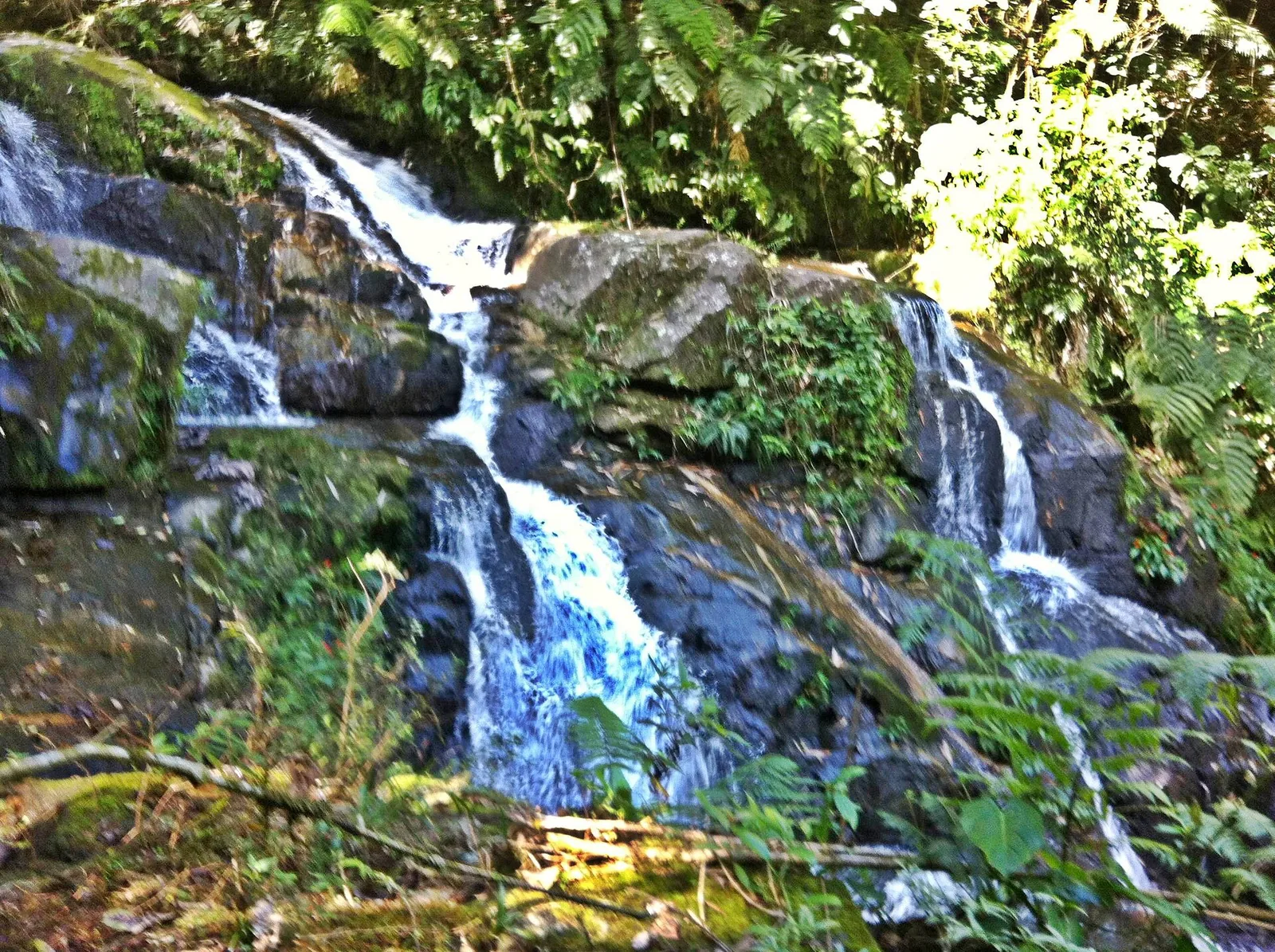
Cachoeira do Tobogã is famous for one thing: a long, smooth chute of rock that the river polishes into a natural slide. When the water is running well, locals and braver visitors sit at the top, push off, and shoot down the granite into the pool below. It is genuinely fun to watch and, with the right guidance, to try. But be clear-eyed — it is bare rock and moving water, the exit matters as much as the entry, and people do get hurt here every season by treating it like a theme-park ride. Ride it only when someone who knows the exact line shows you, go feet-first, and skip it entirely after heavy rain when the flow turns fierce.
Poço do Tarzan: the calmer half
A little further along the same path is Poço do Tarzan, and this is the spot for everyone who looked at the slide and thought, not for me. It is a deeper, calmer basin where you can float, dip and cool off without any risk of sliding anywhere you didn't mean to. There is a rope some use to swing in — appealing to teenagers, worth a firm word about landing zones — but you can equally just wade in from the edge and let the cold do its work. Families with cautious swimmers tend to settle here for an hour or two very happily.
The area around the pools has a couple of simple riverside kitchens serving cold drinks and fried snacks, which makes it easy to turn a swim into a lazy half-day. A small church, a working chapel road, forest on every side — it feels rural and unhurried in a way the coast rarely does. Bring small cash notes, because the kiosks are not set up for cards, and go early if you want the pools before the day-trip crowd arrives from town.
How to reach the Penha pools
You can drive straight there — it is one of the easiest inland spots to reach independently — or take a local bus toward Penha and walk the last short stretch. Because it is so close to Paraty, this is the pool day that fits neatly around other plans: a morning swim before lunch in the old town, or a cool-off on the way back from a longer excursion. If you want to string it together with a distillery visit, the cachaça route runs through the same green hinterland; our guide to the old Gold Trail and its distilleries shows how the two connect.

Cachadaço and the Caixa d'Aço: the sea pool at Trindade
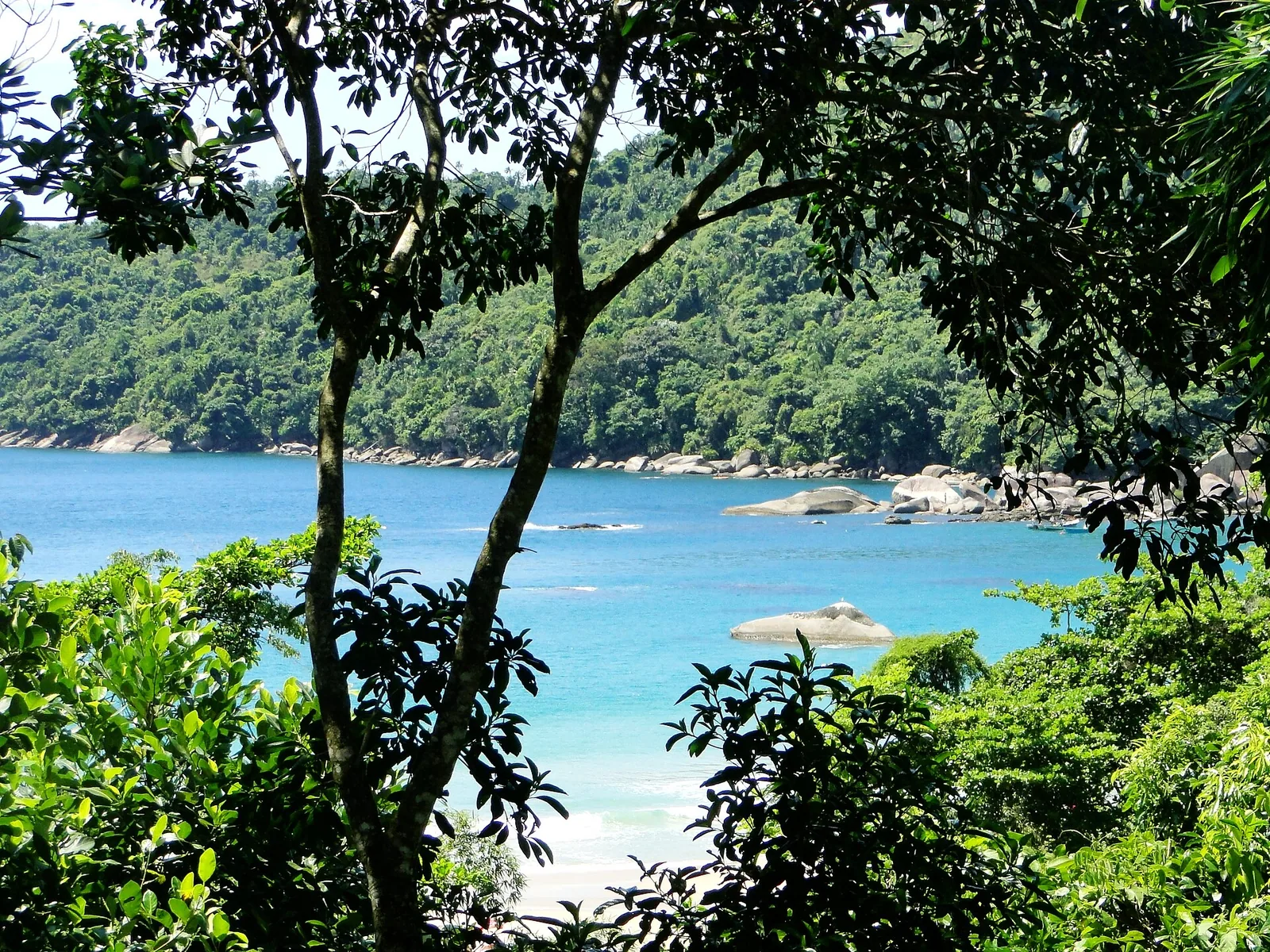
Now the one that surprises people most. Out at Trindade — a former fishing and surf village about 24 km southwest of Paraty, roughly forty minutes by road — the coastline throws up a ring of rock that traps a pocket of sea into a shallow, astonishingly clear pool. It goes by two names locally, the Cachadaço natural pool and the Caixa d'Aço, and it is the closest thing on this coast to swimming inside an aquarium. The water is protected from the swell, warm by forest-pool standards, and full of small fish that drift around your ankles.
Because it is saltwater and sheltered rather than cold and fast, Cachadaço is the natural pool I recommend most often to families and to anyone who wants the beauty without the bracing chill. Bring a mask and you will see far more than you expect; this is one of the best easy snorkelling spots in the region, and our guide to snorkelling and diving around Paraty goes deeper on where else the water runs clear. On a calm day it is a place you can happily lose two or three hours.
Getting to the pool from the village
From Trindade there are two ways in, and both are pleasant. The classic route is a gentle forest walk of about thirty minutes that links Praia do Meio to Praia do Cachadaço and on to the pool, with the path weaving between beach and trees. It is easy for most reasonably mobile walkers, though the final stretch can be rocky and, after rain, muddy — closed-toe grip shoes make all the difference. The alternative is a very short boat hop from Praia do Meio or Praia dos Ranchos for a small fee, usually a matter of minutes, which is the kinder option for grandparents, wobbly toddlers or anyone who would rather save their legs. Note that boarding and stepping off usually means wading through shallow water, so pack accordingly.
Trindade itself is worth the trip regardless of the pool — beginner-friendly surf at some beaches, a laid-back village feel, and simple seafood kitchens near the sand. Give the whole place a day rather than a rushed dash; our full guide to Trindade lays out the beaches in order and where each one earns its keep. Go early in high season, because the village road and the pool both fill by mid-morning in January.
A word on the pool's calm
The Cachadaço pool is only as gentle as the sea that day. On a settled morning it is glass. When a swell is running, water surges over the outer rocks and the pool loses its aquarium stillness, currents pick up, and it stops being a place for small children. Check the conditions before you commit the whole family to the walk, and be ready to make the day a beach day instead if the ocean is up. That flexibility — deciding the swim on the morning, not the night before — is the single best habit for this coast.
Forest waterfalls along the Gold Trail and the Serra
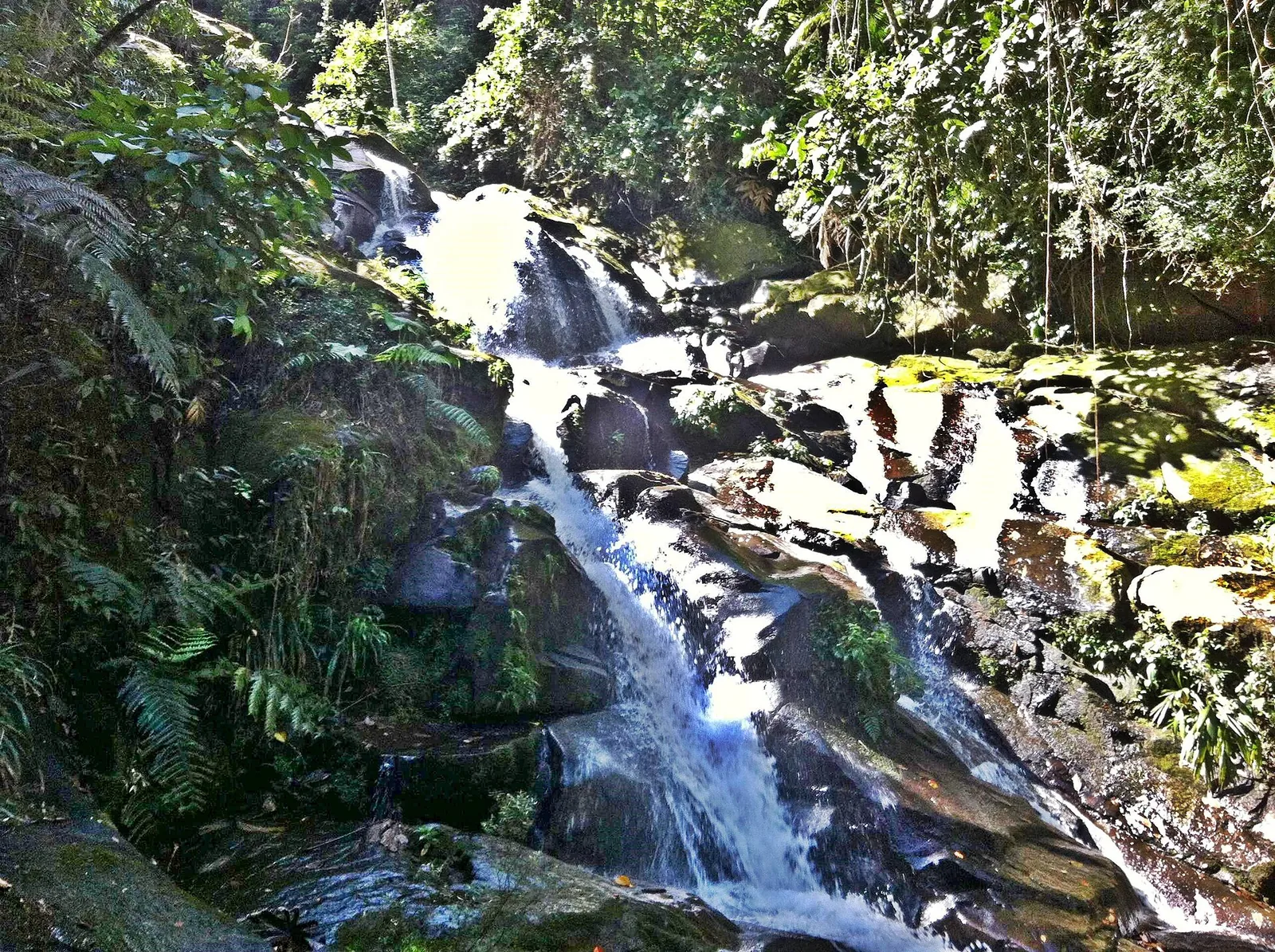
Behind Paraty the land climbs fast into the Serra da Bocaina, and the old stone Gold Trail — the Caminho do Ouro that once carried the region's gold down to the port — cuts up through it. This is waterfall country. The rivers here fall in stages, and along and around the trail you find a scattering of pools of every character: broad shallow basins good for a family paddle, deep dark plunge pools under a proper falls, and quiet stretches where the river simply widens enough to lie back in.
These are the more adventurous swims, and the ones where a guide earns their fee. The forest is thick, the paths are informal, the rock is slick, and the best pools are not always signposted. A local guide knows which are safe to jump into and which hide submerged rock, where the water rises fast after rain upstream, and how to time the walk so you are not on wet granite in fading light. If you like the idea of combining a swim with history — restored stretches of the actual colonial stone road underfoot — this is a rich day. Our dedicated guide to Paraty's waterfalls maps the main ones and how hard each is to reach.
The reward, and the honest catch
The reward is real: standing under cold forest water with nobody else around, toucans somewhere overhead, is one of the finest things you can do near Paraty, and it costs almost nothing. The catch is that these pools ask more of you. The water is genuinely cold. The walks range from easy to sweaty. And after heavy rain the same pool that was idyllic yesterday can be a churning, unsafe mess today, because the catchment above you is huge and unseen. Respect that and the forest is generous; ignore it and it is not.
If wildlife is part of the draw, the walk in is often the best of it — the Atlantic Forest here is one of the most biodiverse on earth, and slow eyes are rewarded. Our journal piece on the wildlife of the Atlantic Forest is a good primer on what you might see between the trailhead and the water.

.jpg)
Which pools suit children — and which don't
This is the question I get asked most, so let me be plain rather than diplomatic. Not every beautiful swimming spot near Paraty is a good idea with children, and matching the pool to the age is the difference between a day everyone remembers fondly and a day of frayed nerves.
The pools that suit families well:
- Cachadaço at Trindade — shallow, warm, protected, full of fish to point at. On a calm day it is close to ideal for children who can paddle, and the short boat option spares little legs the walk.
- Poço do Tarzan — a calm river basin where you can wade in from the edge, no slide required, with snacks and shade nearby. Good for a relaxed family afternoon.
- Broad, shallow river basins along the lower Gold Trail — with a guide who picks a gentle one, these give small children a safe paddle in moving water.
The spots I would keep older children and strong adults only:
- The Tobogã rock slide — fun for confident teenagers under supervision, wrong for small children. The rock is hard, the water moves, and a bad exit hurts.
- Deep forest plunge pools under a proper falls — cold, deep, and often reached by a slippery scramble. Beautiful, but not paddling water for the very young.
- Any pool after heavy rain — regardless of who is with you, a swollen river changes the risk entirely.
A family we hosted last autumn split their days exactly this way and it worked beautifully: the two younger children spent a golden morning in the Cachadaço pool while the teenager and one parent did the Tobogã slide with a guide the following day, everyone got the swim they actually wanted, and no one was pushed into water they found frightening. That split is the whole trick. If you are travelling with a range of ages, our Paraty with family guide plans days around exactly this kind of pacing.
Safety on slick rock: the brief I give every guest
I would rather over-explain this than have a guest learn it the hard way, so here is the plain version. Wet granite with a film of algae is as slippery as anything you will meet, and most injuries at these pools are simple falls, not dramatic ones. A few habits remove almost all of the risk.
- Read the water before you trust it. Stand still for a full minute at any new pool. Watch where the current moves, where the water is deep, where rock breaks the surface. A swimming hole rewards patience — the minute you spend looking is never wasted.
- Never dive or jump into water you have not checked. Levels change week to week and submerged rock is invisible from above. If you didn't watch someone else enter safely, go in feet-first and slowly.
- Wear shoes with grip. Water shoes or grippy sandals turn treacherous rock into manageable rock. Bare feet and smooth flip-flops are how people slip.
- Move like you are on ice near the falls. Small steps, low centre of gravity, hands free. Do not carry a child across wet rock if you can wade instead.
- Respect the rain. After heavy rain the falls run faster and higher, the rock is at its slickest, and flash rises are a real thing in these catchments. When in doubt, choose a sheltered sea pool or the coast instead.
- Keep an eye on the sea at Cachadaço. The pool is calm only while the ocean is. If swell is pushing over the rocks, it is no longer a children's pool.
None of this should put you off. It is the same common sense you would use on any wild water, and once it is a habit you stop thinking about it. Guides carry it as second nature, which is one more reason the more remote pools are worth doing with one. For the roadside spots you can manage perfectly well on your own with the list above in mind.
.jpg)
What to pack for a day at the pools
The difference between a smooth pool day and a scratchy one is usually the bag you packed that morning. Here is what actually earns its place:
- Water shoes or grippy sandals — the single most useful item, for rock and for wading to boats.
- A dry bag — for phone, keys and cash, especially where you board a boat through the shallows.
- Drinking water and a snack — some spots have simple kitchens, some have nothing at all.
- Small cash in low notes — for boat hops, parking, and kiosks that do not take cards.
- Insect repellent — the forest pools mean forest insects, particularly late in the day.
- Sun protection — reef-safe sunscreen, a hat, and a rash top for children who burn.
- A quick-dry towel and a dry change of clothes — forest water is cold and the drive back is more pleasant dry.
- A mask and snorkel — worth carrying for Cachadaço and the clearer sea pools.
Leave behind anything you would mind losing to water or rock — fragile sandals, white trainers, jewellery. And if you are self-catering, packing lunch at the chalet before you leave usually beats hunting for food at a remote pool. A well-stocked cool bag has saved many a Trindade afternoon.
Seasons and water levels: when the pools are at their best
Paraty's water changes character across the year, and knowing the pattern helps you plan. The wet season, roughly December through March, is when the waterfalls are at their most spectacular — full, loud, and dramatic. It is also the hottest time, so the cold shock is at its most welcome. The trade-off is that this is exactly when rock is slickest, rivers rise fastest, and afternoon storms can arrive without much warning. Waterfalls in the wet season are wonderful, but they ask for more care and better timing.
The drier, cooler months from about May to September flip the equation. The falls run gentler and the pools run clearer, footing is safer, and the sea pools like Cachadaço are more often glass-calm. The water is a touch colder to get into and the forest falls less thunderous, but for families and cautious swimmers this is arguably the better window. It is also quieter, with fewer day-trippers on the trails. Our guide to the best time to visit Paraty weighs the seasons in full, including the festival calendar.
Whatever the month, the rhythm of a single day matters too. Every one of these spots is quietest early. Arrive at the Penha pools or the Cachadaço walk before mid-morning and you may have the water to yourself for an hour; arrive at noon in January and you will be sharing it. Early swims are cooler, calmer, better lit for photos, and far more likely to feel like the wild place they are.
.jpg)
Beaches versus natural pools: choosing your day
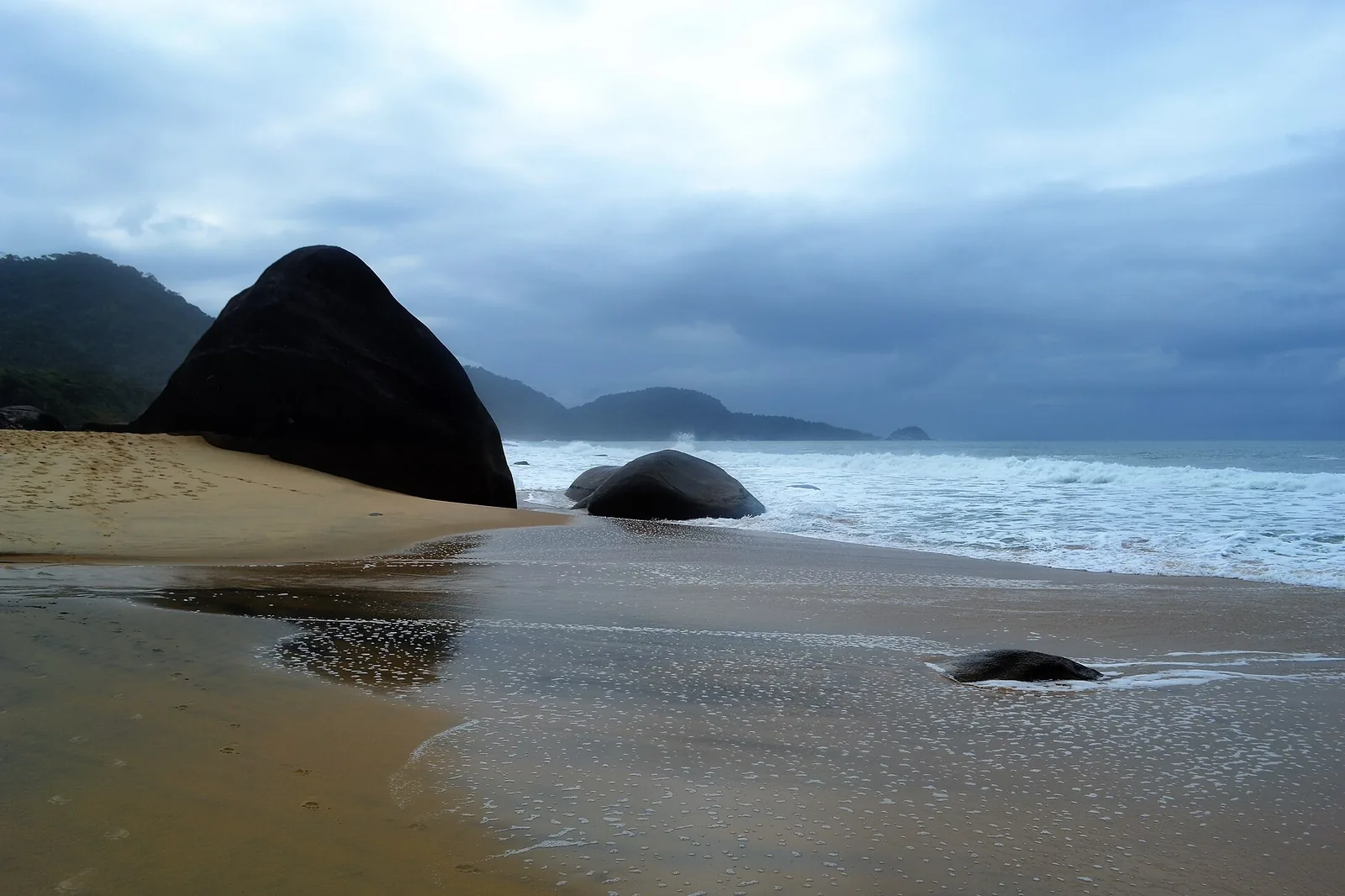
Because the coast is so good, it is worth being deliberate about when to skip it for a pool. The beaches win for warmth, for sociability, for lazy long lunches, and for boat days out among the islands — a boat tour of the bay is one of the region's great pleasures, and our overview of things to do around Paraty lays out how the sea days and land days fit together. The natural pools win for something else entirely: solitude, the shock of cold water, the sense of having gone somewhere most visitors don't.
A well-balanced Paraty week uses both. Two or three beach and boat days for the warmth and the views, a waterfall day for the adventure, a Trindade day that folds a beach and the Cachadaço pool into one, and a slow morning or two simply floating in the chalet's own water while you decide nothing at all. Stack the days so you are not doing two big walks back to back, and always keep one flexible slot for the morning the sea is too rough or the rivers too high — that is the day you swap plans and end up somewhere you didn't expect to love.
Getting there from São Paulo, Rio and abroad
Where you are coming from changes the shape of your pool days a little, so a quick word on each.
From São Paulo, the drive down the Rio-Santos coast road is around four to five hours depending on traffic and where in the city you start. Many guests break the journey with a first swim, because the road passes close to several of the inland pools and to Trindade before it reaches Paraty. Coming this way, a natural-pool stop is an easy warm-up to the trip rather than a separate excursion.
From Rio de Janeiro, it is a shorter run, commonly around four hours by car or coach along the same coastal highway. Rio visitors often do Paraty as part of a longer green-coast loop, and the natural pools slot in neatly between the town and the beaches. If you are weighing Paraty against a day on the big island, our Ilha Grande day-trip guide helps you decide how to spend the water days.
From abroad, you will almost certainly fly into Rio or São Paulo and drive or transfer down from there; there is no major airport at Paraty itself. The practical upshot is that your first full day is the one to keep gentle — an easy roadside pool like Poço do Tarzan or a calm Cachadaço morning is a kinder introduction than a long forest hike while you are still finding your feet and the language. Build up to the bigger walks once you have slept off the flights.
However you arrive, a car makes the inland pools far easier, though local buses do reach both the Penha area and Trindade if you would rather not drive. We are always happy to help guests sort transfers and timing before they land — a short note via our contact page and we can point you at the right day for the conditions you will actually meet.
A few day plans that work
To make this concrete, here are three shapes of day that guests come back happy from. Treat them as starting points, not scripts.
The easy family pool day
Leave the chalet mid-morning after a slow breakfast. Drive out to Trindade, take the short boat across to the Cachadaço pool rather than the walk, and spend the middle of the day snorkelling and paddling in the sheltered water. Lunch at a simple seafood kitchen near the sand, a short beach afternoon, and back up the hill in time for the children to swim off the last of their energy in the chalet pool before dinner. Low effort, high reward, no cold shocks.
The adventurous half-day
Start early. Meet a local guide for a Gold Trail walk to a forest waterfall, swim in the cold plunge pool while the light is still low and the rock is quiet, and be back down by early afternoon. If your group has the appetite and the guide judges it safe, add the Tobogã slide on the way home. Warm up afterward with a distillery tasting in the hinterland, then a long, still float back at the chalet to close the day.
The mixed day for a couple
A slower pattern for two: a late-morning swim at Poço do Tarzan, an unhurried lunch at a riverside kitchen, an afternoon wandering the cobbled streets and churches of the old town, and dinner back on the hill as the bay turns gold. It threads a wild swim through an easy day rather than building the whole day around it. If you are here for a quieter, more romantic trip, our Paraty honeymoon guide keeps to that gentler tempo throughout.
Back to the chalet for a swim
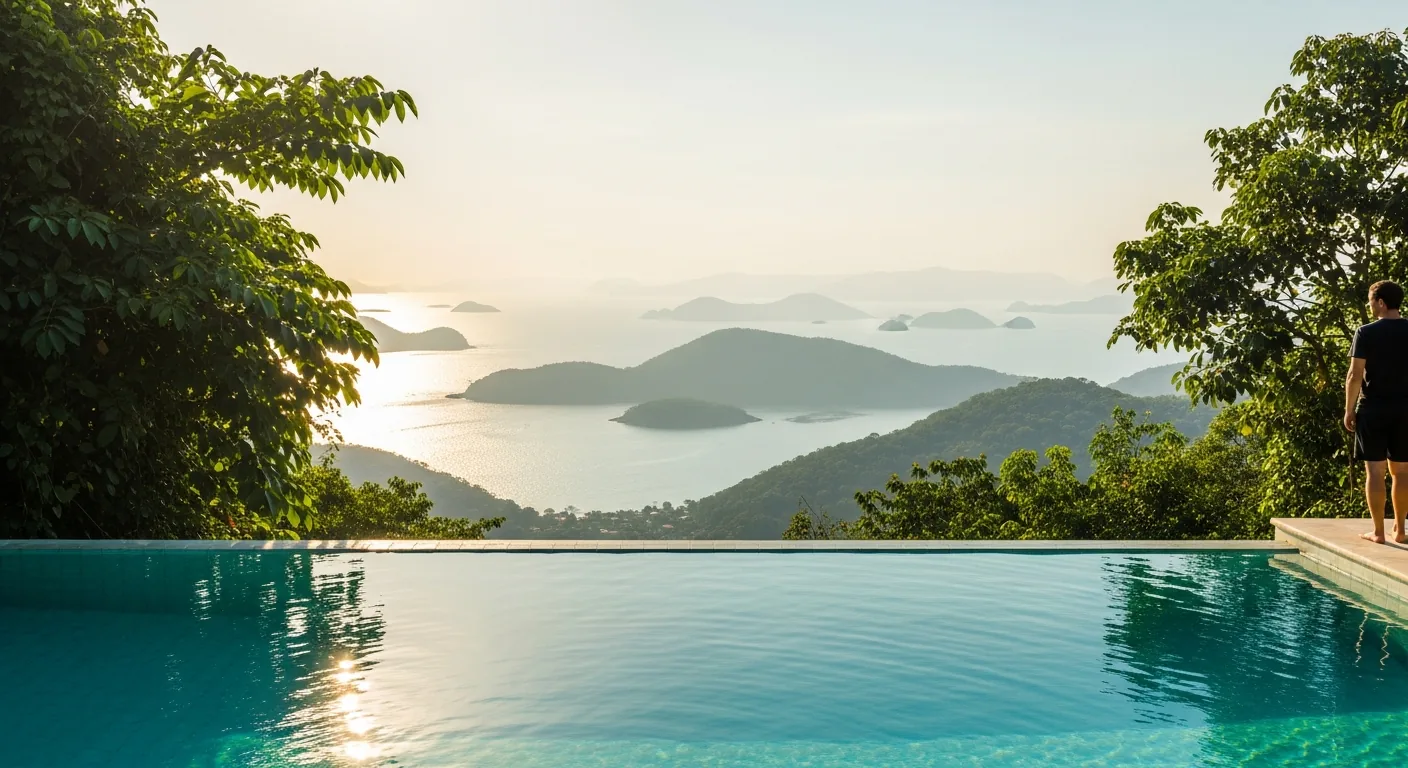
There is a particular pleasure to coming home from cold forest water to your own warm, still pool with the whole bay laid out below. That is really what the chalet is built for. It sits about four hundred metres up the hillside above Paraty, a short drive from the town and from every pool in this guide, with an infinity pool on a deck that looks out over Paraty, Angra dos Reis and Ilha Grande at once. After a day of scrambling to a waterfall or wading to a boat at Trindade, it is the place you rinse off the salt, warm up, and watch the light go while dinner comes together.
That is the rhythm we most like for guests: out in the morning to the wild water, back in the afternoon to your own. The pools give you the adventure and the cold shock and the sense of having gone somewhere few people bother to reach; the hill gives you the long view and the quiet to sit with it. You can read more about the house itself and its pool on the chalet page, and when you are ready to talk dates or ask which pool suits the ages you are bringing, we are one message away. Come for the beaches by all means — but leave room for the water that hides in the hills.
Frequently asked questions
The three most-loved are Cachoeira do Tobogã and its neighbouring Poço do Tarzan on the road to the Penha church, and the sea-fed Cachadaço natural pool out at Trindade. Add the string of forest waterfalls along the old Gold Trail and you have a full week of swimming without ever repeating yourself.
The natural granite slide is genuinely fun but it is real rock and real risk. Go with a local guide who knows the safe line, only ride when someone experienced shows you where to enter and exit, and never after heavy rain when the flow spikes. If you want the same setting without the adrenaline, the calm Poço do Tarzan pool is a short walk away.
Trindade village sits about 24 km southwest of Paraty's old town, roughly 40 minutes by car or the local Colitur bus. From there it is a gentle 30-minute forest walk from Praia do Meio, or a very short boat hop for a small fee if you would rather not hike.
Some are excellent and some are not. The protected Cachadaço pool at Trindade and the calm Poço do Tarzan suit families well because the water is shallow and still. The Tobogã slide and the deeper forest plunge pools are better left to strong adult swimmers. We help guests match each spot to the ages travelling.
The waterfalls run hardest in the wet season from roughly December to March, which is dramatic but also when rock is slickest and flash rises happen. The drier, cooler months from about May to September give clearer, gentler water and safer footing. Early in the day is quietest at every spot.
For the roadside pools near the Penha church, no — you can drive or bus there and walk in. For the Tobogã slide, a river crossing, or the longer Gold Trail waterfalls, a local guide is worth it for safety and for reading the water. Trindade's pool is easy to reach independently.
Water shoes with grip, drinking water, sun protection, a dry bag for phones, insect repellent for the forest, and something to eat. Cash in small notes covers boat hops and simple kitchens. Leave the fragile flip-flops and white trainers at the chalet.