In this guide
Ask anyone who lives on this stretch of the Costa Verde which season they would choose, and a surprising number will quietly answer: Paraty in winter. Not the sticky heat and full car parks of Carnival, not the New Year crush on the beaches, but the run of clear, dry weeks from June through August when the rain lets go of the mountains, the sky settles into a hard blue, and the bay turns still enough to see straight down to the sand. It is the season the town holds back for itself.
Because Paraty sits below the equator, its winter lands in the middle of the northern summer — June, July and August. That timing catches a lot of first-time visitors off guard, and it is precisely why the season is such good value. While the calendar says winter, the days here stay mild and sunny, in the low-to-mid twenties Celsius, and the water keeps enough warmth to swim. What changes is the air: the humidity drops, the light sharpens, and the long, grey rain-curtains of summer give way to weeks of clean, dry weather. For a town wrapped in Atlantic Forest and edged by a hundred islands, that clarity changes everything.
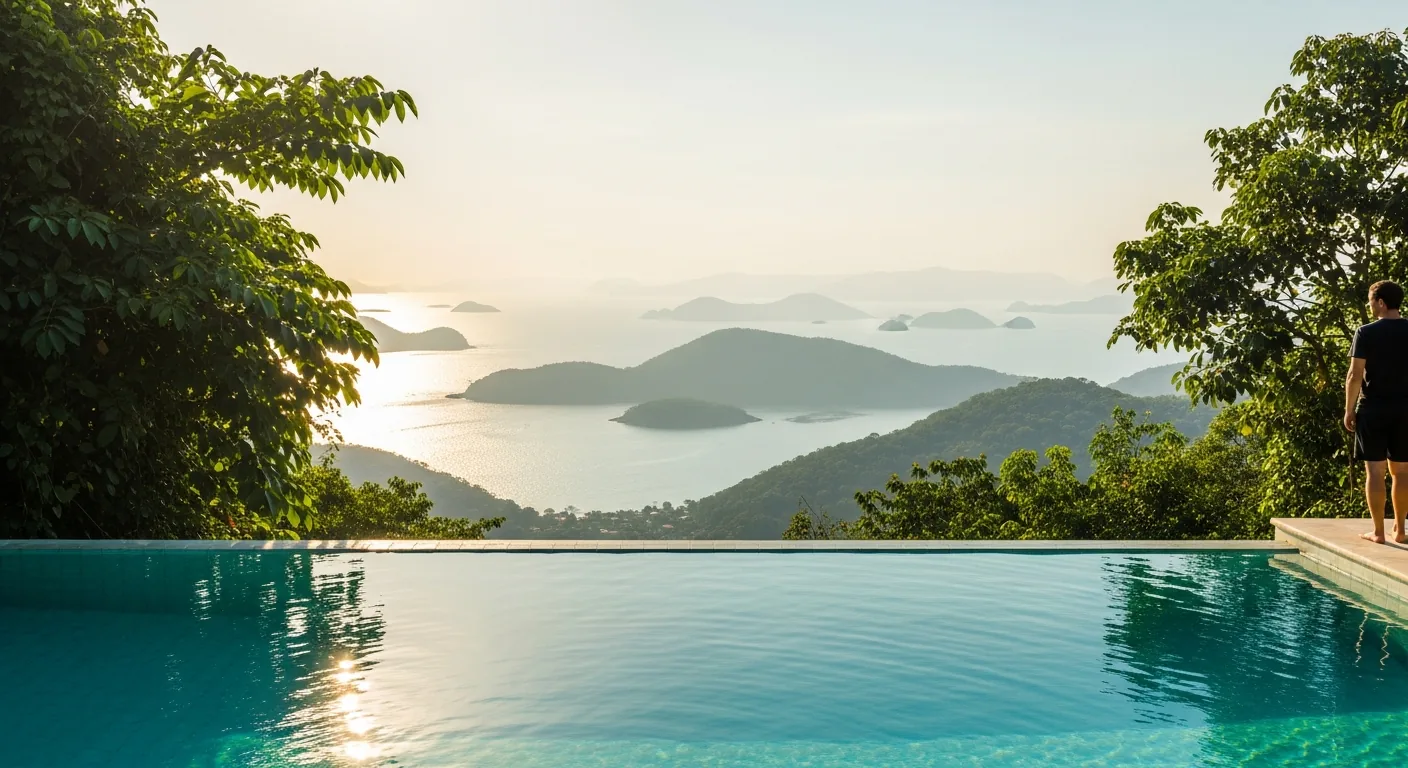
This is a host's guide to that quieter Paraty — what the weather actually does month by month, why the sea is at its clearest for snorkelling, how the crowds and the prices both thin out, what to pack for cool nights, and why a good number of returning guests now come only in winter. We run a hillside chalet above the bay with an infinity pool and a deck that takes in Paraty, Angra dos Reis and Ilha Grande at once, so we watch this season arrive every year. It has become our favourite time to have people to stay.
.jpg)
What "winter" actually means in Paraty
The word does a lot of unhelpful work. Say Paraty in winter to someone from Europe or North America and they picture cold, short days and packed-away swimsuits. The reality on this coast is closer to a long, dry, temperate autumn. The Costa Verde — the green coast between Rio de Janeiro and São Paulo — keeps a tropical Atlantic climate all year. Winter does not bring frost or snow anywhere near sea level. What it brings is the dry season.
Through the summer months of December to March, warm air rides up against the Serra da Bocaina mountains behind town, cools, and dumps rain — often in dramatic afternoon storms. That is what makes the forest so green and the waterfalls so loud, and it is also what turns the roads slick and the sea cloudy with run-off. Come June, that engine switches off. High pressure settles in, the rain-bearing systems track further north, and Paraty enters its clearest, most stable weather of the year.
So when we talk about winter here, we mean three things that travel together: less rain, cooler nights, and cleaner air and water. The daytime temperature barely drops compared with a mild summer day. It is the humidity, the crowds and the cloud that fall away. If you want the fuller picture of how the year breaks down, our guide to the best time to visit Paraty lays each season side by side.
Winter is the season the town keeps for itself: dry skies, glass-clear water, and streets you can actually hear yourself think in.
The weather, month by month
Averages only tell you so much on a coast where a single ridge can hold a cloud in place, but the broad pattern is dependable. Expect daytime highs of roughly 22 to 24 degrees Celsius — shirtsleeve weather in the sun — and nights that slip down to somewhere between 10 and 15 degrees. Rainfall drops sharply, with July usually the driest month of the whole year and the fewest wet days spread across June, July and August. You still get the occasional passing front or a grey, blustery day when the sea kicks up; nowhere on this coast is a guarantee. But the odds swing firmly in your favour.
June
June is the changeover. The heavy summer rains have finished, the forest is still lush and full, and the waterfalls run clear rather than brown. Early June can still throw a warm, humid day or two, but by mid-month the dry air is usually in charge. Crowds are thin, prices are low, and the sea is already clearing. It is a fine, underrated stretch to have the place almost to yourself before the July school holidays.
July
July is the heart of the dry season and, for many, the best of the lot. It is statistically the driest month, the light is at its cleanest, and underwater visibility peaks. The one thing to plan around is the Brazilian winter school break, which fills the middle of the month, and the FLIP literary festival in the last full week — both bring a lively, welcome burst of people to a town that is otherwise very quiet. Book those dates early. The rest of July is calm and clear.
August
August keeps the dry, mild pattern going and often turns a touch breezier. Once the school holidays end, the town empties out again and you are back to quiet weekdays. It can be one of the best-value windows of the year, with the same clean skies and clear water as July but without the mid-month bustle. Nights are still cool, so the layers stay in the bag.

Why the water is at its clearest — snorkelling and diving
This, more than anything, is why serious swimmers and divers pick winter. The single biggest thing clouding the sea around Paraty in summer is run-off: rain pouring off the steep, forested slopes carries silt and organic matter into the bay, and every heavy storm knocks visibility down for days. Stop the rain and you stop the sediment. By deep winter the water over the reefs and around the islands goes properly clear, and calm high-pressure days flatten the surface so the light gets down.
The bay islands just offshore, the coves around Ilha Grande, and the sheltered spots off Angra dos Reis all reward the season. The famous blue-green pools — the Lagoa Azul among them — earn their reputation on a clear July morning, when you can hang over a rock shelf and watch fish work the bottom several metres down. Schooners and small boats run out to these spots year-round, but winter is when the photos actually match the promises. If you want to go deeper on where and how, our guide to diving and snorkelling around Paraty covers the best reefs, the operators worth going out with, and what gear to bring.
A word of honesty on temperature: the sea is cooler in winter than in high summer, though nothing like a European or North American winter ocean. Most people snorkel comfortably in a rash vest, and anyone spending a long session in the water — or diving — will be glad of a thin wetsuit, which the dive boats carry. The trade you are making is a slightly cooler swim for dramatically better visibility. On this coast, in these months, that is a trade most keen snorkellers take every time.
Getting out on the bay
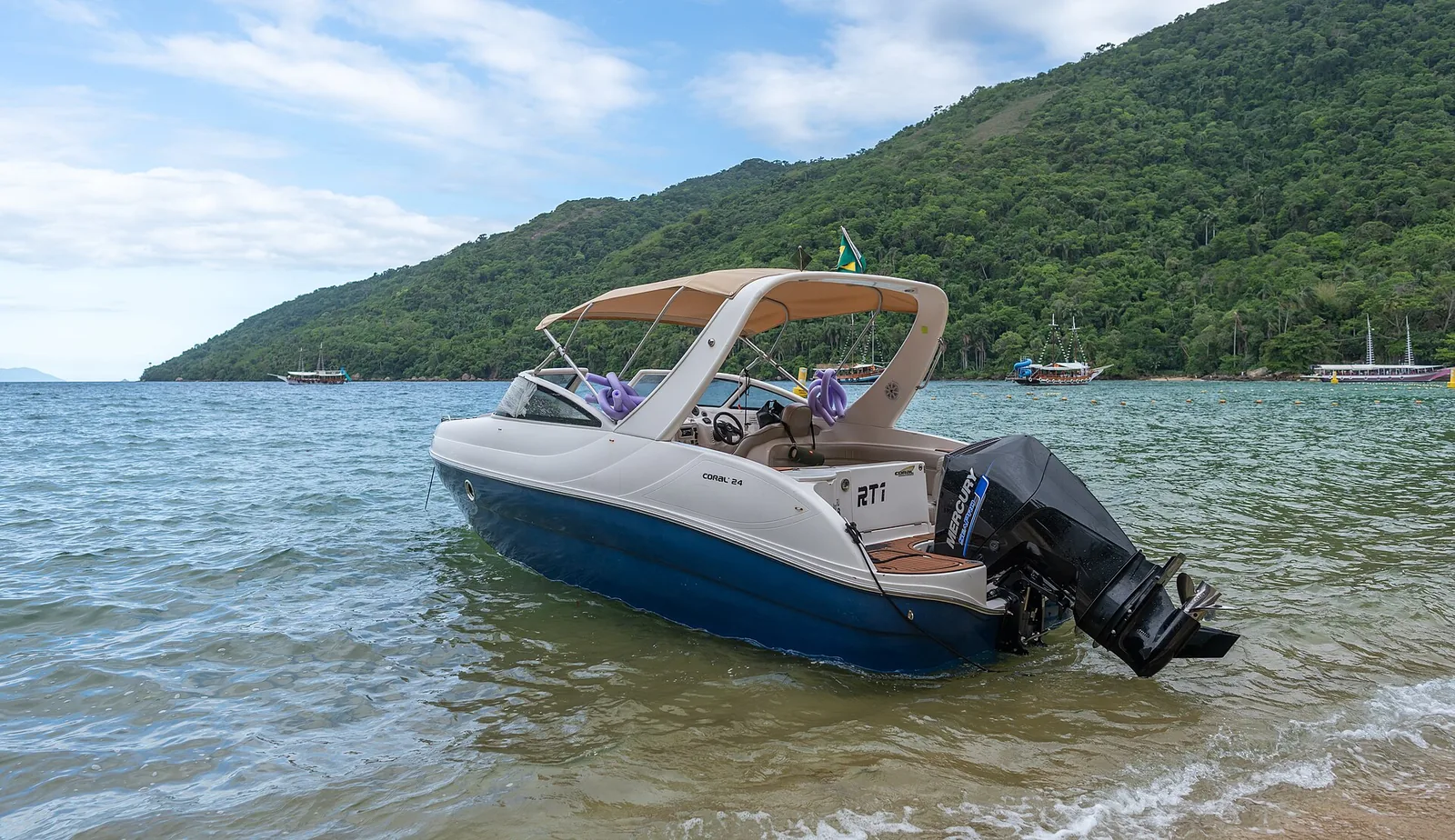
Winter suits boat days for the same reason it suits swimming: the sea is generally calmer and the light is clean, so the three-way spread of water off Paraty — town, Angra and Ilha Grande — shows at its best. The classic run is a day on a wooden schooner hopping between island anchorages, with stops to swim and a lunch of fish and prawns. Smaller private launches get you into the tighter coves the big boats skip. Either way, mornings are steadiest before any afternoon breeze fills in. Our rundown of Paraty boat tours explains the difference between the schooner circuit and a private charter, and how to pick.
Thin crowds, and a town you can hear
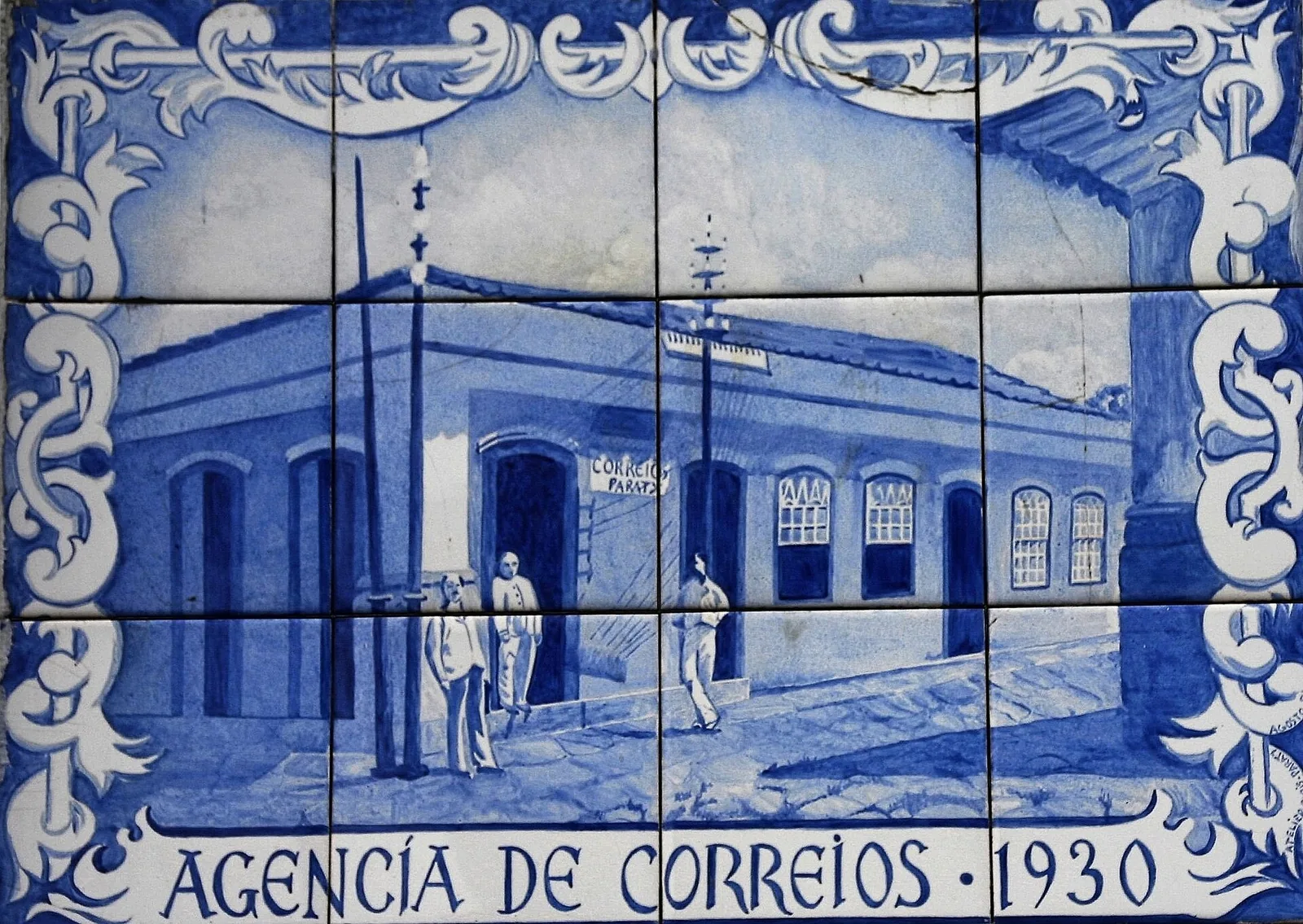
Paraty's historic centre is one of the best-preserved colonial towns in Brazil — irregular cobblestones laid so the tide once washed the streets clean, white houses with painted shutters, churches on the corners. In peak summer it can feel like everyone in São Paulo had the same idea at once. In winter, most days, you get it close to empty. You can stand in the middle of a lane at dusk and hear nothing but your own footsteps on the stone and a guitar somewhere two doors down.
That quiet is the season's real luxury. Tables open up at the restaurants that turn people away in January. The galleries and workshops are unhurried. Guides have time to actually talk. The one break in the calm is the last week of July, when the FLIP festival fills the town with writers, readers and a genuinely good buzz — but that is a contained few days, and easy to plan around or into. For the rest of winter, the centre belongs to whoever bothered to show up. If wandering the old town is high on your list, our guide to the historic centre maps the churches, the best light for photos, and the quiet corners.
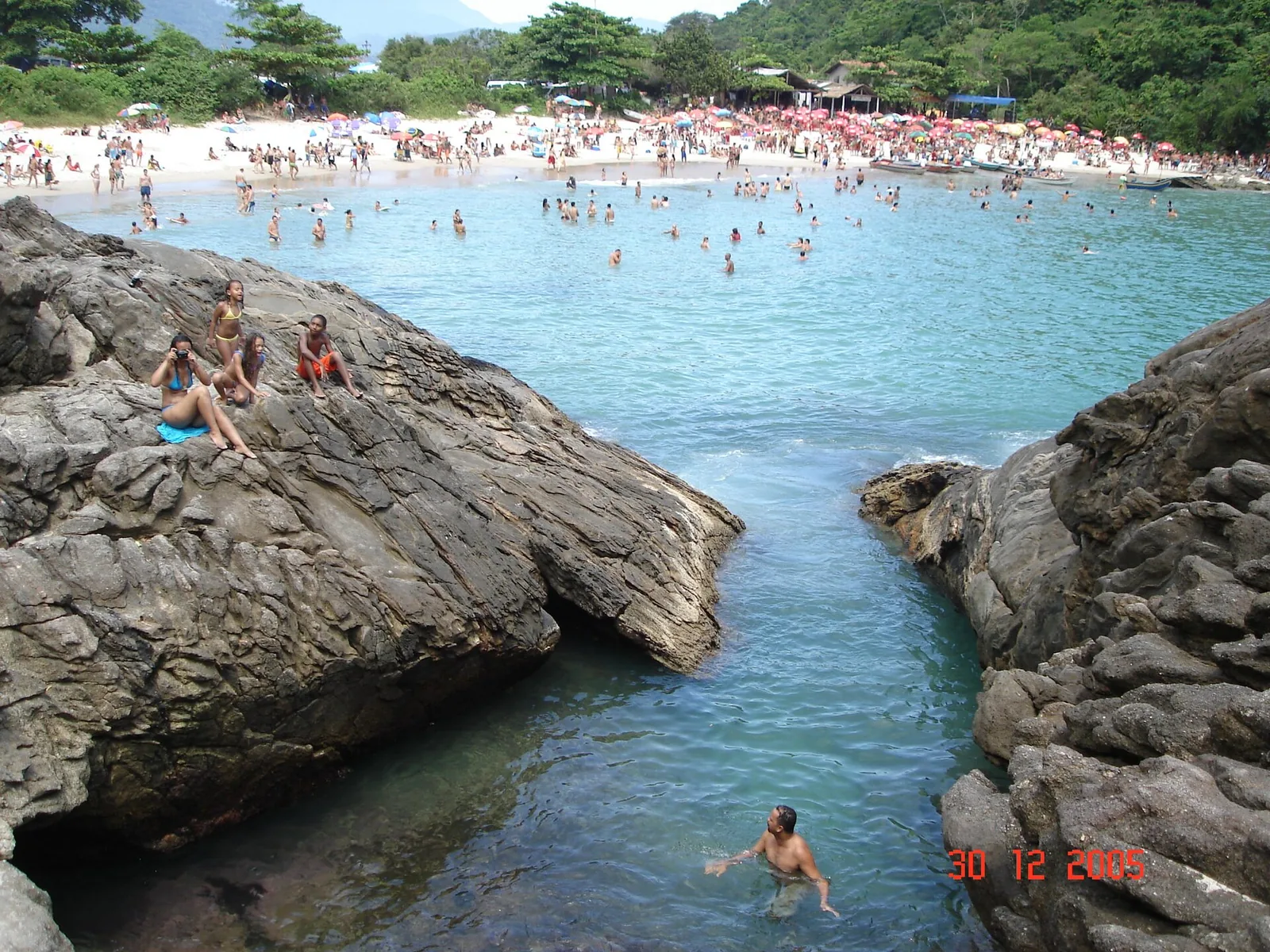
The same thinning happens everywhere else. The beaches down the coast, the forest trails, the waterfalls — all of them shed the summer queues. A family we hosted last August spent a whole weekday at one of the wilder beaches south of town and counted fewer than a dozen other people on the sand all afternoon. In February they would have been shoulder to shoulder. That is the difference winter makes.
.jpg)
Lower prices, better availability
Fewer people means the other quiet advantage: winter is low season, and the prices follow. Away from the FLIP week and the occasional national long weekend, this is when stays, tours and tables are at their most affordable and their most available. You can often book a good boat day the night before rather than a week ahead. Restaurants that need reservations in summer will seat you on a whim. The whole trip runs looser and costs less.
For anyone coming from abroad, the timing lines up neatly with the northern-hemisphere summer holidays, so you can travel in your own high season and land in Paraty's low one. For guests from Rio de Janeiro and São Paulo, winter weekends are the sweet spot — near enough for a short break, quiet enough to feel like a real escape, and priced for it. It is, plainly, the best-value window of the year for a calm trip. That value is a big part of why we point people toward these months when they ask; you can always ask us about winter dates directly if you want a sense of what a stay looks like.
What to do in the clear season
The dry months open up the parts of Paraty that the rain complicates. The trails are firmer, the waterfalls are gentler and safer, the sea is clearer, and the long drives along the coast come with clean views instead of low cloud. Here is where winter earns its keep.
Beaches with room to breathe
Winter is not classic sunbathing weather — the sun is lower and the air cooler — but it is superb beach-walking weather, and the swimming is fine in the middle of the day. The reward is space. The string of beaches and coves down the coast, from the easy ones near town to the wilder sands you reach by boat or on foot, sit almost empty on a winter weekday. Our guide to the best beaches around Paraty sorts them by how remote they are and how you get to each; for the postcard stretch of sand and forest at the region's southern edge, the Trindade guide is the place to start.
Waterfalls and the forest
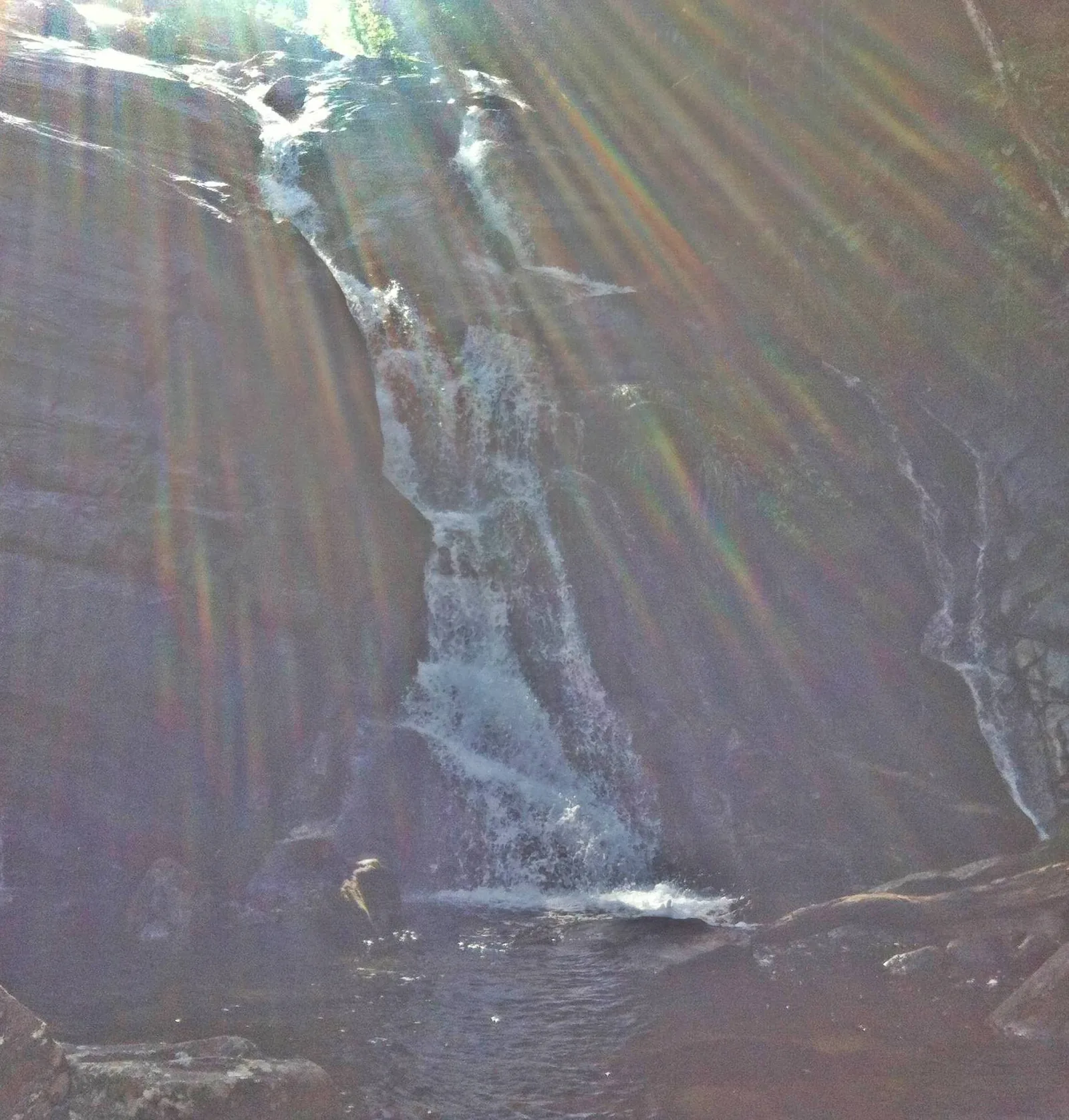
The waterfalls on the road up toward Cunha are a Paraty staple, and winter is the sensible time to go. In the wet season these falls can run high and dangerous after a storm; in the dry months they settle to a clear, manageable flow, the rocks are less slick, and the natural pools are cold but swimmable for the brave. The Atlantic Forest all around is still deep green — this coast does not go bare in winter — and the cooler air makes walking a pleasure rather than a sweat. See our waterfalls guide for which are worth the drive and which have a cachaça still attached.
The Gold Trail
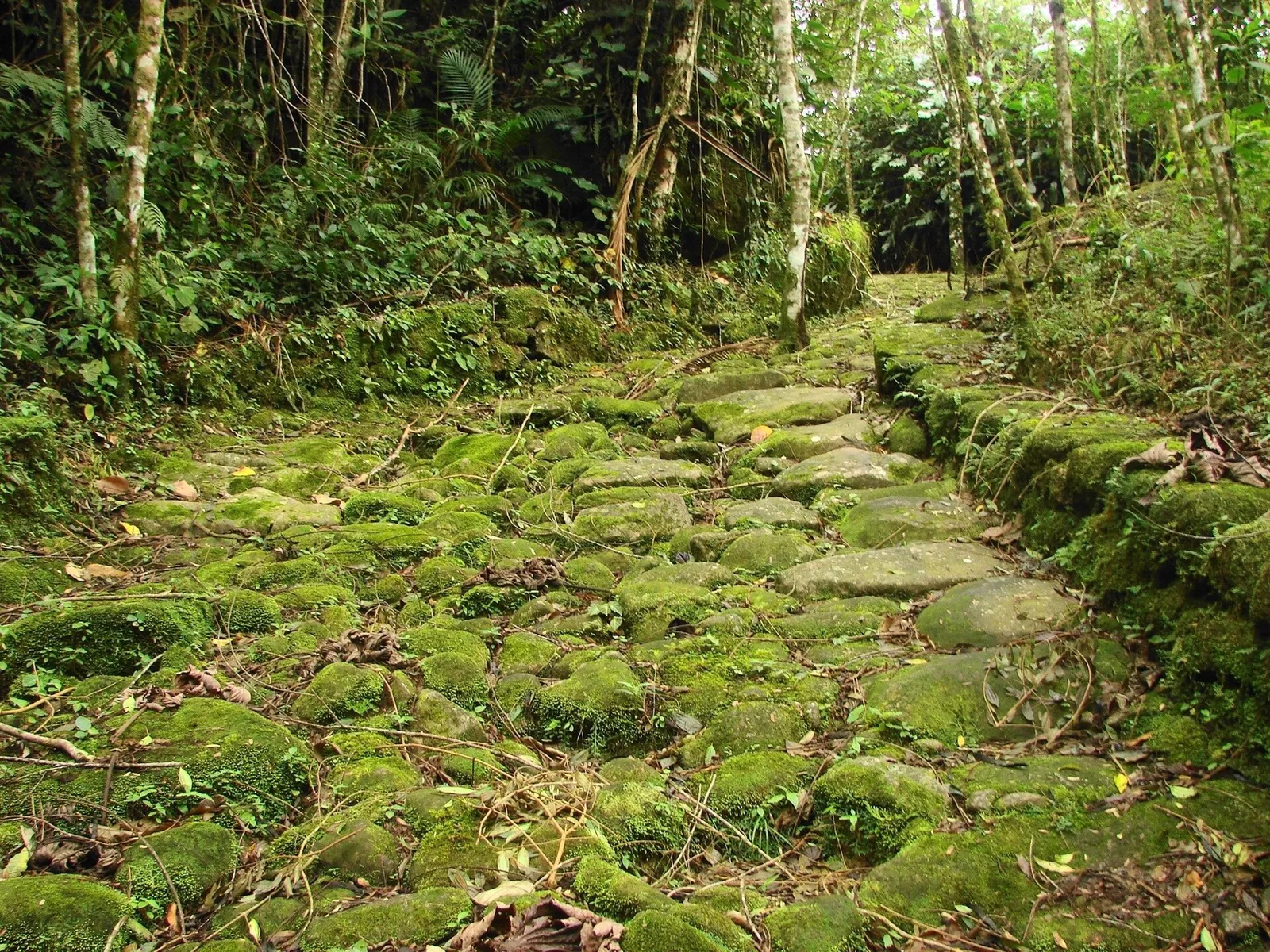
The Caminho do Ouro, the old Gold Trail, is the stone-paved path that once carried gold down from Minas Gerais to Paraty's port for shipping to Portugal. Sections of the original paving survive in the forest above town, and walking them is one of the region's quiet highlights. It is a much better outing in the dry season: the stones are steep and treacherous when wet, and the forest is far more comfortable without the humidity. Our guide to the Caminho do Ouro covers the walkable stretches, the history, and how to arrange a guide.
A day out to Ilha Grande
Ilha Grande, the big car-free island across the bay, is a full day or an overnight from Paraty, and it comes into its own in winter. The trails to its beaches are drier and firmer, the crossings are calmer, and the water off its famous sands is at its clearest. It takes a bit of planning to do well as a day trip; our Ilha Grande day-trip guide lays out the boats, the timing and whether you are better off staying a night.
.jpg)
FLIP and the winter calendar
Paraty's marquee event lands squarely in winter. The Festa Literária Internacional de Paraty — FLIP — is one of the most respected literary festivals in the Portuguese-speaking world, and it takes over the town for five days in the second half of July. Writers from Brazil and abroad, packed talks, book stalls in the old town, music and readings running late into the cool nights: it is a completely different Paraty for those days, busy in the best way. If you want that atmosphere, book well ahead, because it is the one winter window when the town fills up. If you want the quiet version, aim for the weeks on either side. Our guide to FLIP and Paraty's festivals tracks the dates and what else fills the calendar through the year.
Worth knowing for planning: Paraty's other great traditional celebration, the Festa do Divino Espírito Santo, falls in May, tied to the church calendar around Pentecost, so it sits just before winter proper rather than in it. If a colourful religious festival is what you are after, that is a late-autumn trip. Winter's headline is FLIP, and beyond it the season is defined by calm rather than events — which, for a lot of our guests, is exactly the point.
Getting to Paraty in winter
Paraty has no airport of its own. Almost everyone arrives by road along the coastal highway that threads between the mountains and the sea, and winter makes that drive better — clearer views, less risk of the fog and heavy rain that can slow the mountain sections in summer. Here is how the approaches break down.
From Rio de Janeiro
Paraty sits roughly 250 kilometres southwest of Rio de Janeiro, and the drive from the city or its international airport takes about four to four and a half hours along the Rio–Santos coastal road. It is a beautiful route, hugging the water for long stretches, and in winter you get it without the summer haze. Regular intercity buses run the same road if you would rather not drive. Many guests fly into Rio, spend a night in the city, and come down the next morning — our journal piece on the best time to visit Brazil is a useful companion if you are stitching Paraty into a longer trip.
From São Paulo
From São Paulo the distance is similar — around 270 kilometres — but the drive usually runs a little longer, often five hours or so depending on the route down off the plateau and the traffic leaving the city. Buses connect too. For paulistas, this is the natural long-weekend coast, and winter weekends are the quietest and best-value time to make the run.
From abroad
International visitors almost always route through Rio de Janeiro's or São Paulo's main airports, then transfer by road. The winter timing is a gift here, because it overlaps with the northern-hemisphere summer break — you travel when it suits you and arrive in Paraty's calmest, cheapest season. Private transfers can be arranged door to door if you would rather not deal with buses or a hire car after a long flight; we are happy to help sort that out. For the fuller lay of the land — what to see beyond the town, how the region fits together — start with our overview of the area.
What to pack for a Paraty winter
Winter here catches people out in one direction: they pack for the tropics and forget the nights. Days are mild and often sunny, but once the sun drops behind the mountains the temperature falls fast, and a clear night can feel genuinely cold on an open deck or a boat. The answer is layers. You are not packing for a ski trip, but you are packing for real range across a single day.
- Light clothes for the day — shirts, shorts and dresses for the warm middle of the day, when the sun is out and you are walking or on the water.
- A warm layer and a light jacket — a fleece or sweater plus a jacket for evenings and early mornings. This is the thing people most often wish they had brought.
- A light rain shell — the season is dry, not rain-proof. A packable waterproof handles the odd passing front without weighing you down.
- Swimwear and a rash vest — you will still swim and snorkel. A rash vest or thin top adds warmth for longer sessions in the cooler water.
- Sturdy shoes with grip — the cobblestones in town are uneven, and the Gold Trail and waterfall paths demand proper footwear, especially anywhere that stays damp.
- Sun protection — the winter sun is lower but still strong at this latitude. Sunscreen, a hat and sunglasses earn their place on the water.
- Insect repellent — there are fewer bugs in the dry season than in summer, but the forest and dusk still call for repellent.
One more note for the town itself: the old centre is all cobblestones, laid deliberately uneven and occasionally awash at the highest tides. Leave the delicate shoes and the wheeled cases packed for smoother places. Flat, grippy footwear will save your ankles and your dignity.
Eating and drinking in the cool season
Cooler weather suits the way Paraty eats. The kitchens here lean on the sea and the forest — fish and prawns from the bay, hearts of palm, cassava in a dozen forms, and the slow, warming seafood stews that a winter evening was made for. A pot of moqueca, the coconut-and-palm-oil seafood stew, tastes better when there is a cool breeze off the water than when you are already sweating. The seafood houses down at the harbour end of the old town do this best, and in winter you can usually get a table without the summer wait. For the full spread of where and what to eat, see our Paraty restaurants guide.
Then there is cachaça. Paraty was one of the great historic centres of sugarcane spirit, and the small distilleries in the hills around town still produce some of Brazil's most respected bottles. Winter is a lovely time to visit them — the drive up through the forest is clear, the cool air suits an unhurried tasting, and a well-made caipirinha or a neat aged cachaça takes the edge off a chilly evening. Our guide to the cachaça distilleries maps the family stills worth the trip and how to taste without needing to drive home. If you want the wider culture behind the glass, the journal has a piece on cachaça and caipirinha culture.
A winter day from the chalet
Here is how these months actually feel from where we sit, four hundred metres up the hillside above the bay. You wake to a clear morning and the whole three-way view laid out cold and sharp — Paraty to one side, the islands of Angra dos Reis and Ilha Grande spread across the middle, the water flat and pale. Winter mornings give the cleanest version of that horizon, before any afternoon haze. You have a slow breakfast on the deck with a jacket on, then the sun climbs and the jacket comes off.
Mid-morning you go out — a boat onto the glassy bay, a walk on the Gold Trail, a run down the coast to a near-empty beach. The clear season means you actually see the bottom when you snorkel and the view when you drive. By late afternoon you are back up the hill, and this is where a high pool earns its place: you swim as the light goes gold and the temperature starts to drop, the infinity edge running straight out toward that same bay you were on an hour ago. Then the sun goes behind the Serra, the air cools fast, and you swap the pool for a warm layer, a caipirinha and the town's lights coming on far below. Winter nights up here are quiet and properly dark, good for stars.
That rhythm — clear active days, cool still nights, a base you come back to for a swim — is what the season does best, and it is why a hillside chalet with a pool and a wide view suits winter so well. You are close enough to town to be down there in a few minutes, and high enough to feel like you have the whole coast to yourself.
Who winter suits — and who might not
Winter is not the right answer for everyone, and it would be dishonest to pretend otherwise. If your idea of Paraty is long, hot days baking on a crowded beach with the water bathtub-warm and the town buzzing until dawn, that is a summer trip, and you should go in December or January and accept the crowds and the prices that come with it. The nightlife is livelier in high season too; the quiet that winter travellers love is exactly what a certain kind of visitor comes to escape.
But if what you want is clear water, empty trails, a town you can hear yourself think in, cool nights that make a pool and a jacket both feel good, and prices that leave room in the budget for a nicer stay — winter is the season, and few things about this coast are as underrated. It suits couples after a calm few days, families who would rather not queue, friends chasing the best snorkelling of the year, and solo travellers who want the place at its most human scale. It rewards people who came for the water and the light rather than the party.
Making a winter trip easy
Planning a Paraty winter is not complicated once you know the shape of it: aim for the dry weeks of June through August, decide whether you want the FLIP buzz of late July or the quiet on either side, pack for warm days and cool nights, and book the water days for clear mornings. The rest tends to fall into place, because the season itself does so much of the work — the weather is stable, the crowds are gentle, and the whole coast slows down to a pace you can meet.
If you are weighing dates, stitching Paraty into a longer Brazil trip, or just want a straight answer on what these months are really like, that is what we are here for. We watch every winter arrive from the deck, and we are glad to talk through timing, transfers and what to build a few days around. Come and ask us about a winter stay, or spend a little longer with the wider guide to the area first. Either way, the clear, quiet season is waiting up here — and once you have had Paraty this way, the crowded version is a harder sell.
Cool snaps, cold fronts and what winter really feels like
Winter here is mild by most standards, but it is not uniformly warm, and it helps to know the real range before you pack. Every few weeks a cold front pushes up from the south — locals call the cold spell a friagem — and for two or three days the sky greys over, a fine coastal drizzle sets in, and the temperature drops. Up at the chalet's altitude the change is sharper than in town: nights can fall into the low teens Celsius, cool enough to want a jumper on the deck and a warm layer on the bed. Then the front clears, the air turns crystalline, and you get the bright, dry, long-viewed days that make winter the clearest season on the bay.
The sea barely notices any of this. It sits around twenty-two degrees through the winter, a touch cooler than summer but perfectly swimmable, especially at midday and in the sun-warmed shallows. The practical answer is simple: pack layers rather than heavy clothes, plan the boat days and the long views for the clear spells, and save the town, the churches and a long lunch for a grey afternoon. A sheltered corner of the deck, a good book and the quiet that comes when the crowds have gone turn a friagem from a disappointment into one of the most restful stretches of a winter stay above the bay.
Frequently asked questions
Winter runs from June to August, since Paraty sits in the Southern Hemisphere. These are the driest, clearest months of the year, with July usually the driest of all. Days are mild and sunny while nights turn genuinely cool.
Yes. Daytime highs sit around 22 to 24 degrees Celsius, which is comfortable for walking, boating and swimming. Nights drop to roughly 10 to 15 degrees, so you will want a jacket after dark, but the sea stays warm enough for snorkelling.
Winter gives you the best underwater visibility of the year. With less rain washing sediment off the mountains, the water around the bay islands, Ilha Grande and Angra dos Reis turns clear and calm. Late June and July are usually the sharpest weeks.
Far less than in summer. Outside the FLIP literary festival in late July and the odd long weekend, winter weekdays are quiet — thin crowds in the historic centre, room on the beaches and easy restaurant tables. It is the calmest the town gets.
Generally yes. Away from festival dates and holiday weekends, winter is low season, so rates on stays and tours tend to be softer and availability is better. It is the best-value window of the year for a quiet trip.
Layers. Bring light clothes for warm days, a warm layer and a light jacket for cool nights, a rain shell just in case, and swimwear — you will still use it. Add sturdy shoes for the Gold Trail and waterfalls, plus sunscreen and insect repellent.
No — winter is the dry season. July averages the least rain of the year, and June and August have the fewest rainy days. You can still catch the odd shower or a grey sea day, but long stretches of clear, dry weather are the norm.